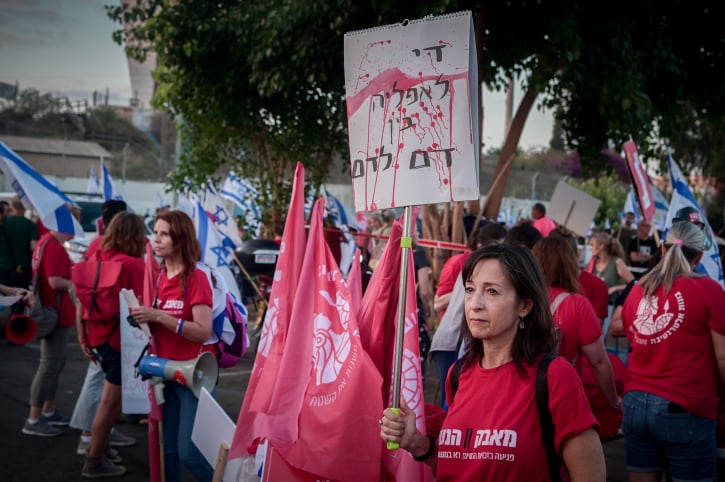
Thousands of participants in a women’s rights march in Bnei Brak trek through a traffic artery of the predominantly Haredi city, provoking some hostility but also hospitality.
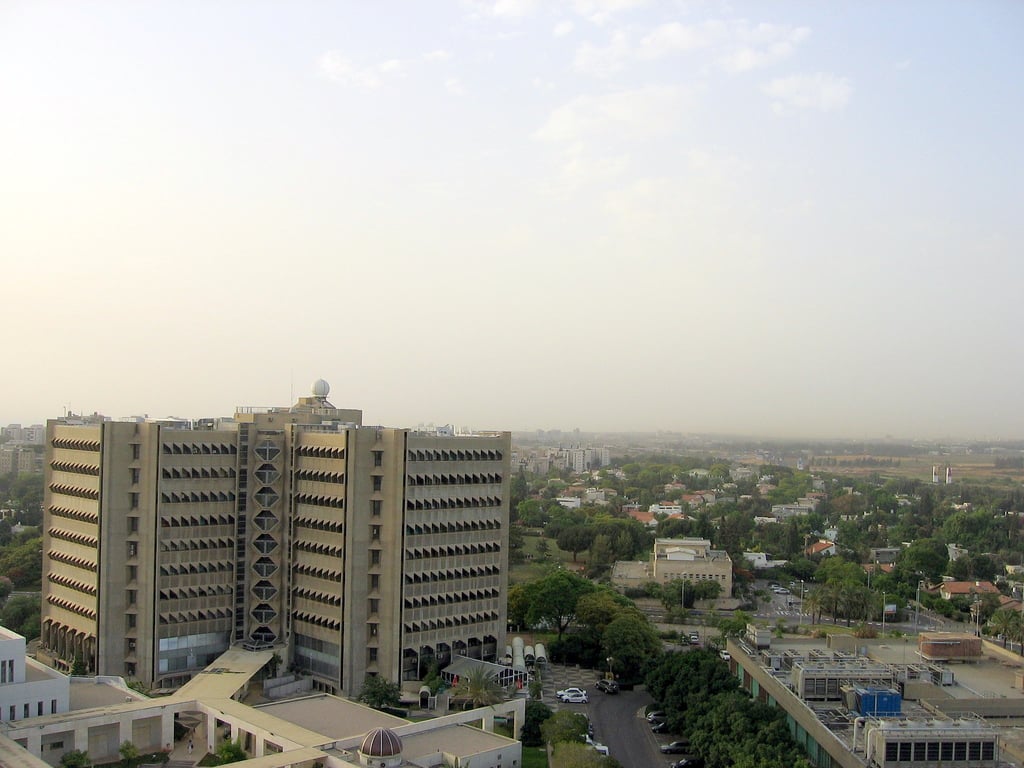
The protesters, many of them flying Israeli flags, gather around a speaker’s podium opposite the Mor Institute on Jabotinsky Street, which connects Bnei Brak with Ramat Gan. Police break up several confrontations, mostly between non-Haredi men, and early arrivers to the rally.
The rally, organized jointly by several women’s rights groups and groups protesting the judicial overhaul, is a reaction to multiple cases reported in recent weeks of exclusion and harassment of women who allegedly did not conform to religious requirements of modesty and conduct, organizers say. Several women were documented over the summer being denied service or segregated aboard public buses.
“We’ve come to protest the attempt by the government, in cooperation with the Haredi leadership, to make Israeli less liberal, less equal to women,” says Amit Aharon of the Pink Front organization.
A few hundred Haredi men and women watch the rally, which began with a march from Ramat Gan Stadium, and some of them speak with participants.
“This is not about human rights, this is about being brave against Haredim,” Oz Kostika, a 27-year-old special education professional, tells one protester. “You know nothing will happen to you here, but if you go to an Arab village and protest the oppression and murder of women there, they will throw stones at you.”
Inbal Bar-Sela, 57, came from Haifa to Bnei Brak “to show solidarity with all women,” she says. “This includes Haredi women, some of whom, including a woman I know personally, can’t drive or they’ll suffer social consequences. Their sons won’t get into good yeshivas. That’s not fair and I am going to make a stand against it.”
Dana Bezalel, a Haredi woman, set up what she calls a welcoming station near the rally point, serving protesters with bottles of water and wristbands emblazoned with the words “love thy neighbor.” She says it’s an attempt at dialog.
“They came here to make a point. I want to welcome them into this city and hear everything they have to say, tell them where I think they’re wrong,” she says of the marchers. “But I also want to tell them that because of the anti-Haredi sentiment in media, I, as a 34-year-old Haredi woman, am more afraid of harassment and targeting when I walk on Rothchild Avenue in Tel Aviv than in Bnei Brak.”


 Add ToI as a Preferred Source on Google