

Live updates (closed)
 Add ToI as a Preferred Source on Google
The Times of Israel liveblogged Wednesday’s events as they unfolded.
PM says lesson of October 7 is that buffer zones must be established beyond Israel’s borders
Asked during his Channel 14 appearance if he was changed by the Hamas-led October 7, 2023, attack, Prime Minister Benjamin Netanyahu says the invasion and massacre affected his approach to Israel’s security doctrine, citing the need for buffer zones inside enemy territory.
“Let’s just say that I learned lessons. I drew conclusions. And you have to move with reality,” he says.
“The most important thing, in my view, is first and foremost having buffer zones inside enemy territory — not inside our territory. I don’t want the communities of the north to be some kind of frontier region whose reality is different from that of the areas immediately south of them,” the premier says.
The remarks come amid ongoing public debate over accountability for the attack, which led several senior military and intelligence officials to publicly acknowledge failures and resign. Netanyahu has not explicitly accepted personal responsibility for the attack and has refused to establish a state commission of inquiry, instead calling for a politically controlled probe of the Hamas attack and aftermath.
Pressed further by the pro-Netanyahu channel on how he personally has changed since the massacre, the premier jokes, “first of all, I lost a little weight,” before pivoting to a review of wartime decisions he said he championed, including a broader reserve mobilization than initially planned, the campaign against Hamas, operations against Hezbollah, actions in Syria and strikes on Iran.
Asked if there will be a third confrontation with Iran, Netanyahu replies: “If necessary,” repeating his vow that, “as long as I am prime minister, Iran will not have nuclear weapons.”
On Gaza, he is asked whether past proposals for the “voluntary emigration” of Gazans remain under consideration after being roundly rejected by much of the international community, which accused backers of the idea of trying to ethnically cleanse Gaza of its Palestinians. Netanyahu declines to elaborate, saying: “I prefer to talk less and do more.”
He is similarly noncommittal when asked about the prospect of renewed Israeli settlement in Gaza, saying only that “sometimes it’s advisable to separate” actions from public statements, and that “therefore, I have nothing further to add on that matter.” In the past, he had ruled out Gaza settlements, but appears to be adapting his public stance as elections approach.
Netanyahu says that Israel achieved two of three war aims: returning the hostages and eliminating Hamas as a military threat.
“The first objective, of course, was to bring back all of our hostages. And we achieved that,” he says, without noting that some hostages were killed in captivity or died before being recovered.
“The second objective was to dismantle Hamas and ensure that Gaza would no longer pose a military threat to Israel. And at the moment, it doesn’t,” he adds, reiterating that there was no military response from Hamas after the recent assassination of its top official Izz al-Din al-Haddad.
“We are in control. We are squeezing them. We also had a third objective, and that objective has not yet been achieved: eliminating their civilian rule. We will get there. There is still work to do. But there are constant operations targeting those who participated in October 7,” he says, adding that “we will find” anyone who remains who planned or participated in the attack.
PM tells Erdogan to ‘calm down’ with anti-Israel rhetoric, says he raised Egyptian military presence in Sinai with Cairo
Prime Minister Benjamin Netanyahu says Turkish President Recep Tayyip Erdogan should “calm down” in the face of his increasingly hostile rhetoric toward Israel.
Asked during his Channel 14 interview if recent rhetoric coming out of Turkey concerns him, Netanyahu replies: “Of course it concerns me.”
Erdogan and other senior Turkish officials have ramped up threats against Jerusalem recently, with Turkey’s interior minister calling earlier this month for the country to “liberate” Jerusalem. Some Western and Israeli outlets reported that Erdogan called for God to destroy Israel during a prayer service marking the end of Ramadan in March 2025, saying: “May Allah, for the sake of his name… destroy and devastate Zionist Israel.”
Netanyahu charges that “what is happening in Turkey is a result of Iran’s decline in power. Iran is the extreme Shiite axis, while Turkey represents the axis of the Muslim Brotherhood — an equally extreme movement.”
“The things Erdogan says about wanting to destroy Israel and wanting to once again rule Jerusalem — I think he has forgotten that the 400 years of Ottoman rule have come to an end. Today, there is a strong state here called Israel. There is the Israel Defense Forces. There are the people of Israel. And there is a government of Israel. And it would be wise for him to calm down.”
“We will not allow anyone to threaten our existence. We will not allow anyone to threaten our security. And I think we have demonstrated what we are capable of,” he says.
The interviewer also asks Netanyahu about Israeli concerns over Egypt, apparently referring to Israeli media reports throughout the past year of growing concern in Jerusalem over an expanding military footprint in the Sinai Peninsula, which Israel is said to claim violates the demilitarization clauses of their 1979 peace treaty with Cairo.
“I have held discussions with the Egyptians, and I told them what I expect to be done. Part of it is already being carried out. These are matters that simply involve upholding the agreements between us,” he says, without elaborating.
“I think we need to safeguard our borders. But we must understand: as one power declines, another power rises. That is always the way things work. And the power that must continue rising — and to rise faster — is the State of Israel,” Netanyahu says.
Qatar reaffirms mediation role in US-Iran talks after meeting with Witkoff
Qatari Prime Minister Sheikh Mohammed bin Abdulrahman al-Thani affirmed his country’s continued mediation efforts and its support for all tracks of talks stemming from the memorandum of understanding between the US and Iran, Qatar’s Foreign Ministry says.
Sheikh Mohammed’s remarks come in a meeting with US envoy Steve Witkoff and President Donald Trump’s son-in-law Jared Kushner, where they discussed developments in ongoing US-Iran talks.
The statement does not provide further details on the content of the discussions.
Prime Minister and Minister of Foreign Affairs @MBA_AlThani_ Meets US Envoys
Doha | June 30, 2026
HE Prime Minister and Minister of Foreign Affairs Sheikh Mohammed bin Abdulrahman bin Jassim Al-Thani met on Tuesday with HE Steve Witkoff and HE Jared Kushner, the US Envoys.
The… pic.twitter.com/ULBbdzNcyq
— Ministry of Foreign Affairs – Qatar (@MofaQatar_EN) June 30, 2026
Guterres warns UNRWA nearing ‘breaking point’
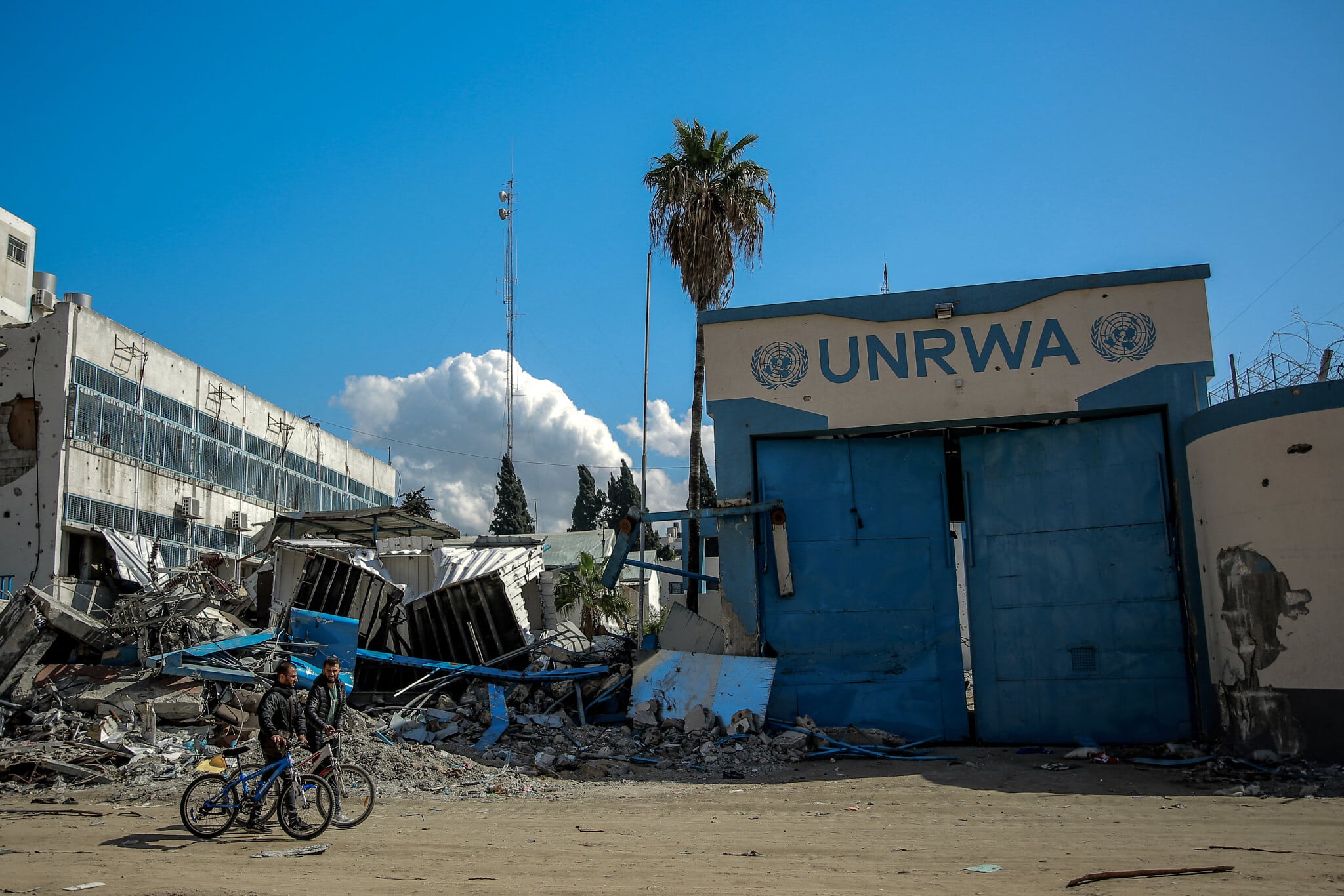
Two Palestinians walks with their bicycles past past the damaged Gaza City headquarters of the United Nations Relief and Works Agency for Palestine Refugees (UNRWA) on February 15, 2024 (AFP)
UN Secretary-General Antonio Guterres urges countries to cover a $100 million gap in funding for the UN Palestinian refugee agency UNRWA, saying the body is nearing a breaking point after deep cost-cutting and austerity measures.
Guterres tells an ad hoc meeting of the General Assembly on voluntary contributions that UNRWA’s situation is increasingly precarious given sweeping restrictions throughout Palestinian territory that impede its work and the large cash shortfall.
The United Nations agency operates in Gaza, the West Bank, Lebanon, Jordan and Syria, providing aid, schooling, healthcare, social services and shelter to 2.6 million Palestinians.
The US was UNRWA’s biggest donor, but cut funding in January 2024 after revelations that some of its members took part in the deadly October 7, 2023, attack by Hamas terrorists that triggered the war in Gaza. Sweden also cut its 2025 funding. Other big donors paused funding for UNRWA while the Hamas charges were investigated, but most have resumed their contributions.
Guterres says the agency’s liquidity crisis jeopardized its ability to meet its mandate, which was renewed by the General Assembly six months ago with overwhelming member support.
“They cannot keep going like this without urgent backing and financial support from member states,” Guterres says, noting that the agency had taken decisive steps to implement reforms and update its policy on outside and political activities following revelations of some of its staff’s ties to Hamas.
“UNRWA is a stabilizing force in an age of instability,” he says, rejecting what he calls continued efforts to undermine the agency through “disinformation, smear campaigns, legislative actions, operational restrictions, diplomatic roadblocks and more.”
Such actions threatened the well-being of millions of Palestinians as well as UNRWA staff, Guterres says, noting that 390 UNRWA staff had been killed in Gaza since October 2023.
The UN has said it fired nine UNRWA staff who may have been involved in the October 2023 attack, which killed about 1,200 Israelis and foreign nationals. A Hamas commander in Lebanon, killed in September by Israel, was also found to have had a UNRWA job. The UN has disputed links with Hamas and vowed to investigate all accusations.
UNRWA had reduced its service delivery hours by 20% this year, cutting salaries for local personnel and keeping 15% of international posts vacant, Guterres says, adding, “Any further cuts could push conditions past the breaking point.”
UN spokesman Stephane Dujarric says the agency faced an existential crisis. He says the results of the ad hoc meeting on voluntary contributions would be announced on Wednesday.
In 2025, UNRWA received about $887 million in pledges and $829 million in contributions, according to its website, accounting for just 27% of total funding needs of $3.3 billion.
Iran says it won’t meet with US envoys, clouding prospects for peace deal
Iran says that it would not meet with top US envoys who flew to the region following an outbreak of hostilities, clouding the prospects for a lasting peace between the two countries.
Iranian officials also say the two sides must still sort out the terms of a ceasefire they signed two weeks ago before they could tackle more difficult topics, such as possible limits to its nuclear program.
The developments indicate that the two sides are far apart on key pillars of the initial framework, which calls for Iran to lift its chokehold on the Strait of Hormuz in exchange for financial incentives and sets up 60 days of negotiations to work out a permanent peace deal.
US President Donald Trump’s son-in-law Jared Kushner and envoy Steve Witkoff arrived in Doha for what the White House described as “high-level” talks, but Iran and host Qatar said they would meet with mediators, rather than the Iranians themselves.
“No meeting at any level with the American side has been scheduled for the coming days,” Iranian Foreign Ministry spokesperson Esmaeil Baghaei says.
The two countries were due to commence lower-level technical talks.
Shipping has partially resumed through the strait, which handled one-fifth of global oil and liquefied natural gas before the war broke out on February 28.
But Iranian officials have insisted on their right to manage traffic along with US ally Oman, which lies on the other side of the strategic waterway. Iranian officials said they would impose tolls in mid-August, when the 60-day period expires.
“The sovereignty of the Strait of Hormuz lies with Iran and Oman, and traffic in the Strait is subject to arrangements determined by Iran,” Iran’s top negotiator, Mohammed Baqer Qalibaf, says on state TV.
Despite the uncertainty, oil prices have fallen since the weekend, when the US bombed Iranian military facilities in response to drone strikes on commercial ships and Iran attacked US military sites in Kuwait and Bahrain.
Vulnerable economies, however, could remain at risk from food and fuel price increases even after energy markets feel relief, the UN trade and development agency says.
Upstate New York woman arrested for funding Palestinian Islamic Jihad
US federal authorities arrest a woman from Upstate New York for allegedly sending funds to Palestinian Islamic Jihad.
Catherine Beth Washburn, 37, from the Rochester area, is charged with attempting to provide material support and resources to a designated foreign terrorist organization, the US Department of Justice says in a statement.
Washburn is a leader of the Direct Action Movement for Palestinian Liberation, a group that rejects peaceful protests and instead favors “direct action,” such as acts of sabotage, to support Palestinians, the statement says.
The FBI’s Joint Terrorism Task Force executed search warrants on Washburn’s electronic devices earlier this year.
The investigators allegedly recovered messages between Washburn and a Palestinian Islamic Jihad fighter in Gaza who claimed he had attacked Israel.
Washburn’s messages included, “I wish every day were October 7th,” that she hated Jews “very much,” that she wished Israel “would disappear,” and that if she lived in Gaza, she “would fight alongside the resistance.”
“I feel very excited every time I see news of the killing of an occupation soldier,” she said, according to the Department of Justice.
Financial records showed that Washburn had sent 80 transfers of cryptocurrency to the individual, amounting to $30,116.
She faces a maximum penalty of 20 years in prison and a $250,000 fine.
Three murdered in different instances this morning, including Netanya rabbi
Three people were murdered in separate instances within a short time of each other this morning.
A well-known Netanya rabbi in his 70s was stabbed to death in a yeshiva in the city. Police believe an argument between the rabbi and the suspect, for whom a search is underway, devolved into a deadly attack on the former. Paramedics who arrived on the scene rushed the rabbi to hospital but he succumbed to his injuries.
In Shfaram, in northern Israel, a man aged around 24 was shot dead.
In Yagur, near Haifa, a man in his 20s was shot dead in a parking lot near a shopping center.
Police are investigating the killings.
Israel has been beset by a wave of murders and gangland killings that shows no sign of abating.
Trump has weighed return to full war in Iran, but prefers diplomatic push — report
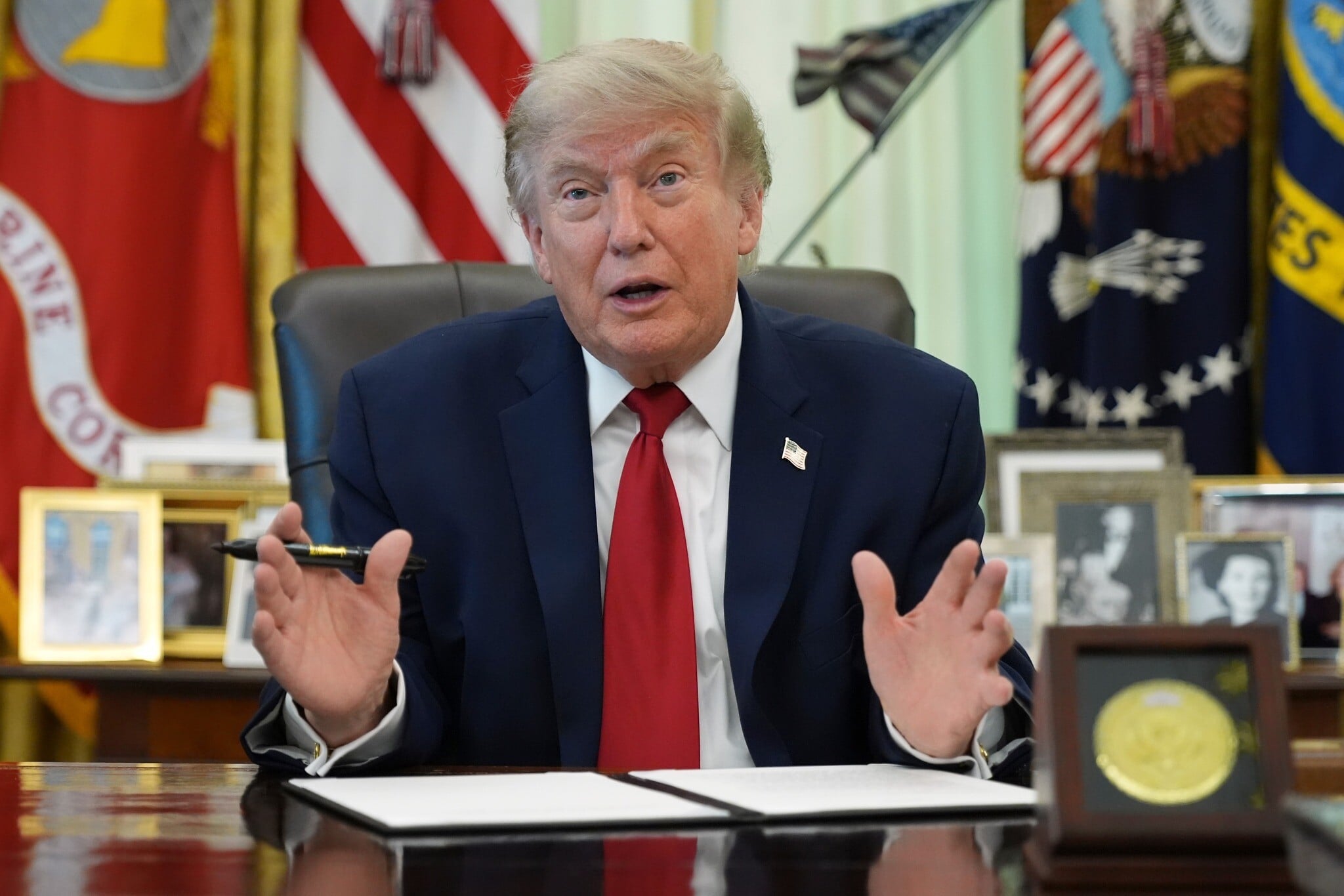
US President Donald Trump speaks in the Oval Office of the White House, Monday, June 29, 2026, in Washington. (AP Photo/Jacquelyn Martin)
US President Donald Trump has in recent days considered options for a return to full-scale war in Iran, but has not decided to move forward on the matter at this time, The Wall Street Journal reports.
According to the paper, Trump was briefed on various military options to “finish the job” by top defense officials, but has said he fears a renewed military conflict could harm the prospects of an eventual diplomatic solution and of dismantling the Islamic Republic’s nuclear program.
The paper also says the American leader indicated a willingness to let the indirect negotiations in Qatar extend past the 60-day deadline on August 18.
It also says he is content with continuing to carry out limited strikes on Iranian targets if Tehran breaches the terms of the temporary deal currently in place, as has repeatedly taken place recently.
Iran yesterday said it would not meet with top US envoys who flew to the region, clouding the prospects for a deal. Iranian officials also said the two sides must still sort out the terms of a ceasefire they signed two weeks ago before they could tackle more difficult topics, such as possible limits to its nuclear program.
The developments indicated the two sides are far apart on key pillars of the initial framework, which calls for Iran to lift its chokehold on the Strait of Hormuz in exchange for financial incentives, and sets up 60 days of negotiations to work out a permanent peace deal.
Shipping has partially resumed through the strait, which handled one-fifth of global oil and liquefied natural gas before the war broke out on February 28.
But Iranian officials say they have a right to manage traffic along with US ally Oman, which lies on the other side of the strategic waterway, and will impose tolls in mid-August when the 60-day period expires.
“The sovereignty of the Strait of Hormuz lies with Iran and Oman, and traffic in the Strait is subject to arrangements determined by Iran,” Iran’s top negotiator, Mohammed Baqer Qalibaf, said on state TV.
US Vice President JD Vance said Iran would be prevented from charging tolls through the international waterway, telling The Michael Knowles Show, “This is not going to end in a place where the Iranians are collecting tolls on ships going through the Strait of Hormuz.”
IDF says 4 Hamas operatives planning attacks killed in Gaza strikes
Four Hamas operatives whom the military says were advancing attacks on troops were killed in strikes in the Gaza Strip in the past week.
The military identifies the operatives as Wael Mahmoud Ali Labad and Muaz Mohammad Hassan Ahmad, both anti-tank operatives; Sameh Abu Kamil, a platoon commander; and Akram Ashraf Hamad Labad, a sniper operative.
Additionally, several rocket-launching tunnel shafts were destroyed in strikes on Monday, the IDF adds.
The military publishes footage showing some of the strikes.
במספר תקיפות להסרת איום: צה"ל חיסל ארבעה מחבלים והשמיד פירי שיגור של ארגון הטרור חמאס
צה"ל תקף במהלך השבוע האחרון בצפון רצועת עזה, וחיסל ארבעה מחבלים מהזרוע הצבאית של ארגון הטרור חמאס שקידמו מתווי טרור נגד כוחות צה"ל הפועלים ברצועת עזה.
המחבלים שחוסלו:
* ואיל מחמוד עלי לבד -… pic.twitter.com/aw7GA2pCAW— צבא ההגנה לישראל (@idfonline) July 1, 2026
Democratic socialist who refused to call Boulder firebombing antisemitic wins Colorado primary

Democratic congressional candidate Melat Kiros speaks after winning the Democratic nomination during a primary election night watch party at The Broadway, Tuesday, June 30, 2026, in Denver. (AP Photo/Rebecca Slezak)
Democratic socialist Melat Kiros beat US Rep. Diana DeGette in a Colorado House primary Tuesday, a stunning victory for the first-time candidate against a nearly 30-year incumbent and another win for progressive challengers across the country.
She is set to join a growing class of democratic socialists and staunch Israel critics headed to Congress.
The race between Kiros and DeGette, in a district that covers nearly all of Denver, came one week after a slate of progressives won their Democratic primaries in New York City, energizing left-wing advocates who are looking for additional victories around the country.
A number of Jewish leaders and groups in Colorado voiced concerns about Kiros, who drew criticism after calling Hamas’s Oct. 7 attack “inevitable” and declining to refer to the Boulder firebombing as antisemitic.
Kiros made her sharp criticism of Israel and its relationship with the United States a central part of her campaign. Her platform includes a complete arms embargo on Israel and ending military subsidies to the Jewish state.
“We will not wait to put an end to the politics of the past, to get big money out of our politics, and to reject corporate PACs and AIPAC,” Kiros said to loud cheers during her victory speech.
The democratic socialist also said she would “not wait” to take the fight to Donald Trump and abolish ICE. “And no, we will not wait to end the genocide in Palestine,” Kiros said.
The Institute for Middle East Understanding Policy Project, a pro-Palestinian advocacy group, wrote in a statement that Kiros’s ascension to Congress “in large part due to her stand for Palestinian rights is proof positive of how much the country has has transformed over the last two years.”
Suspect arrested in lethal stabbing of Netanya’s Rabbi Amos Guetta
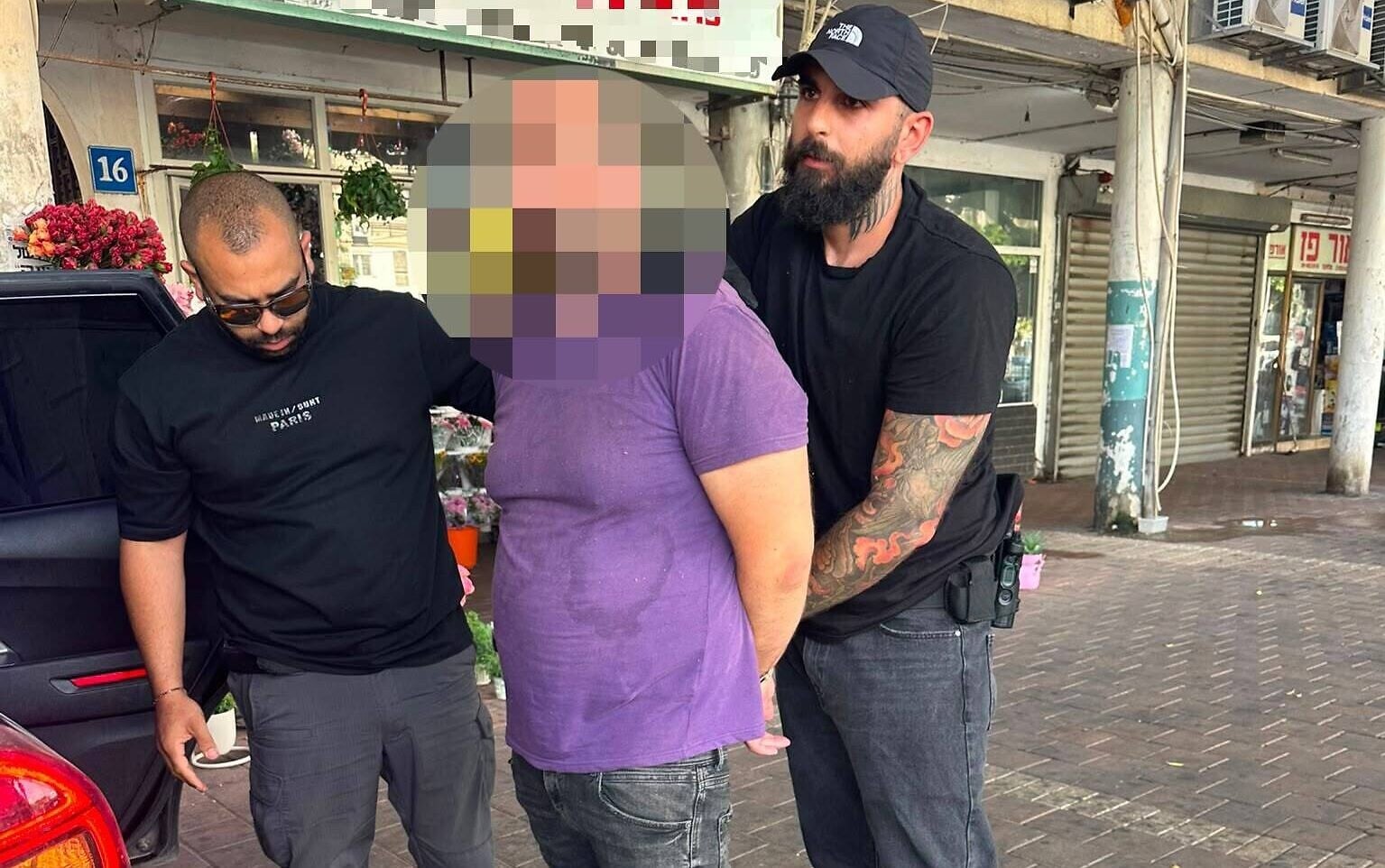
Police arrest a man on suspicion of fatally stabbing Rabbi Amos Guetta in Netanya on July 1, 2026. (Israel Police)
Police have arrested a suspect in the lethal stabbing of a well-known rabbi in Netanya, one of three people killed within a short time early this morning.
The rabbi, 75-year-old Amos Guetta, was found by medics in critical condition at his yeshiva at around 5:40 a.m. He was rushed to the hospital, where he succumbed to his wounds.
After receiving a report of the stabbing, officers launched a manhunt for the suspect and located him in downtown Netanya a short time ago. Police say the suspect, a man in his 20s, studied under the rabbi.
Police believe the suspect came to visit his former teacher this morning, stabbed him several times and then fled the scene. The investigation into the murder is ongoing.
Police are currently preparing for Guetta’s funeral. It is expected to draw thousands of mourners to Netanya today.
Oct. 7 families’ movement plans ‘largest-ever’ memorial ceremony this year

The crowd at Israel's national October 7 memorial ceremony in Tel Aviv's Yarkon Park, October 7, 2025. (Marva Sharon/Pro-Democracy Protest Movement)
A movement of Oct.7 survivors and families has announced it will once again hold a major memorial ceremony in Tel Aviv’s Yarkon Park on this year’s anniversary of the attack, planning for it to be the biggest one yet.
Kumu (“Rise Up”) is asking for public support of its crowdfunding campaign.
“Three years after the failure and the disaster, with hearts that still ache, countless questions still awaiting answers, and a memory that must continue to resonate, we are once again taking our stand to present the failure as it unfolded, to give voice to the families, the murdered, the wounded, the survivors of captivity, and the communities that were destroyed — to remember, and to offer hope,” it says.
Some 30,000 people attended last year’s event.
Organizer Yonatan Shamriz, the brother of slain hostage Alon Shamriz, says the group wants to hold “the largest memorial event in the history of the country.”
The event can be supported here.
Political activist Yaya Fink tears down sign calling for release of Yigal Amir, clashes with supporter of assassin
In a video, political activist Yaya Fink is seen clashing with a far-right supporter of Yigal Amir, the assassin of late prime minister Yitzhak Rabin, and removing a sign the man hung over the Hemed Interchange near Jerusalem calling for Amir’s release from prison.
“Shame on you!” he repeatedly tells the man and a woman helping him as he tussles with them and tears down the sign.
יאיא פינק התעמת פיזית עם תולה השלט ׳משחררים את יגאל עמיר׳ במחלף עין חמד, קרע אותו ותלה במקום: ״לא נשכח ולא נסלח 4.11.95״.
בתגובה פעיל עם חולצת ״לשחרר את יגאל עמיר״ תקף את פינק.הרקע לתליית השלט דווקא היום- לא ברור pic.twitter.com/bxqWnGLE0Z
— דורון בלוך (@doronbloch) June 30, 2026
Fink, who is running for a spot on The Democrats party’s slate for the Knesset, later says in a statement: “I arrived at the Hemed Interchange and tore down the signs calling for the release of Yigal Amir. A few scratches and being grabbed by Yigal Amir activists won’t deter me.”
He asserts that if the right wins the coming election, “Yigal Amir will be released. Don’t say it’s impossible. They’ll stop at nothing.”
Katz sanctions dozens of IRGC cryptocurrency wallets meant to fund terror
Defense Minister Israel Katz says he has signed off on “sanctions” against dozens of cryptocurrency wallets belonging to Iran’s Islamic Revolutionary Guard Corps, worth NIS 24 million ($8 million), that were intended to fund Hezbollah and other proxy groups.
The Defense Ministry’s National Bureau for Counter Terror Financing (NBCTF) has in the past confiscated crypto wallets that Israel says were used to fund terror. It is unclear if the sanctions announced today against the 37 IRGC wallets mean that they were seized.
In a statement, Katz’s office says that an investigation by the NBCTF and other intelligence bodies found that the wallets were used to “transfer funds to Iranian-backed terror organizations, primarily Hezbollah, which requires funding sources following the severe damage it sustained during the fighting against Israel.”
An analysis found that “tens of millions of dollars were transferred” through the wallets to various terror groups over the years, the statement adds.
Cryptocurrencies ostensibly provide a high level of anonymity, making them particularly attractive for financing criminal activity or terrorism.
Suspect tries to stab officer in Lod, is shot by police
Police shot at and “neutralized” a suspect who tried to stab an officer in Lod during an operation in the city, law enforcement says.
According to police, officers on patrol noticed a suspect with a knife in his hand and called on him to stop. Instead, the suspect ran toward police and tried to stab one of the officers.
“The officer shot at the assailant and neutralized him,” police say, without elaborating on the suspect’s condition.
No police officers were injured in the incident.
Large police forces are currently operating in the area and the circumstances of the incident are under investigation, police say. Central District police commander Amir Cohen is making his way to the scene.
98-year-old Jewish American claims ownership of Van Gogh painting in Musée d’Orsay, saying it was wrested from his grandfather by Nazis

Vincent van Gogh's Hôpital Saint-Paul à Saint-Rémy-de-Provence (1889)
A 98-year-old Jewish American is fighting for the return of a Vincent van Gogh painting which he argues was forced from his grandfather, who owned it before the rise of the Nazis in Germany.
The painting, Hôpital Saint-Paul à Saint-Rémy-de-Provence (1889), shows a man (Van Gogh’s doctor) standing outside an asylum where the artist was treated. It is currently at the Musée d’Orsay in Paris.
Klaus Kallmann alleges it was taken from his grandfather Felix Kallmann, a German Jewish industrialist and collector from Berlin.
According to records, Kallmann tried to sell the painting in 1932. Its trail disappears soon afterward, before the painting’s reappearance in 1934 at a well-known dealer’s gallery. It then changed ownership many times over the decades, before finally arriving at the museum.
French investigators say the family likely suffered persecution under the Nazis, but cannot say whether the painting was sold under coercion. Researchers have found no clear evidence of a forced sale.
The case hinges on whether a sale by a Jewish collector in early Nazi Germany should automatically be seen as involuntary. The issue is now under review by France’s Commission for the Compensation of Victims of Spoliation.
Former hostage pointman disputes Smotrich, says war could have ended ‘at least a year earlier’

FILE: Nitzan Alon attends the Herzliya Conference at the Reichman University in Herzliya, July 1, 2026. (Avshalom Sassoni/Flash90)
Former hostage pointman Maj. Gen. (res.) Nitzan Alon hits back at Finance Minister Bezalel Smotrich, who claimed credit this week for the return of all the hostages held by terror groups in the Gaza Strip, saying that the war could have ended “at least a year earlier.”
Smotrich had voted repeatedly throughout the two-year war in the Strip against deals that would have seen the hostages released earlier.
“In Gaza, we fought a long war that could have been ended at least a year earlier. When talking about the return of all the hostages, it should be remembered that around 40 hostages who were abducted alive were killed in captivity, and I do not forget that. In certain cases, with different conduct and decisions, or different negotiations, we might have been able to bring them back alive,” Alon says at the Herzliya Conference at Reichman University.
“Therefore, Minister Smotrich, who opposed some of the agreements at various stages, I do not think can take credit for the return of all the hostages,” he says.
“The cabinet and the political leadership refused earlier comprehensive deals in the name of that ‘total victory,’ which is in fact a falsehood,” Alon adds, referring to a slogan repeated by Prime Minister Benjamin Netanyahu and other coalition members during the war.
Defense Ministry chief says Israel’s long-term force buildup ‘dangerously behind schedule’
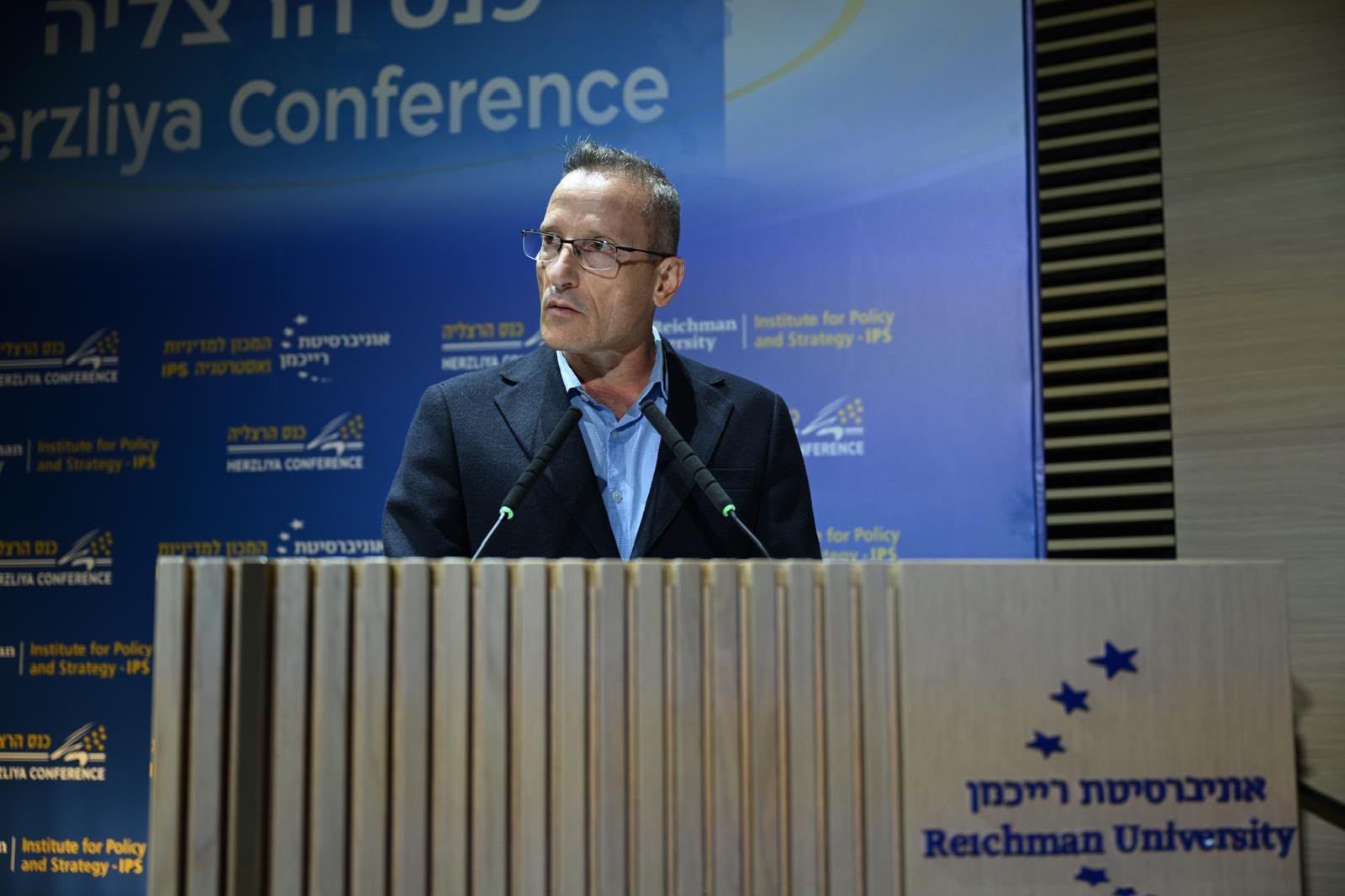
Defense Ministry Director General Amir Baram speaks at a conference at Reichman University in Herzliya, July 1, 2026. (Defense Ministry)
Defense Ministry Director General Amir Baram says “Israel’s long-term force buildup is dangerously behind schedule.”
“If we continue to conduct ourselves this way as a country, the risk to Israel’s adequately adapted security preparedness will become extremely great,” he warns at the Herzliya Conference at Reichman University.
On the subject of Israel’s missile interceptor stockpile, Baram says that “thanks to emergency measures we took in real time, Israel today has a stockpile of Arrow, David’s Sling, and Iron Dome interceptors that continues to grow even amid fighting, but the work is not yet done.”
US, Iran officials to hold indirect talks in Doha today — diplomat
US and Iranian officials will hold indirect lower-level technical talks with mediators today on a deal aimed at permanently ending the war, a diplomat with knowledge of the talks says.
“US and Iranian officials are to hold indirect technical talks on Wednesday in Doha with Qatari and Pakistani mediators on the memorandum of understanding and building on the progress made at the Lake Lucerne Summit,” the diplomat says.
US envoys Jared Kushner and Steve Witkoff will not be taking part in the technical talks, the diplomat adds, after they met with Qatar’s Prime Minister Sheikh Mohammed bin Abdulrahman Al Thani yesterday.
Iran’s state media says container ship ran aground after sailing non-designated Hormuz route
Iran’s state media says a foreign container ship ran aground in the Strait of Hormuz after entering shallow waters outside the shipping route designated by Iranian authorities.
State media reiterates the Revolutionary Guards’ warning that vessels should transit only through the corridor south of Iran’s Larak island, which Tehran says is the sole approved entry and exit route for ships passing through the strait.
IDF probing photo that shows Palestinian man blindfolded, tied to bed
The military says it is investigating a photo, allegedly taken by a soldier, purporting to show a Palestinian man blindfolded and bound to a folding bed used by the army.
“After a comprehensive review was conducted, the source of the footage has still not been identified. The review is ongoing,” the IDF says in response to a query by The Times of Israel on the picture, which was circulated online by anti-Israel accounts.
“The footage, if authentic, does not align with the IDF’s values and orders. If it is found to be authentic, the matter will be handled accordingly,” the military adds.
Contrary to claims made by the anti-Israel accounts, a military source says the photo was not taken during operations of the Kfir Brigade’s Netzah Yehuda Battalion in the northern Gaza Strip, though the investigation is still ongoing.
This is so dehumanizing and terrorizing.
An israeli terr*rist battalion named “Netzah Yehuda Battalion” has just posted this photo of a Palestinian they took hostage recently in Gaza. pic.twitter.com/3kRvknepk5— Mosab Abu Toha (@MosabAbuToha) June 30, 2026
Knesset legal adviser recommends dissolving Knesset on July 17 ahead of elections
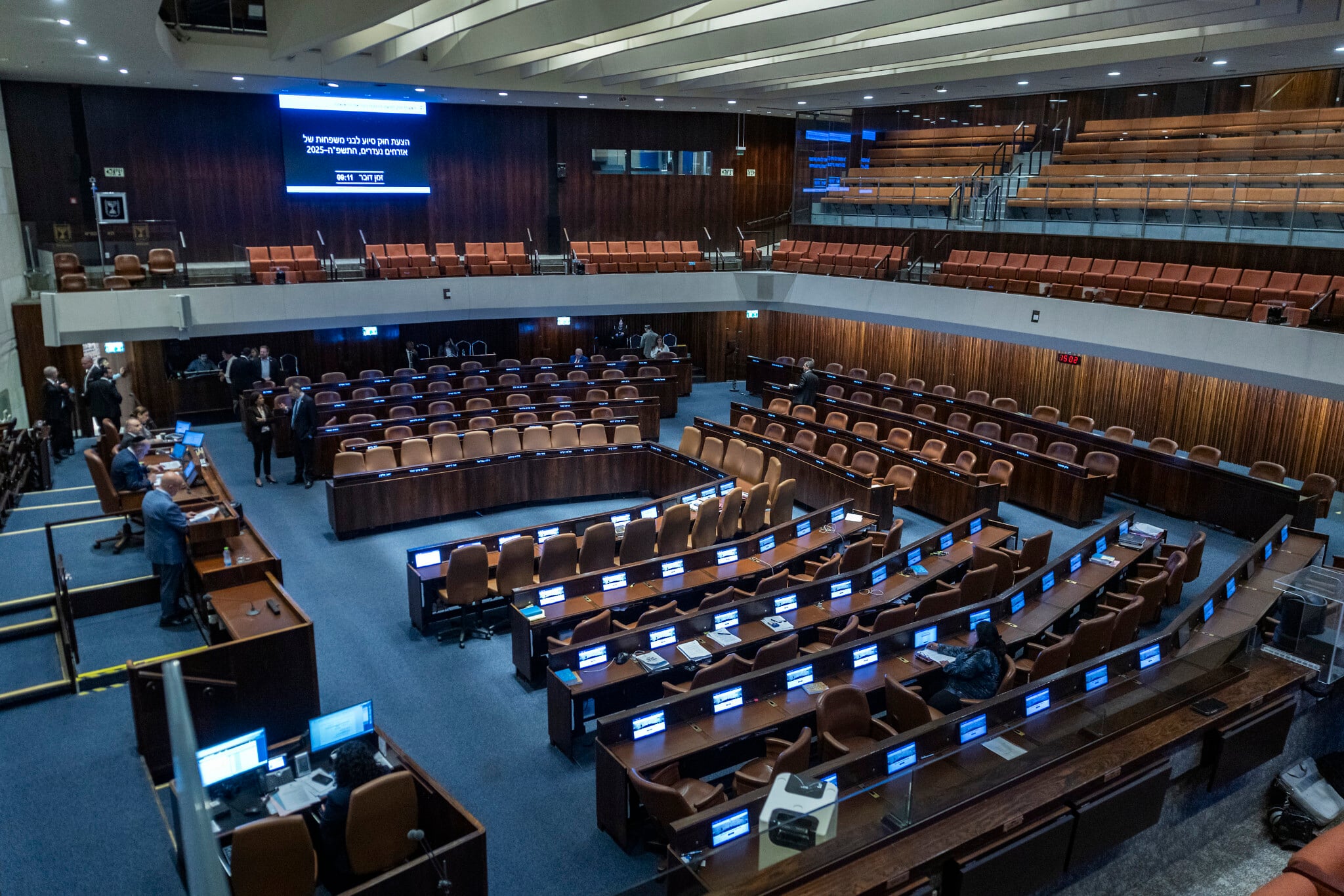
A plenum session at the Knesset in Jerusalem, April 27, 2026. (Chaim Goldberg/Flash90)
Knesset Legal Adviser Sagit Afik recommends that the Knesset be dissolved on July 17, 101 days before the election, which must be held by October 27.
Under that timetable, July 16, a Thursday, would be the final day of the Knesset’s current term before entering its pre-election recess.
Speaking during a House Committee meeting, Afik notes that the law requires the Knesset to dissolve between 90 and 150 days before an election and that “in the unique circumstances of this Knesset, the appropriate date for its dissolution is July 17.”
Because the high holidays fall within the statutory election period, the Knesset would need to dissolve slightly earlier than the minimum 90-day threshold to allow elections to be held by the legal deadline.
Afik says that dissolving the Knesset on July 17 would “create legislative transparency” and provide stability for the Knesset Legal Department as regular legislative work gives way to the restrictions governing the election period, thereby avoiding “unnecessary disputes” over when those limitations take effect.
Hebrew media reported earlier this week that Knesset Speaker Amir Ohana, of Likud, had told coalition lawmakers the Knesset was expected to dissolve on that date.
The Knesset last month approved in a preliminary reading a coalition-backed bill to dissolve itself and potentially trigger early elections after the ultra-Orthodox parties threatened to bring down the government over its failure to advance legislation preserving military exemptions for yeshiva students.
The bill has since stalled as the coalition instead began advancing the Haredi-backed legislation at the heart of the dispute, including a proposed Basic Law on Torah study intended to shield draft evaders from sanctions.
Energy Ministry proposal seeks to streamline rooftop solar panel installation
As part of its aim to have 100,000 solar roofs by 2030, the Energy Ministry publishes for public comment a proposal that would cut costs and shorten the time it takes for rooftop solar panel installation, from up to six months to 30 days.
According to a ministry review, establishing a home solar system involves 22 to 26 stages today, and the involvement of over 10 professional and regulatory factors.
Although the physical installation takes up to four days only, households must wait months due to licensing procedures, inspections, coordination, and connection to the electricity grid.
The connection stage alone can take up to three months, even when the system is already installed and ready for operation.
Furthermore, double inspections by building engineers and electricians add thousands of shekels to the cost, without a significant safety addition.
Regulatory costs can reach up to NIS 23,000 ($7,740) per system, with almost 40% of the project cost attributed to labor, planning, inspection, and regulation.
EU agency warns airlines should still avoid airspace over Iran
Airlines should continue to avoid the airspace over Iran, Iraq and Lebanon and remain cautious across the region due to uncertainty surrounding the sustainability of a ceasefire and possibility of rapid escalation, the EU aviation safety agency EASA says.
EASA says it is extending its conflict-zone advisory for the region until July 8, after previously extending it to July 1.
High Court freezes appointment of Michael Rabello as state comptroller over vote concerns
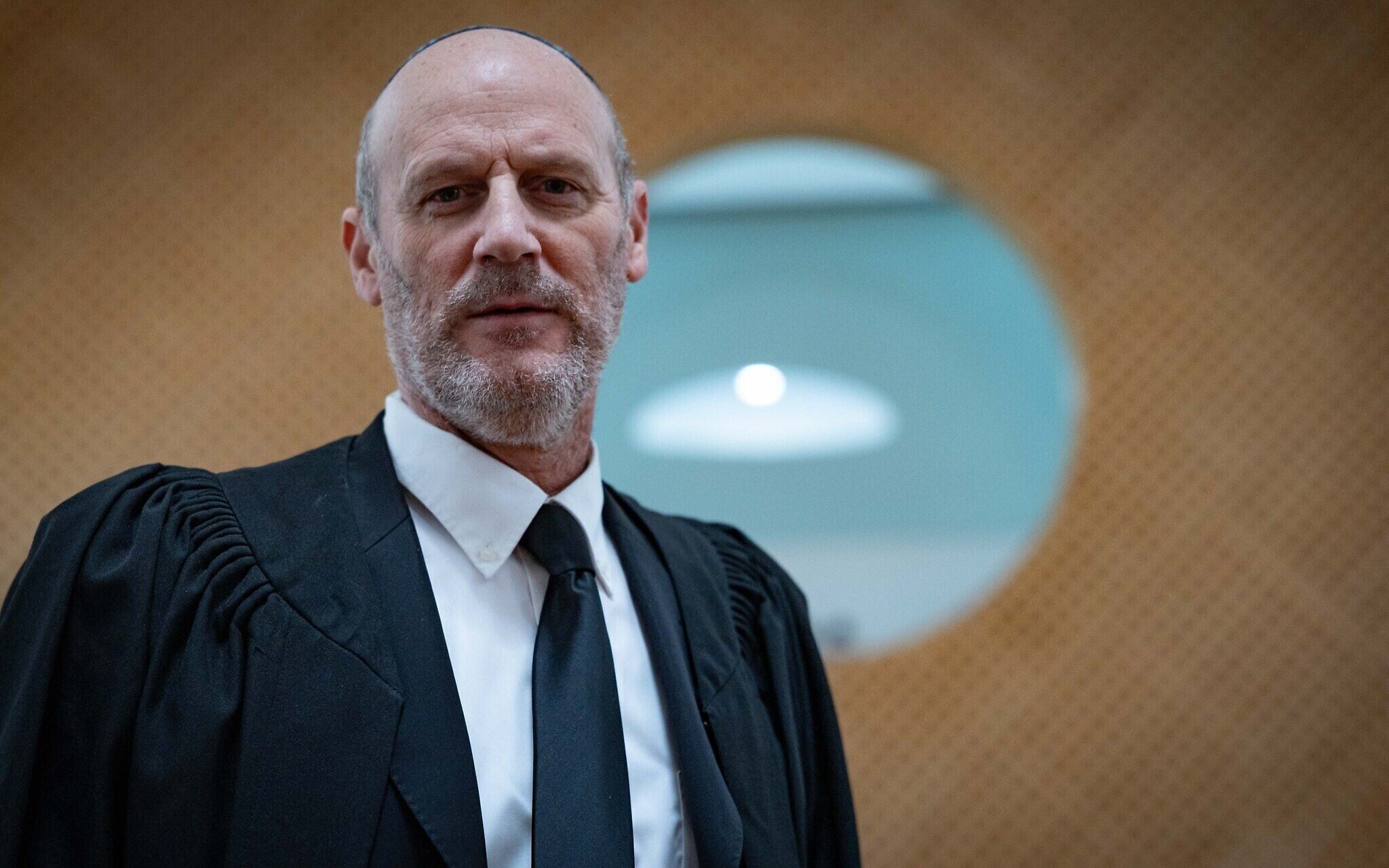
Attorney Michael Rabello is seen before a court hearing on the dismissal of National Security Minister Itamar Ben Gvir at the Supreme Court in Jerusalem, April 15, 2026. (Yonatan Sindel/Flash90)
The High Court of Justice issues an interim order freezing the entry of Michael Rabello into the position of state comptroller until it can issue a final decision on petitions against his appointment.
The court is currently considering petitions asking that it annul the controversial June 3 Knesset vote in which Rabello was elected as state comptroller, after several Likud MKs photographed or videoed themselves voting for Rabello, reportedly on the instructions of senior Likud officials.
In a recent hearing by the court, the justices appeared highly critical of the way the vote was conducted, suggesting that the law requiring that the election be conducted by secret ballot was violated, and indicated they would intervene in the matter — likely by declaring the vote void and ordering the Knesset to hold it again.
Outgoing State Comptroller Matanyahu Englman was scheduled to leave office on July 3, and Rabello was expected to take up his position on July 4. The court says it needs more time to write its ruling and therefore freezes Rabello’s entry into the position until it can issue its decision. The court says it will issue the ruling as quickly as possible.
The court had previously urged the Knesset to redo the vote but Knesset Speaker Amir Ohana refused.
Coalition pulls Torah study Basic Law from Knesset agenda at last minute
A proposed Basic Law declaring Torah study a foundational value of the State of Israel, widely viewed as part of the ultra-Orthodox parties’ effort to preserve broad exemptions from military service for yeshiva students, has been pulled at the last minute from today’s Knesset’s agenda after initially being scheduled for its first plenum reading.
While no explanation has been given for the bill’s removal from the agenda, the move comes amid significant internal coalition opposition, including from lawmakers in Prime Minister Benjamin Netanyahu’s Likud and Finance Minister Bezalel Smotrich’s Religious Zionism party, raising the possibility that the coalition lacks the votes needed to advance the measure.
The bill, which must pass two more votes in the Knesset before passing into law, was rushed through the Knesset House Committee this week in three marathon sessions, despite sharp objections from legal authorities that both the substance of the legislation and the legislative process were deeply flawed. The coalition has been seeking to pass the bill into law before the Knesset is expected to dissolve and enter its pre-election recess on July 17.
The Knesset’s legal advisers and the Attorney General’s Office have argued that the legislation raises fundamental constitutional questions that remain unresolved, including its purpose and legal implications, warning that it should not advance before those issues are addressed.
They also criticized the decision to prepare a Basic Law in the House Committee rather than the Constitution, Law and Justice Committee, where such legislation would typically be discussed, calling the accelerated process inappropriate. Absent a constitution, Basic Laws in Israel have the highest legal status in the country.
The proposal has drawn fierce opposition, with critics arguing that the measure is a transparent attempt to circumvent High Court rulings requiring the enlistment of ultra-Orthodox yeshiva students by constitutionally entrenching Torah study to shield draft evaders from sanctions and prosecution.
Syrian president names final members of first post-Assad parliament
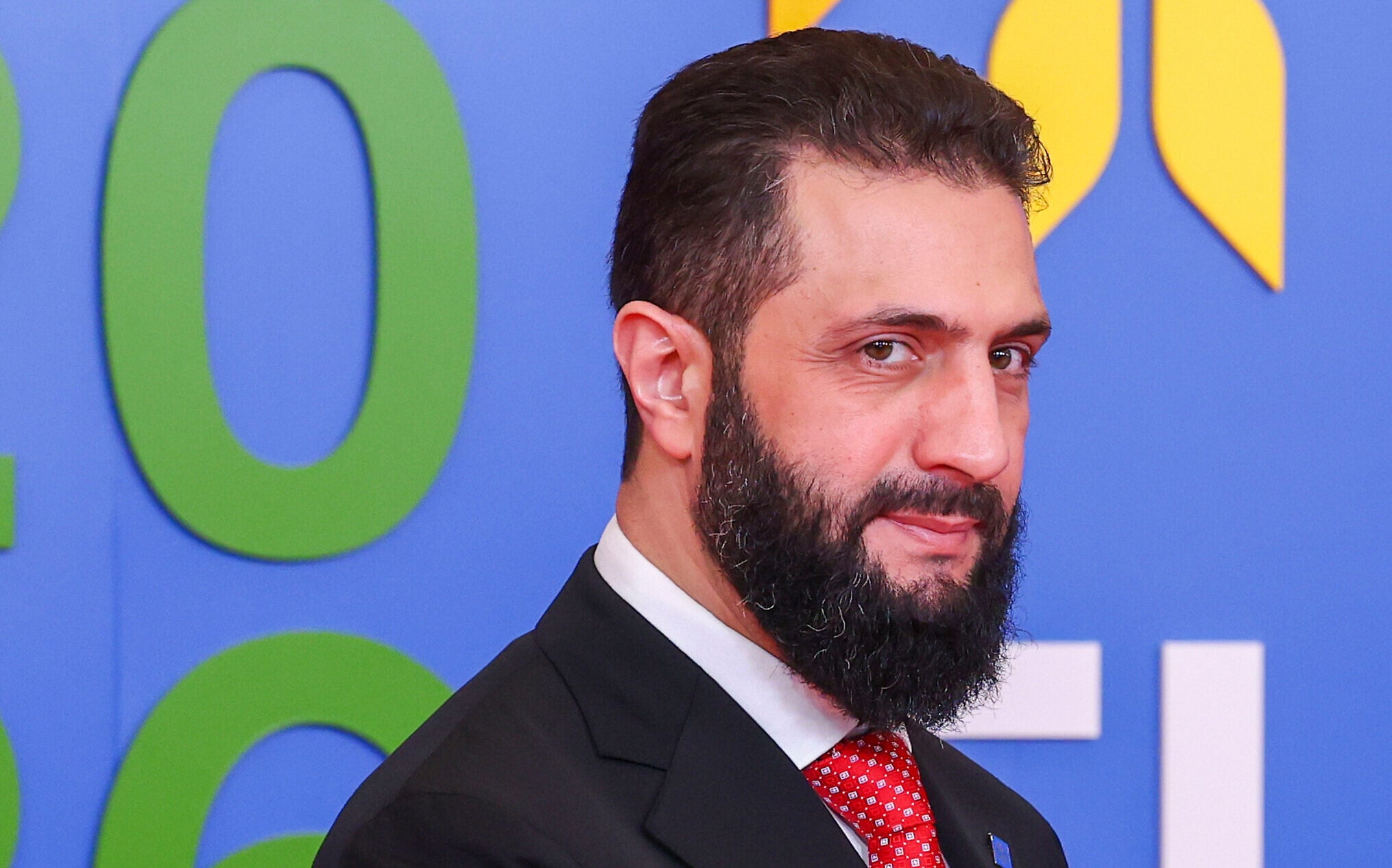
Syria's President Ahmed al-Sharaa arrives for the EU Summit in Nicosia, Cyprus, April 24, 2026. (Yves Herman, Pool Photo via AP)
Syrian President Ahmed al-Sharaa finalizes the formation of the country’s first parliament in the post-Assad era, which authorities say will hold its first session on July 6.
Of the last 70 lawmakers appointed, 15 are women and 13 were previously held in prison under toppled president Bashar al-Assad. The other members, comprising two-thirds of the legislature, were selected by electoral committees.
Unchecked AI progress may pose catastrophic risks, UN panel warns
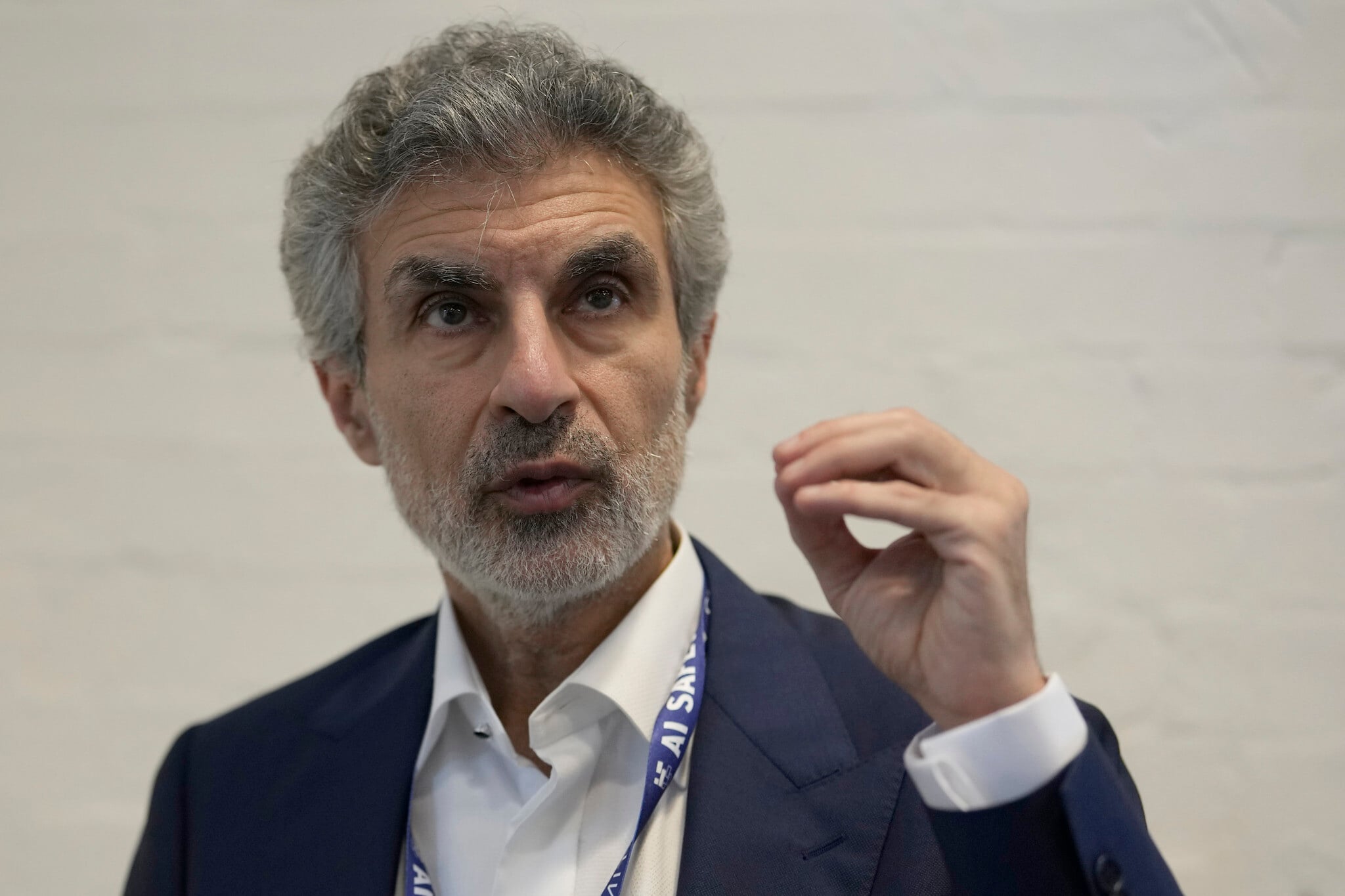
File: Yoshua Bengio, Scientific Director Mila Quebec AI Institute, speaks to the Associated Press during the AI Safety Summit in Bletchley Park, Milton Keynes, England, Wednesday, Nov. 1, 2023. (AP Photo/Alastair Grant, File)
Developments in artificial intelligence are outpacing scientific understanding and government policy, meaning there are no guarantees the technology will not cause catastrophic harm, a United Nations independent panel warns.
A preliminary report by the UN’s Independent International Scientific Panel on Artificial Intelligence says policymakers face a growing dilemma: they need robust evidence to regulate AI effectively, yet such evidence is struggling to keep pace with the technology’s rapid evolution.
“AI capabilities are outpacing both scientific understanding and governments’ ability to adapt,” says Yoshua Bengio, co-chair of the panel, composed of 40 cross-regional experts.
“With growing evidence of deceptive AI behavior, science currently cannot guarantee that as capabilities continue to increase, AI will not cause catastrophic harm, either on its own or due to malicious users.”
Described as the first global independent assessment of AI’s risks and opportunities, the report aims to give up-to-date evaluations of the science to help guide decision-making as governments contend with fast-evolving systems.
Bennett says his government will lead plan for ‘the overthrow of the Iranian regime’

Former prime minister Naftali Bennett at the Herzliya Conference at Reichman University in Herzliya, July 1, 2026 (Avshalom Sassoni/Flash90)
Former prime minister Naftali Bennett, head of the Together party, tells the Herzliya Conference that “after a thousand days of war, the truth must be told: Hamas is rearming in the south, Hezbollah is growing stronger –attacking our soldiers and threatening our citizens — and the head of the octopus, the regime in Tehran, remains standing.”
He vows that under his leadership, following the next election, “the strategic goal of the State of Israel will be the overthrow of the Iranian regime — before Iran acquires a nuclear weapon.”
“To achieve this, bombs are not enough,” he says. “We will initiate a comprehensive campaign that will deepen the weaknesses of the Iranian economy. We will develop cyber systems that will disrupt the regime’s ability to oppress its own citizens — who are mostly good, freedom-loving people. We will strengthen the large minority groups within Iran that are being crushed by the government. We will expose the corruption of the ayatollah regime.”
Likud MK calls to ignore High Court ruling freezing appointment of state comptroller
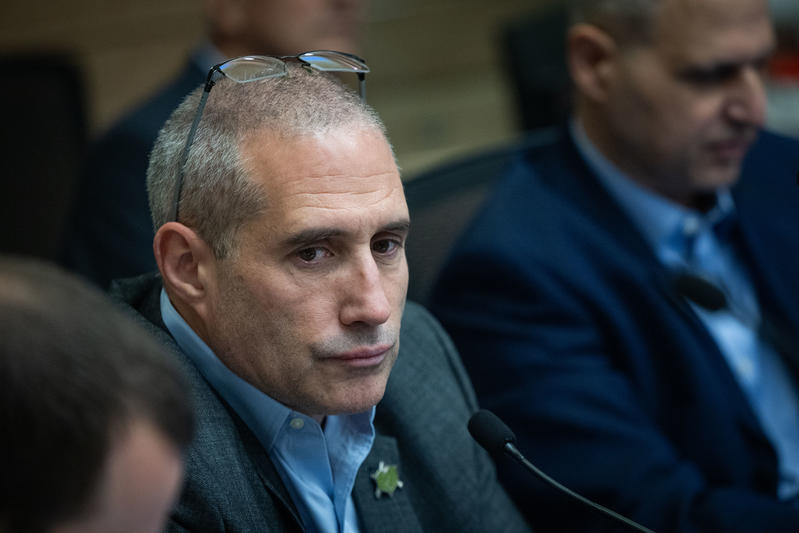
Finance Committee chair MK Hanoch Milwidsky leads a Knesset Finance Committee meeting, January 5, 2026. (Yonatan Sindel/Flash90)
Likud MK Hanoch Milwidsky calls to ignore the High Court’s ruling freezing the appointment of attorney Michael Rabello as state comptroller.
“The illegal decision of the High Court of Justice must be ignored,” he writes on X. “As I have been saying for a while now, it is a mistake to continue participating in the theater of the absurd of [Supreme Court President] Isaac Amit and his mutinous colleagues. If we want governance, the time has come to act.”
Opposition Leader Yair Lapid welcomes the court’s ruling, saying: “These elections were contaminated. Netanyahu’s private lawyer will not be able to be appointed to the position.”
Opposition MKs protest Knesset debate on bill to expand gender segregation in academia
Opposition lawmakers stage a mock gender segregation protest in the Knesset Education Committee as it debates a coalition-backed amendment to the Student Rights Law to increase gender-segregated academic tracks in mixed universities and colleges.
The amendment originally sought to allow mixed institutions to offer gender-segregated master’s and doctoral programs for religious students, with segregation limited to classrooms, and participation voluntary. Supporters have argued that it would make higher education more accessible to religious women who would otherwise be unwilling to pursue advanced degrees.
Committee deliberations have since expanded the measure to undergraduate programs, and beyond classrooms to other areas of campus.
In protest, female opposition MKs Naama Lazimi of The Democrats and Yesh Atid lawmakers Adi Ezuz and Yasmin Fridman place “Men” and “Women” signs around the committee room.
“If you’re going to segregate academia, why not segregate the Knesset?” the lawmakers argue, sarcastically calling for the committee itself to be segregated.
"מלידה ועד תארים מתקדמים יש פה תפיסה כוללת שנשים זה דבר טמא" – ח"כ נעמה לזימי מותחת ביקורת על הצ"ח לקיום מסלולים נפרדים באקדמיה, ח"כ לימור סון הר מלך מגיבה: "את שונאת נשים דתיות"
????️מתוך הדיון בוועדת החינוך בנושא מסלולי לימוד נפרדים בתארים מתקדמים@naamalazimi @limor_sonhrmelh… https://t.co/XxhODWjaNq pic.twitter.com/8fKVJLdCsr
— ערוץ כנסת 99 (@KnessetT) July 1, 2026
Otzma Yehudit MK Limor Son Har-Melech, one of the bill’s chief backers, accuses Lazimi — an observant Jew who comes from a Masorti background — of “hating religious women.”
Lazimi rejects the claims and attempts to respond, but acting committee chair Shas MK Yossi Taieb ejects her from the meeting.
Following the incident, Lazimi says supporters of the bill seek to create “a reality in which a woman is born believing she is impure and should not be seen in public spaces, even in higher education, while a man grows up viewing women as something forbidden, that must be kept away from the moment he enters the world until he earns a doctorate. This is not normal.”
The legislation has drawn fierce opposition from lawmakers and legal officials. Opposition MKs have warned it could lead to broader gender segregation, asking, “What’s next? Separate sidewalks?” They submitted 1,181 reservations to the bill, which the committee is still working through, while Justice Ministry representatives argue the proposal infringes upon the principle of equality and serves “no legitimate purpose.”
Iran’s FM: If Trump’s Tel Aviv pets ignore their master, ‘Iran will school them’
Iranian Foreign Minister Abbas Araghchi warns that the US-Iran memorandum of understanding obligates US President Donald Trump to “muzzle” Israel and prevent it from militarily threatening Iran, in response to remarks by Defense Minister Israel Katz.
“The terms of the Islamabad MoU are crystal clear and public for all to see. POTUS has committed the US to muzzling its pets in Tel Aviv. If they ignore their master, Iran will school them. Any threat against our People and Leadership will receive Immediate Powerful Response,” Araghchi warns in a post on X.
The terms of the Islamabad MoU are crystal clear and public for all to see.
POTUS has committed the U.S. to muzzling its pets in Tel Aviv. If they ignore their master, Iran will school them.
Any threat against our People and Leadership will receive Immediate Powerful Response. pic.twitter.com/VrKa259gYd
— Seyed Abbas Araghchi (@araghchi) July 1, 2026
The comments come in response to remarks Katz made in a briefing with Israeli military reporters on Monday, warning that Iran’s wartime-elected supreme leader Mojtaba Khamenei was “marked for death,” and that while Tehran is attempting to “extract concessions” in its talks with Washington, Israel “will not allow Iran to develop nuclear weapons. If an agreement achieves that, all the better.”
The MOU declared that the US, Iran, “and their allies” would cease hostilities “on all fronts,” but Israeli officials have stressed that Jerusalem is not a signatory to the agreement and have vowed to continue to act to prevent Iran from obtaining a nuclear weapon, even as Washington stresses its pursuit of a “regional ceasefire” and its preference for a diplomatic solution to the conflict.
4-month-old baby rushed to hospital from Gedera in critical condition
A four-month-old baby has been rushed to hospital in critical condition from a daycare in Gedera, near Rehovot.
Paramedics were called to the scene after the baby was found unconscious.
The cause is not immediately clear.
Bismuth warns against ‘domestic interference’ in elections following High Court ruling on state comptroller vote
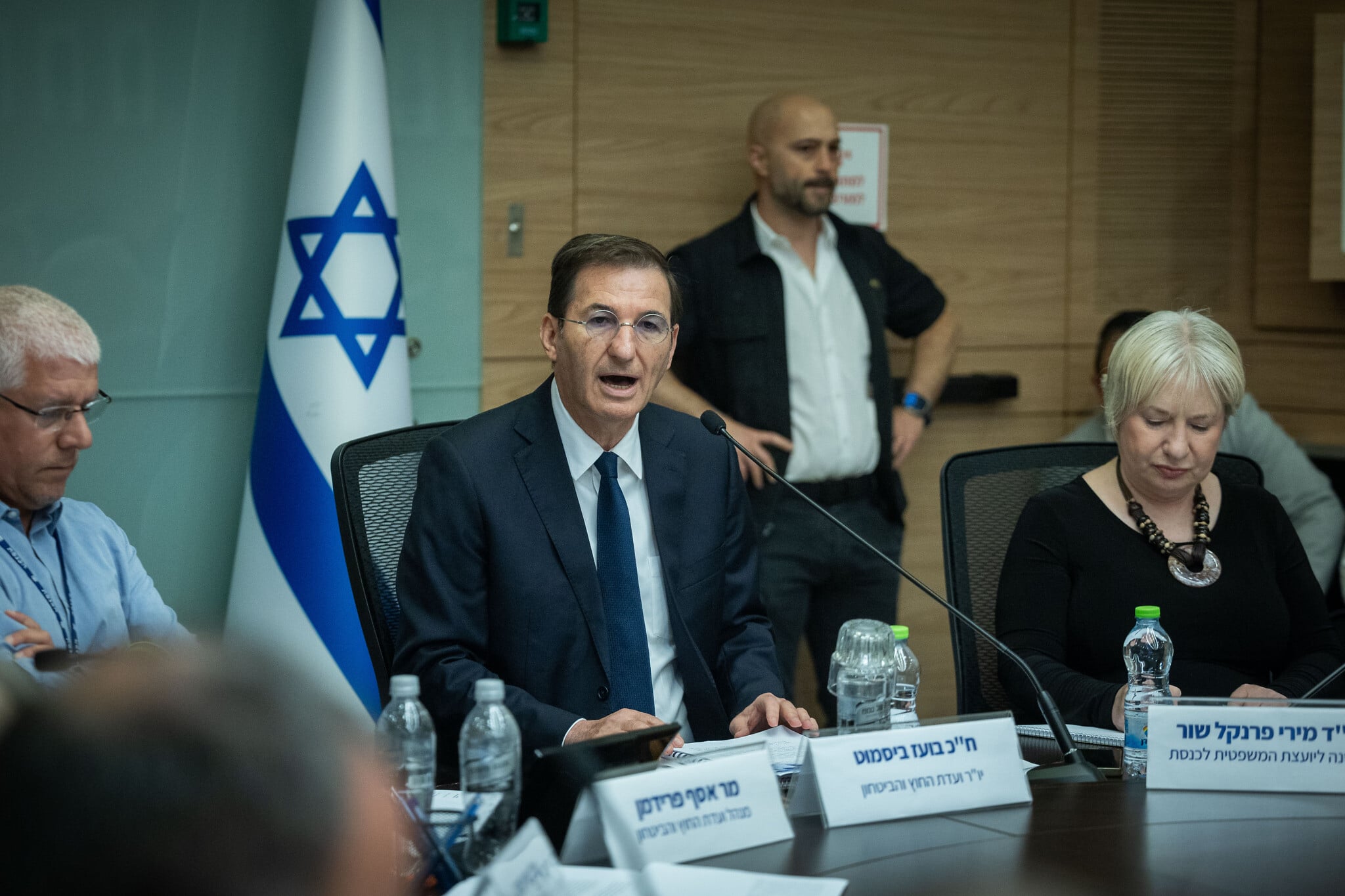
MK Boaz Bismuth leads a Foreign Affairs and Defense Committee meeting at the Knesset in Jerusalem, June 30, 2026 (Yonatan Sindel/Flash90)
Knesset Foreign Affairs and Defense Committee chair Likud MK Boaz Bismuth summons Shin Bet chief David Zini for what he describes as a discussion on both foreign and domestic “attempts to interfere in Israel’s electoral system” in the upcoming October elections.
In a letter to Zini, Bismuth writes that while Israel must guard against foreign attempts to influence elections, “it is also necessary to examine the danger of interference from within.”
He specifically refers to the High Court of Justice’s interim order today freezing Michael Rabello’s appointment as state comptroller after he was elected in a controversial June 3 Knesset vote in which several Likud MKs photographed or videoed themselves voting for Rabello, reportedly on the instructions of senior Likud officials.
The court had previously urged the Knesset to hold a new vote, but Speaker Amir Ohana refused.
“We are witnessing another serious incident today, as an interim injunction has been issued freezing the appointment of the state comptroller after he was lawfully elected by the Knesset,” Bismuth writes. “This development raises grave concern over a slippery slope: Today it concerns the election of the state comptroller, and tomorrow it could concern Israel’s general elections.”
Bismuth’s letter echoes a broader campaign by coalition lawmakers, who have repeatedly portrayed the High Court of Justice — one of the few institutional checks on government power in Israel — as an anti-democratic body for halting government policies.
Critics, including opposition lawmakers and constitutional scholars, argue the opposite, warning that the coalition’s handling of the state comptroller election offers a troubling preview of how it will conduct elections.
They also contend that the coalition’s long-running efforts to delegitimize the judiciary is laying the groundwork to reject a future election defeat by portraying judicial enforcement of election law as political interference.
Israel, US sign land agreement for permanent American embassy complex in Jerusalem

US Ambassador to Israel Mike Huckabee and Foreign Minister Gideon Sa'ar attend a formal signing ceremony at the Foreign Ministry of an agreement to allocate land at the Allenby Complex for the construction of a permanent US Embassy compound in Jerusalem on July 1, 2026. (Boaz Oppenheim/GPO)
Israel and the United States sign an agreement to allocate land at the Allenby Complex for the construction of a permanent US Embassy compound in Jerusalem.
Foreign Minister Gideon Sa’ar, US Ambassador to Israel Mike Huckabee, and Jerusalem Mayor Moshe Lion attend a formal signing ceremony at the Foreign Ministry, according to a statement from the ministry.
Washington currently operates its embassy from the former US Consulate building in Jerusalem, which was redesignated as the embassy after US President Donald Trump recognized Jerusalem as Israel’s capital in 2017 and relocated the embassy from Tel Aviv in 2018.
“Today is another historic day for the US-Israel relationship as the US receives the property that will be the future home of the new US Embassy complex — deepening and expanding our presence in Jerusalem — the eternal capital of Israel,” Huckabee says in a statement from the ministry.
Sa’ar adds: “We mark another milestone in the unbreakable alliance between Israel and the United States,” calling Israel Washington’s “most important strategic asset in the Middle East, saying, “just as the United States is indispensable and irreplaceable to Israel, Israel is indispensable to the United States and to its interests throughout this region.”
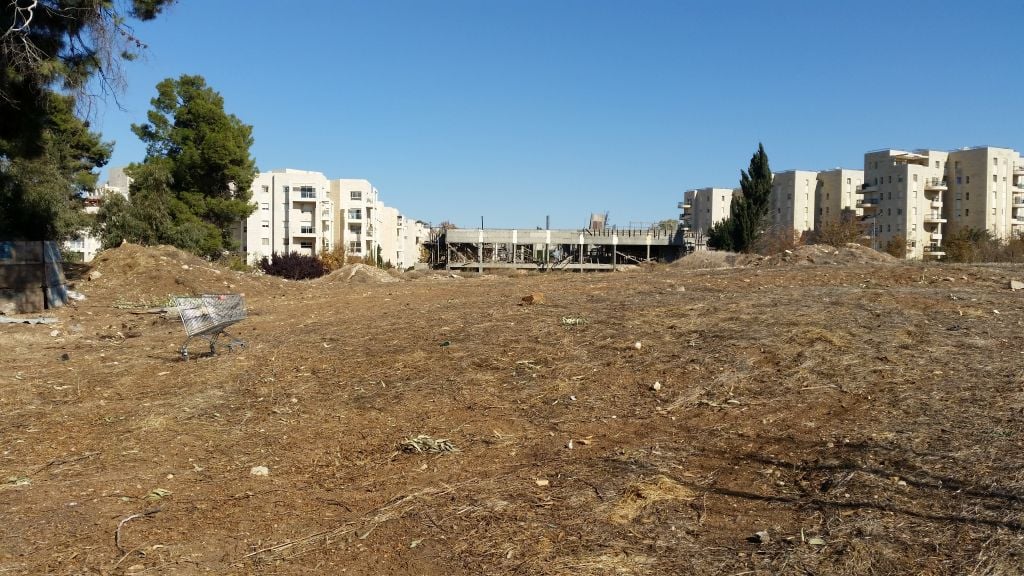
IsraAid says its staff on the ground in Venezuela following devastating earthquakes

IsrAid staff install water filters to help those displaced by the earthquakes in Venezuela on July 1, 2026. (Victor Diefenbach/IsraAID)
IsraAid reports that it has entered Venezuela and is already working in Caracas and La Guaira, following last week’s devastating earthquakes.
It says it is conducting rapid needs assessments with local partners, distributing urgent aid supplies, installing water filters, and providing mental health and protection support and guidance in affected communities.
On Tuesday, the aid group’s team installed emergency water filters and ran emotional support and wellbeing sessions for children at a displaced persons’ camp housing 700 people in La Guaira, the area worst affected by the earthquakes.
IsraAID’s team in Venezuela includes experts from its mission in neighboring Colombia and its global Emergency Response Team.
Trump: Denuclearization of Iran is moving along well; good meetings in Doha
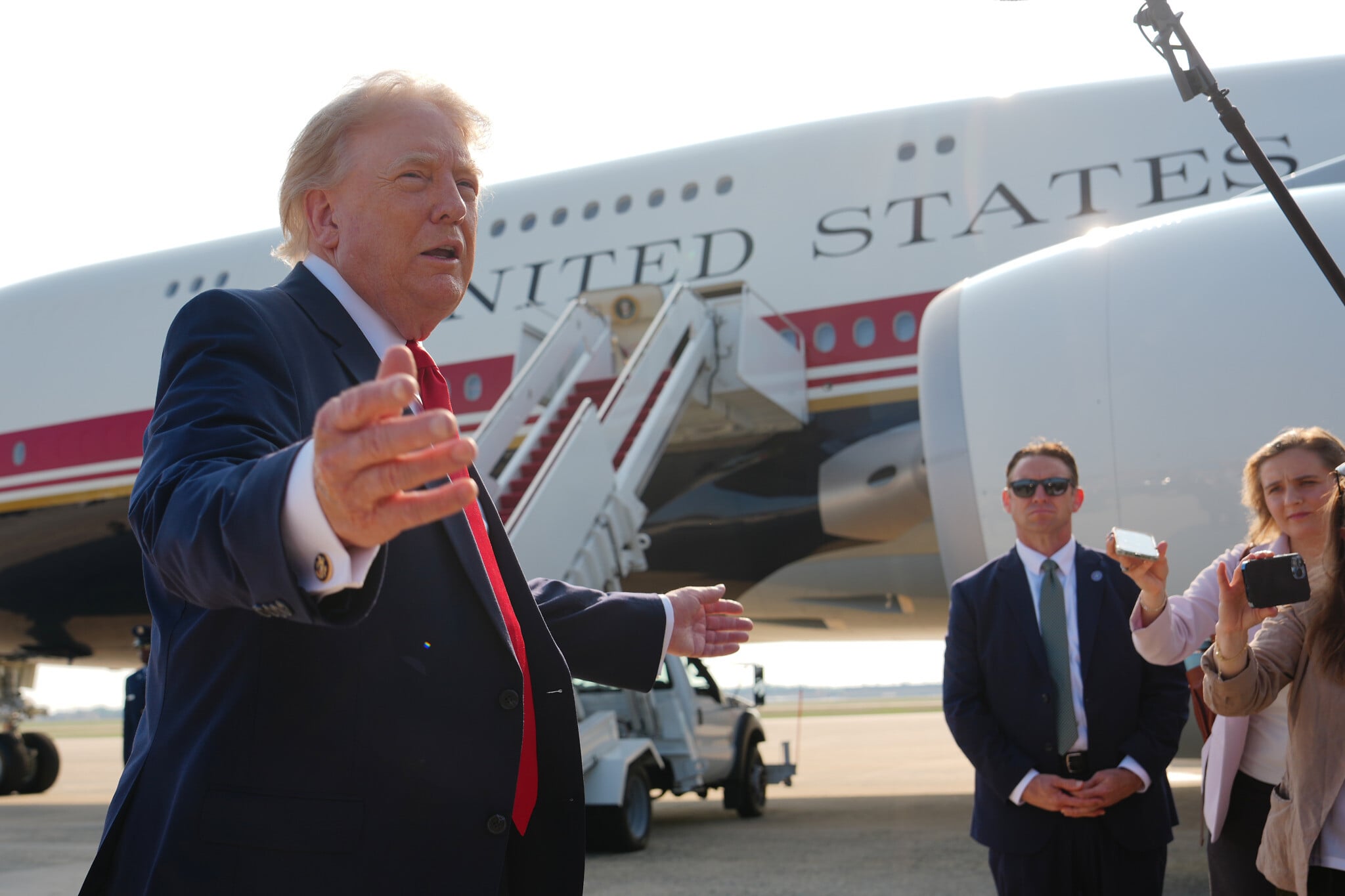
US President Donald Trump speaks to reporters before boarding Air Force One, Wednesday, July 1, 2026, at Joint Base Andrews, Md. (AP Photo/Julia Demaree Nikhinson)
US President Donald Trump says, “The denuclearization of Iran is moving along well.”
“They’ve had very good meetings, and we’ll see,” he tells reporters before boarding the new, Qatari-gifted Air Force One, apparently referencing the meetings his envoys have been holding in Doha.
Trump had earlier claimed his aides would be meeting with Iranian counterparts, but they ultimately only ended up sitting down with mediators, amid Iranian frustration with Washington regarding the Strait of Hormuz and Lebanon.
“We hit them very hard for three nights, but we’re getting along very well,” Trump says, calling back to the recent US strikes against Iran that were in retaliation for Tehran’s renewed targeted of ships in the Hormuz and of Gulf neighbors.
IMF predicts Israel’s economy will grow at slower rate due to defense spending, regional tensions
Israel’s economy is expected to grow at a slower pace this year, overshadowed by high defense expenditure and elevated regional tensions, the International Monetary Fund (IMF) cautions in a report.
The IMF lowers its 2026 growth forecast for the Israeli economy to 3.5 percent from 4.8% previously, citing “hostilities in the Middle East, defense expenditure [which] is expected to remain high, and labor supply constrained by military mobilization and reduced availability of non-Israeli workers.” The IMF’s forecast is lower than the Bank of Israel’s 3.8% growth projection for 2026.
“Risks to the growth outlook are tilted to the downside with deeper and more prolonged regional conflicts remaining the key concern,” the IMF says. “With medium-term growth challenges looming, key priorities include rebuilding fiscal buffers, raising labor supply and productivity, and ensuring price and financial stability.”
Police have solved just 12% of homicides in Arab communities, data shows
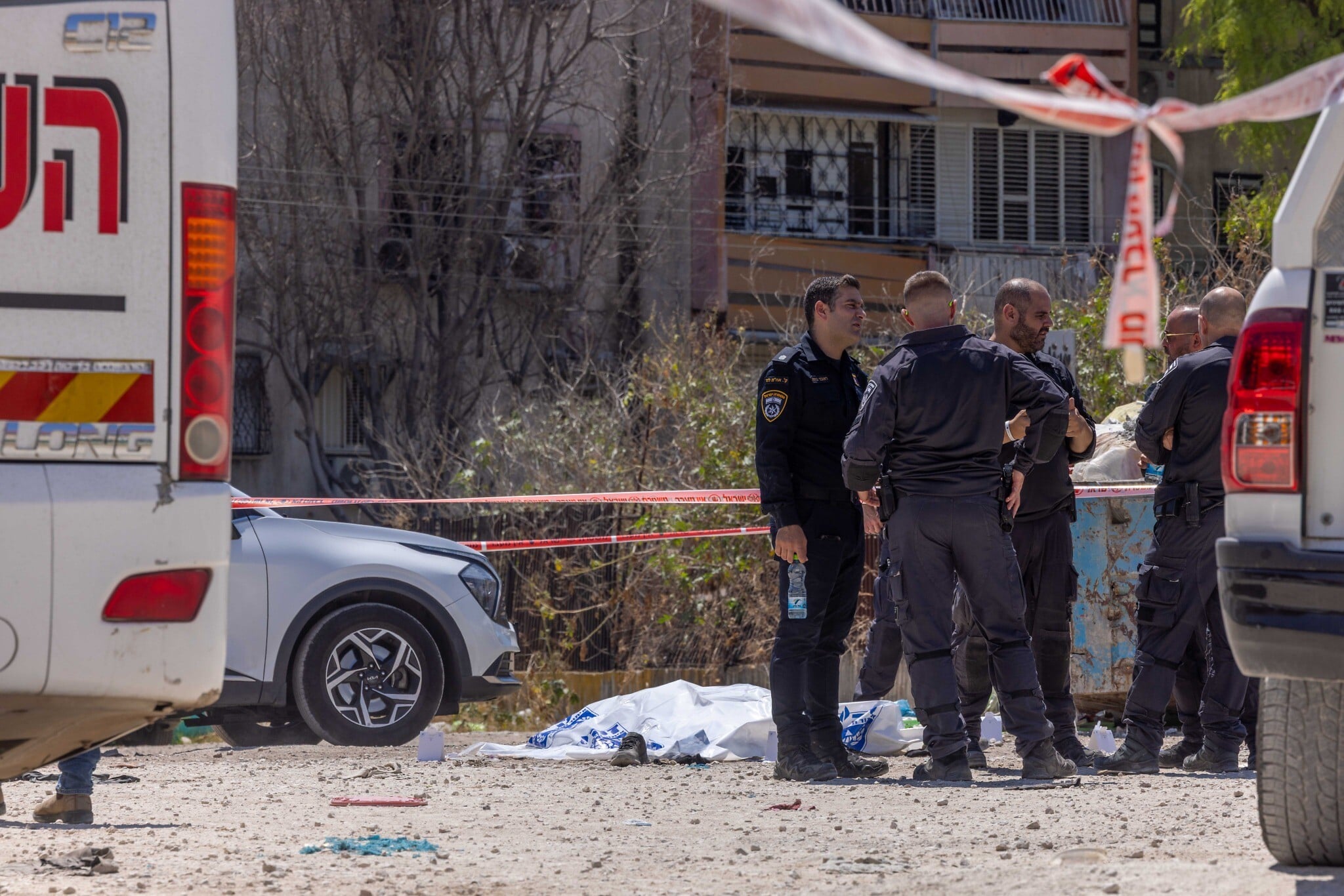
Police at the scene of an attempted stabbing attack in Lod, central Israel, July 1, 2026. (Yossi Aloni/Flash90)
Police have solved just 12 percent of homicides in Arab society so far this year, according to new data from the Abraham Initiatives watchdog, as violent crime continues to surge in cities and towns across Israel.
The organization in a report released last night says that the community has seen 144 homicide deaths in the first half of the year, comprising 140 Arab citizens and four Palestinian residents of East Jerusalem, who are subject to the authority of the Israel Police despite lacking citizenship.
Since then, the number of Arab sector homicide deaths has risen to 147, following a lethal car bombing yesterday and a pair of unrelated shootings that left two young men dead this morning in northern Israel.
“After the sharp rise in the number of victims in 2025, crime continues to run rampant in 2026 as well, and the number of victims in this current half-year period is larger than the number of victims in the first half of 2025,” the group says.
Last year was the deadliest on record for Arab society in Israel, as the community mourned 252 people slain in violent criminal circumstances. The vast majority of Arab sector homicides went unsolved in 2025 as well, with police managing to crack just ten percent of cases, the monitor said.
The homicide rate in Arab society doubled in 2023 and continued to rise in the years following, save for a short dip in 2024, before reaching a new peak in 2025.
The massive uptick, which coincided with the start of Itamar Ben Gvir’s term as national security minister, has alarmed Arab community leaders, many of whom attribute the sharp rise to ineffectiveness, if not outright negligence, of law enforcement.
Police, for their part, have claimed that they are doing all they can to combat violent crime. Senior officers, including police chief Danny Levy, have placed blame on state prosecutors and the court system, and in other instances said that officers lack the technological means to efficiently collect evidence.
Iran’s deputy foreign minister in Qatar to discuss Iran-US interim deal implementation
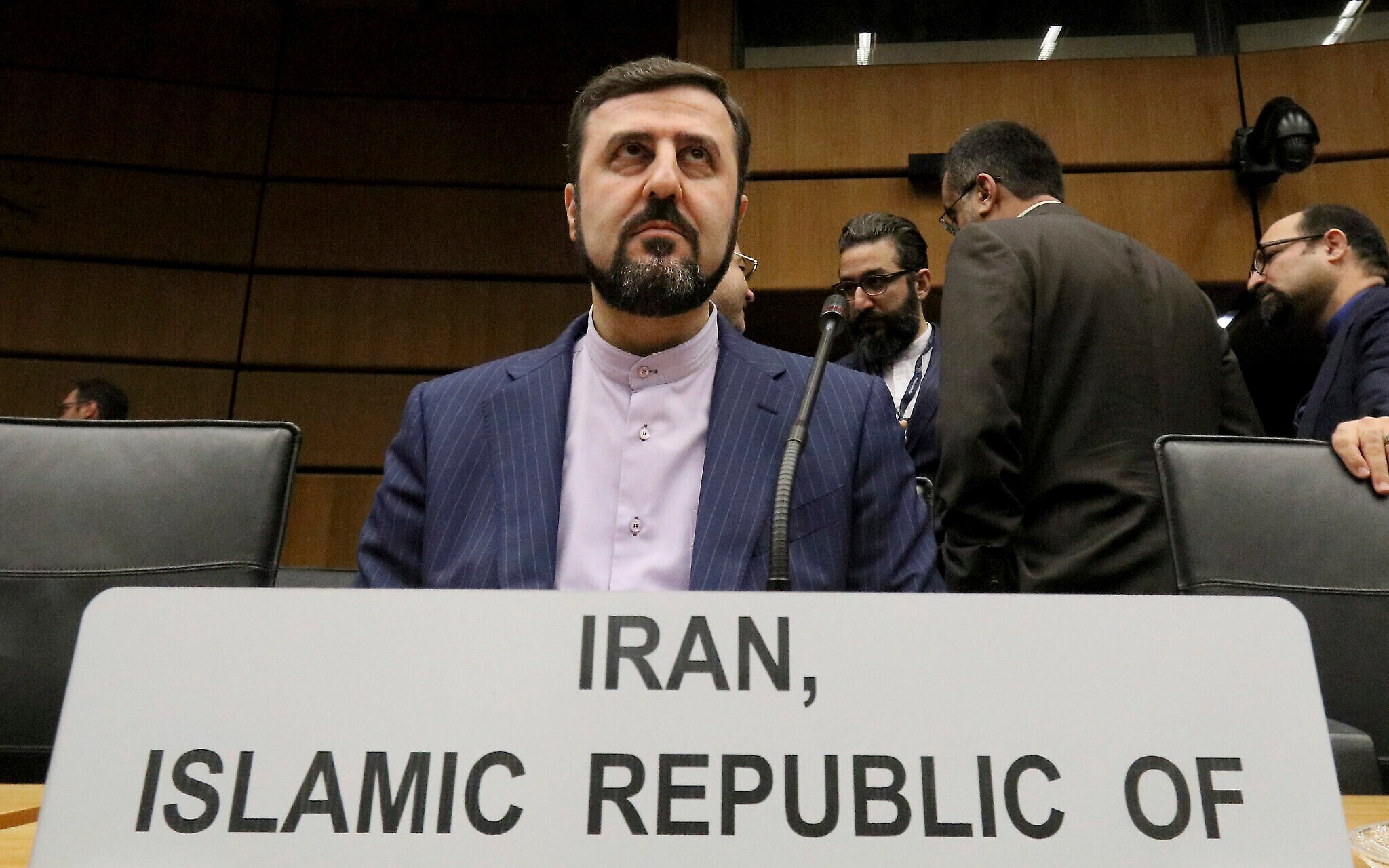
Iran's then-Ambassador to the International Atomic Energy Agency Kazem Gharibabadi waits for the start of the IAEA board of governors meeting at the International Center in Vienna, Austria, November 21, 2019. (AP/Ronald Zak)
Talks in Doha have focused on the implementation of the interim deal between Tehran and Washington, Iran’s deputy foreign minister says, according to state media.
Heading a delegation with representatives from Iran’s foreign ministry, central bank and agriculture ministry, Kazem Gharibabadi held a meeting with Qatar’s prime minister as well as participated in a trilateral meeting between Iran, Qatar and Pakistan to review the interim deal’s implementation.
Israeli legal giant Edna Arbel dies at 82
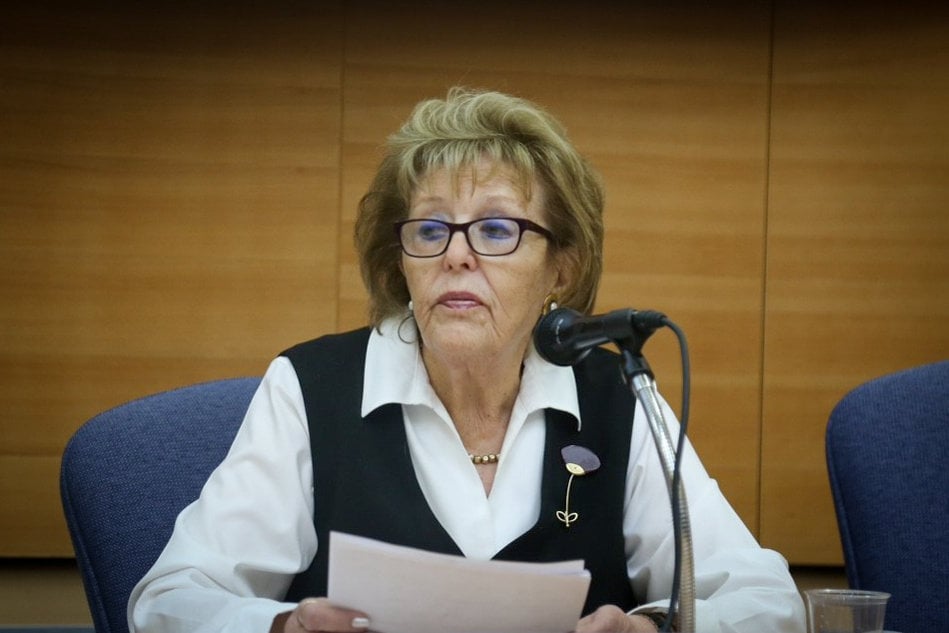
Former Supreme Court justice Edna Arbel speaks at the annual cyber week held at Tel Aviv University on June 25, 2017. (Flash90)
Former Supreme Court justice and state attorney Edna Arbel has died at the age of 82.
Arbel served as state attorney from 1994 to 2004, after which she served on the Supreme Court until 2014.
Doron Spielman named international spokesperson for PMO’s public diplomacy department

Doron Spielman, international spokesperson for the National Public Diplomacy Directorate. (Lotem Segev)
Tzipi Hotovely, the recently appointed head of the National Public Diplomacy Directorate in the Prime Minister’s Office, announces the appointment of Doron Spielman as the directorate’s international spokesperson.
Spielman, a reserve IDF officer holding the rank of major, served as a spokesperson to foreign media in the IDF Spokesperson’s Unit and has conducted hundreds of interviews worldwide since the Hamas-led October 7, 2023, attack that sparked the war in Gaza, according to a statement from the PMO.
“Doron brings extensive international experience, a deep understanding of the public diplomacy challenges facing Israel, and a proven ability to present the Israeli narrative through a profound connection to the roots of our identity,” Hotovely says in the statement.
In recent years, Spielman served as the founder and CEO of a strategic communications and media consulting firm, and for twenty years until 2023 served as vice president of the City of David Foundation. In his recently published book entitled “When the Stones Speak: The Remarkable Discovery of the City of David and What Israel’s Enemies Don’t Want You To Know,” Spielman highlights archaeological discoveries at the contentious site located near the Temple Mount, asserting that they provide evidence of an indigenous Jewish presence in the land of Israel.
Until the past few months, several key positions in the PMO’s Public Diplomacy Directorate — which is officially responsible for coordinating Israel’s global messaging — remained vacant following a series of resignations and layoffs, even as Israel fought wars on several fronts and faced severe and mounting global criticism from both allies and adversaries.
Wall Street futures slip as US-Iran tensions cloud Middle East peace prospects
Wall Street futures have dipped today as US-Iran tensions cast fresh doubt over peace in the Middle East, marking a cautious start to the second half of the year, while investors awaited commentary from Federal Reserve Chair Kevin Warsh.
Tehran said it would not meet with top US envoys who flew to the region following an outbreak of hostilities, suggesting that a breakthrough in peace negotiations may not be imminent.
However, a source with direct knowledge of the talks as well as an Iranian official said the US and Iran held technical talks in Doha on Wednesday.
Repeated false dawns and contrasting rhetoric in negotiations have made the war situation difficult to track, leading some investors to focus instead on the economy’s underlying pillars.
But premarket declines indicate that the Middle East war remains difficult to ignore, especially given the impact the region has on global energy markets.
At 07:05 a.m. ET, Dow E-minis YMcv1 fell 109 points, or 0.21%, S&P 500 E-minis EScv1 lost 8.75 points, or 0.12%, and Nasdaq 100 E-minis NQcv1 shed 91.5 points, or 0.3%.
Investors are also worried the US Federal Reserve may need to hike rates and keep them elevated to control inflation.
Traders expect the central bank to raise rates at least once by the end of the year, according to data compiled by LSEG.
US and Iran holding indirect technical talks to secure peace deal, shipping restart — sources
The US and Iran held indirect technical talks in Doha today, as they seek to agree on the flow of shipping through the Strait of Hormuz and secure a lasting ceasefire, a source with direct knowledge of the talks and an Iranian official say.
The indirect talks, mediated by Qatar and Pakistan, began on Tuesday night and have continued today, the Iranian official says.
They are structured as sessions between chief negotiators and specialists, the source with knowledge of the talks says, adding that Trump’s son-in-law Jared Kushner and envoy Steve Witkoff met Qatar’s prime minister to lay groundwork for the talks but would not be attending.
The stated priority of the US is to ensure the free flow of traffic through the strait, the source with knowledge of the talks says.
There had been intensive diplomatic activity on Lebanon between parties, including the US, up to Tuesday evening, the source with knowledge of the talks says.
‘Excited’ Trump takes first flight on Qatar-gifted Air Force One
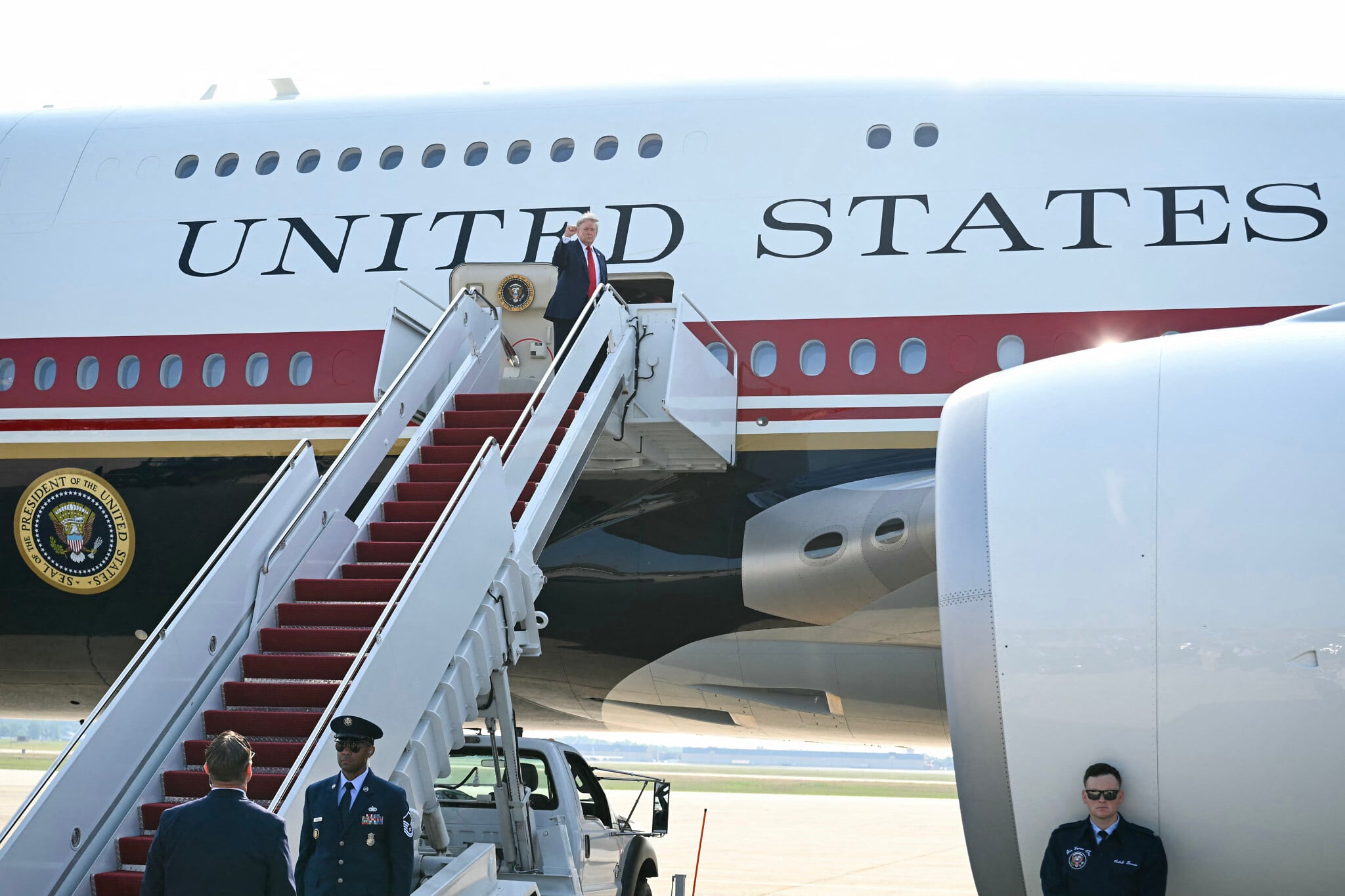
US President Donald Trump boards Air Force One for his first flight aboard the Boeing 747-8 that Qatar gifted the United States to use for executive travel, at Joint Base Andrews, in Maryland, July 1, 2026. (Saul Loeb/AFP)
US President Donald Trump says he is thrilled to make his first flight aboard his new Air Force One plane, thanking Qatar for the controversial gift of the luxury jet.
Trump says the United States “couldn’t build a plane like this” — despite the fact that the heavily modified Boeing 747-8 aircraft was originally made there.
“To be honest with you, I’m excited about the first flight. Nobody’s ever seen anything like it,” Trump tells journalists traveling with him, ahead of a trip to North Dakota.
The 80-year-old president is due to attend an event at the Theodore Roosevelt Presidential Library as part of celebrations for the 250th anniversary of American independence.
“They just completed it. They made it appropriate for a president, that means the security and all of the different bells and whistles they put on. Very complex stuff, but it’s really quite something,” Trump says at Joint Base Andrews near Washington.
Critics have raised a host of ethical, constitutional and security concerns about the gifting of an aircraft worth hundreds of millions of dollars by a foreign power like Qatar.
The wealthy Gulf emirate, which is also playing a key role as a mediator in talks between the US and Iran, donated the jet last year. It has since undergone major modifications and testing.
The first flight also comes just a day after Trump faced further ethical scrutiny over filings that showed he earned around $1.2 billion from his family’s cryptocurrency ventures in his first year back in power.
But Trump dismisses any suggestion of impropriety, saying the cost to US taxpayers of adapting the Qatari jet was “very little relative to what it would cost if we did it a different way.”
“Frankly, we couldn’t build a plane like this because we wouldn’t be willing to spend the kind of money necessary. They spent top dollars,” Trump tells reporters.
Trump says he had asked the emir of Qatar if he could use the plane but “he said ‘no, no, I’d like to make a contribution to the country, so it was very nice.”
The plane will serve as a stopgap until Boeing delivers two new purpose-built Air Force Ones, which are expected to be delivered in two years after a series of delays and cost overruns.
Trump has long been obsessed with replacing the aging current Air Force One fleet, although one of them appeared to be traveling as a backup for him on Wednesday.
England breaks record for warmest June
England chalked up its warmest June since records began in 1884, the Met Office weather service says on, after a month that saw temperatures soar to new highs.
Rare extreme heat warnings were issued for several days last month, which was also the second-warmest June on record for the UK, with “exceptionally warm overnight temperatures,” the Met Office says.
England registered an average temperature of 17.1°C last month compared to 16.9°C in June 2025.
Tehran insists on keeping control over Hormuz, senior Iranian sources say
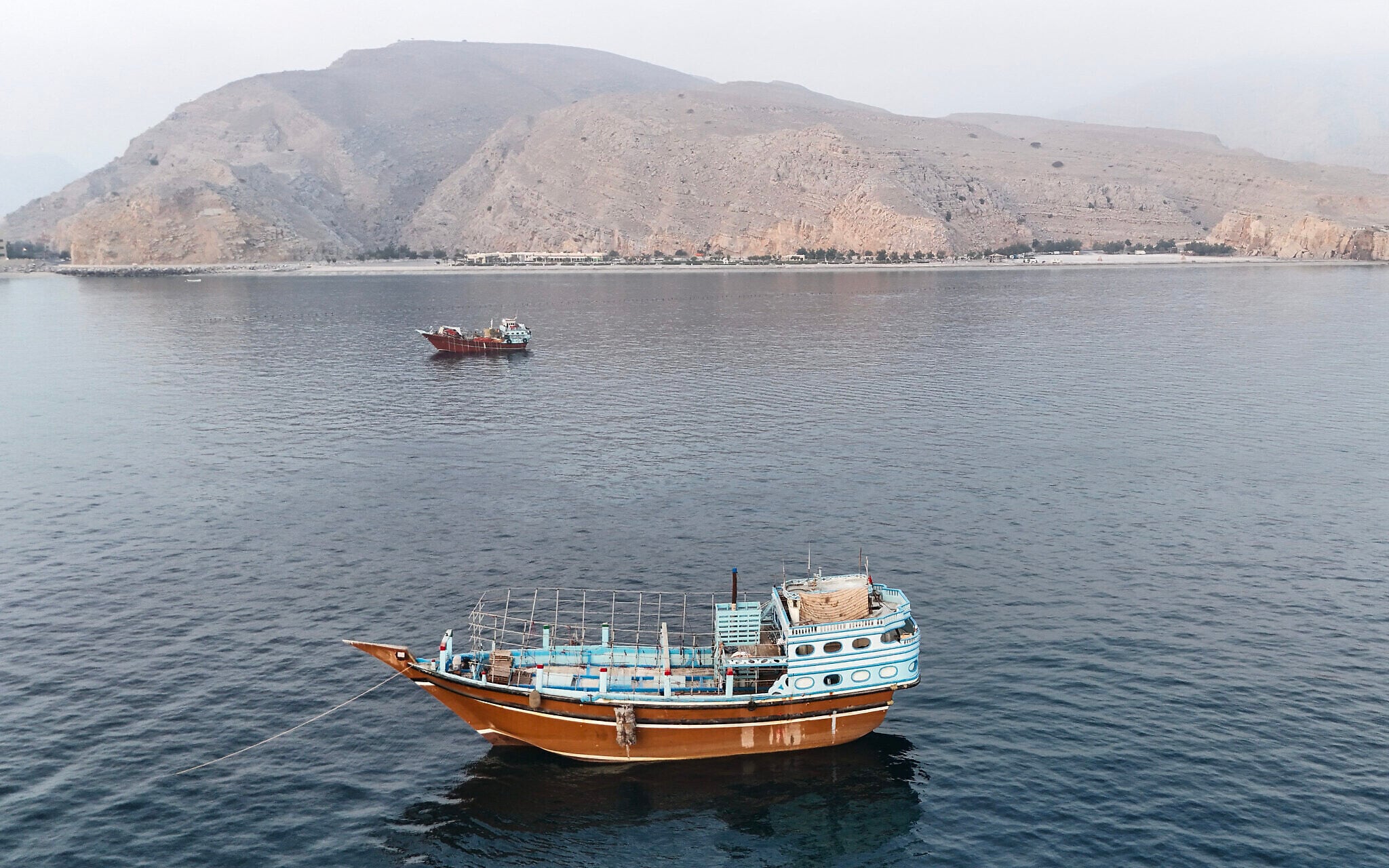
This aerial photograph shows boats anchored off Oman's northern Musandam Peninsula near the Strait of Hormuz on June 27, 2026 (AFP)
Iran is determined to win international recognition of its control over the Strait of Hormuz and ability to levy fees on ships entering or leaving the Gulf even if it has to do so by force, two senior Iranian sources say.
Under this month’s interim deal with the US to end their three-month conflict, Iran agreed to let ships pass through the Strait for 60 days without charge. But it believes the wording of the agreement allows it to keep control of which ships may pass and which route they take through the narrow waterway.
It is also determined to secure lasting formal acceptance of this control once the interim phase expires, and its negotiators will not move to other areas of dispute in ongoing peace talks with Washington until that has been agreed, the sources say.
If the interim deal ends without being extended, Iran would start charging ships for passage in mid-August, though it has not yet laid out any list of what fees it will charge or how. Iran closed the Strait when the war began and Iranian officials have said authorities charged some vessels navigation or other fees to leave the Gulf.
Iran interprets the interim deal as meaning it can maintain control over all passage through the Strait, though without collecting fees during the interim phase of the deal, and that while it has to discuss arrangements with Gulf states, it is not obliged to reach an agreement with them, the sources say.
One of the senior officials says Iran will not let the situation return to the prewar status quo. Instead, it believes new arrangements must govern Hormuz including Iran choosing how vessels enter and leave the Strait, holding the right to deny entry to any it suspects of threatening Iranian security, and charging fees for compulsory services it provides.
Iran is ready to impose its demands on the Strait through force if there is no agreement by other countries to accept its terms, the official adds, saying Tehran would not back down even if it led to renewed – and intensified – confrontation with the US.
The second senior Iranian official says that having survived what Tehran had seen as its biggest potential threat — a war with the US and Israel — Iran believed it had a “historic opportunity” to secure a long-term advantage.
Ship-owning countries would eventually accept Iranian management of the Strait because of the growing cost of the dispute, and Washington would accept it to ensure uninterrupted global energy supplies, the official adds.
Controversial Torah study Basic Law returned to Knesset agenda after brief removal
A proposed Basic Law declaring Torah study a foundational value of the State of Israel has been restored to the Knesset agenda after being removed earlier today without explanation, reviving plans for a first-reading vote in the plenum.
The bill is being promoted by the ultra-Orthodox parties as part of their broader effort to preserve broad exemptions from military service for yeshiva students.
It had briefly disappeared from the agenda amid speculation that the coalition lacked sufficient support to advance it amid internal dissent, including from lawmakers in Prime Minister Benjamin Netanyahu’s Likud and Finance Minister Bezalel Smotrich’s Religious Zionism party.
Reports: two killed, four wounded in strikes in northern Gaza
Hamas-affiliated Palestinian media outlets in Gaza report that one person has been killed and four were wounded in a strike in the Sheikh Radwan neighborhood of Gaza City.
Earlier today, another man, identified as Mohammad Jundiya, was reportedly killed in a separate strike in Gaza.
Footage from his funeral shows armed men firing into the air.
The IDF has not yet commented on either strike.
شيّع فلسطينيون في مدينة غـ ـزة، جثمان الشـ ـهيد محمد جندية، الذي استُـ ـشهد جراء قصف إسرائيلي استهدف شارع عمر المختار وسط المدينة. pic.twitter.com/nkD4x3FRZ1
— السبيل الإخباري (@assabeeldotnet) July 1, 2026
Bennett posts graphic of multi-pronged plan for toppling Iran regime that Netanyahu neglected
Together party chief Naftali Bennett posts what he says is a sketch that he drew during a security consultation he held as premier in 2022 that laid out several dozen steps Israel would take to bring about regime change in Iran.
Most of the words in the sketch have been blacked out due to security concerns, he says.
This plan was subsequently shelved by the next government after he left office later in 2022, Bennett says.
He claims that had the plan been adopted by Prime Minister Benjamin Netanyahu, the chances of toppling the Iranian regime when internal protests broke out against it would have increased.
The plan had included measures to ensure that the Iranian regime would not be able to shut down the internet — a step that it took in January when it reportedly mowed down thousands of protesters.
“In the last war, it was proven again that with kinetics alone you don’t topple a regime. Netanyahu erred when he neglected (my) action plan… and to our regret, none of the war’s objectives were achieved,” Bennett writes.
He says he will revive what he has dubbed as the multi-pronged “Octopus Plan” for toppling the regime.
Critics of such efforts have argued that regime change can’t be sparked externally and that those who called for it in recent months badly misjudged the situation and pushed for a war that may have ended up strengthening the Islamic Republic.
תסתכלו על הדף הזה, כתבתי אותו במהלך דיון ביטחוני על איראן בינואר 2022 בהיותי ראש ממשלה.
חקרתי לעומק ולמדתי שיש שורה של פעולות רכות שאפשר לעשות כדי להעצים את החולשות של המשטר.
בדף שכתבתי מפורטים עשרות צירי פעולה להפלת המשטר האיראני באמצעים לא ישירים: צבאיים, טכנולוגיים,… pic.twitter.com/w8b1wfO5QR
— Naftali Bennett נפתלי בנט (@naftalibennett) July 1, 2026
Lufthansa, ITA Airways resume flights to and from Ben Gurion after Iran war halt

A Lufthansa plane takes off at the Ben Gurion International Airport, outside of Tel Aviv, August 14, 2025. (Yossi Aloni/Flash90)
German carrier Lufthansa and Italy’s ITA Airways resume flight operations to and from Tel Aviv’s Ben Gurion Airport, having suspended them due to the US-Israel war against Iran and heightened regional tensions.
Germany’s Lufthansa group of carriers — which includes Lufthansa, SWISS, Austrian Airlines, Brussels Airlines, and Eurowings — restarted flight services to and from Israel in a phased manner from June. Austrian Airlines resumed flights to and from Tel Aviv on June 2. Eurowings is expected to return to Tel Aviv by mid-July and SWISS plans to begin operating a daily flight on the Zurich–Tel Aviv route from August 1.
Spanish carrier Air Europe renewed flights between Madrid and Tel Aviv on June 29.
Meanwhile, other major foreign airlines, including Air France, have continued to cancel flight services to and from Israel through July 2, and British Airways has canceled services up to October. US carriers, including Delta, have pushed back their return to September.
Turkey and Iraq discuss energy cooperation ahead of pipeline deal expiry
Turkey’s Energy Minister Alparslan Bayraktar says that he met senior Iraqi oil and foreign ministry officials to discuss energy cooperation, including on the Iraq-Turkey Crude Oil Pipeline that runs from Kirkuk to Ceyhan.
The decades-old Turkey-Iraq Crude Oil Pipeline Agreement, which governs exports through the pipeline, is due to expire on July 27. Baghdad and Ankara are still discussing a new draft agreement.
The Iraqi delegation included Deputy Foreign Minister Hussein Bahr Al-Uloom, Deputy Oil Minister Naser Azez Jabbar and Iraq’s Ambassador to Ankara Majid Al-Lachmawi.
Bayraktar says in a post on X that Turkey aims to work closely with the new Iraqi government on more effective use of existing energy infrastructure.
Turkey also seeks to support existing infrastructure with new connections, Bayraktar says.
Baghdad last month asked Ankara to extend the pipeline agreement for at least a year to allow time for more talks, but Ankara said it does not want an extension under current conditions.
Irak Dışişleri Bakan Yardımcısı Sn. M. Hussein Bahr Al-Uloom, Irak Petrol Bakan Yardımcısı Sn. Naser Azez Jabbar ve Irak’ın Ankara Büyükelçisi Sn. Majid Al-Lachmawi'yi Bakanlığımızda kabul ettik.
Irak-Türkiye Ham Petrol Boru Hattı başta olmak üzere petrol, doğal gaz ve elektrik… pic.twitter.com/6wGquNRxhJ
— Alparslan Bayraktar (@aBayraktar1) July 1, 2026
US said weighing pulling troops from Saudi Arabia amid major tensions with Riyadh over Iran war
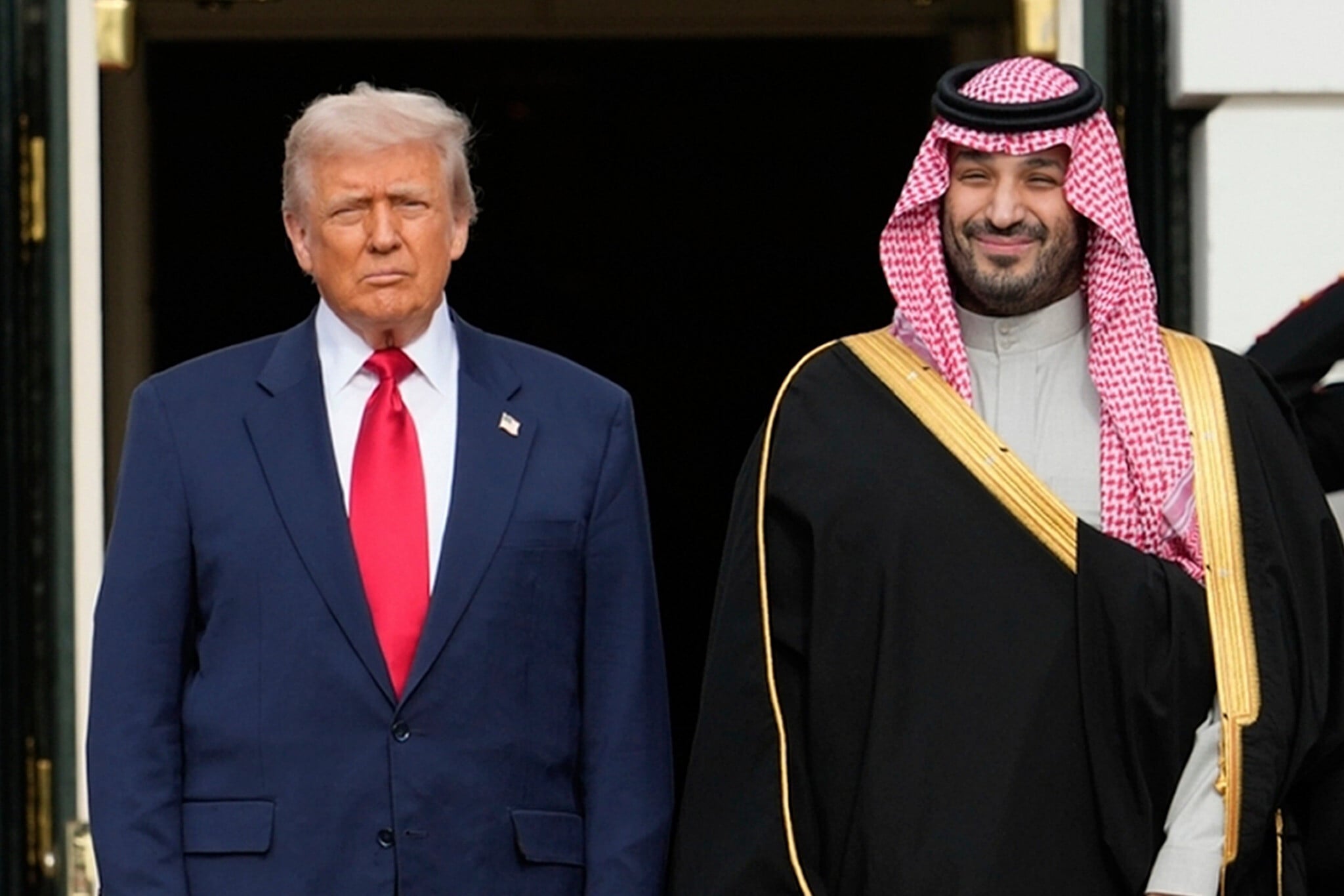
US President Donald Trump (left) stands with Saudi Arabia's Crown Prince Mohammed bin Salman on his visit to the White House, in Washington, November 18, 2025. (Mark Schiefelbein/AP)
US-Saudi relations have significantly deteriorated in recent months amid anger in Riyadh over Washington’s decision to launch a war against Iran that has caused massive blowback for the rest of the region, a Middle Eastern intelligence official tells The Times of Israel, confirming a Wall Street Journal report.
Saudi Arabia refused to allow the US to use its bases in order to conduct Project Freedom, which was aimed at breaking Iran’s control over the Strait of Hormuz by escorting stuck ships out of the channel.
Saudi bases and airspace were critical to the operation and Riyadh’s refusal to cooperate forced the US to abort the mission, the WSJ reveals. At the time, US President Donald Trump claimed that it was progress in talks with Iran that led him to call off Project Freedom after less than two days.
Infuriated by the Saudi decision, the White House threatened to hold back the delivery of interceptors that Riyadh had been using to shoot down Iranian missiles and drones, WSJ says, citing US and Arab officials familiar with the matter.
Riyadh subsequently relented and Project Freedom resumed covertly, but the damage wouldn’t be easily undone, US officials say.
The US is now considering reducing its military presence in Saudi Arabia, US officials tell the Journal.
US Secretary of State Marco Rubio visited the Gulf last week, making stops in the UAE, Kuwait and Bahrain, in what Riyadh viewed as a snub, WSJ says.
A week earlier, Saudi Crown Prince Mohammed bin Salman turned down an invitation to participate in a G7 summit in France — which was attended by Trump — in protest of Washington’s handling of the war, sources familiar with the matter tell WSJ.
Saudi Arabia had lobbied Trump against launching the war, fearing that efforts to topple the Iranian regime wouldn’t work and that Tehran would respond by closing the Strait of Hormuz, destabilizing the region and damaging the global economy.
Trump went ahead with the war, anyway, exacerbating Saudi concerns that its investment in the relationship with the US president wasn’t translating into actual influence over American policy, Arab officials tell the Journal.
After initial reluctance, the kingdom and other Gulf states allowed the US to use their bases for attacks against Iran, as they quickly found themselves bearing the brunt of Tehran’s retaliatory strikes.
Saudi Arabia even launched a number of its own strikes against Iranian drone and missile sites, US officials and a Gulf official say.
Iran proceeded to target energy sites, including ones in Saudi Arabia, leading Riyadh to begin pushing for a diplomatic resolution to de-escalate tensions.
Saudi Arabia took particular issue with continued Emirati attacks on Iran, fearing that it put regional energy facilities at further risk.
Riyadh wanted the US to pressure the UAE to halt its attacks and join regional diplomatic efforts to end the war, WSJ reports.
Abu Dhabi’s hardline stance against Iran further exacerbated tensions with Saudi Arabia that have been bubbling for the past year. The UAE pulled out of the Saudi-led OPEC in April.
Saudi Arabia also pushed the US during the war to drop its blockade of Iranian ports, something that Trump refused to do until a deal was reached last month.
China’s top diplomat warns US to handle Taiwan with ‘utmost caution’
China’s Foreign Minister Wang Yi urges the United States to handle Taiwan with “utmost caution” during a call with Secretary of State Marco Rubio, a Chinese readout says.
“The Taiwan question has far-reaching implications and we hope the US will treat Taiwan-related matters with utmost caution,” Wang said during a phone call with Rubio on Tuesday, according to Chinese state broadcaster CCTV.
Yi also told Rubio that improving ties between their two countries was “not just a slogan” and urged action, state media says.
“Building a constructive relationship of strategic stability is not just a slogan; it requires action, moving towards each other and persistent efforts,” Wang told Rubio, according to CCTV.
US envoy warns some NATO allies ‘lagging’ on Trump spending vow

US Under Secretary of War for Policy, Elbridge Colby (L) speaks to US Ambassador to NATO nominee Matthew Whitaker as they take part in a meeting of NATO Ministers of Defence Summit at the NATO headquarters in Brussels on February 12, 2026. (Photo by JOHN THYS / AFP)
The US ambassador to NATO warns that some European countries are not doing enough to fulfill a defense spending pledge, ahead of a summit in Ankara with US President Donald Trump.
Under pressure from Trump, NATO leaders agreed at a gathering last year in The Hague to boost defense-related spending to five percent of GDP by 2035.
“Some allies are doing more than others — and we have countries like Poland, the Nordic countries, the Baltics and Germany leading the way,” US envoy Matthew Whitaker tells journalists.
“But we have some that are lagging behind, that either are not spending enough right now or don’t have a credible path to get to The Hague defense commitment.”
Whitaker says Trump “fully expects that all allies will step up immediately and get on the path to five percent and do it with urgency.”
The NATO summit in Turkey comes after Trump lashed out at European allies over their response to his war in Iran.
Whitaker says he believes the bad blood is behind the alliance, claiming that “those days are past us.”
He points to Spain for having “disappointed” Trump over Iran and for its “unwillingness to demonstrate a credible path to five percent.”
But he says that he does not expect a bust-up at the summit between Trump and Spanish Prime Minister Pedro Sanchez.
As defense spending rises across the alliance, Whitaker says that Europe must now show it is turning the increased cash into real capabilities.
“The goal is clear — continue shifting the burden for the conventional defense of Europe to our allies in NATO,” he says. “The United States is not going anywhere, but we have responsibilities globally.”
Bolstering the defense industries on both sides of the Atlantic will be a major focus of the upcoming gathering.
Whitaker says the United States welcomed EU efforts to increase production, but warned against the continent putting up barriers for US firms.
“We certainly do not support the protectionist language that oftentimes many of the European defense initiatives have included that would cut out allies,” he says. “That’s one area that may come up during the summit and we expect that we can come to some agreement on that challenge.”
Knesset advances far-right MK’s bill to lower volume of mosque calls to prayer
A mosque at the entrance to Tarabin al-Sana, a Bedouin town in southern Israel's Negev region, pictured on December 31, 2025. (Charlie Summers/Times of Israel)
The Knesset votes 50-36 in a preliminary reading to advance a bill tightening restrictions on loudspeakers in mosques, in what supporters describe as an effort to curb “unreasonable noise,” but what opposition lawmakers have said unfairly targets Israel’s Muslim minority.
Sponsored by far-right Otzma Yehudit MK Zvika Fogel, the bill would require mosques to obtain permits to operate loudspeaker systems, authorize police to enter premises to halt violations and impose administrative fines for breaches. Muezzins use loudspeakers in mosques to issue calls to prayer five times a day, including the predawn Fajr prayer.
“This is not a political issue,” Fogel tells the plenum. “Just as the law is enforced against event halls, private businesses, factories and houses of worship of every kind, so too must it be enforced equally here.”
National Security Minister Itamar Ben Gvir welcomes the bill — which must pass three more votes before being passed into law — declaring that “governance begins with noise,” and claims that residents of Arab communities also suffer from the calls broadcast over loudspeakers.
Arab lawmakers counter that Ben Gvir is prioritizing what they describe as the persecution of a religious minority instead of addressing surging violent crime in Arab communities, after three people were killed in separate incidents today.
“Three murders within an hour… another day under this government of blood,” says Arab-majority Hadash-Ta’al chairman Ayman Odeh, accusing the “Kahanist and convicted criminal” minister of abandoning public security.
The vote comes after Shas announced it would back the legislation, despite earlier reports that it planned to oppose it as part of an understanding between the Haredi and Arab parties under which the Arab factions would abstain on today’s vote on the coalition’s controversial Basic Law enshrining Torah study as a national value.
Israel relocates screening facility for Palestinians returning to Gaza from Egypt
Israel has relocated its screening facility for Palestinians returning to the Gaza Strip from Egypt to the Kerem Shalom Crossing, instead of a military post in Rafah.
The Coordinator of Government Activities in the Territories (COGAT) announces that as part of the ceasefire agreement, “a pilot has been launched to relocate the Israeli security screening conducted for residents returning from Egypt to the Gaza Strip via the Rafah Crossing.”
Previously, Palestinians returning to Gaza from Egypt would be screened at the IDF’s “Regavim” checkpoint, located in Rafah.
The screening and identification procedures have now been relocated to Kerem Shalom, and they will be conducted by the Defense Ministry’s Land Crossings Authority, alongside other security bodies, according to COGAT.
“This is an operational adjustment intended to streamline the crossing process, enhance screening capabilities, and ensure the continued safe and efficient operation of the mechanism,” COGAT says.
COGAT says this change only relates to the Israeli screening process. The movement through the Rafah Crossing itself remains unchanged, including “coordination with Egypt and the World Health Organization (WHO), Israel’s prior security approval process, the supervision of the European Union Border Assistance Mission (EUBAM), and the mechanism governing the departure of residents from the Gaza Strip to Egypt.”
Harris quietly engages with Mamdani, pro-Palestinian activists as she weighs 2028 bid
Former US vice president Kamala Harris held a call last week with New York City Mayor Zohran Mamdani and has been holding lengthy meetings with other prominent progressives, including pro-Palestinian activists, as she weighs another presidential run, Axios reports.
Harris appears determined to improve her ties with progressives, who were critical of her during the previous race for not doing more to advance the Palestinian cause.
The Harris campaign had refused a demand from the “Uncommitted Movement,” which had refused to endorse her, to have a Palestinian speaker at the 2024 Democratic Party Convention.
Harris’s recent meetings have included ones with Uncommitted co-founder Abbas Alawieh and Democratic National Committee member James Zogby, who has been a longtime advocate for Palestinian rights.
Vance: We have options if Iran tries to rebuild nuclear program, but we won’t needlessly drop bombs
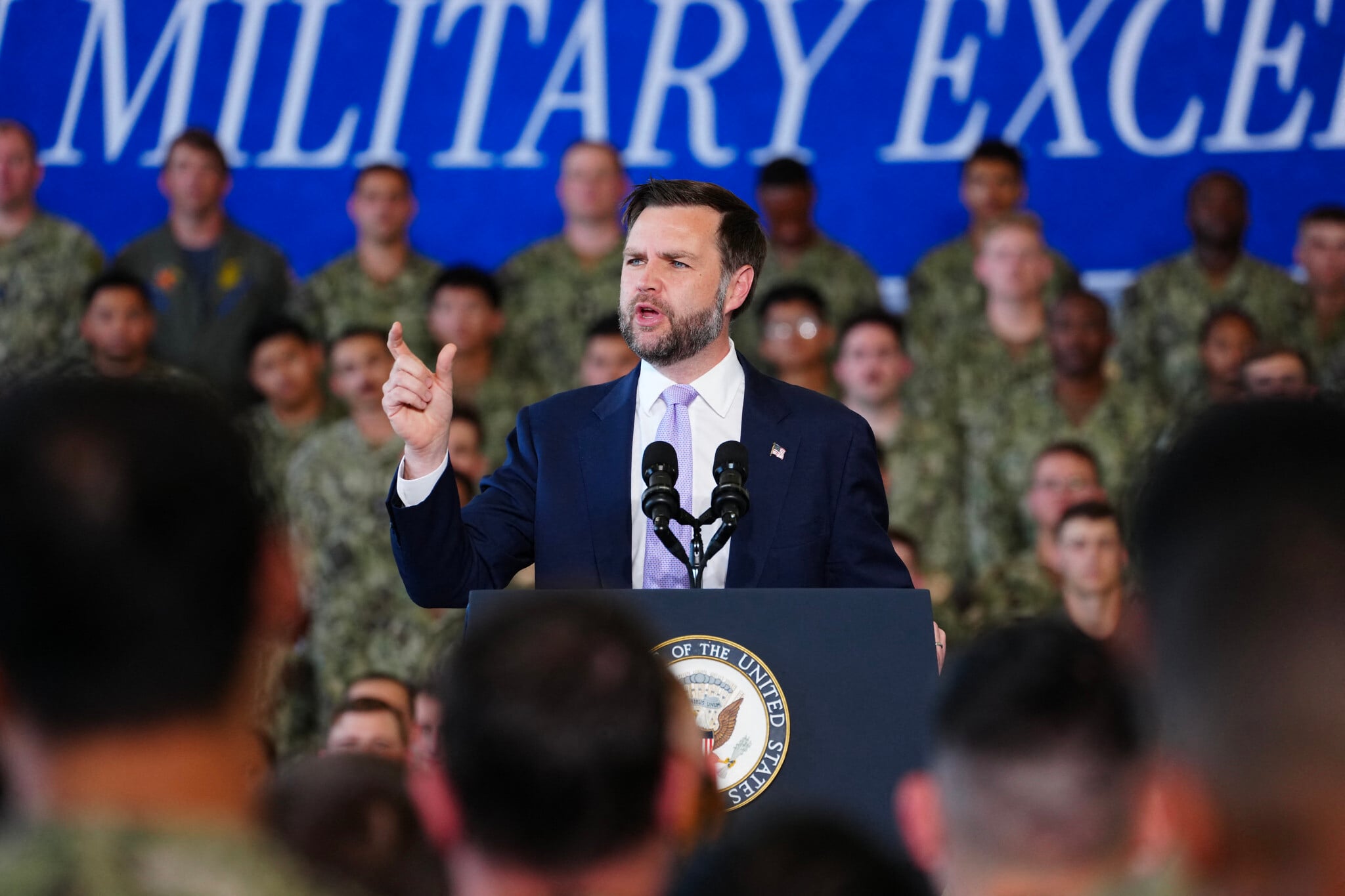
US Vice President JD Vance speaks during an event marking 250 years of the American military at Naval Air Station Oceana in Virginia Beach, Virginia, on July 1, 2026. (Ken Cedeno / POOL / AFP)
Addressing troops at a naval air base in Virginia, US Vice President JD Vance says Iran’s nuclear program has been set back decades thanks to American military strikes against it.
“If you look at what our own intelligence says about their nuclear program, they are further away from developing a nuclear bomb than they have ever been since basically the last 20 or 30 years,” Vance says, stopping short of US President Donald Trump’s claim that Iran’s nuclear program has been “totally obliterated.”
“What the president asks you to accomplish is to destroy the defense industrial base of that country, so that if they ever decided to rebuild their military, or if they ever decided to rebuild that nuclear program, they would be harmless to do it. You did that exactly as well,” Vance tells the US troops.
Vance claims Trump is now “negotiating from a position of strength because of you.”
“If the Iranians try to rebuild the nuclear program, the President’s got options. If the Iranians try to threaten their neighbors or fund terrorism, we’ve got options.”
“But what we must never do is drop bombs just for the sake of dropping bombs. And that is what the president will never ask you to do,” Vance continues.
“He’ll ask you to go to war, yes. But when he asks you to go to war, he’ll tell you exactly what you’re going for. And I think that is what you should expect out of your political leadership,” the vice president says.
“What I noticed about the people who are attacking the administration for negotiating is that they are the very same people who, for example, encouraged us to just go a little bit further and just drop a few more bombs in places like Afghanistan. If you go back to the mistakes that were made, those very same people refused to say what we were dropping bombs for.”
But the Trump administration has, in fact, come under fire for what critics say have been unclear goals in the Iran war. The Trump administration has asserted that it launched the war primarily to prevent Iran from obtaining a nuclear weapon, even though the president has also claimed to have completely destroyed Iran’s nuclear program in strikes a year ago.
Vance doesn’t go as far as to say that the US shouldn’t use military force.
“We dropped some bombs a couple of days ago… Because the Iranians were shooting at commercial ships… We applied some leverage, and we’ve had free commercial transit for the last three days,” Vance claims.
IDF says it killed Hamas commander who posed threat to troops in south Gaza on Tuesday
A Hamas commander who “posed a threat” to Israeli forces in the Gaza Strip was killed in a strike yesterday, the military announces.
The strike in southern Gaza killed Adel Jihad Mohammad Asfour, a platoon commander in Hamas’s military wing, according to the IDF.
During the war, Asfour advanced sniper and explosive device attacks against Israeli troops, the military says, adding that recently, alongside advancing “imminent” attacks, he also worked to rebuild Hamas’s capabilities.
“The terrorist posed a threat to IDF troops operating in the Gaza Strip and was eliminated in an aerial strike,” the IDF says.
NCAG touts productive meetings in Cyprus aimed at readying Palestinian technocratic committee for Gaza entry
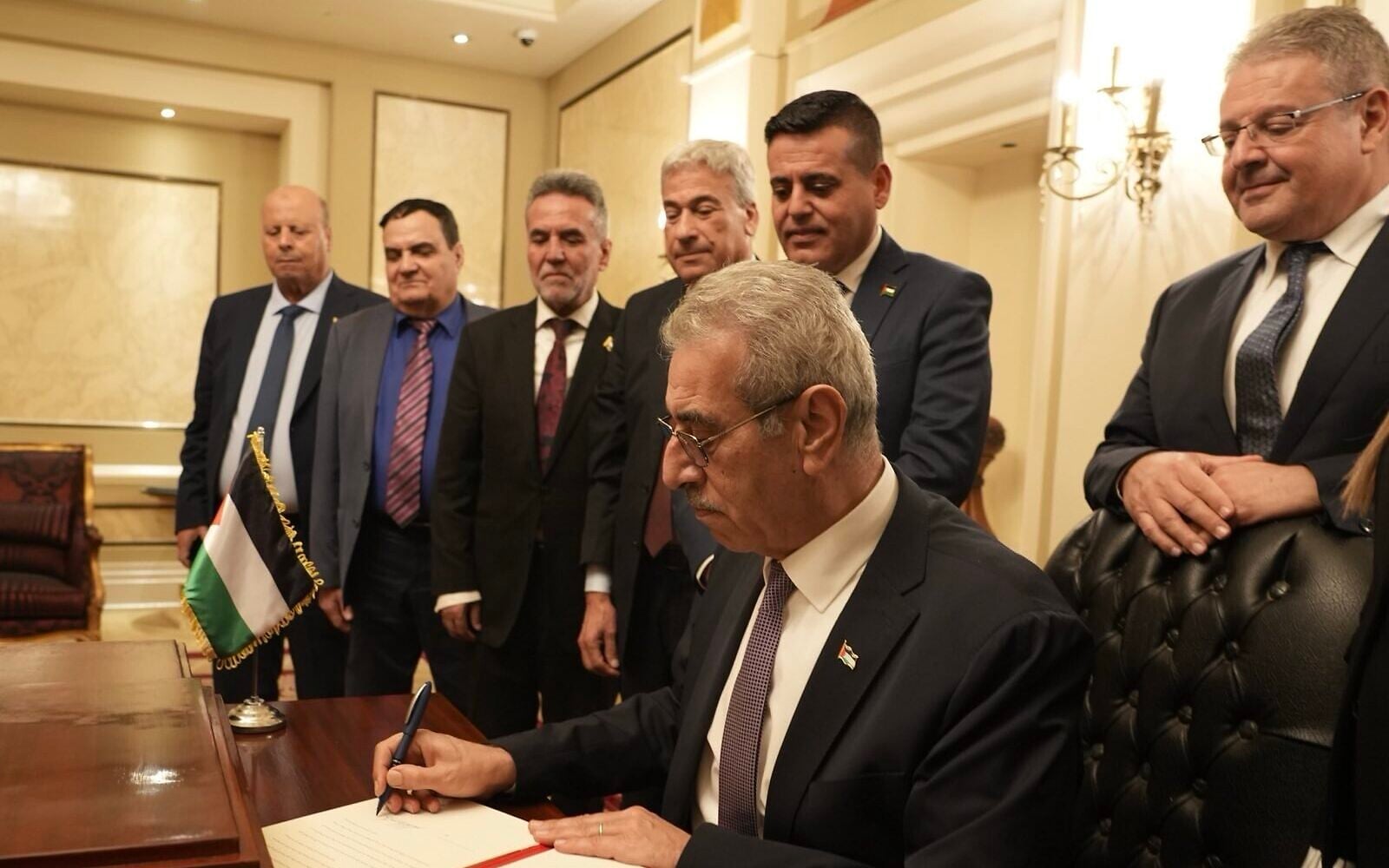
Ali Shaath, the top official of the National Committee for the Administration of Gaza, signs the committee's mission statement in a photo posted to his X account on January 17, 2026. (Ali Shaath/X)
The National Committee for the Administration of Gaza (NCAG) says its members held a series of “highly productive” meetings in Cyprus to prepare for the next phase of its efforts to alleviate the suffering of Palestinians in Gaza.
Participating in those meetings were representatives from Nickolay Mladenov’s Office of the High Representative and former UK prime minister Tony Blair’s Institute for Global Change, NCAG says in a statement.
“We concentrated on what can be done immediately, including initiatives and projects to ease conditions on the ground. We reviewed plans for reconstruction, security and governance, and we finalized the institutional arrangements that will ensure the transparency and accountability required by international donors,” the statement continues.
The NCAG statement reiterates the Palestinian technocratic government’s commitment to US President Donald Trump’s 20-point plan for Gaza and says it is “prepared to take all necessary steps — in coordination with the Board of Peace and the Office of the High Representative — in order to assume its responsibilities once the right conditions are met.”
It doesn’t specify what those conditions are, but the Board of Peace has conditioned NCAG’s entry into Gaza on Hamas agreeing to disarm, while the terror group argues that Israel must first cease violations of the ceasefire deal reached in October.
This week’s meetings in Cyprus built on a workshop that was held in Cairo last week and “are part of a broader process to ensure we have every tool necessary to serve the Palestinian people of Gaza,” NCAG says.
“Further steps will be set out and announced in due course,” the statement adds.
Board of Peace says ‘UNRWA has no place in the new Gaza,’ sparking outcry from PA
The US-led Board of Peace overseeing the postwar management of Gaza indicates that the UN agency for Palestinian refugees will not be allowed to play a future role in Gaza.
“UNRWA has no place in the new Gaza. We are turning the page on the complex of perpetual aid dependency and conflict. The people of Gaza deserve better,” the Board of Peace tweets.
It appears to be the first time that the Board of Peace has voiced its stance regarding UNRWA, which Israel and the US argue has become an irredeemable organization due to its ties to Hamas.
Israel has taken measures to limit UNRWA’s ability to operate in Gaza, the West Bank and East Jerusalem, but its infrastructure continues to be used to facilitate the delivery of humanitarian aid in the Strip.
UNRWA has no place in the new Gaza. We are turning the page on the complex of perpetual aid dependency & conflict. The people of Gaza deserve better. https://t.co/MttkJqX1Np
— Board of Peace (@BoardOfPeace) July 1, 2026
The statement from the Board of Peace sparks outcry from the Palestinian Authority’s foreign ministry, which stresses the importance of UNRWA’s work in providing for Palestinians.
The PA statement also “rejects all terminology aimed at fragmenting Palestinian Territory, including the term ‘New Gaza,’ which seeks to isolate the Gaza Strip from its natural surroundings, as well as the term ‘the people of Gaza.’ It stressed that the Palestinian people are one people in the Gaza Strip, the West Bank, including East Jerusalem and the diaspora, and affirmed that the Gaza Strip is an integral part of the occupied territory of the State of Palestine.”
However, the PA statement was careful to reiterate Ramallah’s support for US President Donald Trump’s 20-point plan for Gaza as well as the establishment of the National Committee for the Administration of Gaza (NCAG), which is tasked with running the Strip in place of Hamas until the PA has carried out necessary reforms.
US said telling Iran it can gain more money by adhering to MOU than it would by charging Hormuz tolls
US negotiators are reportedly seeking to convince their Iranian counterparts at the ongoing indirect technical talks in Doha to forgo plans to charge tolls in the Strait of Hormuz, arguing that Tehran will be able to make more money by following through with nuclear concessions than it would be able to generate from such fees.
The effort comes two weeks after the US and Iran signed an MOU that gave them 60 days to negotiate a final deal covering Iran’s nuclear program. But talks on that final deal haven’t really begun yet, given disagreements regarding the Strait of Hormuz.
“We have reached an understanding that we will keep things quiet for the coming week, so progress on all aspects of the MOU can be worked on in a productive environment, without missiles flying,” a US official tells the Axios news site. “The President has been clear that every time they shoot, we will shoot more — and at targets that further degrade their position in the Strait.”
US Vice President JD Vance said earlier today that the US technical team “is sitting down with the Iranians, with the Qataris, and with others in Doha… ensuring that we continue to make the progress… It’s still pretty early, but talks are going well.”
It’s unclear whether US talks are happening directly with the Iranians or indirectly through Qatari and Pakistani mediators. Iran has insisted that it isn’t meeting with the US amid ongoing disputes over implementation of the MOU.
“The Gulf is currently in discussions about how the Strait should be managed after [the MOU expires] and those discussions are converging” with the US-Iran negotiations, a US official says.
In response to Iran’s efforts to charge tolls in Hormuz after the 60-day period expires, “the US message to Iran was ‘Think bigger,'” the official says, claiming the sums Iran could generate from developing and selling oil after the US lifts sanctions under the deal “would be 100 times more valuable to them than using a gangster tactic to try and charge a toll.”
“We are pushing them to think bigger about their potential in the context of a broader nuclear and regional non-intervention deal,” the US official says.
Al Arabiya reports that during the technical talks today in Doha, the sides reached an understanding regarding the release of the first batch of frozen Iranian funds held by Qatar.
A regional source says $3 billion would be made available to the Iranian central bank for buying humanitarian goods, at least some of which will come from the US market. US officials had previously claimed that all of the money would go toward buying American products.
Meanwhile, US officials denied that an agreement had been reached on the release of the $3 billion in Iranian funds.
Iranian negotiators also raised their concern over Israel’s continued presence in Lebanon, in apparent violation of the MOU, which required all military operations there to cease.
A regional source says the US negotiators conveyed to the Iranians that Washington had managed to coax Israel to withdraw from two areas of south Lebanon and that additional pull-backs would take place if the first ones are properly implemented.
Israeli military-civilian advance team arrives in Venezuela to assist in emergency earthquake response
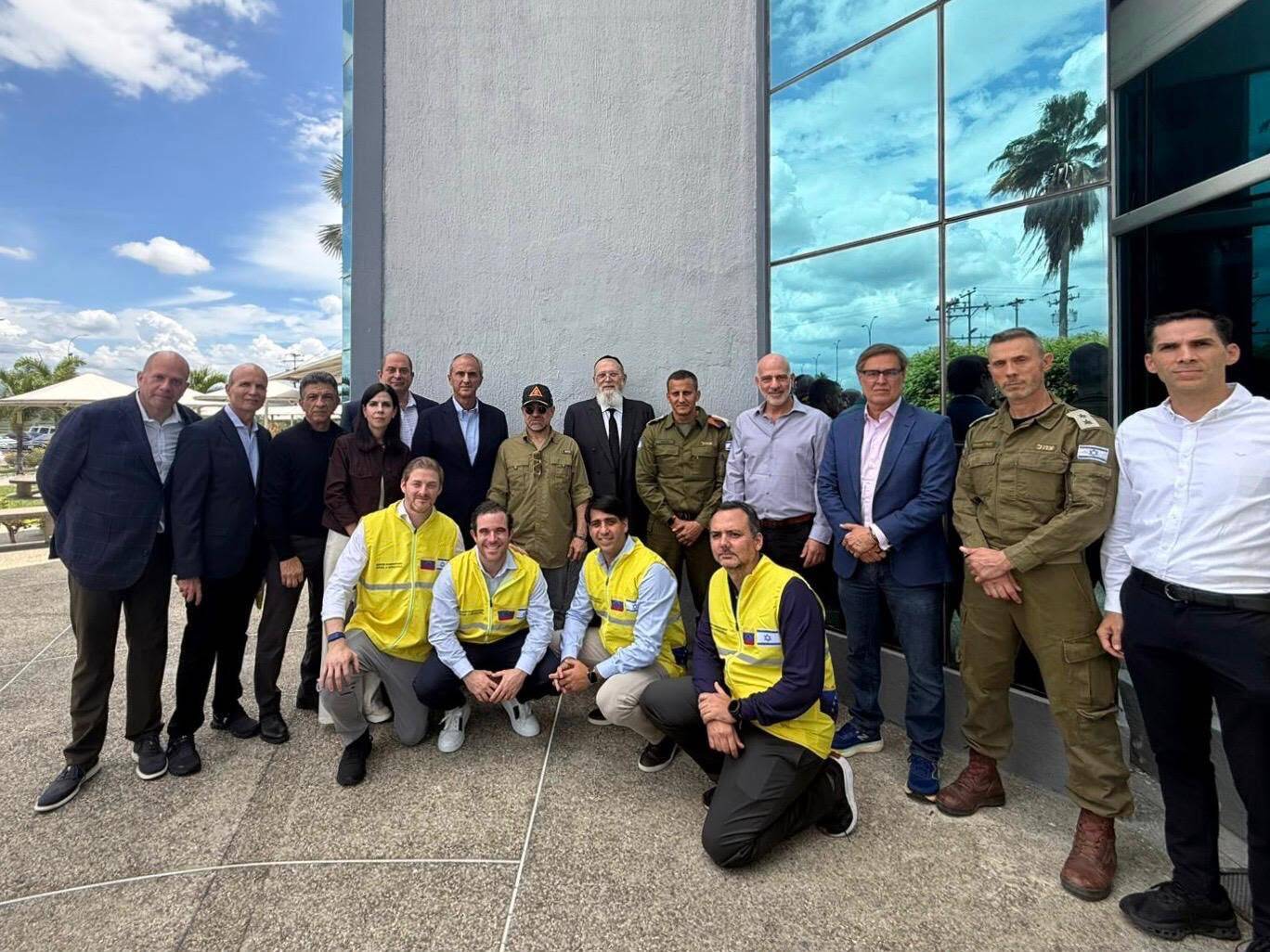
Members of an Israeli aid delegation are seen in Venezuela, July 1, 2026. (Israel Defense Forces)
An advance team of an Israeli aid delegation, including both military and civilian members, arrived in Venezuela a short while ago to assist in the aftermath of the powerful earthquakes that struck the South American country.
“Immediately upon landing, members of the delegation began a series of working meetings with the local authorities, emergency services and additional partners to form a situational assessment, map the needs on the ground, plan the joint activity, and complete preparations ahead of the start of operational activity,” the military and Foreign Ministry say in a joint statement.
Ambassador Yoed Magen, who grew up in Venezuela, is leading the advance team on behalf of the Foreign Ministry, while the military’s team is led by Home Front Command Chief of Staff Brig. Gen. Elad Edri.
The IDF and Foreign Ministry say that in the coming days, the rest of the aid delegation will arrive in Venezuela and join the advance team.
“Once preparations are complete, the expert teams will begin operating alongside the local authorities and assist in the recovery efforts, while sharing the knowledge and experience the State of Israel has gained in dealing with earthquakes, emergency situations, and aid missions around the world,” the statement adds.
Iran says technical talks in Qatar have concluded, sides agreed on partial release of frozen funds
Iranian Deputy Foreign Minister Kazem Gharibabadi announces the conclusion of talks in Doha on implementing the memorandum of understanding between Tehran and Washington on ending the Middle East war, state media reports.
The participants agreed that “a communication channel would be established by tomorrow” to report and record violations of the memorandum, the IRNA state news agency quotes Gharibabadi as saying.
Gharibabadi says the sides agreed that part of the $6 billion in frozen funds would be released to allow Tehran to purchase goods based on its needs.
‘Everybody’s profiting’: Trump defends $1 billion crypto earnings

US President Donald Trump greets onlookers after arriving in a Freedom250-themed train ahead of a dedication ceremony for the Theodore Roosevelt Presidential Library on July 01, 2026 in Medora, North Dakota. (Andrew Harnik/Getty Images/AFP)
US President Donald Trump defends earning $1.2 billion from his family’s cryptocurrency activities last year, saying “everybody’s profiting” from his time in power.
Taking his maiden flight aboard a new Air Force One plane gifted by Qatar, Trump rejected criticisms that he was using his presidency to enrich himself.
“You know why I’m profiting, because the stock market’s going up, everybody’s profiting,” Trump tells reporters at Joint Base Andrews near Washington.
The 80-year-old Republican said his earnings were placed in blind trusts to ensure that he could not influence government policy to boost his fortune.
“I don’t get involved in my personal (finances), we have funds that run my money,” Trump says. “I’ve made a lot of money before I became president, and they invest my money, and I don’t talk to them.”
Trump also insists that his wealth was due to his prior career, despite the fact that the earnings were related to crypto ventures launched during his first year back in the White House.
“I don’t know if I’ve had a better career in politics or business, but I had a great career in business, and you know, you saw the cash, and you report the different things,” he says. “So we’re all profiting. I’m profiting because I have a lot of money and a lot of cash.”
According to financial disclosures released by the US Office of Government Ethics on Tuesday, Trump received nearly $550 million from his ties to the startup World Liberty Financial (WLF) in 2025.
WLF was co-founded in September 2024 by Trump’s sons and the son of Trump’s Middle East special envoy Steve Witkoff.
WATCH: Maccabiah Games opening ceremony kicks off in Jerusalem

The opening ceremony of the 22nd Maccabiah Games commences in Jerusalem on July 1, 2026. (Zev Stub/Times of Israel)
The opening ceremony of the 22nd Maccabiah Games commences in Jerusalem, with 5,000 athletes, including 2,000 Israelis and 900 from the US, set to participate in more than 30 sports over two intense weeks.
A livestream of the ceremony can be accessed HERE.
PM claimed Iran ‘already obtained atomic bombs;’ Eisenkot, Bennett say it’s a complete ‘lie’
Yashar party chief Gadi Eisenkot and former prime minister Naftali Bennett accuse Prime Minister Benjamin Netanyahu of lying after the premier claimed during his Channel 14 interview last night that he ordered two Israeli attacks on Iran “to save us from the destruction of atomic bombs — which they already had obtained.”
This was the first time that Netanyahu has ever claimed that Iran had already obtained a nuclear weapon. He has long boasted of advancing policies that prevent Iran from obtaining a nuclear weapon.
Netanyahu apparently either got carried away in highlighting the threat from Iran and his steps against the regime or simply misspoke, given that a source familiar with the matter tells Haaretz that Netanyahu’s claim is a “complete lie.”
No previous US or Israeli intelligence assessments have previously accused Iran of already building nuclear weapons. Instead Iran has been accused of enriching uranium to levels with no peaceful use and of seeking the technology that would allow it to break out and develop a bomb in a very short time.
Calling out Netanyahu during an appearance at the Herzliya conference, Eisenkot, a former IDF chief of staff and a member of the war cabinet, insists, “Iran never obtained nuclear weapons. I’m well aware of all the intelligence. Netanyahu is inventing a reality, making up threats, and that’s his way to scare the Israeli public.”
Also, speaking at the conference, former prime minister Naftali Bennett also called the statement “a lie,” accusing Netanyahu of trying to rewrite history.
Female soldiers were pulled from meeting with PM in south Lebanon because Haredi troops were also present
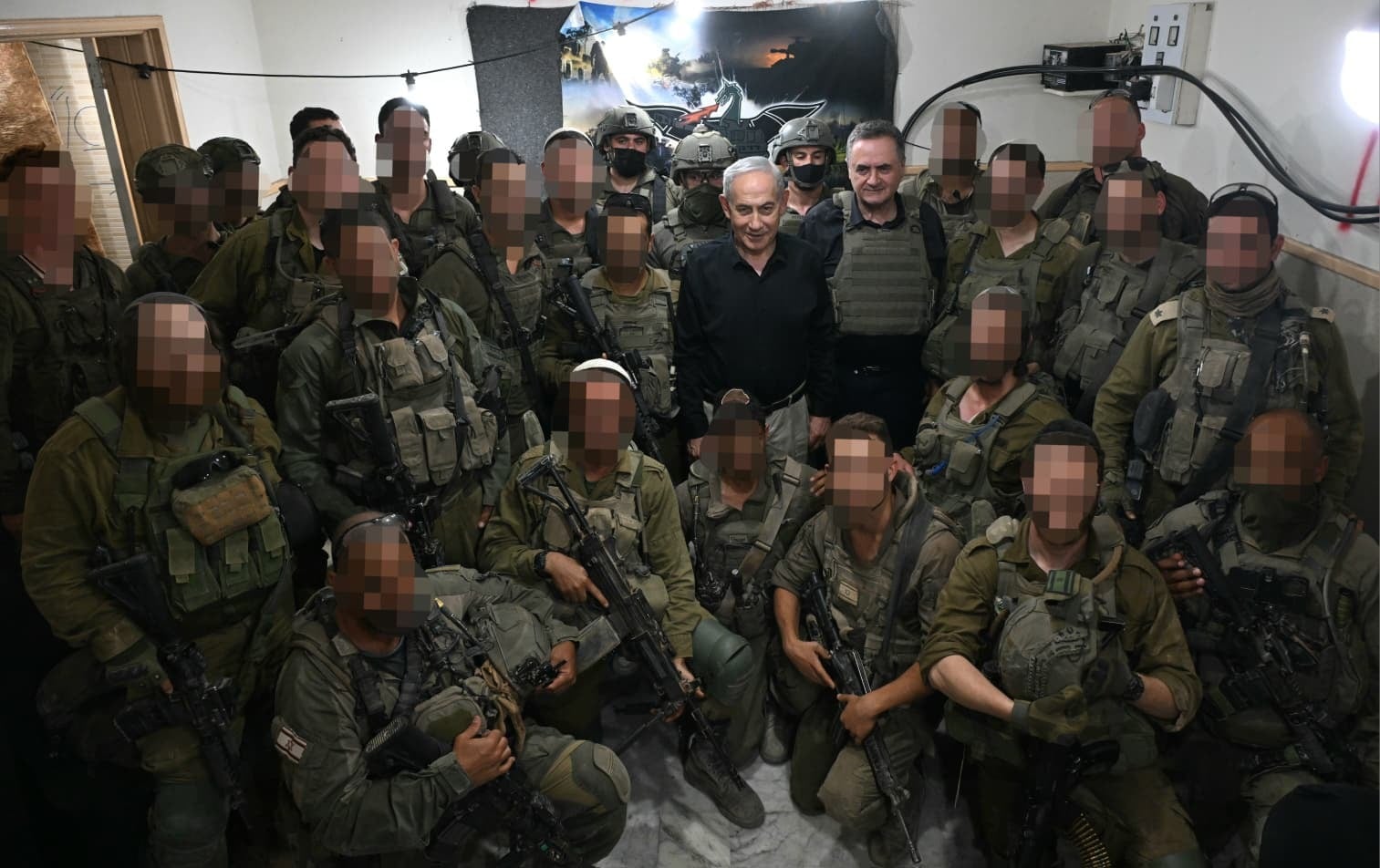
Prime Minister Benjamin Netanyahu visits Israeli troops in southern Lebanon on June 30, 2026. (Haim Zach/GPO)
A squad of female troops from an artillery unit currently stationed in southern Lebanon were told to leave the building they were stationed in yesterday in south Lebanon shortly before the arrival of Prime Minister Benjamin Netanyahu and Defense Minister Israel Katz.
The mother of one of the soldiers tells the Kan public broadcaster that the women were told that soldiers from the ultra-Orthodox Hasmonean Brigade would be joining Netanyahu for the visit.
In order to “respect” the Haredi soldiers, the four women were asked to leave the home that they themselves had helped clean and secure for Netanyahu’s visit, the mother tells Kan.
For four hours, the girls sat alone in an adjacent house, and were not even permitted to go upstairs to avoid a scenario in which the Hasmonean soldiers might “accidentally” see them, the mother says.
The home that was used for the Netanyahu visit wasn’t even in an area where the Hasmonean Brigade was stationed, but organizers of the visit still wanted the troops to take part, as the premier tries to present the unit as a success story, in an apparent effort to blunt criticism of his coalition’s efforts to pass legislation granting blanket conscription exemptions for Haredi yeshiva students.
Report: Former Shin Bet officials accuse Zini of crossing ‘red line’ over removal of Oct. 7 memorial
Shin Bet director David Zini at Mount Herzl Military Cemetery in Jerusalem during Memorial Day on April 21, 2026. (Chaim Goldberg/Flash90)
A recent decision by Shin Bet chief David Zini to dismantle a memorial at the entrance to the agency’s Tel Aviv headquarters commemorating employees killed in the October 7, 2023, Hamas-led terror onslaught has sparked fierce backlash among current and former officials in the security agency, Channel 12 reports.
The decision – in addition to other reported decisions by Zini, including the cancellation of a planned Pride Month event within the agency and the removal of the budget of the organization’s LGBTQ employee group – prompted three former senior Shin Bet officials who returned to assist the organization after October 7 to decide to tell Zini in the coming days that he had “crossed a red line,” the report say.
The officials, who have continued serving in what the report describes as a reserve capacity, tell the network they plan to tell the Shin Bet chief: “Your decision to dismantle the memorial wall is a red line for us. It is something that should never have been done. We cannot continue as though nothing happened,” noting that their primary motivation for returning to service was the desire to help rehabilitate the organization after October 7.
There is also considerable anger among families of fallen Shin Bet personnel over the decision, the report adds.
One current official tells Channel 12: “We are here precisely to look the failure in the eye every day, even if Zini does not want to see it. That is the fuel for our work after October 7.”
The memorial was removed shortly after Israel’s Memorial Day in April, according to Haaretz, which quoted sources as saying Zini believed there was no reason agency employees should “have to see the debacle [of October 7] in front of our faces every day,” while another source said he viewed the display as an expression of “defeatism.”
The Shin Bet later confirmed that the memorial had been removed, saying Zini believed a display commemorating only some of those killed on October 7 did not adequately reflect the scale of the attack. The agency noted that a separate memorial wall honoring all victims of the massacre remains in place.
Europeans to fill almost all gaps left by US in NATO defence plans, source says
NATO is set to announce at next week’s Ankara summit that its European members have filled almost all the gaps left by the United States in the alliance’s defence plans, a NATO source tells Reuters.
The main gap NATO is still struggling to plug is in strategic bombers, where the US has said it will make only one aircraft available instead of two, says the source, speaking on condition of anonymity.
One US service member missing after helicopter goes down in Arabian Sea
One US service member is missing, and three others are wounded, but in stable condition after their MH-60S Seahawk helicopter made an emergency landing in the Arabian Sea, the US military says, adding that there is no indication the crash was caused by hostile action.
“US Navy assets in the region are currently searching for other aircrewmen still missing. The cause of the incident is under investigation,” the US Navy’s 5th Fleet said in a statement, adding that the helicopter was deployed to the region on the USS George H.W. Bush aircraft carrier.
Helicopter water landings can be dangerous, even for experienced pilots, given the propensity of top-heavy aircraft to flip upside-down during submersion. US forces in the region are also on high alert amid periodic flare-ups in violence during the ceasefire between the US and Iran.
Coalition advances controversial Basic Law aimed at shielding Haredi draft evaders from sanctions
The Knesset votes 63-53 to advance through its first reading of a highly controversial Basic Law declaring Torah study a foundational value of the State of Israel, following a lengthy and heated debate in the plenum.
Four coalition MKs voted against the measure as they did during the preliminary reading in June: Likud MKs Dan Illouz and Yuli Edelstein, Deputy Foreign Minister Sharren Haskel and Religious Zionism MK Moshe Solomon.
All four lawmakers have long opposed efforts to preserve broad military service exemptions for yeshiva students. Edelstein was ousted as chair of the powerful Knesset Foreign Affairs and Defense Committee and replaced with Likud MK Boaz Bismuth for refusing to advance draft-exemption legislation.
The legislation is intended to shield draft evaders from sanctions and prosecution. Absent a constitution, Basic Laws in Israel have the highest legal status in the country.
The proposed basic law will now return to the Knesset House Committee for further deliberation and then must advance to the plenum for two final votes before passing into law.
The coalition is aiming to pass the legislation before the Knesset dissolves in the coming weeks for the legally mandated 90 days ahead of elections, which must be held by October 27.
The bill forms part of the Haredi parties’ broader legislative push to preserve mass exemptions for yeshiva students from military service by elevating the status of Torah study, including a parallel measure to shield current draft evaders from criminal enforcement.
The vote comes after the coalition briefly pulled the legislation from the Knesset agenda earlier today without explanation before restoring it several hours later, amid last-minute internal coalition opposition, including from lawmakers in Prime Minister Benjamin Netanyahu’s Likud and Finance Minister Bezalel Smotrich’s Religious Zionism party, raising questions over whether the coalition had sufficient support to advance it.
The legislation was rushed through the Knesset House Committee this week during three marathon sessions despite sharp objections from the Knesset’s legal advisers and the Attorney General’s Office, which argued that it raises unresolved constitutional questions and criticized both the accelerated legislative process and the decision to prepare a Basic Law in the House Committee rather than the Constitution, Law and Justice Committee.
TikTok settles with US teenager ahead of social media addiction trial

Illustrative: A man opens the social media app 'TikTok' on his phone, in Islamabad, Pakistan, July 2020. (AP/Anjum Naveed)
TikTok settled a lawsuit with a teenager just weeks before the company was set to go to trial in a second landmark case over whether social media companies are responsible for the harms their products might cause.
The 15-year-old Florida teenager, identified only by his initials R.K.C., has accused four social media companies of harming his mental health and previously reached a settlement agreement with YouTube on June 23.
This leaves only Meta and Snapchat as defendants in the trial, which is scheduled to begin July 27 in Los Angeles.
“We can confirm that a settlement in principle has been reached with TikTok,” law firm Morgan & Morgan, which represents the teenager, tells AFP, without specifying the terms.
TikTok also previously settled a similar case, the first of its kind, in January before the trial started.
This second trial, to be held in a Los Angeles courtroom, is considered another benchmark for how thousands of social media addiction lawsuits could play out in the United States.
The Florida teenager claims that years of compulsive social media use contributed to severe psychological disorders -– anxiety, depression, and suicidal thoughts –- for which he is still receiving treatment.
“These social media companies have been strategizing for years to hook children early and maximize their usage with insidious features like autoplay and infinite scroll, all with the aim of increasing profits at the expense of the mental health of our youth,” the plaintiff’s attorneys at Morgan & Morgan said in a statement after settling with YouTube.
In March, a Los Angeles jury ordered Meta and Google, YouTube’s parent company, to pay the young woman known as K.G.M. $6 million.
TikTok and Snap both settled before the trial without any admission of liability.
In May, Meta, Snap, TikTok, and YouTube agreed to pay about $27 million to a school district in Kentucky to avoid a trial. That case was also seen as a test for around 1,200 other lawsuits filed by representatives of 13,000 public schools nationwide.
In a separate case that could go to trial in August in Oakland, more than thirty US states are suing Meta over similar allegations.


read more: