The Times of Israel liveblogged Sunday’s events as they occurred.
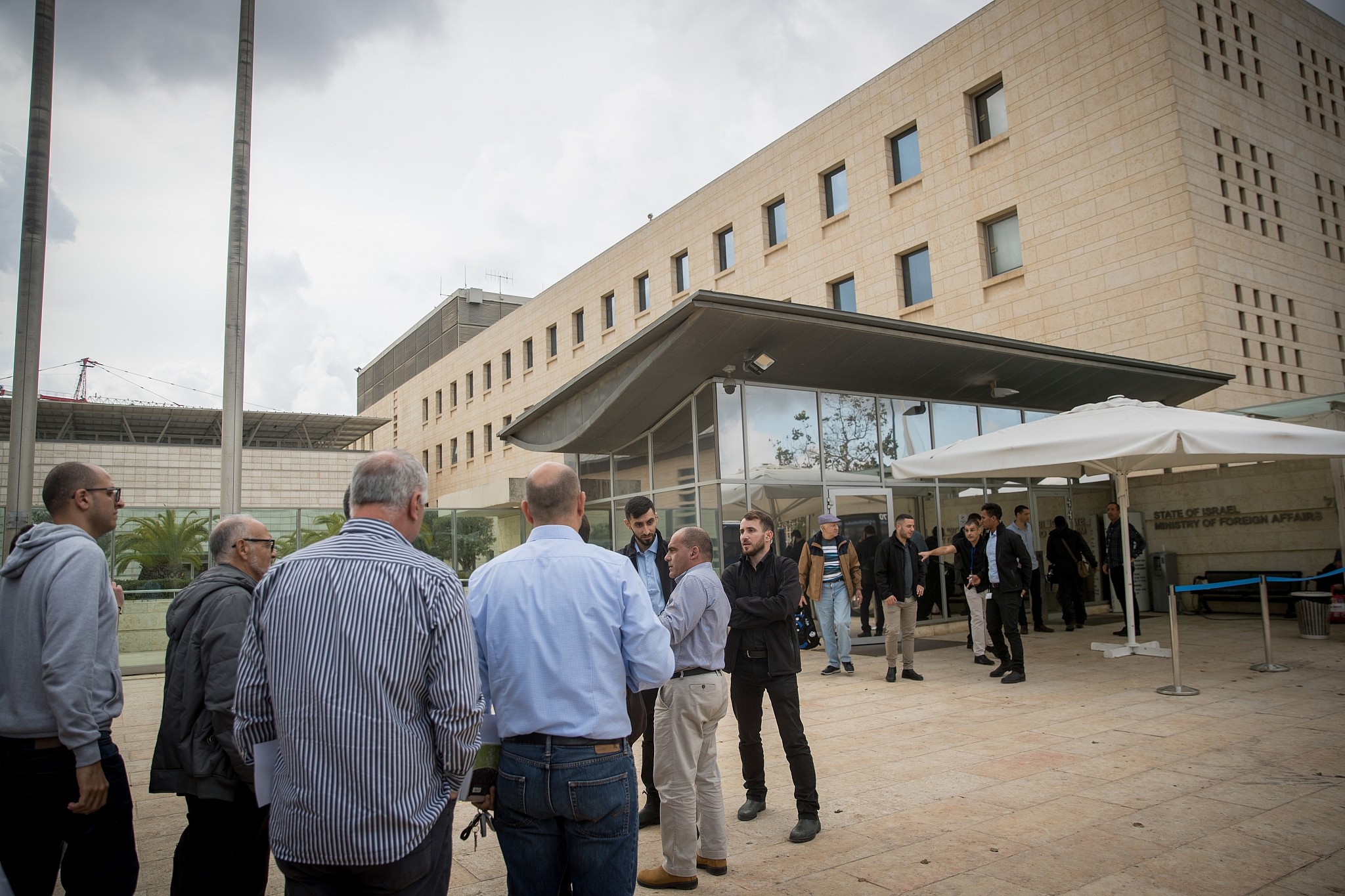
Acting Tiberias mayor rejects justice’s suggestion he bow out of race

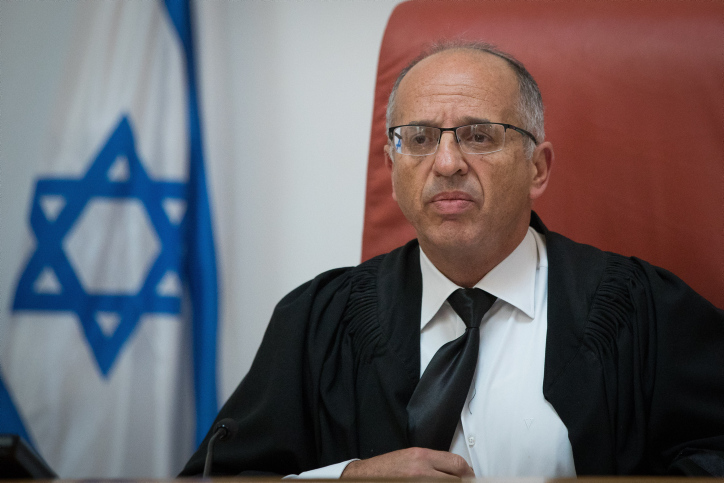
Following a five-hour long hearing, Supreme Court Justice Noam Sohlberg recommends that acting mayor of Tiberias Boaz Yosef refrain from running for the post in the upcoming October election, stating that the nine-justice panel favors a situation in which a recent law ostensibly passed to assist Yosef electorally should enter into effect only after the upcoming ballot.
Despite the justice’s comments, Yosef’s lawyer informs the court that he declines to accept the recommendation.
Sohlberg’s remarks, which he said reflect the “emerging view” of the nine-justice panel, indicate that the court hearing has taken a dim view of the personal nature of the law which was seemingly designed both by its primary sponsor Likud MK Amit Halevy and in the legislative process in committee to specifically enable Yosef to run for mayor.
“The emerging opinion of the court is that the implementation of the law needs to be postponed,” says Sohlberg, adding, “Perhaps it’s best not to polish the swords and to reconcile with the result.”
The organizations and individuals who filed petitions against the law argued it should be struck down by the High Court because it was narrowly designed to help a specific individual.
The law does away with a cooling off period imposed on acting position holders to avoid them having an unfair advantage in the upcoming elections over other candidates. Petitioners argued that the new law harms the enshrined rights of other candidates.
While expressing concern throughout the hearing over the personal nature of the law, the High Court justices were relatively dismissive of constitutional arguments against the legislation.
Palestinians suggest panel to push reconciliation, but not accepted
Rival Palestinian political leaders meeting in Egypt have decided to form a committee on intra-Palestinian reconciliation, a move that one analyst doubted would end their 17-year rift.
In a statement, Palestinian President Mahmoud Abbas says he “hopes for an upcoming meeting soon in Egypt to announce to our people the end” of the 17-year split “and the return to Palestinian national unity.”
Abbas held rare face-to-face talks with Hamas leader Ismail Haniyeh in the coastal city of El Alamein along with representatives of most Palestinian political factions.
“”We must return to a single state, a single system, a single law and a single legitimate army,” Abbas says
The Hamas leader says “a new, inclusive parliament must be formed on the basis of free democratic elections.”
Palestinian political scientist Moukhaimer Abu Saada tells AFP that the formation of the committee was no cause for celebration.
“The best way to kill something is to form a committee for it,” he says, speaking from Gaza.
Israel says it snagged ‘irregular’ weapons being smuggled from Jordan
Authorities have cleared for publication reports on a foiled weapons smuggling operation from Jordan.
There are scant details about the incident, which occurred last week. Reports describe the weapons being smuggled as “anomolous” but there is no information regarding the type of weapon or where it was smuggled to.
Army Radio reports that authorities investigating the incident believe the weapons were being spirited in for use by terror groups.
Weapon smuggling from Jordan is a constant challenge for Israel, along its long, porous eastern border, and in the West Bank. Officials believe most guns are being used in underworld crime, and have vowed to crack down as part of an effort to end years of bloodshed in the Arab community.
Ceasefire fails to halt fighting in Lebanon refugee camp

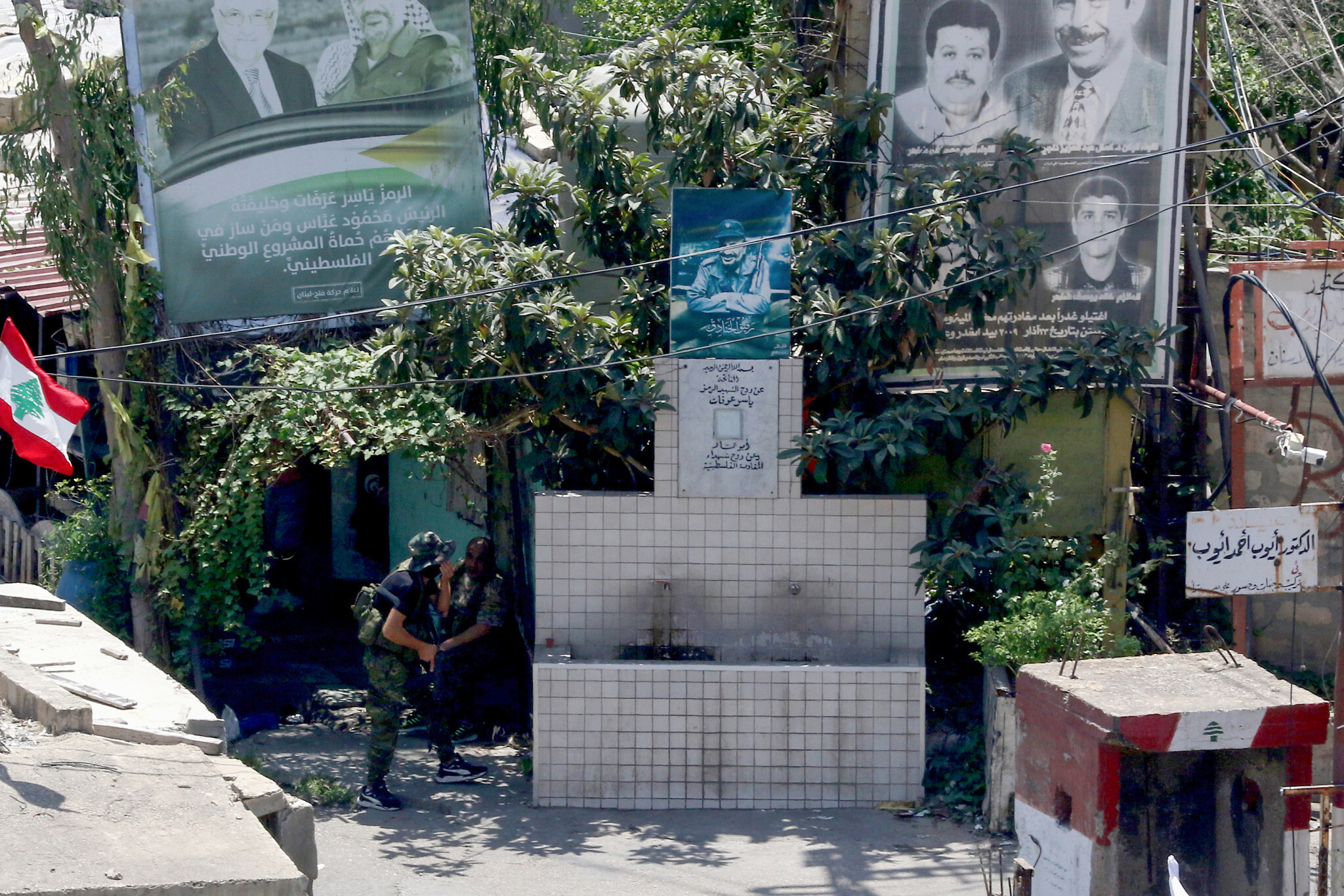
Fighting in the Palestinian refugee camp of Ein el-Hilweh, near Sidon, Lebanon, is persisting despite a ceasefire meant to end a day of intense gun battles.
The warring factions say in a joint statement that they agreed to a ceasefire during a mediation meeting hosted by the Lebanese Shiite Amal movement and Hezbollah in Sidon. But local media say the fighting has continued.
A spokesperson from Hamas tells AP that the groups are working to implement the truce.
UNRWA, the UN agency for Palestinian refugees, puts the death toll from the fighting at six. Lebanese authorities earlier said five were killed and seven wounded, including two children.
Lebanon’s caretaker prime minister, Najib Mikati, condemns the clashes.
“We call on the Palestinian leadership to cooperate with the army to control the security situation and hand over those meddling with security to the Lebanese authorities,” Mikati says.
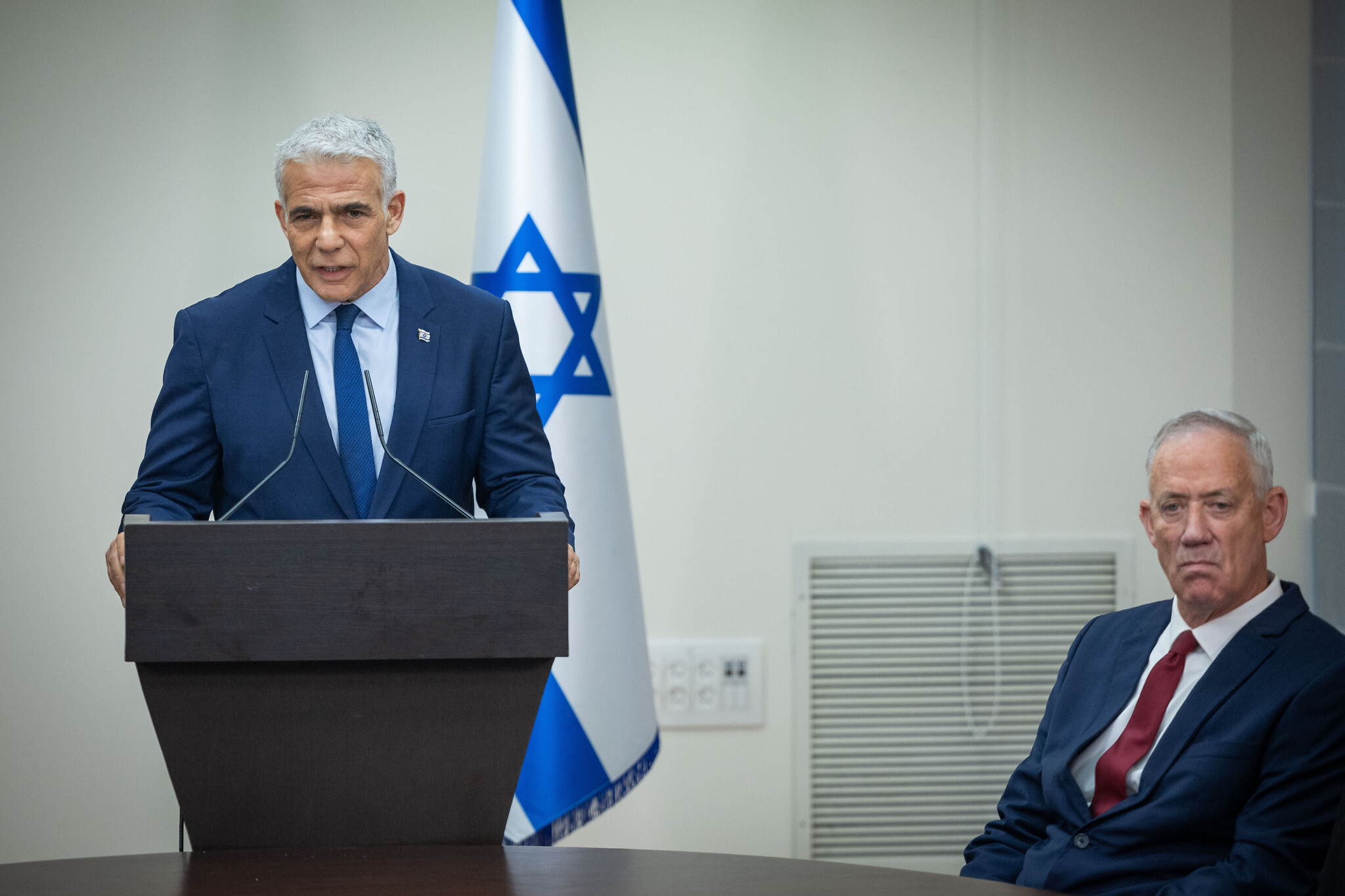
Lapid and Gantz put kibosh on joining Netanyahu government for Saudi deal
Opposition party leaders say a potential normalization deal with Saudi Arabia would not be enough to bring them into Prime Minister Benjamin Netanyahu’s ruling coalition, the Walla news site reports.
However, they could support such a deal from outside the government, say both Yesh Atid head Yair Lapid and National Unity leader Benny Gantz.
“We won’t enter a Netanyahu government. If there’s a deal with Saudi Arabia that represents Israel’s security interests, we’ll back it from the outside,” a source close to Lapid is quoted saying.
According to reporting by ToI and The New York Times, any deal with the Saudis is expected to require significant Israeli concessions on the Palestinian front, moves unlikely to be backed by far-right elements in the Netanyahu government.
Opposition leaders have stated that they will not serve in a coalition with Netanyahu due to his ongoing corruption trial, “but questions have come up in discussions with Americans about whether the leaders might relent if it meant establishing diplomatic relations with the Saudis,” The New York Times reported Sunday.
However, according to Walla, opposition members are expected to approach any deal with Saudi Arabia with a jaundiced eye, fearing it could include concessions that will erode Israel’s regional military advantage, such as okaying a Saudi nuclear program.
Opposition members lodged largely ineffective objections to a normalization deal with the UAE that included an Israeli sign-off on advanced arms sales to Abu Dhabi.
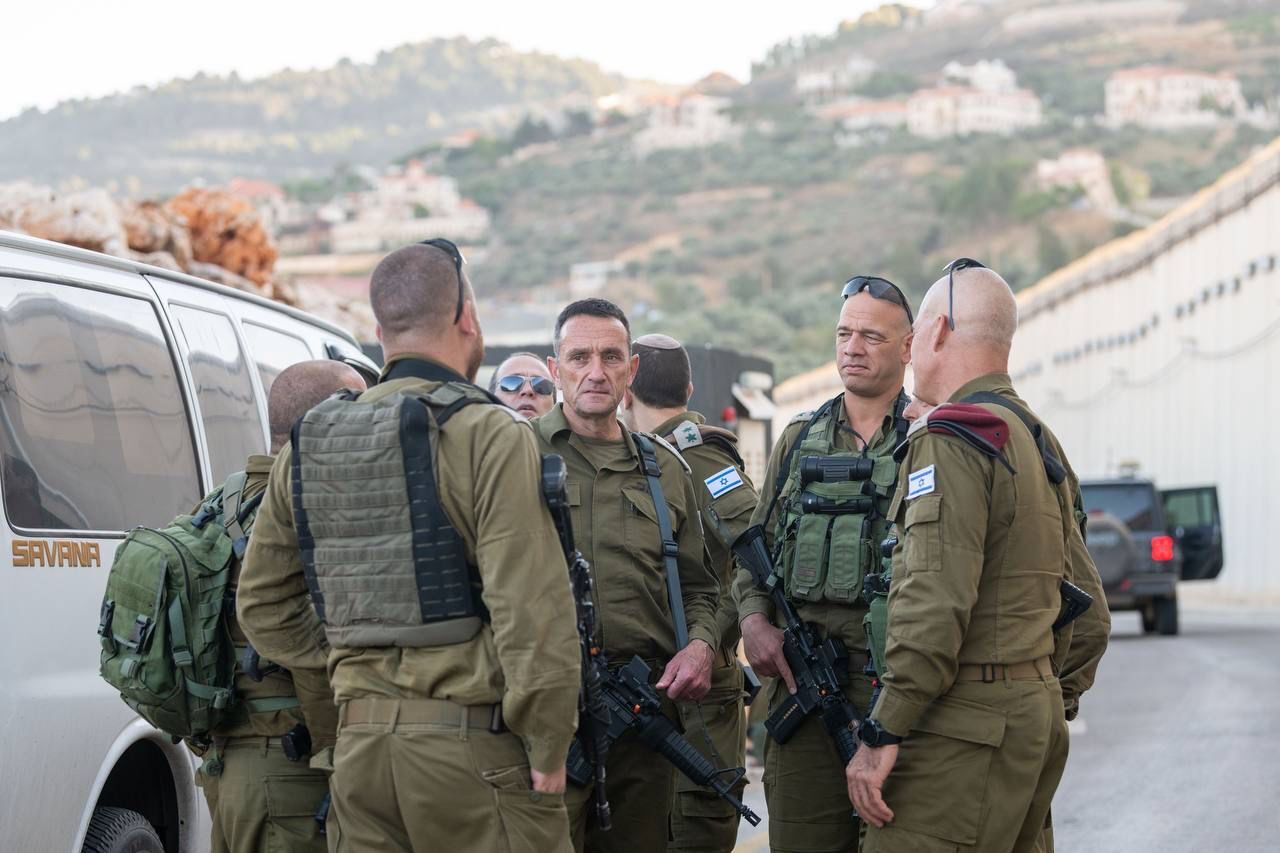
Army indicates reluctance to remove Hezbollah tent after Netanyahu meet
Speculation surrounding tensions on the northern border is rampant after Prime Minister Benjamin Netanyahu held a briefing with defense brass and other top officials, in light of reports indicating increased activity by the Hezbollah terror group on the frontier.
Channel 12 news reports that the military recommended against a operation aimed at pushing away the terror group, and removing a tent it has set up in disputed territory.
At the same time, the channel quotes defense officials saying that Israel’s deterrent threat against Hezbollah has weakened considerably and continues to fade every day the tent remains.
A defense official is quoted telling Army Radio after the briefing with Netanyahu that the army is not being pushed into operations against its will, seemingly seeking to reject claims that border tensions are being manufactured or exaggerated to distract from Netanyahu’s domestic political issues.
“We won’t carry out any mission that is forced into us,” the source is quoted saying. “These tents are not a security threat, and we aren’t getting into any operation we’re not interested in.”
Gazans hold rare rally against Hamas over power woes
Thousands have taken to the streets across the Gaza Strip to draw attention to chronic power outages and difficult living conditions, in a rare public show of discontent with the territory’s Hamas government.
Hundreds join marches in Gaza City, the southern town of Khan Younis and other locations, chanting, “For shame” and in one place burning Hamas flags.
The demonstrations are organized by a grassroots online movement called “Alvirus Alsakher,” or “the mocking virus.”
“Where is the electricity and where is the gas?” the crowds shout in Khan Younis. “For shame. For shame.”
הפגנות חריגות מאוד בכמה מוקדים ברצועת עזה נגד חמאס, על רקע משבר החשמל והטינה הכללית. "מכרו את עזה תמורת דולרים" ועוד דברים שלא נשמעו כבר תקופה pic.twitter.com/q7IhMeEcXy
— Nurit Yohanan (@nurityohanan) July 30, 2023
The crowds also criticize Hamas for deducting a roughly $15 fee from monthly $100 stipends given to Gaza’s poorest families by the wealthy Gulf state of Qatar.
Police eventually move in and disperse the gatherings, destroying mobile phones of people filming in Khan Younis and arresting several, according to witnesses.
Knesset passes abuser monitoring law ‘rebalanced’ by Ben Gvir
The Knesset has passed a law introducing a system for electronically enforcing restraining orders on domestic abuse suspects, after the coalition torpedoed a similar bill to introduce on of its own.
The law, presented by National Security Minister Itamar Ben Gvir, authorizes electronically monitored restraining orders, but requires more preconditions for them than the previous version that was narrowly voted down in the Knesset in March.
Ben Gvir had said he wanted a version of the bill that was more “balanced” and addressed false accusations against abuse suspects.
The law is officially an emergency order and will expire in three years. It only goes into affect next year.
“After several years of legislating, we are finally putting cuffs on anyone who causes harm, or is clearly liable to cause harm, to allow families to have a normal life,” says Otzma Yehudit MK Tzvika Fogel, a Ben Gvir apparatchik who heads the Knesset committee that oversees his boss.
Following assessment, PM says he ‘accepts’ recommendations of IDF

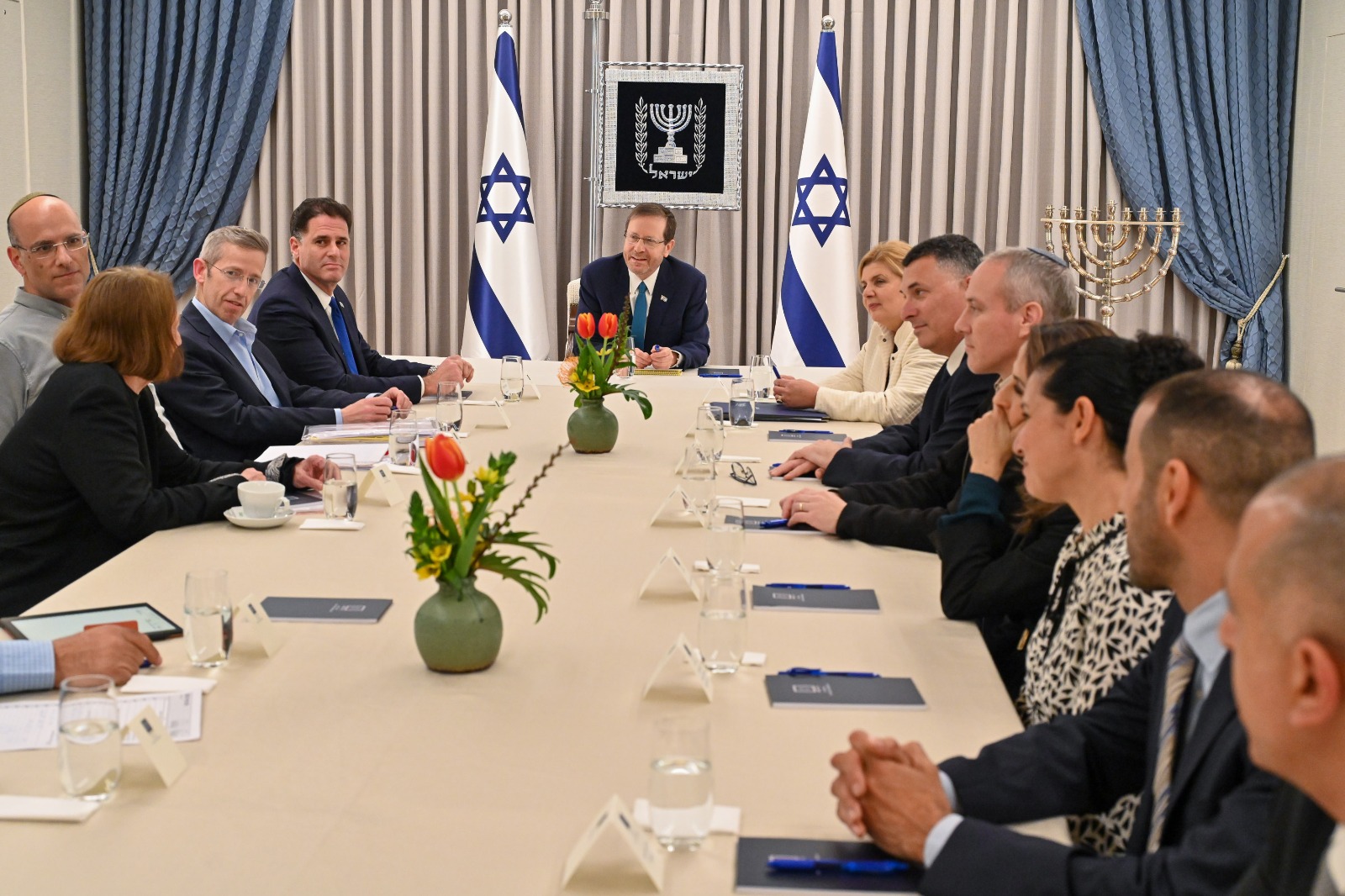
Prime Minister Benjamin Netanyahu held an assessment today with all the top defense officials to discuss courses of action proposed by the military, his office says.
According to a statement published by the Prime Minister’s Office, Netanyahu met with Defense Minister Yoav Gallant, Strategic Affairs Minister Ron Dermer, IDF Chief of Staff Lt. Gen. Herzi Halevi, Mossad Director David Barnea, Shin Bet chief Ronen Bar, National Security Adviser Tzachi Hanegbi, head of the IDF Military Intelligence Directorate Maj. Gen. Aharon Haliva, head of the IDF Operations Directorate Maj. Gen. Oded Basiuk, the head of the Defense Ministry’s Political-Military Bureau Dror Shalom, and the premier’s military secretary, Maj. Gen. Avi Gil.
“The prime minister accepted the recommendations and courses of action proposed by the IDF and the defense establishment,” the PMO says in a vague statement that does not elaborate.
Likud MK says Netanyahu cannot intervene in overhaul due to his conflict of interest
Renegade Likud MK Tally Gotliv says that Prime Minister Benjamin Netanyahu cannot legally intervene in the ongoing judicial overhaul because of his conflict of interest due to his ongoing corruption trial.
“Netanyahu cannot touch the judicial system, that’s my opinion,” says Gotliv in an interview with the Knesset channel. “He is inherently in a conflict of interest, on a personal level.”
Gotliv, a former attorney, adds however that she believes Netanyahu until now has only “unfortunately” intervened on the side of protecting the current judicial system rather than pushing for change.
The Likud MK adds that she has long advocated for Netanyahu “to pass the baton to [Justice Minister] Yariv Levin” on the issue.
Netanyahu has already been warned by the attorney general that he has violated the conflict of interest agreement he signed in 2020, which barred him from getting involved in legislative matters that may impact his ongoing trial on corruption charges.
The High Court has agreed to hear petitions on the issue sometime in mid-September.
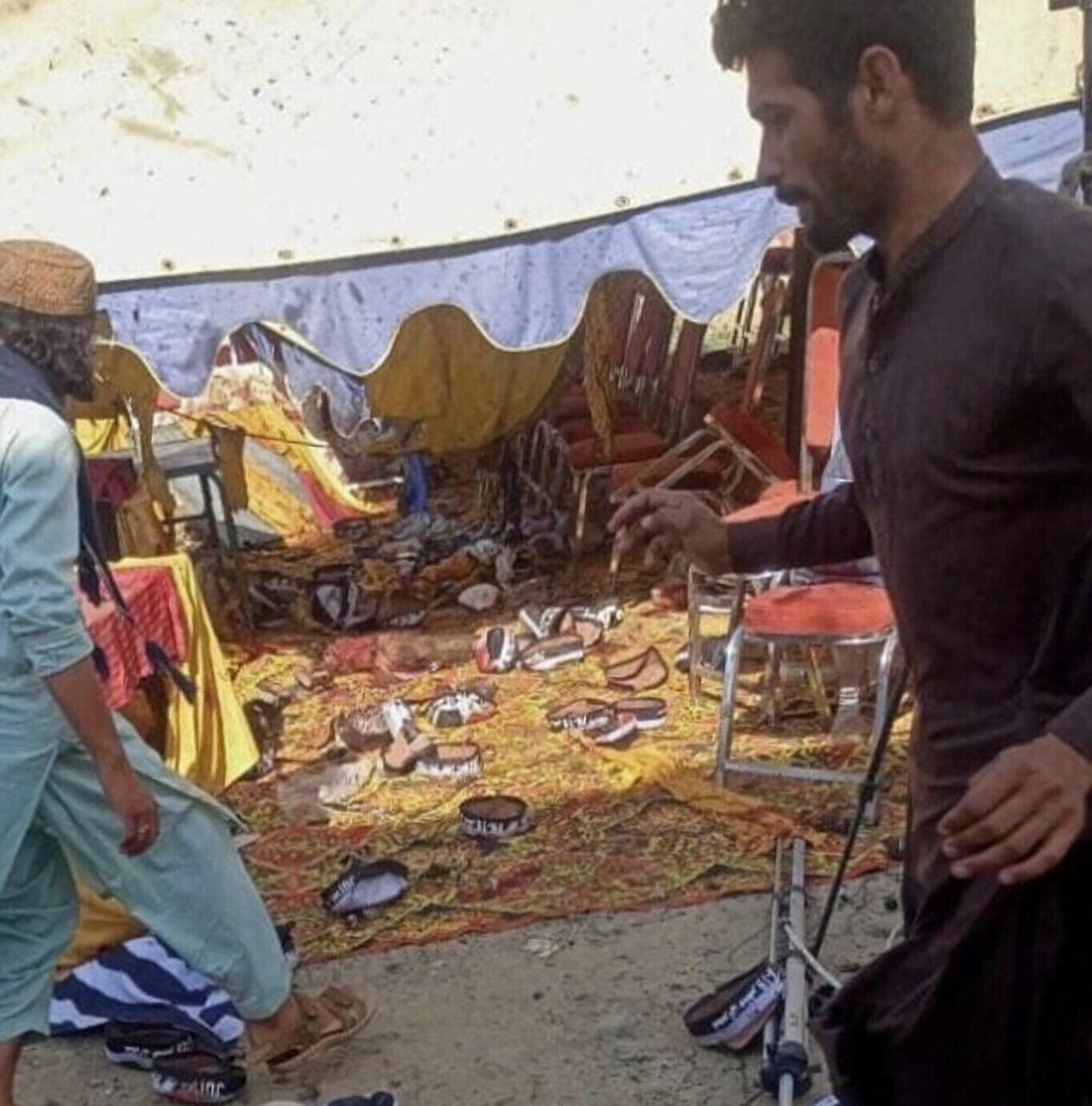
At least 40 people killed in explosion at political rally in Pakistan

A powerful bomb rips through a rally by supporters of a hardline cleric and political leader in the country’s northwestern Bajur district that borders Afghanistan, police and health officials say, killing at least 40 people and wounding more than 100.
Senior police officer Nazir Khan says the workers convention of Maulana Fazlur Rehman’s Jamiat Ulema Islam party was taking place on the outskirts of Khar, the capital of Bajur district, when the explosion took place. AP video showed wounded people being carried from the scene in the chaotic aftermath of the explosion.
Khan says some of the wounded were in critical condition and the death toll could rise.
No one immediately claims responsibility for the attack, but the Islamic State group operates across the border in Afghanistan.
Knesset advances bill that would force Israeli envoys to declare loyalty to state

The Knesset advances a bill that would require senior Israeli diplomats to sign onto loyalty pledges to Israel as a Jewish and democratic state before being posted abroad.
Backed by Foreign Minister Eli Cohen, the bill clears its first reading, and will need an additional two votes before becoming law.
According to Cohen’s spokesperson, Israeli ambassadors, consuls or other heads of diplomatic missions will be compelled to take the pledge as a condition of receiving their appointments abroad.
“The role of the state’s emissaries and representatives is to represent the State of Israel and its values and act in its interests. The State of Israel is a Jewish and democratic state, and anyone who does not recognize this will not be able to serve as an ambassador and represent the State of Israel,” Cohen says in a statement released shortly after the vote.
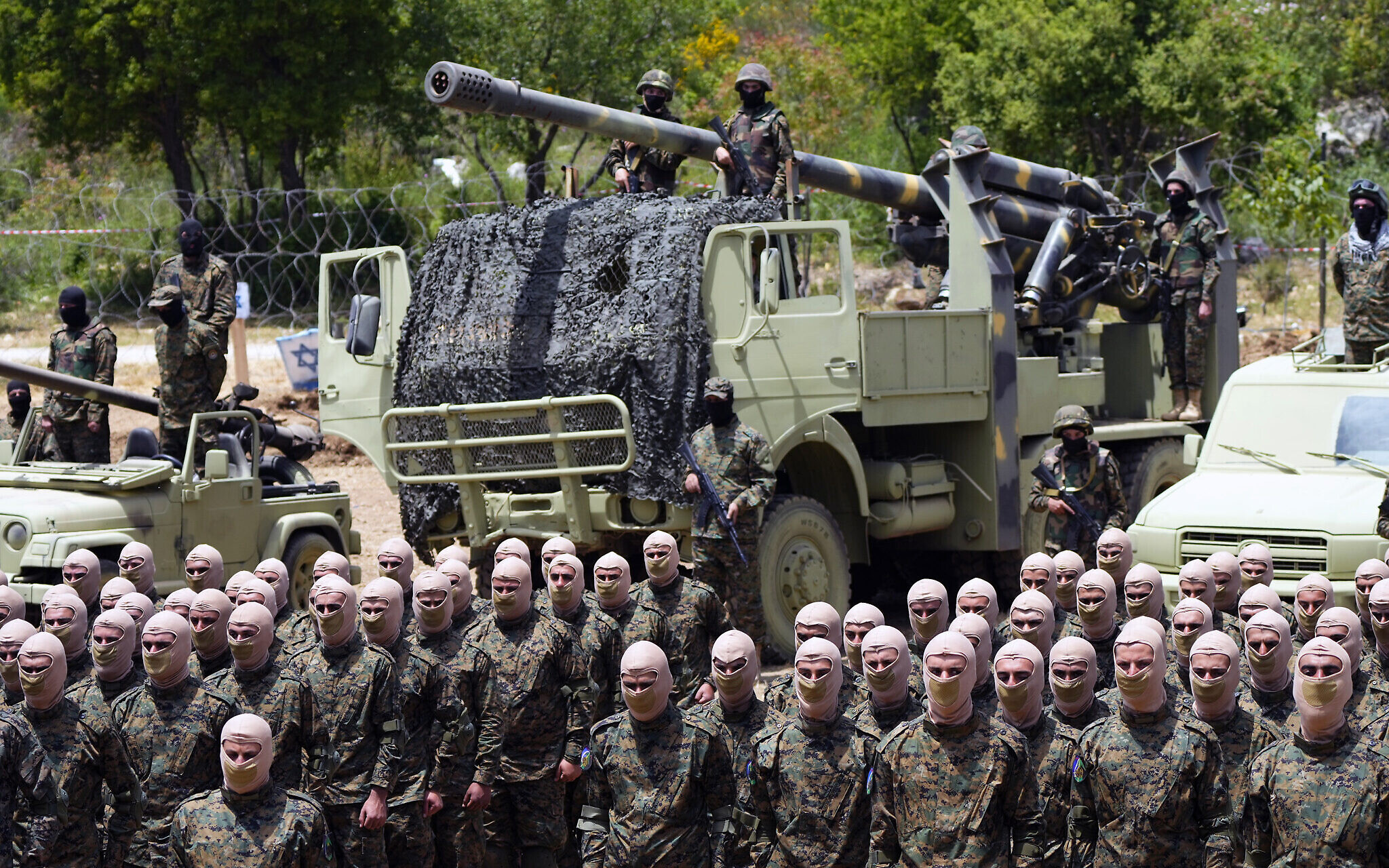
Lebanese men wave Hezbollah flags along border with Israel

A number of Lebanese citizens wave flags of the Hezbollah terror group on Israel’s border, footage shows.
In videos and pictures shared by a Hezbollah-affiliated reporter, several young Lebanese men are seen crossing a barrier reportedly set by a United Nations peacekeeping force near the contested village of Ghajar, which straddles the Israel-Lebanon border.
The suspects did not cross Israel’s border fence or enter sovereign Israeli territory.
فيديو صوره الشبّان اللبنانيون الذين قطعوا السياج الذي وضعته اليونيفيل عند حدود الجزء اللبناني من الغجر ودخلوا إلى الطريق الممنوعة على اللبنانيين منذ العام 2006 والتي تربط بين الوزاني والعباسية . pic.twitter.com/WNWdkGzL2Y
— علي شعيب || Ali Shoeib ???????? (@alishoeib1970) July 30, 2023
According to Ali Shoeib, the Hezbollah-linked correspondent, the UN fence had prevented Lebanese residents from entering a road near Ghajar since 2006, when Israel gained control of the entire village following a month-long war with Hezbollah.
The incident appears to be the latest in a series of escalating confrontations along the northern border, most of them instigated by Hezbollah, that have raised tensions in recent months.
احتجاجاً على احتلال قرية #الغجر واقفال قوات #اليونيفيل الدولية الطريق اللبناني بين #الوزاني و #العباسية الذي يمر بالقرب من الغجر قام شبّانٌ لبنانيون بقطع السياج الذي وضعته اليونيفيل ودخلوا إلى الطريق المحرمة على اللبنانيين منذ العام 2006 pic.twitter.com/39rYrr897b
— علي شعيب || Ali Shoeib ???????? (@alishoeib1970) July 30, 2023
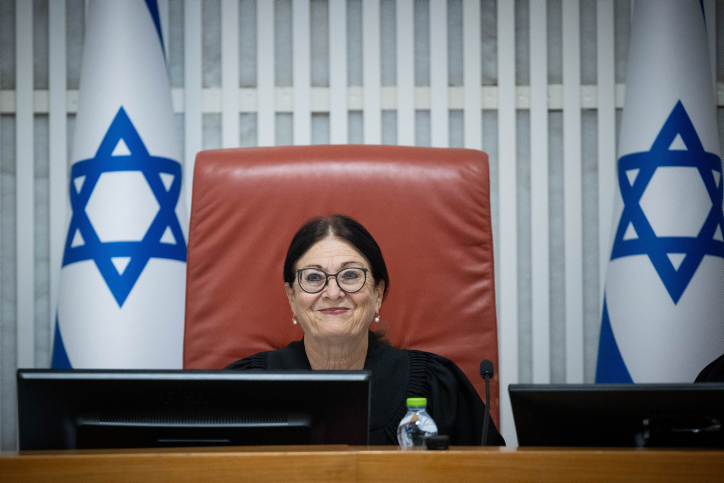
High Court chief slams mayoral election law as being ‘tailor-made’ to benefit Deri ally

Supreme Court President Esther Hayut expresses skepticism about the legality of the so-called “Deri law” in a hearing about the legislation.
Hayut tells the court that the legislation passed earlier this month, which voids a requirement for caretaker mayors to take a break before running for election, is clearly a “personal bill.”
Petitions to the High Court claim that the legislation, pushed for by Shas chief Aryeh Deri, is aimed at paving the way for an associate of his to run for mayor of Tiberias in this fall’s municipal elections.
“The law is personal because it is tailor-made for the election in Tiberias — members of Knesset said this out loud,” says Hayut, according to Army Radio.
The court earlier this month issued an injunction against the legislation taking effect.
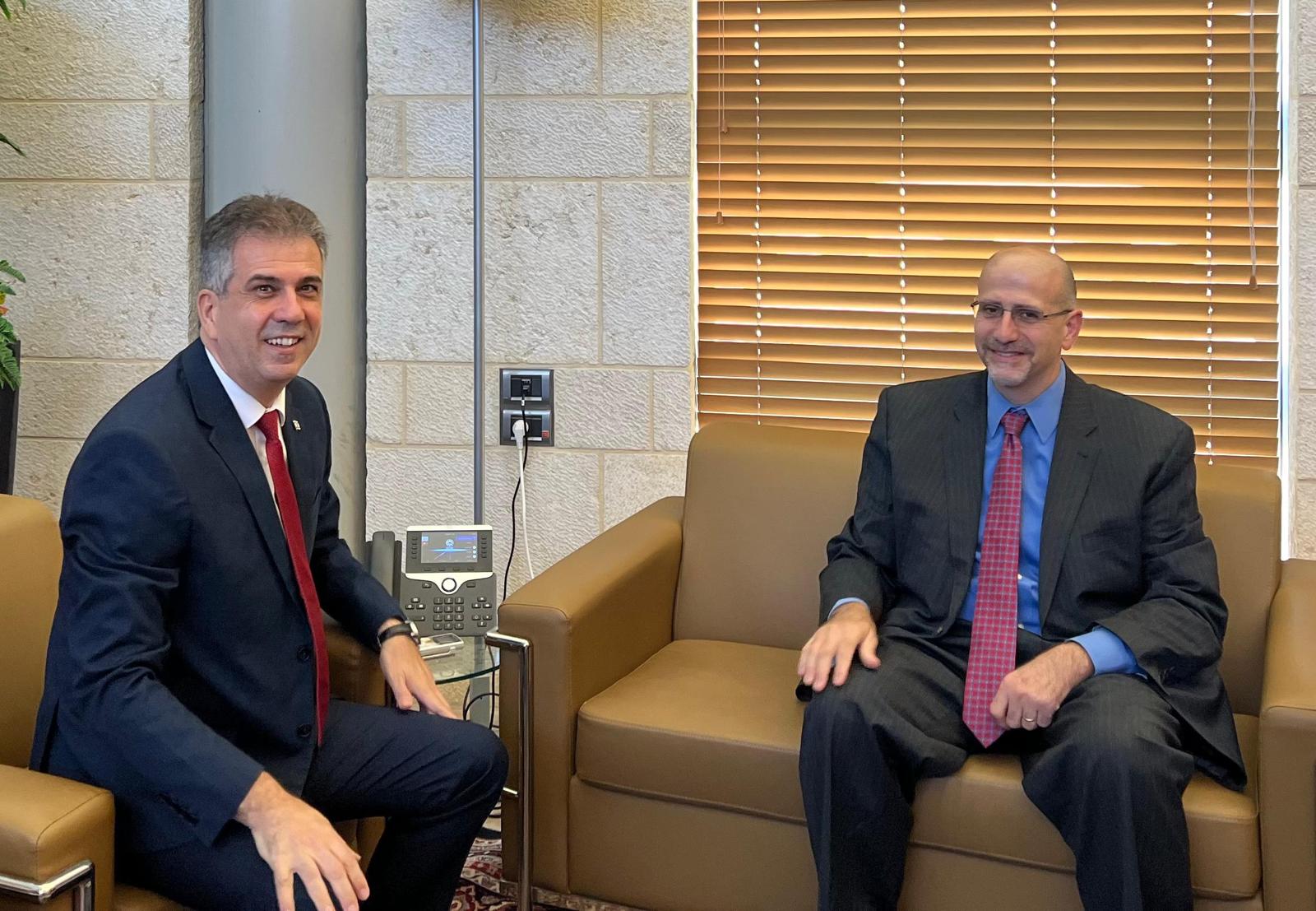
FM Cohen meets with new US Abraham Accords envoy Shapiro

Foreign Minister Eli Cohen meets with Dan Shapiro, the new US special envoy on the Abraham Accords.
According to Cohen, the pair discuss the potential for expanding the accords to include Saudi Arabia as well as the attempts to reconvene the Negev Forum — which was delayed last month amid Arab dissatisfaction with the Israeli government.
“In my conversation with special envoy Shapiro we agreed to work together and cooperate closely in order to maintain our good relations with our current [Abraham Accords] allies and to work to expand the circle of peace and normalization with new partners in the Middle East and elsewhere,” says Cohen in a statement.
At briefing, PM hails NIS 100b fast-rail plan, does not explain funding or take questions

Prime Minister Benjamin Netanyahu has just completed an hour-long press briefing — together with Transportation Minister Miri Regev, Finance Minister Bezalel Smotrich and a deputy minister from United Torah Judaism, Uri Maklev –to detail the government’s newly announced plan to build a fast-rail system from Kiryat Shimona in the north to Eilat in the south.
Netanyahu spoke first, heard out the three other speakers, and then returned to the microphone, apparently to take questions. In the event, however, he made a second address and then departed before the Q&A session.
In the first of his two sets of remarks, Netanyahu hails what he calls “the great transport revolution” which he says has already included building a network of new roads and will now see the fast-rail system.
He does not elaborate on the prospect he raised at the cabinet meeting earlier today about the rail network extending to “Saudi Arabia and the Arabian Peninsula.”
He says the planned rail revolution will redistribute Israel’s population — as it grows to what he posits will be 30 million — away from the central region to the south and parts of the north, with immense social, economic and security benefits.
Where first prime minister David Ben-Gurion talked of settling the Negev, Netanyahu says, his plan “will bring infrastructure to the Negev.”
“This revolution is now setting out, with a NIS 100 billion [some $27 billion] budget,” he says, adding that this will be spread over several years, and that there are various ideas about how to fund it.
However improbable the project, he says, “believe me” it will come to pass.
In his second set of remarks, he says the rail revolution is another of the “reforms” he has introduced, and says the great challenge, when introducing reforms, is to persuade people that they are needed. This appears to be an oblique reference to his hugely divisive and controversial judicial overhaul program.
“The ideological struggle is the hardest,” he says several times.
“How do you know that you’ve won” the ideological argument, he asks rhetorically. “When your colleagues advance your ideas better than you can,” he answers.
Interestingly, the briefing is not screened live on any of Israel’s TV networks, not even the pro-Netanyahu Channel 14.
Likud rejects Lapid’s demand for legislative freeze as condition for talks

The prime minister’s Likud party slaps back at Opposition Leader Yair Lapid, after he demanded an 18-month legislative freeze as a precondition to rejoining judicial reform compromise talks.
“Yair Lapid is ready to talk with Abu Mazen” — a nickname for Palestinian Authority President Mahmoud Abbas — “without preconditions, but for Likud he is setting a list of preconditions for talks,” the party says in a statement.
“We invite Lapid to enter into negotiations today so that we can all reach a broad agreement,” it continues.
At least five dead in intense fighting between Palestinian groups in Lebanon
At least five people are dead and seven wounded following clashes in Lebanon’s largest Palestinian refugee camp near the southern port city of Sidon, Palestinian officials say.
The officials say the fighting broke out after an unknown gunman tried to assassinate Islamist militant Mahmoud Khalil, killing a companion of his instead.
Later, Islamists assassinated a Palestinian general from the Fatah group and three escorts, another Palestinian official says.
Factions used assault rifles and rocket-propelled grenade launchers in the overcrowded Ein el-Hilweh camp as ambulances zoomed through its narrow streets to take the wounded to the hospital. Several residents fled the crossfire.
Lebanon’s state-run National News Agency says two children are among those wounded.
Ein el-Hilweh is notorious for its lawlessness and violence is not uncommon. The UN says it is home to some 55,000 people.
National Unity MK: We could support coalition from outside
In the latest sign of discord within the opposition, National Unity MK Michael Biton tells Army Radio that his faction could back Prime Minister Benjamin Netanyahu’s coalition.
“A unity government is not on the table, but maybe support from the outside,” he says. “If Netanyahu brings good things to Israel we’ll back him from outside [the coalition], but won’t join the government.”
Lapid: Overhaul talks only if legislation frozen until 2025
Opposition Leader Yair Lapid is demanding a year-and-a-half freeze on legislation aimed at making changes to the judiciary as a condition for his Yesh Atid party returning to negotiations with the coalition on judicial reforms.
Lapid, speaking from the Knesset rostrum on the parliament’s last day before summer recess, says that this freeze must be legislated into law.
Yesh Atid sources say this demand is in line with the type of guarantee Lapid unsuccessfully sought from Likud, amid frenzied attempts to compromise ahead of the coalition passing its first law of the judicial overhaul program last Monday.
“As long as there is no legislative freeze, there is no point and no sense to talk about other laws or agreements, because it is quite clear that the government will run away again at the last minute,” Lapid says to the Knesset.
The opposition leader says that Prime Minister Benjamin Netanyahu was ready to compromise last week, but instead capitulated to pressure from Justice Minister Yariv Levin and National Security Minister Itamar Ben Gvir.
“On Monday, both the president and I thought there was an agreement ready for signing. But then Yariv Levin and Ben Gvir knocked on the table and threatened to dissolve the government. The prime minister panicked, surrendered to them, and the ‘reasonableness’ law was passed in the most extreme formatpossible,” Lapid charges.
Shortly after the law to outlaw judicial review over the “reasonableness” of cabinet or ministerial decisions passed on Monday, Netanyahu made a fresh offer for compromise talks up to November, a month after the Knesset returns from recess.
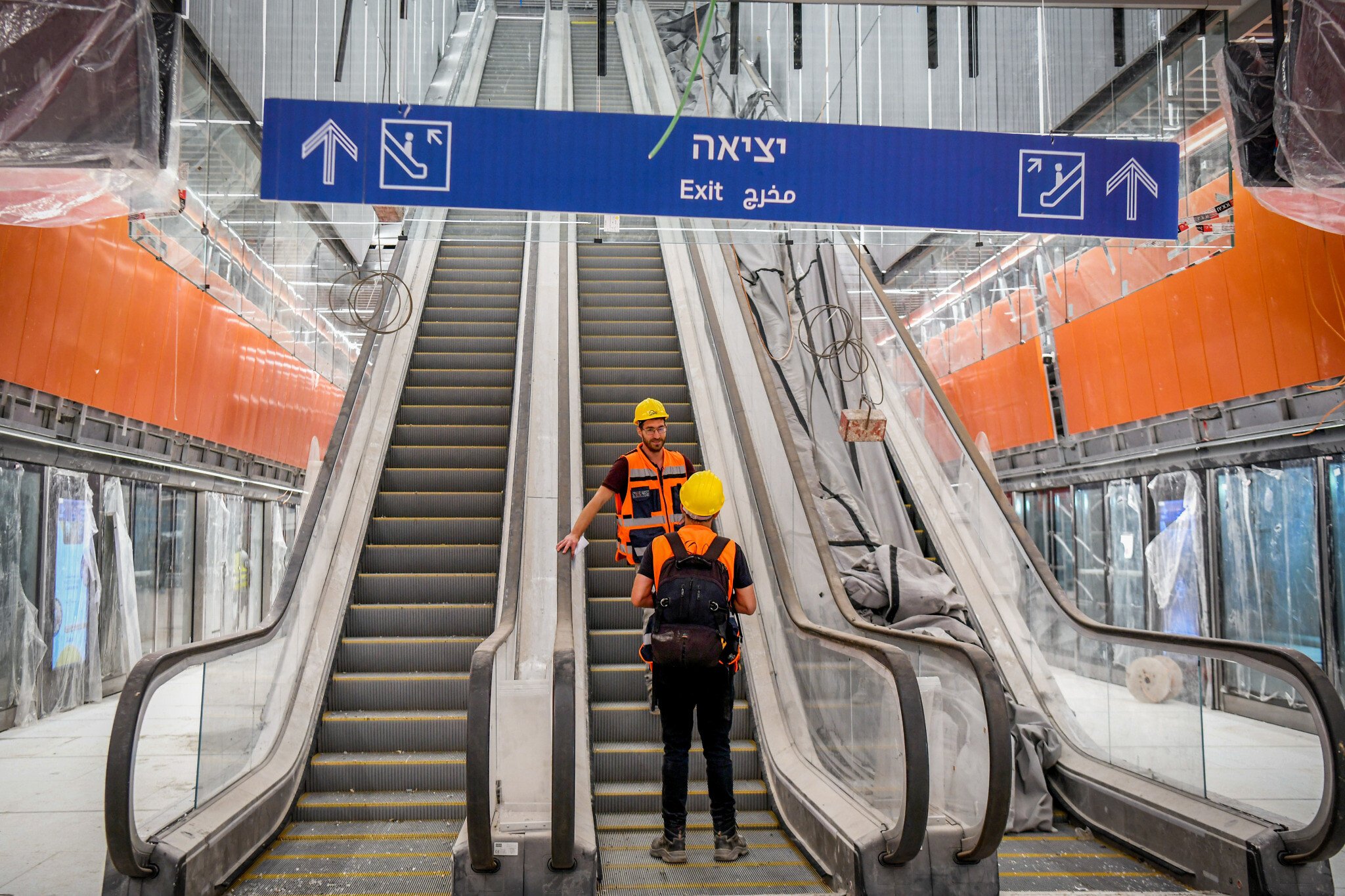
Regev says no Tel Aviv metro system unless cross-country rail okayed
Transportation Minister Miri Regev is reportedly demanding that ministers approve an NIS 100 billion ($27 billion) rail line from Kiryat Shmona to Eilat before she will agree to revive the metro rail system being built to relieve congestion in Tel Aviv.
According to the Ynet website, at the weekly cabinet meeting, after Prime Minister Benjamin Netanyahu announces Regev’s Eilat project, Smotrich expressed pleasure that the metro element of Tel Aviv’s new subway and light rail network will finally be freed to resume moving toward its long-awaited opening.
“The state has plans for 20 million people in cities with strong infrastructure,” he’s quoted saying. “In the coming years, we’ll revive the project and link outlying areas to the center.”
But according to the report, Regev, sitting next to Smotrich, responded that he had the order wrong.
“The metro will be revived only when there is a Kiryat Shmona-Eilat line. The moment there is a government decision to link Israel and it earmarks NIS 2.5 billion [$675 million] for planning and moving the schedule up, the metro’s management will come back to life.”
Regev, who came into office with hopes of slaying the metro, announced in May that she was stripping the Metropolitan Mass Transit System, better known as NTA, of responsibility over the metro system, which will include three metro subway lines to complement three over-ground routes, essentially freezing the project weeks before its first line was slated to open.
Among the reasons given were repeated delays and cost overruns of NIS 3 billion ($828 million), according to a statement from her office at the time.
Iranians tried to hack state employees, researchers — Shin Bet
The Shin Bet security agency says it has revealed an Iranian phishing plot against Israeli civilians, mostly targeting state employees and researchers in order to obtain intelligence on the state.
According to the agency, Iranian operatives would contact Israeli targets on LinkedIn while posing as acquaintances, and the conversation would later to move to an email, where the operatives would either invite them to a conference or share a research paper.
The documents shared by the Iranian operatives, once opened, would grant them permission to the target’s computer, according to the agency, which says none of the phishing attempts were successful.
The Shin Bet says the initial messages with the Israelis were carefully written based on research the Iranian operatives had conducted into the various targets, with the subject matter being of interest to the target.
The agency says it managed to foil the attempts after many of the Israeli targets contacted the Shin Bet, alongside other actions it took.
Knesset passes law making terror aggravating factor in sex crimes
On its last operational day before breaking for summer recess, the Knesset passes a law to make terror, nationalist, or racist motivation an aggravating factor in crimes of sexual assault or harassment.
It would also double compensatory penalties assessed for sexual harassment motivated by racism or hostility toward certain groups.
Sponsored by a group of lawmakers from the far-right coalition party Otzma Yehudit and right-wing opposition party Yisrael Beytenu, the new law marks rare cross-Knesset alignment and passes 39 to 7 on its final reading.
The law also establishes reporting requirements, whereby the justice and national security ministers would have to report enforcement statistics to the Knesset’s National Security Committee annually, in March.
Netanyahu unveils planned Kiryat Shmona-Eilat rail line, says it could link to Saudi too
Prime Minister Benjamin Netanyahu announces an NIS 100 billion plan to link the northern city of Kiryat Shmona to the Red Sea resort of Eilat in the far south by rail, at the start of his weekly cabinet meeting.
“My vision is for every Israeli citizen to be able to travel to or from the center from anywhere in the country in less than two hours,” he says. “In most cases under an hour, and even less than that.”
Aside from swiftly moving people the approximately 400-kilometer (250-mile) distance, the line will allow the moving of goods from the Eilat port to terminals on the Mediterranean, the premier says.
“And it will be able to link Israel to Saudi Arabia and the Arabian Peninsula, we’re working on that too,” Netanyahu crows, reviving Hejazi-line dreams.
It’s unclear where the financing for the project will come from. According to the Ynet news site, the Transportation Ministry has agreed to fund NIS 200 million over the next two years for planning the line, which is reportedly expected to include a bullet-train segment through the Negev desert.
The cabinet is widely expected to approve the project nonetheless.
The announcement comes almost exactly a decade after a Netanyahu-led cabinet approved a train line linking the center of the country to Eilat, which had been the latest in a series of such decisions that had all gotten derailed once it became time to actually build the thing.
At the time, the vaguely Chinese-funded project was pilloried as costly and environmentally harmful. It also failed to actually link the Eilat port with the one in Ashdod.
The war with Iran has been draining for all of us in Israel. But when I heard about a high casualty incident – ballistic missile impacts in Arad and Dimona that left nearly 200 people wounded – I drank a cup of coffee, packed a bag, and headed south.
There, I spoke with Shilgit, the head of an after-school program for underprivileged youth. Standing outside her destroyed center, Shilgit said it was a miracle that no children were hurt and spoke about the community coming together in the hours since.
As a Times of Israel reporter, I’m committed to telling stories of resilience like Shilgit’s. But my colleagues and I can't do this alone. If you value work like this, please consider joining our reader support group, The Times of Israel Community. Your financial support is essential to keep real human reporting like this going.
— Stav Levaton, military reporter
We’re really pleased that you’ve read X Times of Israel articles in the past month.
That’s why we started the Times of Israel - to provide discerning readers like you with must-read coverage of Israel and the Jewish world.
So now we have a request. Unlike other news outlets, we haven’t put up a paywall. But as the journalism we do is costly, we invite readers for whom The Times of Israel has become important to help support our work by joining The Times of Israel Community.
For as little as $6 a month you can help support our quality journalism while enjoying The Times of Israel AD-FREE, as well as accessing exclusive content available only to Times of Israel Community members.
Thank you,
David Horovitz, Founding Editor of The Times of Israel