

 From the Liveblog of
Tuesday, May 25, 2021
From the Liveblog of
Tuesday, May 25, 2021
Islamophobia a ‘problem’ in UK’s ruling party, probe finds
 Add ToI as a Preferred Source on Google
Islamophobia within Britain’s ruling Conservative Party is a problem both at an individual level and beyond but falls short of “institutional racism,” an independent investigation concludes.
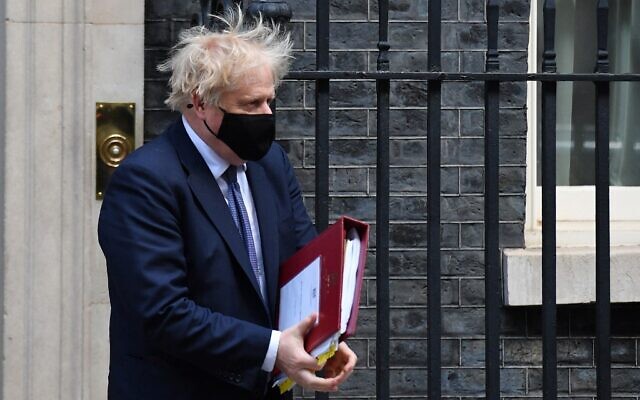
The center-right party has been dogged for years by accusations of anti-Muslim sentiment that have been leveled against members, including Prime Minister Boris Johnson.
The former journalist’s comments comparing Muslim women in veils to letterboxes and bank robbers, in a newspaper column in 2018, contributed to a “widespread” perception that the Tories have a “Muslim problem,” the report said.
“Anti-Muslim sentiment remains a problem within the party. This is damaging to the party, and alienates a significant section of society,” the investigation led by Swaran Singh, a former commissioner at the Equality and Human Rights Commission, finds.
Singh says he believes the report was “going to be very uncomfortable for the party” and hopes it will “spur them into action.”
The investigation says since 2015 the “bulk” of discrimination complaints had been made over anti-Muslim allegations.
Of 1,418 complaints relating to 727 incidents of alleged discrimination, more than two-thirds of the incidents — 496 cases — related to Islamaphobia.
But while the report finds “there were examples of anti-Muslim discrimination by individuals and groups at local association level,” it says those problems fall short of claims of “institutional racism.”
The report says there is no evidence that complaints related to Islam are treated differently from those related to other forms of discrimination.
Johnson tells Singh’s probe he was “sorry for any offense taken” over his 2018 column and adds he would not use “some of the offending language from my past writings” now that he is prime minister.







The Times of Israel Community.