

 From the Liveblog of
Tuesday, March 1, 2016
From the Liveblog of
Tuesday, March 1, 2016
Protesting Ethiopian Israelis block Jerusalem road
 Add ToI as a Preferred Source on Google
Several hundred people, largely Ethiopian Israelis, demonstrate in Jerusalem over a decision to close the investigation against police whom they accuse of causing the death of Yosef Salamsa, a member of the community, in 2014.
The demonstrators intermittently block Route 1 in front of the Israel Police headquarters, and four are arrested.
Police say that due to the blocking of the road, cops are redirecting traffic to alternate routes.
“The police emphasizes that all protests must be conducted lawfully,” a spokesperson says. “We call on the leaders of the [Ethiopian-Israeli] community to show restraint and heed police’s instructions.”
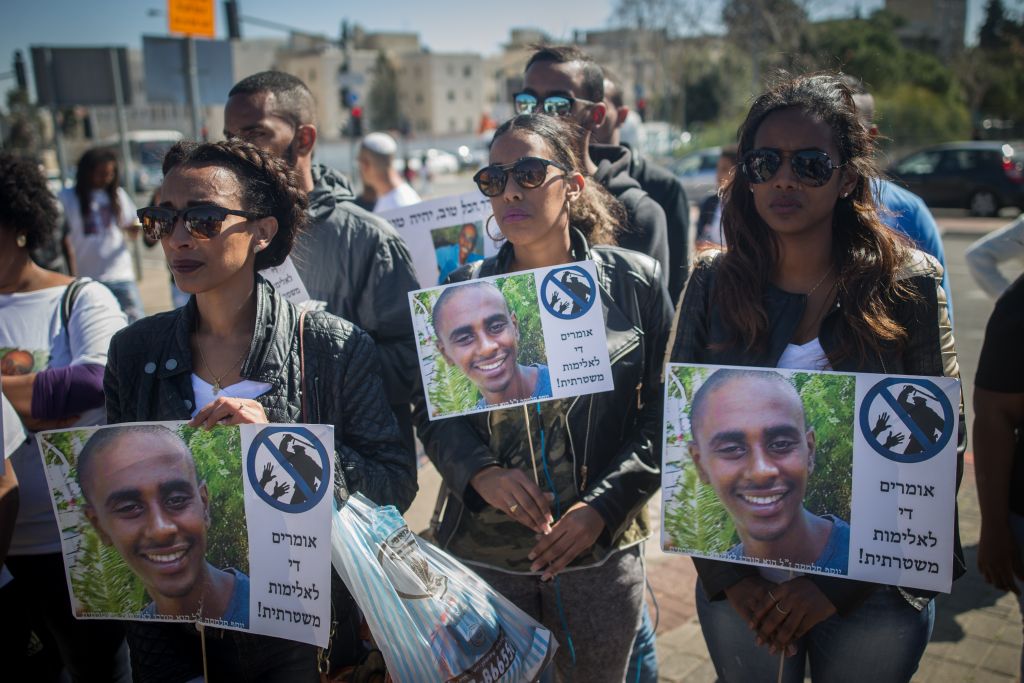
Police officers detained Salamsa, a young Ethiopian Israeli, in Zichron Yaakov in March 2014, and tased him in the police station before letting him go. He was never investigated or charged with any crime, and after the incident, he fell into a deep depression, and his family registered a complaint with the Justice Ministry’s Police Internal Investigations Department.
In the wake of that complaint, activists say, police began to harass Salamsa, whose corpse was found in early July 2014, three days after he failed to come home from work. He had apparently fallen to his death in a quarry, although his family maintains he may have been murdered.
In closing the investigation recently, the Police Internal Investigations Department said there was no criminal aspect to the conduct of the officers involved in Salamsa’s arrest. However, it did censure them for lying about the incident after the fact.
— Renee Ghert-Zand contributed









The Times of Israel Community.