

 From the Liveblog of
Friday, November 15, 2024
From the Liveblog of
Friday, November 15, 2024
UNSC draft resolution demands ‘immediate, unconditional’ Gaza ceasefire, release of hostages
 Add ToI as a Preferred Source on Google
Jacob Magid is The Times of Israel's US bureau chief
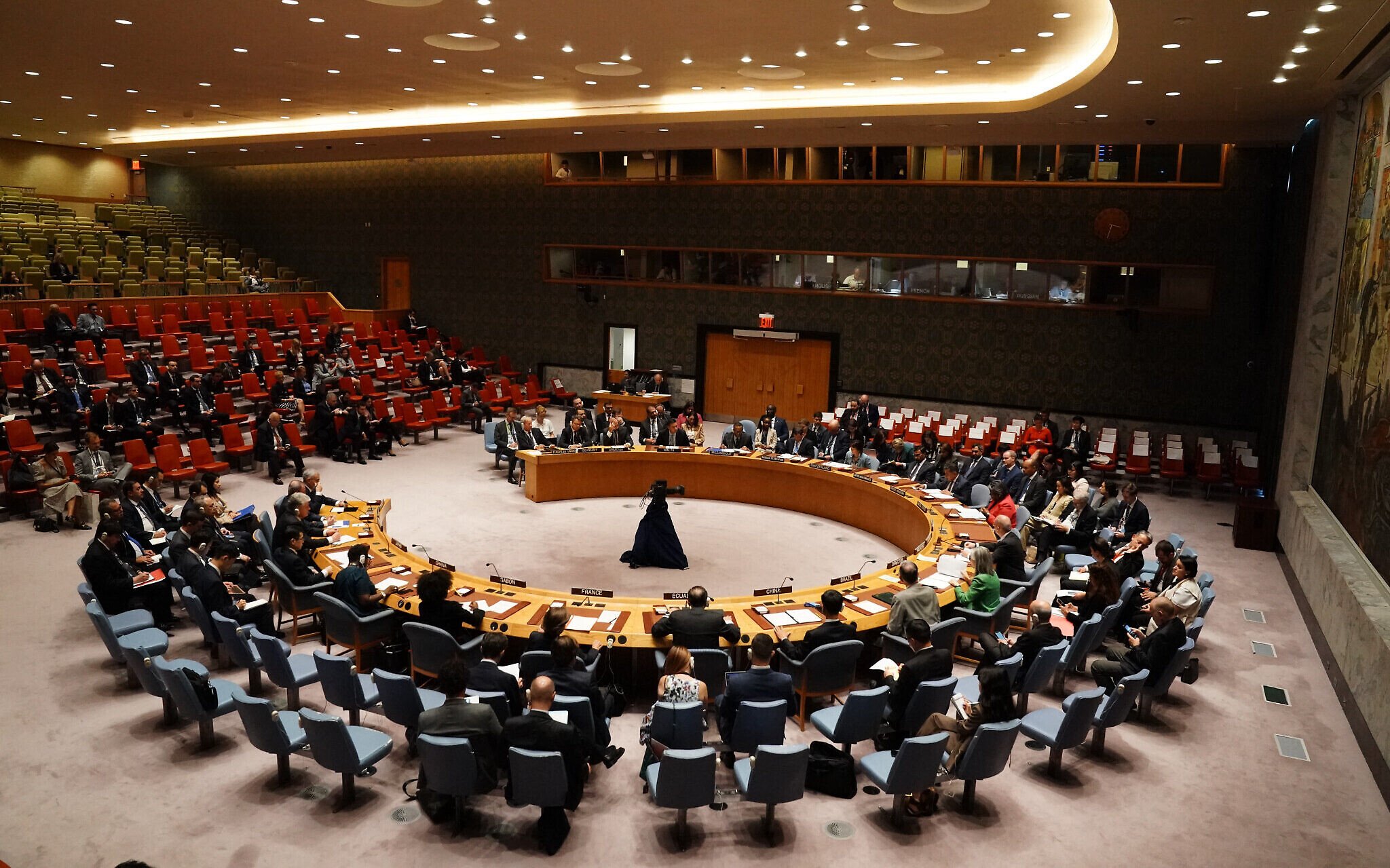
The UN Security Council’s 10 elected members have circulated another draft resolution demanding “an immediate, unconditional and permanent ceasefire” in Gaza along with the “immediate and unconditional release of all hostages.”
The Council’s 10 elected members — Ecuador, Japan, Malta, Mozambique, Switzerland, Algeria, Guyana, South Korea, Sierra Leone and Slovenia — circulated the draft after reaching the agreement.
The United States, Israel’s closest ally, holds the key to whether the Security Council adopts the resolution. The four other permanent members — Russia, China, Britain and France — are expected to support it or abstain.
In an interview with The Times of Israel last week, Israeli Ambassador to the UN Danny Danon criticized an earlier draft that has since been lightly edited in a bid to gain American support.
The earlier draft split the two demands for a ceasefire and hostage release into separate paragraphs, which were merged into one in the updated version. That was enough to convince the US to abstain on a similar resolution adopted by the Security Council in March, which called for an immediate ceasefire during Ramadan.
In June, the Council adopted another resolution calling for an immediate ceasefire based on the parameters that were being negotiated by the US, Qatar and Egypt, which envisioned a three-staged hostage release deal that would bring an end to the conflict between Israel and Hamas.
NEW: Revised version of E10-led #UNSC draft #Gaza ceasefire resolution has been circulated to the P5. Major change in OP1 due to US opposition to language which would have seen the council determine that the situation in the Gaza Strip and the regional escalation constitute a… https://t.co/0NzgzkRgQa pic.twitter.com/JcVxGA8jok
— Rami Ayari (@Raminho) November 14, 2024
But talks on this framework have all but fallen apart since then. The US and Egypt are still working to negotiate a hostage deal, and Washington is hoping that Qatar’s decision to ask Hamas officials to leave Doha will spark a breakthrough in negotiations. So far, though, none has come to fruition.
Accordingly, Security Council members are once again working on their own ceasefire resolution. Such initiatives have not made an impact on the ground in the past, but members hope that they will add pressure to the warring parties to end the conflict.
Danon told The Times of Israel last week that his office opposed the draft resolution because it doesn’t explicitly condition ending the war on the release of the hostages. The US argued in March that merging the two demands into the same sentence was enough for it to interpret the text as a conditional relationship between the ceasefire and the hostage release.
The draft also demands immediate access for Gaza’s civilian population to humanitarian aid and services essential for their survival.
Additionally, it “underscores” that UNRWA, the UN agency helping Palestinian refugees, “remains the backbone of the humanitarian response in Gaza.”
Israel’s parliament passed two laws last month banning UNRWA’s operations in the Palestinian territories, which take effect in 90 days.
The draft resolution would also express the council’s “deep alarm over the ongoing catastrophic humanitarian situation in Gaza including the lack of adequate healthcare services and the state of food insecurity creating a risk of famine notably in the north.”






The Times of Israel Community.