

Mamdani-allied Jewish groups campaign against synagogue buffer zones
Far-left activists call legislation meant to protect houses of worship an attack on free speech, complicating thorny issue for mainstream Jewish groups, City Hall and City Council
 Add ToI as a Preferred Source on Google
Luke Tress is The Times of Israel's New York correspondent.

NEW YORK — Far-left Jewish groups in New York City came out on Monday against legislation meant to create protective buffer zones around synagogues in response to recent protests, complicating a fraught issue for the city government and Mayor Zohran Mamdani.
New York City Council Speaker Julie Menin introduced legislation to protect houses of worship last month, part of her broader plan to combat antisemitism in the city, where Jews are targeted in hate crimes far more than any other group.
The bill proposes a 100-foot (some 30 meters), police-enforced buffer zone to prevent “harassment” and “intimidation” around sensitive sites such as synagogues, mosques, churches, and schools. New York Governor Kathy Hochul has proposed a separate statewide measure that would mandate a 25-foot (7.6 meters) protective zone.
The legislation came after two vitriolic protests at synagogues in recent months. At one demonstration, anti-Zionist activists harassed Jews with discriminatory, violent and threatening rhetoric, and, at the second, chanted in support of Hamas.
The protesters framed the demonstrations as political, and not as an attack on religious worship. At the first protest, Manhattan’s Park East Synagogue hosted an event facilitating immigration to Israel. The group organizing the event, Nefesh B’Nefesh, provides information to those seeking a move to Israel, including West Bank settlements. The second protest, in Queens, targeted an Israeli real estate event that included information on real estate in Ma’ale Adumim in the West Bank.
The fault line between antisemitic discrimination and protected, anti-Zionist political protest has become a major issue in US politics and the court system.
The far-left groups, Jews for Economic and Racial Justice (JFREJ), Jewish Voice for Peace-New York City (JVP-NYC), IfNotNow NYC, and the American Council for Judaism protested the buffer zone proposal as an attack on free speech in a joint statement on Monday. The first three had endorsed Mamdani’s mayoral candidacy.
“Legislation that restricts protest undermines the open society we cherish here in New York City, which has allowed Jews to thrive for centuries,” the statement said.
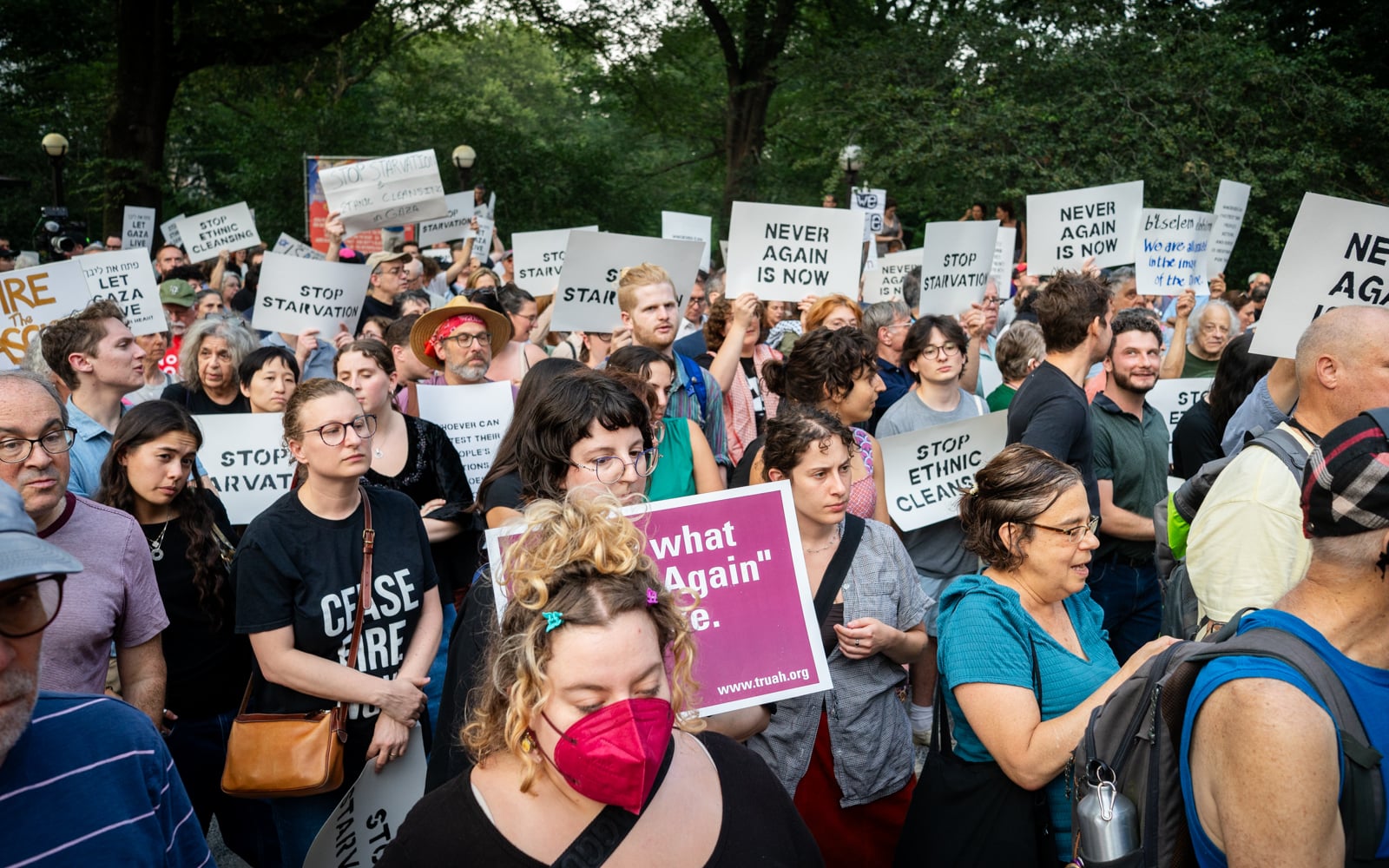
“As Jewish organizations, we know the image of people protesting outside a synagogue can spark discomfort and even real fear,” the statement said. “But when houses of worship host non-religious political events, they are making a choice with the knowledge that they might be protested.”
JVP-NYC, IfNotNow, and the American Council for Judaism are explicitly anti-Zionist, separating them from the Jewish mainstream, and JFREJ is the Jewish group most closely allied with Mamdani, who has also identified as an anti-Zionist. Anti-Zionism is the rejection of the Jewish nation-state in Israel.
Leftist Jewish activists are closer to New York’s halls of power now that Mamdani is in office, featuring prominently at an annual interfaith event hosted by the mayor’s office last week that saw attendees, including a Jewish headliner, lean into religious activism.
“We need city and state governments to strengthen our First Amendment protections, not erode them,” the groups’ statement said, urging the City Council to vote down the legislation. “We urge our city leaders to take seriously that a free and open democracy is essential towards ensuring the safety of all New Yorkers, including Jewish communities.”
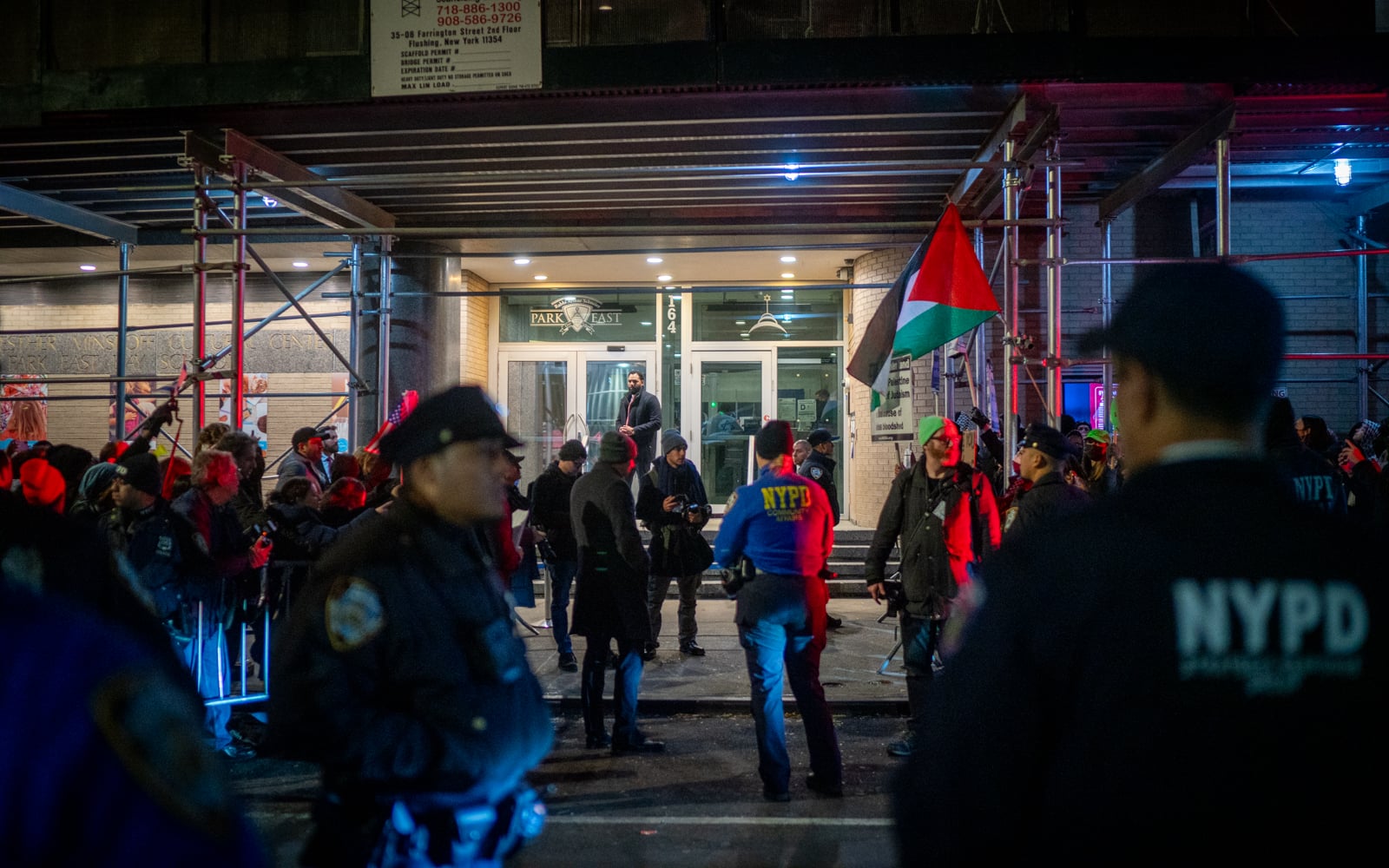
Several anti-Zionist activist groups, including Pal Awda, the group behind the synagogue protests, have launched a separate campaign against the buffer zones.
The proposed buffer zones are a thorny issue because of conflicts between civil rights protections for free speech, free assembly, and freedom of religion, as well as Jewish community security. Far-left Jewish organizations tend to view community safety as tied to solidarity with other groups, while the Jewish mainstream has moved away from that position since the October 2023 attack on Israel, when many Jews felt abandoned by longtime allies. Some protests outside synagogues in the US have become violent, and synagogues have been repeatedly targeted in attacks.
The synagogue legislation will likely present a challenge to Mamdani, putting him between his far-left allies and the City Council’s leadership and mainstream Jewish groups that back the buffer zones. The federal government has also taken action against protests at houses of worship, including in nearby New Jersey.
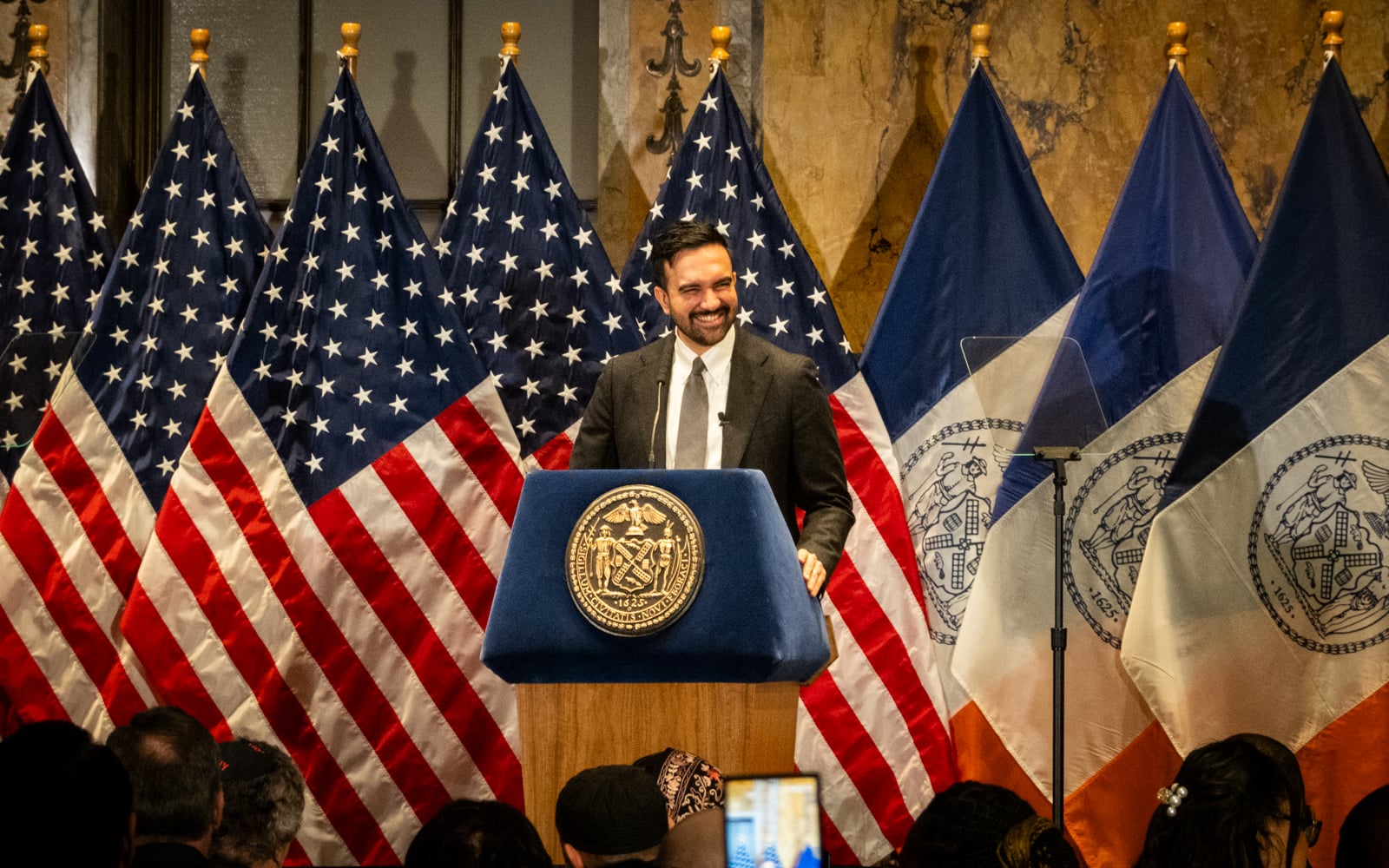
The proposed legislation will need to pass the City Council before going to Mamdani for approval. If the mayor signs the bill, it becomes a local law; if he vetoes the legislation, the council can override the veto with a two-thirds vote.
Menin, a centrist Jewish Democrat, became the City Council’s first Jewish speaker last month. The role is a powerful position in the city government.
The Jewish groups’ opposition to the measures will boost Mamdani if he decides to oppose the bill. Mamdani has not commented on the legislation, saying he was awaiting a review of its legality.
Despite the brouhaha, the bills, if enacted, would not have a major impact on the ground. The bills would not bar protests, and demonstrations adjacent to synagogues in New York are relatively rare. The pro-Hamas protest in December was already more than 100 feet away from the targeted synagogue’s entrances.
New York State mandates the protection of abortion clinics, including by establishing buffer zones around some locations, measures that Menin cited in her defense of the synagogue legislation.

The Times of Israel Community.