 Add ToI as a Preferred Source on Google
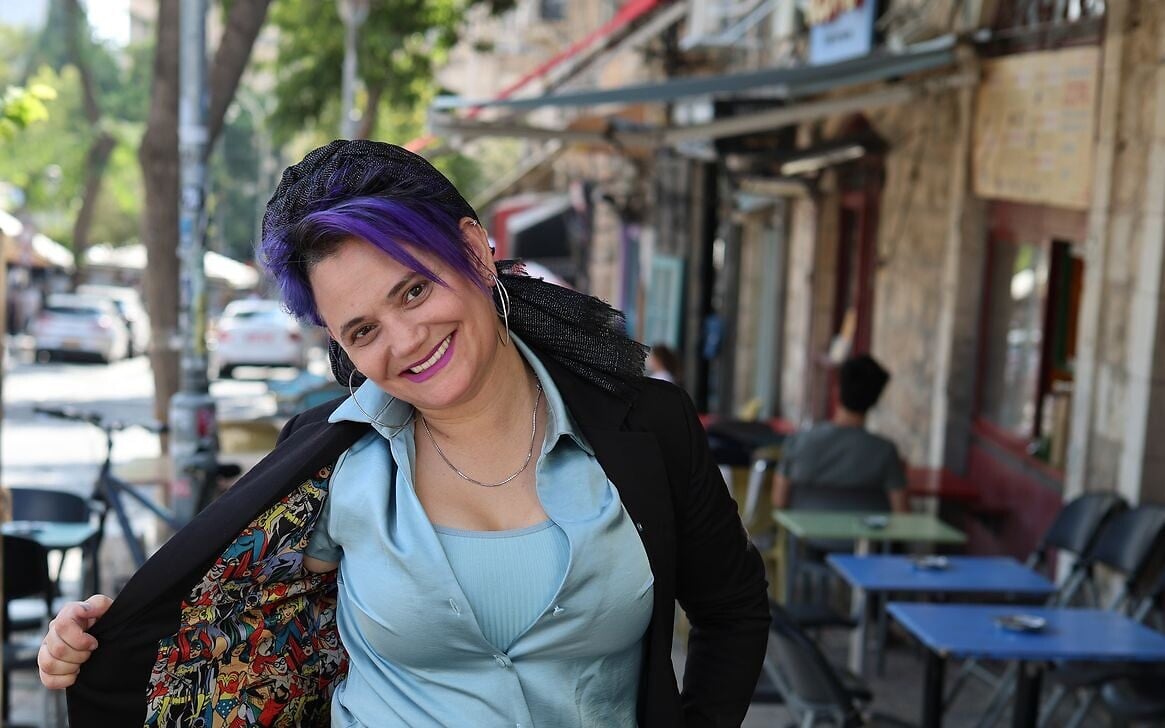
Nava Shaffner is something of a unicorn: She is Orthodox and liberal, a Zionist and an activist, a mother and social entrepreneur, deeply rooted in Jewish tradition while determined to challenge the institutions that sometimes speak in its name.
She has advocated for survivors of abuse in religious communities, fought for women trapped in marriages by husbands who refuse them a Jewish divorce, built a network for career-minded mothers and officiated at the Orthodox wedding of two gay former lone combat soldiers.
For some people, those identities might appear contradictory, but for Shafner, they are the point.
“I actually think labels are really powerful,” she says. “A lot of people say, ‘Don’t label me.’ I like that people can give you context to themselves with just little catchphrases and buzzwords.”
Even her unmistakable purple hair is part of the intro.
“I always joke that one of the reasons I have my wonderful hair is because it used to take people around 30 seconds to realize how bananas I am,” she says. “I just decided to do a public service announcement. Here we go. You know what you’re coming into.”
WATCH the full episode here:
What you are coming into, more than anything, is Jerusalem.
Shafner, now “40 and fabulous,” fell in love with the city when she was five years old. Her father, an academic philosopher, brought the family from the United States for a sabbatical.
They lived in the Katamon neighborhood of Jerusalem, and she remembers looking toward the Western Wall and experiencing something surprisingly definitive for such a young child.
“This is it,” she remembers thinking. “This is my place. This is where I’m going to be.”
Her family was deeply Zionist, but moving to Israel seemed impractical. Her father’s academic career was in the United States.
Besides, Shafner jokes, Israel already had plenty of philosophers. “Just get in a taxi and talk to the driver. Everyone is a philosopher.”
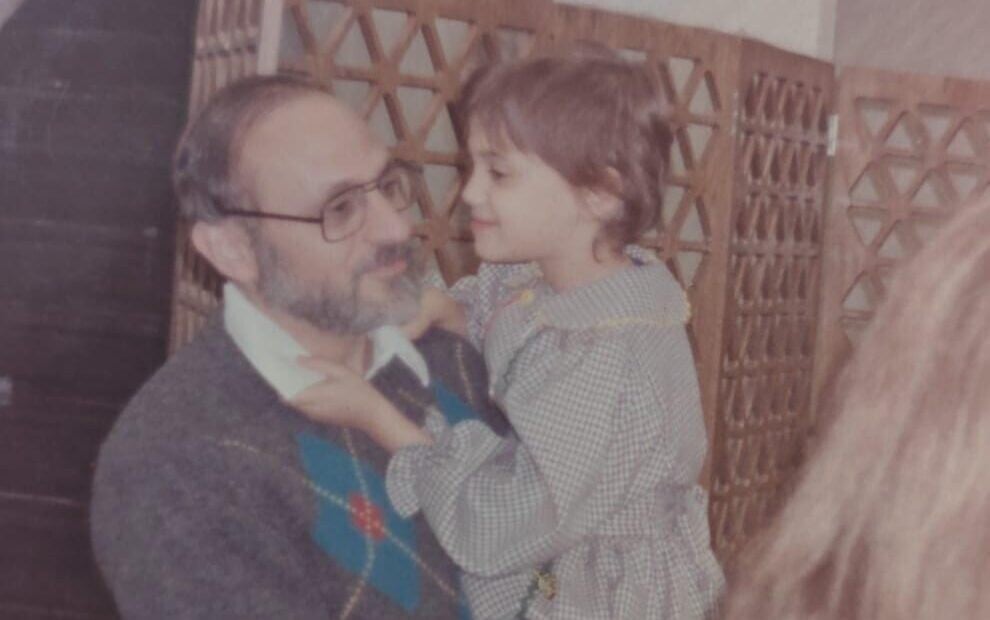
But the conviction remained. At 12, Shafner decided: She was moving to Israel.
“I was fully prepared to go alone and sleep on a park bench and figure it out,” she says.
Then, shortly before another planned sabbatical in Jerusalem, her father received a telephone call at around 2 a.m. Shafner remembers watching him begin to cry.
He had been appointed a full professor at Hebrew University, so the family immigrated to Israel. But coming to Israel as a teenager in the late 1990s was not always easy. Shafner arrived, she says, wearing intensely “rose-colored glasses,” with an idealized vision of Israel as a light unto the nations.
Reality may have complicated that picture, but Jerusalem held her.
The streets around the Russian Compound especially became her world. This was where teenagers and young adults gathered, and everyone seemed to know everyone. Friends expected one another to appear at the same bars several nights a week.
“These stones formed me,” Shafner says.
She celebrated her sheva brachot nearby after her wedding, built friendships there and discovered something about Jerusalem that still animates her work: the feeling that change, however improbable, might actually be possible.

“You throw that spark into something with the air of Jerusalem and there’s magic that happens,” she says. “Sometimes it’s dark magic. It’s not always great, but it’s always magical.”
That belief that anything could happen eventually became a conviction that if something was wrong, she had a responsibility to do something about it.
Motherhood provided one such opening.
As a young working mother, Shafner became frustrated by the assumption that professional ambition and devoted motherhood were somehow in competition. The guilt, she decided, was unnecessary.
With a friend, she founded Ima Kadima, a community intended to empower career-minded mothers. It grew into a forum of more than 20,000 women, providing professional support, sisterhood and a base for activism.
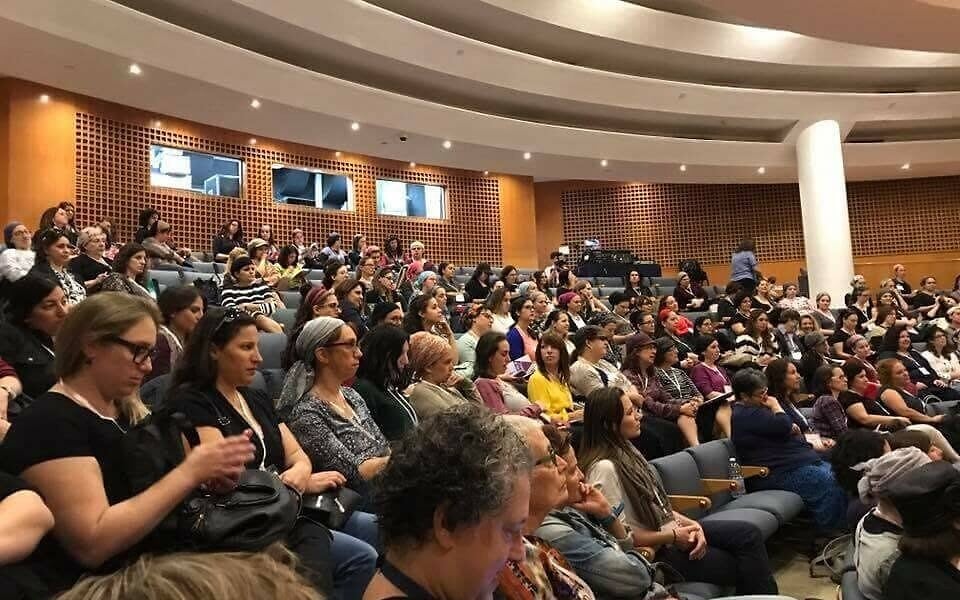
Religion became another arena: Shafner describes herself emphatically as an Orthodox Jew. Precisely because of that commitment, she says, she is troubled by Israel’s entanglement of religious authority and political power.
“I think it’s bad for the religion and bad for the state,” she says. “There’s something so beautiful about the wide tapestry of Jewish expression and Jewish practice.”
She became involved in a campaign for women’s rights in state-run mikvahs, culminating in a Supreme Court victory in 2016.
Her work has repeatedly brought her to people pushed toward the margins of religious communal life.
At Magen, Shafner worked with survivors of abuse in religious communities and challenged institutions to protect vulnerable people rather than their own reputations. At Mavoi Satum, she advocated for agunot, women unable to leave Jewish marriages because their husbands refuse to grant them a Jewish divorce.
And then there was the wedding.
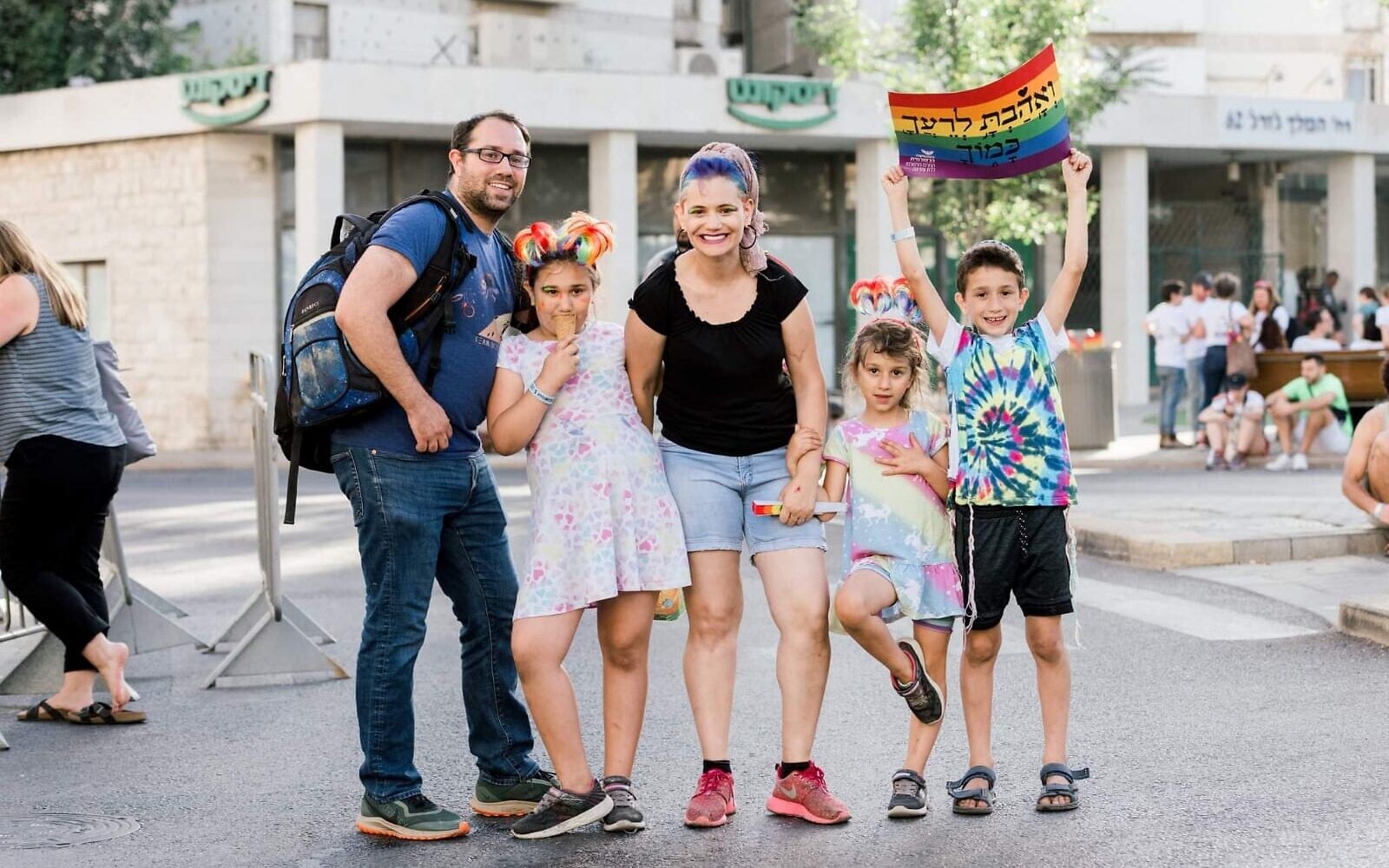
Shafner and her husband, Ari, had become the adopted family of a lone soldier serving in a combat unit. He eventually became one of their closest friends. In May 2022, on a hilltop in the Jerusalem mountains, Shafner stood beneath a chuppah and officiated as he married his husband, another former lone combat soldier.
They prayed Mincha first. Shafner wrote a ceremony specifically for the couple. More than 200 people came from around the world.
To an outsider, advocating for agunot, supporting abuse survivors and creating an Orthodox ceremony for a gay couple might represent radically different causes.
Shafner sees one.
“I show up for people our community tends to leave standing outside the door,” she says.
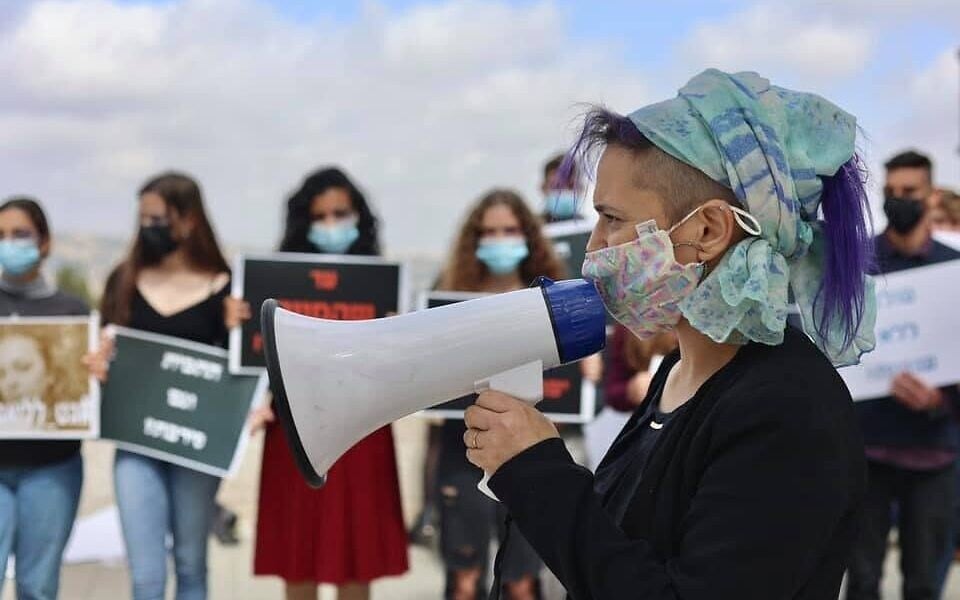
For years, much of that work took the form of activism: identifying injustice, confronting institutions and, in her words, doing a lot of yelling, including the particularly impossible task of “trying to yell nuance.”
Then came a shift: COVID-19 was brutal. Shafner was raising three young children while holding an intense job, and she says the experience broke something in her.
For a long time afterward, she worked behind the scenes, helping organizations communicate while speaking in other people’s voices. After October 7, she realized she was ready to use her own again, and she also wanted to build.
That distinction has become central to the next chapter of her life: activism fights what is wrong, while social entrepreneurship asks what can be created in its place.
Today, Shafner is director of Ashoka Jewish World & Israel, part of a global network supporting social entrepreneurs. Her work focuses on identifying and connecting Israeli and Jewish changemakers with one another and with a wider international community.
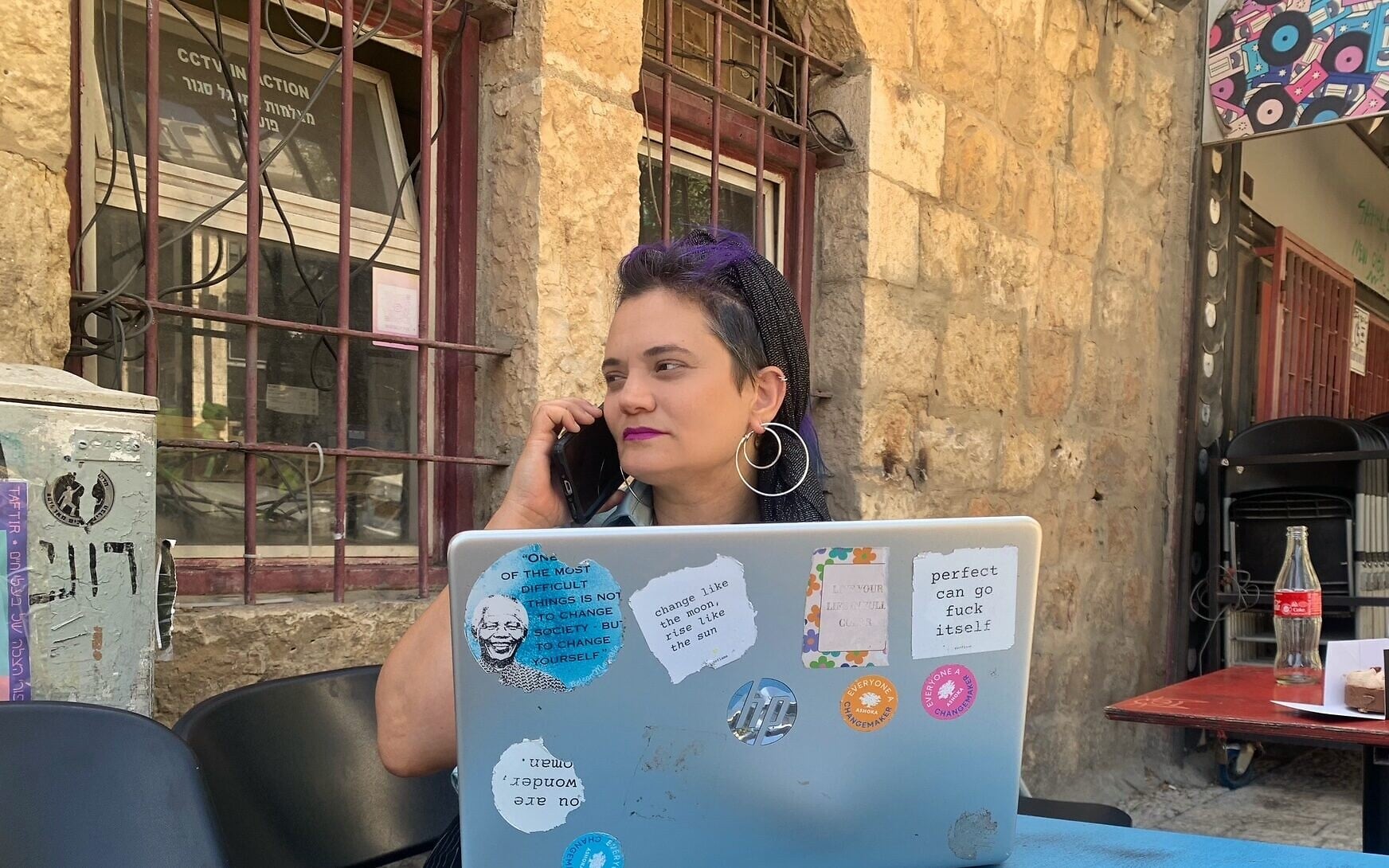
“The Jewish world’s greatest asset has always been its connections,” she says.
She sees possibilities in allowing ideas to travel: a solution being tested in Israel might help someone confronting a similar problem in Africa, Nepal or somewhere nobody involved has yet imagined.
She calls them “Jewish solutions to global problems.”
And perhaps that is where all of Shafner’s labels finally converge: The Orthodox Jew. The liberal. The Zionist. The activist. The mother. The social entrepreneur. The “neuro-sparkly” Jerusalemite with the bright purple unicorn hair and the “brain gremlins” she affectionately associates with her ADHD.
She is not particularly interested in squeezing those selves into separate boxes.
Instead, Shafner wants to build a world in which more people can bring their entire authentic selves through the door and then hold that door open for whoever comes next.

The Times of Israel Community.