

Buried, forgotten, demolished: Archaeologist searches for New York City’s lost mikvehs
Miriam Entin, a PhD candidate at CUNY, scours historical records to locate ritual baths from immigrant heyday, hoping to shine light on Jewish history and allow for future digs
 Add ToI as a Preferred Source on Google
Luke Tress is The Times of Israel's New York correspondent.
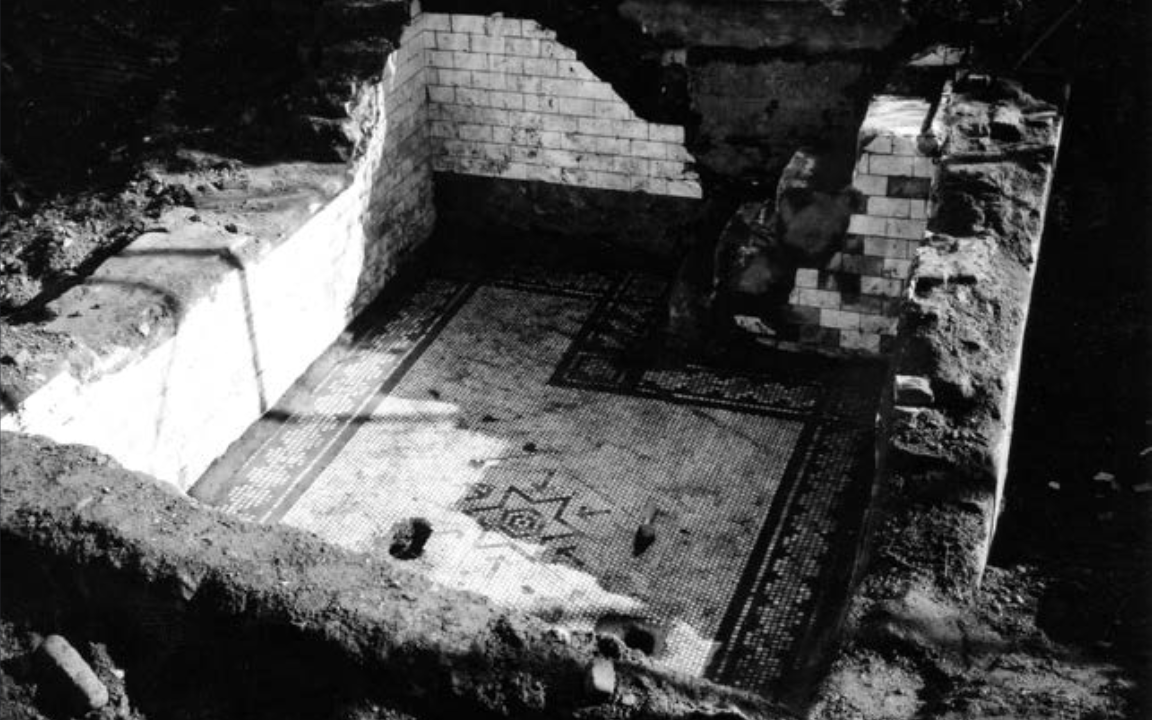
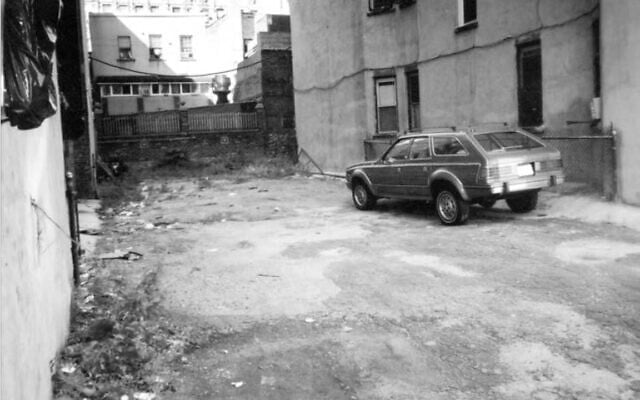
NEW YORK — In 2003, a backhoe working at a housing development site dug into an asphalt lot surrounded by chain-link fence on the Lower East Side of Manhattan.
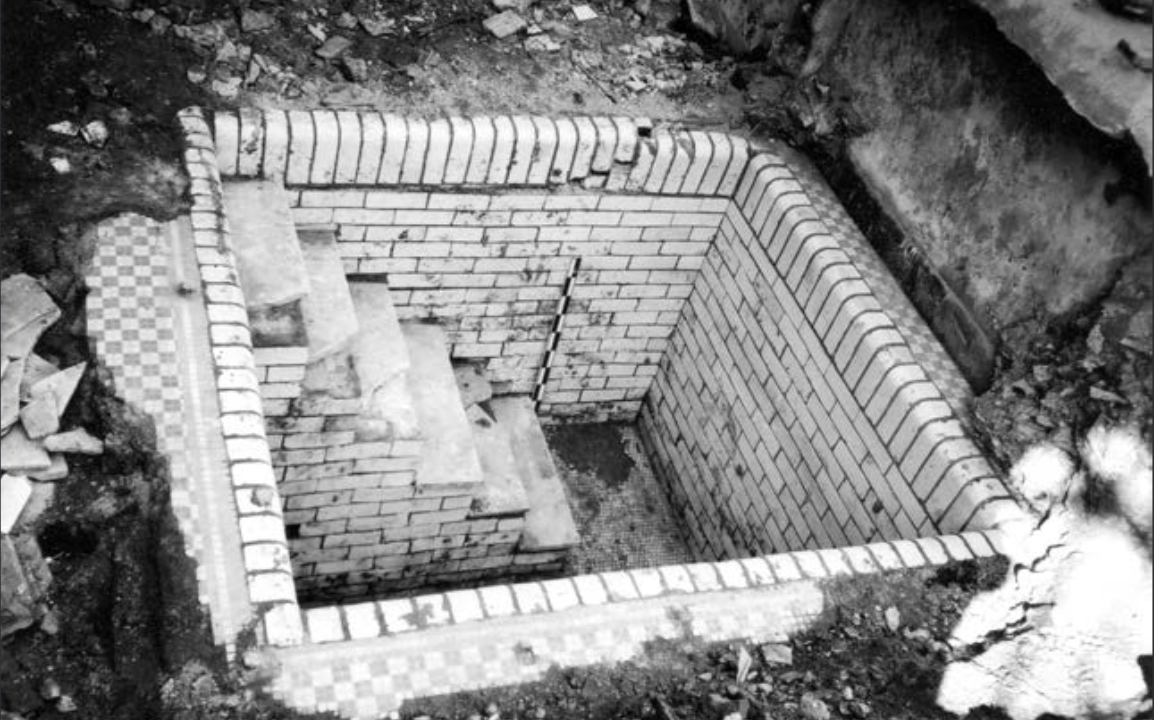
A white tiled wall emerged from the soil and researchers on the scene began to excavate the structure by hand, unearthing a set of marble steps descending into a rectangular bath. At the center of the bath’s floor was a Star of David made of blue hexagonal tiles.
Archival research found that a Congregation Moshcisker Chevrah Gur Arye had been housed at the site, indicating the pool was likely a mikveh, a Jewish ritual bath, according to a consultant’s report on the dig.
The site is one of only three historical mikvehs discovered by archaeologists in the city, despite its nearly 400 years of Jewish history. The mikvehs have been forgotten, buried or demolished, and rediscovering them is difficult due to the city’s dense urban development.
Researcher Miriam Entin, 29, a Jewish PhD candidate in archaeology at the City University of New York’s Graduate Center, is scouring historical records to search for others, and hopes that uncovering more mikvehs will help shed light on Jewish history in the city.
Mikvehs, used for ritual immersions and purification, are central to Orthodox life and are typically built into the ground, making them potentially rich archaeological sites across the Jewish world. Researchers in Israel recently announced finding a 2,000-year-old mikveh in the southern city of Kiryat Gat, and another from the same era in Jerusalem.
Despite the prominence of mikvehs in Jewish communal life, most Jewish archaeology in New York City has focused on synagogues and cemeteries, Entin said. Her work, she said in an interview, “comments on the social world, the experience of these immigrants.”
In basements, bathhouses, synagogues and cellars
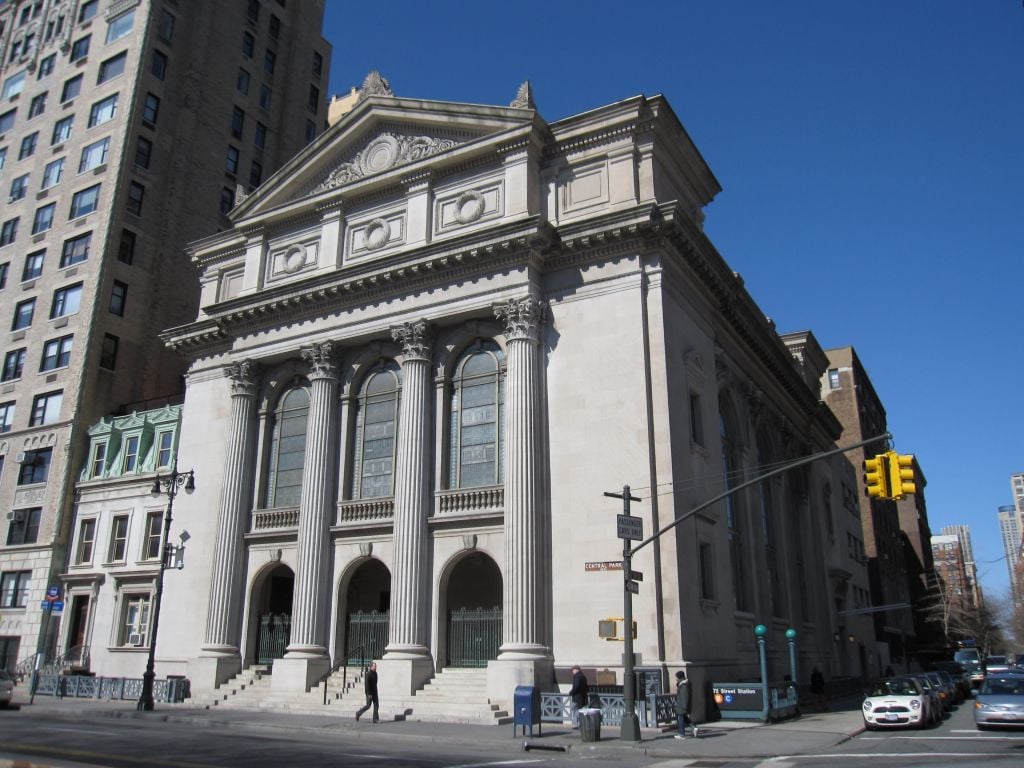
Jews arrived in New York City, then known as New Amsterdam, from Brazil in 1654. The city’s first mikveh was built by Congregation Shearith Israel in 1759 on what is now South William Street, using water from a natural stream. Earlier generations of Jews probably used the stream itself for ritual immersions, according to a 2017 study by Dr. Celia Bergoffen, an archaeologist and professor at New York’s Fashion Institute of Technology who excavated a mikveh discovered on Allen Street in 2001.
Bergoffen said in an interview that mikvehs have been a longtime topic of study in Europe, but in the US, were mostly neglected until the last 20 years. Part of the reason is that many women who used mikvehs were shy to discuss the practice “because it has to do with women’s sexuality and menstruation and women’s marital relations,” she said.
Entin, whose grandparents moved to the US from Europe after the Holocaust, wanted to focus on Jewish history and archaeology when she started her PhD studies at CUNY and decided to address that gap. Her dissertation focuses on mikvehs in the Lower East Side and she plans to finish her seven years of PhD studies later this year.
In the late 19th and early 20th centuries, millions more Jews flooded into the city, seeking economic opportunity and fleeing pogroms in Eastern Europe. The immigrants crowded into tenements in areas such as Manhattan’s Lower East Side, setting up congregations and other communal infrastructure, including mikvehs.
A report on the mikveh found in 2003 noted that the congregation at the site was one of more than 500 on the Lower East Side, a neighborhood covering less than one square mile, in the early 20th century. Sometimes, multiple congregations were housed in space rented in the same tenement building.
In the crowded neighborhoods, stressed for space, the mikvehs were located in synagogues, in private facilities, in tenement cellars and in yards. Some were not listed in business directories or associated with a congregation, and possibly only known to residents of the immediate neighborhood, Bergoffen’s study said.
Maintaining the mikvehs was a struggle. Many were in independent facilities, so rabbis would certify them as kosher, but would not provide ongoing oversight, forcing patrons to trust the sometimes unscrupulous operators. A certain amount of water in mikvehs must be from natural sources, but the city’s water is supplied through pipes, so the mikvehs had to be made kosher by adding water from snow, ice and rain. The facilities would become overwhelmed by demand around holidays.
Residents did not have access to bathtubs or showers — most early 20th century buildings did not have indoor bathrooms — so mikveh immersion took the place of bathing. Some of the operators did not provide showers or empty and clean the mikvehs, which often became filthy.
The water in mikvehs in tenement basements was described as “thick and slimy… covered with the scum from the bodies of the bathers,” in a 1914 report for the city cited in Bergoffen’s research.
The number of mikvehs on the Lower East Side began to decline in the 1920s as the tenements were demolished and Jews moved from the neighborhood.
You can’t dig on Fifth Ave.
Archaeology is complicated in New York City because urban development blocks digs, unlike in rural areas, where archaeologists have more flexibility.
“You can’t just go and say, ‘Okay, I have these research questions and I want to find out the answers, so I’m just going to start digging on Fifth Avenue,’” Entin said. “It’s very rare, almost non-existent, that somebody can start with a research question and then just pursue it freely in the city.”
Typically, when a developer is planning a construction project, federal and state laws require them to contact cultural resource management specialists who assess whether a site has historical value. The assessors look at the land’s history, from the prehistoric and Native American eras to later immigrant communities.

The specialists issue a report with a recommendation — that the site should be excavated, that archaeologists should monitor the development project, or that the site is unlikely to have historical value and that the construction can proceed without interference.
Even if an excavation takes place, there is usually pressure from developers to finish the dig quickly so construction can begin, Entin said.
When archaeologists uncover artifacts, the finds are collected, catalogued, and shelved for safekeeping and future research. The New York City Archaeological Repository contains more than 120,000 artifacts, dating back to an 8,000-year-old hunting point found in Queens.
Archaeologists have only found three mikvehs, all in or near the Lower East Side. One was under a vacant lot on Allen Street near the historical Eldridge Street Synagogue, another found by chance during a basement renovation on East 7th Street, and the third at the site of Congregation Moshcisker Chevrah Gur Arye on East 3rd Street.
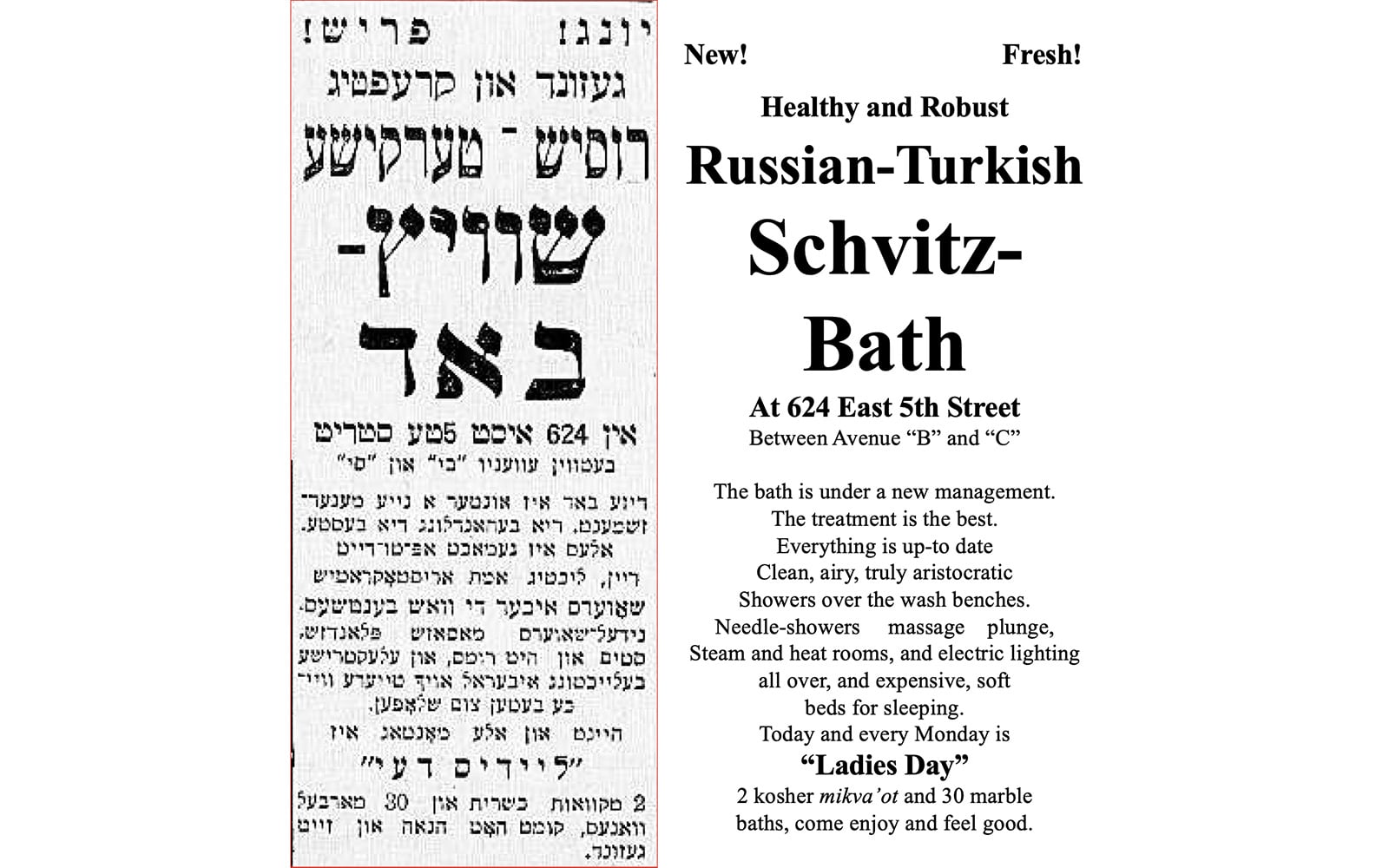
Entin is scouring historical Yiddish advertisements, fire insurance maps and other archival materials to find others and compile the first comprehensive database of historical mikvehs in the city.
The advertisements include information like the address and the rabbi who certified the mikveh. The insurance maps identify the locations of synagogues, alongside descriptions of baths or basements, indicating a potential mikveh. Entin then cross-references the maps with other sources, like a Center for Jewish History database, to determine if the synagogue had a mikveh.
Other times she checks with property owners to make sure the basements have been filled in and do not still include an extant mikveh.
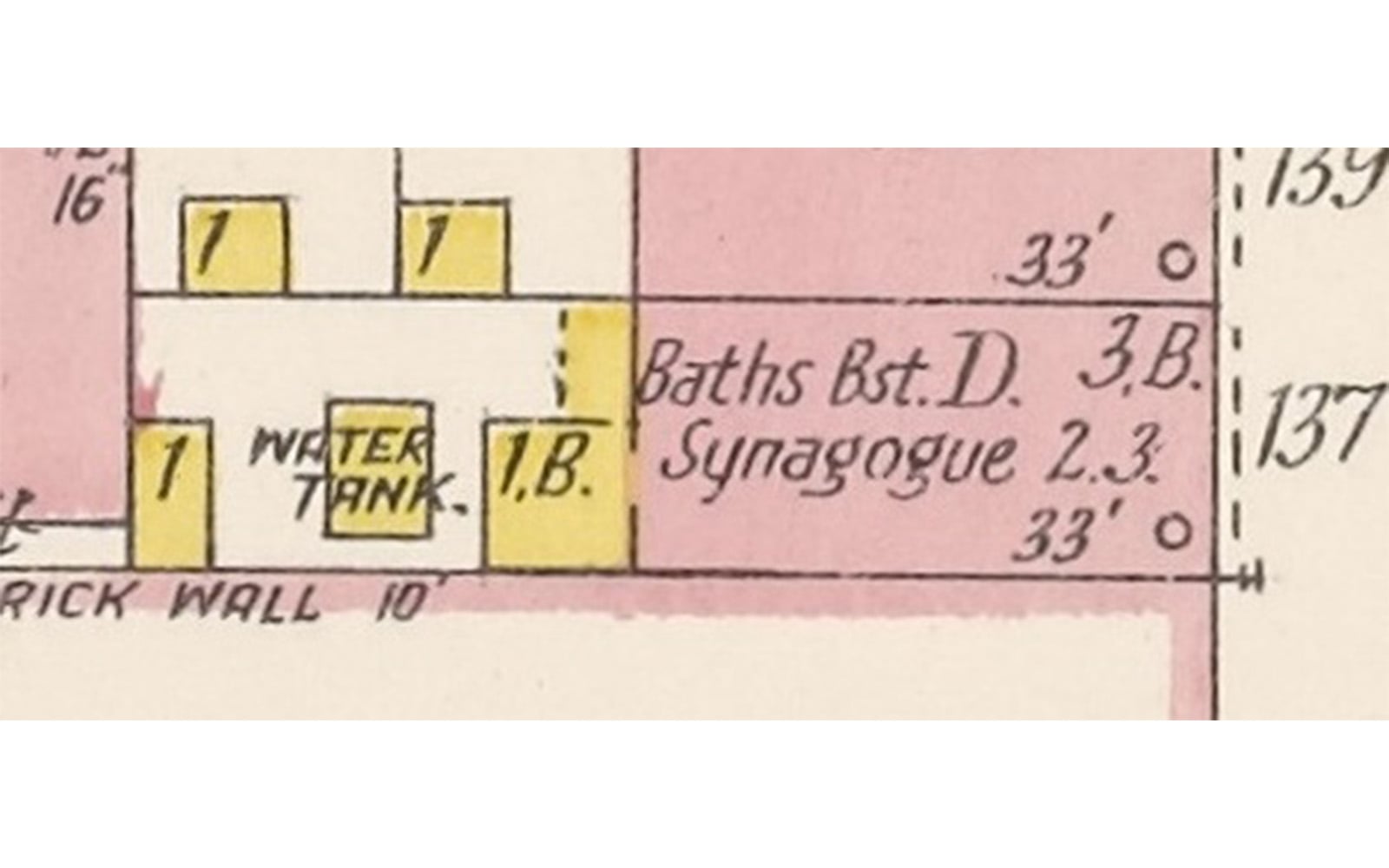
The insurance companies released the maps every few years, allowing Entin to track the buildings over time.
“You can see, ‘Oh, in 1903 it says baths, but then in 1920 it doesn’t,’ so you know the mikveh was probably sold or demolished in between,” she said.
Shining a light on past Jewish life
The advertisements can also tell a story. The prominent Park East Synagogue on the Upper East Side advertised a mikveh around the turn of the 20th century, but later advertisements said it had been put up for sale, and it later appeared to have gone defunct, Entin said.
She has located dozens on the Lower East Side, although she is withholding specific figures and locations until her dissertation is published. She has found a couple dozen more in other areas of the city, such as the Bronx and parts of Brooklyn, and in Newark, New Jersey, and Philadelphia, Pennsylvania, she said.
“Some of them were definitely destroyed. We know that a mikveh existed in a certain building, and now that building is a hotel, so there’s probably nothing there anymore,” she said. “But there are almost certainly ones that exist intact in certain tenement basements and the landlord’s kind of waiting for somebody to knock on the door and ask about it.”
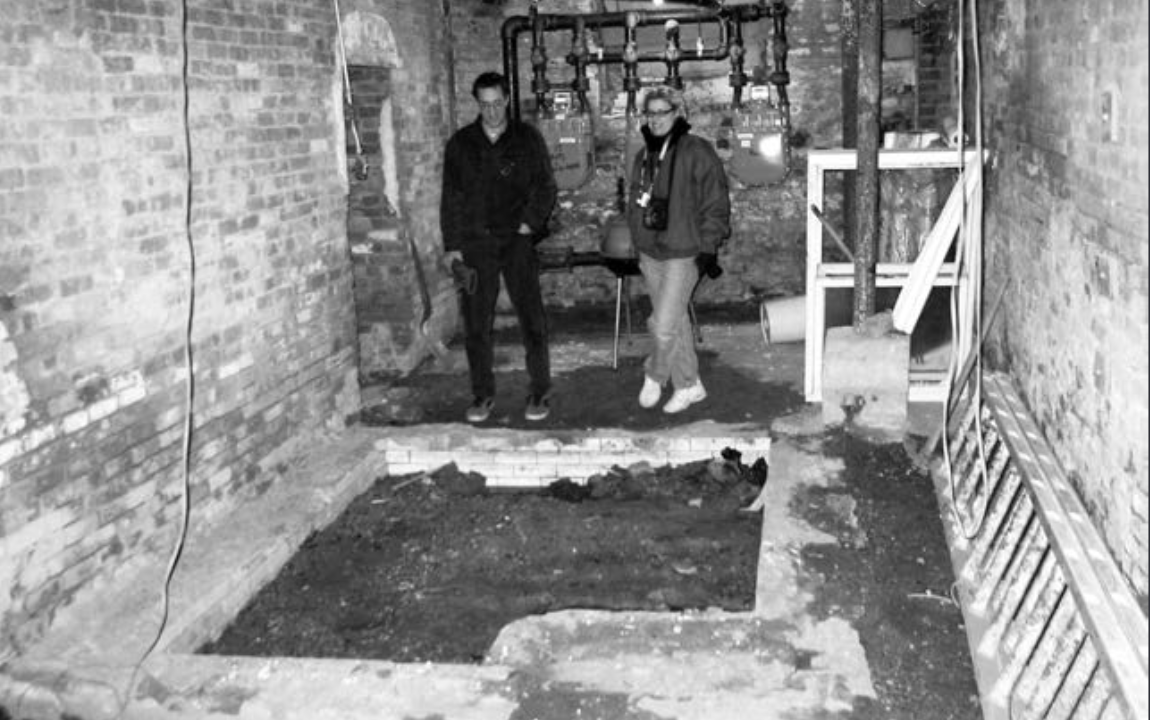
Others are likely buried under concrete floors. In the early- and mid-20th century, developers were required to demolish underlying structures to build solid foundations, but would often illegally fill in basements with dirt debris instead, then build on top of them, “which works out well for archaeologists looking later,” Entin said. This is how the Allen Street mikveh was preserved during construction in 1958.
Excavations can shed light on past Jewish life, such as showing the construction methods and ritual specifications for the baths. Around the beginning of the 20th century, Jewish legal authorities held discussions on how tap water could be used to fill a mikveh, in place of the traditional spring water or rainwater, for example. Archaeological digs can show how those rulings and controversies played out in construction.
The digs can also unearth artifacts surrounding the mikvehs. The Allen Street excavation turned up parts of a banister that had surrounded the bath and treads on the marble stairs leading to the water to make the steps less slippery, indicating safety measures were in place.
The construction can show details of the structure that are not visible on maps, such as whether mikvehs were in a private area, had separate entrances, and what privacy measures there were.
Bergoffen said Entin’s database will be “very valuable for tracing the evolution of the Jewish community on the Lower East Side and the practices of that community,” although she did not think it was likely the research would lead to more excavations due to obstacles surrounding digs in the city.
Entin hopes her research will open the way for future excavations, though, because archaeologists will be able to use her data to advocate for digs during development projects.
“Old buildings probably hold some secrets,” she said.








The Times of Israel Community.