

Liberman is risking another election to secure his right-wing political future
The Yisrael Beytenu chairman has ruled out a minority coalition dependent on Arab parties. He is banking on Likud defectors, but is actually erecting a roadblock for the center-left

 Add ToI as a Preferred Source on Google
Shalom Yerushalmi is the political analyst for Zman Israel, The Times of Israel’s Hebrew current affairs website
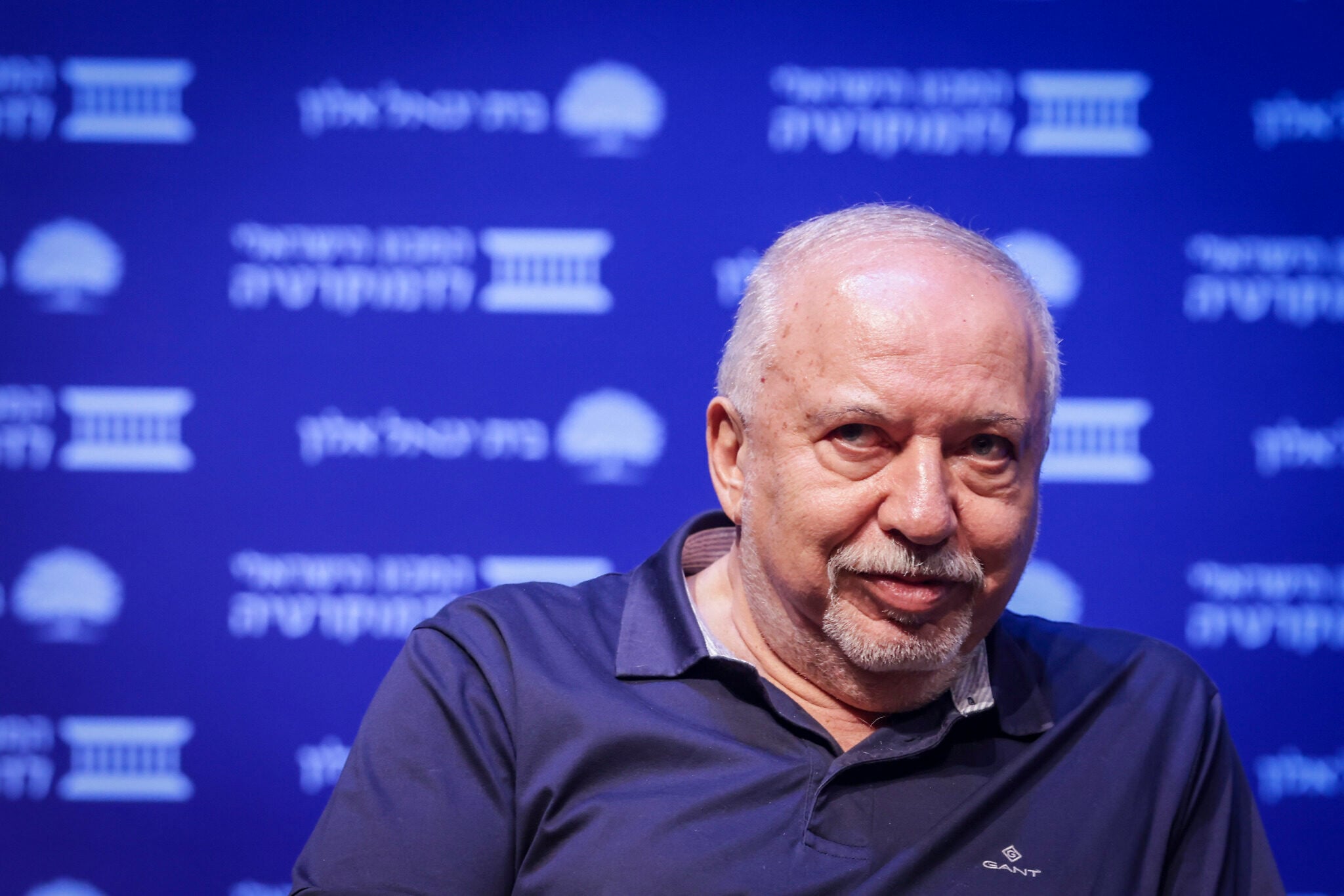
Avigdor Liberman announced on Thursday that after the upcoming election, he would not join or support a minority government — a parliamentary arrangement in which a governing bloc of fewer than 61 lawmakers is sworn in and survives thanks to the abstention or outside votes of factions that are not formally part of the coalition.
The announcement effectively blocks a path being considered by Gadi Eisenkot, the former IDF chief of staff whose Yashar party has overtaken Likud in recent polls. Eisenkot has floated the possibility of forming such a government if the anti-Netanyahu bloc falls short of a majority in the October 27 election.
Liberman, the secular, right-wing Yisrael Beytenu chairman, also ruled out sitting with Arab-majority parties or any other faction he considers non-Zionist. That includes the ultra-Orthodox parties, which have conditioned joining the next government on a law exempting yeshiva students from military service.
“Our position is sharp and clear: We will form a coalition made up only of Zionist parties,” Liberman said in a post on X. “Without Ra’am, without the Joint List, without Shas and without United Torah Judaism.” The first two are the Arab-majority slates running in this election; the latter two are the ultra-Orthodox parties.
To remove any doubt, Liberman stressed that he would not support a minority government even for a brief transitional period — a maneuver that would theoretically allow the anti-Netanyahu “change bloc” to take control of the Knesset and government ministries during the crucial first months after the election.
He was just as categorical about the current prime minister: Yisrael Beytenu will not sit in a government with Likud as long as Benjamin Netanyahu leads it. Likud without Netanyahu, however, could be a legitimate partner. Nearly everyone in the anti-Netanyahu camp shares that position, including Eisenkot and B’Yachad leaders Naftali Bennett and Yair Lapid.
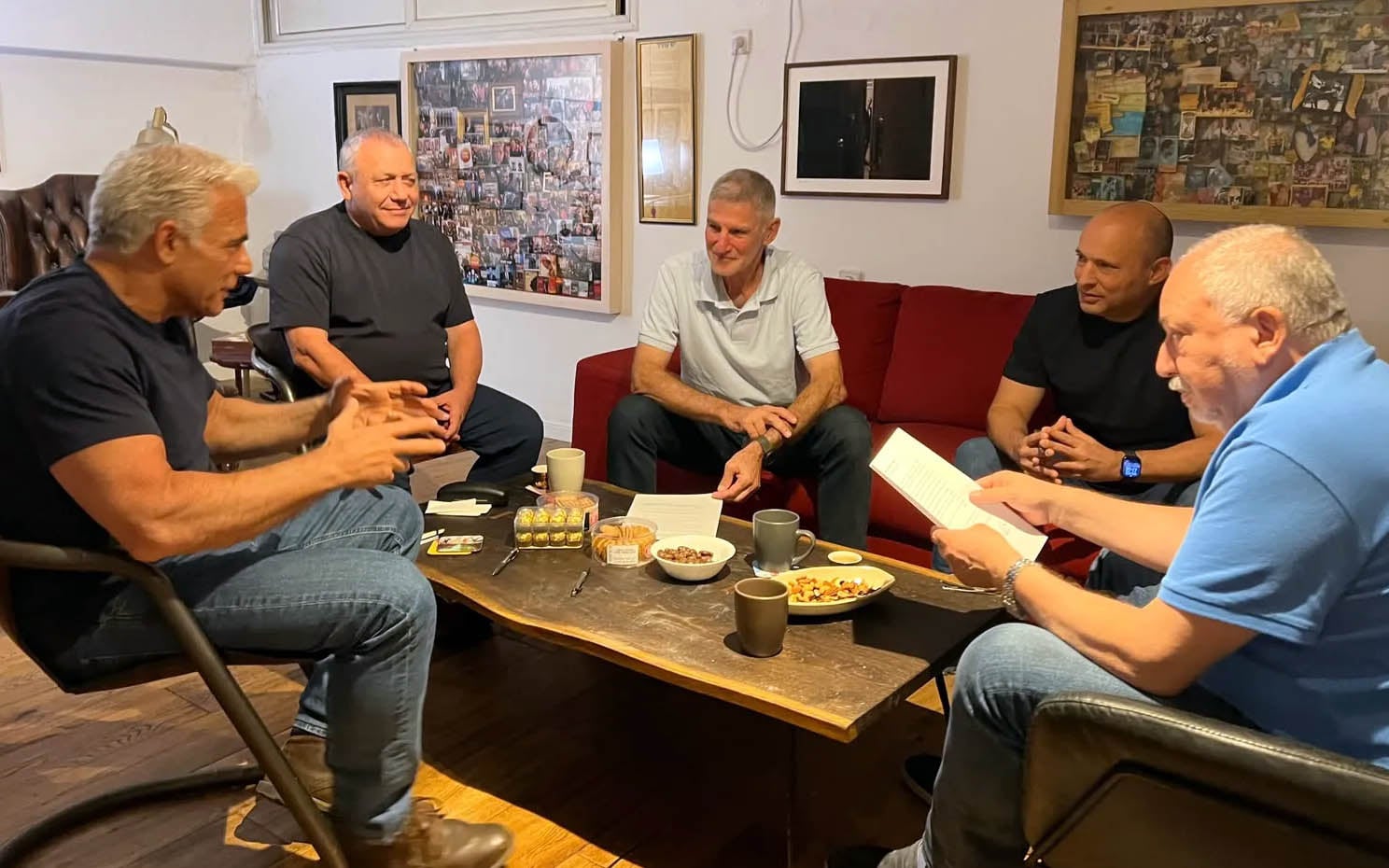
So how exactly does Liberman intend to form a stable, 61-seat government that does not rely on outside Arab support?
He says he plans to lure right-wing Knesset members away from Likud to make up the numbers. He claims to know several Likud MKs who feel Netanyahu has made them subservient to the ultra-Orthodox parties and who would be willing to join the Zionist opposition bloc.
In other words, he would be borrowing the very playbook Netanyahu and his associates have used for years.
This despicable practice of political defection is epitomized by Foreign Minister Gideon Sa’ar, who quit Likud in late 2020 to form his own party and entered the current Knesset on Benny Gantz’s slate, with the votes of Netanyahu opponents. During the war, he broke with Gantz and crossed over to Netanyahu’s government, and he now holds a safe spot on Likud’s slate for the next Knesset.
Liberman genuinely believes the change bloc could win an outright majority in the upcoming election. By his optimistic calculations, this will happen if three conditions are met: An unprecedented 75% of the bloc’s supporters turn out to vote; many ultra-Orthodox voters stay home in protest of their rabbinic leadership; and voters in the periphery — particularly the displaced residents of the war-torn north — reverse their historical allegiance and abandon Likud over the government’s handling of Israel’s wars.
Liberman also believes that most first-time young voters will support the change bloc over the ruling coalition.
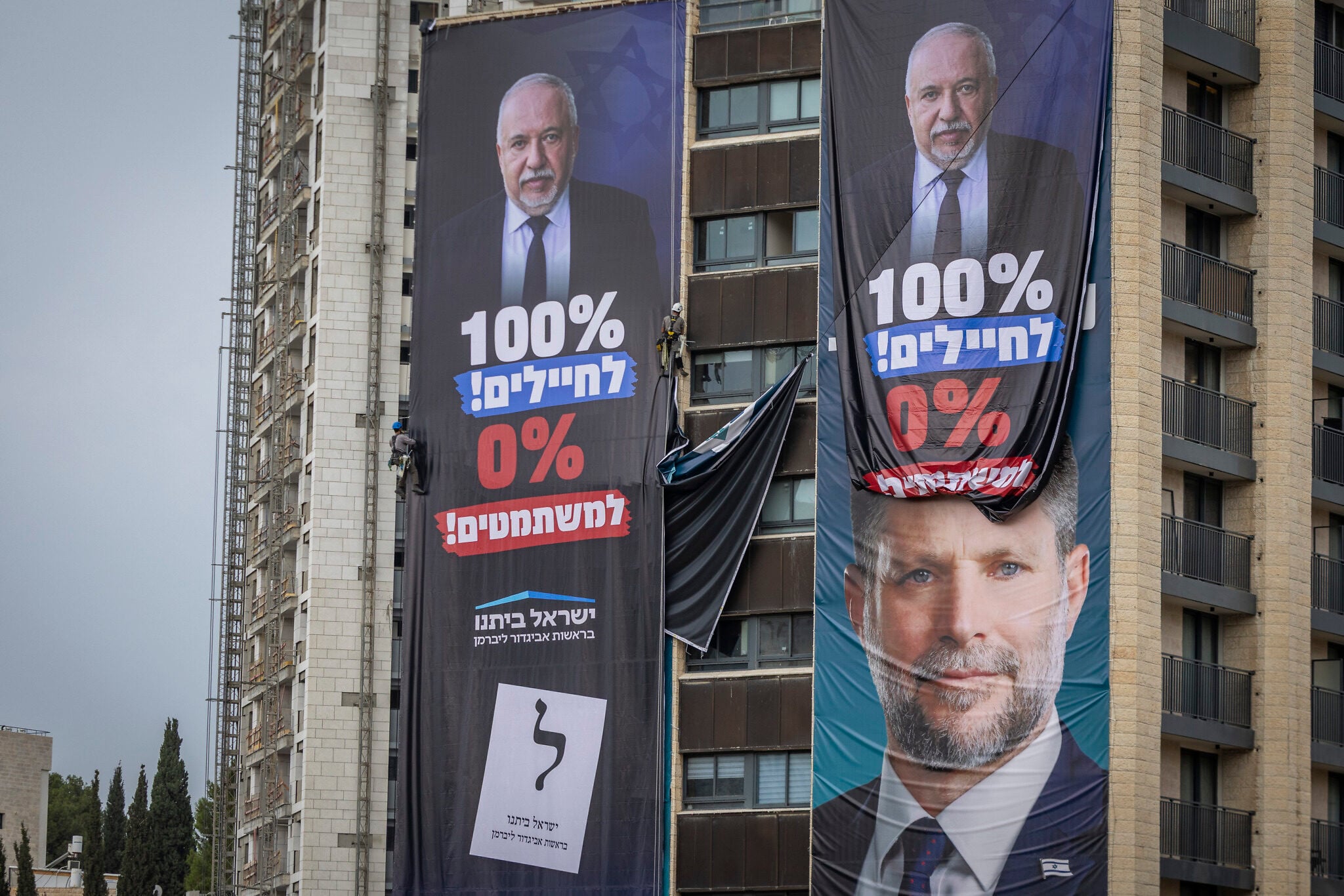
These assessments are at odds with nearly all current opinion polls, which show neither bloc reaching 61 seats. The electoral math suggests that the only realistic path to the Prime Minister’s Office for the opposition bloc is a minority government relying on Mansour Abbas’s Islamist Ra’am party.
In that scenario, Ra’am’s lawmakers would abstain in the Knesset vote to swear in the government, allowing it to be approved without 61 votes in favor. The exception would be the party’s No. 2, Yoav Segalovitz, a Jewish former senior police officer and Yesh Atid MK who joined Ra’am’s slate in August in an unprecedented technical alliance. Only later would Ra’am be brought into the government itself, with ministerial portfolios and Knesset committee posts. Abbas has said openly that he wants to return to government with responsibility for fighting violent crime.
Such a scenario apparently horrifies Liberman and his hawkish colleagues in Yisrael Beytenu, even though they once accepted far more. When Ra’am made history in 2021 by becoming the first Arab party to formally join a governing coalition, Liberman served as finance minister in the Bennett-Lapid government that depended on its votes.
The main message behind Liberman’s statements on Thursday, which he delivered both verbally and in writing, is clear: He is prepared to drag a traumatized country through yet another election rather than sit again with Abbas.
The second message is quieter: Liberman is signaling to his former colleagues on the right that he was, and remains, a Likud man at heart.

Liberman’s roots in Likud run deep. He served as director-general of the Likud movement from 1993 to 1996, and was pivotal in turning Netanyahu, then a newly elected party leader, into Likud’s dominant figure. When Netanyahu won the premiership in 1996, he appointed Liberman director-general of the Prime Minister’s Office.
Liberman broke away in 1999 to establish Yisrael Beytenu, initially a political home for the large wave of immigrants from the former Soviet Union. But he has always kept one foot in the Likud camp. Netanyahu and Liberman even ran on a joint “Likud Beytenu” ticket in the 2013 elections.
Liberman still has strong footholds and deep connections within the ruling party. He intends one day to fulfill his ultimate dream: running for the Likud leadership and becoming prime minister as head of the party where his political career began.
All this, he hopes, will happen in the post-Netanyahu era, which could come sooner rather than later. If Netanyahu retires immediately after the election, Liberman will abandon the change bloc that very day, return to his political home and revive the old Likud Beytenu alliance.
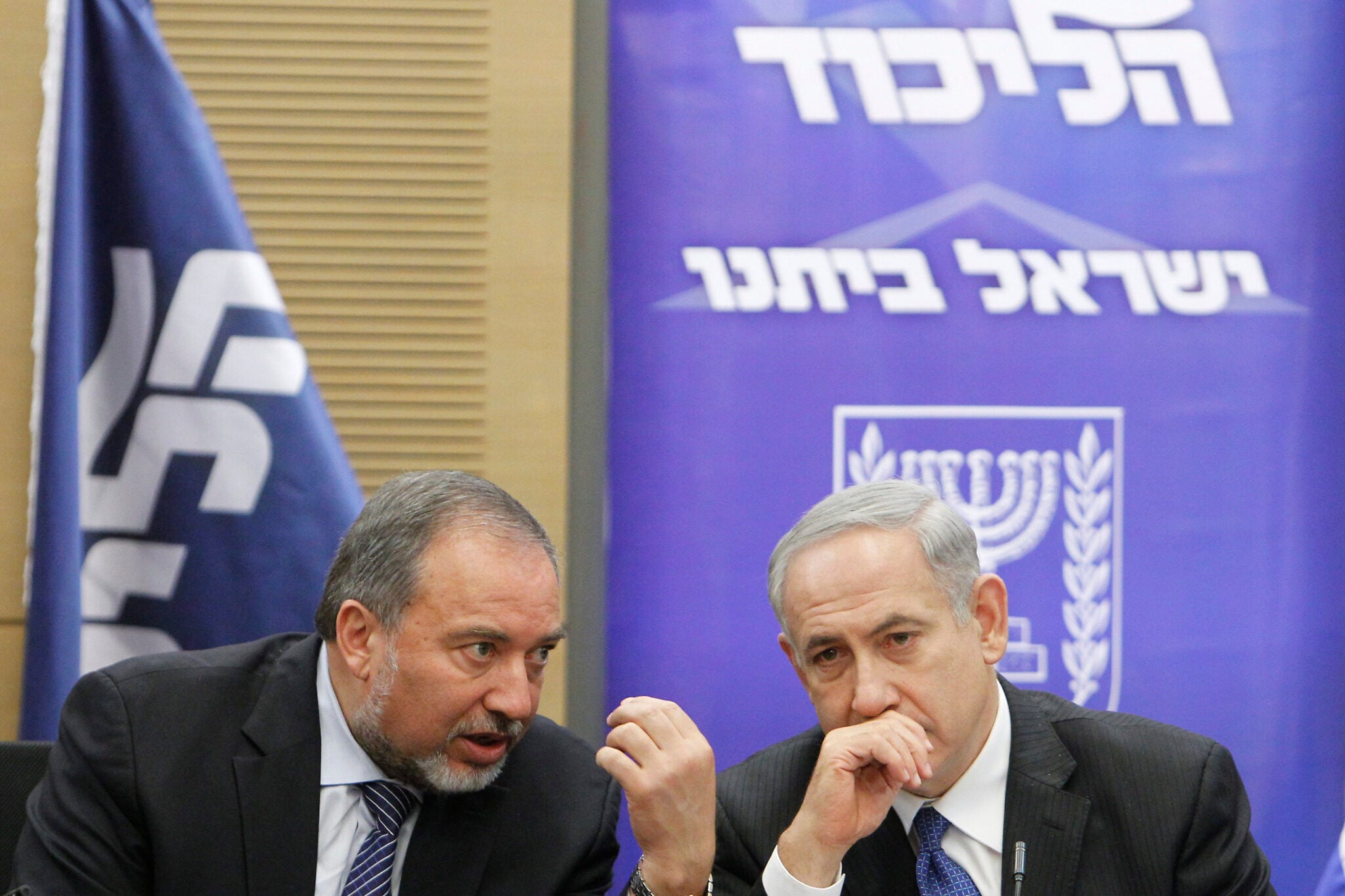
Anyone who knows Liberman understands that his political maneuvers are driven by a longstanding personal vendetta against Netanyahu rather than by any centrist ideology.
That is why Liberman refused to give Netanyahu Yisrael Beytenu’s five Knesset seats after the April 2019 election, ostensibly over the ultra-Orthodox military draft. The refusal deprived Netanyahu of a majority and plunged Israel into a cycle of repeat elections — four more in the following three and a half years. Judging by his current posturing, it appears likely he will do it again.
Liberman is a hardline right-winger and a resident of the West Bank settlement of Nokdim. On security and the Palestinians, his views are remarkably close to those of far-right ministers Itamar Ben Gvir and Bezalel Smotrich, or former MK Moshe Feiglin.
For years, Liberman served in right-wing governments alongside Likud, the religious Zionists and the ultra-Orthodox parties. The ultra-Orthodox were among his closest allies until their falling-out over draft exemptions.
Today, above all, Liberman resents his tactical partnership with Yair Golan, the former IDF deputy chief of staff who united the decimated Labor and Meretz parties into the new left-wing Democrats. Liberman tells Golan to shut his mouth at every opportunity. On Thursday, he expressed his right-wing views forcefully, causing considerable despair in a change bloc that badly needs Yisrael Beytenu’s seats — nine in the latest Times of Israel poll.
Will Liberman backtrack on what he said on Thursday, as Netanyahu’s associates believe he will? Will he be able to resist the temptation of seeing Netanyahu ousted, even if the price is a government that depends on Abbas? And if he does backtrack, will he use his leverage to demand a prime ministerial rotation with Eisenkot, even in such a fragile minority government?
Right-wing political commentator Amit Segal argued on Thursday that this was precisely the motivation behind Liberman’s move: securing a rotation agreement for himself through political threats and extortion.
The ballots will be cast on October 27. In the coalition talks that follow, we will find out whether Liberman’s word is his bond, or whether this is just another piece of cynical political bluster.






The Times of Israel Community.