

3 experts on how you’re reading election polls wrong — and why they can’t predict the result
With several parties at risk of falling short, small shifts make a huge difference. Plus, Israel’s electorate is difficult to survey and methodology is often opaque. But even so, analysts say, polls are still worthwhile

 Add ToI as a Preferred Source on Google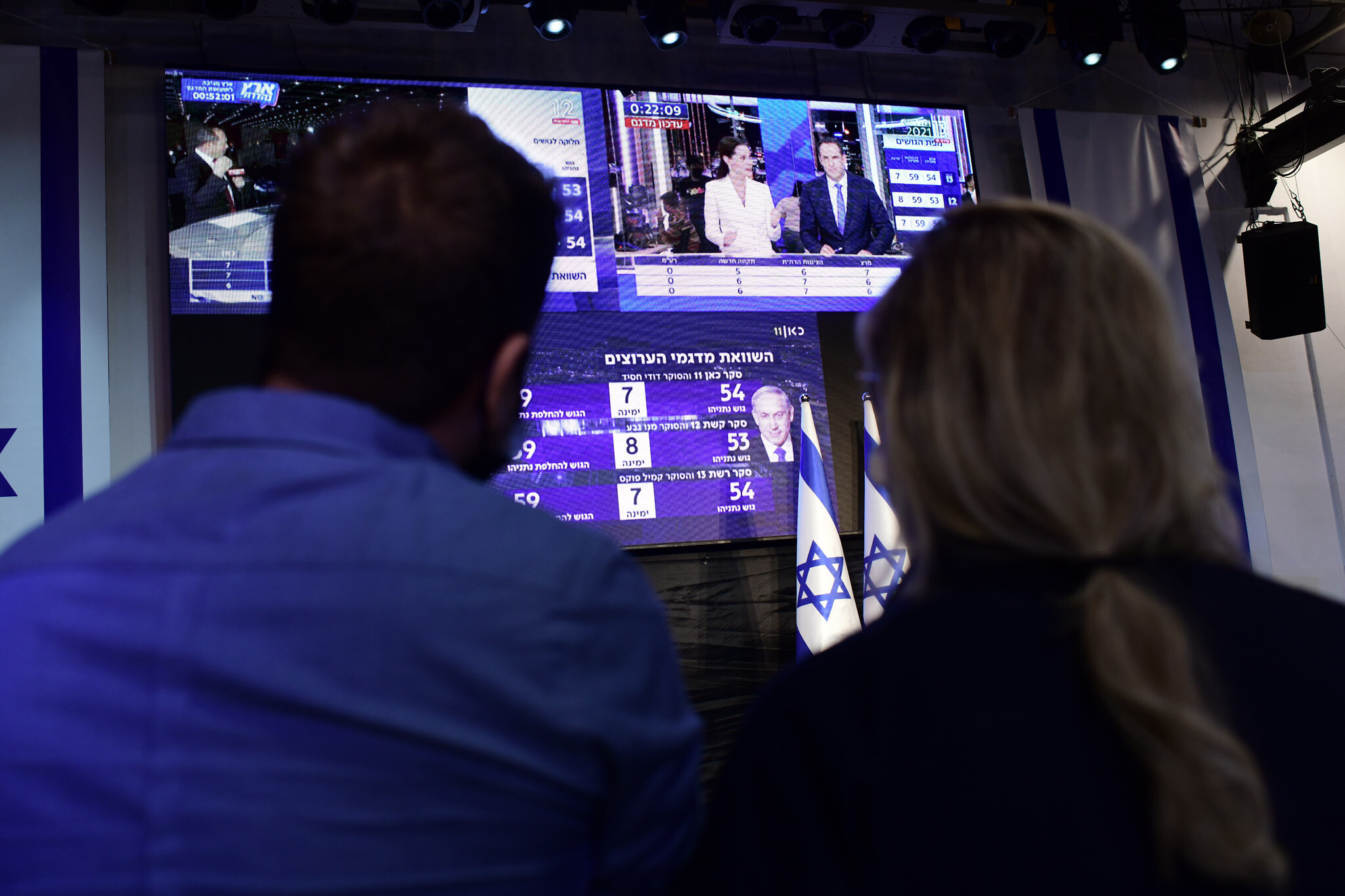
For weeks, Israelis have been bombarded by polls from every major media outlet purporting to predict how voters will cast their ballots and who will govern the country after the election.
But polling experts have a message for the anxious electorate: When Israelis go to the polls on October 27, no one really has any idea what will happen. Polls, they say, are useful, but not always for the reasons people think.
The unreliability of Israeli election surveys stretches back decades and has become an axiomatic part of every vote, with the final result routinely skewing from what polls predicted days earlier. And yet, paradoxically, Israelis can’t get enough of them. In a country so obsessed with politics, where the stakes are so high, polls provide concrete data to latch onto.
So how should Israel’s apprehensive voters read the polls — and what should they look out for? Here’s what polls can and can’t tell us, and why, despite all of their shortcomings, experts say they’re still useful.
“Polls are a reflection of who we are. They’re not a perfect reflection, but then nothing else is either,” Dahlia Scheindlin, an Israeli political analyst with a focus on polling, told The Times of Israel.
“And so I think it’s fair to look in the mirror to see how you want to get dressed in the morning,” she added. “I think the more we know about ourselves, the better.”
Beware the small parties
To understand why Israel’s fragmented and chaotic electoral landscape is so hard to predict, it’s useful to look at another case where polling is much more straightforward: US Senate races.
Earlier this year, Democrats Abdul El-Sayed and Haley Stevens faced off in a closely watched primary in Michigan. Unlike in Israel, there were two candidates: One would win, and the other would lose.
The campaign was bitter, but polling showed El-Sayed with a big lead. One poll, for example, put him 16 points up with a 3.7 percent margin of error — meaning he was forecast to win by anywhere from 12 to 20 points. In the end, he won the race, but by less than a point. And that was in a straightforward, head-to-head contest.
In Israel, up to 13 parties are expected to enter the Knesset. Minuscule vote differences between them — far smaller than even the best polls’ margins of error — could decide how many seats they get, if any, and thus the distribution of the next Knesset. Channel 12’s margin of error, for example, is 4.4% — worth about five seats out of the Knesset’s 120, more than enough to determine which side wins.
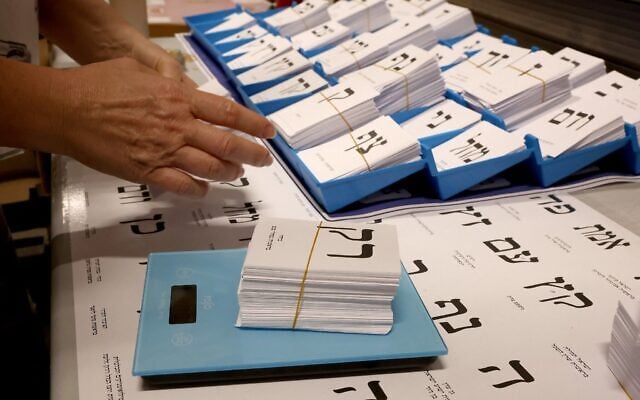
Far more consequential is that several parties are hovering around the electoral threshold of 3.25%. If they win that share of the vote or slightly more, they get four seats. If they win even a vote less than that percentage, they get zero seats, all of those votes go to waste, and the rest of the parties’ shares are reshuffled accordingly.
That’s exactly what happened in the most recent election, in 2022. The popular vote was split roughly 50-50 between supporters and opponents of Prime Minister Benjamin Netanyahu. But two anti-Netanyahu parties, Meretz and Balad, just barely missed the threshold; their collective 289,000 votes were thrown out, and Netanyahu got a 64-56 majority that has held, in one way or another, to this day.
“In almost every election, we’ve seen one party that seemed certain to cross the electoral threshold, and in the end did not cross the electoral threshold,” Gal Ariely, a professor of politics and government at Ben-Gurion University, told the Times of Israel. “The Israeli voter generally tends to vote strategically, and generally tends to vote for parties that have a certain level of certainty that they’ll cross the electoral threshold.”
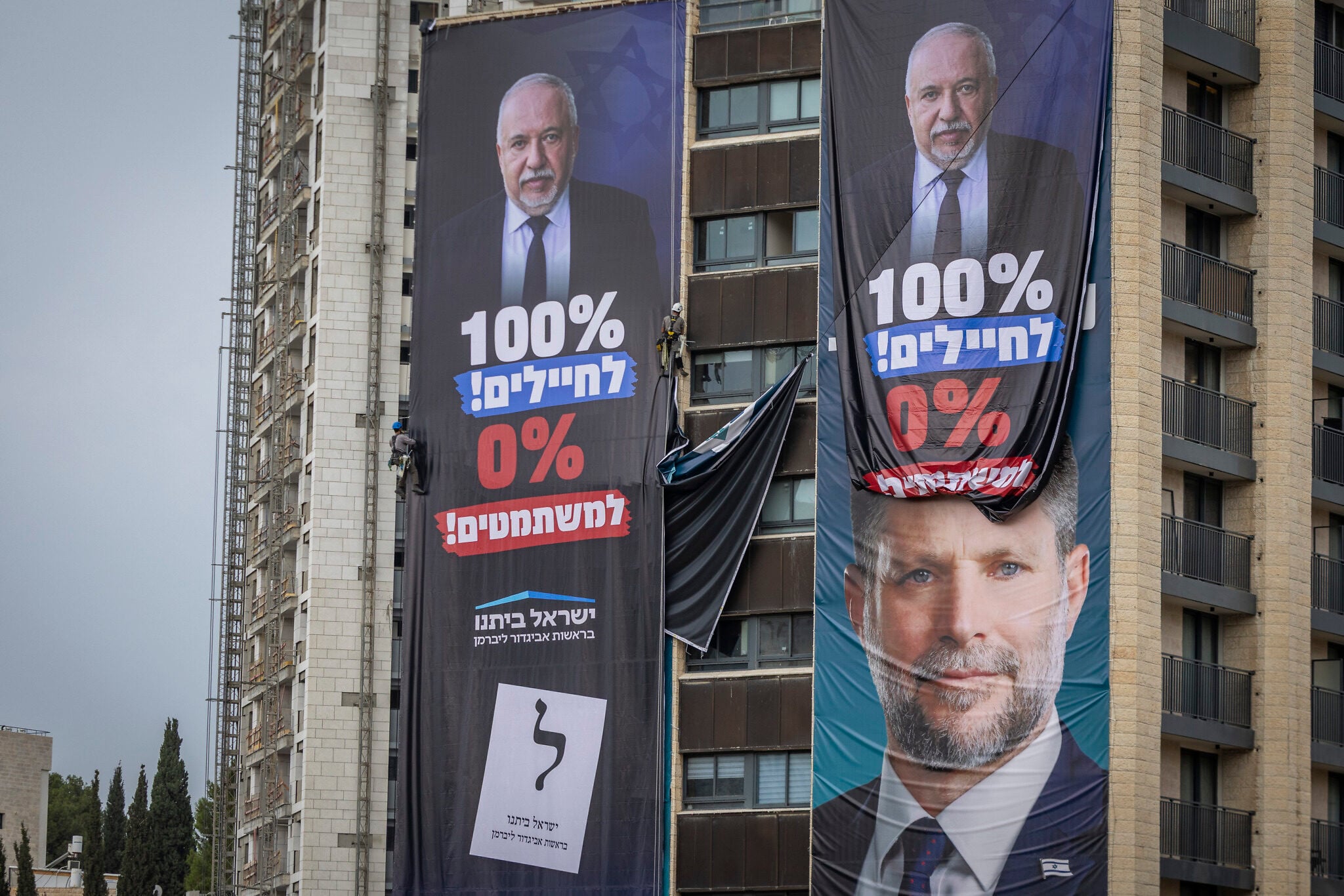
This time, as many as four parties are hovering around the threshold, from across the Knesset’s ideological spectrum: The far-right Religious Zionism, the right-wing People of Israel, the centrist Reservists and the historically Islamist Ra’am.
They could each get four or five seats — adding up to between 16 and 20 collectively — or they could all get zero. If, theoretically, each receives 3% of the vote, and they all therefore get shut out of the Knesset, that would mean a total of 12% of voters (the equivalent of around 14 seats) would have their ballots thrown out.
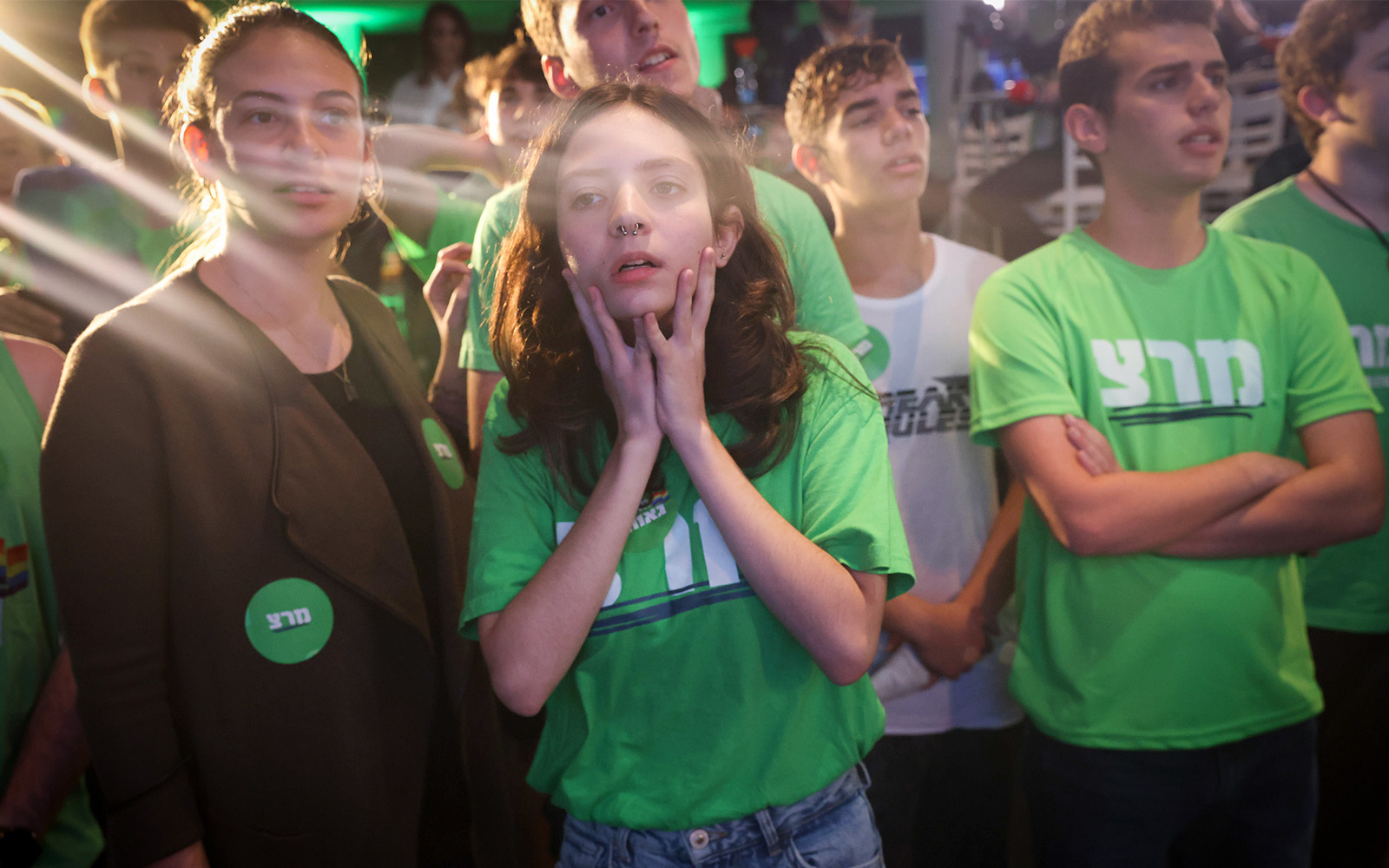
That is a massive swing that would reshape the results, and the way Israel is governed. And with current polling, there’s no way to know if it will happen.
“You might have to redistribute somewhere between zero and 10 seats on the day after election day,” Shmuel Rosner, who runs the Madad polling firm and works as a pollster on Channel 13. “This is an exercise that we all keep doing time and again, and the more parties you have under such risk, the more uncertainty it creates concerning the final result.”
Welcome to the methodology jungle
Over the past few days alone, at least six outlets have released polls. The Times of Israel, Kan, and Channels 12 and 13, gave Netanyahu’s Likud 18 or 20 seats, good for second place. Channel 14 and i24 News, both of which have a pro-Netanyahu bent, gave Likud 29 and 27 seats, respectively.
Again, that’s a massive spread. According to the pro-Likud channels, Netanyahu and his partners would be able to form a majority coalition, or get close to it. According to everyone else, neither Netanyahu nor his opponents are particularly close to winning a majority.
Part of that, according to Ariely, relates to the lax polling standards in Israel. Pollsters are required to submit their results and some basic methodology (sample size, respondents, date, margin of error) to the Central Elections Committee — and that’s it. A lot more goes into polling, including weighting the results, making sure to reach different sectors of Israel’s religiously, ethnically, linguistically, and geographically diverse society, looking for outliers in the data, and more.
Much of that is proprietary. And Ariely noted that the raw data is often unavailable, making it hard to vet the poll numbers.
“This field is pretty unconstrained, and anyone can publish more or less whatever they want and call it a poll.”
“Besides the fact that there’s an election [committee] that requires the publication of sample size, sampling method, very, very minor details, this field is pretty unconstrained, and anyone can publish more or less whatever they want and call it a poll,” he said.
Channel 14’s polls, in particular, have raised eyebrows, both because they depart so far from the other poll results, and because of questions surrounding transparency and reliability. The channel’s poll analyst, Shlomo Filber, was a state witness in Netanyahu’s corruption trial, then contradicted his testimony, leading his agreement with prosecutors to be annulled. Then, in May, Haaretz reported that Channel 14 established its own election polling firm without disclosing that it held an ownership stake.
In August, Haaretz reported that Channel 14 failed to report the required data to the election panel. In one case, its poll had just 436 respondents, Haaretz said, below the generally accepted minimum of 500 (and far below the approximately 1,000 regularly surveyed by Rosner’s Channel 13).
Because Channel 14 has such a pronounced pro-government slant, its polls are taken with the corresponding grain of salt. Netanyahu, interviewed on Channel 14 this week, called its polling “optimistic.” But it’s also possible, given all the uncertainty surrounding polling, that it could be right. That would amount to a shock to Israel’s political system.
But if the rest of the polls are to be believed, and Channel 14 is wrong, that could produce a shock of its own: Israel’s media environment is as fragmented as any other, and many of Netanyahu’s voters get their news from what is effectively his house outlet. They’ve been primed to think he’s on pace to win. If the other polls are right, and their longtime leader who portrays himself as Israel’s indispensable man loses, how will they react?
“In an ideal world, polls that only show who’s winning and who isn’t wouldn’t be at the heart of the discussion,” Ariely said. “The heart of the discussion would be about platforms, about approaches, about policy alternatives. That’s at least how democracy is supposed to look in an ideal world. In practice, people are more interested in who’s leading and who isn’t.”

Rosner put it more bluntly. “I’d say don’t pay as much attention to the polls, because polls aren’t the only thing in the world,” he said. “You know, get a life.”
Much of the problem with how polls are understood, Scheindlin said, has to do with how the media covers them. At least three articles over the past week used the word “dramatic” to describe polling with small shifts that leave the electoral picture largely unchanged. That leads readers to ascribe outsize significance to polling changes that, again, are all within the margin of error, which means they may not even be real.
“There’s a lot of really distorted, sensational headline writing,” she said. “It’s very typical here. There’s a lot of misreporting — ‘Earthquake Poll!’ — when a party went up by one seat, or down by one seat, or even two.”
Who actually goes out to vote?
The days before the election, and the day of, present their own set of issues. Israeli law prohibits reporting on polls in the four days prior to an election — a time when significant shifts can decide the outcome.
In 2015, for example, Channel 12’s final election poll showed the center-left opposition Zionist Union with a four-seat lead over Likud. The conventional wisdom at the time was that the party’s leader, Isaac Herzog, would try to cobble together a coalition, or that he would form a unity government with Netanyahu.
“I’d say don’t pay as much attention to the polls, because polls aren’t the only thing in the world. You know, get a life.”
The next four days saw a huge right-wing rally in Tel Aviv that energized Netanyahu’s voters, as well as a gaffe for the ages by Herzog on primetime TV. On Election Day, Netanyahu put out a panicked video raising alarm about Arab citizens exercising their right to vote. When the ballots were tallied, Netanyahu had won a clear victory over his opponent, with Likud garnering 30 seats to Zionist Union’s 24.
“Election polls, at the end of the day, are accurate for their moment,” Ariely said. “And we have no indication if the gap between the election poll published a few days before the election, and the election result, stems from errors. It could stem from the election dynamics themselves. We don’t really know.”
The other gap relates to turnout. While polls measure who Israelis support, they don’t generally make clear whether their respondents intend to go to the polling station and cast a ballot. Voter registration is automatic in Israel, Election Day is a day off, and turnout in the country, where politics is often a matter of life and death, is generally high, topping 70% in the last election.
But how much that other 30% contributes to the result of the poll is another factor that could spur small but decisive changes in the results. In his hour-long interview on Channel 14 this week, Netanyahu exhorted the audience to actually turn out for the election, saying that doing so could make the difference between victory and defeat.
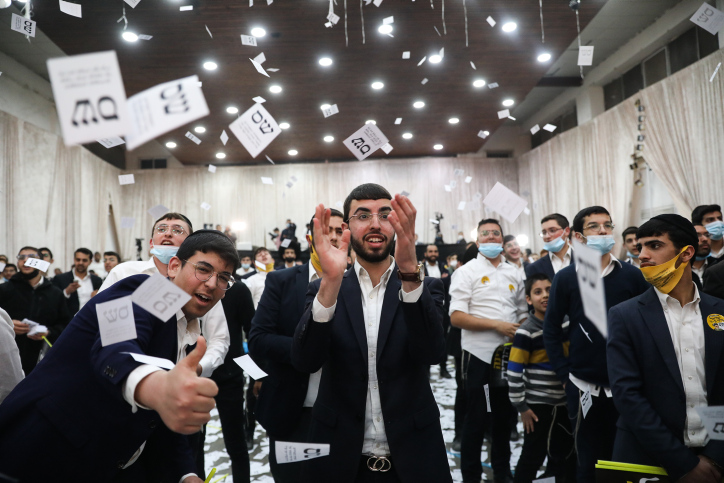
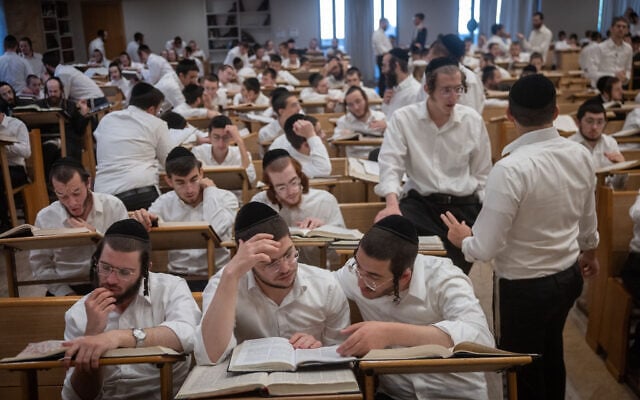
And then some groups are harder to reach, such as Haredi communities that eschew smartphones, or Bedouins living in remote, unrecognized villages in the Negev. Pollsters make an effort to reach those populations, but the difficulties can lead to an undercount, say, in the percentages given to Haredi United Torah Judaism, or Ra’am. It’s hard to know who they want to vote for, let alone whether they’ll actually vote.
“There are communities that are easier to poll and more difficult to poll, and we try to compensate for that as much as we can,” said Rosner, whose firm specializes in reaching the ultra-Orthodox and has a dedicated pollster for Arabs as well. “And we understand that it’s never perfect.”
What are polls good for?
If there’s so much variance in the polling, and so many structural factors making the result impossible to predict, why pay attention to polls at all? Rosner said some of the scrutiny is unwarranted, but added that if readers focus on the big picture, polls have plenty of useful things to say about Israeli politics.
“Just read them carefully, realistically, see what they agree on, and these are the things that you can feel more comfortable with,” Rosner said. “Some of the things they disagree on, these are the things that you should be more worried about.”
In particular, he said, while shifts between parties aren’t easy to capture, polling has shown that the size of the pro- and anti-Netanyahu blocs has been relatively stable, which should give readers more confidence in the overall landscape. Many of the shifts, in other words, have been within the pro- and anti-Netanyahu blocs, not between them.
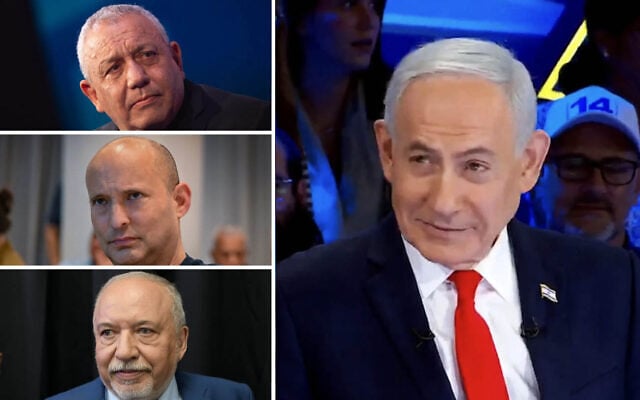
“If you assume that a lot of the movement… is going to be within the main camps, then you can feel somewhat more comfortable with assuming that the size of the blocs is what you see in the polls,” Rosner said. When it comes to the four Jewish-led parties opposing the prime minister, for example, “The chance that you’ll have a huge error when you combine these four parties together is somewhat diminished.”
And while polls are meant to predict the outcome of the election, Scheindlin said voters have it backwards: While each poll is just a snapshot of a given moment, polls, taken together, do an excellent job of showing the past: how the landscape has changed over the past several months, and how voters’ choices have evolved, giving readers a better understanding of Israel’s politics, and Israel itself.
“Long-term trends matter a great deal, because they tell us so much more than predicting future trends,” Scheindlin said. “We cannot know future trends, but we can know a lot about the past. And failing to do that means we’re missing out on the best parts that surveys have to give us, and focusing instead on what they really don’t know how to do, which is predict.”




The Times of Israel Community.