

Rethinking defense ties with US, Israel eyes shift from patronage to partnership
With Washington turning against military aid, a new bilateral framework could take shape based on industrial output and tech integration, but politics will still shape Jerusalem’s access to arms

 Add ToI as a Preferred Source on Google
Nava Freiberg is The Times of Israel's deputy diplomatic correspondent.
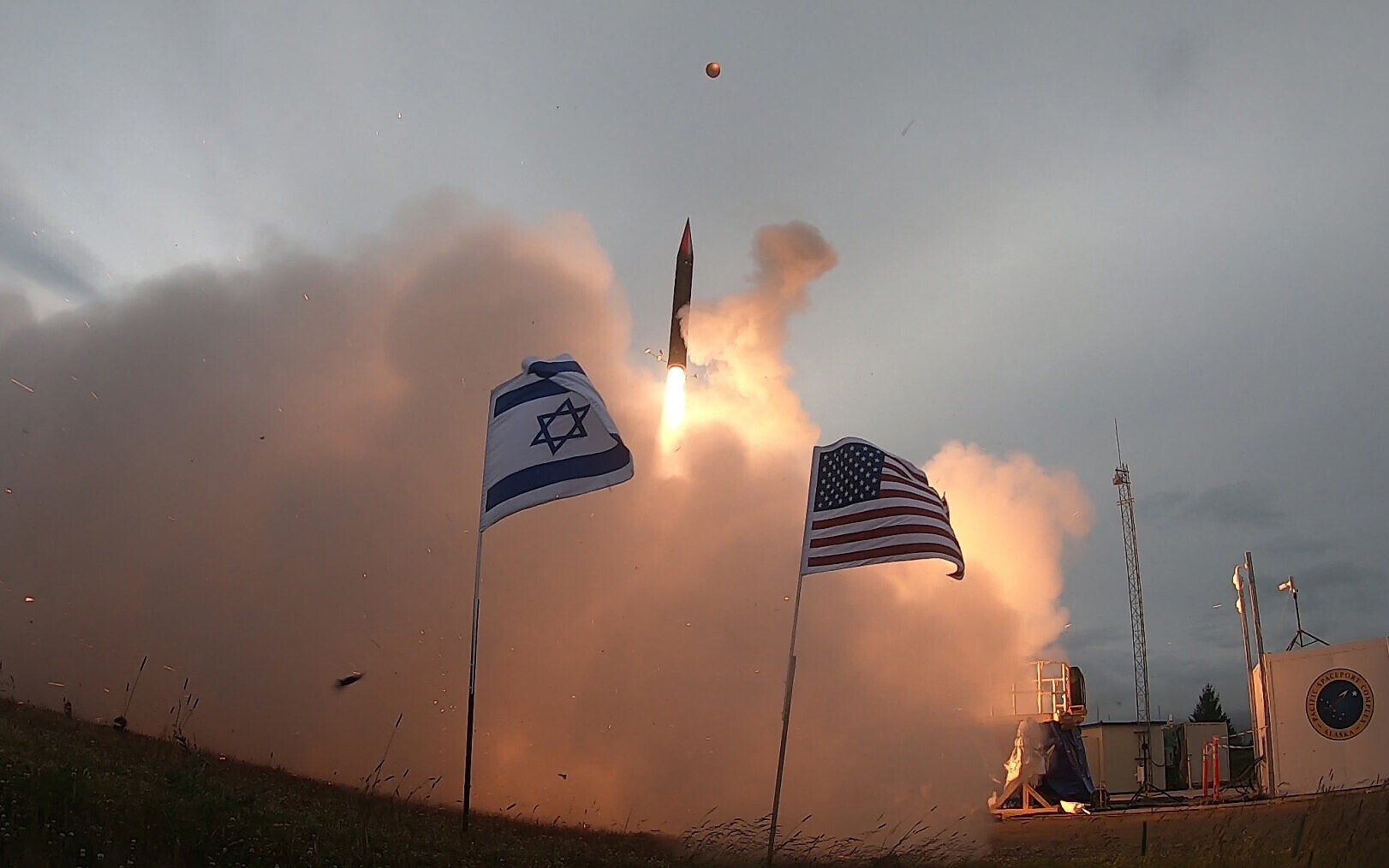
Once thought irreversible, Israel’s rock-solid bond with the United States has become a matter of debate, with the future shape of ties between the allies hanging in the balance. At the center of those deliberations is Jerusalem’s defense partnership with its most powerful and beneficent friend, which faces the possibility of being pared back significantly.
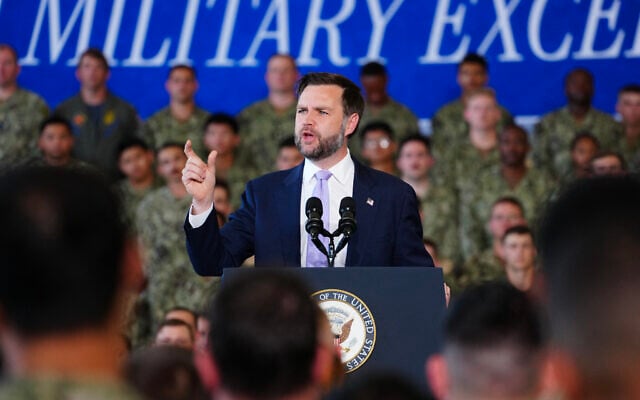
In June, US Vice President JD Vance — seen as a leader of Israel-skeptic Republicans — warned Israelis expressing criticism over the now-defunct US-Iran memorandum of understanding not to bite the hand that feeds it.
“If I was in the cabinet of the Israeli government, I might not be attacking the only powerful ally that I have anywhere left in the entire world,” Vance said. “The other thing that I would say is that over the last three months, two-thirds of the defensive weapons that protected your homeland have been built by American hands and paid for by American tax dollars.”
Elements of both US political parties want to see decades of US military aid to Israel end, with progressive Democrats seeking to stop funding or arms sales that support Israeli actions in Gaza and the West Bank, while parts of the Republican base question why American pockets should subsidize allies and Washington involve itself in overseas conflicts.
US President Donald Trump himself has been a strident critic of foreign handouts, and Prime Minister Benjamin Netanyahu seemed to be getting ahead of the curve when he told the Economist in January that he seeks to “taper off [US] military aid within the next 10 years,” confirming when asked that he meant reducing it to zero.
Far from seeking to weaken security ties with Washington, Jerusalem hopes to replace financial dependence on the US with a more reciprocal relationship in which Israel pays more of its own way while boosting technological, industrial, and strategic value for both sides.
The problem for Israel, though, is that slashing military aid may be just the start, with the whole relationship, from intelligence sharing to weapons development, potentially under the gun.
Even if it does move to a more partnership-based model, that will not shield Israel from painful military fallout should a future White House be determined to downgrade ties.
‘From aid to partnership’
US military aid to Israel grew substantially after the 1973 Yom Kippur War and over the decades became a central pillar of the relationship. Under the current memorandum of understanding negotiated with the Obama administration, covering 2019-2028, Washington committed $3.3 billion a year in foreign military financing, much of it to purchase US-made arms, and another $500 million annually for missile defense.
That aid has become a smaller share of its military spending as Israel’s economy and defense budget have grown in recent years. Jerusalem has also survived and achieved great military feats without US aid before, such as in 1967, and has found ways to cope with restrictions even since aid was ramped up, including by boosting domestic production.
Even if aid were reduced or cut altogether, Israel would likely still seek to purchase American weapons with its own funds. Should the defense relationship shift beyond military aid, though, US approvals for weapons sales and deliveries could be up in the air.

Israel’s air force relies on US-built F-15s, F-16s and F-35s and large stocks of American precision munitions, while Israeli missile defense systems depend heavily on US funding, technology or co-production.
Israeli concerns over how much it can rely on supplies continuing to come from the US were sharpened during the war in Gaza, when the Biden administration delayed some weapons transfers and balked altogether on sending 2,000-pound bombs.
The concerns go beyond just arms sales to Israel. Since 2008, Washington has legally committed to preserve Israel’s “qualitative military edge” by refusing to sell other countries in the region weapons or technology that could challenge Israeli defenses.
There are worries, though, that Washington may no longer be willing to nix lucrative arms deals in deference to Israel. Trump’s efforts to sell F-35s to Saudi Arabia absent an agreement to normalize ties with Israel have raised hackles in Jerusalem, though the State Department insisted last month that the deal “will not alter the military balance in the region.”
CNN: “Israel’s favorability all negative — not just with Dems, the general electorate has turned against Israel… not just a left issue, an American issue… a SIXTY-SEVEN POINT SHIFT AGAINST ISRAEL…” pic.twitter.com/HATzVVetSO
— The Tennessee Holler (@TheTNHoller) September 18, 2026
Public opinion in the US will likely play a role in shaping what a future military relationship looks like, and there are signs that Americans’ feelings about Israel have never been worse.
CNN’s chief data analyst reported last month that since spring, national polls all showed Israel with negative net favorability ratings, with unfavorable views exceeding favorable ones by between 10 and 23 percentage points across surveys by Ipsos, Fox News, Marquette University Law School, and Pew Research Center. The network also stated that 55% of Americans believe US military aid to Israel should be either reduced or ended.
A survey published in late June by Quinnipiac University found that 48% of American voters think the US is “too supportive” of Israel, the highest number the pollster had recorded since it started asking the question in 2017.
There is “a real divide” between the value that the US military and defense industry place on greater cooperation with Israel and how “it will resonate in the political discourse in the United States in the years ahead,” said former US ambassador to Israel Dan Shapiro, who helped negotiate the expiring MOU under Obama.
In June, representatives from Israel’s Defense Ministry and the Trump administration formally launched talks on the next defense framework, which the ministry said would seek “to strengthen the IDF’s qualitative military edge through expanded joint investment in research, development and co-production, deepen the US-Israel partnership demonstrated during [the 2026 US-Israeli campaign against Iran] Operation Roaring Lion, and gradually transition from aid to a completely reciprocal partnership.”
Discussions on the framework are ongoing, Aviram Hasson, director of the Defense Ministry’s mission to the US and Canada, told The Times of Israel in a recent interview.

Rather than financial assistance, the new relationship would focus on joint mass production, specialized components, technological development, access to intellectual property, and work on shared defense challenges, he explained, saying, “Each side contributes its best capabilities, its strengths, and this creates a synergy. One plus one equals three.”
Without foreign military financing, procurement in the US would increasingly be financed by Israeli government funds, Hasson elaborated, noting that this trend has already grown since the war in Gaza was launched in the wake of the October 7, 2023, Hamas attack, during which Israel has spent approximately $3.3-$3.4 billion of its own funds in the US on wartime needs.
The mission head could not predict where within the state budget future funding would come from, saying that would depend on government priorities.
What’s in it for Washington?
Israel — a leading military innovator in a strategically sensitive region — has much to offer in a more reciprocal model with the US, proponents say.
Continual threats from regional actors and terror groups allow Israel to serve as a testing ground for US defense technologies.
It is clear on both sides of the ocean that this cooperation is a strategic need of both powers, not only of Israel.
Hasson pointed to engineering breakthroughs and intellectual property emerging through development of Israel’s active-defense systems, saying every US government request for technology arising from the long-range anti-ballistic missile Arrow 3 program has been fulfilled.
“It is clear on both sides of the ocean that this cooperation is a strategic need of both powers, not only of Israel,” he said.
While Israel can innovate and test quickly, the far larger US defense-industrial base can provide manufacturing and scaling for Israeli defense firms to meet American and global demand.
“You can move from the startup nation to the scale-up nation very quickly if you have the regulatory framework for that,” said Richard Goldberg, senior adviser at the Foundation for Defense of Democracies and chairman of the Defense Technology Alliance.

He pointed to AUKUS, the 2021 trilateral security and military technology partnership between the US, Australia, and the United Kingdom, as an example of such regulatory integration.
Under a similar model, Israeli intellectual property could be incorporated into American systems, Israeli firms could expand production in the US, and large American defense contractors could acquire or integrate Israeli technologies.
That could make a deeper relationship not merely an investment in Israeli security, Goldberg added, but also one in American manufacturing, jobs and military capability. For Israel, such a transition allows it to expand domestic capacity for its own security needs while at the same time using US industry to scale its technologies for larger markets.
Drone warfare and defense — which has rapidly dominated recent conflicts in Ukraine and the Middle East — is one such potentially symbiotic field. While Ukraine produces some 8 million drones a month fighting Russia, the US Department of War is rushing to match that capacity without using Chinese parts.
The solution may be Israel, which has been increasingly focused on drone production and innovations in enemy UAV detection as it confronts the Iran-backed Hezbollah terror group on its northern border; Israeli firms have already begun supplying counter-drone technologies to the Pentagon.
Moreover, Israel is an advantageous partner for the US military to expand its regional footprint, with Israel providing room for bases and refueling hubs, ensuring regional access for American forces and augmenting interoperability.
Multiple US bases near Iran have been hit and cleared out, some even rendered unusable, during this year’s conflict, as Trump repeatedly panned European nations for limiting access to US forces and arms deliveries. Israel, on the other hand, has highly advanced defense systems in place and is far less likely to limit American actions.
“Instead of thinking about America as the redundancy for Israeli munitions, Israel… can also become a reserve for when the United States is stressed in other areas of the world,” Goldberg said.
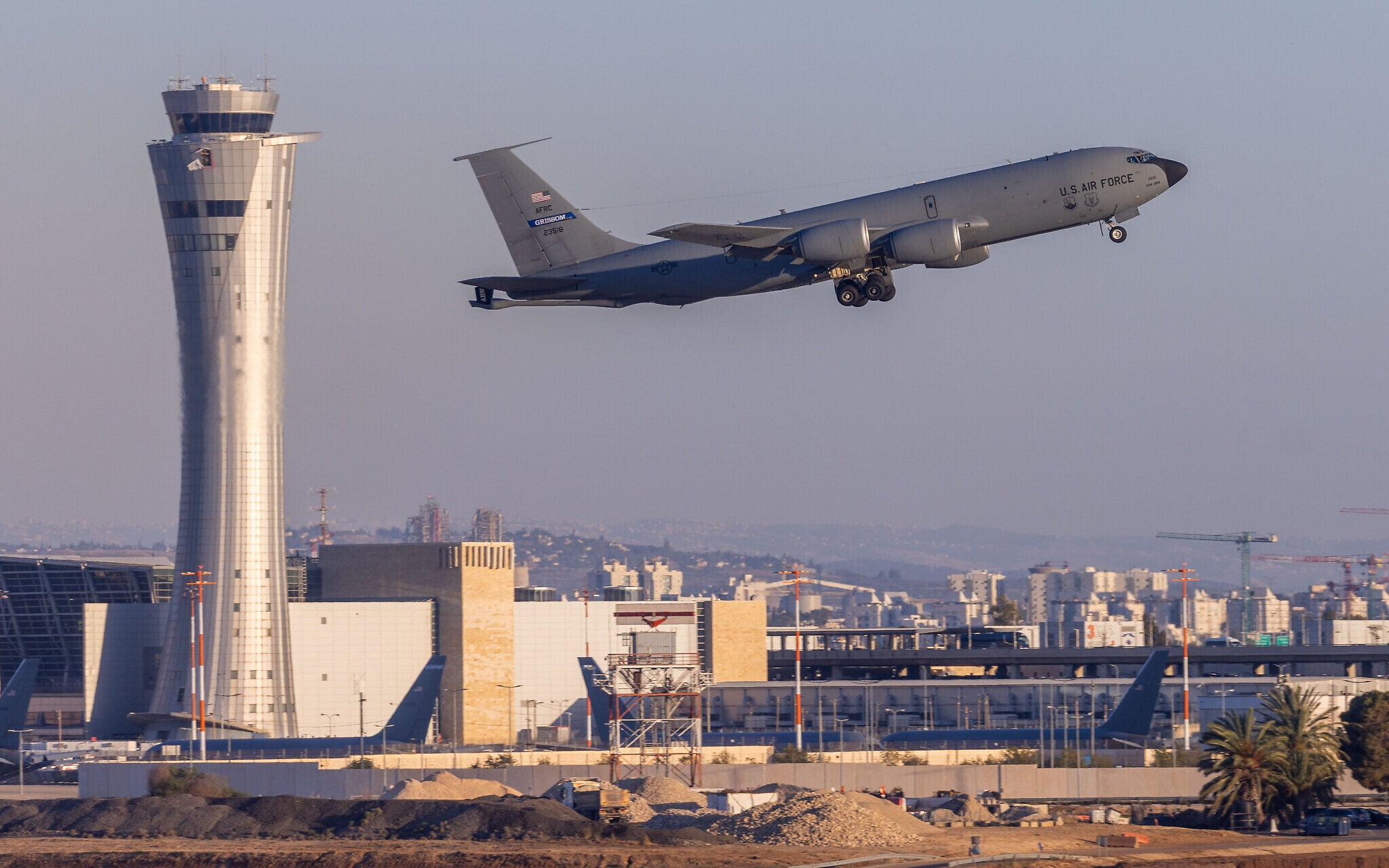
Israel’s small size and crowded infrastructure, however, limit its ability to provide bases for US troops and assets. That challenge was underscored by the strain caused by US refueling aircraft operating from Ben Gurion Airport during the Iran war, which muscled out commercial activity until Israel pushed the Americans to clear out.
Other tradeoffs may come with a military relationship more centrally focused on cooperation on defense tech and innovation. While deeper integration can help both sides advance in these fields, closer cooperation with the US may also limit Israel’s control over who can access its sensitive tech, and it may be hamstrung by American demands that it deal only with certain partners.
This is especially true in the fields of AI, energy, and critical technologies, all of which are increasingly important competitive battlegrounds between Washington and Beijing, and thus areas where Israel may have to choose between working with the US or maintaining economic and technological ties with China.
The political limit
While the political atmosphere has grown tense, Israel has some room to breathe, at least for the remainder of Trump’s term.
In July, the House of Representatives passed an annual defense policy bill that included proposals for deeper defense and intelligence ties with Israel, while last month US officials said the Trump administration is preparing a $2.8 billion munitions sale to Israel that includes tens of thousands of 2,000-pound bombs — the same type of weapon that the Biden administration held back in 2024 over humanitarian concerns in Gaza.

Regardless of Israel purchasing more weapons itself, however, Washington would still control whether future weapons, spare parts, munitions and support are supplied. Even after delivery, US-origin equipment remains subject to end-use monitoring, and reported violations can trigger tighter restrictions and, in serious cases, suspension of future sales or exports.
The challenge in negotiating the next military cooperation framework is less about how much financing Israel receives and more about managing arms export approvals, congressional review, and administration policy at large, said Shapiro.
An MOU cannot lock in future US support since, unlike a treaty, it is not legally binding, and a future administration that objects to portions of the agreement could also seek to renegotiate them.
Furthermore, while reducing aid may help answer Republicans opposed to subsidizing Israeli security, it does less to answer the mainly Democratic concerns over Israeli policy and the use of American weapons, where opposition can simply shift from aid to arms sales or broader defense integration.
Assuming the next Israeli government is unwilling to adjust policies to suit American expectations, more meaningful military independence would require producing more weapons at home or diversifying suppliers, rather than simply self-funding American purchases.
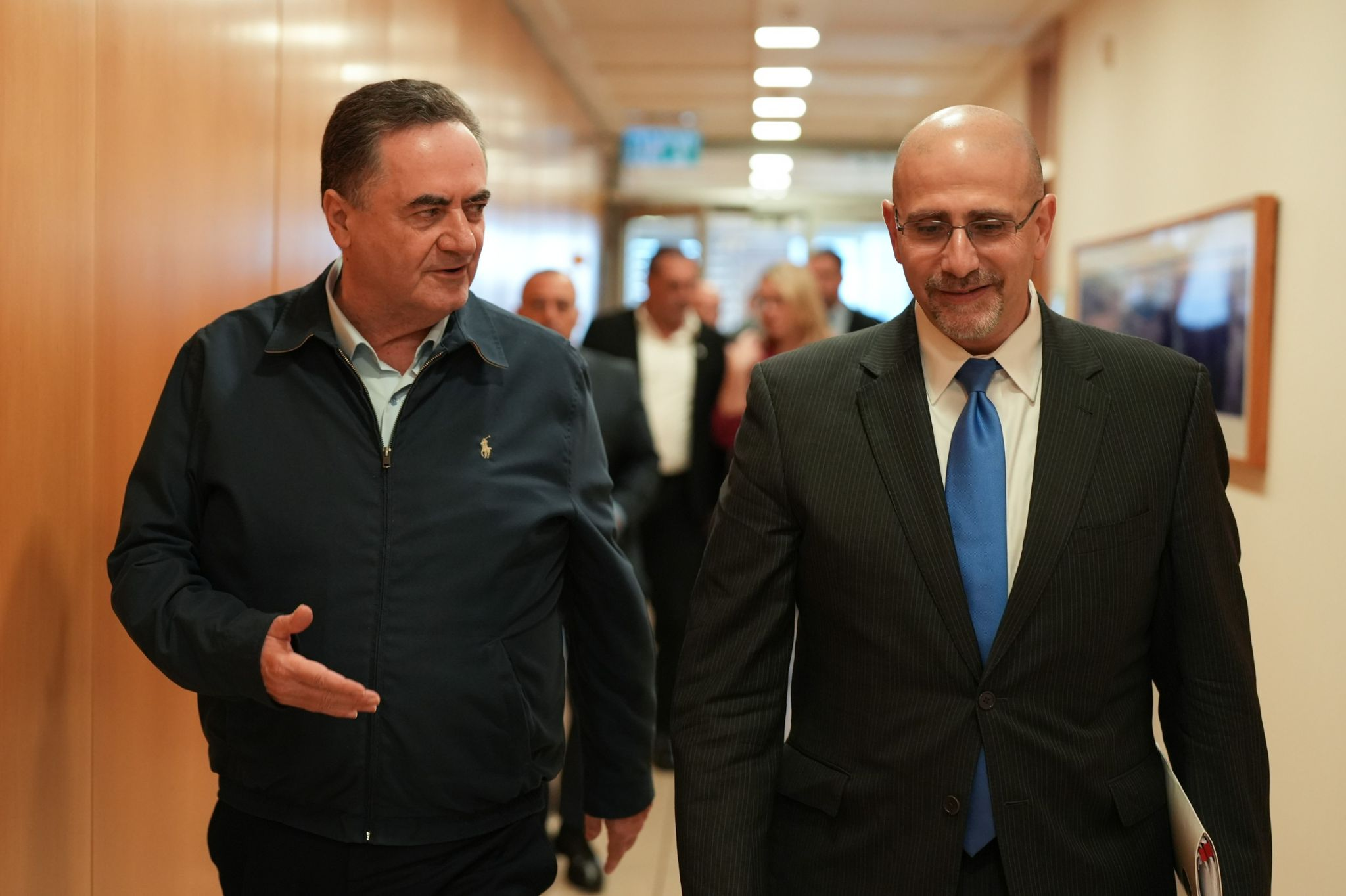
Even as it seeks to rebalance ties around greater mutual benefit, Jerusalem is keen to preserve the depth of the existing defense relationship.
“There is a spirit in the current administration that Israel is a partner, and that permeates the Defense Department. It permeates the defense industries,” Hasson said.
He described extraordinary cooperation with “dozens” of American defense companies and military officials during Israel’s recent wars, saying companies sometimes accelerated deliveries or redirected shipments intended for other customers, while US Army and Air Force officials cleared their schedules to hear Israeli requirements and find solutions.
At the same time, however, Hasson acknowledged that some US companies working with Israel had received “the cold shoulder” from nations hostile to Jerusalem — a sign that even industry relationships are facing political pressure.
While the next agreement may make US-Israel defense ties more reciprocal and mutually beneficial, it cannot guarantee the political support needed to sustain them.








The Times of Israel Community.