

Colombia opens embassy in Jerusalem, becoming tenth country to do so
Sa’ar hails move as start of ‘golden age in relations,’ following inauguration of new right-wing president Abelardo de la Espriella
 Add ToI as a Preferred Source on Google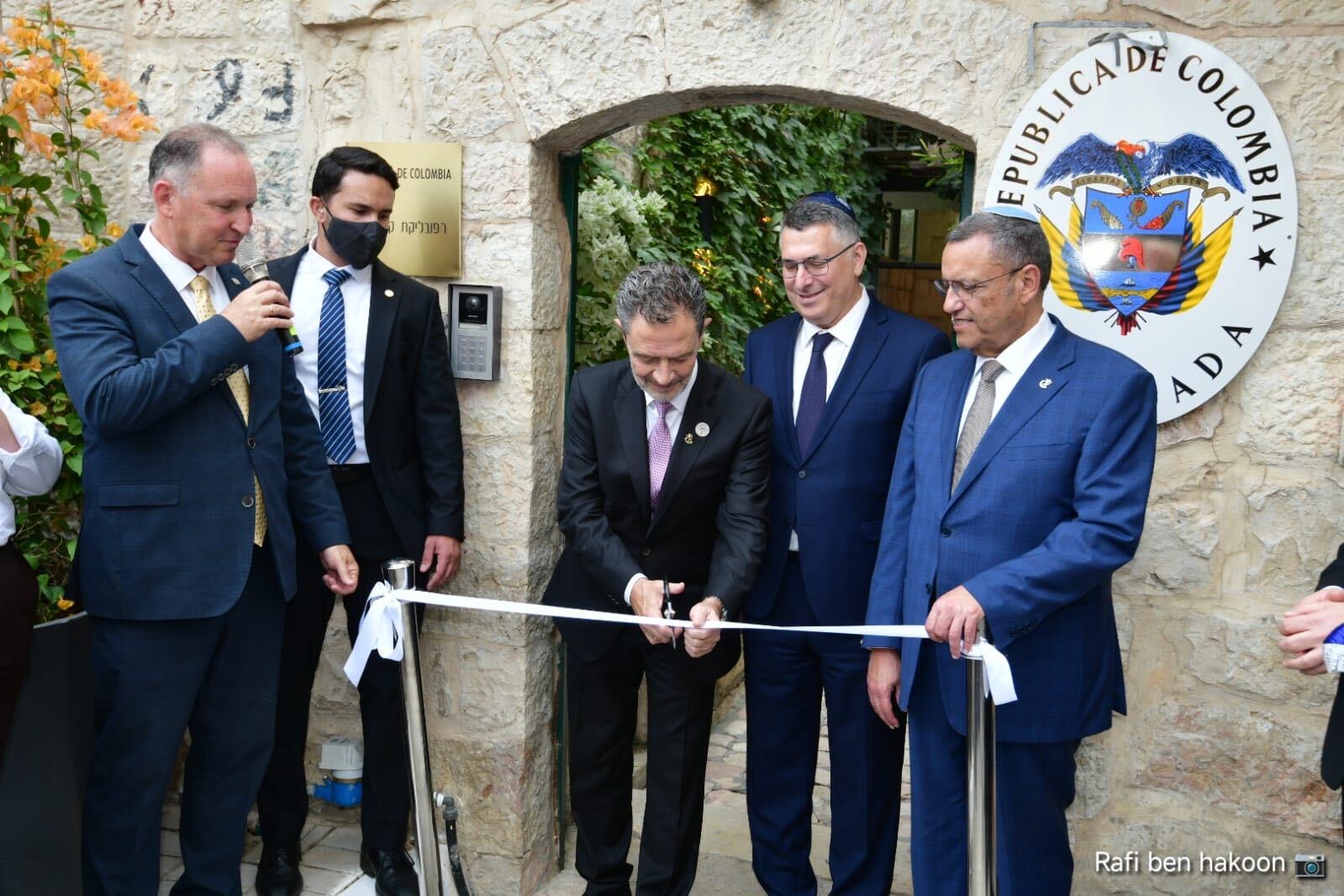
Colombia on Wednesday opened its embassy in Jerusalem, making it the tenth country to take the symbolic step of backing Israeli sovereignty in the holy city.
The embassy’s opening was attended by Foreign Minister Gideon Sa’ar and visiting Colombian Foreign Minister Omar Bula Escobar.
“Today, we are taking a concrete step toward restoring diplomatic relations between us — relations that should never have been severed. Israel is a strategic partner — it always has been, and from now on, it will be even more so,” Escobar said, according to a Foreign Ministry readout.
Colombian Ambassador Tania Gilinski echoed that sentiment in her remarks, saying the countries’ ties will continue with “even greater determination and strength.”
Sa’ar similarly hailed the move, calling it “a recognition of the simple political fact that Jerusalem is Israel’s capital.”
“This is the beginning of a golden age in relations between our two countries,” he said.

Colombia’s new right-wing president, Abelardo de la Espriella, announced his intention to open the embassy following his election months ago, saying the two countries would have a relationship “like never before” once he takes office.
Bogota’s relations with Jerusalem nosedived under Colombia’s first-ever leftist government, led by president Gustavo Petro, an ardent critic of Israel’s war against Hamas in Gaza, before de la Espriella’s election renewed ties.
Colombia is the tenth country to open an embassy in Jerusalem, alongside the United States, Guatemala, Honduras, Kosovo, Papua New Guinea, Paraguay, Fiji, Somaliland and Nauru. Other countries — including Hungary, the Czech Republic, and Slovakia — maintain embassy branches in the capital.
Most nations’ embassies in Israel are in Tel Aviv, with countries arguing that Jerusalem’s standing can only be decided as part of a final status agreement between Israel and the Palestinians, who claim East Jerusalem as the capital of a future state. Israel took control of East Jerusalem — which includes the Old City and its holy sites — from Jordan during the 1967 Six Day War. Israel annexed the territory in 1980 and considers the entire city its capital.






The Times of Israel Community.