

 From the Liveblog of
Wednesday, October 14, 2026
From the Liveblog of
Wednesday, October 14, 2026
COGAT: Gaza merchants suspending coordination for goods shipments amid Hamas threats
 Add ToI as a Preferred Source on Google
Nurit Yohanan is The Times of Israel's Palestinian and Arab world correspondent
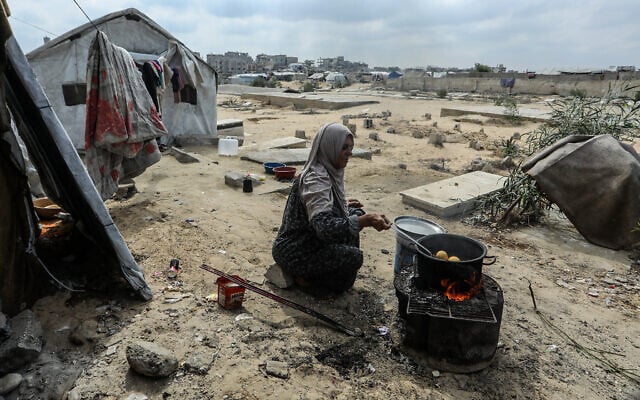
The Coordinator of Government Activities in the Territories (COGAT) says private-sector merchants in Gaza have announced that they are suspending coordination for the entry of goods into the Strip until further notice, following what it describes as a forced taxation mechanism imposed by Hamas and escalating threats against merchants.
According to COGAT, Hamas security personnel arrested and imprisoned the son of one of the merchants yesterday after the merchant refused to pay taxes to the terror group on goods brought into Gaza. As a result, the merchants announced that they would suspend coordination activities starting today.
COGAT says that, according to the merchants, Hamas demands approximately NIS 10,000 for every truck entering Gaza and requires merchants to sell around 30 percent of their goods in cash, apparently to enable the group to gain control of the proceeds.
These demands directly contradict the commitments made by merchants approved to operate, who are required to make and receive payments exclusively through bank transfers.
For most of the war following October 7, Israel refused to allow goods into Gaza through private merchants. In August 2025, it began allowing private merchants who had undergone security screening to bring in goods, alongside humanitarian organizations.
According to COGAT, the private sector currently accounts for 50% of all trucks entering the Gaza Strip. Under the ceasefire agreement reached last October, Israel committed to allowing approximately 600 trucks a day into Gaza.
COGAT chief Maj. Gen. Yoram Halevi sent a letter to Nickolay Mladenov, the Board of Peace’s high representative, and to the commander of the International Stabilization Force and the UN humanitarian coordinator for the region, informing them of the development and warning that Hamas would seek to exploit the suspension of private-sector operations to spread false claims that Israel was failing to comply with the agreement.
COGAT also says that, according to assessments supported by professional evaluations conducted by the UN and other international experts, approximately 250 trucks a day entering through humanitarian organizations are sufficient to meet the humanitarian needs of Gaza’s population.








The Times of Israel Community.