

Chinese FM tells Herzog that Israel should stop ‘forced establishment’ of settlements
Wang Yi also meets with his PA counterpart at Baku summit, claims Palestinian question is greatest historical injustice of this century
 Add ToI as a Preferred Source on Google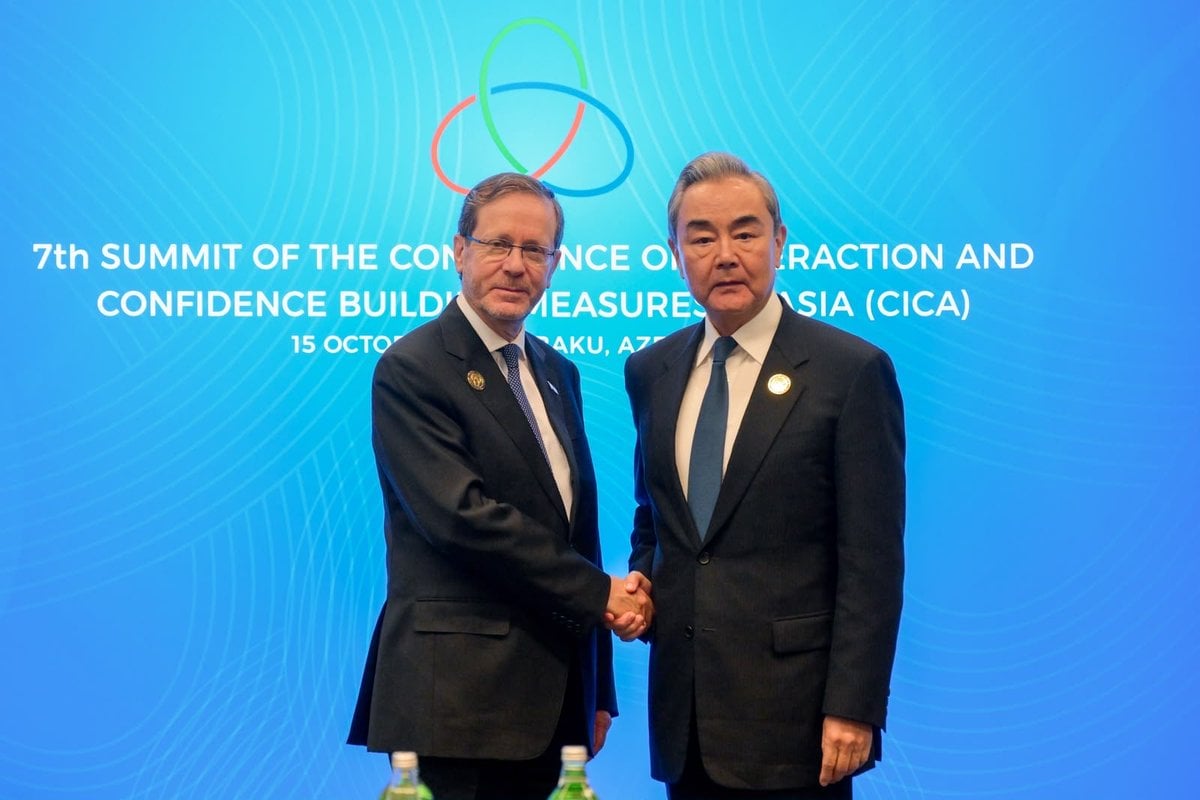
Chinese Foreign Minister Wang Yi told President Isaac Herzog that Israel should stop and reverse its “forced establishment” of West Bank settlements, China’s foreign ministry said in a statement released Friday.
China has consistently held that the Palestinian question is the greatest historical injustice of this century, Wang told Herzog in Baku, Azerbaijan, China’s ministry added.
Wang said that promoting peace and reconciliation in the region is the “cornerstone” of China’s Middle East policy, with Beijing believing that the “two-state solution” is the right path to a resolution and the immediate priority is to fully open access to the Gaza Strip so a humanitarian “catastrophe” is not allowed to spread.
China is willing to work with the international community to push all parties to return to dialogue and consultation as soon as possible and seek a political settlement of the conflict, Wang further said.
According to Herzog’s office, the Israeli president met with Wang on the sidelines of the Conference on Interaction and Confidence-Building Measures in Asia summit in Baku on Thursday to discuss “bilateral relations,” with an emphasis on “economic, trade, and cultural ties.” His office declined to comment when asked about their discussions on the West Bank or the Palestinians.
Herzog also met with Azerbaijani President Ilham Aliyev and Bahrain’s Foreign Minister Abdul Latif Al Zayani.
During his address, Herzog called for expanding Israel’s diplomatic and economic ties with Asian nations.
“I say to all neighboring countries, to all nations in this region and in Asia, that Israel desires and strives to enhance collaboration and to broaden the circle of peace. But it must be clear: Peace cannot exist with terror, and cooperation cannot thrive with boycotts,” Herzog told the summit of international leaders.
“Members of this institution have the right to live freely and peacefully, without their existence being constantly threatened,” he declared.
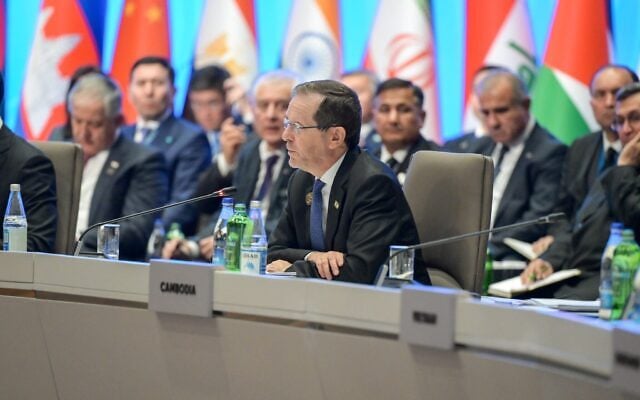
In his speech, Herzog urged forging relationships based on “common interests,” and hailed the success of the Abraham Accords normalization agreements, which he said show “how converging interests can transform political realities.” He nodded to the Bahraini and Emirati representatives in the audience.
“Israel has much to contribute to Asia here in the 21st century, in technology and science, water management and innovation, advanced agricultural practices, energy, tourism, fintech, healthcare, AI, and more,” Herzog added. “We truly see ourselves as part of the Asian continent and want to contribute to it.”
However, when Herzog began his speech, representatives from Iran, Pakistan, Turkey, the Palestinian Authority and Kuwait left the hall. Qatari Emir Tamim bin Hamad Al Thani remained.
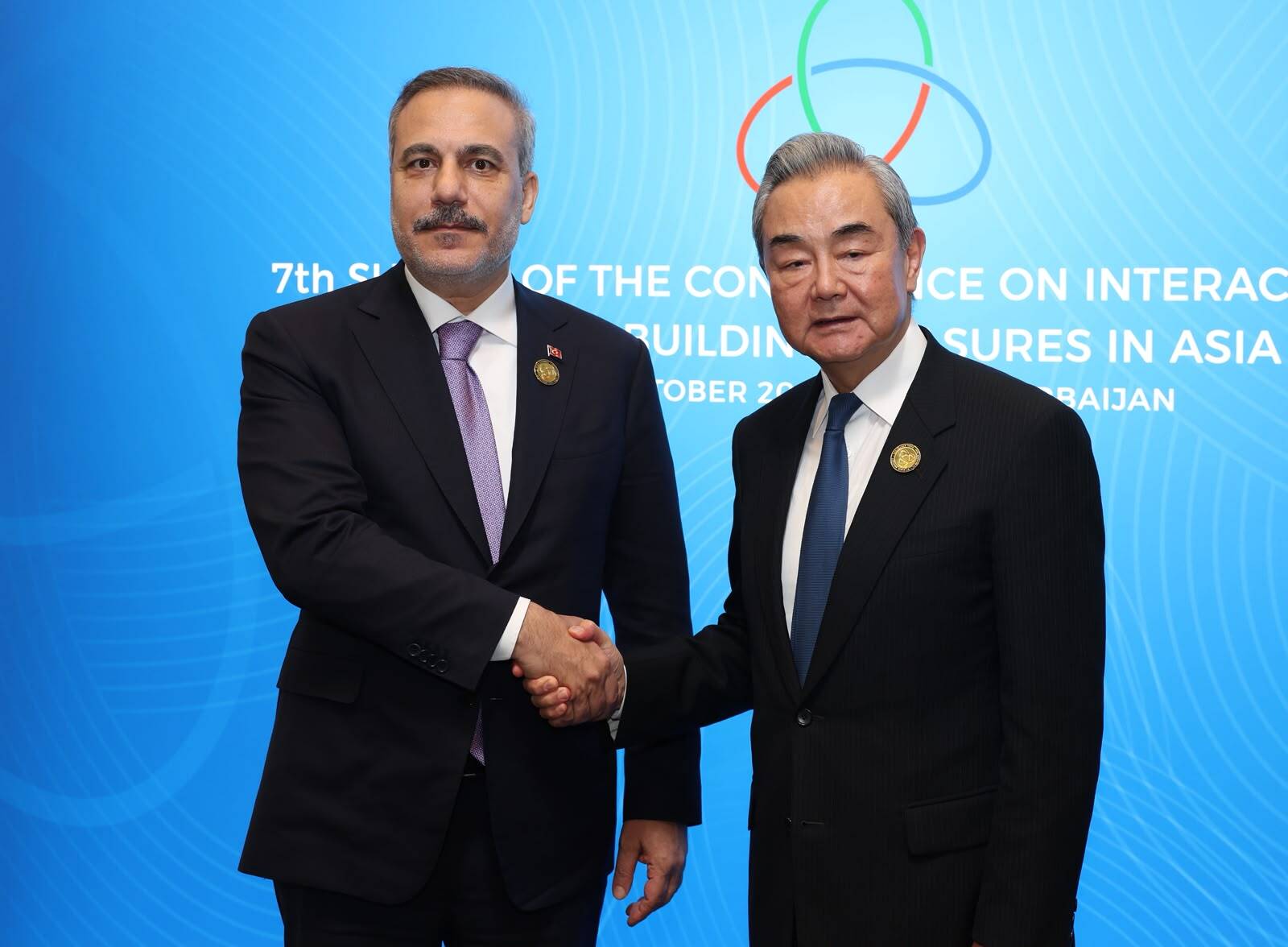
Meanwhile, Wang voiced continued support for the Palestinians and said China will keep speaking up for the Palestinian cause, according to a ministry statement.
“The Palestinian issue should not be marginalized,” Wang told his Palestinian Authority counterpart, Varsen Aghabekian Shahin, at the Baku summit, the statement said.
Wang urged “all peace-loving countries” to support the two-state solution, according to the statement.
Israel is a founding member of the 28-member peace-building organization, as are regional powers like Iran, Qatar, Turkey, Egypt and the United Arab Emirates.
World powers China and Russia are also CICA members, while the US is an observer state.
Nava Freiberg contributed to this report.



The Times of Israel Community.