

A top economist sees Israel’s fiscal future on the ballot as costs of war, division mount
Ahead of election, former central bank deputy governor Zvi Eckstein says outgoing government’s decisions have impacted country’s growth, with economy at risk unless changes are made
 Add ToI as a Preferred Source on Google
Sharon Wrobel is a tech reporter for The Times of Israel

When Israelis enter the polling booths on October 27, they won’t only be choosing the country’s political direction, but its future prosperity as well, according to a top economist, who argues that the outcome of the vote will be crucial in determining whether Israel continues on the trajectory of long-term growth or enters a lost decade of stagnation.
While security threats, defense needs, accountability and foreign relations are dominating campaign agendas in the run-up to the first election since the October 7, 2023, Hamas attack, there are “substantial” economic and social costs to all of those issues, Prof. Zvi Eckstein, a former deputy governor of the Bank of Israel, told The Times of Israel in a recent interview.
“Most of the discussion around the election is focused on leaders and their personalities, not on economic outcomes, but the debate around the internal split within Israel’s war-strained society, severed by a government trying to destroy Israel’s independent judiciary and hugely funding and fiercely refusing to draft the ultra-Orthodox community through three harsh war years, has a price,” said Eckstein, who heads of the Aaron Economic Policy Institute at Reichman University. “The internal split and the direction that Israel will take has an economic impact with consequences for its growth trajectory.”
“The key danger may be serious damage to the quality of life and attractiveness of a future in Israel, which could trigger a flight of highly educated middle-class families and talented high-earning human capital, on which the economy depends, to foreign shores,” added Eckstein.
Eckstein was Bank of Israel deputy governor between 2006 and 2011, serving under Stanley Fischer, who famously steered Israel around the 2008 financial collapse.
Over the years, Eckstein has won academic and professional awards, published in leading economic journals, and chaired several professional government committees that designed economic policies.

To Eckstein, a lack of strategies to advance much-needed growth-enhancing reforms, whether in education, health or public transportation, has been the most evident casualty of what he describes as government dysfunction over the past four years.
The Prime Minister’s Office and Finance Ministry did not respond to requests for comment on Eckstein’s remarks.
The government has been criticized for funding earmarks for special interests, particularly the ultra-Orthodox, in exchange for political backing; for failing to provide sufficient support for military reservists who have suffered financially while serving for extended periods; and for mismanaging Israel’s image abroad, resulting in diplomatic isolation and boycotts.
Those problems and others will be among the major challenges that any incoming government will inherit. If left unaddressed, issues like the disproportionate burden on reservists, ballooning defense spending, and concerns of democratic instability dampening the business environment and driving an exodus of skilled professionals, run the risk of causing the economy to experience a gradual downfall, said Eckstein.
“This election is critical if the outcome is having sort of the same government we have now, trying to change the judiciary to control the Supreme Court and get rid of the liberal democracy that we have built over the 78 years of independence,” he said, referring to the outgoing government’s efforts to overhaul the judiciary. “That has consequences for people who consider leaving the country at least in some industries, especially in high-tech.”

Most recent polls indicate that the upcoming election will result in a deadlock, with neither Prime Minister Benjamin Netanyahu’s presumed coalition of right-wing and ultra-Orthodox parties nor an alliance seeking his ouster able to muster a majority of the Knesset’s 120 seats.
Israel’s economy, Eckstein said, has managed to weather the external hostilities in the past three years remarkably well, but the widening rift within society has raised many fears for its prosperity. For now, economic data keeps defying the odds.
The economy rebounded in the April to June quarter following the US-Israel war with Iran. Gross domestic product expanded by nearly 15% in annualized terms. Growth forecasts for the economy in 2026 have been raised to about 4%, expanding from 3.5% last year.
Conflict with Iran, Hezbollah, Hamas and Yemen’s Houthis has done little to dampen bullishness in the stock market, which broke records last year and continues to gain. Tel Aviv’s main stock indexes rose some 11% this year.
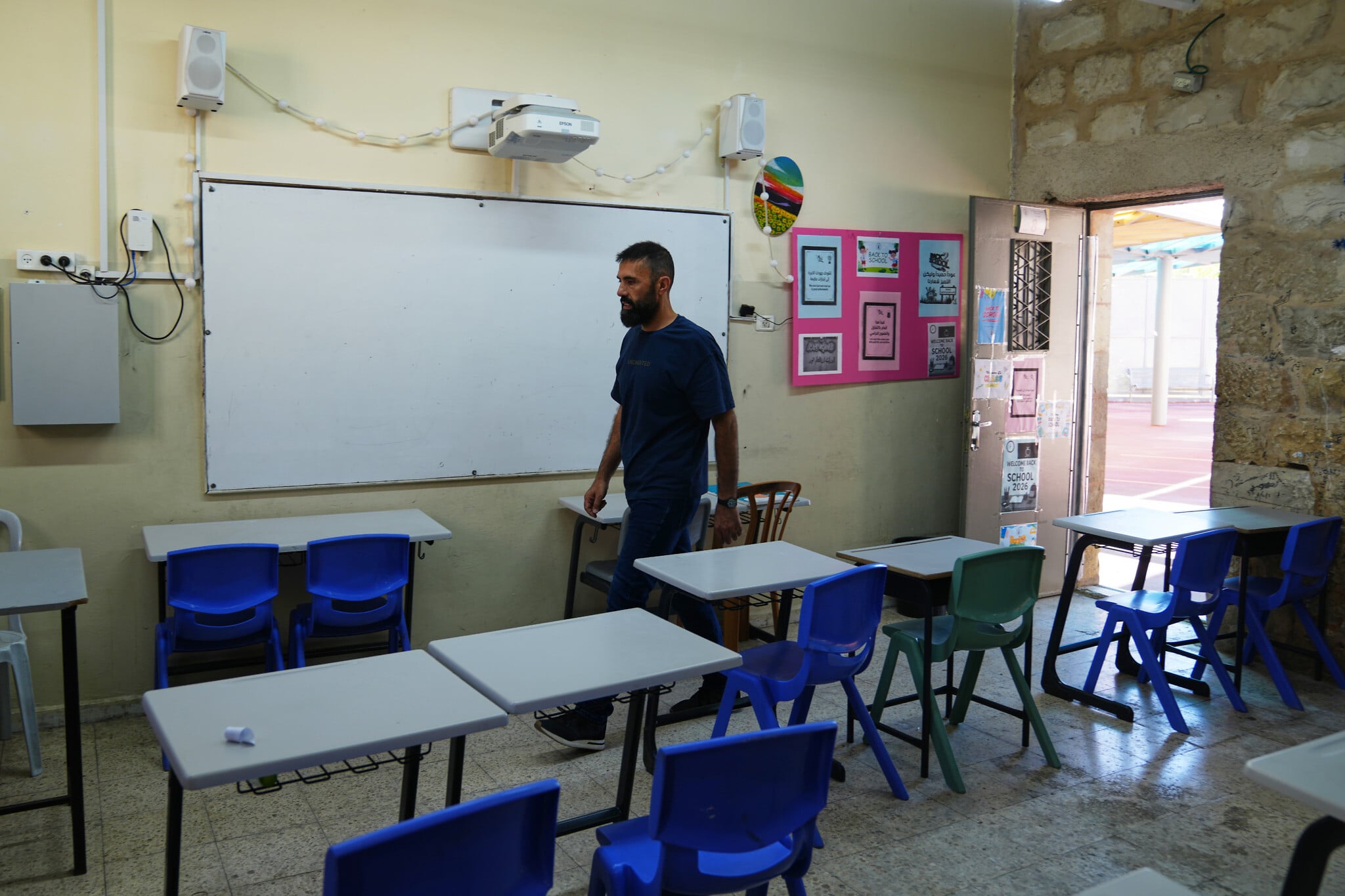
What has also continued to soar is defense spending, which has ballooned to as much as 8% of gross domestic product, doubling from before the outbreak of war against Hamas in Gaza in October 2023.
Public debt has risen from 60% of GDP in 2022 to almost 70% this year, as the government prioritized defense-related war needs. It also spent heavily to keep ultra-Orthodox coalition partners happy, transferring billions in discretionary taxpayer shekels to yeshivas and Haredi institutions, Eckstein remarked.
“This government was not very careful in defense spending in terms of using costly reservists and there has been little attempt to optimize it in the sense of drafting more people among the ultra-Orthodox, who don’t serve,” said Eckstein.
“Currently, we are on a path of rising debt as it is not clear what the level of defense spending needs to be,” he added, noting that the government had not articulated a clear strategy on reducing hostility across various fronts.
Assuming defense outlays remain high, paying for them will require either higher taxes or sizable belt-tightening on domestic spending by the government. That will mean less money for schools and higher education, which can result in slower economic growth and rising emigration.
Eckstein cited recent record-low scores of Israeli students on international tests in science, math, and English as a major red flag, which he attributed to the falling standard of STEM education in schools in recent years.

The troubling findings also show very large and persistent gaps between population groups. To close the gaps and spur economic integration across all communities, including Haredi and Arab populations, equalized levels of funding are required for education, including teaching STEM subjects, he added.
Many Haredi schools eschew instruction in science, math or other “secular” subjects and instead concentrate on Jewish education.
“Israel has built up a whole system of supporting the ultra-Orthodox society that is not economically sustainable, as they are secluded from the general education system, receive welfare support based on their large families, and have disproportionately [low] participation in the labor market,” said Eckstein. “Israel needs growth-enhancing reforms, which will come from equalizing the accessibility of quality education, vocational training, and transportation to support the integration of ultra-Orthodox working men and long-term employment of ultra-Orthodox women and also help the Israeli Arab population join the labor force.”
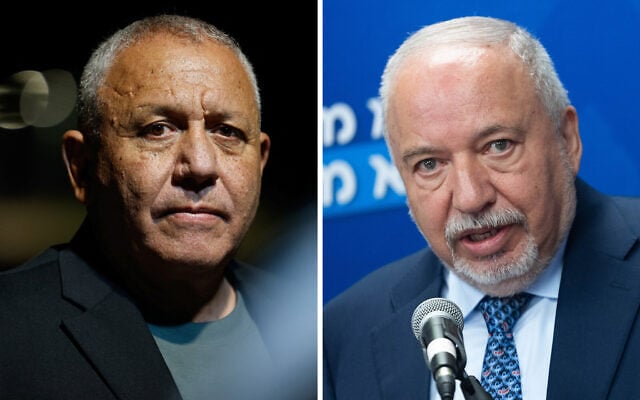
Eckstein expressed hope that the next government elected would include both ultra-Orthodox and Arab political representation, necessitating compromises that would help both communities integrate into Israeli society and economic life. Eisenkot has said he is open to working with any party, but has demanded that Arab factions accept Israel’s Jewish and democratic character, and that the ultra-Orthodox drop demands for a law enshrining military draft exemptions. Netanyahu has ruled out a coalition that includes Arab parties.
In a small country with few natural resources, economic growth depends heavily on human capital. Israel’s tech industry, which relies on access to a highly educated workforce, accounts for about a fifth of GDP and more than half of exports, with a third of total income tax revenue generated from salaried tech employees.

Under the current government, high-earning Israelis working in tech and healthcare have been emigrating in sharply rising numbers, with the brain drain disproportionately involving doctors, engineers and other highly educated academics in the primes of their careers.
Historically, much of Israel’s emigration has been framed around the pursuit of better economic opportunities abroad. However, recent Tel Aviv University research pointed to the prolonged military conflict and internal political tensions around the judicial overhaul and a stable democracy as driving elevated emigration.
If the emigration trend continues, it could pose a significant strategic risk to state revenues and economic growth, in a country where the top 20% of income earners pay 92% of all income tax revenue, Eckstein noted.
“The key danger for Israel’s economy is the brain drain,” said Eckstein. “If Israel does not catch up with reforms in education, health, and public transportation, which puts us on a par with the US and European countries, young people who can choose where to live might leave, and those who have already left will likely not come back.”






The Times of Israel Community.