

Shallow 6.0 earthquake strikes eastern Iran, causing damage
No deaths reported in tremor and aftershocks; two weeks ago, a 7.3-magnitude quake near Iraq border killed over 400
 Add ToI as a Preferred Source on Google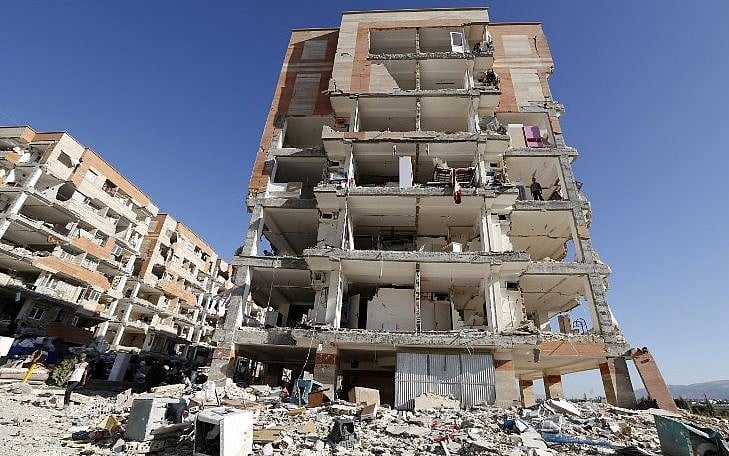
Three earthquakes hit eastern Iran in quick succession early Friday, the first a fairly strong magnitude 6.0 tremor that struck at a shallow depth close to the populous city of Kerman, the US Geological Survey said.
It was followed by two less powerful 5.0 and 5.1 aftershocks in the same area, the survey said.
“For the moment, no deaths have been reported but there has been destruction in several villages,” Hossein-Ali Mehrabizadeh, an official with the crisis unit in Kerman, told state television.
With the tremors hitting around 60 kilometers (37 miles) north of Kerman, USGS modeling predicted a low chance of widespread loss to life or property.
The University of Tehran’s seismology center gave slightly different figures, announcing an earthquake of 6.1, followed by aftershocks of 5.1 and 4.
The latest tremors come just over two weeks after a 7.3 quake killed more than 400 people in western Kermanshah province, close to the border with neighboring Iraq.
Iran sits on top of two major tectonic plates and sees frequent seismic activity.
In 1990, a 7.4-magnitude quake in northern Iran killed 40,000 people, injured 300,000 and left half a million homeless, reducing dozens of towns and nearly 2,000 villages to rubble.
Thirteen years later, a catastrophic quake flattened swathes of the ancient southeastern Iranian city of Bam, killing at least 31,000.
Iran has experienced at least two major quake disasters since — one in 2005 that killed more than 600 people and another in 2012 that left some 300 dead.










The Times of Israel Community.