

At meeting in DC, Rubio lauds Lebanon president’s ongoing push to disarm Hezbollah
Aoun says Beirut and Washington must align on achieving initial Israeli withdrawal from negotiated ‘pilot zones,’ ahead of his scheduled meeting with Trump on Tuesday
 Add ToI as a Preferred Source on Google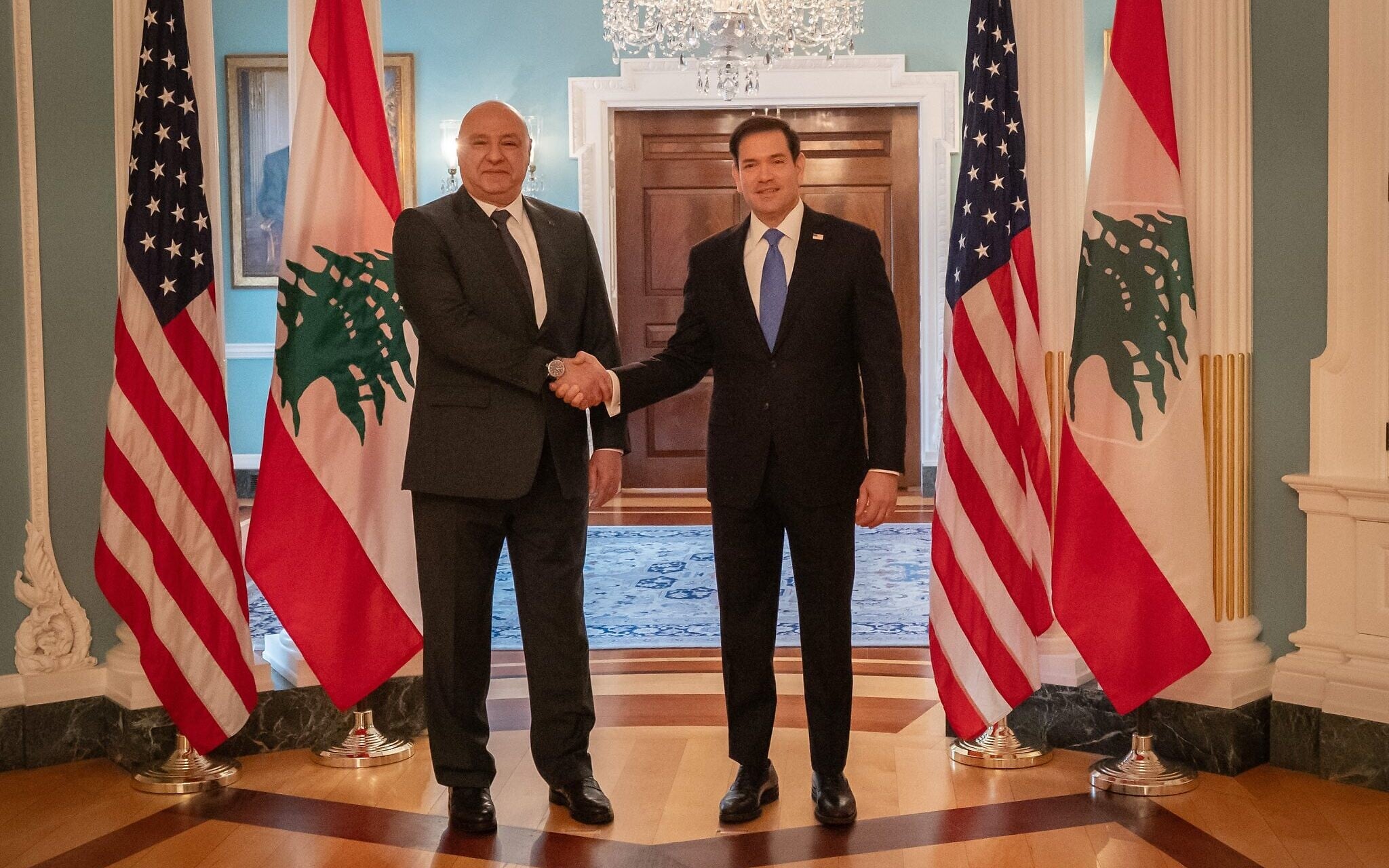
US Secretary of State Marco Rubio praised Lebanese President Joseph Aoun’s efforts to disarm the Hezbollah terror group during their meeting in Washington, DC, on Sunday.
It was the first trip to the US capital by a Lebanese head of state since Michel Sleiman was received by Barack Obama in 2009. Aoun is slated to meet with US President Donald Trump on Tuesday.
Rubio “commended the courage of the government of Lebanon, under President Aoun’s leadership, for their determined effort to reclaim Lebanon’s sovereignty, disarm Hezbollah and dismantle its terrorist infrastructure, and move towards peace,” according to a US State Department readout.
Hezbollah pulled Lebanon into the Middle East war on March 2, when it began striking Israel in support of its backer, Iran.
Israel responded with airstrikes and a ground invasion, and, despite a ceasefire, it continues sporadic attacks while IDF troops remain stationed in several areas in the south, in what Israel describes as a security zone.
Israel and Lebanon — which do not have formal diplomatic relations — began US-sponsored negotiations in April aimed at reaching a peace deal and permanently ending the Israel-Hezbollah war.
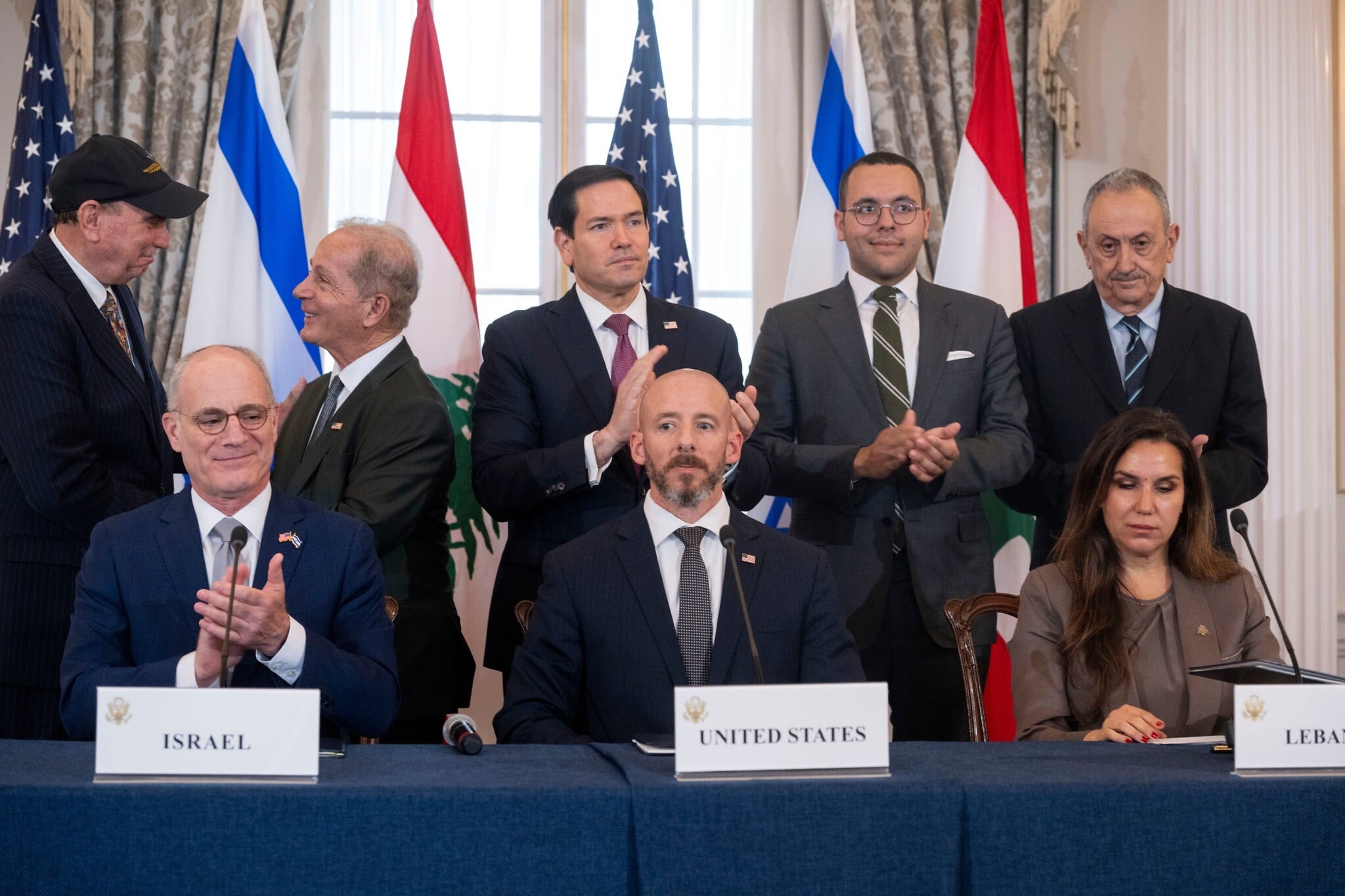
On June 26, they reached a framework agreement in Washington under which the Israeli military is to withdraw from southern Lebanon and the Lebanese army is to deploy, starting with two “pilot zones.”
But the agreement is contingent on the disarmament of the Iran-backed terror group Hezbollah, which has flatly rejected both the deal and the Israel-Lebanon negotiations that underpin it.
At Sunday’s talks, the Lebanese president stressed that Lebanon and the US must “align… regarding the implementation of the tripartite framework, through achieving the first Israeli withdrawal from the first pilot zone.”
The State Department added Sunday that Washington was committed to the framework and to backing “Lebanon’s efforts to deliver peace.”
US-brokered talks between Israel and Lebanon were held in Rome last week, without an exact timeline for when Israel will fulfill its pledge to withdraw from the two pilot zones, though officials described the dialogue as “positive.”
According to Lebanon’s Al Jadeed TV channel, Israeli and Lebanese officials discussed during their meeting on Wednesday how to verify that pilot zones under Lebanese army control are free of Hezbollah weapons and fighters.
A third party will verify disarmament, according to the report. No final decision has been reached, though United Nations forces have been brought up as a possibility.
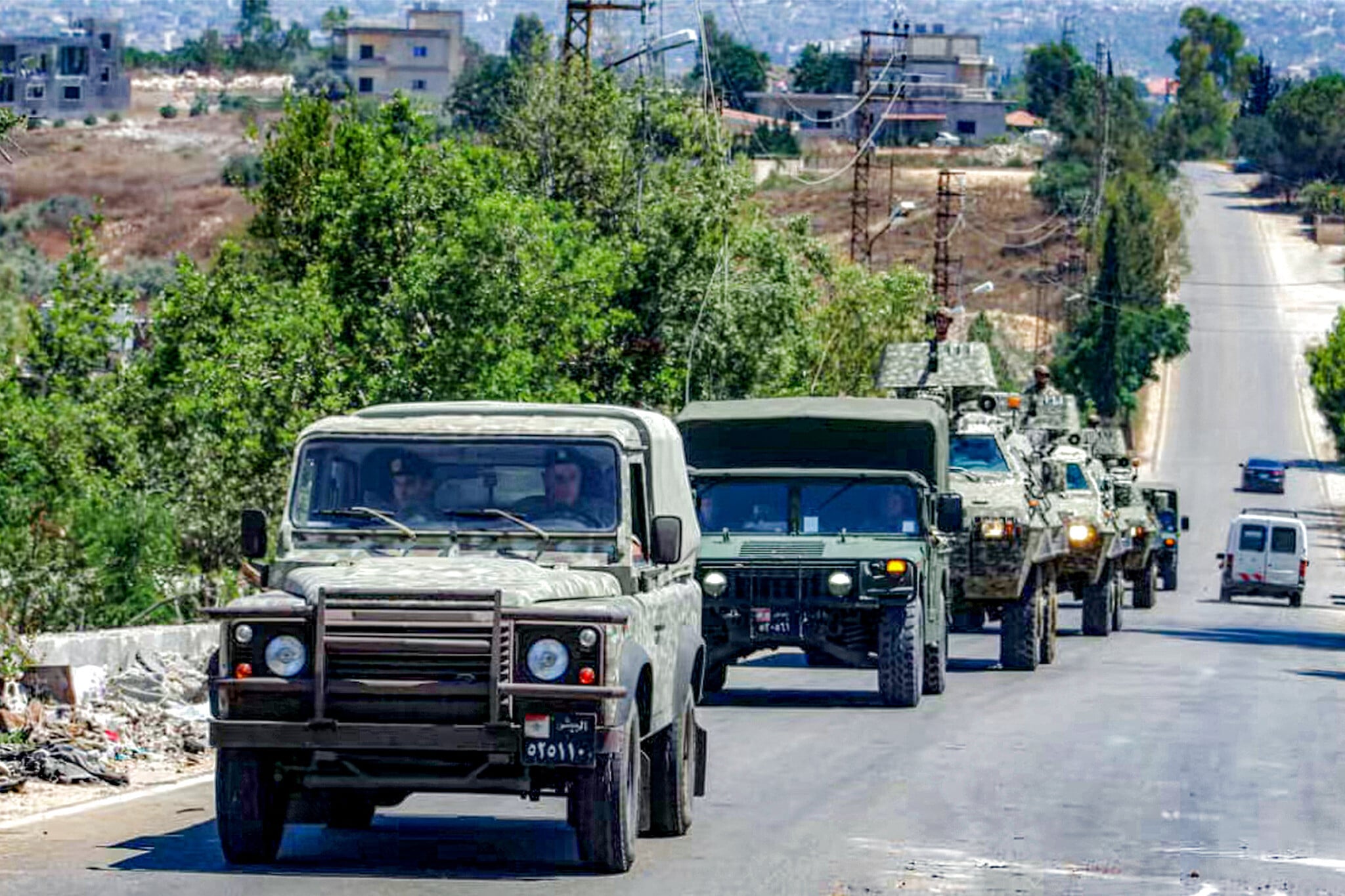
The first pilot zone will include the villages Zatar El-Gharbiyeh, Zatar El-Sharqiya, Ghandouriyeh, Froun, Srifa, and Burj Qalaouiyah, which sit on both the northern and southern banks of the Litani River.
Israel agreed to withdraw from two pilot zones as part of the framework deal inked with Lebanon last month. Jerusalem described the withdrawals as a very minor concession, given that the pilot zones are located in areas beyond the original buffer zone that the IDF had established in southern Lebanon.
IDF officials have said that while they are ready to implement the withdrawal, they have yet to receive a directive from the political leadership.
On Friday, local media outlets reported that the Lebanese army had redeployed forces to the southern towns of Froun and Burj Qalaouiyah.
Both towns are located outside of the IDF’s south Lebanon buffer zone, meaning that no Israeli soldiers withdrew from the area for the Lebanese army to enter.
Israeli forces are, however, currently stationed in the Zatar al-Sharqiya area, and will be required to withdraw as the deal progresses.




The Times of Israel Community.