

With Ben Gvir’s backing, prison guards quietly branding domestic criminals as terrorists
Public defenders alarmed over uptick in Arab inmates being moved to squalid security wings where they serve alongside terror prisoners, based on questionable misconduct allegations

 Add ToI as a Preferred Source on Google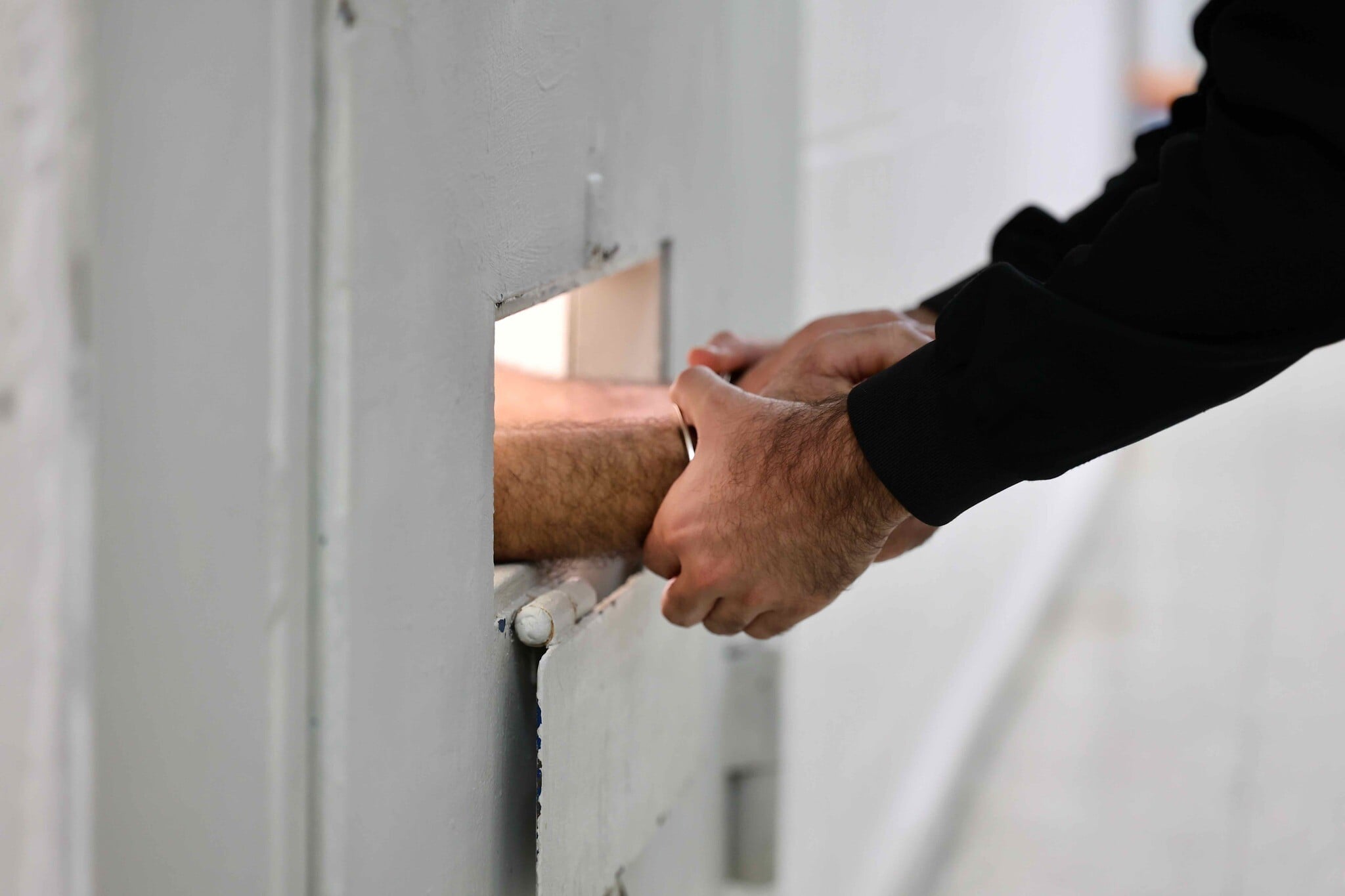
One summer afternoon last year, Mohammad Abu Samour was caught red-handed while ransacking a Beersheba shopping mall.
Breaking into the building, which was closed for Shabbat, the 32-year-old man had gone from business to business, nicking two display T-shirts from a sushi restaurant, NIS 200 ($67) from the tip jar of an Aroma cafe and two packs of cigarettes from a kiosk.
He was at his fourth shop, trying to pilfer clothes from an outlet store, when police burst into the mall and apprehended him, according to an indictment.
When he was caught, the Rahat resident had only been out of jail for two months, after doing a six-month stint in prison for similar offenses. This time around, though, lockup would be much worse for the repeat offender, who was also dealing with a drug addiction.
In June 2025, Abu Samour was charged with four counts of robbery. As he went back into the system, his public defense attorney began trying to arrange admission to a rehab center for his drug problem.
But in August, during the middle of the legal proceedings, the lawyer suddenly lost contact with him.
That is because Abu Samour had been transferred to a security wing at Ganot Prison, used to house Palestinian inmates convicted of terror offenses — despite the fact that Abu Samour had been accused of criminal activity, not terror or nationalistically motivated crime.
The move led to an immediate downgrade in his living conditions and left him with virtually no access to his attorney or anyone else.
“The man suddenly disappeared. The moment you’re a security prisoner, you don’t have phones, you have no link to the outside world, they don’t even notify the lawyer,” said Layil Patishi, a public defense attorney who worked on Abu Samour’s case.
“If he hadn’t been in the middle of criminal proceedings, it’s likely that nobody would’ve known he was moved to a security wing,” she said.
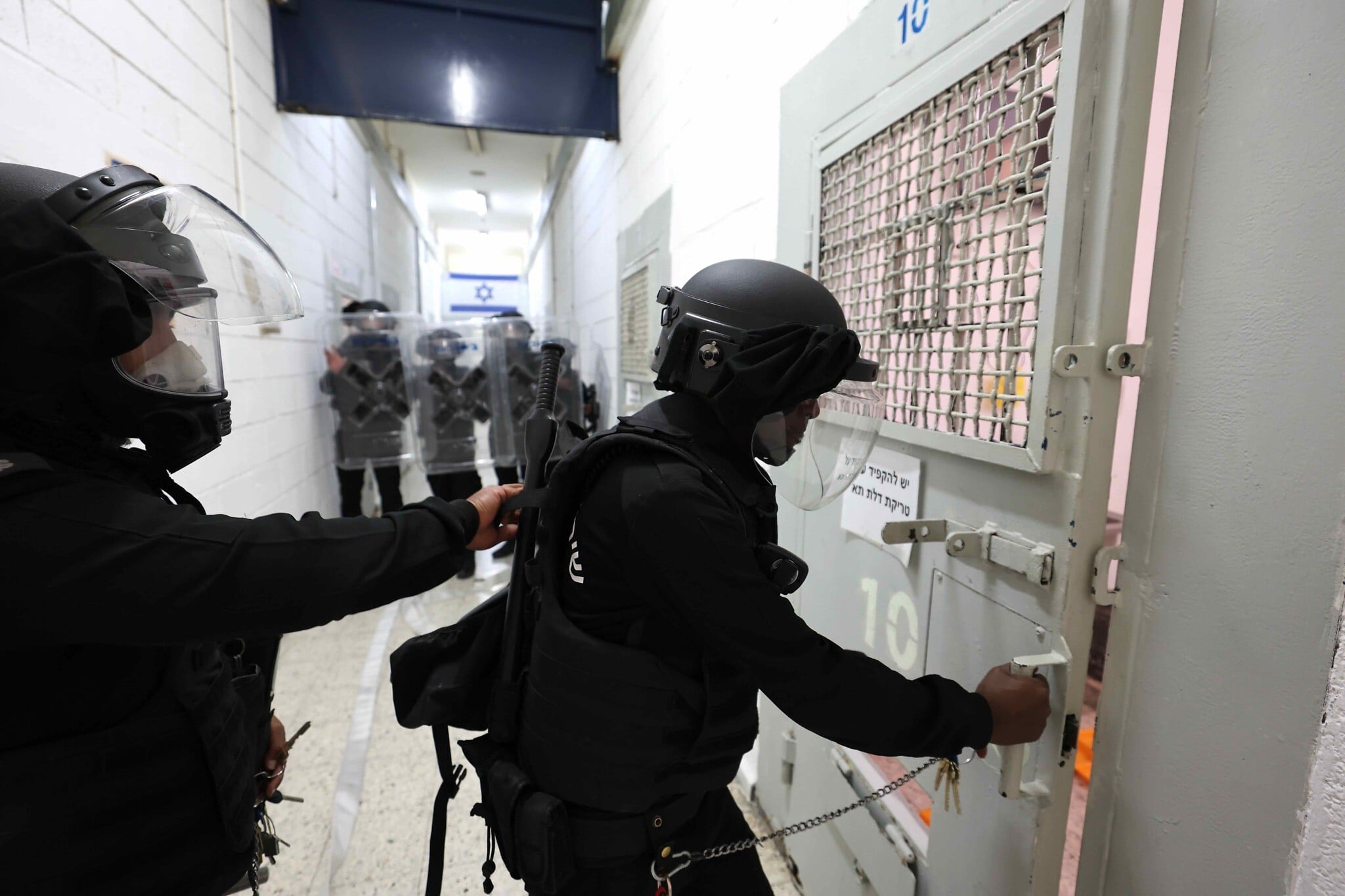
Abu Samour is one of a growing number of Arab domestic criminals who have been transferred to security wings based on alleged misbehavior behind bars, a new practice that has picked up steam under the oversight of far-right National Security Minister Itamar Ben Gvir.
According to Patishi and other attorneys in the Public Defender’s Office, the practice of moving a prisoner to a security wing — subjecting them to the same dire conditions as those held on terror offenses — was unheard of a year ago.
Now the practice is quickly burgeoning under the noses of rights organizations, lawyers say, alarmed as the line between Arab criminal and terrorist becomes increasingly blurred.
“Anyone who so much as moves in the wrong direction gets classified as a security prisoner,” said Shani Moran, a criminal defense lawyer who has dealt with similar cases.
Unlike standard criminal prisoners, security prisoners are in custody for committing offenses under Israel’s counter-terrorism law, which can range from deadly terror attacks to publishing incendiary content online. Almost all are Palestinian or Arab Israeli.
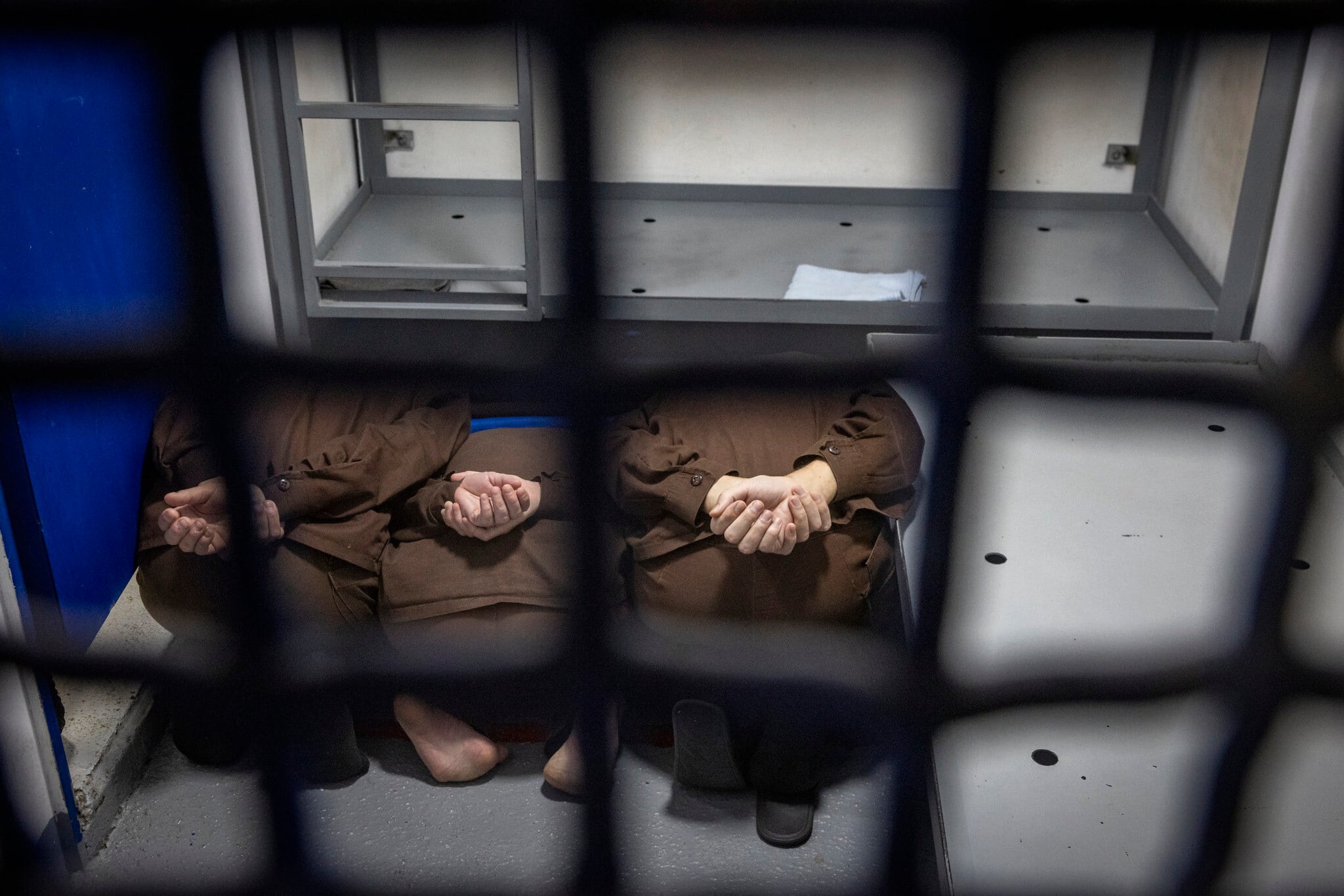
Defending the decision to move Abu Samour to a security wing, the Prison Service said that during a headcount one morning, the inmate threatened to “burn all the Jews in the wing” after getting peeved at a guard who locked the door to his cell.
The inmate and his lawyers denied the allegations, for which the Prison Service provided no evidence. At the agency’s request, police launched a probe into Abu Samour on suspicion of threats but soon closed the case without charges.
Nonetheless, he remained in the security wing, which meant he was denied access to rehab for his drug addiction.
“There was nothing to discuss anymore,” Patishi said. “Being classified as a security prisoner cuts the process off entirely.”
After eight months of legal wrangling, Abu Samour’s attorneys got him transferred back to a general criminal wing he never should have been moved out of, according to the Beersheba District Court’s final ruling on the matter.
He returned much skinnier and more exhausted than before, according to a legal source who is in regular contact with the prisoner.
“The conditions that he spoke of were horrible. He was cut off entirely from his environment,” the source said. “Something in his face had been extinguished.”
Draconian turn
Abu Samour isn’t the only person to come out of a security prison in much worse shape than he went in.
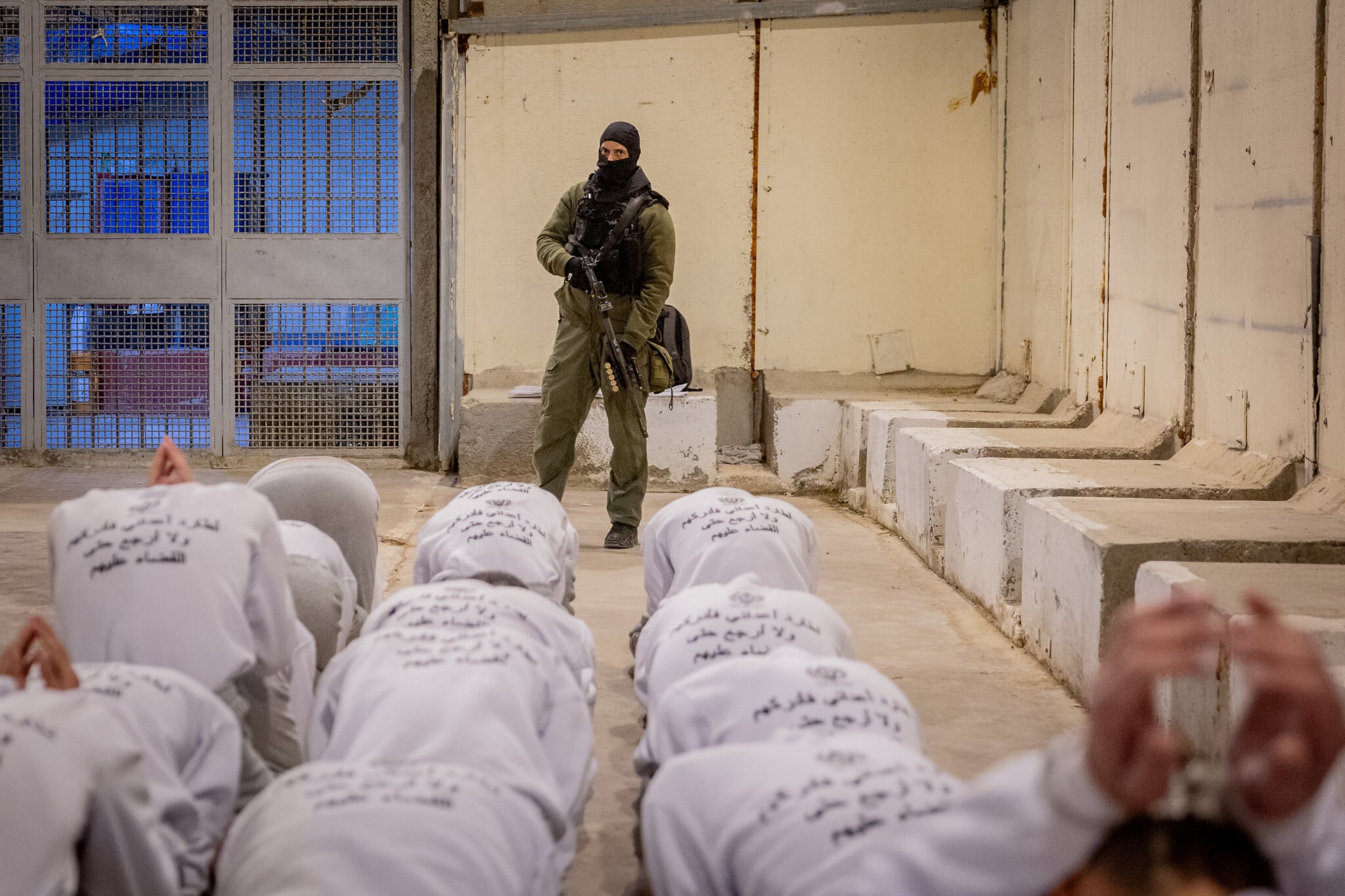
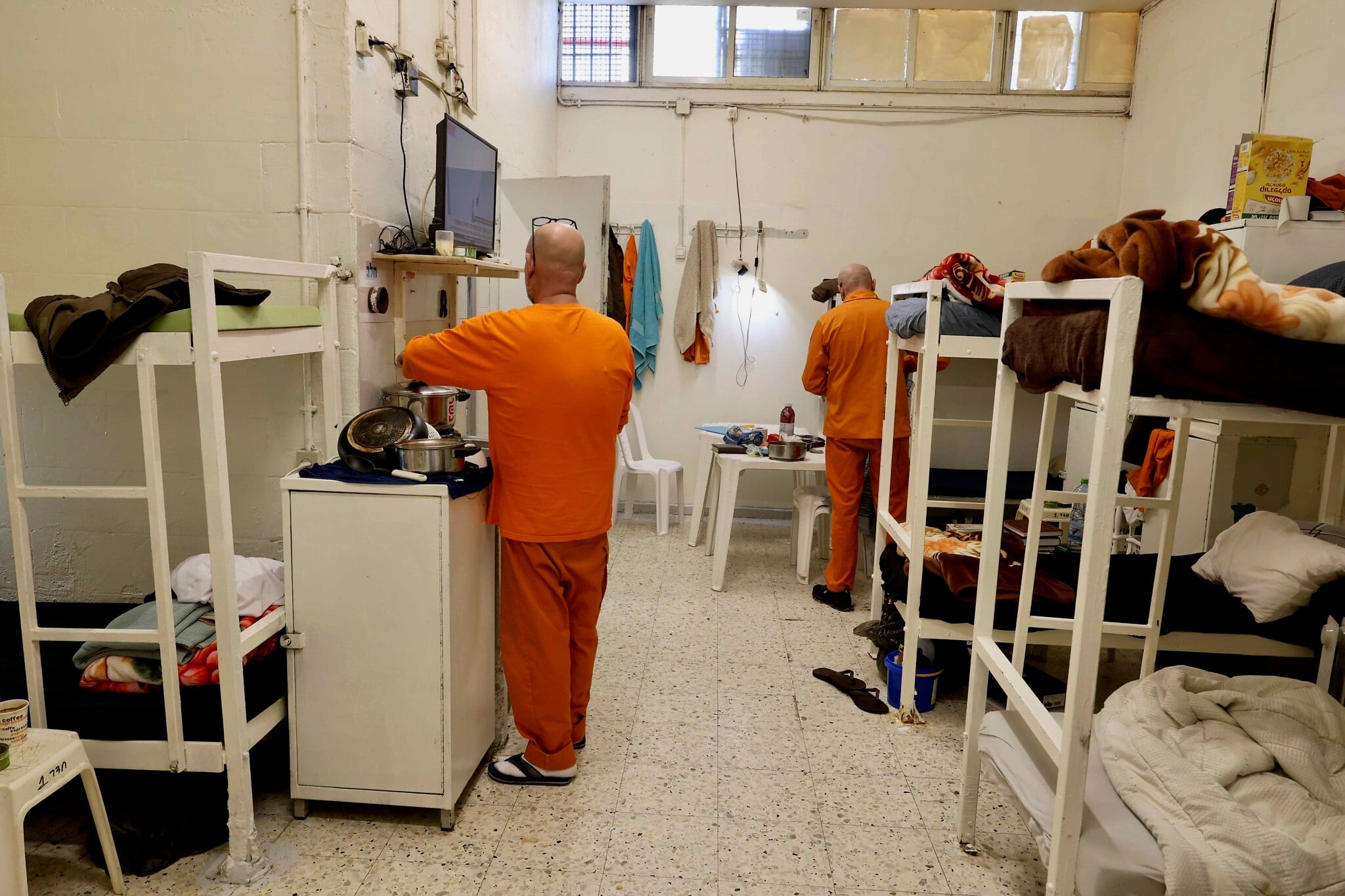
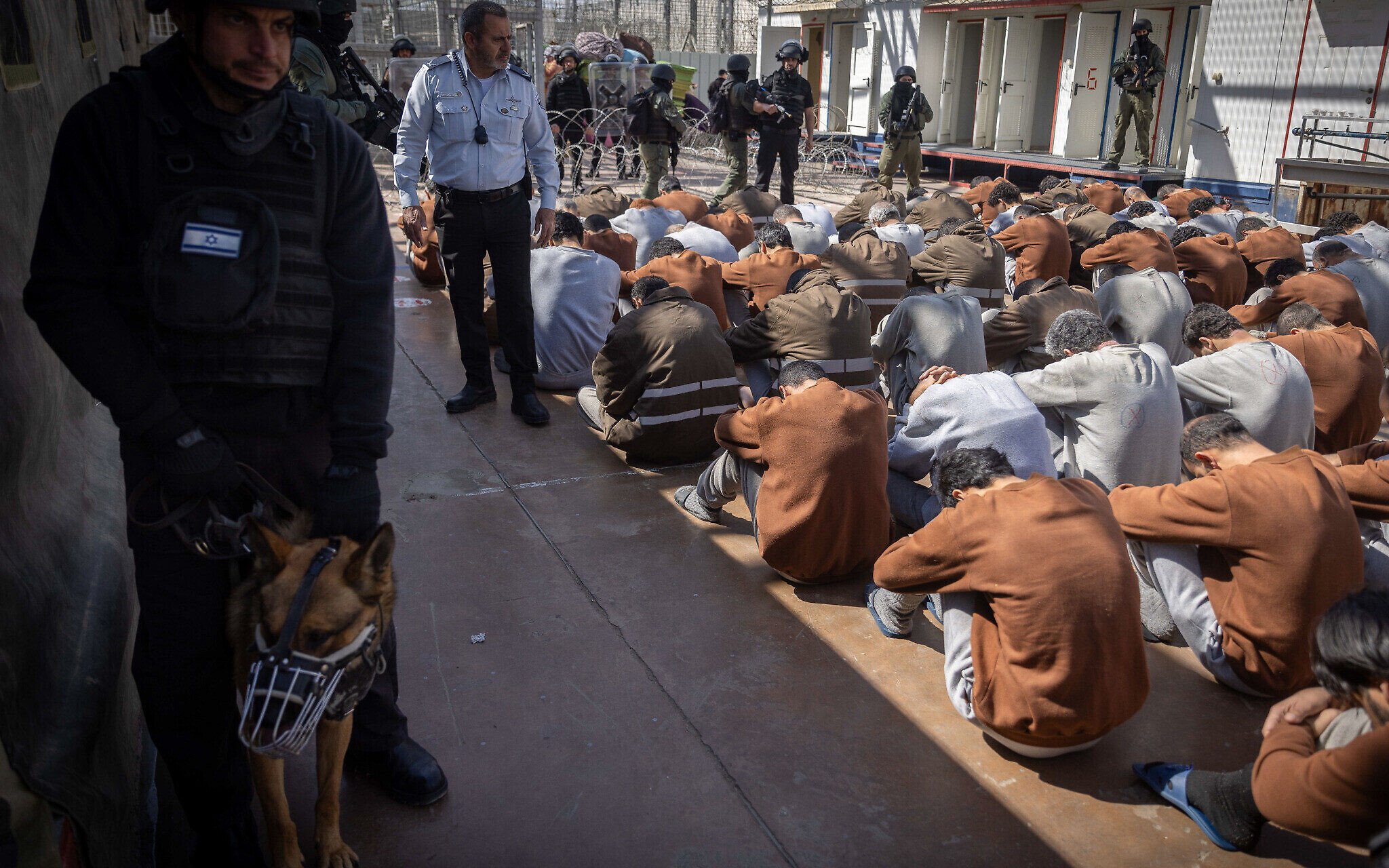
Under Ben Gvir, particularly in wake of the Hamas-led massacre on October 7, 2023, conditions for Palestinian prisoners jailed for security offenses have drastically deteriorated. Security convicts receive meager food portions compared to domestic criminals, live in dire sanitary conditions and are often subject to violence by guards, according to rights groups.
Palestinians who have been freed after spending more than a few months in prison often emerge frail and gaunt, having lost a considerable amount of weight. Others emerge with lasting scars from scabies, a common disease running rampant in many Israeli detention facilities.
Some prisoners have died in custody, among them a 22-year-old Arab Israeli convicted on incitement offenses, who was due to go free six months later.
The draconian development, which Ben Gvir boasts of regularly on social media, has been well-documented and even criticized by other state institutions.
The Supreme Court found in September that the state was failing to fulfill its legal obligations to adequately feed Palestinian security prisoners and ordered it to provide them enough food to “enable a basic existence.”
At the start of this year, the Public Defender’s Office released previously unpublished reports from 2024, in which inspectors visiting prisons bore witness to skeletal inmates with physical evidence of beatings and medical neglect on their bodies. Officials described one prison they visited as “not fit to hold human beings.”
Ben Gvir and his supporters have boasted of the worsened conditions, arguing that they fit the crime and work as a deterrent. “Jails have turned into a nightmare for terrorists, and I’m proud of this,” Ben Gvir told a Knesset committee in October.
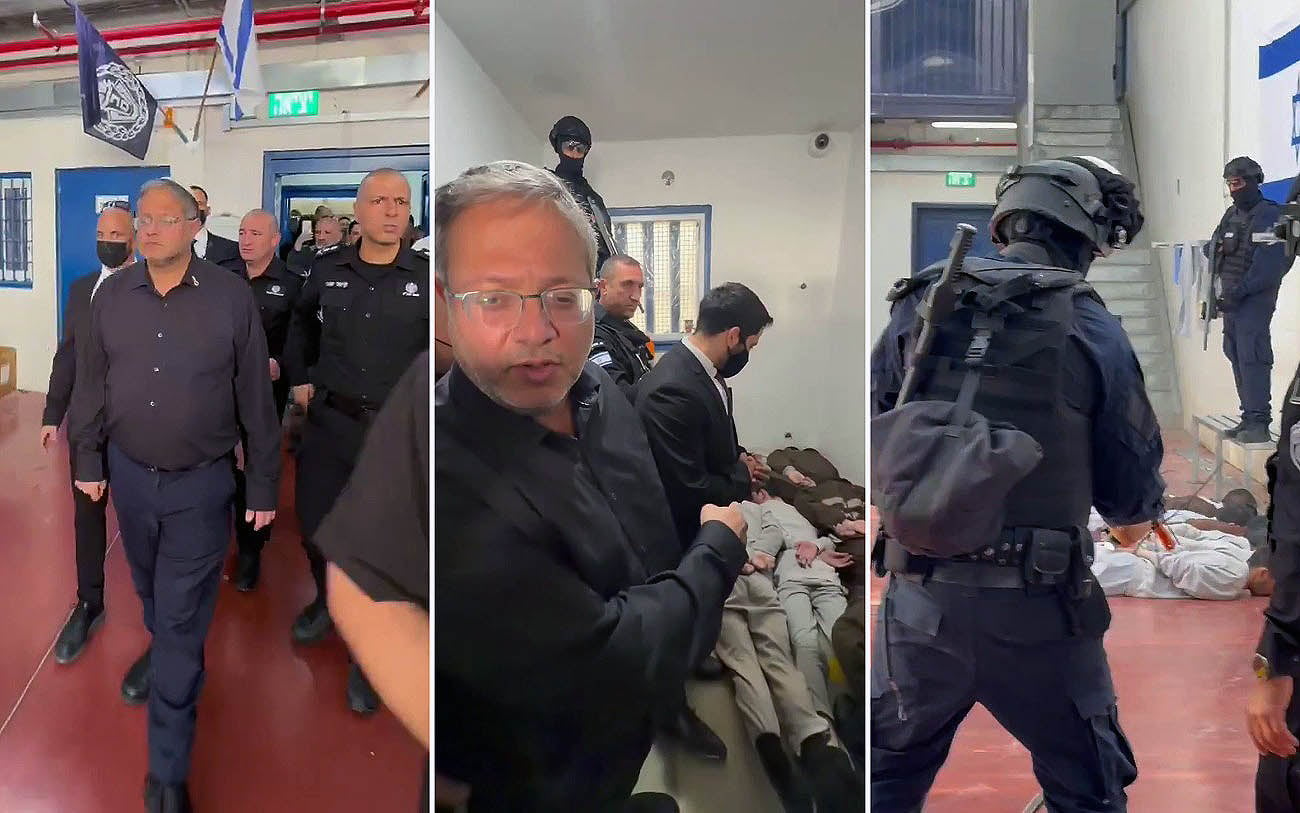
Ben Gvir has made little effort to hide efforts to extend the security prisoner classification to a wider pool of inmates. At the start of the war with Iran, his ministry said it would begin moving anyone who expressed support for Iran to a security wing, regardless of the nature of their crime.
“We will not allow incitement against the State of Israel or expressions of support for Iran, and anyone who tries to act against the state will be dealt with harshly.” the National Security Ministry said in a Hebrew-language Facebook post.
Speaking to The Times of Israel, a spokesperson for Ben Gvir confirmed that the practice of moving prisoners to security facilities based on expressions in support of Iran and other terror groups is “the minister’s policy and the directive of the [IPS] commissioner.”
The Israel Prison Service refused to comment on the matter.
Contact lost
According to the Prison Service, data about how many reclassifications have taken place can only be obtained via a Freedom of Information request, which was not answered as of press time.
Lawyers who spoke with The Times of Israel said there have been dozens such cases recently, a sharp uptick from past years, when the practice was used only rarely.
“It’s occurring all the time now, but isn’t something which happened in the past,” Moran said.
All of the reclassified inmates known to The Times of Israel are Arab Israelis. Some, like Abu Samour, are being held on nonviolent offenses, while others are convicted of crimes such as arms trafficking and homicide.
Regardless of the severity of their crimes, none of them have been charged with or convicted of any offenses under Israel’s counterterrorism law.
“These people are Israeli citizens who have no terror background, but guards are still quick to define them as security prisoners — it’s a very serious problem,” Moran said.
The lawyer cited cases in which inmates were reclassified on dubious grounds, including one instance in which a prisoner was moved to a security wing after guards searching their cell found a recording of an Israeli news segment about the ISIS terror group.
Moran noted the news segment was accessible to anyone on YouTube, and argued that possession of it cannot be construed as incitement on its own merits.
“I’ve encountered a case in which an inmate prayed together with other inmates and guards defined him as a security prisoner because of this, even though it [group prayer] is permitted according to the Prison Service’s own regulations,” she said.

Lawyers said they were not informed when their clients were moved, only discovering the reclassification when they or a family member suddenly couldn’t reach the inmate.
Each lawyer who has found themselves representing a criminal-turned-security prisoner recounts either suddenly losing contact with their client or receiving a message from a family member who was worried after their loved one suddenly stopped calling home.
Moran, a criminal attorney who declines to represent any suspect implicated in terror offenses, said that is what happened with her clients Sa’ad Johani, Ahmad Johani and Amer Johani, who were charged, convicted and imprisoned for arms trafficking.
“One day contact with them was simply lost. They disappeared. I started to look into what was going on, reached out to the Prison Service and received an update that they suddenly decided to categorize them as security prisoners based on the position of [Prison Service] intelligence officials,” she recounted.
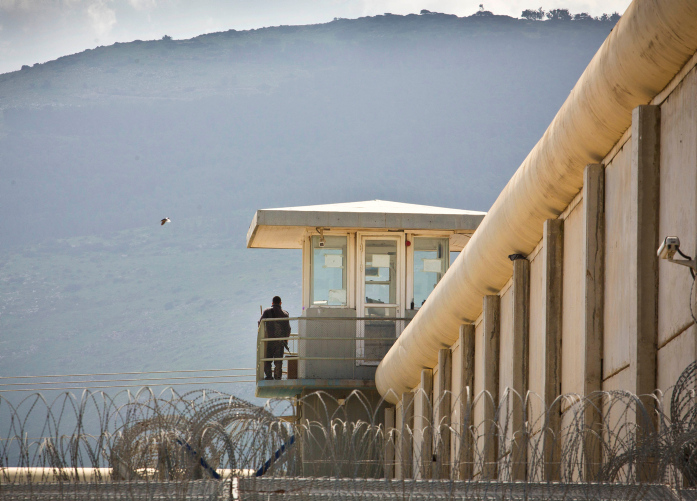
The Prison Service provided no concrete reasoning for transferring the three inmates, whose gunrunning was completely unrelated to nationalist violence, according to the indictment filed against them.
After figuring out where an inmate is being held, the lawyer must reach out to the Prison Service with a request to transfer their client back to a criminal wing. The agency almost always rejects such requests, taking several months to do so, meaning the lawyer must then turn to the courts.
The three smugglers remain in a security wing while their case moves through the court system.
Unimpressive secret evidence
The practice of switching up a prisoner’s classification — though legal in certain circumstances — has only become common practice over the past year, experts said.
A regulation added to the Prison Ordinance at the turn of the century provides for a prisoner’s reclassification only after the Prison Service consults with an external security agency — namely the Shin Bet or police.
“It is permissible to change the classification of a ‘security prisoner’ and define him as a ‘criminal [prisoner]’ or vice versa, both at the request of the prisoner and on the initiative of the Prison Service,” the ordinance states.
Since changing a prisoner’s classification entails altering the conditions in which they are held, the statute specifies that the move can only be made after consulting with the Prison Service’s intelligence division, which in turn should reach out to the Shin Bet, police or another security agency for its opinion.
But based on the cases that have made it to court in recent months, the Prison Service has been classifying inmates as security prisoners unilaterally, without any input from external bodies.
One of the cases brought before a judge has made its way to the Supreme Court. In the court’s first ruling on the issue, Justice Khaled Kabub sharply criticized the transfer of Abdelrahman Haj-Yahia — a Taibe man charged with aggravated murder — to a security prison.
Haj-Yahia was accused of shooting and killing a security guard protecting the city’s mayor in April 2023 and was subsequently jailed. Upon his entry into the penal system, he was classified as a criminal inmate and held in Rimonim Prison.
Then on June 17, 2025, prison guards seized two CDs from his possession. One of the discs, the Prison Service claimed, included “incendiary statements against the State of Israel and the United States.”
The prisoner, for his part, claimed he received the discs from another prisoner and hadn’t been aware of their content, believing they were Turkish soap operas.
He was brought to a disciplinary hearing in jail and found guilty of the misdemeanor, but when police launched their own criminal investigation, they closed it without charges.
Though the Shin Bet determined that Haj-Yahia was not a national security threat, he was nonetheless transferred to a security wing of Gilboa Prison in July 2025.
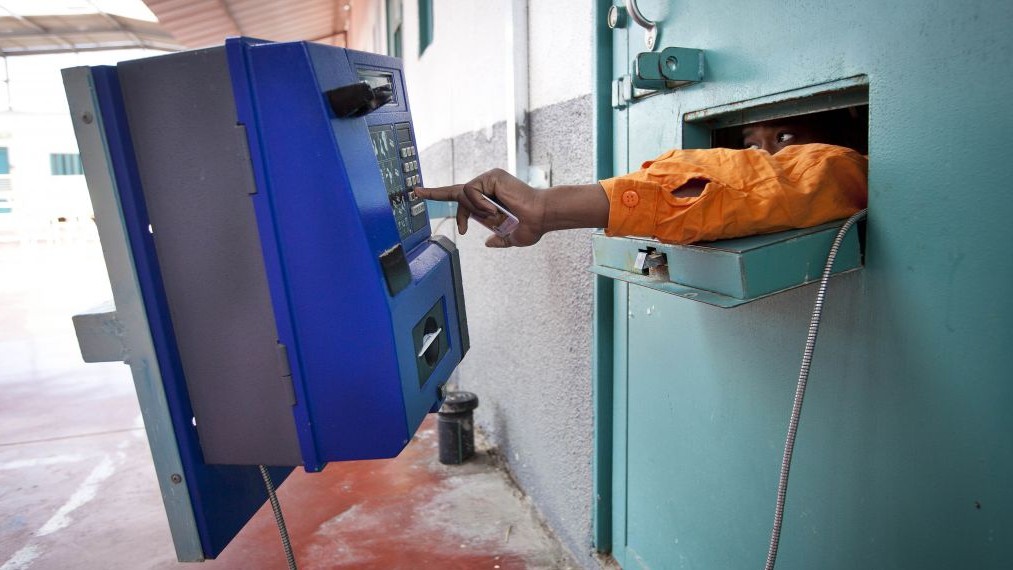
Haj-Yahia’s lawyer, Darwish Nashef, told The Times of Israel that the move could have harmed his ability to defend himself in the ongoing murder trial, since security inmates are not entitled to phone calls and are granted very limited in-person contact with their lawyers.
Based on court filings, the Prison Service seemingly justified its decision to move Haj-Yahia with what it said was secret intelligence. In February, Kabub ordered a report on the confidential information, but was apparently not impressed, warning against “turning the phrases ‘intelligence information’ and ‘classified material’ into a cudgel.”
“Without going into detail, I will note that the classified material does not substantially add to the material that has been disclosed, and it even seems that a factual error was made regarding the facts of the indictment,” Kabub wrote in an April decision on the case.
Before Kabub was able to issue the decision ordering Haj-Yahia transferred back to a criminal wing, the Prison Service did so itself, without explanation.
“It is not at all clear why the Prison Service changed its firm position in this case. The behavior described above is displeasing,” Kabub said.
Nashef claimed that the ruling, which did not take a stance on the statute itself, was nevertheless a major blow to the Prison Service’s stance.
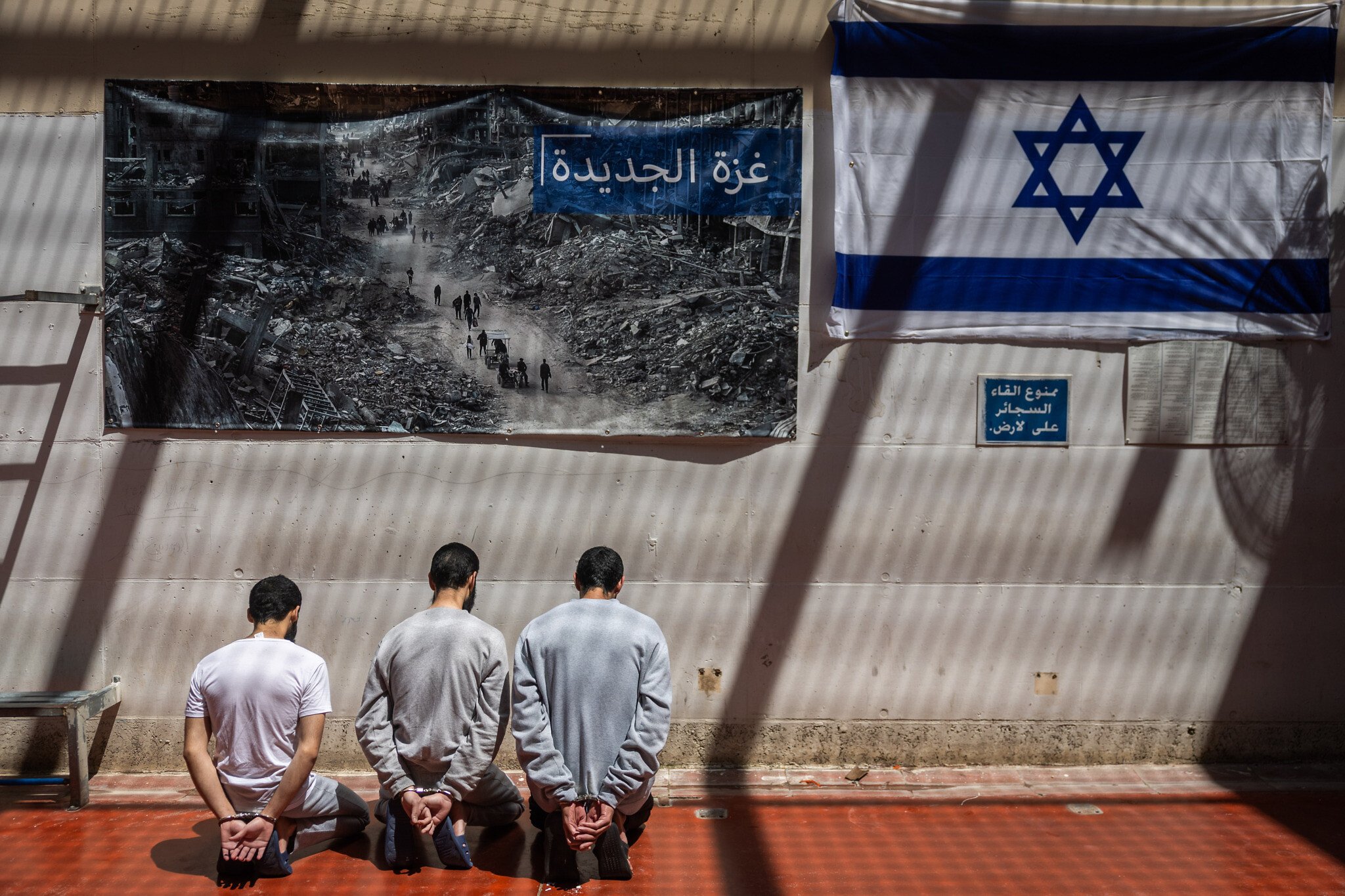
“The High Court was basically saying, ‘What is this jungle?’ Because it can’t be that just any intelligence officer in the Prison Service can make a decision like this,” he explained.
The lawyer claimed that most cases were a result of officers trying to “please the ruler,” meaning Ben Gvir.
“Over the past two years, every intelligence officer in a small prison wants to prove himself to Ben Gvir,” he said. “Everybody wants to be as militant as they can, which in effect, means violating the rights of Arab prisoners as much as possible.”
‘Best school for terror’
Patishi warned that placing domestic criminals together with terror convicts could end up radicalizing prisoners who previously had no links to extremist ideology.
“It’s the best school for terror there is,” she said. “That’s the strange thing about it: In terms of the state’s interest, there’s no point in mixing criminal prisoners with security prisoners, some of whom are serving life sentences on very grave offenses.”
At the same time as this transfer of domestic criminals to security wings has been playing out, jails have been undergoing an acute crowding crisis that reached new heights with the influx of security detainees during the Gaza war that broke out after Hamas’s October 7 invasion.
The number of security inmates nearly doubled since October 7, according to a state comptroller’s report published in June, which noted that Israel has released 19 high-level security prisoners back to the Gaza Strip due to lack of space.
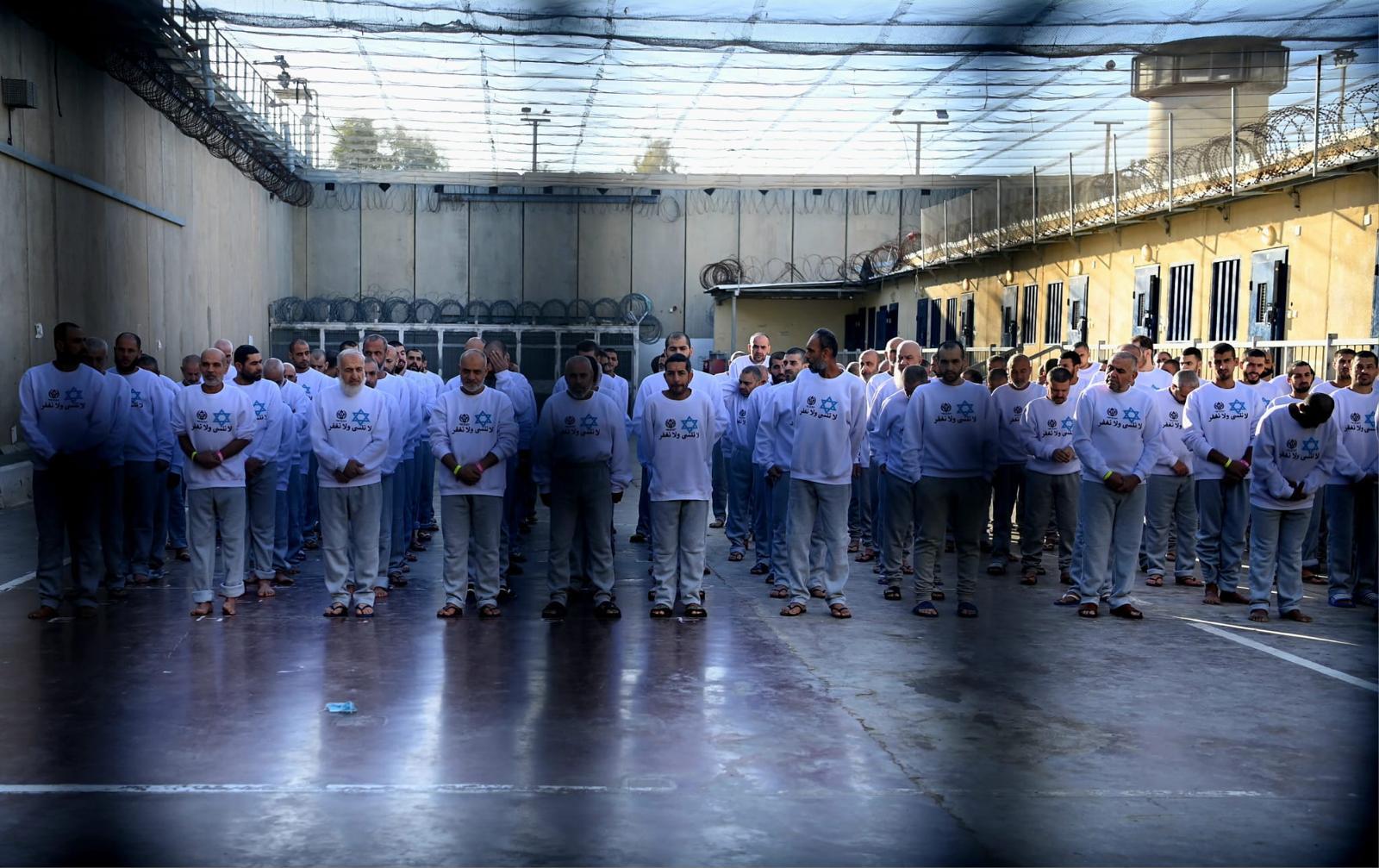
Even before the war, the Prison Service was under strain and running 12 percent above its official inmate capacity of 14,500. Now, it houses over 23,000 prisoners, around 10,000 of whom are in security wings, the report found.
The push toward reclassification is part of a years-long trend that has picked up pace under Ben Gvir, in which tools meant to combat terrorism have been repurposed against non-nationalist crime.
The reliance on emergency national security measures, experts say, is eroding due process rights and, by extension, Israel’s democratic foundations.
“Over the past few years we’ve seen a trend of importing heavy-handed tools used in the realm of counterterrorism and national security to the fight against criminal [domestic] crime,” said Nitzan Ilani, a lawyer for the Association for Civil Rights in Israel who specializes in prisoners’ rights.
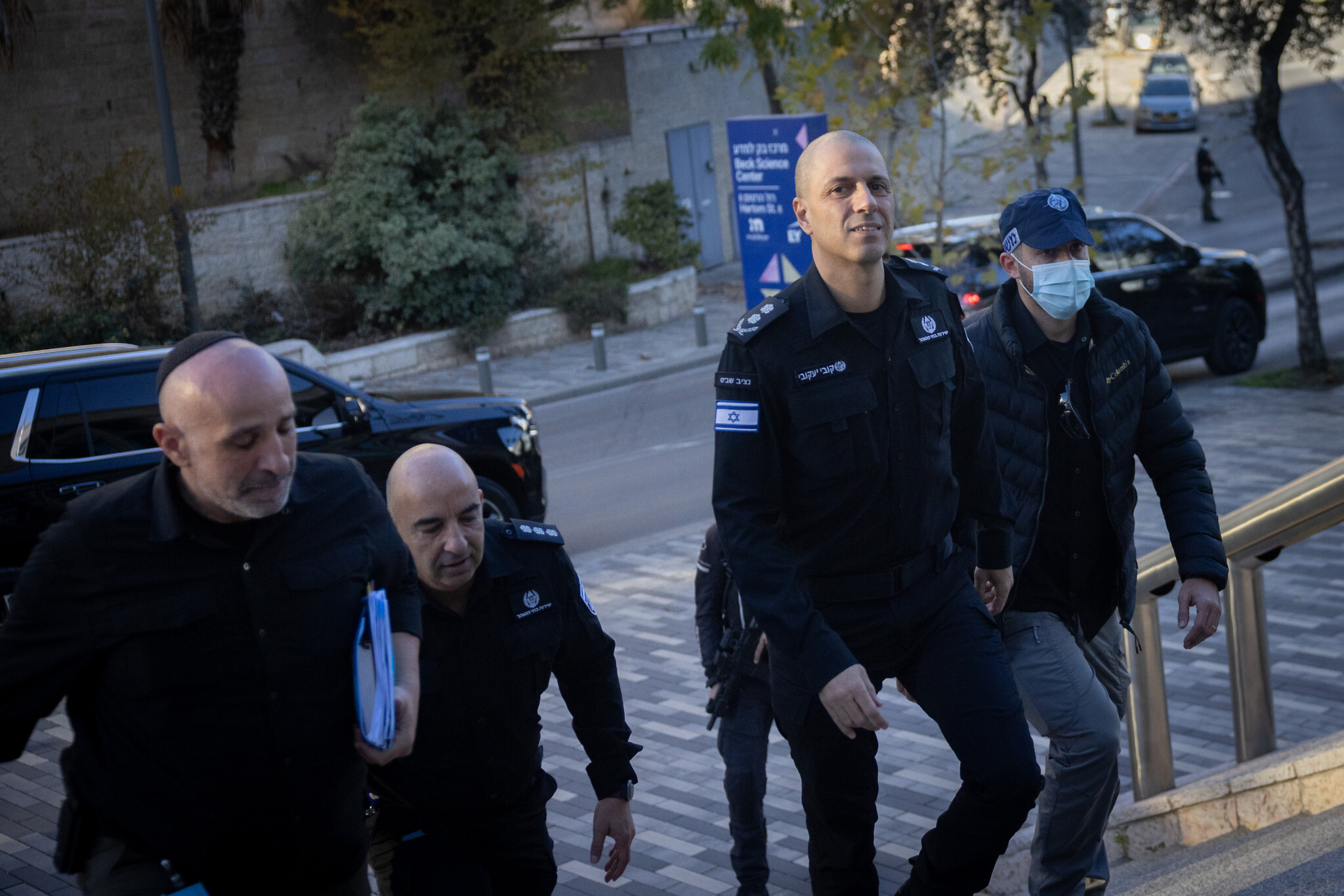
The crossover is not just confined to the prison system, Ilani noted, bringing up a 2024 law which allows district court judges, at police’s request, to impose restrictions on citizens’ freedom of movement and expression on the basis of secret evidence in a bid to protect the public from criminal organizations.
She noted the police practice of placing concrete barriers at the entrances to Arab towns and neighborhoods. Though it was once limited to Palestinian communities in the West Bank, these barriers are increasingly common inside the Green Line.
According to Ilani, the reclassification of prisoners who committed criminal [domestic] offenses as security inmates goes against both the prison system’s own internal guidelines and a High Court ruling stating that classification is not meant to be used as a punitive measure.
“Prisoners’ rights are being disproportionately violated,” she said, “especially in light of the appalling conditions in security facilities.”










The Times of Israel Community.