

The unbecoming of an officer
Allegations of sexual assault against Brig.-Gen. Ofek Buchris still top the headlines, underscoring a change in attitude toward rape in Israel
 Add ToI as a Preferred Source on Google
Adiv Sterman is a breaking news editor at The Times of Israel.
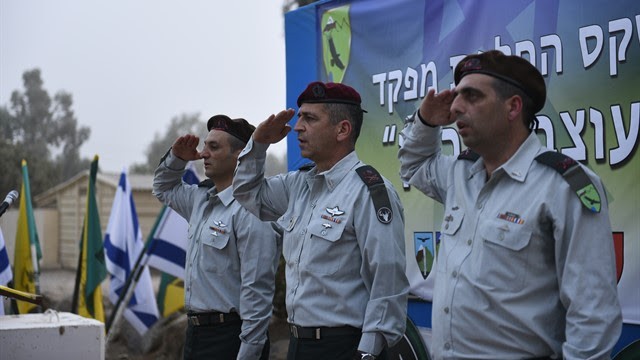
The feelings of betrayal and confusion over allegations of sexual assault that have surfaced this week against Brig.-Gen. Ofek Buchris — one of the IDF’s most senior and decorated officers — continue to rock the Hebrew-language newspapers. Friday finds the various media outlets attempting to reconcile the harsh claims made against Buchris, by two of his former soldiers, with the defense mounted by dozens of other subordinates, friends and acquaintances who refuse to believe that Buchris could have strayed so far.
“A command post under interrogation,” reads Yedioth Aharonoth‘s headline, referring to an upcoming Military Police investigation in which officers and soldiers who served under Buchris during his tenure as the head of the Golani Brigade are expected to give testimony. The paper explains that many of the Golani troops are torn, since on the one hand, they are familiar with and trust one of Buchris’s former soldiers who accuses the officer of rape, while on the other, after years of service and joint missions alongside the top official, the claims do not fit their general views and opinions of him.
Yedioth does not take sides in the internal debate eating away at the Golani soldiers, and seems to be trying to present the conflict as fairly and clearly as it can. What is noticeably missing from the tabloid — perhaps not out of malice but lack of information — is a focus on the two women who have lodged the accusations. While the complaints unsurprisingly loom in the background of Yedioth writer Yossi Yehoshua’s report, the experiences and claims of the women are not wholly present, and are instead sketched as a frame through which the deliberations of Buchris’s former subordinates can be highlighted.
Israel Hayom devotes most of its coverage of the allegations against Buchris to a third female soldier, who in a Facebook post claimed the top officer had for a period of time attempted to sway her to accept a job as his secretary — though he had never actually met her in person — all the while sending her text messages which she said dealt with her physical appearance.
“Because this affair came to light now, I remember that one day he sent me a message saying that he saw me from afar, and that I’m very pretty,” the woman wrote in her post. “If that would’ve happened to me now, I would immediately go to complain.”
Israel Hayom writer Lilach Shoval goes on to report, however, that as more allegations concerning Buchris’s conduct surface, so do online initiatives dedicated to proving the brigadier-general’s innocence. A Facebook page named “Supporting Brig.-Gen. Ofek Buchris” has gained 300 followers since its launch Thursday, while an additional 5,000 people signed an Internet petition that claims the officer is the target of a cruel plot aimed at thwarting any chance for him to climb up the army ranks. “We don’t purport to know the truth, but we are livid at the fact that even before a thorough investigation or proper legal proceeding took place, his blood is being spilled,” the page states.
In an article linked, but not immediately related, to the allegations against Buchris, Haaretz reporter Gili Cohen writes that the IDF is working to establish a body to provide legal assistance to female and male soldier victims of sexual assault in the army. According to Cohen, soldiers who experienced or lodged complaints regarding sexual crimes while serving in the military have until now not officially received legal guidance from the IDF. Interestingly enough, military officials accused of abusing their power and committing sexual misconduct did and still do receive legal aid from the army. The new initiative, which is in its pilot stage, aims to change this situation by assigning military lawyers to alleged victims of sexual assault from within the army. Cohen adds that legal experts working with the body are involved in the Buchris case as well.
With the Buchris case still in mind, Yedioth announces that the next issue of its magazine Laisha (literally, for the woman) will deal with the victims of sexual crimes, and specifically 22 women who agreed to share their traumatic experiences in full.
The paper features an image of the magazine’s cover, showing the 22 women dressed in black, sitting with their arms folded or placed on their lap, ceasing to apologize for or hide from the fate that befell them. The paper says that the cover design was borrowed from a recent issue of New Yorker Magazine, which featured the women who accused comedian Bill Cosby of sexually assaulting them. “You will not rape us to keep quite,” reads the headline of Laisha.
It seems that the magazine’s cover and coverage of the topic encapsulate the country’s struggle to come to terms with a new and changing attitude toward rape. Women, the magazine stresses, are no longer willing to accept sexual assault as a given in society, regardless of how senior, well-respected or famous the perpetrator.
On a different note, Haaretz reporter Ofer Aderet tackles the contentious issue of elderly ex-Nazis who are currently being brought to trial, decades after the atrocities these senior citizens allegedly helped carry out. “A series of court cases against low-ranking Nazis raises debate over the roll of late justice,” the article’s headline declares.
Aderet presents the stories of six such Nazi suspects, all now in their early and mid-nineties. Their attorneys in some cases insist that their clients were just low-level officials, and that they are sure to pass away soon and face justice “in the court of heaven,” as one of the lawyers quoted puts it. The prosecutors, however, maintain that there is no statute of limitations for murder, and that the crimes of the Nazis — no matter how much time has passed since — cannot and must not be absolved or forgotten.








The Times of Israel Community.