

The world closes in on Syria
Even Russia dials back its support for Assad
 Add ToI as a Preferred Source on Google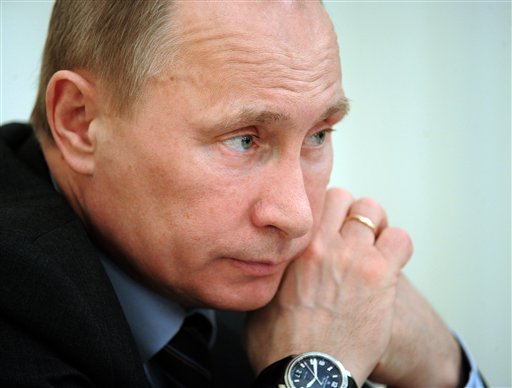
The London-based Palestinian daily Al-Quds Al-Arabi today highlights the continuing trend to delegitimize Assad’s regime among the international community.
The latest blow, it notes, arrived after “a French photographer and an American journalist were killed amid the altercations in Homs.” As a result of the incident, the members of the European Union called an emergency meeting in which it was decided that “those responsible for the horrible atrocities must be punished.” Despite the abstract nature of this statement, there was a concrete decision made when French President Nicolas Sarkozy announced the immediate closing of the French embassy in Syria.
The more interesting development in Europe came from a more unexpected source – Russia. Despite the Security Council veto that the Russians cast on foreign intervention in Syria a couple of weeks ago, it seems that now Russian officials are beginning to dial back their support of Syria. First, the paper reports that Putin came out and said that “Russia does not have a special bond with Syria.” Not only that, the paper then goes on to quote the Russian Foreign Ministry as it clarified Saturday that: “Russia is not bound by the 1980 defense treaty with Syria that was signed by the Soviet Union” and that “Russia will not be obliged to intervene should foreign forces invade Syria.”
These statements come as a surprise, for short of direct criticism of Assad’s regime, this is the closest thing we have seen thus far to an abandonment of Russia’s allegiances to the Assad regime.
Meanwhile, on the Arab front, the paper reports in a second piece on the front page of a certain coalescing of forces between the Arab dissent of Assad – in the shape of the Tunisian organization “Friends of Syria” — and the European and American authorities. The paper quotes a press release from the Tunisian group stating that “in the organization’s recent meeting there were deliberations with American, French, British, Turkish, and Saudi intelligence officials about the possibility of orchestrating a military coup in Syria.”
Al-Quds on the roadblocks to Palestinian unity
Saturday’s edition of Al-Quds, the East-Jerusalem publication, features an editorial that offers some interesting insight into the core difficulties of arriving at some sort of reconciliation between Fatah and Hamas: “For five years, the two sides were unable to reach any sort of binding agreement,” it opens. It uses the current round of negotiations to shed light on past difficulties and disabuse the readers of what it considers to be wrongfully axiomatic assumptions: “’We have no problem with Abu Mazen,’ said Khaled Mashaal in Cairo the other day, and indeed it seems that the problem is not so much with deep-seated personal grudges or political acrimonies between the two Palestinian factions – but is in fact with attitudes towards Israel.”
Throughout the piece, there is an attempt to push back against the pervading perception that there are still bitter lingering hostilities from the 2007 Hamas coup in Gaza, as the editorialist offers analysis of the last five years of negotiations: “Ever since 2006 (when Hamas won Palestinian parliamentary elections), the parties have managed to agree about most domestic points. And the issue of the timing of the next elections – the present holdback in the negotiations – is also very much bridgeable. However, the area in which the two sides cannot see common ground is over security cooperation with Israel.”
Observing the West Bank and Gaza, the piece determines that “Fatah has no problem having its security forces collaborate with Israeli forces; however, Hamas is very resistant to that notion given the amount of hostility between the two sides and the many deaths inflicted by Israeli forces upon the heads of Hamas security forces.”
Nasrallah calls for questioning of foreign reporters
A-Sharq Al-Awsat, the pan-Arab Saudi daily, plays up a recent exchange between the head of Hezbollah, Hassan Nasrallah, and the Lebanese Minister of Communications and Public Opinion, Ziad Al-Kaderi. The paper first quotes the official network of the Lebanese Resistance (Hezbollah), Al-Manar, which broadcast Nasrallah’s weekly address. “Nasrallah was filled with consternation,” the Saudi paper reports, “that the foreign journalists that ran away from Syria to Lebanon were not held for questioning by the Lebanese authorities…
“He claimed that it is an appalling breach of Lebanese sovereignty that French and British journalists were allowed to enter the country and then leave it without so much as one question being asked by a Lebanese official.”
The paper then offers the Lebanese government’s response through Al-Kaderi: “It is a curious thing that Nasrallah calls for the questioning of the reporters,” the minister responds tartly, “for isn’t he the one who refuses to acknowledge any wrong-doing on the part of Assad’s regime or any evidence of massacres? If Nasrallah really wants to question the reporters, he should start with the things they saw in Homs being done to Syrian civilians.”
Verdict today on cartoon that ‘desecrated’ Islam
Al-Ahram, Egypt’s leading daily publication, reports that the verdict in the case of Egyptian businessman and politician Naguib Sawiris is expected to be delivered today. Sawiris, the paper reports, “posted a cartoon on his Twitter account which was deemed offensive and deprecatory to Islam.”
The cartoon in question, which was published by Sawiris during the 2011 revolution, featured Mickey and Mini Mouse in traditional Muslim garb. The paper notes that “the left-winged Sawiris, founder of the Liberal Free Egyptians Party, was a staunch dissenter of the Mubarak regime and an avid supporter of the revolution.” The implication: A political motivation behind the charges laid against him.






The Times of Israel Community.