

Under duress in Duma: 5 things to know for June 20
Hebrew papers weigh in on trial of Jewish extremists suspected of murdering Palestinian family after court throws out portions of confessions obtained via illegal methods
 Add ToI as a Preferred Source on Google
Tamar Pileggi is a breaking news editor at The Times of Israel.
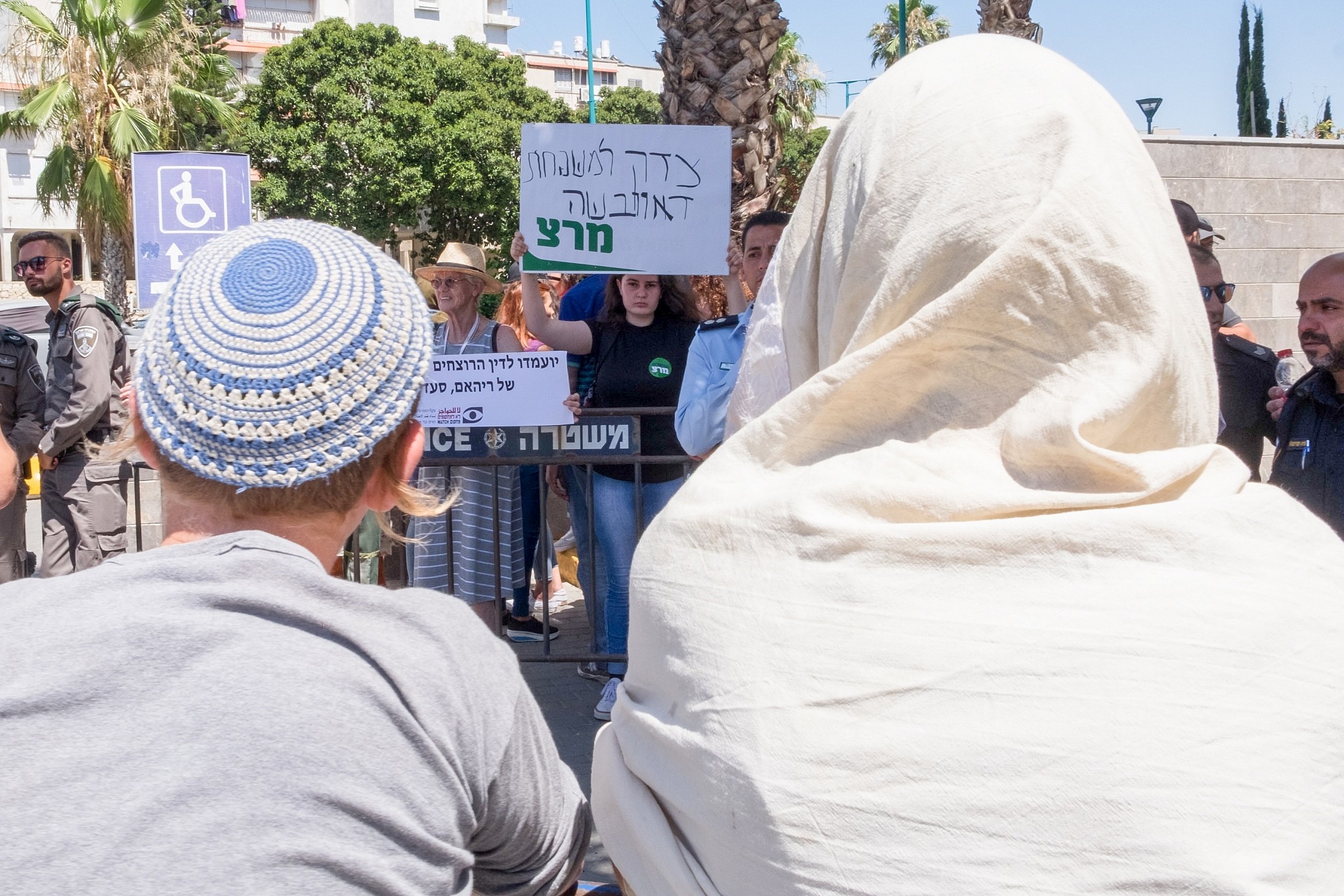
1. A court’s dramatic decision to throw out the confession of one of the Jewish extremists accused of involvement in the deadly firebombing that killed a Palestinian toddler and his parents three years ago is the major story in Wednesday’s Hebrew papers.
- The decision of the court in Lod, central Israel, could cast doubt on the strength of the prosecution’s case against the main suspect, Amiram Ben-Uliel from the northern West Bank settlement of Shilo.
- Eighteen-month-old Ali Dawabsha was burned to death when the family’s West Bank home was firebombed in July 2015. His parents later died of their injuries. His brother Ahmed, now six, is the sole survivor from the immediate family but was left with severe burns.
- Under a prominent headline “Jewish terrorism saga,” the Yedioth Ahronoth daily describes the latest developments in the case as “conditional disqualification.” Throughout its coverage, Yedioth says that despite the disqualified confession, prosecutors should still have enough evidence to secure a conviction against Ben Uliel.
- The paper’s Shlomo Piotrkowski hails the court decision as “good news for the safeguarding of rights in the State of Israel.” He says throwing out the confessions obtained under duress sends the message that torturing suspects crosses all red lines. “It separates what is and is not legitimate to do in order to prevent terrorism in real time.”
2. Overnight Tuesday, Israeli warplanes struck Hamas positions in Gaza after Palestinians there fired dozens of rockets and mortars at southern communities early Wednesday, the military said.
- It was the biggest flareup between the sides in weeks. However, no casualties were reported in Israel or Gaza. Some rockets exploded inside Israel damaging property. Wednesday’s papers were full of pictures of Israeli houses and cars peppered with shrapnel and said one mortar shell exploded next to a kindergarten.
- Fawzi Barhoum, a spokesman for the Hamas terrorist group, praised the attacks, saying that it is “a legitimate right that bombing is met with bombing,” but did not take responsibility for them. The IDF strikes were a response to relentless attacks on Israel by incendiary kites and balloons launched from Gaza.
3. The US on Tuesday withdrew from the United Nations Human Rights Council on Tuesday, condemning the “hypocrisy” of its members and its alleged “unrelenting bias” against Israel.
- “For too long, the Human Rights Council has been a protector of human rights abusers, and a cesspool of political bias. Regrettably, it is now clear that our call for reform was not heeded.”
- “Since its creation, the council has adopted more resolutions condemning Israel than against the rest of the world combined.”
- Prime Minister Benjamin Netanyahu welcomed the US move, branding the council “a biased, hostile, anti-Israel organization that has betrayed its mission of protecting human rights.”
4. The bombshell announcement earlier this week that a former minister has been charged with spying for Iran is still making the rounds.
- If Gonen Segev is found guilty of handing information to Iran he could face either the death penalty or up to life imprisonment, legal sources told The Times of Israel this week.
- Yedioth says that Segev told Shin Bet investigators that he wanted to be a double agent. The paper reports that Segev claimed that he reported his contacts with Iranian intelligence officials to Jerusalem, and that he was “seeking to restore my image and help to keep Israel safe.”
- Haaretz in its report Wednesday cites Israeli defense officials who say that Israeli businessmen representing Israeli defense companies were likely exposed to Tehran because of Segev, after they paid him for medical services with a credit card, sent him emails and called him from their cellphones.
5. The Trump administration’s controversial new policy dictating that every illegal migrant who crosses the US border will be prosecuted and detained is a major story in Israel this week.
- Since children cannot be prosecuted with adults, they are reclassified as unaccompanied minors and taken away, either to mass children’s shelters or foster homes. More than 2,300 children have been separated from their parents, according to The New York Times.
- On its front page, Yedioth highlights the “caged children,” and a prominent op-ed urged the American people “don’t ignore their screams.” “You can’t expect Trump to be aware of the suffering of others,” writes Orly Azoulay. “That word doesn’t exist in his vocabulary. But it’s odd that no one around him tried to explain that child abuse does not equal political capital.”
- The policy has already drawn comparisons to those of Nazi Germany, and a broad spectrum of Jewish groups have spoken out against the policy, along with many other religious organizations. Some Jewish groups are working on the southern border and elsewhere to provide physical or legal assistance to migrants.







The Times of Israel Community.