Tamar Pileggi is a breaking news editor at The Times of Israel.
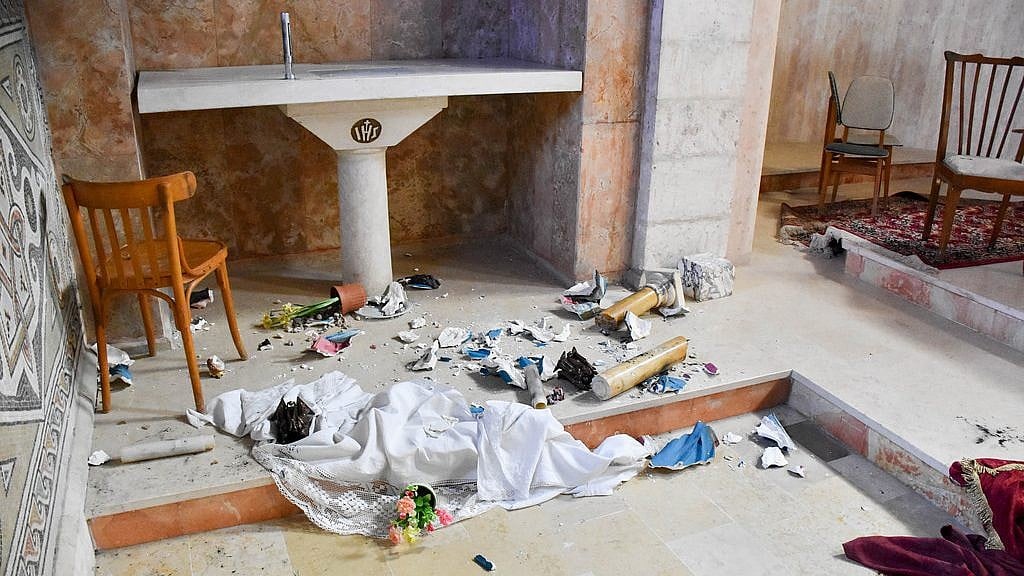
The vandalized sanctuary of the Beit Jamal Monastery seen on September 22, 2017. (Latin Patriarchate of Jerusalem)
Vandals ransacked a monastery west of Jerusalem this week, the Latin Patriarchate in the city said in a Friday statement.
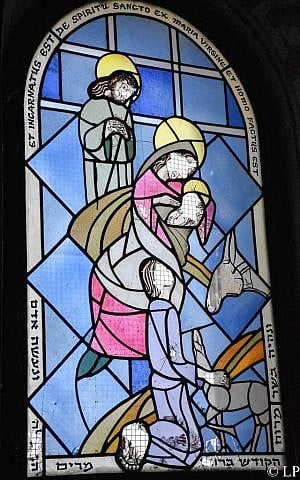
It said the unknown perpetrators smashed a statue of the Virgin Mary, damaged furniture and broke a number of the stained-glass windows inside the sanctuary of the Beit Jamal Monastery.
Photos of the damage show the vandals took special care to shatter the faces of the icons and of those depicted on the windows.
The vandalized sanctuary of the Beit Jamal Monastery seen on September 22, 2017. (Latin Patriarchate of Jerusalem)
Police opened an investigation into the apparent hate crime.
The incident this week marks the third time the Catholic church has been vandalized in recent years.
Get The Times of Israel's Daily Editionby email and never miss our top stories
In 2013, suspected Jewish extremists firebombed the building and scrawled the phrases “price tag,” “death to the Gentiles,” and “revenge” on the hallways of the monastery.
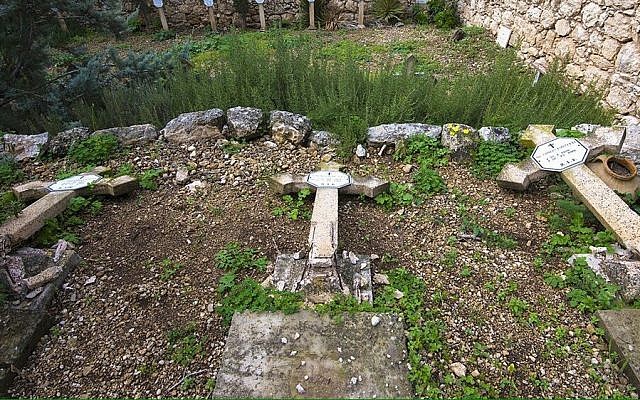
Then, in January 2016, dozens of crosses at Beit Jamal’s cemetery were toppled.
No arrests were made in either of the cases.
Advertisement
Bishop Boulos Marcuzzo condemned the latest incident as “not only an act of vandalism but an action against the sacredness of the holy places and the faith of people.”
“The Holy Land is deep [with] faith and culture. We must live together with the diversity of beliefs,” Marcuzzo said according to a church statement. “It is absolutely necessary to accept others, to accept each other in our diversity.”
Vandals desecrated the Christian cemetery at the Beit Jamal Monastery near Beit Shemesh, the Latin Patriarchate of Jerusalem said on January 9, 2016. (Latin Patriarchate’s Media Office)
The monastery, situated next to the Jerusalem-area town of Beit Shemesh, is known for its good relations with Israelis, who visit to buy its hand-crafted ceramics, honey and olive oil.
Help us report truthfully on social media
As a multimedia journalist, my job is to take the quality, fact-based journalism produced by The Times of Israel newsroom and make it accessible across every platform — from Instagram posts to podcasts to short-form videos.
This is how many, especially young people, consume news these days. But misinformation is rampant on social media. Our team at ToI produces accurate, responsible short-form reporting on Israel and the Jewish world.
If you believe in the importance of factual social media journalism, please consider joining our reader support group, The Times of Israel Community. Your financial support is essential to sustain responsible multimedia reporting.
We’re really pleased that you’ve read X Times of Israel articles in the past month.
That’s why we started the Times of Israel - to provide discerning readers like you with must-read coverage of Israel and the Jewish world.
So now we have a request. Unlike other news outlets, we haven’t put up a paywall. But as the journalism we do is costly, we invite readers for whom The Times of Israel has become important to help support our work by joining The Times of Israel Community.
For as little as $6 a month you can help support our quality journalism while enjoying The Times of Israel AD-FREE, as well as accessing exclusive content available only to Times of Israel Community members.
Thank you, David Horovitz, Founding Editor of The Times of Israel


 Add ToI as a Preferred Source on Google