

A battle neither side wanted
Both Israel and Hamas seem to be hoping the current escalation in the south calms down before it evolves into Cast Lead 2
Mitch Ginsburg is the former Times of Israel military correspondent.
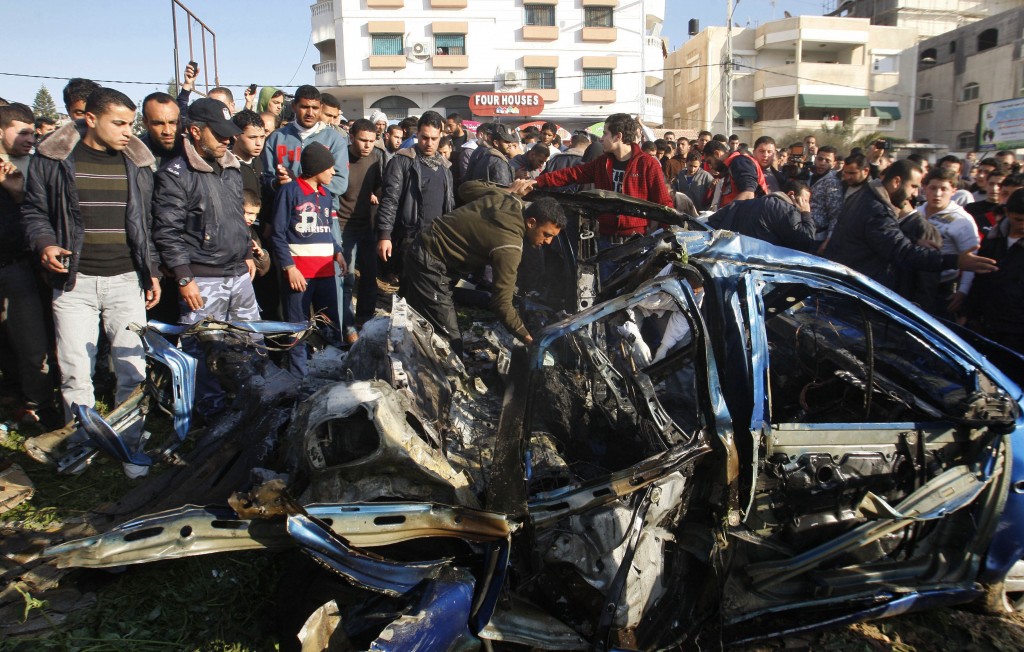
In the summer of 2011 Israeli intelligence reportedly received word that a radical terror group in Gaza, the Popular Resistance Committees, was planning an attack along the long and largely open border with Egypt. Then, as now, Shin Bet agents passed word up the chain of command.
The difference is that last year, the IDF did not strike. Perhaps the intelligence was tainted. Perhaps there were no quality targets. Perhaps the political situation demanded caution.
Either way, on August 18 a 12-person squad of terrorists managed to complete the journey through the Rafah tunnels into Egypt and from there to the mountainous region north of Eilat. They were armed with grenades, mines, explosive belts and anti-tank rockets and dressed in Egyptian military uniforms. They opened fire on one Egged bus, attacked another one with the explosive belts and fired on passing cars, killing eight Israelis. Judging by the terrorists’ deployment, only a swift response by the IDF barred a successful kidnapping.
Israel’s initial response resulted in the killing of roughly half the terror squad and several Egyptian security personnel. Three weeks later the Israeli embassy in Cairo came under attack, threatening a destabilizing deterioration of ties with Egypt, and though the ambassador has returned to Cairo, the doors of the embassy remain shut.
So when word came down this time that Zuhair al-Qaissi, the secretary general of the Popular Resistance Committees, was in the midst of planning an attack akin to the one that took place during the summer, the IDF was presumably determined to strike first and in Gaza rather than in Egypt.
The upshot is that while neither Israel nor Hamas seek an escalation to the raging, cross-border conflict in southwestern Israel and the Gaza Strip, both parties, like two boxers in an embrace, are unwilling to disengage just yet, leaving the outbreak of war just one miscalculation away.
“The IDF does not intend at this point to launch another operation in the Strip,” Home Front Defense Minister Matan Vilnai said Saturday in Beersheba, a Negev city that has come under rocket fire from Gaza.
Defense Minister Ehud Barak estimated that the exchange of fire would go on “for another day or two” and urged the citizens in the area to remain patient and indoors.
The Hamas leadership seems to be sending a similar message. Mahmoud a-Zahar reportedly led a Hamas delegation to Egypt Saturday in an attempt to begin working on reestablishing the truce with Israel.
Both sides seem to have been “pushed” into this latest escalation, with Israel hoping to hit al-Qaissi early, disrupting the terror attack, and Hamas knowing it had to allow revenge for the assassination or risk losing face in Gaza.
But this seems to not be the battle either side wanted. In November IDF chief of General Staff Lt. Gen. Benny Gantz told the Knesset Foreign Affairs and Defense Committee that the “IDF will have to launch in the future a significant offensive in the Gaza Strip.” The campaign, he said, would have to be shorter and even more forceful than the December 2009 Operation Cast Lead. But it would also be “orderly and initiated” by Israel.
Hamas also does not seem ready for a full-blown confrontation with Israel. The leadership in Gaza has tellingly allowed others to raise the flag of resistance, with Islamic Jihad launching most of the rockets and suffering most of the losses.
An enforced calm seems to be in interests of both sides at this time. But with 15 dead in Gaza, rockets raining down on the south and a terror attack that the defense minister says may still be in the offing, Cast Lead 2 remains just one ill-fated bullet or bomb away.






The Times of Israel Community.