

Knesset advances Basic Law bill equating Torah study with IDF service, despite coalition revolt
Four coalition MKs opposed measure declaring Torah study a foundational value; critics say bill seeks to preserve mass ultra-Orthodox draft exemptions, ‘spits in the face’ of troops
 Add ToI as a Preferred Source on Google
Ariela Karmel is a political correspondent at The Times of Israel. She previously reported for Calcalist and Haaretz. She holds an MA in Middle Eastern and African History from Tel Aviv University and a BA in Political Science from the University of British Columbia.

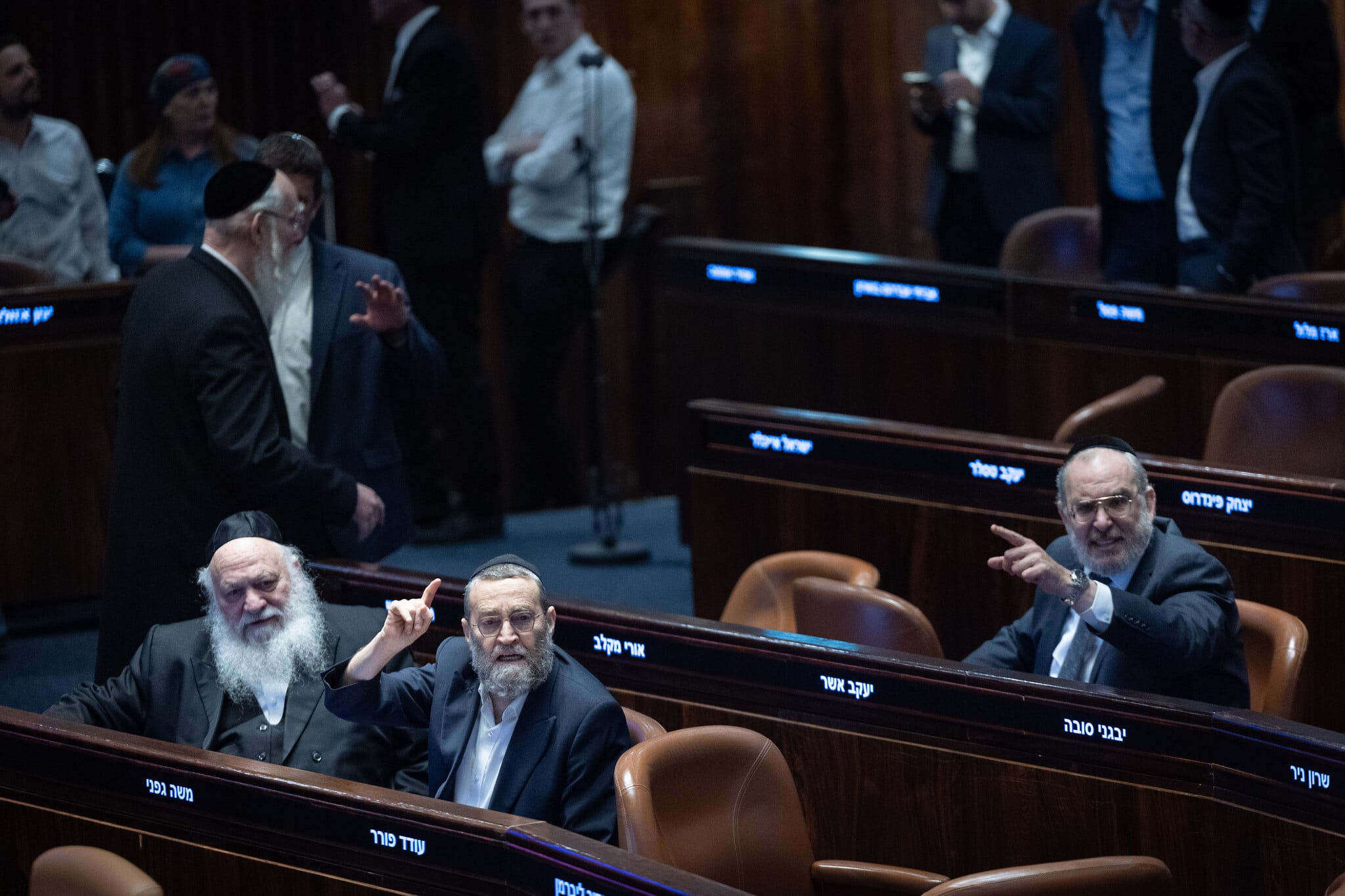
The Knesset voted 56-43 on Wednesday in a preliminary reading to advance a controversial Basic Law declaring Torah study a foundational value of the State of Israel, and effectively equating the study of Torah with military service. The vote passed despite several coalition lawmakers breaking ranks to vote with the opposition against the divisive legislation, causing an uproar in the plenum.
Sponsored by ultra-Orthodox United Torah Judaism lawmakers MKs Moshe Gafni and Yaakov Asher, and backed by the ultra-Orthodox Shas party, the measure would recognize those who dedicate themselves to long-term Torah study as performing “meaningful service” to the state, effectively equating it to army service and conferring upon yeshiva students equal rights to those who serve in the army.
The bill will now be sent to the Knesset House Committee, which will determine which committee will prepare it for its subsequent readings. The coalition hopes to pass the bill before the upcoming national election in the fall.
Senior ultra-Orthodox lawmakers hailed the vote, with United Torah Judaism MK Yisrael Eichler calling it “a declaration of holy war against those who blaspheme God, persecute the Torah and oppose those who study it,” as fellow UTJ MK Meir Porush referred to opponents of the bill as “antisemites” and “enemies of the Torah and its students.”
Both said that Haredi parties were compelled to bring forward the bill due to the “systematic persecution of Torah scholars” by “dictatorial jurists.”
The legislation represents the latest effort by the Haredi parties to preserve mass draft exemptions for yeshiva students and purported yeshiva students after a coalition-backed enlistment bill promoted by Knesset Foreign Affairs and Defense Committee chairman Boaz Bismuth was shelved last month, amid an impasse between the ultra-Orthodox parties and members of Prime Minister Benjamin Netanyahu’s coalition.
The dispute is rooted in a fierce, years-long national debate over the blanket exemptions from military service that have long been given to Haredi men. Calls for Haredi conscription have mounted as Israel has fought a multifront war since the Hamas-led October 7, 2023, invasion and massacre, while facing a growing manpower shortage. The IDF has repeatedly said it urgently needs 12,000 more recruits, and IDF Chief-of-Staff Eyal Zamir reportedly warned ministers last month that the army would “collapse in on itself” if it did not get more manpower. Some 80,000 ultra-Orthodox men aged between 18 and 24 are currently believed to be eligible for military service, but have not enlisted.
Ultra-Orthodox parties have sought to preserve the military service exemptions following a 2024 High Court ruling that found them unconstitutional, leading some state benefits to be curtailed.
The bill is explicitly designed to shield draft evaders by anchoring Torah study in legislation as equal to military service, in order to circumvent High Court rulings.
A coalition rebellion
The bill faced intense opposition and a small mutiny from several coalition lawmakers in the Knesset on Wednesday, with four ultimately voting against it: Likud MKs Dan Illouz and Yuli Edelstein, Deputy Foreign Minister Sharren Haskel and Religious Zionism MK Moshe Solomon.
All four lawmakers have long opposed efforts to preserve broad military service exemptions for yeshiva students. Edelstein was ousted as chair of the powerful Knesset Foreign Affairs and Defense Committee, and replaced with Bismuth, for refusing to advance draft-exemption legislation.
The mini-rebellion sparked a major uproar in the Knesset plenum. Shas MK Yossi Taieb had to be restrained and removed by Knesset guards after rushing toward Illouz following the vote, and Finance Minister Bezalel Smotrich subsequently removed Solomon from all Knesset committees as punishment for defying the faction’s position.
מהומה במליאה: דן אילוז מצביע נגד חוק יסוד: לימוד תורה, ח"כ יוסי טייב התעמת איתו@dillouz @yossitaieb https://t.co/7sNZB6xY2L pic.twitter.com/uUbQJxYHEJ
— ערוץ כנסת 99 (@KnessetT) June 10, 2026
Smotrich’s Religious Zionism party had announced on Tuesday that it would not support the measure in its current form in further votes, saying it would back legislation establishing Torah study as a foundational value of the State of Israel only if it “does not equate yeshiva students with IDF soldiers.”
According to Hebrew media reports, several members of Netanyahu’s Likud party also objected to the legislation on similar grounds, including ministers Ze’ev Elkin and Amichai Chikli, who reportedly demanded changes as a condition for their support.
While Shas MK Yoav Ben-Tzur said the ultra-Orthodox parties had agreed to remove the disputed language at Smotrich’s request, the bill had already been submitted and could not be amended before Wednesday’s vote.
The coalition has since insisted that language equating Torah study with military service will be removed before the bill’s next reading.
“The government’s position is to support the bill, provided that the comparison between Torah scholars and those who serve is removed,” Elkin told the plenum on Wednesday, adding that the legislation will be amended before its subsequent readings or “will not advance.”
Unequal before the law
The dispute over equal obligations under the law goes to the heart of the legislation.
“The central issue arising from the law is equality,” Prof. Benjamin Porat, a senior fellow at the Israel Democracy Institute, told The Times of Israel, adding that the legislation implicitly asserts that “Torah learners are equal to those serving in the IDF.”
In practice, however, he said, the bill violates the principle of equality by granting “a defined population an exemption from IDF service while preserving all financial benefits for that group.”

Dissident coalition MKs and opposition lawmakers dismissed assurances that the legislation’s flaws could be fixed through amendments, arguing that inequality lies at the heart of the bill.
Democrats MK Gilad Kariv called the promises “a complete lie,” arguing that “the legislation explicitly states that evading military service in favor of yeshiva study will be recognized as a significant contribution to the State of Israel.”
Accusing the coalition of “spitting in the face of the serving public and bereaved families,” Kariv argued that the bill’s core purpose was to provide a constitutional basis for continued military exemptions for yeshiva students.
Illouz denounced the proposed amendment as “nothing more than a sleight of hand,” arguing that the bill’s “sole purpose remains preventing benefits from being conditioned on military service” and without it, the Haredi parties “would have no interest in advancing the legislation in the first place.”
Removing a few words from the bill was “a slap in the face to those who serve,” he said, arguing that supporting the legislation amounts to “a desecration of God’s name,” as well as a betrayal of IDF soldiers.
Even if the legislation ultimately passes in the Knesset, Porat said there was “a significant likelihood” that the High Court of Justice would strike it down, or at least any interpretation of it equating Torah study with military service.
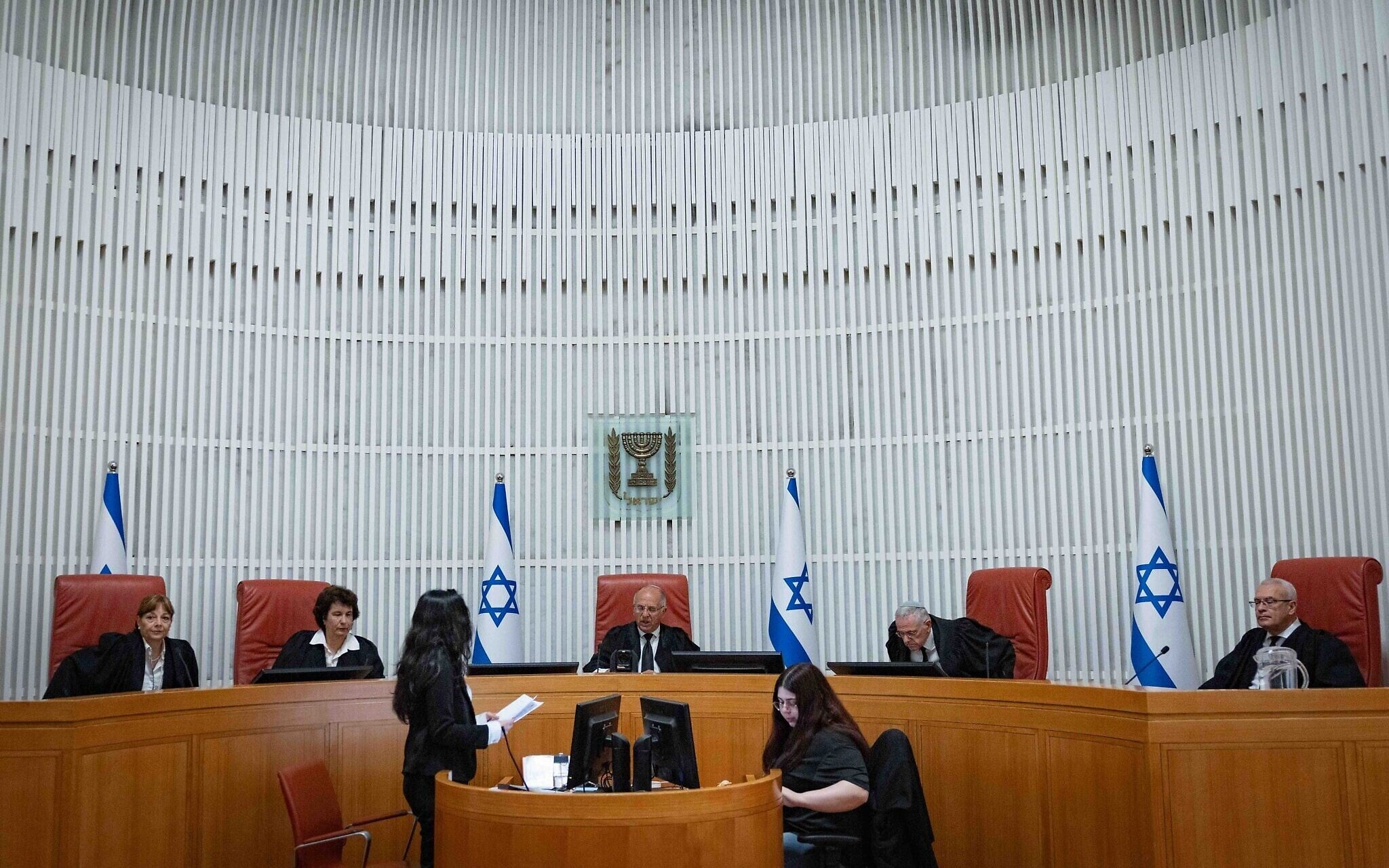
While the bill’s sponsors hope the bill’s status as a Basic Law will protect it from judicial intervention, Porat noted that Basic Laws are not immune from judicial review, particularly when they “harm Israel’s character as a Jewish and democratic state.”
“Such a severe infringement of the principle of equality is expected to be recognized by the court as an infringement of Israel’s democratic character,” he said.
Exploiting the Torah
Opposition leaders roundly criticized the legislation, accusing it of exploiting Torah study to preserve draft exemptions.
UTJ’s Gafni argued during the plenum debate that Torah study is what “sustained the Jewish people for thousands of years,” including during periods of persecution such as in “Warsaw during the Holocaust,” drawing sharp criticism from opposition lawmakers.
Responding to Gafni’s remarks, Opposition Leader Yair Lapid retorted that “in the Warsaw Ghetto they did not receive stipends to study Torah,” but instead “took up arms and led the Warsaw Ghetto Uprising.”
The Yesh Atid leader added that his grandfather “died in a concentration camp” and his father, Holocaust survivor and former government minister Yosef Lapid, was forced into a ghetto “because there was no [Jewish] army.”
“This is a law to finance draft evasion. It is not a law about Torah – it’s a law about money,” said Lapid.
"אמרת שבגטו ורשה הם למדו תורה. בגטו ורשה הם לא קיבלו קצבה, הם לקחו נשק ביד ועשו מרד למען העם היהודי" – ראש האופוזיציה ח"כ יאיר לפיד משיב לח"כ משה גפני: "זה לא חוק על תורה, זה חוק על כסף"
????️מתוך הדיון במליאה@mk_moshe_gafni@yairlapid https://t.co/biGQsSAiy6 pic.twitter.com/pwcRD4swjl
— ערוץ כנסת 99 (@KnessetT) June 10, 2026
Similar criticism also came from outside the political arena, including from the Religious Zionist Tzohar Rabbinical Organization, which, in a statement to The Times of Israel, expressed “deep opposition” to the legislation, arguing that “leveraging Torah values for the purposes of evading military service is a desecration of God’s name.”
“Torah study is certainly a central value for our people and nation, but should never be used to further an agenda of avoiding the mitzvah to defend our land through military service,” the organization said in a statement. “This is all the more true in our current time of war, when our soldiers and reservists are forced to bear the burden of a nation.”
Tzohar chairman Rabbi David Stav told The Times of Israel that he was deeply disappointed over “the behavior of Religious Zionism and Likud MKs that renounced all of their values.”
While he welcomed the proposed removal of language explicitly equating Torah study with military service, Stav argued that “the very fact that this bill exists is a desecration,” insisting that Torah should not be used as “a tool of political influence” or “a path to avoid sharing in our national needs.”
Yashar party leader Gadi Eisenkot called the legislation part of “a deal for a few more weeks in power” between the ultra-Orthodox parties and Netanyahu’s coalition, made at the expense of “Israeli lives and security.”
Former prime minister Naftali Bennett, who is running to unseat Netanyahu as head of the Together slate, appealed directly to the Haredi public, arguing that the measure will harm both the state and the ultra-Orthodox community while serving only Haredi political leaders.
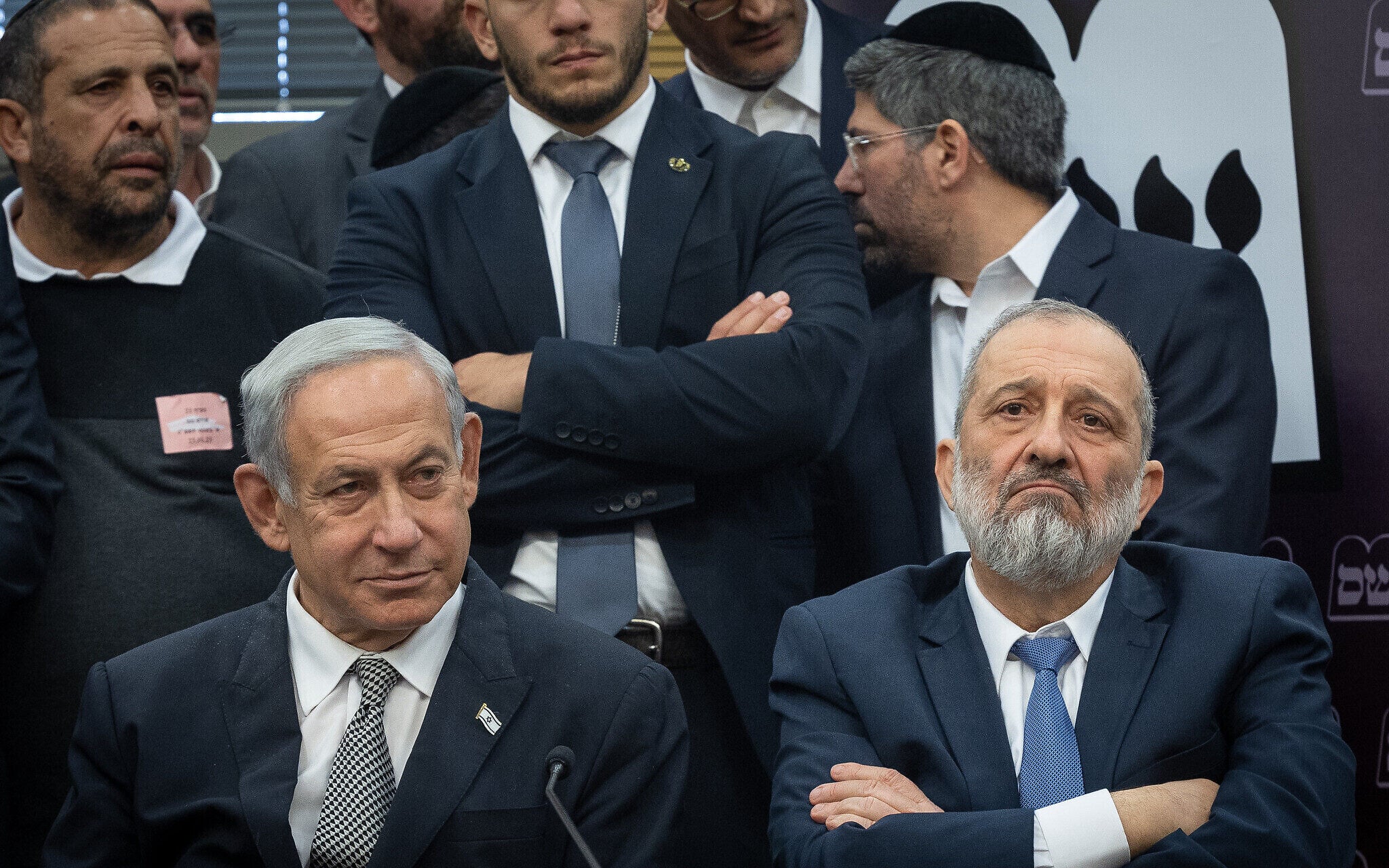
Shas chair Aryeh Deri and UTJ leader Yitzhak Goldknopf are “condemning you to lives of poverty and dependence while they live in luxury villas and wear luxury brands. This is not Torah — it is a business model,” Bennett said.
Arab parties’ absence aids bill’s passage
With several coalition MKs dissenting, the bill might not have advanced if not for the absence of lawmakers from Arab parties Hadash-Ta’al and Ra’am.
According to Hebrew media reports, the parties stayed away as part of a deal with the ultra-Orthodox factions, under which the latter pledged to help block legislation backed by National Security Minister Itamar Ben Gvir to increase restrictions on the use of loudspeakers for calls to prayer in mosques.
In return, the Arab factions agreed not to oppose Wednesday’s vote, prompting criticism from the opposition that the coalition had partnered with anti-Zionist parties at the expense of military servicemembers.
“The Bibi-Tibi alliance continues — and this time at the expense of those who serve and the reservists,” Yisrael Beytenu chair Avigdor Liberman said, using Netanyahu’s nickname and referring to Hadash-Ta’al MK Ahmad Tibi.
Pledging to replace the government, Liberman added: “We will put an end to the rule of draft dodgers and anti-Zionists.”









The Times of Israel Community.