

Record 30,000 take part in Jerusalem Marathon
Kenya’s Shadrack Kipkogey wins, while Fenta Gezachew finishes first among Israeli men; Yaara Zangi-Radoshitzky is first Israeli woman
 Add ToI as a Preferred Source on Google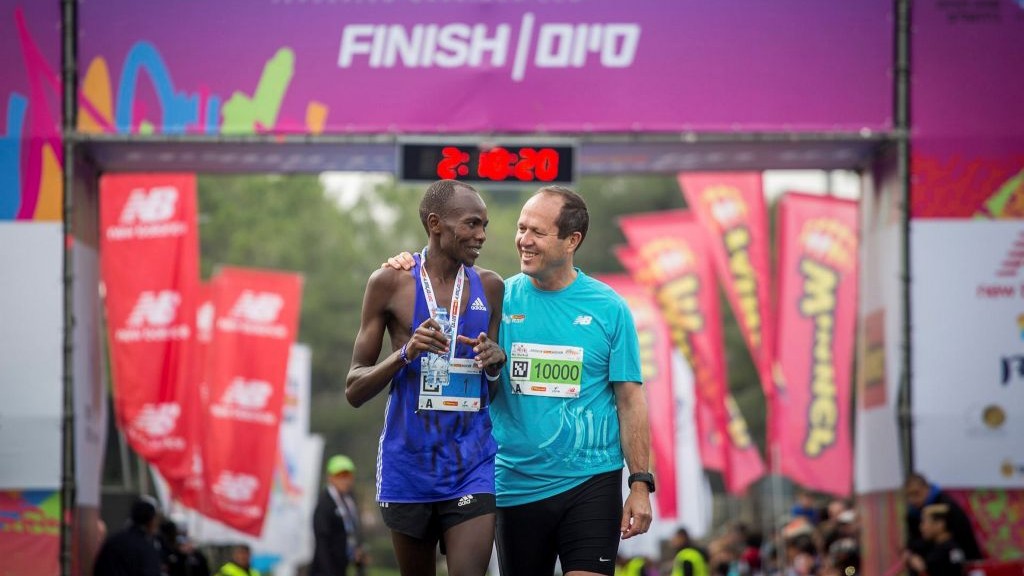
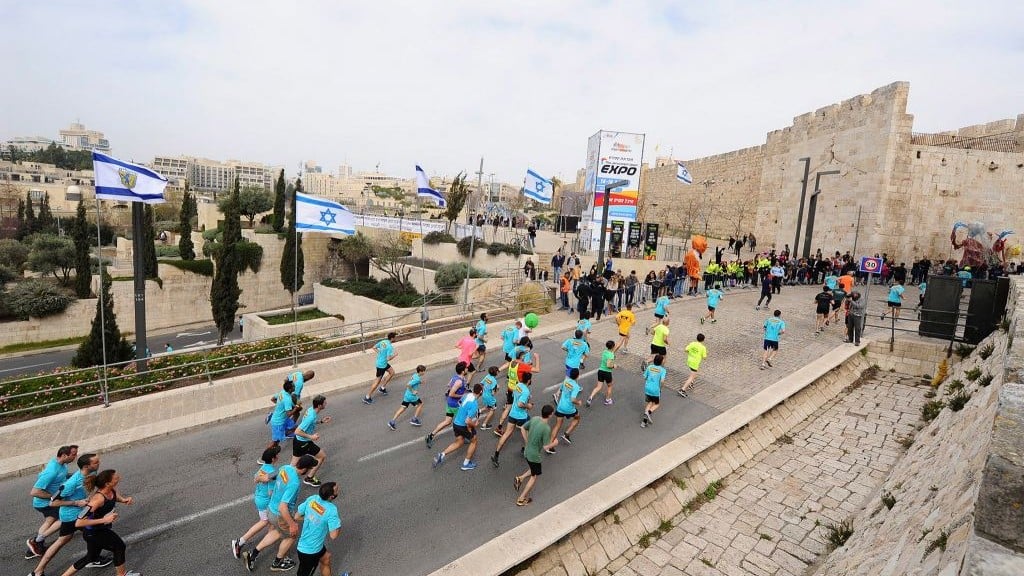
Over 30,000 people took part in the Jerusalem Marathon on Friday, which race organizers said set a new record for the number of runners.
Under heavy police presence, Friday’s events began with the 13-mile half marathon, which took off with Jerusalem Mayor Nir Barkat firing the starting shot at 6:45 a.m.
Finishing first in the 26-mile run was Shadrack Kipkogey of Kenya, who completed the race in two hours, 17 minutes and 36 seconds. Tilahun Wendwesen Damte of Ethiopia came in second place, while Mathew Kibiwott Sang of Kenya took third.
Among women, Emily Chepkemoi of Kenya finished first with a time of two hours, 49 minutes and 25 seconds. She was followed by fellow Kenyan Merci Too in second place, while Israeli Yaara Zangi-Radoshitzky finished third.
The fastest Israeli male was Fenta Gezachew, who finished the race with a time of two hours, 47 minutes and 47 seconds, while Yaara Zangi-Radoshitzky was the fastest Israeli female.
Of the more than 30,000 participants in the day’s races, over 3,500 were international competitors, coming in from more than 65 countries. There were nine world-class runners from several African countries.
After the race, Barkat hailed the record number of participants as proof of the city’s international pull.
“The fact that we broke a record for number of overseas participants in the year in which Jerusalem is celebrating 50 years since it was reunited is proof of Jerusalem’s might and of the international prestige” of the marathon, he said in a statement.
The starting point of the marathon was between the Knesset and Israel Museum, on Ruppin Boulevard.
The route began in the western part of the city, looping around the Givat Ram campus of Hebrew University, alongside the Valley of the Cross, and through several neighborhoods on the way up to Hebrew University’s Mount Scopus campus in eastern Jerusalem. The route then descended to the Old City, taking runners through Jaffa Gate and the Armenian Quarter and out through Zion Gate, on the way to the Jerusalem Forest, before ending in Sacher Park.
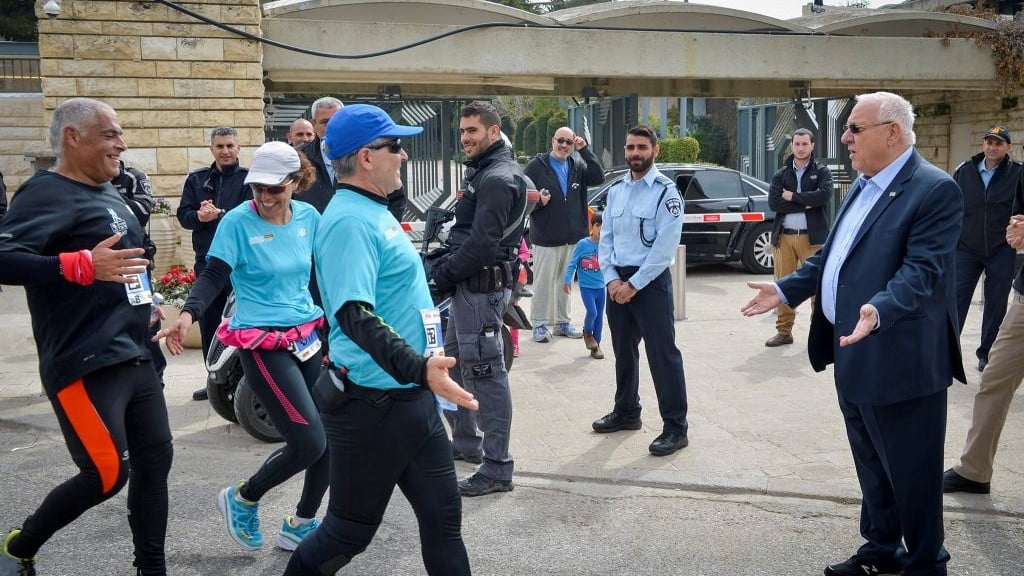
Despite threats from ultra-Orthodox protesters that they would interfere with the races, the marathon took place almost without a hitch, although a 24-year-old man was said to be in serious condition after suffering from heat stroke, while another man was reportedly in moderate condition under similar circumstances, according to Hebrew-media reports.
Another 12 runners were reportedly treated for minor injuries.
On Thursday, an extremist ultra-Orthodox group known as the Jerusalem Faction lead by Rabbi Shmuel Auerbach threatened to disrupt the marathon in protest over the arrest of one its members for not appearing at an army draft office. The group called on ultra-Orthodox men throughout Israel to come to Jerusalem to demonstrate.
Police intercepted three buses full of ultra-Orthodox men at the Shoresh interchange on the main highway leading to Jerusalem early Friday. They were suspected of planning to disrupt the race, police said.
Several other men were detained inside Jerusalem.
Many in the ultra-Orthodox community shun the mandatory military service that applies to most Israelis, and the community has historically enjoyed blanket exemptions in favor of religious seminary studies. However, a group of ultra-Orthodox followers of Auerbach refuse to even appear at the recruiting offices to request such exemptions.
One such student, Yisrael Meir Toledano, was arrested on Sunday night at his home in Ofakim. On Tuesday a military court extended his remand until Thursday.
Ahead of the race Mayor Barkat warned protesters “not to show up and interfere with the marathon,” a warning to which would-be demonstrators largely heeded.






The Times of Israel Community.