

In rare critique, senior PA official says Abbas’s exclusion of political rivals is mistaken
Jibril Rajoub tells ToI that those backing exiled ex-security chief Dahlan shouldn’t be forced to sign ‘humiliating’ individual amnesty requests, as demanded by ruling Fatah party

 Add ToI as a Preferred Source on Google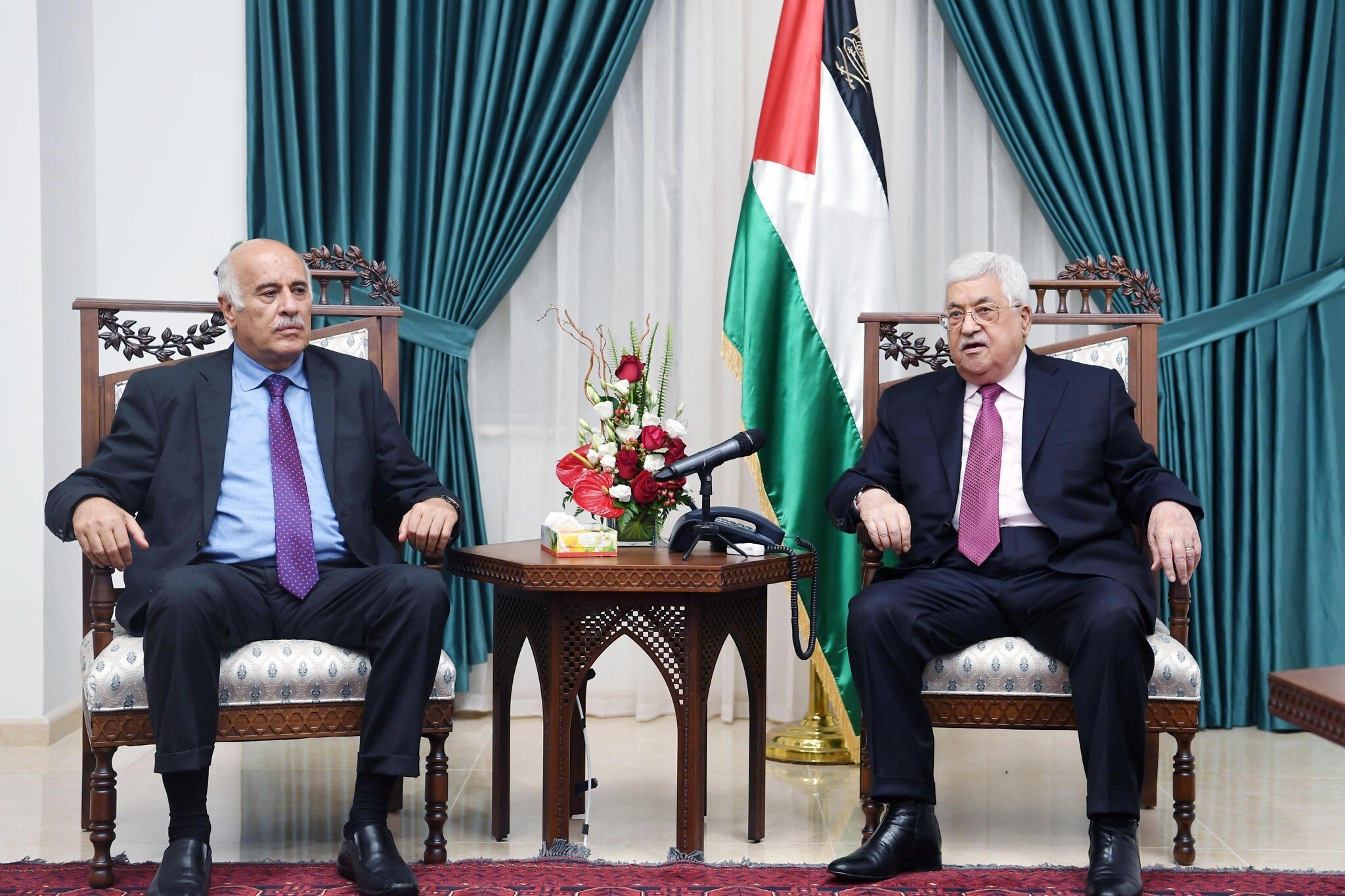
RAMALLAH, West Bank — A senior official in Palestinian Authority President Mahmoud Abbas’s Fatah party has issued a rare critique of the PA leader during an interview with The Times of Israel, describing the continued sidelining of a sub-faction that supports one of Abbas’s rivals as a mistake.
Abbas announced last year that he would grant amnesty to all dismissed members of Fatah, in remarks seen as directed at backers of the PA’s exiled former Gaza security chief Mohammed Dahlan.
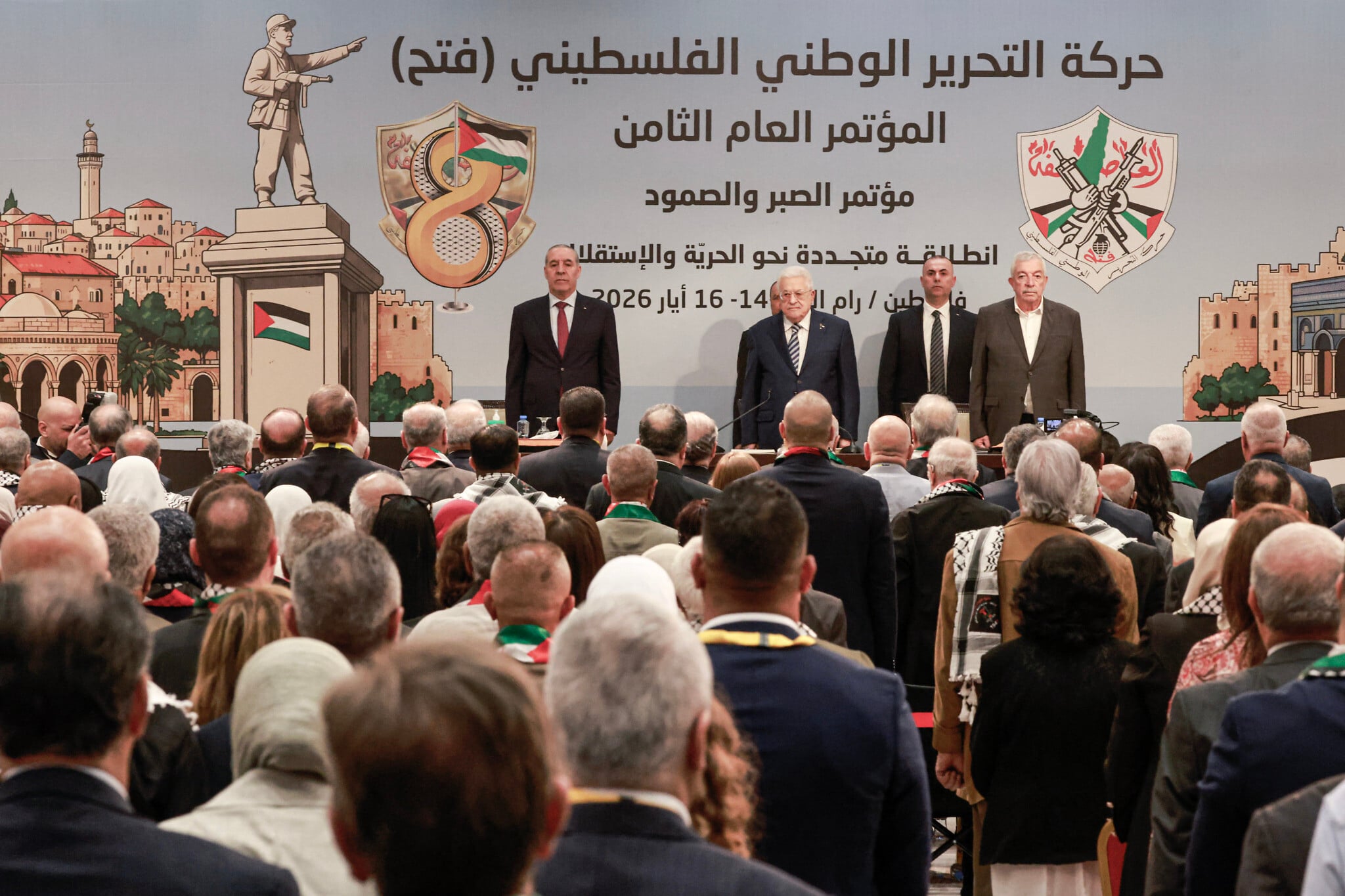
But the PA president’s party then hardened its stance, demanding that each ousted Fatah member submit a letter acknowledging any infractions committed. After members of the Dahlan-linked Reformist Democratic Faction (RDF) overwhelmingly refused, they were kept out of the Fatah conference held last month, during which elections were held for Fatah’s powerful Central Committee and Revolutionary Council.
“I think we made a mistake that we did not settle this issue before the conference,” Fatah Central Committee member Jibril Rajoub said when asked about the issue during a rare interview with an Israeli news outlet at his Ramallah office on Wednesday.
He noted that the party had adopted a resolution allowing the return of dismissed members — including ones in the RDF — and Rajoub stressed that the reinstatements were supposed to be done “respectfully and with no humiliation.”
The senior Palestinian official was referring to a requirement quietly added by the Abbas-controlled Fatah party after the PA president’s amnesty announcement. Those interested in having their membership reinstated were told they needed to submit individual requests that included an acknowledgment of infractions.
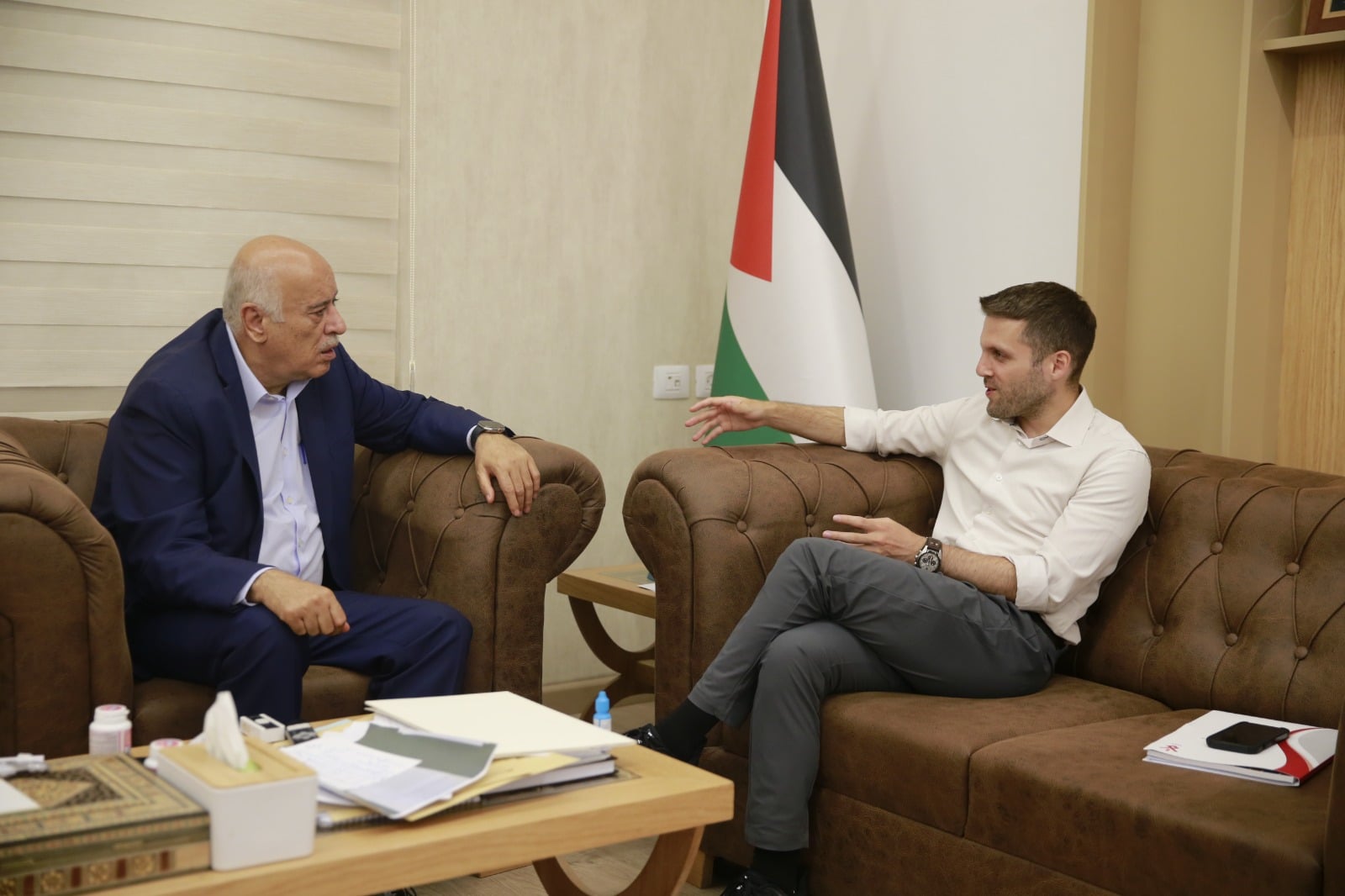
Negotiations were held with representatives from the pro-Dahlan faction in the lead-up to last month’s Fatah conference, and Egypt quietly urged Abbas to compromise.
But the PA president didn’t budge, with one of his aides telling The Times of Israel last week that the RDF was seeking to take over Fatah by entering as a bloc rather than as individual members.
Rajoub said he would see to it that the issue is resolved in a manner that respects the rights of the dismissed members, even if the Dahlan-backing faction was unable to return in time for the first Fatah conference in a decade.
However, he clarified that those with open court cases against them would need to have those settled before returning to the party. This appeared to be a reference to Dahlan himself, who was tried in absentia by a PA court on corruption charges, which his supporters say are unfounded and politically motivated.
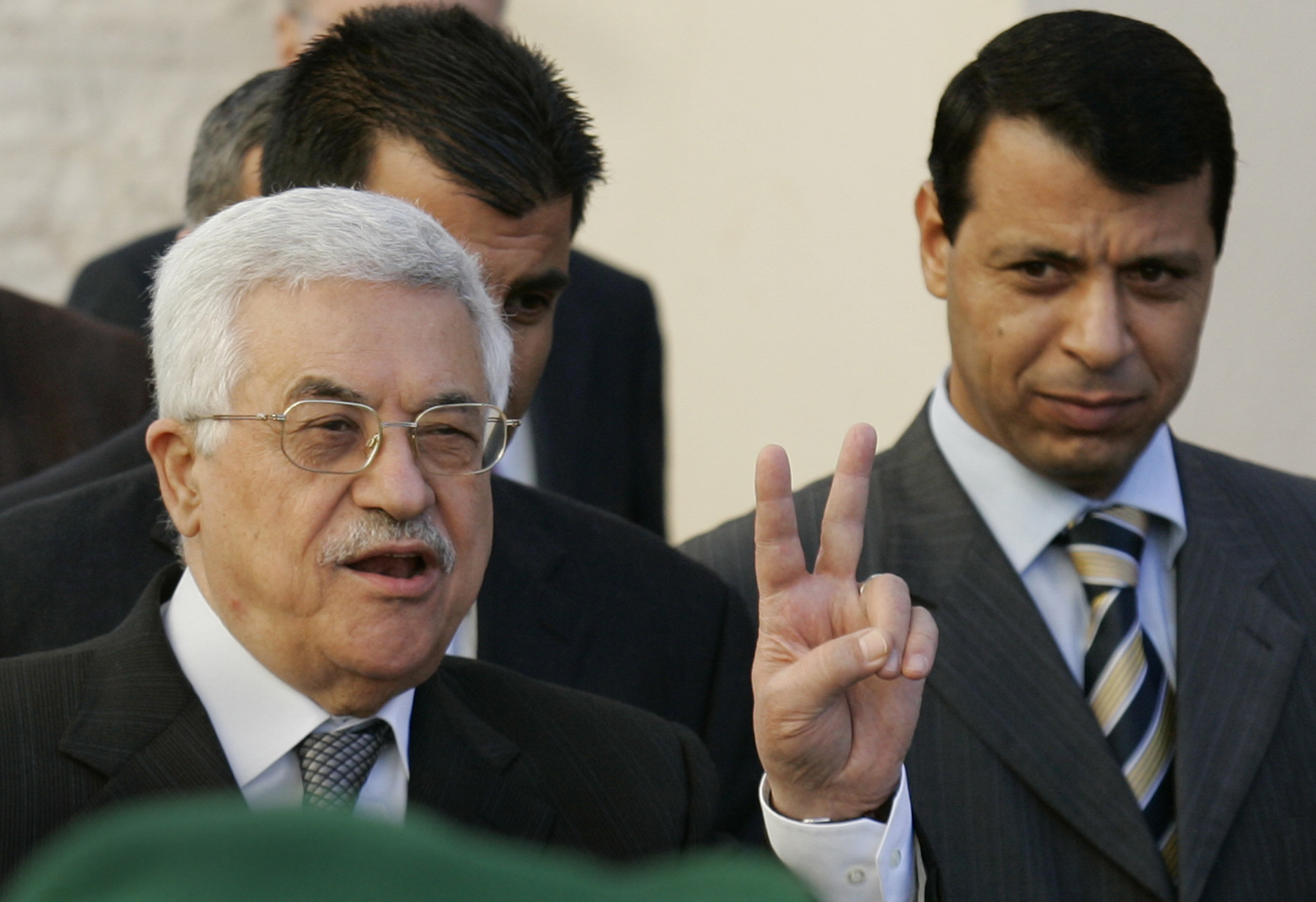
Regardless, Dahlan has not expressed interest in returning to the West Bank, and has also ruled out a leadership position in Gaza.
That hasn’t stopped some Israeli officials from viewing him as a potential solution to Prime Minister Benjamin Netanyahu’s insistence that neither Abbas nor Hamas be allowed to govern the Strip moving forward.
Shin Bet chief David Zini quietly met with Dahlan in Abu Dhabi recently, according to two sources familiar with the matter.
Dahlan has been living in the UAE, becoming a close adviser to Emirati President Mohammed bin Zayed, since the former Fatah strongman was ousted from the West Bank in 2011 amid a bitter falling out with Abbas.
Abbas has blamed Dahlan for the subsequent rapid deterioration of the UAE’s ties with the PA.
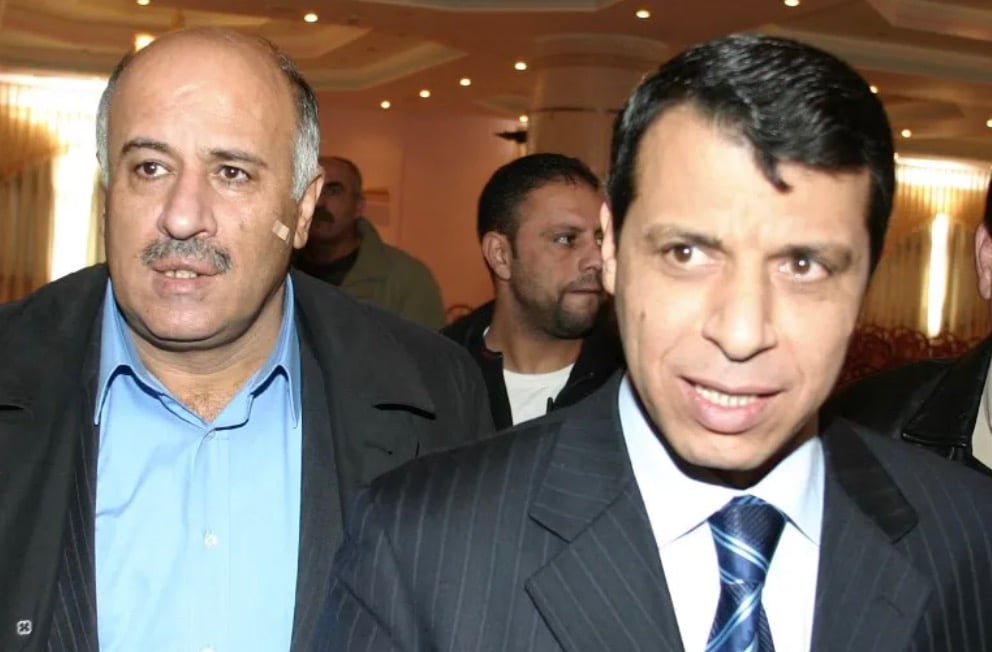
Despite living in exile, Dahlan has built a sizable following among Palestinians, particularly in his native Gaza.
Abbas is regularly accused of flouting democratic norms, having not held presidential or parliamentary elections in nearly two decades.
He pledged to hold such votes by the end of this year, but has since given a vaguer timeline with regard to the presidential election.
But the criticism of Abbas rarely comes from within Fatah, with the party that also controls the PA increasingly dominated by loyalists.
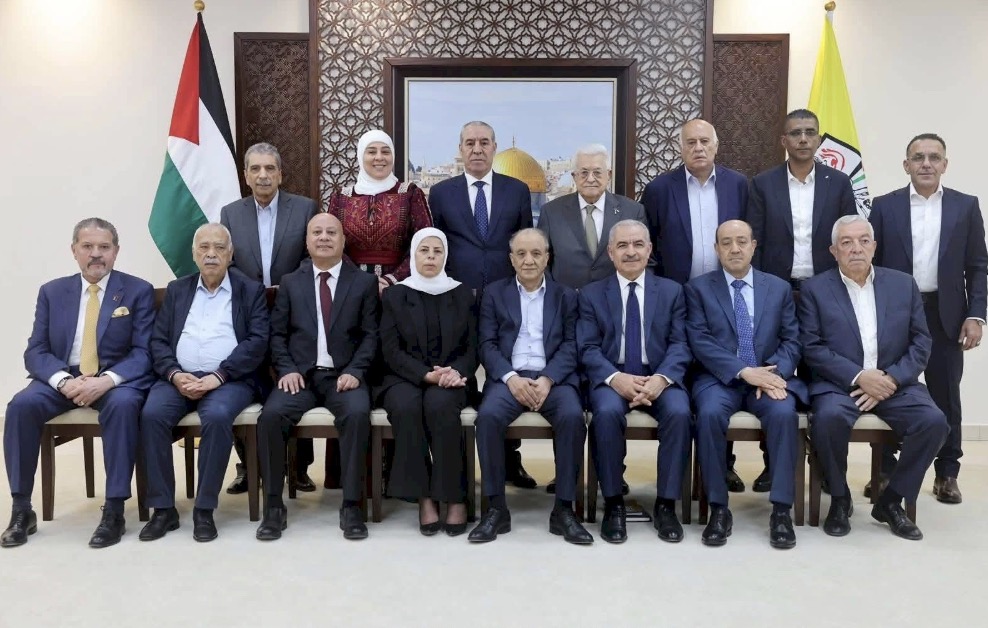
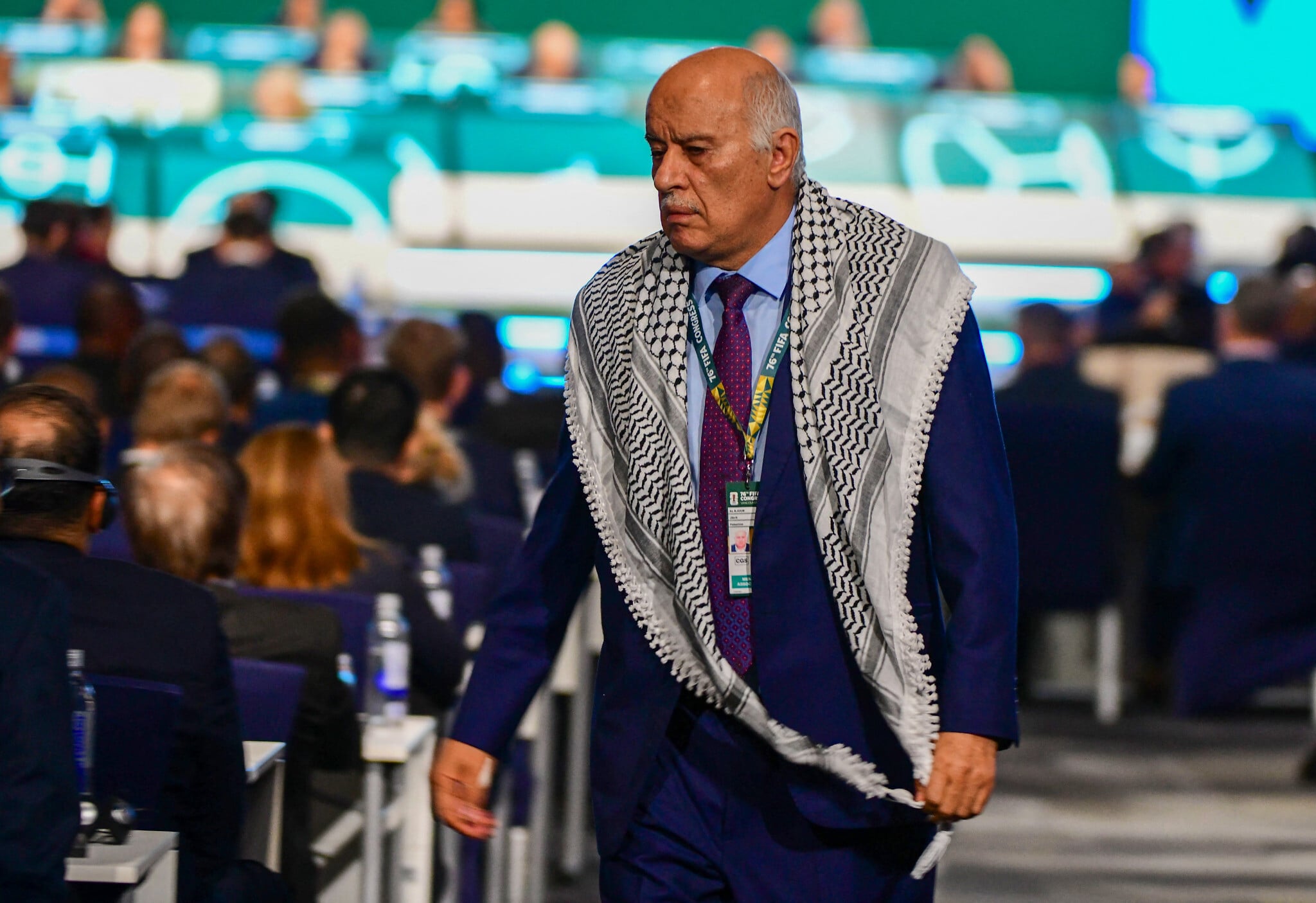
Rajoub has been somewhat of an exception over the years, though he has avoided the level of sparring that led to Dahlan’s ouster. The former head of the PA’s Preventive Security Force has maintained a working relationship with Abbas, who has appointed him the Palestinian Football Association chairman and secretary-general of Fatah.
The next step up within the party is the post of deputy chairman, and while Rajoub was the third most popular candidate voted back onto Fatah Central Committee at last month’s party conference, the deputy role was given to Hussein al-Sheikh, who received fewer votes but is seen as more loyal to Abbas and who also holds the No. 2 posts in the PA and the Palestine Liberation Organization.
Collapsing the PA is not an option
Rajoub sat down for the interview on Wednesday evening, immediately after returning from a closed meeting where al-Sheikh was given the deputy chairman role.
Rajoub declined to comment on the development, beyond insisting that his focus was not on being appointed to positions and adding that he was proud of what he said was the unity demonstrated at the Fatah conference around the PA’s vision for a two-state solution.
Rajoub also avoided issuing further criticism of Abbas’s party, even when pressed on the controversial election of the president’s son, Yasser, to the Fatah Central Committee. Rajoub said the vote was held cleanly and that the results should be respected.
While Abbas has not yet set a date for presidential elections, even after initially declaring that they would be held within a year from the end of the war, Rajoub expressed his hope that they would still be held very shortly after the November 1 parliamentary vote.
Rajoub recognized that Ramallah faces one of its most severe economic crises, among a growing list of punitive measures implemented by Netanyahu’s government, which includes senior members who have called for collapsing the PA.
But the senior Fatah official ruled out such a possibility.
“We will not leave Palestine, we will not surrender, and we will not dismantle our institutions,” he insisted.
“But their pressure could lead to an explosion. Losing hope can lead to something that we don’t want, which I hope the international community understands,” he warned.
‘No blood-shedding’
Rajoub represented Ramallah in a meeting held last month with Turkish Foreign Minister Hakan Fidan in Ankara, which has served as a mediator in the Gaza ceasefire talks between Israel and Hamas.
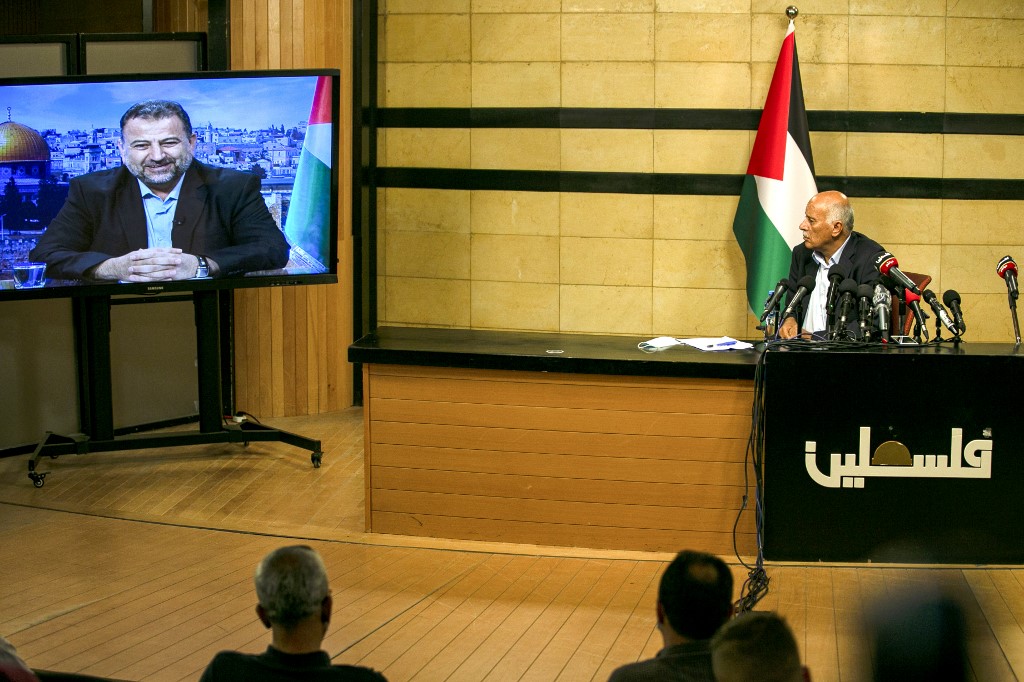
Rajoub said Fidan told him that Turkey recognizes the Fatah-dominated PA and PLO as the representative of the Palestinian people, while also urging reconciliation between Abbas’s party and Hamas in order to achieve national political unity.
The senior Fatah member said he too backed the idea, but conditioned a deal with Hamas on the terror group giving up power in Gaza and handing over its weapons to the PA.
“Blood-shedding is not an acceptable choice,” Rajoub said, rejecting Hamas’s use of violence to advance the Palestinian cause, while asserting the right to self-defense against settlers amid near-daily attacks in the West Bank whose perpetrators are rarely prosecuted.
As for ties with Israel, Rajoub fumed: “I don’t want to talk about this current Israeli government.”
“We are urging the international community to pressure the Israelis to stop all of their unilateral aggressions against the Palestinians,” he said. “Our qualified partner is the international community. Our commitment is toward them, not toward this racist and fascist Israeli government.”
No handshake with ‘Ben Gvir’
Rajoub made headlines in April when he refused to shake the hand of Israeli Football Association vice president Basim Sheikh Suliman at the annual FIFA conference, claiming that Jerusalem had sent his counterpart to “whitewash their fascism and genocide.”
When asked about the incident during the Wednesday interview, Rajoub claimed that Suliman had given a speech moments earlier at the FIFA conference that sounded like one that could have been given by far-right National Security Minister Itamar Ben Gvir. But the Israeli representative’s remarks focused almost entirely on the importance of Jewish-Arab coexistence — an idea that Ben Gvir is not known to support.
VIDEO | Palestinian football chief refuses to share stage with Israeli counterpart at FIFA event
Jibril Rajoub, President of the Palestine Football Association, refused to pose alongside or shake hands with Basim Sheikh Suliman, Vice-President of the Israeli Football… pic.twitter.com/8Ep1Ac61sz
— The Cradle (@TheCradleMedia) May 1, 2026
After Suliman spoke, FIFA president Gianni Infantino called the Palestinian Football Association to the stage and tried to orchestrate a repeat of scenes from roughly a decade ago when Rajoub agreed to embrace his Israeli counterparts.
But against the backdrop of the devastating war in Gaza, sparked by Hamas’s October 7, 2023, onslaught, along with increasingly aggressive Israeli policies in the West Bank, Rajoub held off on making nice with Suliman.



The Times of Israel Community.