

Argentine prosecutor says president did not shield Iran
After two courts reject claims of government cover-up in AMIA bombing, Javier De Luca effectively closes case against Fernandez
 Add ToI as a Preferred Source on Google
BUENOS AIRES — An Argentine prosecutor on Monday dismissed accusations against President Cristina Fernandez that she helped shield Iranian officials allegedly behind the 1994 bombing of a Jewish center, effectively putting an end to a case that had exposed deep divisions in the South American nation.
Javier De Luca, prosecutor before the Court of Appeals, said there wasn’t enough evidence in late prosecutor Alberto Nisman’s investigation to warrant a probe.
“There has been no crime,” De Luca wrote in his decision, echoing two previous court decisions.
The case was rejected by a federal judge in February and then thrown out on appeal by the Federal Appeals court. De Luca’s decision not to present the case to the next level of appeals court means it has effectively reached the end of the line.
As the drama played out over the last three months, each court decision has been greeted by supporters and detractors of Fernandez’s administration accusing the other side of using Nisman’s death for political reasons.
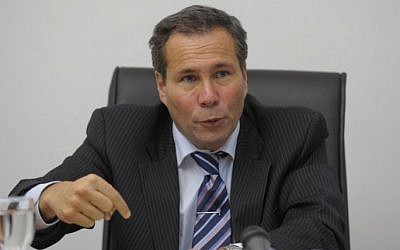
“The case underscored the idea that there is no rule of law,” said Martin Bohmer, a law professor at the University of Buenos Aires. “The display of divisions and fear sent all the wrong messages.”
Nisman had alleged Iranian officials ordered the bombing via Lebanese terrorist group Hezbollah. He later concluded that a 2013 deal between Argentina and Iran for the suspects to be investigated by a joint commission was a conspiracy designed to ensure they would never be brought to justice.
In January he filed a report accusing Kirchner, Foreign Minister Hector Timerman and other figures close to the government of protecting high-ranking Iranian officials, including former president Akbar Hashemi Rafsanjani, in exchange for oil and trade benefits.
Four days later, on January 18, the prosecutor was found dead in his bathroom with a bullet through the head.
The president has strongly denied the allegations and Iran has long denied the involvement in the bombing, which killed 85 people and stands as the country’s worst terrorist attack.
Since Nisman’s death, initially labeled a suicide, suspicion has fallen on Kirchner’s government of orchestrating his murder.
The president, who took office in 2007 and steps down in December, has suggested the prosecutor was manipulated by disgruntled former intelligence agents who then killed him to smear her.
Fernandez’s administration has struggled to confront fallout from Nisman’s death and the president’s popularity has eroded, according to several polls.
AFP contributed to this report.



The Times of Israel Community.