

As war widens, Trump says US has yet to launch largest strikes on Iran
On third day, Tehran increases attacks on region; US president doesn’t rule out ground troops; IDF targets Iran’s air defense, leadership, ballistic missiles
 Add ToI as a Preferred Source on Google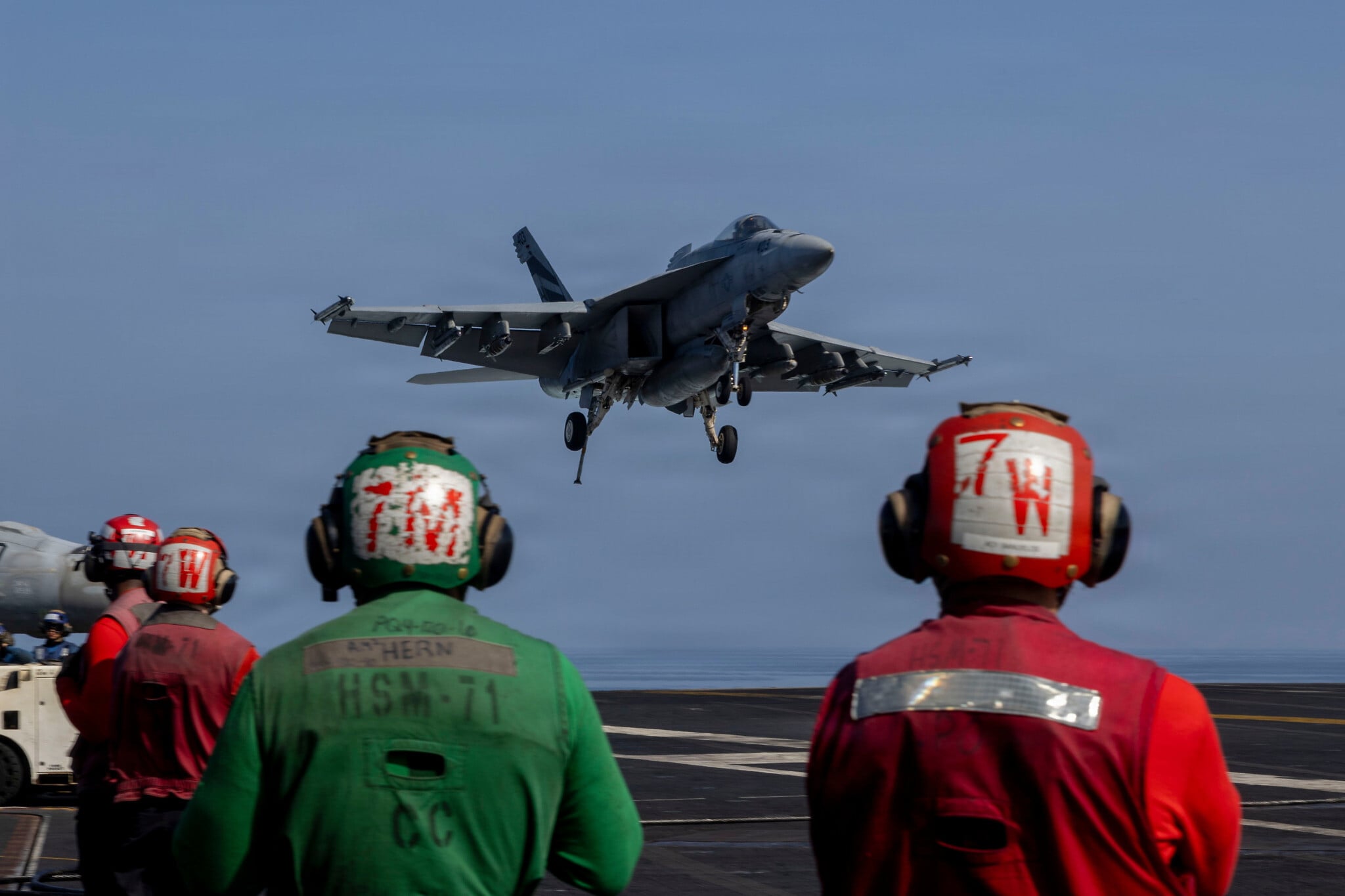
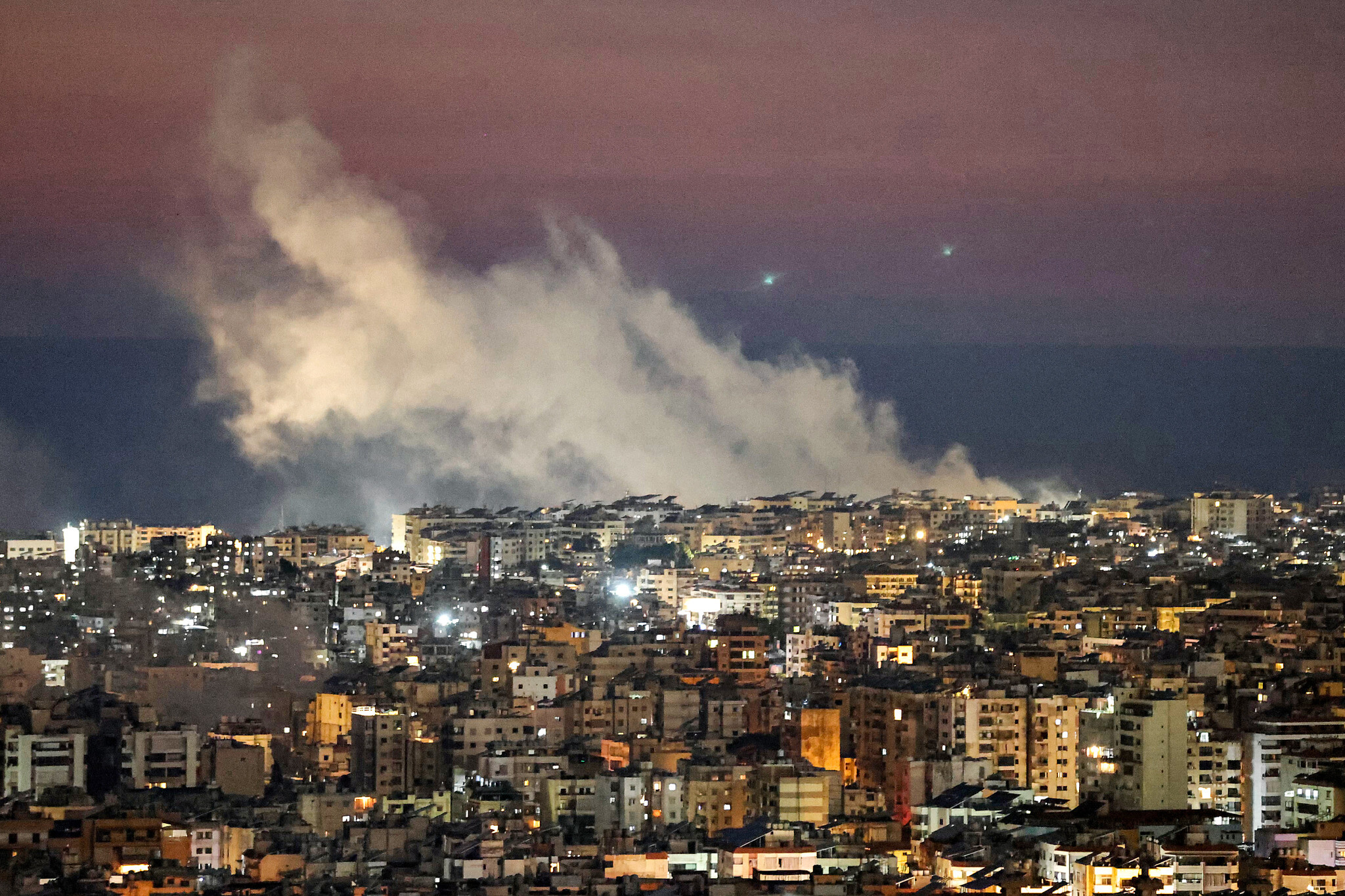
The US-Israeli war with Iran widened on its third day, as Gulf states were drawn deeper into the conflict and Hezbollah took heavy Israeli fire after launching rockets at Israel.
The joint campaign against the Iranian regime began on Saturday, killing the country’s supreme leader, Ali Khamenei, and hitting scores of targets. US President Donald Trump and Prime Minister Benjamin Netanyahu have said the operation aims to give Iranians the space to topple their regime.
On Monday, Trump laid out more specific goals for the operation — targeting Iran’s ballistic missiles, nuclear program, navy, and support for proxy groups — and said that the largest wave of strikes was still to come. He declined to rule out using ground troops and said that the campaign could last about four weeks.
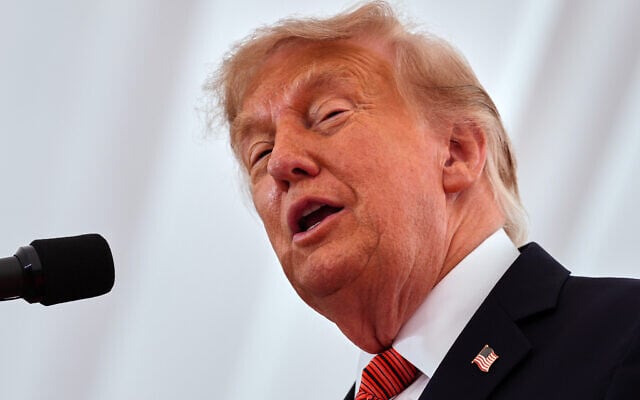
“We haven’t even started hitting them hard. The big wave hasn’t even happened. The big one is coming soon,” Trump told CNN.
US and Israeli officials lauded the success of the campaign, even as six American troops were killed and three US planes shot down by friendly fire from Kuwait, though nobody was killed in those incidents. The US said air superiority was achieved over Iran, and the Israel Defense Forces said it had destroyed some 600 Iranian targets so far.
In response, Iran escalated its attacks on the region, continuing to target Israel with barrages of missiles and claiming to target Prime Minister Benjamin Netanyahu’s office in Jerusalem — a claim the PMO denied.
It also continued to fire at Gulf states, which have threatened to retaliate. The United Arab Emirates, Qatar, and Saudi Arabia have all been drawn deeper into the conflict, warning of a further escalation in the fighting.
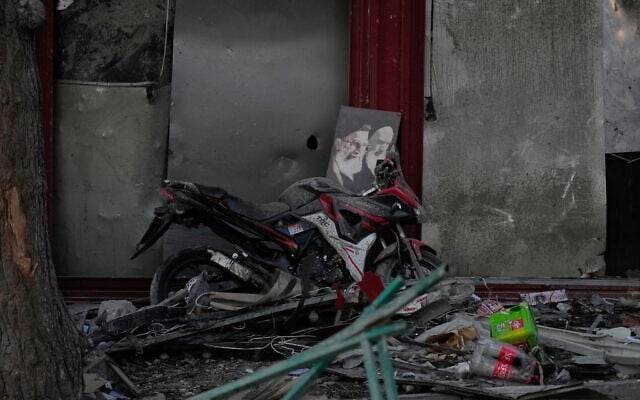
Hezbollah, the Iran-backed terror group in Lebanon, joined the fray early on Monday, firing rockets at Israel for the first time in over a year. In response, Israel struck a range of Hezbollah targets, including in Beirut, and said it killed the group’s intelligence chief. IDF Chief of Staff Eyal Zamir said Israel had decided to “go on the offense” against the terror group, which the IDF had damaged heavily in a 2023-2024 war. He later said that the military would not end its new offensive against the group until “the threat is removed.”
Defense Minister Israel Katz said that Israel would target Hezbollah’s leader, Naim Qassem.
The Lebanese government, which has been working to disarm Hezbollah, said it was banning the terror group’s military activities. Hezbollah responded with Mohammed Raad, head of its parliamentary bloc, condemning Beirut’s “swaggering decisions,” and saying that “the Lebanese were expecting a decision rejecting the [Israeli] aggression.”
Iran: Enemy ‘will no longer be safe anywhere’
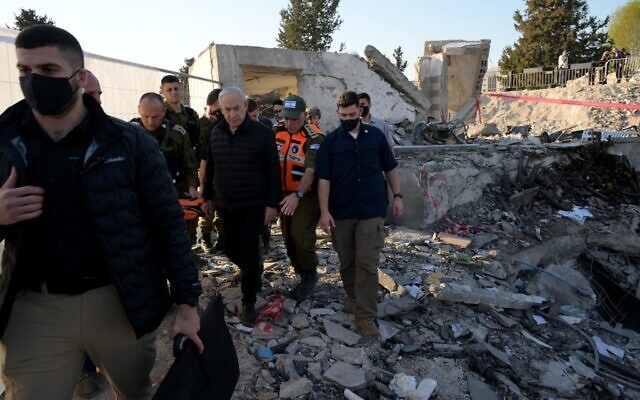
Iran fired volleys of missiles at Israel during the day, with one salvo fired at Beersheba injuring 19.
Iran’s Revolutionary Guards also said they targeted the office of Prime Minister Benjamin Netanyahu and the headquarters of the Israeli air force commander.
“The office of the criminal prime minister of the Zionist regime and the headquarters of the regime’s air force commander were targeted,” the Guards said in a statement carried by Fars news agency. It said Kheibar missiles were used in the attack.
Netanyahu’s office denied the claim as “fake.”
The IRGC also warned that the United States “will no longer be safe.”
“The enemy should know that their happy days are over and they will no longer be safe anywhere in the world, not even in their own homes,” the IRGC’s Quds Force, which oversees IRGC foreign operations, said in a statement carried by state TV.
Saudis threaten Iran’s oil industry; Qatar downs Iranian fighters
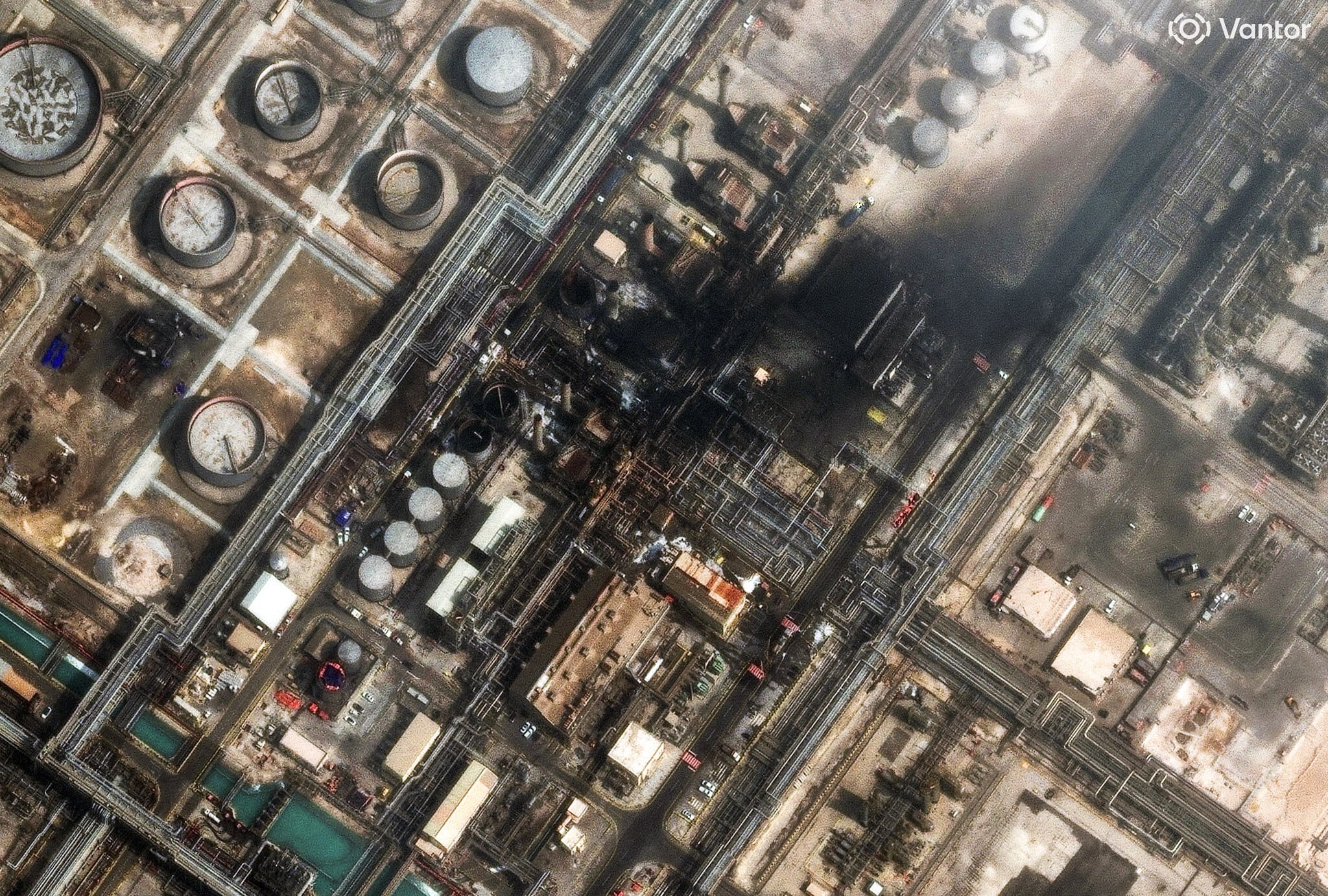
On Monday, an Iranian drone hit the main Saudi Ras Tanura refinery, causing a fire and forcing some operations to be shut down. Subsequently, a source close to the Saudi government said that a concerted attack by Iran on Saudi oil infrastructure could trigger a military response from the kingdom.
Saudi Arabia would target “Iranian oil facilities if Iran mounts a concerted attack on Aramco,” the source told AFP, referring to the state oil giant.
Meanwhile, Qatar, which hosts a US military base that Iran targeted last year, said that its air force shot down two Iranian Russian-made Sukhoi Su-24 bombers.
Qatar’s Defense Ministry also said that its air force and navy intercepted seven ballistic missiles and five drones from Iran on Monday.
And the Emirati Defense Ministry said the country’s air defenses intercepted nine ballistic missiles, six cruise missiles, and 148 drones on Monday. According to the ministry, Iran has fired 174 ballistic missiles at the UAE since Saturday, the vast majority of which were intercepted.
IDF says it hit 600 regime sites
Since the start of the operation against Iran, the IDF said on Monday, it has destroyed some 600 Iranian regime sites in airstrikes.
They include 20 sites belonging to Iran’s security leadership, 150 ballistic missiles and launchers, and 200 air defense systems, according to the military. Israeli Air Force aircraft have dropped over 2,500 bombs, the IDF said.
כלי טיס של חיל-האוויר תקפו וסיכלו חוליית חיילים ממערך ההגנה של משטר הטרור האיראני בזמן שניסו להפעיל מערכות הגנה נגד כוחותינו.
צה"ל לא יאפשר למשטר הטרור האיראני להפעיל מערכות הגנה על מנת לפגוע במטוסי חיל האוויר וימשיך לתקוף ניסיונות לחמש את משגרי הטילים.
במקביל חיל-האוויר ממשיך… pic.twitter.com/WGX8VuwIC4
— Israeli Air Force (@IAFsite) March 2, 2026
The military said the Air Force struck and killed Iranian soldiers as they were attempting to operate an air defense system against Israeli aircraft.
“The IDF will not allow the Iranian terror regime to operate air defense systems to harm Israeli Air Force aircraft and will continue to strike attempts to arm missile launchers,” the military said.
Trump: ‘I don’t have the yips’ about using ground troops
Speaking to US media on Monday, Trump acknowledged that the “biggest surprise” of the conflict thus far was Iran’s strikes on Arab countries, and that he expected those nations to strike back.
“We told [the Arab states hit], ‘We’ve got this,’ and now they want to fight. And they’re aggressively fighting. They were going to be very little involved and now they insist on being involved,” Trump said.
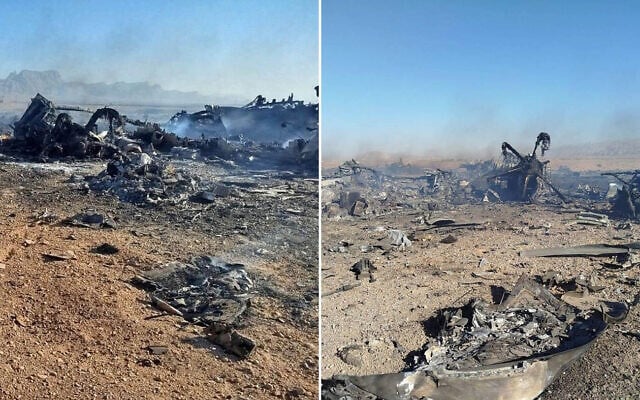
In Kuwait, the US saw three planes accidentally shot down by friendly fire by Kuwaiti forces, though no casualties were reported. A total of six US military personnel have been killed since the start of the war, US Central Command said, raising the death toll from four.
“US forces recently recovered the remains of two previously unaccounted for service members from a facility that was struck during Iran’s initial attacks in the region,” CENTCOM said in a post on X.
Polls show that the war is unpopular in the US, but Trump said the fighting would likely extend for weeks, and did not rule out using ground troops.
“I don’t have the yips with respect to boots on the ground — like every president says, ‘There will be no boots on the ground.’ I don’t say it,” he told The New York Post.
Asked for a timeline for the operation, Trump told CNN, “I don’t want to see it go on too long. I always thought it would be four weeks. And we’re a little ahead of schedule.”
Trump added that the US is taking steps outside the military realm on behalf of the Iranian people, without elaborating.
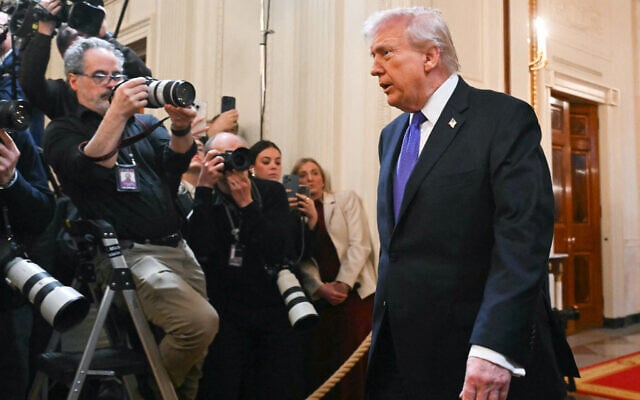
In prepared remarks at a White House event, Trump said the campaign was the “last best chance” to strike Iran and “eliminate the intolerable threats posed by this sick and sinister regime.”
He also listed four goals for the operation: destroying Iran’s missile capabilities; seeking to “annihilate” Iran’s navy; ensuring Iran can never obtain a nuclear weapon; and halting its support for proxy terror groups in the region.
He did not mention regime change, though he has urged Iranians in previous speeches to seize the opportunity provided by the strikes to “take over” their government.
Trump claimed the US is “substantially ahead of our time projections” for the operation. “We projected four to five weeks, but we have the capability to go far longer than that.”
“We also projected four weeks to terminate the military leadership, and, as you know, that was done in about an hour,” Trump claimed.
Hegseth: Campaign not ‘endless’
At his own press conference on Monday, US Defense Secretary Pete Hegseth declined to specify a timeline for the operation, but pushed back on the notion that the administration is entering another entrenched Mideast conflict.
“This is not a so-called regime change war, but the regime sure did change, and the world is better off for it,” Hegseth said, presumably referring to the killing of Khamenei and other regime top brass.
“Our ambitions are not utopian. They are realistic,” Hegseth continued. In a reference to the Iraq War, which lasted more than eight years and was widely viewed in the US as a quagmire, he said, “This is not Iraq. This is not endless… Our generation knows better, and so does this president.”

Hegseth listed actions by the Iranian regime that had killed Americans, and pushed back on Iran’s claim that it is not pursuing nuclear weapons, saying that it has been trying to hide that aim. He acknowledged that there will be more casualties, lamenting the loss of the US troops who have been killed.
“No stupid rules of engagement, no nation-building quagmire, no democracy-building exercise, no politically correct wars,” he said. “We fight to win, and we don’t waste time or lives.”
Speaking alongside Hegseth, US Chairman of the Joint Chiefs of Staff Gen. Dan Caine praised the first day of US-Israeli fighting. He said 100 US aircraft began striking Iran in a single wave, and 1,000 targets were hit in the first 24 hours, while Israel launched hundreds of its own strikes.
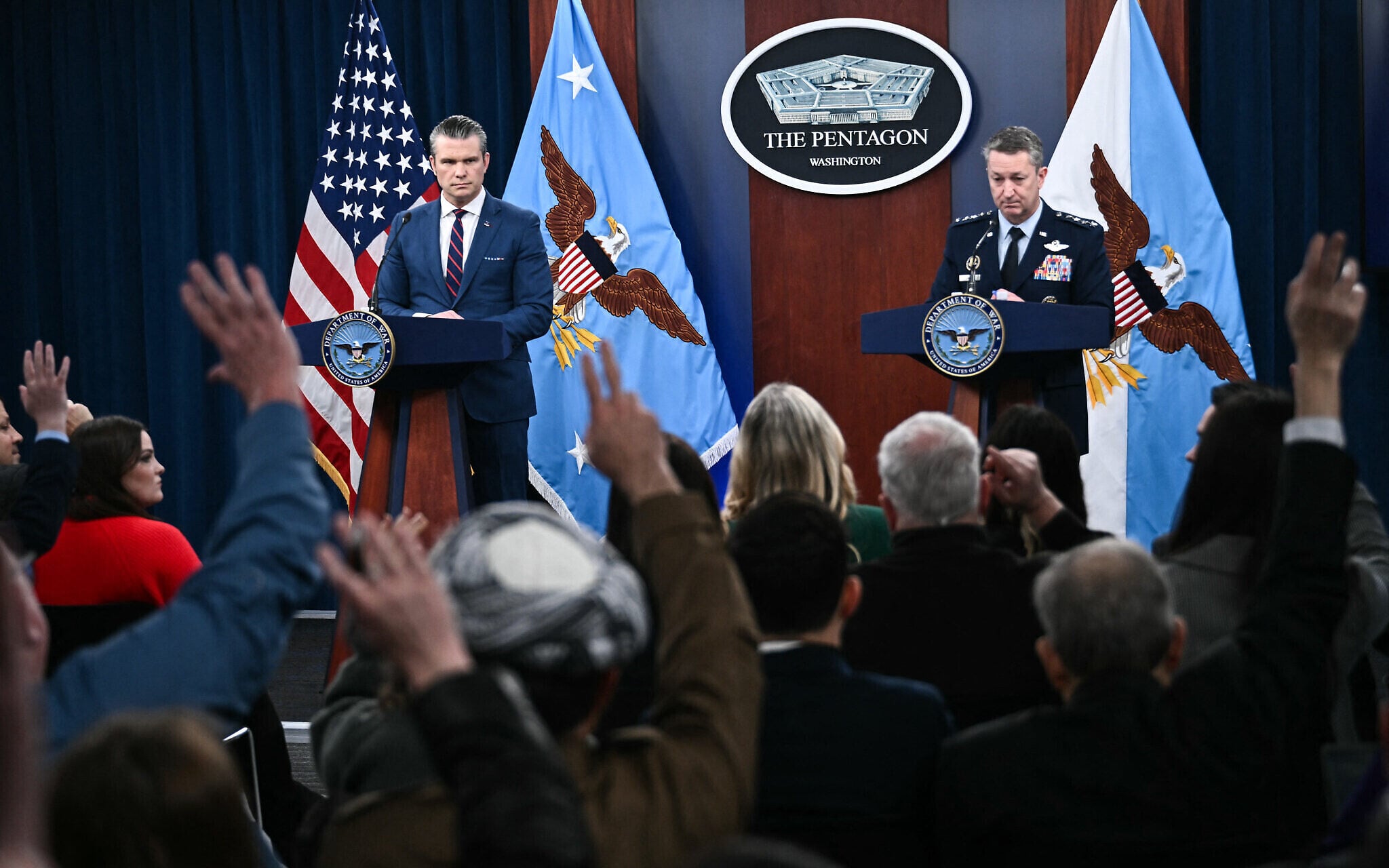
Caine also said that US forces had achieved air superiority over Iran.
Strikes by American forces “resulted in the establishment of local air superiority. This air superiority will not only enhance the protection of our forces, but also allow them to continue the work over Iran,” Caine said.
He added that the goals of the war would take time to achieve.
“This is not a single overnight operation. The military objectives that CENTCOM and the Joint Force have been tasked with will take some time to achieve, and in some cases will be difficult and gritty work,” Caine said. He added that the US is still sending additional troops to the Middle East, even after the massive military buildup that preceded the outbreak of conflict.







The Times of Israel Community.