

At Holocaust commemoration in Eylon Levy’s living room, Oct. 7 atrocities loom large
The former government spokesman hosted survivor Dr. Arnold Clevs as part of the Zikaron BaSalon series ahead of an Israeli Holocaust Remembrance Day suffused with recent tragedy
 Add ToI as a Preferred Source on Google
Shoshanna Solomon was The Times of Israel's Startups and Business reporter
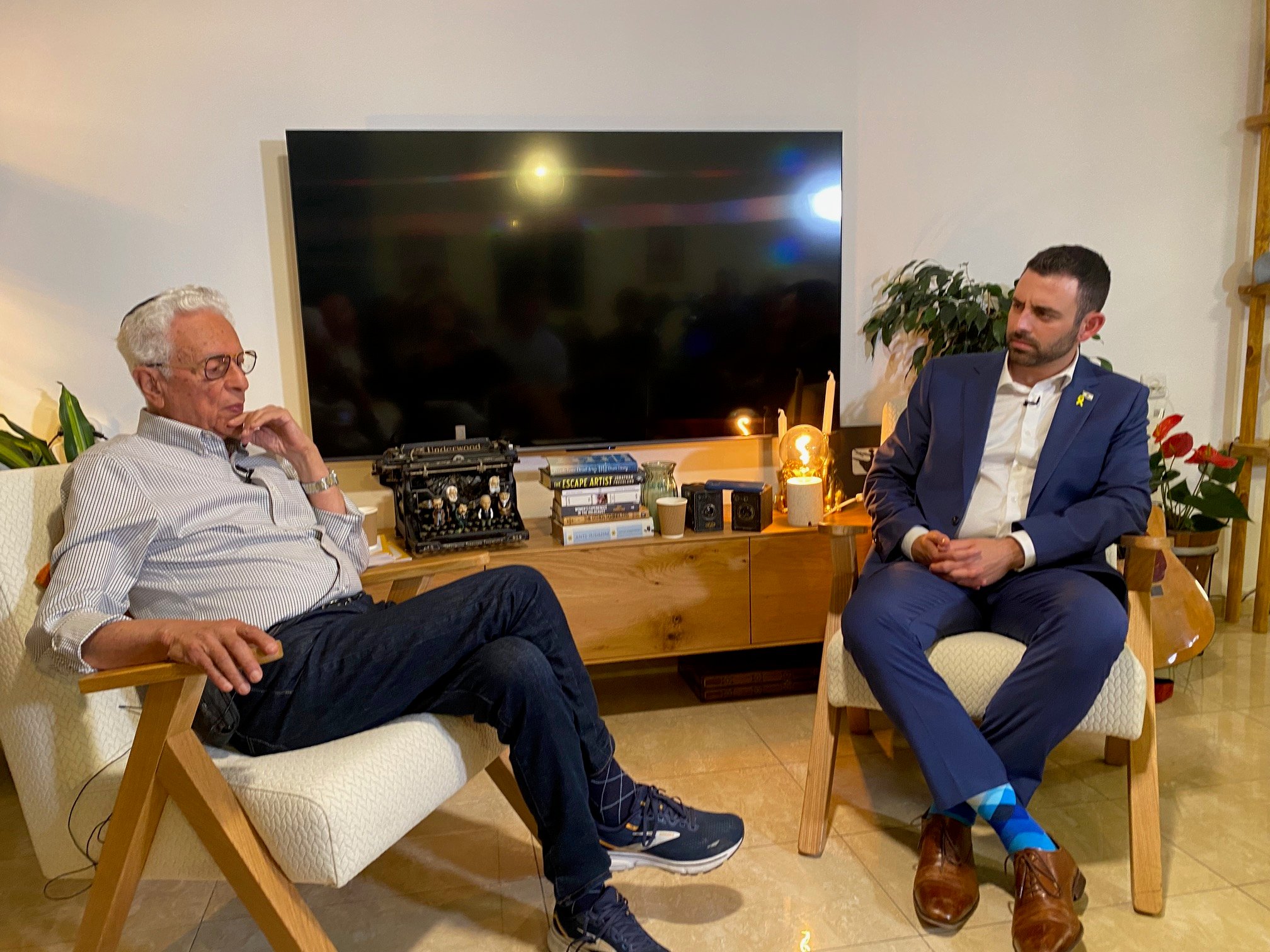
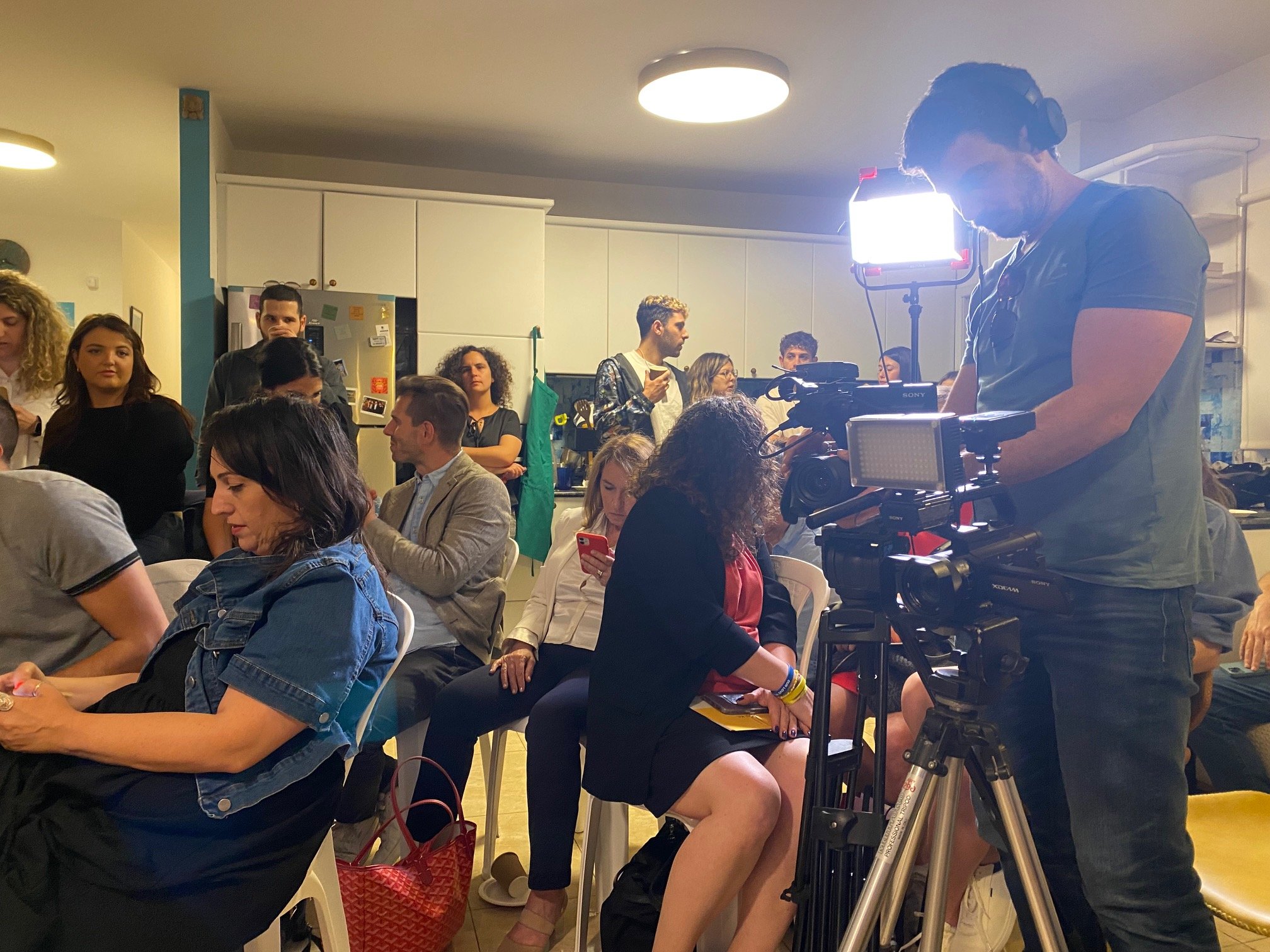
As former government spokesman Eylon Levy introduced Dr. Arnold Clevs to a group of young professionals, foreign diplomats and journalists in the living room of his central Tel Aviv apartment on Wednesday night, a sense of tragedy hung in the air.
Clevs, a Holocaust survivor who had somehow managed to live through internment at 11 concentration camps, moved to Israel four years ago from the United States at the age of 87.
Levy had invited the group to listen to Clevs’s story as part of the Zikaron BaSalon, or the “Memory in a Living Room” initiative, which brings people together in homes, workplaces and other more intimate environments to speak with Holocaust survivors and hear about their experiences.
But things are different this year as the October 7 massacre and subsequent Israel-Hamas war loom large over Holocaust Remembrance Day, which Israel will mark at sundown on May 5.
On October 7, thousands of Hamas-led terrorists invaded southern Israel and killed, burned, raped and took hostages in what has been described as the biggest massacre of Jews since the Holocaust. The brutality saw 1,200 murdered, most of them civilians, and 253 kidnapped to the Gaza Strip.
Since that horrible day, Israelis and Jews worldwide have been looking at their lives through a lens of horror and sorrow: Passover celebrations were tinged with sadness and added prayers; antisemitism globally has surged; and celebrating Independence Day and Memorial Day, both of which fall later this month, will bring its own challenges.
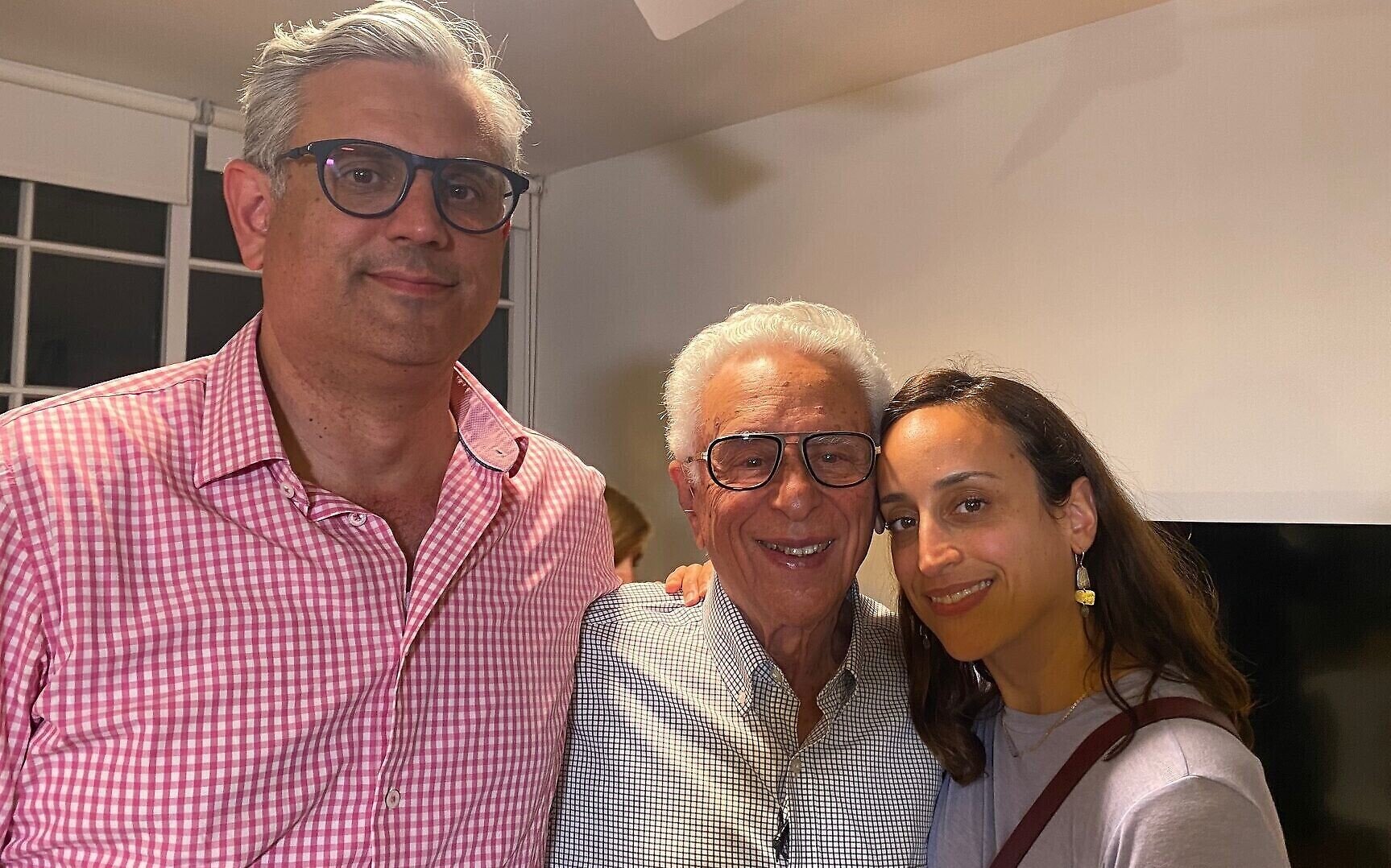
“It would be remiss not to speak about the elephant in the room,” Levy said as he introduced Clevs, a dapper and sprightly now 91-year-old dressed in sneakers, jeans, and a light checkered shirt.
“What does it mean for the Jewish people to live in a world in which the Nazis are no longer the only ultimate symbols of evil?… What do we do in a world in which we’ve come face to face with an evil that is making Holocaust survivors have flashbacks to the Nazis?” Levy asked.
As Clevs recounted his story — an astonishing one of survival, luck and determination — guests listened quietly, sometimes laughing with him as he recounted how he put sand in his shoes to fool the Nazis into thinking he was older and taller, or sighed in distress as he vividly described acute hunger, thirst and the spontaneous acts of deadly violence.
Miracle survival of 11 camps
Born in Kovno, Lithuania, in 1933, Clevs was 8 years old when the war reached his country. He talked about that Sunday morning in which German planes started bombing his city. He was at home with his father, mother and older sister. When their effort to escape to Russia failed, and after witnessing dead soldiers floating in a river and horses with their wounded open bellies, they returned to Kovno where they were later rounded up, sent to live in the ghetto, and eventually deported.
The war saw young Clevs survive 11 Nazi concentration camps including Auschwitz-Birkenau, Dachau, Mauthausen and Gunskirchen. He was separated from his family, witnessed the deportation of children and walked on death marches through Eastern Europe.
He survived, narrowly escaping gas chamber selections and living through an infection in his arm. He talked about hiding in the latrines to get away from SS officers and collecting dead bodies in wagons. He spoke about the hunger — “I chewed on grass” — and how he scraped frosted water from the insides of a packed cattle train to quench his burning thirst. He remembers the screams of parents returning from work to now childless barracks, and the “helplessness” on his father’s face as the young Clevs was taken away by the Germans along with a group of boys — the last time he saw his father.
Liberated finally by the US Army, Clevs got to sleep “for the first time in years” in a bed, “with a white linen little blanket and a pillow,” and was eventually reunited with his mother and sister. After immigrating to the US, he became a dentist and raised a family.
One of the boys who survived with him, then a 16-year-old, now 97, lives in Sderot, a town that was invaded by Hamas on October 7 and which has been bombarded with Gaza rockets for many years.
“I said [to him]… you live in the town with all the missiles always coming. How can you do it?” Clevs said. His old friend answered: “It’s a hell of a lot better than Birkenau.”
Holocaust lessons to navigate today’s troubled times
During the question-and-answer session at the end of his talk, people spoke in wonder about Clevs’s optimism and sought his advice to navigate these troubled times.
What message did he have for survivors of October 7 in terms of resilience, a journalist asked.
“You survived, be happy,” Clevs responded. “Not many of us made it.”
He said he often asked himself why he survived the Holocaust while others did not. “Why am I so special… to survive? I don’t know the answer.’
A deputy ambassador of a European embassy asked if, throughout his wartime tribulations, Clevs also saw “gestures of good acts” and of “humanity.”
“Humanity wasn’t there during the war,” Clevs said. “No one helped us.”
Rasmus Bogh Johansen, deputy head of the mission at the Danish Embassy, said Clevs’s story of “evil and darkness” was an inspiration because it was also one of “love and friendship.”
“You seem like a very positive, optimistic man,” Bogh Johansen said. “You mention your friend from Sderot joking about the rockets. It seems to me like you’re almost a paradox, someone like you who’s been through hell, who’s seen into the deepest darkness of mankind. How can you be so happy? In my generation… the smallest things can knock us out. So, what can we learn? What’s your life lesson?”
There was no hesitation in Clevs’s answer: “I look at my son, at my daughter, and I say to myself, I survived… This is life. You have grandchildren. Life has to go on. And as we say here in Israel, ‘Am Yisrael chai'” — the Nation of Israel lives.






The Times of Israel Community.