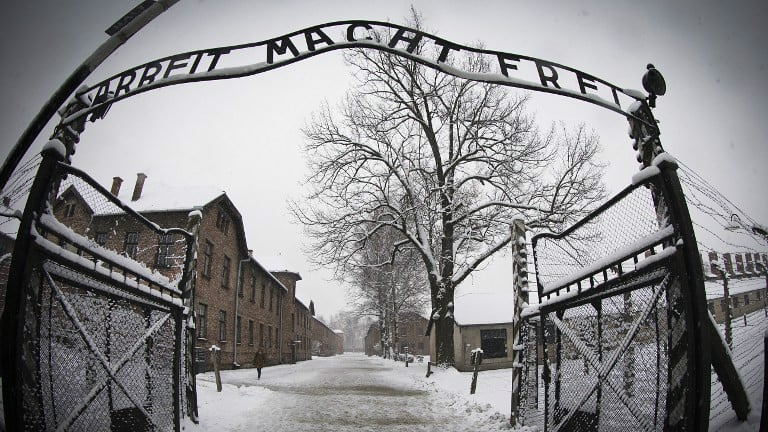
The entrance to the Nazi death camp Auschwitz-Birkenau with the lettering 'Arbeit macht frei' ('Work makes you free'). (Joel Saget/AFP)
WARSAW, Poland — The Auschwitz museum on Tuesday launched a multi-lingual computer application that writers can use to avoid the mistake of referring to Nazi German death camps as being “Polish.”
Warsaw routinely requests corrections when global media or politicians describe as “Polish” former death camps like Auschwitz set up by Nazi Germany in occupied Poland during World War II.
The move comes after Poland’s new right-wing government proposed jail terms of up to five years for anyone who refers to Nazi death camps as Polish.
Even if the word “Polisf” is used as a geographical indicator, Poles insist the term can give the impression that they bore some responsibility for the Holocaust.
US President Barack Obama used the term in 2012 and later expressed “regret.”
Get The Times of Israel's Daily Editionby email and never miss our top stories
Dubbed “Remember,” the application is intended “to help avoid the use of the term ‘Polish concentration camps’ or ‘Polish death camps’ in 16 languages,” according to a statement issued by the Auschwitz state museum in Oswiecim, southern Poland on Tuesday.
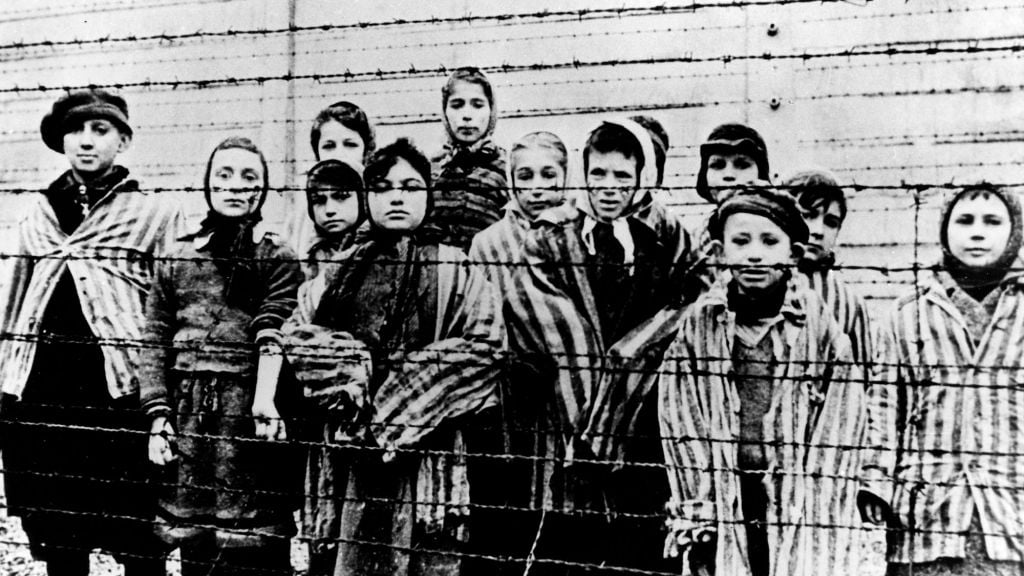
A picture taken just after the liberation by the Soviet army in January 1945 shows a group of children wearing concentration camp uniforms behind barbed wire fencing in the Auschwitz Nazi concentration camp. (AP Photo/File)
Poland was attacked and occupied by Nazi Germany in World War II and was among the hardest hit by the conflict, losing six million of its citizens between 1939 and 1945, including three million Jews in the Holocaust.
The war with Iran has been draining for all of us in Israel. But when I heard about a high casualty incident – ballistic missile impacts in Arad and Dimona that left nearly 200 people wounded – I drank a cup of coffee, packed a bag, and headed south.
There, I spoke with Shilgit, the head of an after-school program for underprivileged youth. Standing outside her destroyed center, Shilgit said it was a miracle that no children were hurt and spoke about the community coming together in the hours since.
As a Times of Israel reporter, I’m committed to telling stories of resilience like Shilgit’s. But my colleagues and I can't do this alone. If you value work like this,please consider joining our reader support group, The Times of Israel Community. Your financial support is essential to keep real human reporting like this going.
We’re really pleased that you’ve read X Times of Israel articles in the past month.
That’s why we started the Times of Israel - to provide discerning readers like you with must-read coverage of Israel and the Jewish world.
So now we have a request. Unlike other news outlets, we haven’t put up a paywall. But as the journalism we do is costly, we invite readers for whom The Times of Israel has become important to help support our work by joining The Times of Israel Community.
For as little as $6 a month you can help support our quality journalism while enjoying The Times of Israel AD-FREE, as well as accessing exclusive content available only to Times of Israel Community members.
Thank you, David Horovitz, Founding Editor of The Times of Israel