

Beit Shemesh strips off ‘modesty’ signs in nighttime operation
City workers escorted by elite police unit after a previous attempt to remove gender segregation notices was cut short by scuffles
 Add ToI as a Preferred Source on Google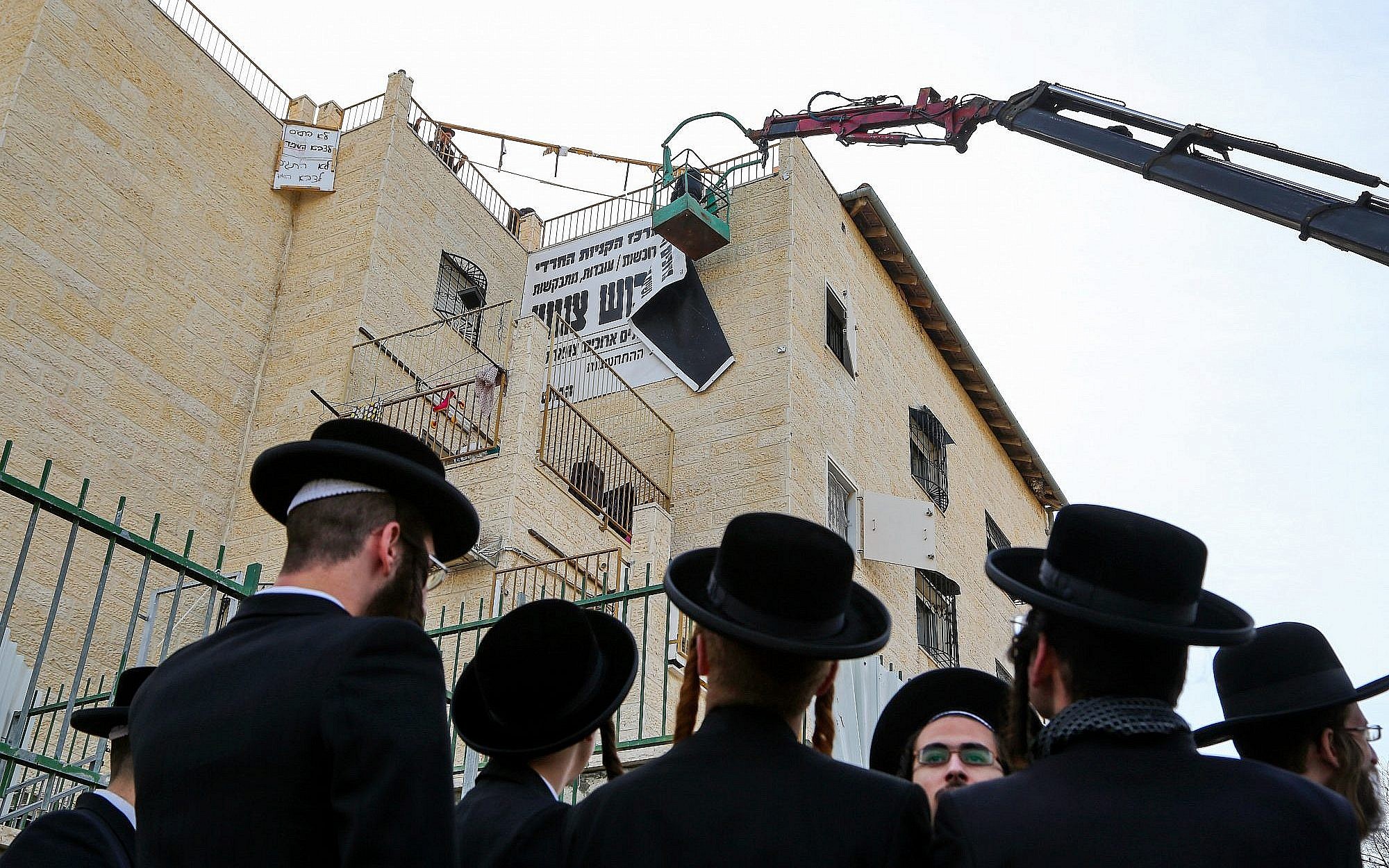
Municipal workers took down “modesty” signs in Beit Shemesh early Tuesday morning, carrying out a December High Court of Justice ruling ordering their removal.
The city workers were accompanied by officers from Jerusalem’s Special Patrol Unit, who prevented ultra-Orthodox onlookers from interfering with the work, the Ynet news site reported.
An attempt to remove the signs, which instruct men and women to walk on separate sides of the street, in December was cut short “due to violent disorderly conduct” by ultra-Orthodox men, the municipality said at the time.
עיריית בית שמש קיימה הלילה מבצע להסרת שלטי צניעות ברמת בית שמש, בעקבות פסק דין שחייב אותה להסיר את השלטים @moyshis pic.twitter.com/cz3acs1TrL
— כאן חדשות (@kann_news) February 27, 2018
The court ruling came in response to a municipality appeal in July of a lower court order to remove the signs. The court ruled the signs, which justices say discriminate based on gender, must come down by December 12.
Beit Shemesh, a city of some 110,000 people 19 miles west of Jerusalem, was to have been fined NIS 10,000, nearly $3,000, for every day the signs remained posted.

In its appeal, the municipality said the signs demanding conformity to ultra-Orthodox dress are just “ideological signs.”
Beit Shemesh was first ordered to remove the signs in 2015, when the High Court said that they “cause serious harm to human dignity, equality, personal choice and autonomy,” Ynet reported.
Two years later, when the signs were not removed, the women who filed the original lawsuit turned to an administrative court to enforce the ruling.
Beit Shemesh has seen conflict between ultra-Orthodox, non-ultra-Orthodox and secular residents over restrictions on women’s dress and gender-segregated seating on public buses. In a widely publicized incident in 2011, an 8-year-old Orthodox girl was spat on by ultra-Orthodox men on her way to school for her perceived immodest dress.
JTA contributed to this report.










The Times of Israel Community.