

Cape Town students swap their duds for shtetl garb in educational time machine
A program at the South African Jewish Museum highlights the similarities between today’s South Africans and Eastern European Jews — and leaders from both communities are loving it
 Add ToI as a Preferred Source on Google
CAPE TOWN, South Africa — Think of the poor townships of South Africa as latter-day shtetls.
With children today as isolated and impoverished as any 19th century Jew from the Polish provinces, bridging the gap between the two communities separated by centuries and thousands of miles isn’t as far-fetched as it may seem.
For the kids, exchanging their own clothing for tattered shtetl garb and hearing about diversity, respect and love is enough to transpose them to a different world.
That is what is happening with a growing cadre of youngsters who, teachers say, are ecstatic about the experience.
The South African Jewish Museum in Cape Town is working to brighten the ethnic rainbow in this nation of 56 million where apartheid died almost three decades ago.
One foundation dedicated to black empowerment applauds the efforts.
“Exposing children through interactive experiences to religious and cultural diversity within our society sensitizes them to issues of prejudice, xenophobia, racism and discrimination,” said Corinne Abel, chief executive officer of the HCI Foundation.
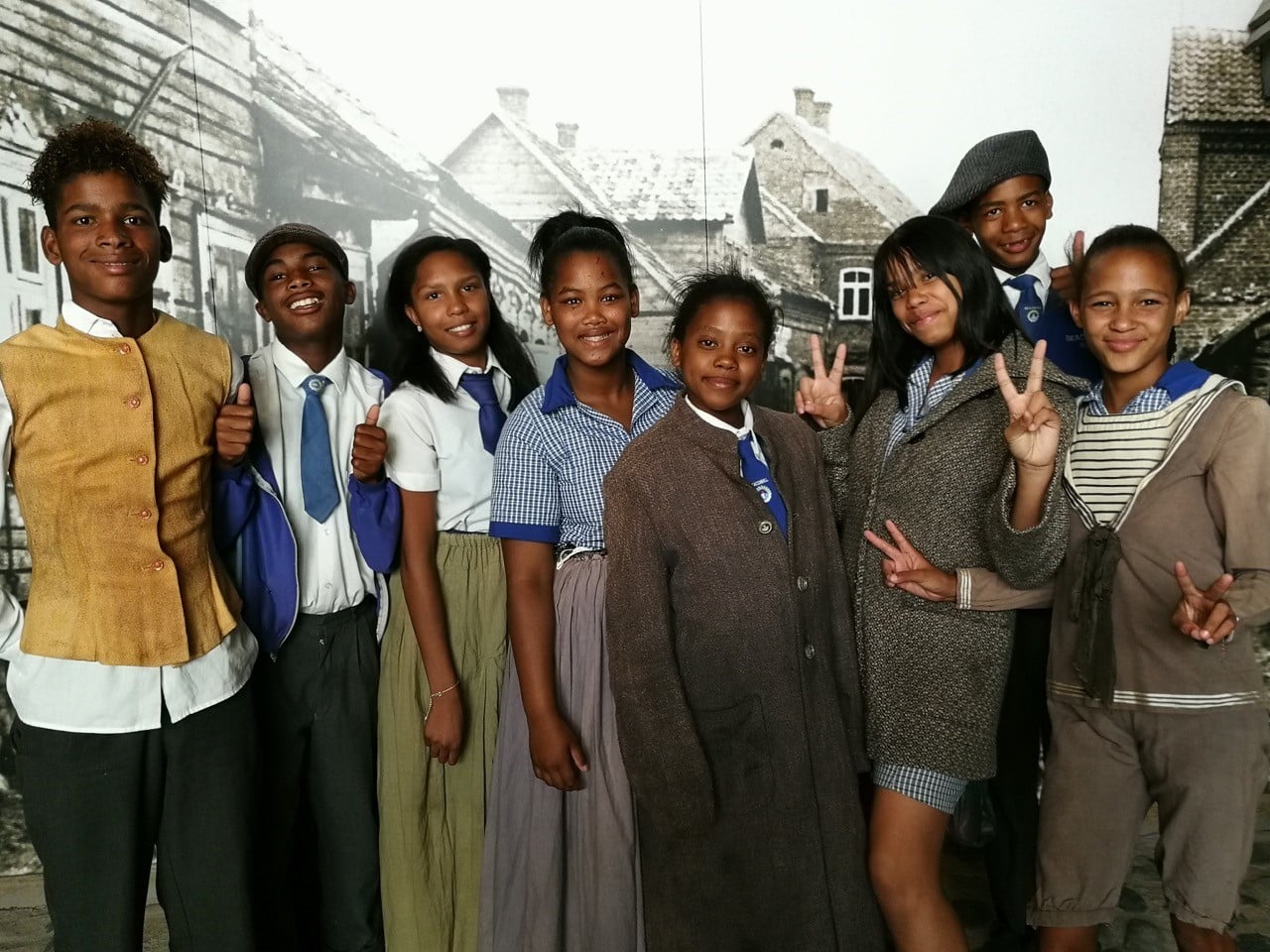
Marlene Silbert, a local educator and early anti-apartheid activist, launched the museum’s Education Outreach program at the beginning of the decade after developing a national high school curriculum for Holocaust education.
Jewish history, including the Holocaust, “are relevant to contemporary society,” said Silbert.
Upwards of 35,000 school children have visited the museum housed in South Africa’s first synagogue, which was erected in 1863.
Inside, they walk past an enlargement of a note written by Nelson Mandela 20 years ago which hailed the Jewish community for being singularly “broad-minded… on issues of race and politics.”
The students are told about Jewish history, culture and religion. Then the conversation is broadened to cover the importance of human rights, diversity and mutual respect.
While few in global human rights circles are aware of the Cape Town program, those who are speak highly of an effort they believe should be replicated wherever intolerance persists.
The Anne Frank Foundation, in far off Basel, Switzerland, is aiding the museum’s efforts to touch the lives of students, some of whom are the same age as Anne Frank when she crafted her journal.
“Our own focus is increasingly on Africa, where we support projects for the empowerment of women and access to education for children and youths,” said Barbara Eldridge, the foundation’s executive secretary.
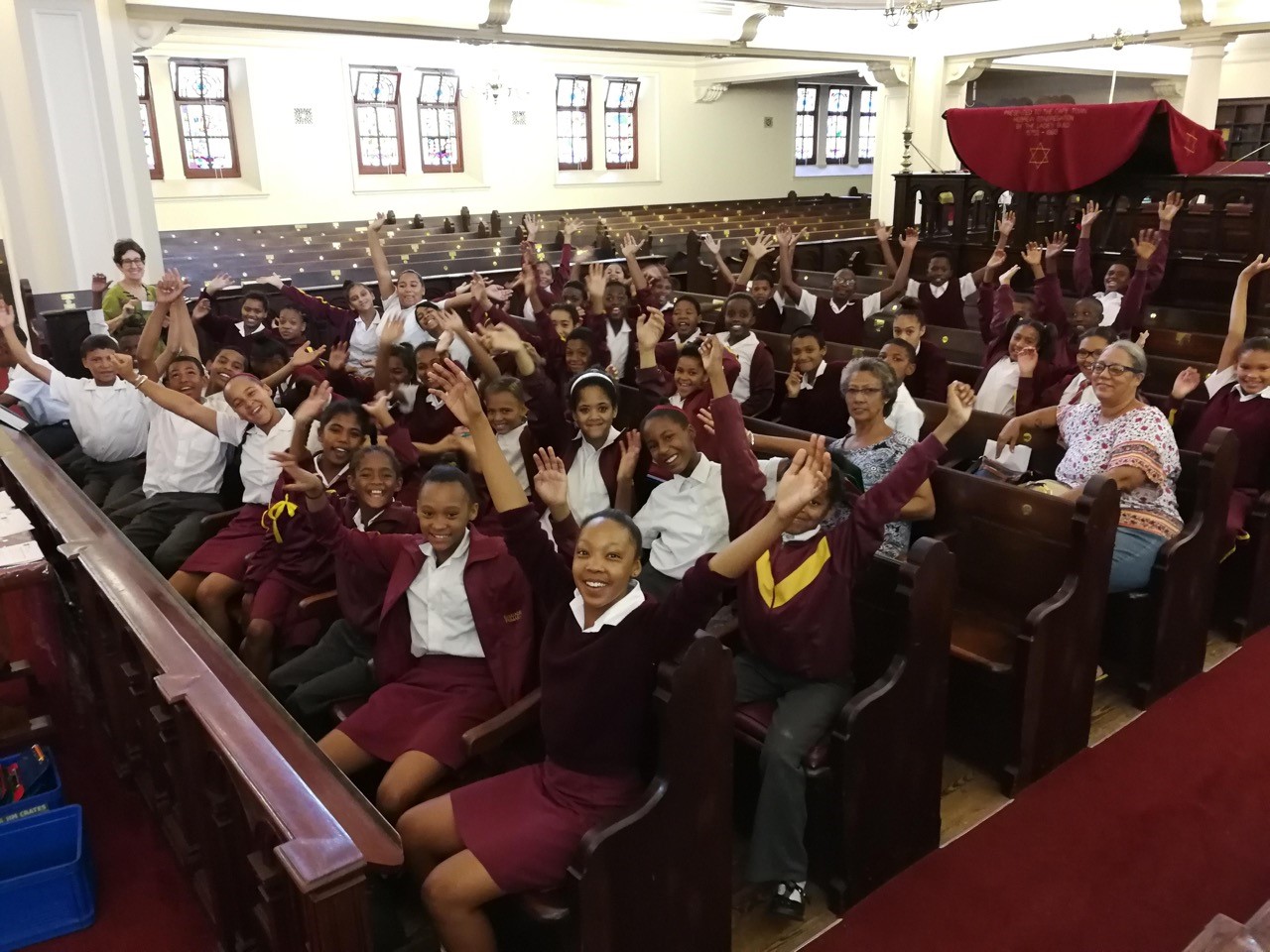
The impact is immense, according to Auburn Kelly, a mathematics teacher in the Cascade Primary School just outside Cape Town. One recent Monday he accompanied immaculately uniformed, ebullient students to the museum. For weeks prior to the visit and weeks after, the students were transformed by their foray into a wider world.
“It was something awesome,” Kelly said.
Head of the museum’s Education Outreach program Silbert, who is 83, said the South African students readily understand the strong link between the oppression of Jews in Europe a century ago and their own personal lives in 2018.
“The conditions under which Jews lived relate to the way many black people continue to live in informal settlements,” said Silbert. “During apartheid the majority of people had no running water or electricity and while this has changed considerably, there are still many black people living in overcrowded shacks.”
Abel, of the HCI Foundation — the social outreach arm of a black empowerment investment company — said that the museum’s exercise is transformative.
“Occupying the space of the ‘other’ and walking in the shoes of the ‘other’ provide experiences which open the young person to the sense of what it feels like to be different and to be an outsider. This program then provides an excellent interactive educational model for promoting empathy, tolerance and understanding in a diverse nation like South Africa,” Abel said.
The local educational establishment endorses the program. It is flourishing, even though on the national level, relations between South Africa and Israel are strained. Pretoria recently frowned on efforts to bring Israeli desalination experts to town to help with the area’s water crisis. The national government, mindful of its ties to the developing world, is focused on the plight of Palestinians.
But that seems far off at the museum, a few blocks from the national parliament and presidential residence, where school buses are a frequent sight.
Kelly said that his students could not stop talking about the outing after their return. One of them, Brian, after the field trip spoke with passionate certainty when he said that religions at their best are the same, built on a core of tolerance.
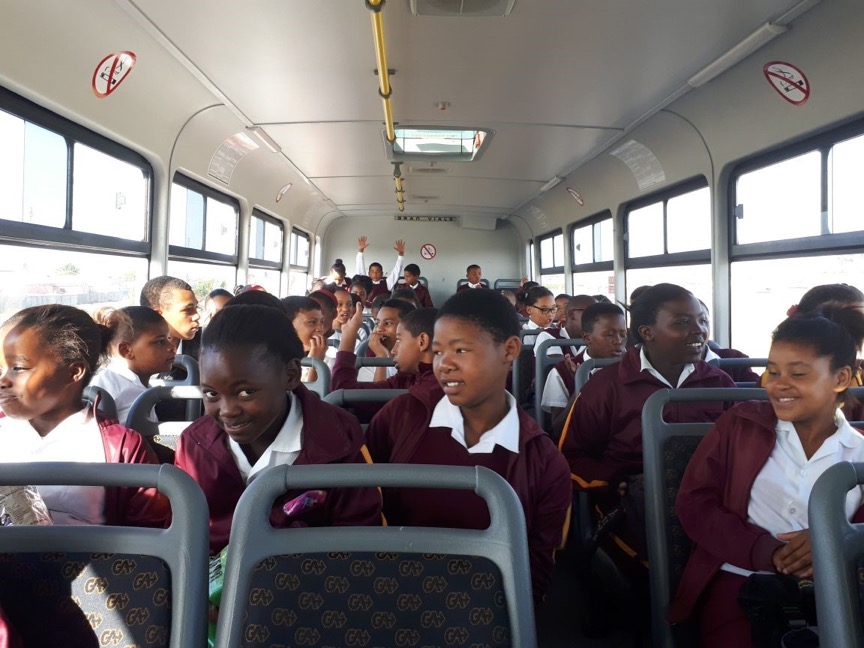
Mitchell’s Plain, where the school is located, is one of the nation’s largest townships with a population of 300,000. Four gangs often tangle near the school, and gunfire occasionally erupts.
“Our community is the poorest of the poor,” Kelly said.
His grade school charges wrote enthusiastically about the museum trip.
“I learned that all of us celebrate in different ways,” wrote one student. “I was so excited to come to the museum. I didn’t sleep last night.”
Another wrote, “All religions are important, they are even a bit similar.”
“I learned shalom, don’t hate and educate,” said yet another.
The students were exuberant, singing snatches of songs as they boarded buses to take in — most for the first time — this sparkling port backed by iconic Table Mountain. They live just a half-hour bus ride away.
Getting out of their township, taking a few precious hours to imagine the struggles of others in a wider world, was liberating, Kelly said.
“They were just free,” he said.









The Times of Israel Community.