

Donkey bone study unlocks how Canaanites hauled ass from Egypt 4,700 years ago
Isotope teeth analysis from donkey skeletons at Gath shows valuable female asses were imported for ritual burial under homes, whereas local animals were butchered and eaten
 Add ToI as a Preferred Source on Google
Rossella Tercatin is The Times of Israel's archaeology and religions reporter.
Some 4,700 years ago, four exotic female donkeys were brought hundreds of miles from Egypt to Canaan to be sacrificed and buried under middle-class homes. Curiously, roughly around the same time at the same Canaanite settlement, a local donkey was butchered and ended up on a dinner table.
A new study based on the animals’ dental analysis, published in the prominent journal PLOS ONE on Wednesday, sheds light on the Canaanites’ perception of imported and local animals, and proves ties between Egypt and Canaan, long considered by scholars to be virtually non-existent during that period.
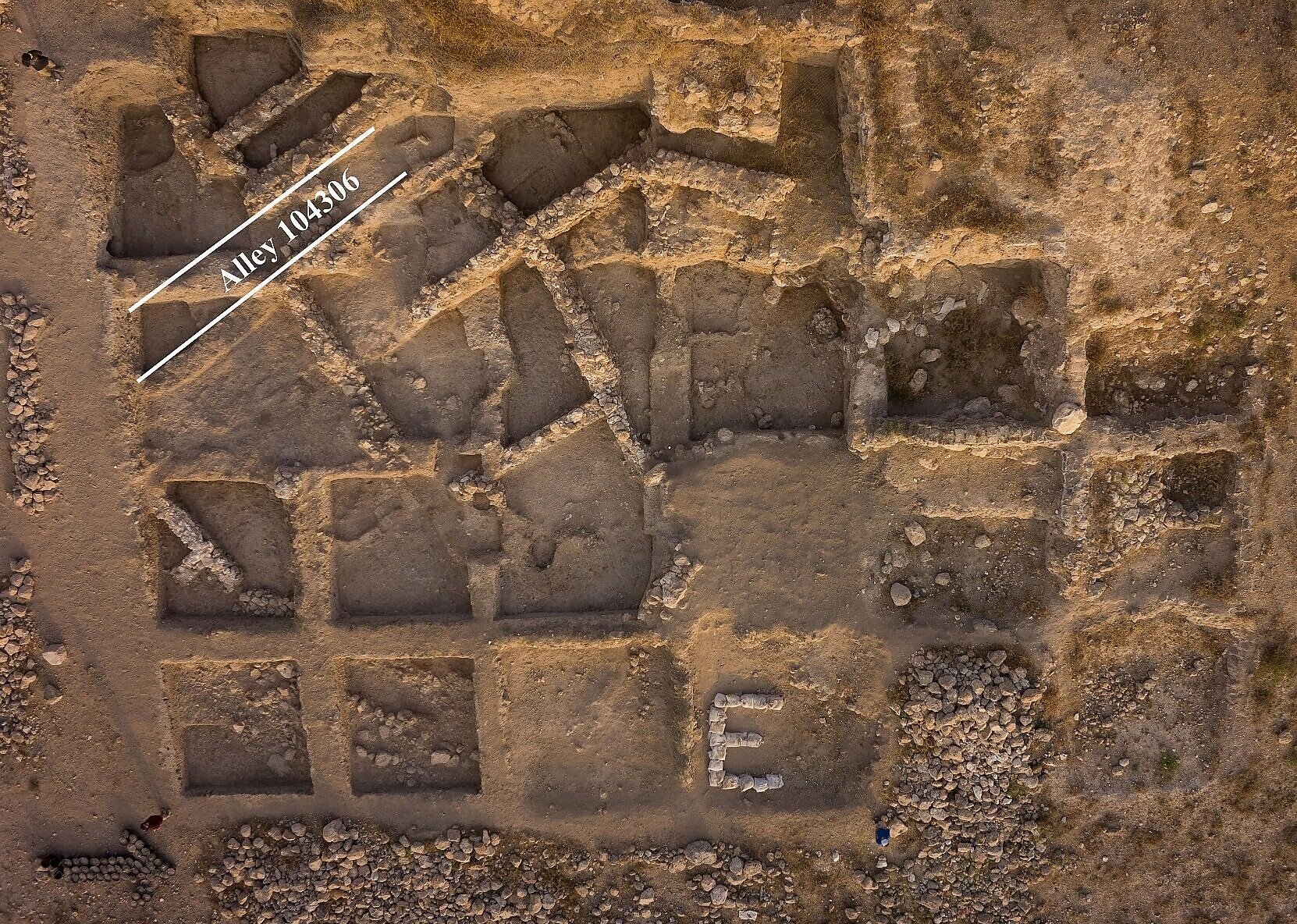
Researchers used multiple-isotope analysis to track the origins of four complete donkey skeletons from the Early Bronze Age III (c. 2900–2600/2550 BCE) found in Tell es-Safi/Gath, a site in modern-day central Israel, some 12 miles (20 kilometers) from the coast. A millennium and some centuries later, the city became well-known as the birthplace of the Philistine giant and King David’s nemesis, Goliath.
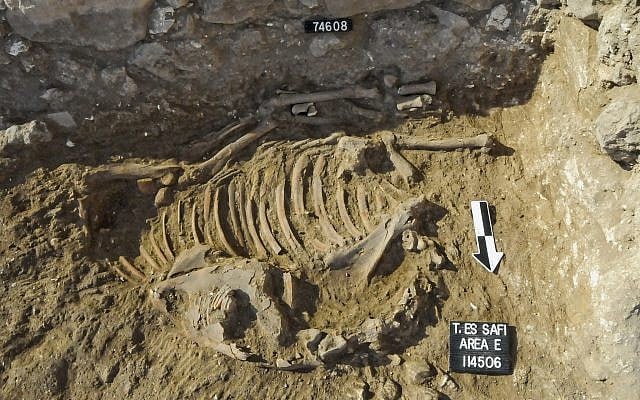
All the sacrificed donkeys’ skeletons were uncovered in shallow pits 8-12 inches (20-30 centimeters) below the floors. The first was identified in 2008, and the other three in 2016. The lone butchered donkey mandible used for comparison was found in 2017.
The first donkey was unearthed with its head completely severed and placed on its abdomen. The other three were found intact, with the legs gathered together. All were facing east.
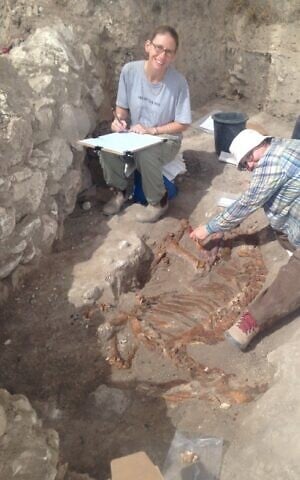
“When I joined the excavations at Safi, the first donkey burial had already been discovered,” said Dr. Elizabeth Arnold from Grand Valley State University in Allendale, Michigan, an author of the paper whose expertise focuses on animal remains and isotope analysis.
“As we carried out isotopic analysis on the donkey’s teeth, it emerged that only at the end of her life she had come to Safi and was sacrificed,” Arnold told The Times of Israel over the phone. “I kept jokingly saying to everybody, ‘Let’s find more donkeys.’ And then, somewhat unexpectedly, they actually obliged, and we found these additional animals.”
A long haul of isotopes
Isotopic analysis can be conducted on bones or teeth to investigate strontium, carbon and oxygen isotopes. The three types of isotopes are found in soil, vegetation and water. Animals and humans absorb these elements through their diet, and they are encapsulated in their teeth or bones, providing scientists with a “fingerprint” of the locations where they resided.
In the case of the Safi donkeys, the researchers analyzed their teeth and examined all three types, obtaining consistent results in each round of testing.
Arnold and her team found that for most of their lives, the four donkeys ate very dry plants prevalent in the Nile Valley, as opposed to local Safi vegetation, because the bones’ oxygen signatures matched those of the Nile Valley rather than the local Safi signatures.
The animals were about five years old when they died. (Modern donkeys live up to 40 years.)
“One of the things that surprised me is that because we suspected they were trade animals, I would have expected that isotopes had shown them moving back and forth between Egypt and Safi, and they didn’t do that,” said Arnold. “They spent the early part of their life in Egypt, and then they came to Safi and were sacrificed.”
The study’s results also demonstrate that ties between Egypt and Canaan persisted in the Early Bronze Age III. In the past, scholars had held a consensus that, contrary to trade and other ties evident in previous centuries, the connection had all but disappeared.
“Now we have very clear and direct evidence of this association with Egypt, which was obviously a valued association,” Arnold said.
Illustrating the high worth of the animals, Arnold said she was amazed to find out that not only were all the donkeys female but also in their breeding years: “These were very valuable animals to sacrifice,” she noted.
In the comparison case — the butchered donkey mandible — the isotopes showed that it, as well as bones from butchered sheep and other animals found at the site, were all local.
Arnold explained that the researchers used Carbon-14 analysis of the organic remains uncovered in the same archaeological strata as the animals to date the donkeys, but could not perform it directly on the skeletons due to a paucity of viable specimens.
The absence of organic remains also meant scientists couldn’t extract any DNA, preventing them from learning more about the donkeys’ appearance.
The Safi discovery does not mark the first time donkey burials have been found in the region.
Two ritual donkey burials from the same period, for example, were found in nearby Tel Azekah. However, this is the first time that researchers have traced the geographical origins of the animals.
“I hope our results will encourage others to do the same,” Arnold said.
A donkey mezuzah?
During the Early Bronze Age III, Safi was one of the region’s fortified cities.
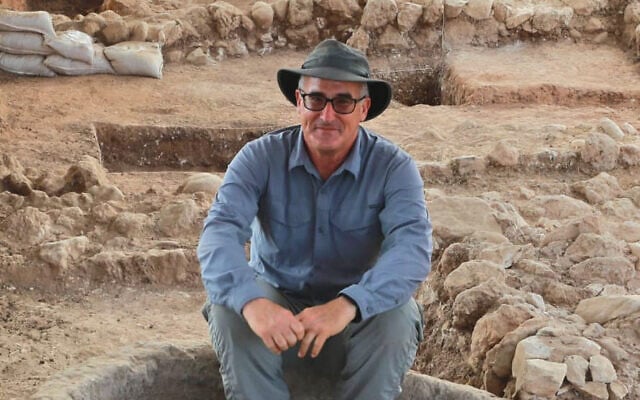
“It was one of the medium to large cities throughout Canaan at the time,” said Prof. Aren Maeir from Bar-Ilan University, one of the article’s authors and the longtime excavation director at Tell es-Safi/Gath.
According to Maeir, although there is no definite archaeological evidence or written source, it is likely that the city’s residents were culturally Canaanite, or part of the Semitic population living in several city-states across the region, which centuries later would be recorded in the Bible and other ancient texts.
Even before receiving the results on the first donkey’s origin, the archaeologists had already hypothesized that the neighborhood they were excavating was home to traders.
“Based on the material culture, we believe the residents might have been merchants,” Maeir told The Times of Israel over the phone.
The archaeologist explained that donkeys were the preferred animals for carrying loads during this era.
“Only later, horses became more popular,” he noted. “We can say that the donkey was the Cadillac of the times.”
He noted that the buildings did not appear to have belonged to the city’s elites, but neither to its poorest residents, making them something of a middle class.
“Perhaps the very fact that they buried donkeys under their houses reflects that they used donkeys in their activities,” he hypothesized.
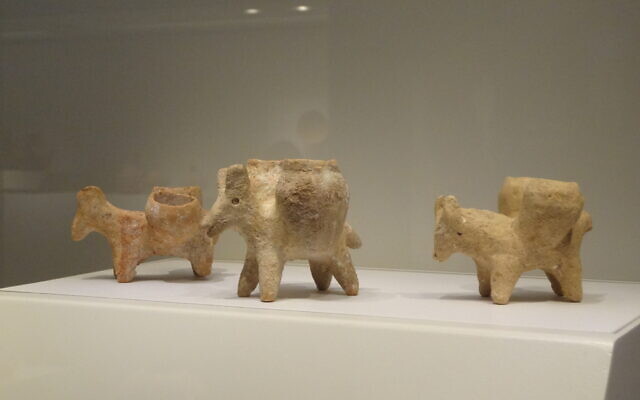
Some fragments of donkey-shaped figurines were also unearthed in Safi.
Maeir explained that the practice of placing foundation deposits — objects buried beneath buildings to invoke divine protection — was a common practice across many historical periods.
“The Jewish mezuzah is perhaps something similar,” he said.
Amanda Borschel-Dan contributed to this report.








The Times of Israel Community.