

Drone industry prepares for warp speed, with Israel looking to lead the way
‘Big bang’ expected for military and commercial use of UAVs; the sector accounts for 10% of Israeli defense exports, and 91 civilian startups are active in field
 Add ToI as a Preferred Source on Google
Shoshanna Solomon was The Times of Israel's Startups and Business reporter
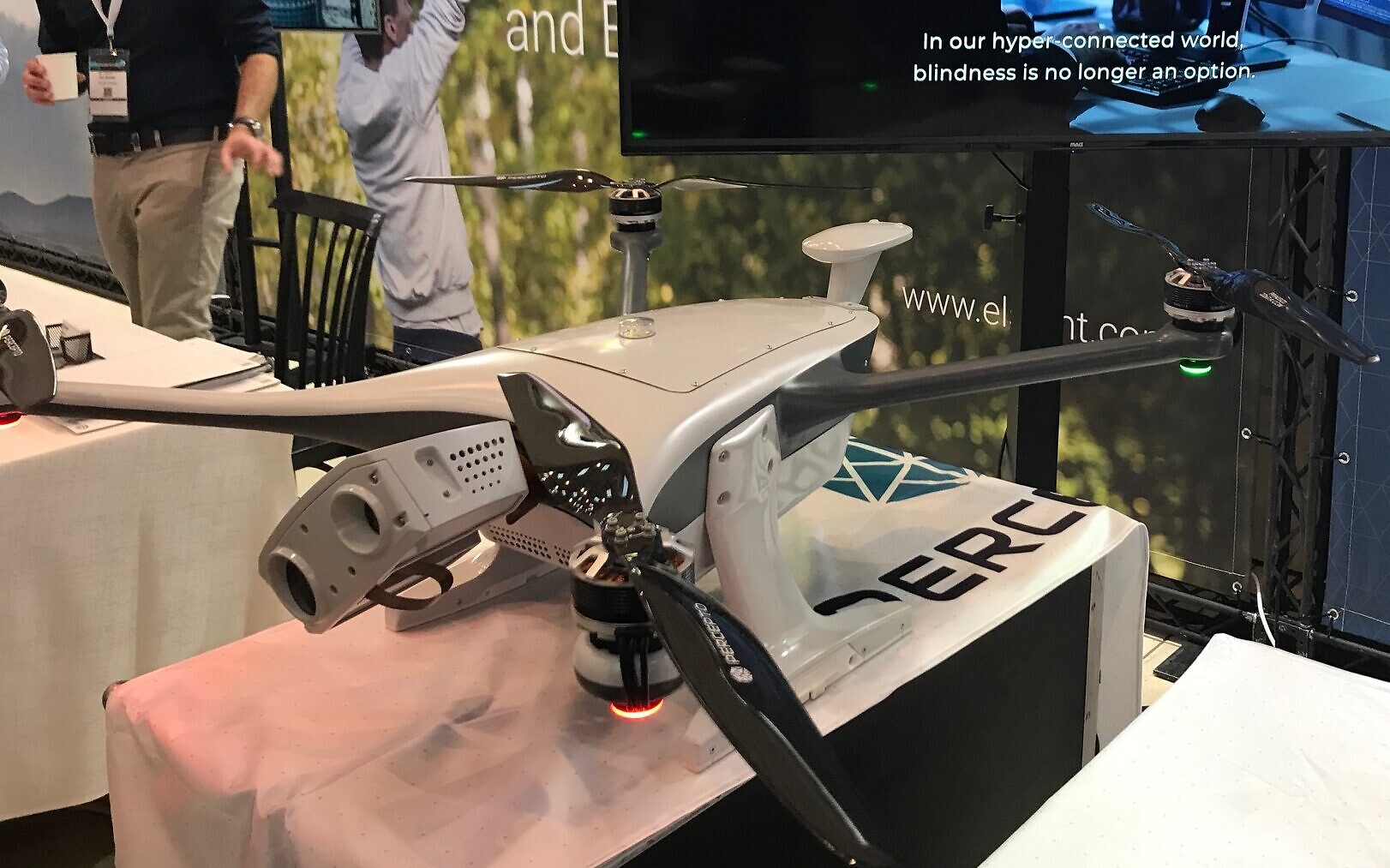
The drone industry is on the verge of explosive growth for both civilian and security uses, attendees of a conference near Tel Aviv were told last week, as they were exhorted to make sure Israel stays ahead of the curve.
“We are poised for a big bang,” said Alon Unger, the founder of the UVID Conference and of the Israel Drones Alliance, a nonprofit organization that connects academia with business in the world of drones.
To make sure it stays ahead of the curve, Israel must shore up the synergies between the defense and civilian arenas, which are the basis for the success of the so-called Startup Nation; pull down walls between the various fields of research, including artificial intelligence and cybersecurity, creating one big ecosystem for all; and quickly set out a clear regulatory framework within which companies and entrepreneurs can work, he said.
The UVID 2019 conference, attended by members of Israel’s security forces, the startup sector and visitors from countries including the US, the UK, Spain, Russia, and Vietnam, showcased a variety of drones for use in agriculture or security and defense along with technologies such as sensors and communication systems that can become the brains of unmanned or remotely controlled vehicles.

At the conference, Brig. General Yoav Amiram, the Israeli Air Force commander of the Palmachim Air Force Base, said he believes that in the future, even after drone technologies integrate artificial intelligence and more advanced technologies, humans will still be in charge on the battlefield.
“People will be the ones making the decisions in the battle field,” he said. “We will always need a human to choose what to do, and make decisions in the ever-changing battlefield.”
Amiram added that drone manufacturers and the makers of drone technologies should push to integrate the variety of platforms existing today for various UAV systems. “The more unified the platforms, the faster we will advance,” he said.
The continued existence of a variety of platforms on which the drones operate will “crystallize our limitations,” he said.

The global commercial drone market is projected to grow significantly between 2019 and 2025, according to ResearchandMarkets, driven by a rise in demand for aerial services and advancements in camera, mapping and other software.
The military industry accounts for the largest share of the global drone market during the forecast period, with drones used in surveillance, rescue operations, providing supplies to troops, mapping and gathering information about hostile places before a mission, the report said. This is “contributing to the growth of the military drone’s market across the globe.”
However, construction and agriculture are becoming “two major civilian areas of the drone market.” UAVs are being used for smart agriculture applications, such as mapping and studying crop data. Drone-collected footage and images are used to make 3D renderings for real estate purposes and for package delivery to customers from retail stores. Media outlets use drone shots to cover developing news events, the ResearchandMarkets report said.
On the flip side, privacy and security concerns in light of high-resolution satellite imagery are seen as hampering market growth, the report said.

Israel is considered a superpower in the field of UAVs, and the sector accounts for some 10% of Israel’s defense exports, according to a report by Invest in Israel, with startups and larger defense firms like Elbit Systems Ltd., Raphael, Israel Aerospace Industries getting in on the action.
The civilian sector is involved as well. For example, AgriDrones Solutions makes autonomous vehicles for spraying crops; Percepto makes the Sparrow I for the aerial monitoring of industrial complexes, acting like a safety inspector robot; Airobotics makes a platform to allow companies to operate drones without skilled operators; and Flytrex uses drones to deliver food
There are some 91 active startups in the field, according to data compiled by Start-Up Nation Central, which tracks the industry.
At the UVID exhibition on Thursday, artificial intelligence and big data startup firm Kaleidoo was displaying its software, which processes and analyzes data collected from drones; Simlat showed off software that train drone operators; and Mobilicom displayed a portfolio of communications, controllers, encryption tools and viewing terminals that can added to UAVs and become their “brain.”










The Times of Israel Community.