

Erdogan to meet Turkish PM after election setback
Ruling party prepares to form a coalition government for first time since taking power in 2002
 Add ToI as a Preferred Source on Google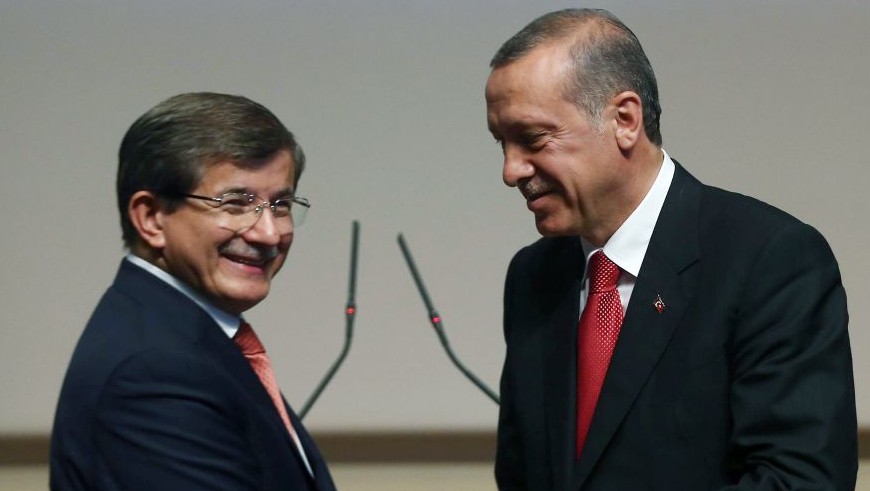
ANKARA (AFP) — Turkish President Recep Tayyip Erdogan was to meet Tuesday Prime Minister Ahmet Davutoglu for the first time since the ruling party’s failure to hold its parliamentary majority left the country facing a coalition government or snap elections.
According to custom, Davutoglu will submit his resignation and Erdogan will ask the premier to form a new government at the meeting at 1400 GMT inside Erdogan’s vast new presidential palace in Ankara.
But this will be no easy task after the ruling Justice and Development Party (AKP) lost its parliamentary majority for the first time since it came to power in 2002, despite having the biggest number of votes.
A minority government will be difficult to maintain and there is no straightforward coalition options, making snap elections a real possibility.
Erdogan can call snap elections within 45 days if efforts to form a coalition are unsuccessful.
The elections have been seen as a bruising blow for Erdogan, the co-founder of the AKP who served as premier from 2003-2014 and as president since August last year.
Erdogan wanted the AKP to win a super majority to push through a new constitution that would give him reinforced powers as president. But instead Turkey has a hung parliament.
To the amusement of pro-opposition bloggers, Erdogan — usually ubiquitous on television and making several appearances a day — has almost vanished from sight since the election.
His sole comment has been a written statement saying the result was fair and urging parties to behave responsibly in a “new process” where no one single party can form a government.
PM’s job on line?
The AKP won 41 percent of the vote, followed by the Republican People’s Party (CHP) on 25 percent, the Nationalist Movement Party (MHP) on 16.5 percent and the pro-Kurdish People’s Democratic Party (HDP) in fourth place with 13 percent.
The AKP will have 258 seats in the 550-seat parliament, the CHP 132, and the MHP and HDP 80 apiece.
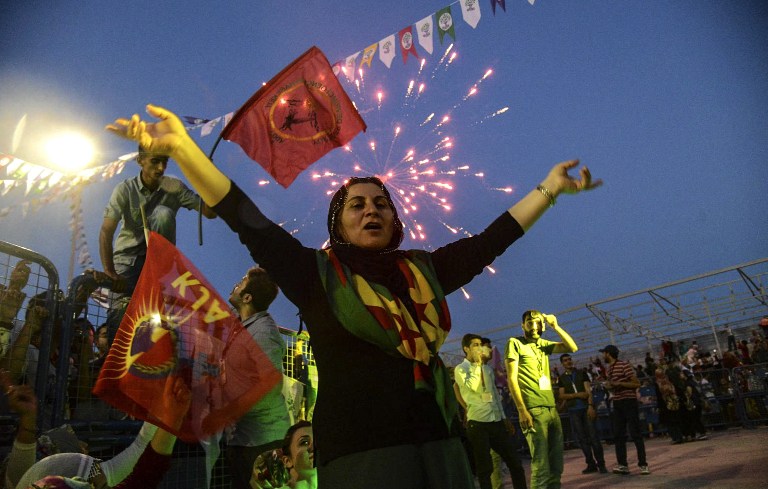
The result was an immense breakthrough for the HDP, which managed to easily surmount the 10 percent threshold needed to win seats and resoundingly defeat the AKP in the Kurdish-dominated southeast.
But the outcome has rattled the AKP — used to winning election after election over the last decade — and shown up rising discontent with the party over an economic slowdown and Erdogan’s perceived authoritarian tendencies.
As president, Erdogan should have in theory remained neutral in the campaign but instead waded in on the side of the AKP, blasting opponents at every opportunity.
Turkish media reports have indicated many AKP officials privately admit their campaign badly misfired, with many voters put off by Erdogan and Davutoglu’s incendiary but divisive rhetoric.
The Hurriyet daily reported that if Davutoglu fails to form a government the AKP could call an extraordinary congress in August and find a new party leader and premier, possibly Erdogan’s predecessor as president Abdullah Gul.
‘Take distance from Erdogan’
The coalition options are not obvious, with none of the three opposition parties in parliament falling over themselves to work with the AKP.
The MHP, which shares the AKP’s conservative and religious outlook would be the most natural partner, but is opposed to many aspects of the peace process with Kurdish rebels.
The CHP has bitterly denounced Erdogan as a dictator but its leader Kemal Kilicdaroglu has left open the door to a coalition.
“It would be disrespectful to the choice of the voters to leave the country without a government,” he said.
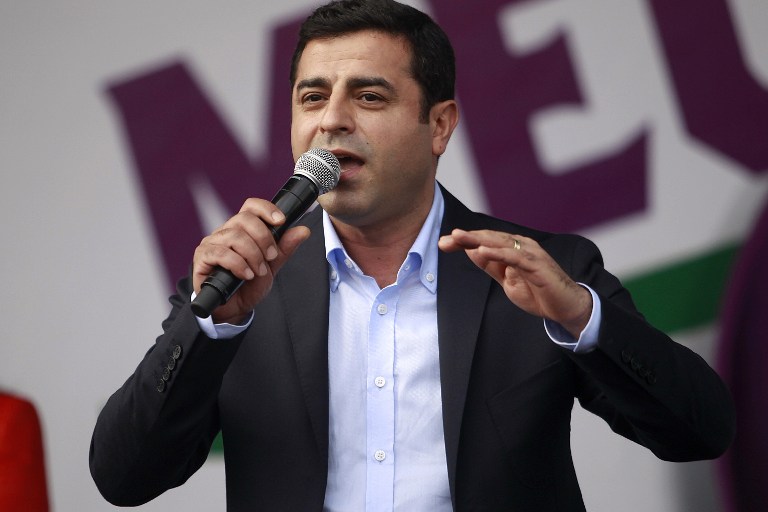
The HDP, whose charismatic leader Selahattin Demirtas was the star of the campaign, meanwhile has clearly ruled out taking part in any coalition.
“The opposition parties would first of all ask Davutoglu to free himself from the president and make sure he (Erdogan) keeps to his official prerogatives as written in the constitution,” the Ankara bureau chief of Hurriyet, Deniz Zeyrek, told AFP.
A red line for all the opposition parties is the presidential system that Erdogan had been seeking, he added.
Markets had been rattled by the political uncertainty Monday and shown heavy losses. But they were calmer Tuesday with the BIST 100 stock index up 0.5 percent and the Turkish lira flat against the dollar.




The Times of Israel Community.