

Falling out of favor with US Jewry
The disintegration of the Western Wall compromise leads the Hebrew-language media to delve into the complex relationship between Jews in Israel and abroad, and to wonder if the bond may be broken
 Add ToI as a Preferred Source on Google
Adiv Sterman is a breaking news editor at The Times of Israel.
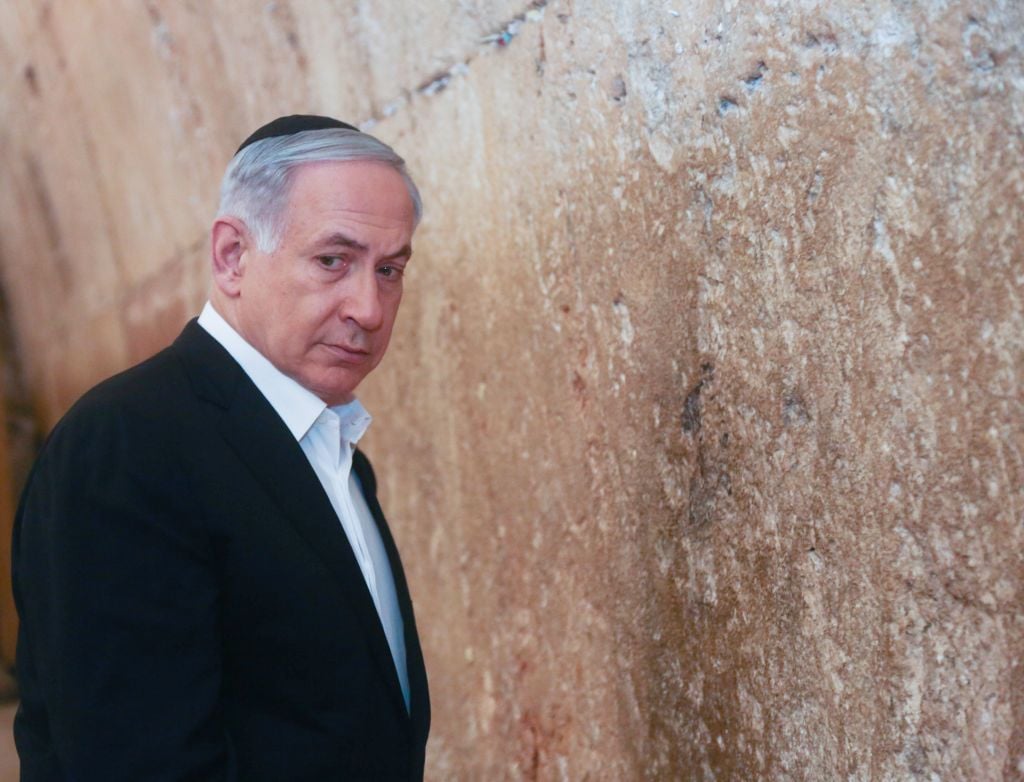
Following the Israeli cabinet’s decision to freeze an agreement for a permanent pluralistic prayer section at the Western Wall, the Hebrew-language newspapers turn overseas, to the liberal Jewish communities in the US, in an attempt to gauge how the contentious move will affect the unique yet volatile relation between Jews around the world.
Yedioth Ahronoth, for the most part, avoids the moral, philosophical, and religious aspects relating to the collapse of the Western Wall agreement and instead analyzes the matter from a utilitarian point of view. The daily warns that the decision will most likely have a negative impact on the stream of donations from abroad to Israel, as the decision is perceived to be deeply insulting to Reform, Conservative, and other liberal communities in the US as it displays a disregard for the religious views of non-Orthodox Jews.
In its segment on the Western Wall crisis, the paper notes that “$1,000,000,000 are in jeopardy,” and makes sure to prominently display a photo of a jam-packed AIPAC event, emphasizing the power of the US Jewish community in relation to Israeli politics. The daily further features an opinion piece by Los Angeles-based journalist Danielle Berrin, who describes the decision as no less than an “existential threat” to the Jewish state. “Liberal Judaism defines itself in terms of inclusiveness, expansion, and flexibility,” writes Berrin. “The current Israeli government is none of those things… Those like [Prime Minister Benjamin] Netanyahu, who give up on their principles in order to retain power, will end up losing both.”
Haaretz’s opinion section uses the Western Wall kerfuffle as a means to engage in one of its most popular activities — Netanyahu-bashing. “The head of the nation of the Jewish people has failed,” writes ex-Israel Hayom and new Haaretz contributor Dan Margalit. But the piece, while provocatively titled, is more about the divide between secular and religious Israel, and the tensions accompanying the gap. The veteran journalist lumps Orthodox and ultra-Orthodox Jews in Israel together, and says the two communities have lost several important battles in recent years, most notably with the increase in roles designated for women in the army.
He explains that these defeats have motivated some religious groups to fight against change in areas where the die has not yet been been cast, and to refuse to meet non-Orthodox Jews halfway. In this environment, Maraglit continues, the Israeli leadership must work much harder in order to enforce compromises between the two major sectors in Israel. “At this junction, Netanyahu must stand his ground,” Margalit writes. “Once everyone had originally found the point of balance, Netanyahu should have pushed back against the further demands of [the ultra-Orthodox party] United Torah Judaism.”
Israel Hayom tiptoes around the Western Wall saga, and instead leads with a report on the woes of Hamas leader Ismail Haniyeh, who is stranded in the Gaza Strip as Arab countries refuse to grant him residency in their territories. Haniyeh had originally planned to run the Islamist terrorist group from Qatar, but after the nation’s neighboring countries have taken to try to pressure the small state into compliance, Hamas’s leader has received a cold shoulder from authorities in Doha.
In light of the situation, Israel Hayom reports, Haniyeh and his associates are becoming concerned that they may be targeted by the IDF. Contributor Eyal Zisser writes that Haniyeh’s isolation highlights the hardships that are plaguing the Gaza-based terrorist organization. “With no support, and in light of the distress at home, the Strip is swinging from one crisis to another,” Ziser writes. “Things have become so bad that Hamas is even ready to consider waving a white flag and handing over the keys to Mohammad Dahlan, the sworn enemy and political rival of [Palestinian Authority President] Mahmoud Abbas, but also the only person who may be able to run the Strip.”
Dahlan, an exiled Palestinian official with presidential ambitions, bitterly fought Hamas a decade ago, later became Abbas’s top aide after losing that battle, and finally fell out with the Palestinian leader in 2010. Dahlan recently helped persuade Egypt to send badly needed fuel to Gaza in exchange for Hamas allowing him to broaden his political presence in the Strip, according to officials involved in the negotiations.
Haaretz dedicates a section to one of the most hated sea creatures in the country, the jellyfish, which due to its stinging potential turns the activity of beach-going from a pleasant pastime to a frightening experience. Swarms of blobby, transparent jellyfish have invaded Israel’s coast, the paper reports, and not only surfers and swimmers are suffering from the seemingly coordinated maritime attack.
According to Haaretz, the bodies of thousands of jellyfish have clogged parts of the Israel Electric Corporation’s infrastructure in power plants across the country, leaving the unfortunate workers with the task of plucking them out while avoiding being stung. And you thought you had a bad day at work.









The Times of Israel Community.