

Ful steam ahead
The fresh fava bean makes its annual appearance, offering a great addition to hummus or a fresh salad
- See more Times of Israel on Google - add us as a Preferred Source
Phyllis Glazer is an American-born food journalist based in Tel Aviv, Israel. She is the author of several cookbooks that have been published in Hebrew, German, and Italian, and appears frequently on television and radio in Israel.
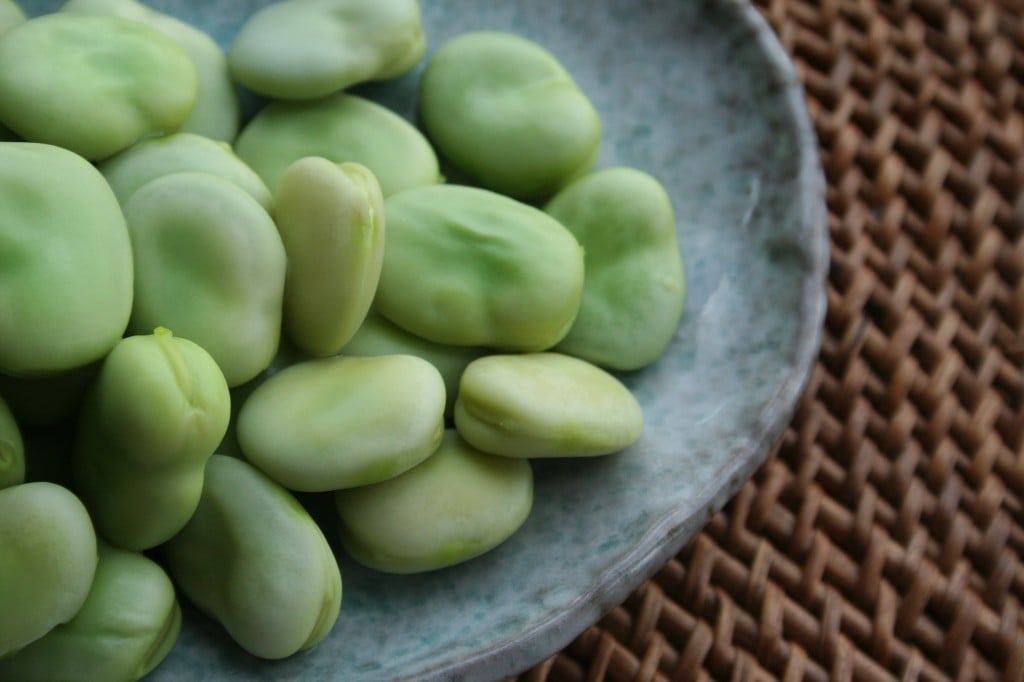
I’m pretty sure it was food writer Claudia Roden who first introduced me to the fava bean. I was in high school at the time, and my oldest sister had bought me a copy of Roden’s seminal book “The Book of Middle Eastern Cooking,” which was major-league exotic back in New York of the 1970s. Until then, the majority of my exposure to beans consisted of the (heavenly) frank-and-bean casserole my mother used to make every Sunday with Heinz beans canned in tomato sauce.
It was from Roden that I first learned that fava beans are consumed throughout the Middle East (including Israel), while cooked dried fava beans (ful medames) are considered Egypt’s national dish, eaten throughout the day, and are “probably as old as the Pharaohs,” according to Roden. I got my first authentic taste of ful, prepared much like hummus, in a hole-in-the-wall restaurant in Cairo, during a press trip from Israel to Egypt following the 1979 peace agreement.
As it happens, Israelis also love ful, cooked overnight in a traditional heavy aluminum pot with a narrow neck. Used primarily as a topping over hummus and served with a hard-boiled egg, pickles and a raw onion, it makes a high-protein, nourishing meal for breakfast, lunch or dinner. The same topping can be made with canned ful, well-seasoned with cumin and dried coriander, garlic and fried onions.
Just last week, while guiding a group of American tourists on the culinary treasures in the Carmel Market, I noticed impressive piles of large green pods; a sure sign that fresh favas are in season. No one in the group had ever seen them before, so I scooped up a kilo’s worth to cook at home. While shelling and peeling them seemed like a daunting task at the beginning, my students discovered that it was actually quite simple, and the resulting dish we created made it well worth the effort.
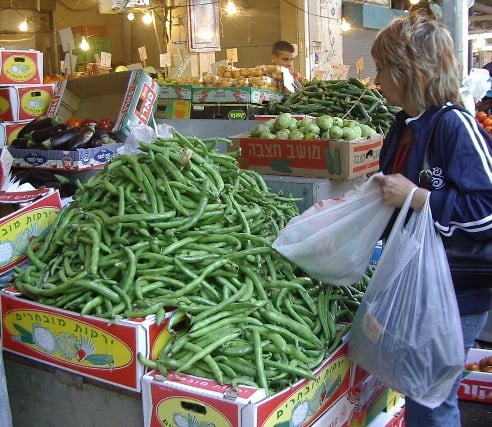
Fresh Fava Bean Salad with Olive Oil, Lemon and Parmesan (serves 6)
- 2 kilos fresh fava beans, shelled
- 3 tablespoons extra-virgin olive oil
- 2 tablespoons lemon juice
- 1-2 tablespoons chopped fresh coriander or parsley
- 1 teaspoon grated lemon rind
- Salt and pepper to taste
- 100 grams Parmesan cheese
- Fill a large pot with water and bring to a boil. Drop in the shelled favas and cook over low heat just long enough for the outer skin to soften, about 25 seconds. Drain and let the beans cool. Use a sharp knife to pierce the skin at one end and slip off the skin. Transfer to a bowl (May be prepared one day in advance and chilled).
- Whisk together olive oil, lemon juice, garlic, coriander and grated lemon rind. Season with salt and coarsely ground pepper and pour over the fava beans. Mix gently. Use a vegetable peeler to shave off thin slices of cheese to garnish. Pour the mixture onto a serving plate and serve with lemon wedges.
Adapted from “Small Plates” by Joanne Weir for Williams-Sonoma.
Note: There is an inherited enzyme deficiency that can cause a severe allergic reaction to fava beans and fava bean pollen and is often inherited by those of Mediterranean or Middle Eastern ancestry, as well as Iraqi, Kurdish and Black African descent. If you’re inviting guests, always check with them before serving fava beans.









The Times of Israel Community.