

G-8: If Iran disrupts oil supplies because of sanctions, we’ll cope
Leaders tackle global economic troubles, hope Greece won’t leave eurozone
 Add ToI as a Preferred Source on Google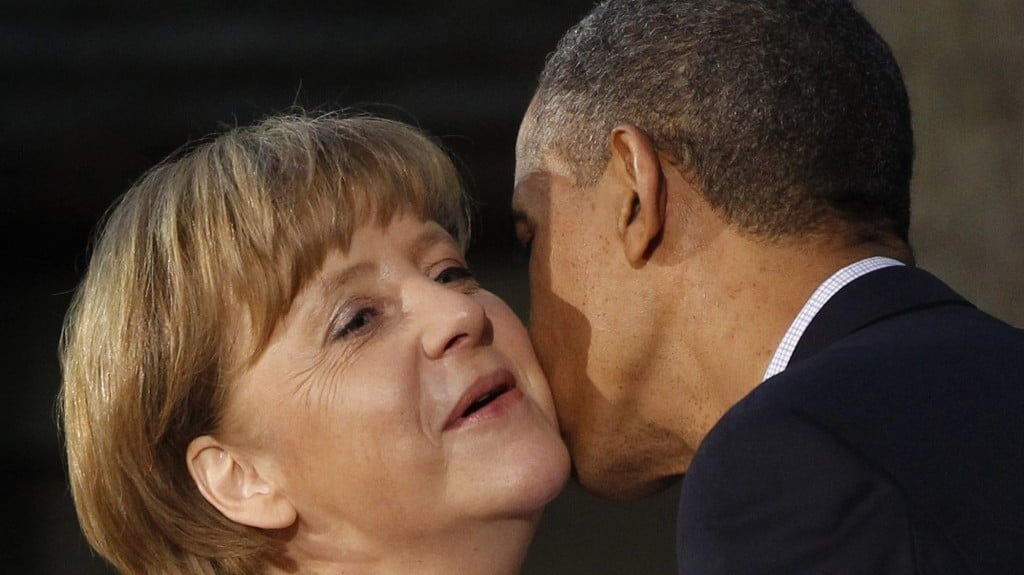
CAMP DAVID, Maryland (AP) — Leaders of the Group of Eight industrial nations said Saturday that they are ready to respond to oil supply disruptions as Iran faces sanctions aimed at crippling its oil exports.
The G-8 leaders say increasing disruptions in the world oil supply “pose a substantial risk” to the global economy. But they stand ready to call upon the International Energy Agency to ensure that the oil market “is fully and timely supplied.”
Circling up around a table in a rustic cabin at the US presidential retreat, the leaders turned to the European economy, underlining the need to keep bringing deficits down through austerity measures but also agreed that targeted spending on things like education and public works projects is needed to solve Europe’s financial crisis.
The leaders expressed hope that Greece will remain in the eurozone as they huddled for a shirt-sleeves summit aimed at keeping Europe’s economic troubles from multiplying and spreading around the world.
“All of us are absolutely committed to making sure that growth and stability and fiscal consolidation are part of an overall package,” US President Barack Obama said.
Germany’s Angela Merkel, for her part, said growth and deficit cutting reinforced each other “and that we have to work on both threads, and the participants have made that clear, and I think that is great progress.”
The G-8 leaders’ joint statement from the woods of Camp David reflected both hope and recognition of the daunting economic challenges they face.
“The global recovery shows signs of promise, but significant headwinds persist,” they said.
Europe’s fate is critical to Obama’s political survival. An economic recession that spreads to the US could damage an already slow recovery and boost the argument by his Republican challenger, Mitt Romney, that the United States economy needs new leadership.
The summit brought together leaders of the United States, Germany, France, Canada, Italy, Britain, Russia, and Japan in an effort to figure out how to tame Europe’s debt crisis while also increasing the demand for goods and spurring job growth.
There is a get-acquainted aspect to the session as well.
The Camp David gathering, the largest collection of foreign leaders ever at the presidential retreat, is the first G-8 meeting for just-elected French President Francois Hollande, for Italian Premier Mario Monti and for Japanese Prime Minister Yoshihiko Noda. In what has been widely viewed as a snub, Russian President Vladimir Putin is skipping the G-8. He sent Prime Minister Dmitry Medvedev in his place.
The group’s statement conceded some points to Merkel’s push for austerity, saying budget deficits needed to be closed. But it added that budget cutting should “take into account countries’ evolving economic conditions and underpin confidence and economic recovery.” That suggested a willingness to let indebted countries take more time to reduce their deficits in line with eurozone rules in order to lessen the deadening impact of cuts on the economy.
“The right measures are not the same for each of us,” their statement said.
Their statement of support for Greece remaining in the euro underlined the potential and unpredictable damage to the global financial system that could come from a Greece departure. It follows a week of increasing speculation that Greece might not be able to stay the course.
Obama chose the secluded Camp David setting in part to give leaders a chance for an intimate and freewheeling discussion out of sight of most media and far from the raucous protests that have accompanied previous meetings of the G-8.
The gathering opened with a Friday evening discussion focused on global trouble spots Iran and Syria.
Copyright 2012 The Associated Press.






The Times of Israel Community.