

Gaza aid workers, journalists among contenders for top EU rights prize
Victory for Gaza groups seen as unlikely due to EU’s divisions over Israel; other nominees are a Serbian student movement, and jailed journalists in Georgia and Belarus
 Add ToI as a Preferred Source on Google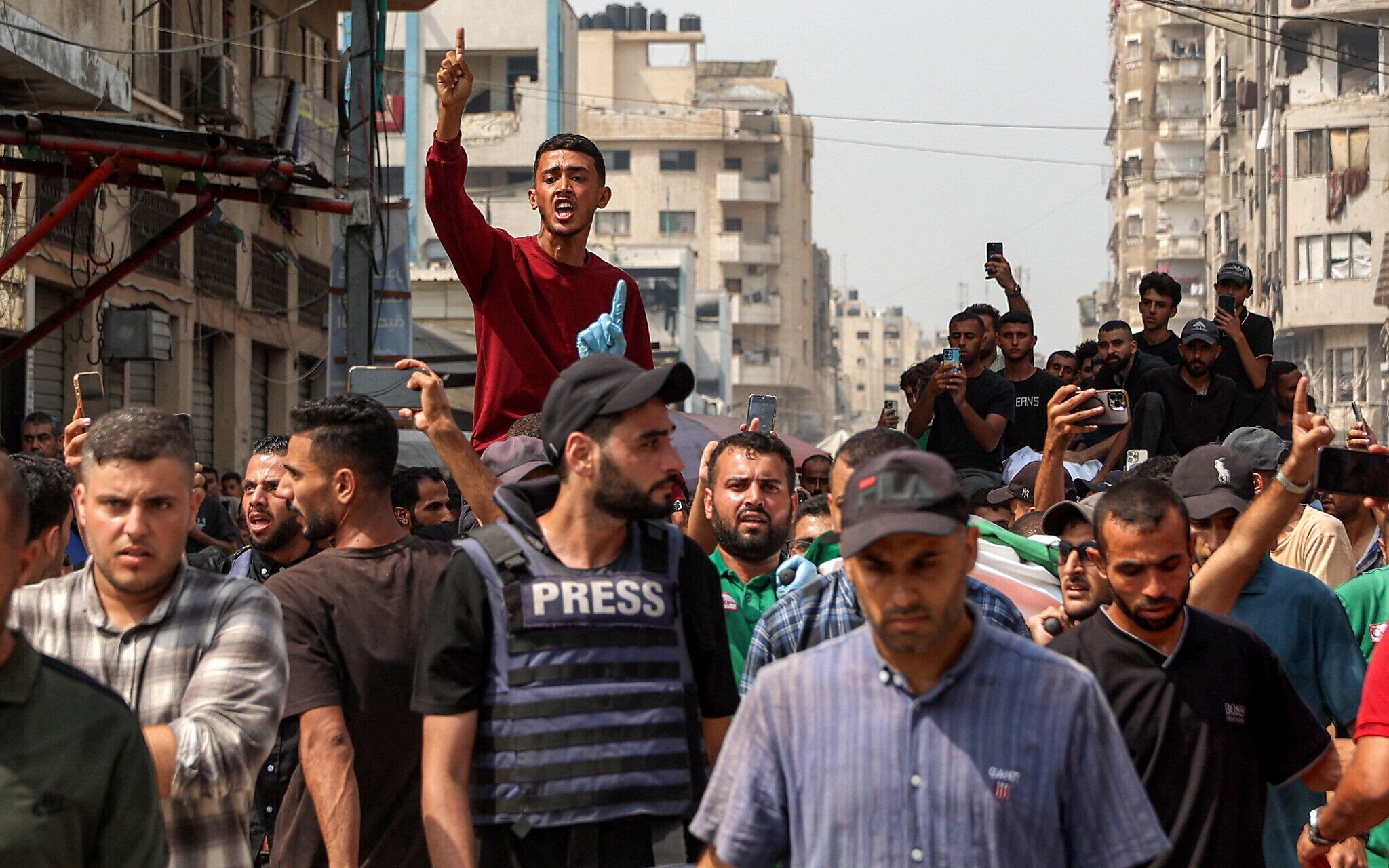
Jailed journalists in Belarus and Georgia, students in Serbia, and aid workers and reporters in Gaza are vying for the top EU rights prize, which will be awarded by the European Parliament on Wednesday.
The Sakharov Prize, set up in 1988 and named after Soviet dissident Andrei Sakharov, is bestowed annually on individuals or organizations to recognize their fight for human rights or democracy. Sakharov, who was among the most prominent Soviet human rights activists, was also an outspoken opponent of antisemitism and an advocate for Soviet Jewry.
Three groups of finalists are in the running this year for the prize: humanitarian workers and journalists in Gaza; jailed Georgian journalist and editor Mzia Amaghlobeli and Polish-Belarusian journalist Andrzej Poczobut; and a Serbian student movement that has shaken the country for nearly a year.
The European Parliament’s political groups as well as individual lawmakers can nominate contenders for the prize, which comes with a 50,000 euro ($58,000) endowment and will be handed out in a European Parliament ceremony on December 16.
Venezuelan opposition leader Maria Corina Machado and her ally, former presidential candidate Edmundo Gonzalez Urrutia, were last year’s winners. Machado went on to win this year’s Nobel Peace Prize.
The laureate or laureates will be decided in a meeting of the chamber’s seven political groups — by consensus or, if need be, by vote. This year’s candidates are as follows:
Gaza aid workers and journalists
The European Parliament’s hardline left and socialist groups nominated Palestinian journalists, the Red Crescent and the UN agency for Palestinian refugees, UNRWA, for the top award.
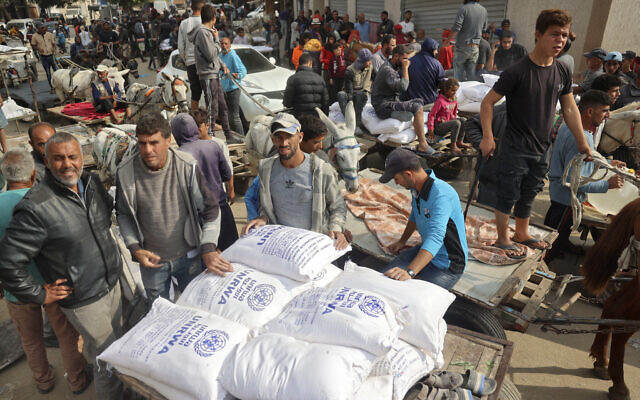
The Palestinian Journalists Syndicate has reported the killing of 252 Palestinian journalists in Gaza since the start of the war in Gaza, which was triggered by the Hamas-led invasion of Israel on October 7, 2023.
Israel denies targeting journalists, and has accused some of the reporters who have been killed of having ties to terror groups. It is likewise harshly critical of UNRWA, accusing it of being complicit with Hamas and saying that some of its staffers took part in the October 7 attack.
The nomination will likely struggle to get broad support as the EU’s 27 nations are sharply divided between countries that are supportive of Israel and those that are more sympathetic to the Palestinians.
Jailed journalists in Belarus and Georgia
Jailed Georgian journalist Mzia Amaghlobeli has emerged as a symbol of journalistic defiance to what critics see as a slide toward authoritarianism in the Black Sea nation.
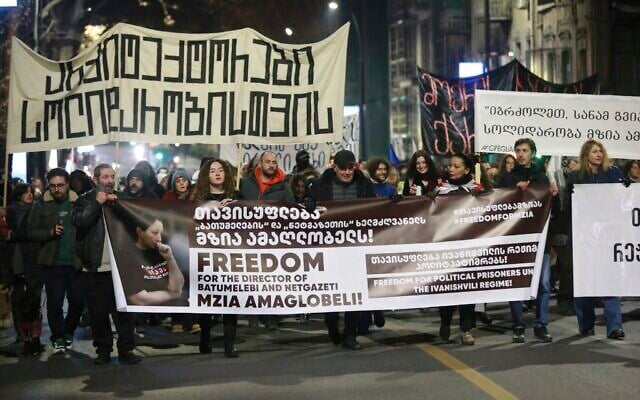
The 50-year-old has championed investigations into public spending and abuse of office through her independent newsrooms Batumelebi and Netgazeti.
Despite appeals from Georgian and international rights groups to release her, a court in August sentenced her to two years in prison on charges of using “resistance, threat or violence” against an official.
Nominated alongside Amaghlobeli is Polish-Belarusian journalist Andrzej Poczobut, a correspondent for Polish newspaper Gazeta Wyborcza.
Belarus sentenced Poczobut to eight years in jail in February 2023 over his critical reporting.
He had covered mass protests against Belarusian President Alexander Lukashenko in 2020 and refused to leave the country after it unleashed a crackdown on dissent, jailing hundreds and forcing most critics into exile.
The two jailed journalists are seen as strong contenders, with support from parliament’s biggest group, the conservative EPP, and the hard-right ECR.
Serbian student movement
For nearly a year, a student-led movement has drawn hundreds of thousands to the streets of Serbian cities, in the largest demonstrations since the fall of nationalist strongman Slobodan Milosevic in 2000.
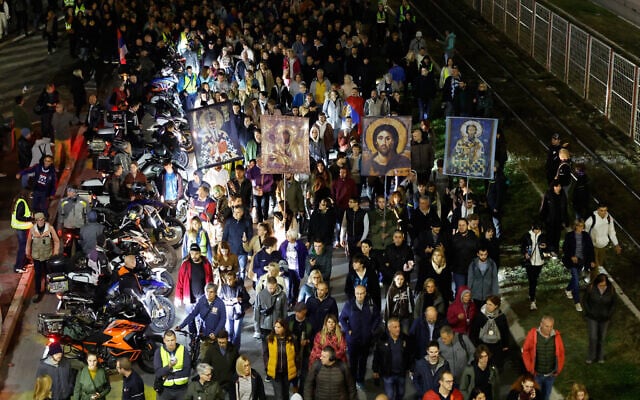
The movement emerged after 16 people were killed in November of last year when a canopy collapsed above the entrance of a newly renovated train station in Novi Sad, Serbia’s second-largest city, becoming a symbol of deep-rooted corruption.
Students blocked their universities and took to the streets with bloodied handprint banners, demanding systemic change in a country ranked 105th out of 180 on Transparency International’s Corruption Perceptions Index.
From the start, the movement followed a strict principle of direct democracy, with decisions made collectively through plenary assemblies across faculties.
For that reason, they were recognized for the prize as a movement — nominated by parliament’s centrist group Renew, and seen as a possible compromise candidacy.








The Times of Israel Community.