

Heavy rainfalls filling up Sea of Galilee
Despite optimistic start to the year, four meters are still needed to fill the lake
 Add ToI as a Preferred Source on Google
Aaron Kalman is a former writer and breaking news editor for the Times of Israel
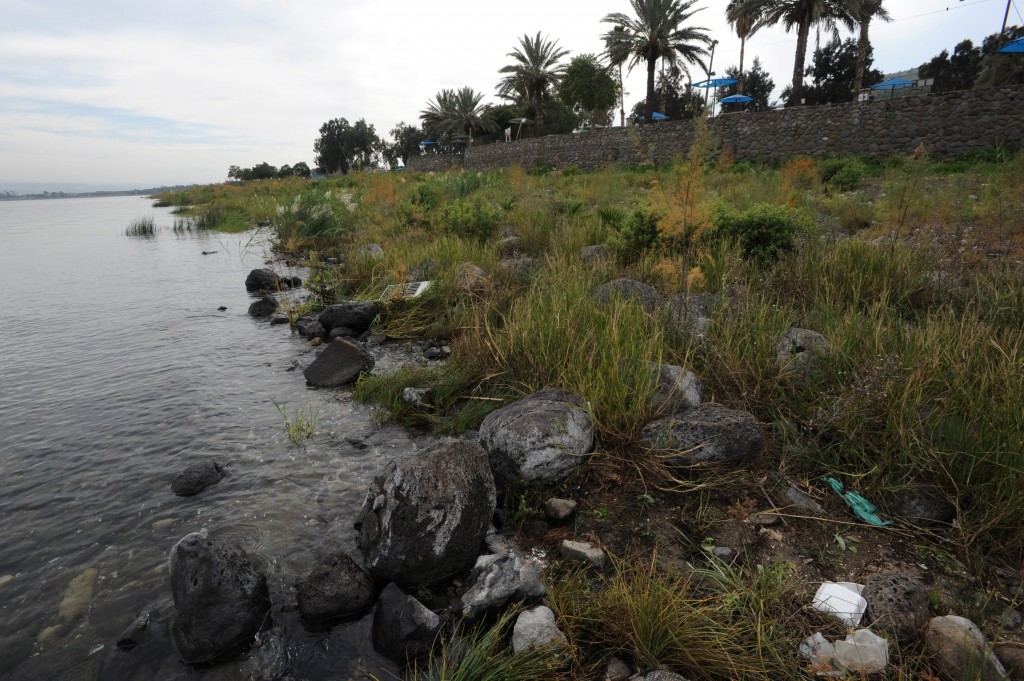
January’s heavy rainfalls have been a boon for the drought-ravaged Sea of Galilee, and on Saturday its water level reached the lower red line at 213 meters below sea level.
The first month of 2012 was the rainiest January in Israel’s history, and as a result more than 55 centimeters of water were added to the Sea of Galilee in one month according to the Israel Water Authority. Even though February hasn’t been as rainy, it has provided an additional nine centimeters as streams continued to flow with water from previous downfalls. In total, the water level has risen by almost 65 centimeters since the beginning of the year.
The Sea of Galilee, which is actually a lake also known as the Kinneret, is one of Israel’s most important water sources, providing fresh water to 30 percent of the country’s homes.
In order to properly manage Israel’s water supply, the Sea of Galilee is constantly monitored and its water level measured with regard to three important lines. The lower red line is located at 213 meters below sea level and when the level drops below that, it’s considered dangerous to pump water. However, in actual fact pumping has continued below that line. Almost two meters lower, at 214.87 meters below sea level, is the black line; when the water reaches that level all pumping from the lake is stopped.
There’s also an upper red line, at 208.80 meters below sea level. When water reaches the upper red line there is danger of flooding in the area around the lake. It’s been more than 15 years since the Deganya dam has had to be opened to prevent such flooding, according to a report in Yedioth Ahronoth, and there’s still a long way to go before reaching that stage — more than four additional meters of water are needed for the lake to be at its fullest.








The Times of Israel Community.