

Herzog, Netanyahu appear to spar, as president makes tacit jab at judicial overhaul
At opening of new Knesset Museum, Herzog urges respect between branches of government, while PM says Israel used to be a parliamentary democracy when the branches knew their place
 Add ToI as a Preferred Source on Google
Sam Sokol is a former political correspondent at The Times of Israel. He was previously a reporter for the Jerusalem Post, Jewish Telegraphic Agency and Haaretz. He is the author of "Putin’s Hybrid War and the Jews"
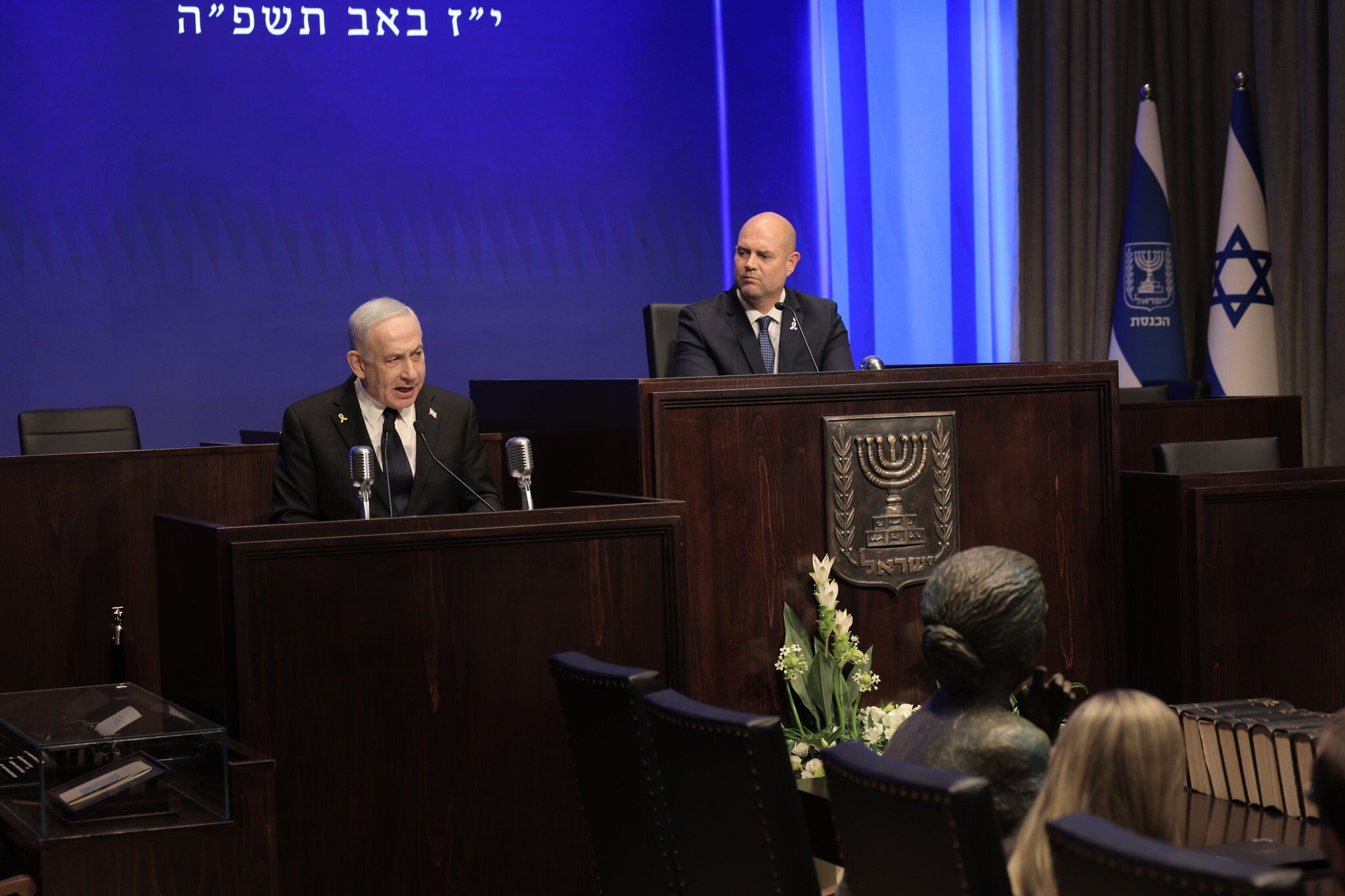
Prime Minister Benjamin Netanyahu and President Isaac Herzog appeared to publicly clash on Monday, as Israel’s head of state implicitly critiqued government efforts to weaken the power of the judiciary, at a ceremony celebrating the opening of the new Knesset Museum in Jerusalem.
In his speech, Netanyahu pushed back against criticism of his judicial policies, insisting that Israeli democracy was stronger in the past when each of the three branches of government “knew its place and its role, and there was balance.”
“Israel was a classic parliamentary democracy and operated through checks and balances. I hope we can return to the understandings of those days,” Netanyahu declared.
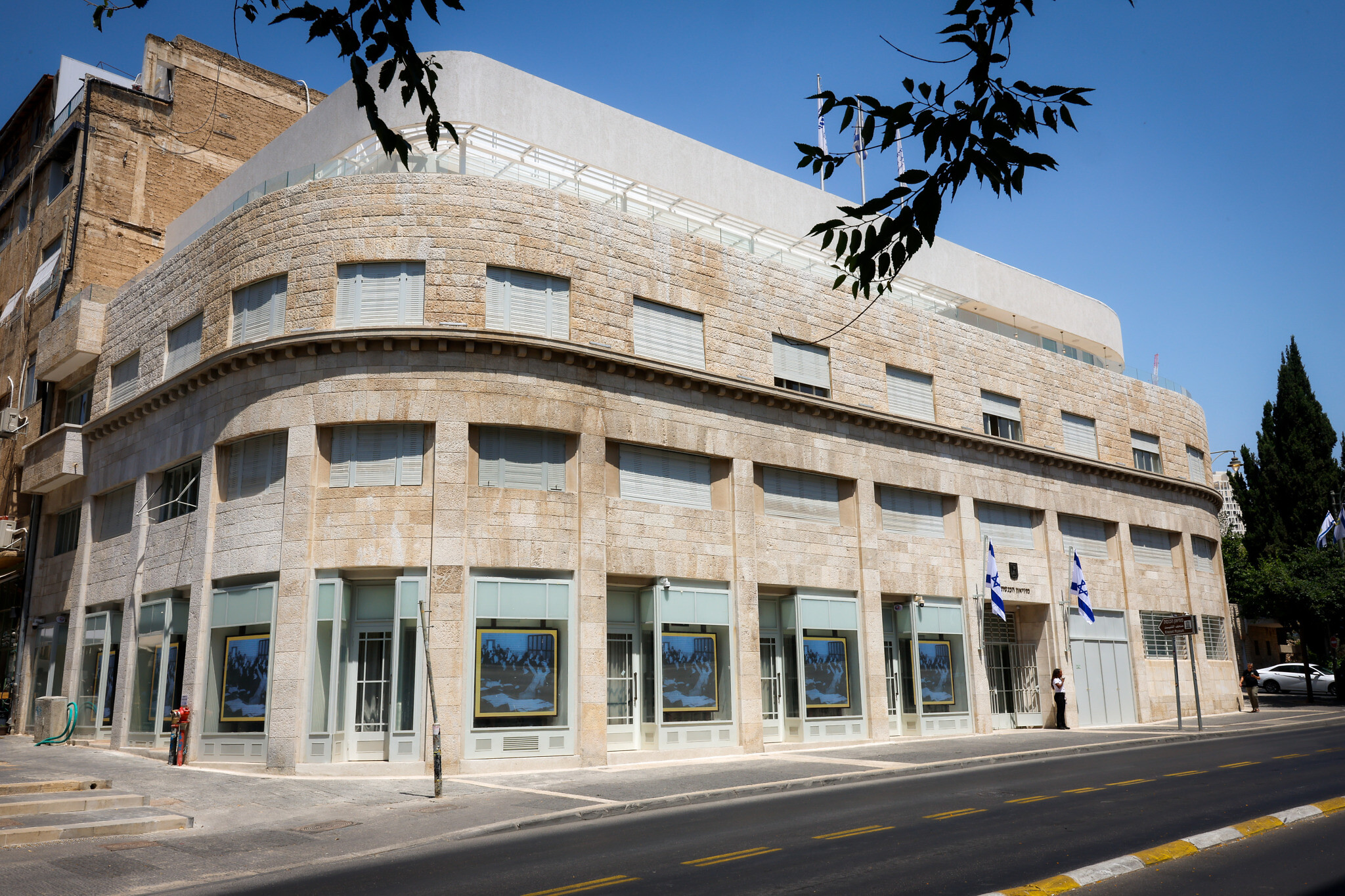
The building at Beit Froumine on King George Street in central Jerusalem served as the headquarters of Israel’s parliament from 1950 until 1966, when the current Knesset complex was completed.
Netanyahu also pushed back against criticism of his handling of the war in Gaza, insisting that “precisely during these days when great victories are being achieved against those who came to destroy us, when we stand before the end of the campaign and work to defeat the remnants of the Iranian axis and free all of our hostages, we are here celebrating the fact of our existence and independence in the heart of our eternal capital, Jerusalem.”
In an apparent response to harsh criticism from the Hostages Families Forum after comments he made last night referencing freeing the 20 living hostages in Gaza — seemingly ignoring those held captive whom Israel has declared dead — Netanyahu stated that “we are struggling for all of them, the living and the fallen as one.”
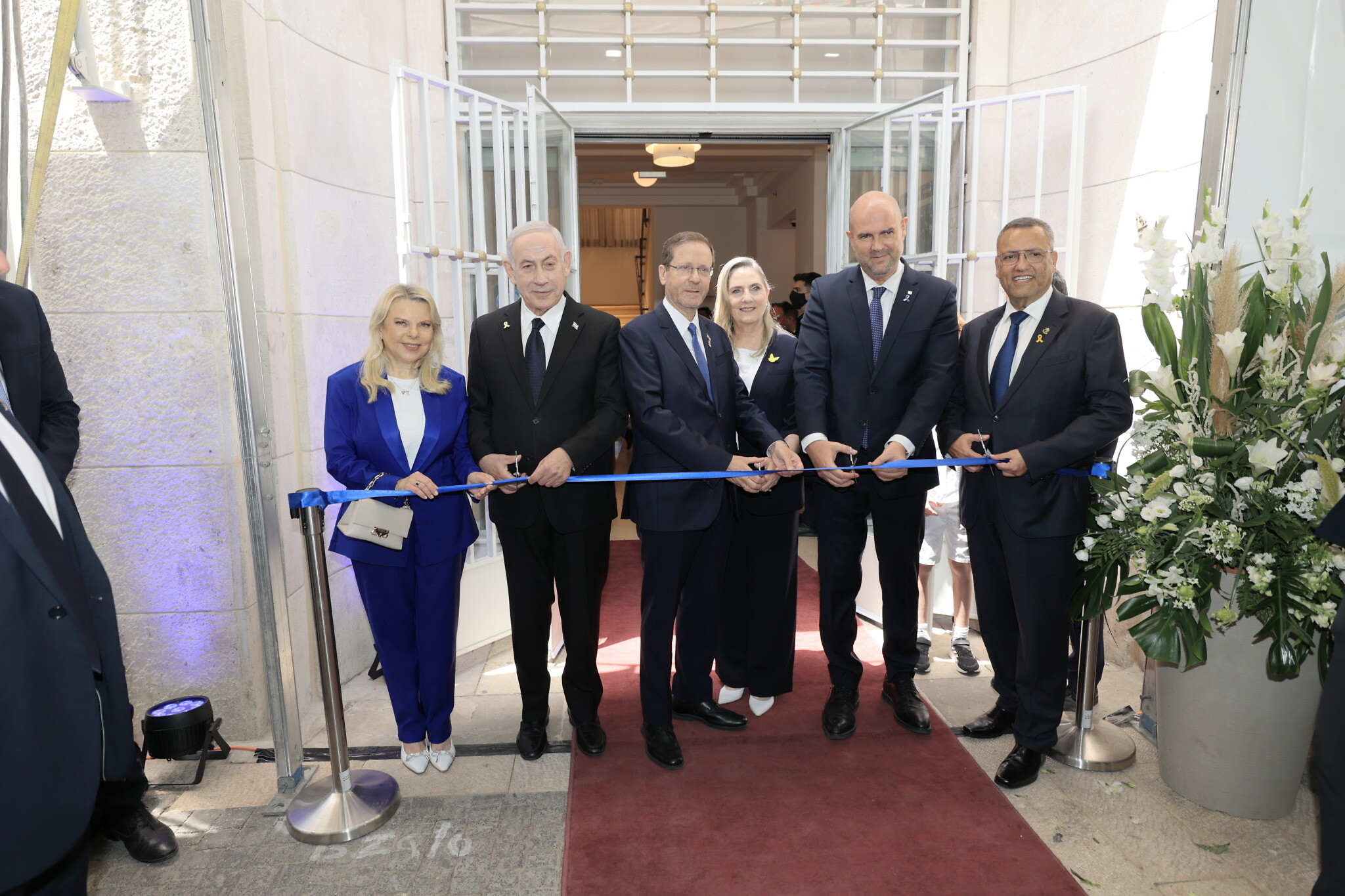
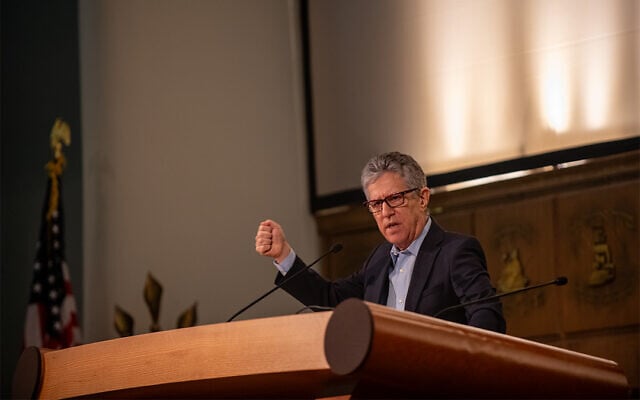
During the ceremony, which was also attended by Knesset Speaker Amir Ohana and Jerusalem Mayor Moshe Lion, President Isaac Herzog made an implicit critique of government efforts to weaken the power of the judiciary.
“Mutual respect between the three branches of government must be maintained. We must look to the past and learn from it how, despite deep disagreements, Knesset members internalized the national responsibility required of them,” he said.
“It is important to remember that the Knesset is the ultimate representation of sovereignty, and therefore we must safeguard its independence and that of its members, even when harsh opinions are voiced,” he said, appearing to criticize recent failed efforts to expel top Arab MK Ayman Odeh from the parliament.
Turning to international affairs, Herzog said that recognizing a Palestinian state would be a “grave mistake” and a “reward to terror,” in response to Australian Prime Minister Anthony Albanese’s recent announcement that his government would extend such recognition next month at the United Nations General Assembly.
A building of national significance
In a statement ahead of Monday’s ceremony, Knesset Speaker Ohana described the new museum as “a building of national and historical significance in the history of the Jewish people, where laws were enacted, speeches were delivered and debates were waged that shaped the character of the Knesset and the State of Israel.”
“The history of the Knesset and the State of Israel has never been more accessible,” he said.
Musing on Israel’s current challenges during the ceremony, Ohana said that “it seems that the trials we are required to face, the government, the Knesset, the army, and the people, are no less than those faced by our predecessors who sat here.”
“The War of Independence is not over, for there are still those who work to wipe the Jewish state off the face of the earth. We are fighting to eradicate the evil of Hamas from the face of the earth, while 50 of our hostages are still held in Gaza. We are fighting for them and are committed to bringing them back. A complete victory in Gaza is not a slogan — it is a condition for peace for the generations to come,” Ohana declared.
A history of legislation… and violence
According to the Knesset website, Beit Froumine was initially intended to serve as a mixed residential-commercial building, but was chosen to house the parliament in 1948 due to the presence of a large hall and attendant visitors’ gallery.
It was first used as the parliament in March 1950 and was the site of the passage of such seminal legislation as the Law of Return. The nondescript building on a busy corner of downtown Jerusalem was also the site of two of the most violent episodes of the Knesset’s history.
On January 7, 1952, thousands of people gathered outside the building to protest the government’s decision to enter a reparations agreement with the Federal Republic of Germany, seven years after the end of the Holocaust.
As lawmakers debated the agreement, a rally by opponents, led by future prime minister Menachem Begin, grew increasingly agitated. Police set up roadblocks and wire fencing, but protesters began throwing stones at the building, including one that shattered a window and hit MK Hannan Rubin in the head.
It took five hours before the police were able to disperse the angry crowd, and hundreds were arrested.
In 1958, Froumin House was again the scene of an attack on lawmakers, when Moshe Duek, a mentally disturbed man, threw a grenade into the building.
Then-justice minister Moshe Shapira was severely wounded in the attack. Prime minister David Ben Gurion and foreign minister Golda Meir also suffered minor injuries.
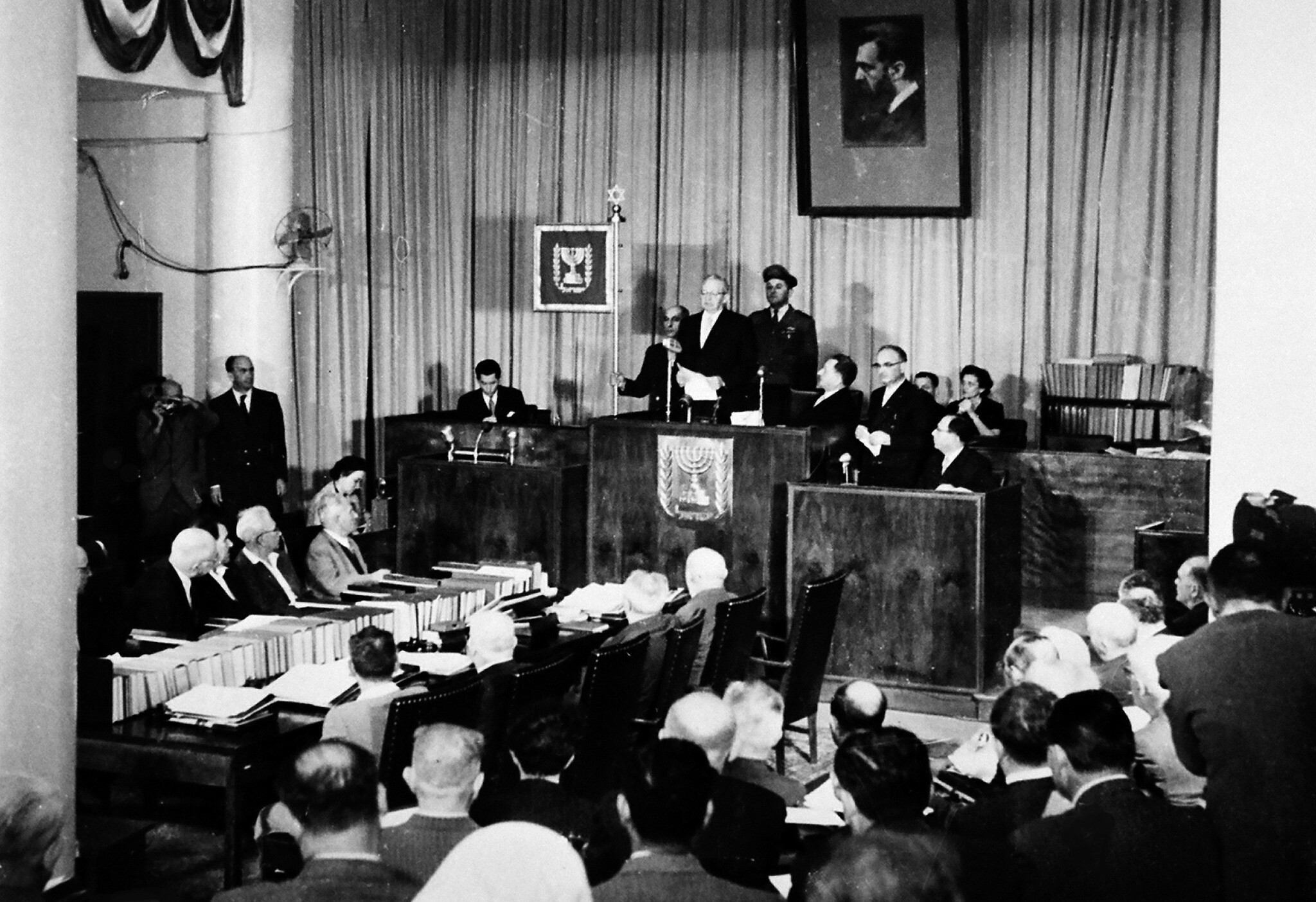
The building was later used by the Tourism Ministry before being sold to a private developer in 2004. In 2010, lawmakers passed the Knesset Museum Law, mandating that the site become a museum, leading to over a decade of work reconstructing and renovating the decades-old structure.
The new museum features a reconstructed plenum hall, cabinet room, Knesset canteen, and a variety of activities and programs, the Knesset spokesman announced.
“The Knesset Museum will serve as a milestone in educating future generations about the significant events this house has witnessed and the historical processes that shaped the State of Israel,” Director General Moshe Edri said in a statement, boasting that the new museum “will provide visitors with a unique experience suitable for the whole family.”
Tal Schneider contributed to this report.





The Times of Israel Community.