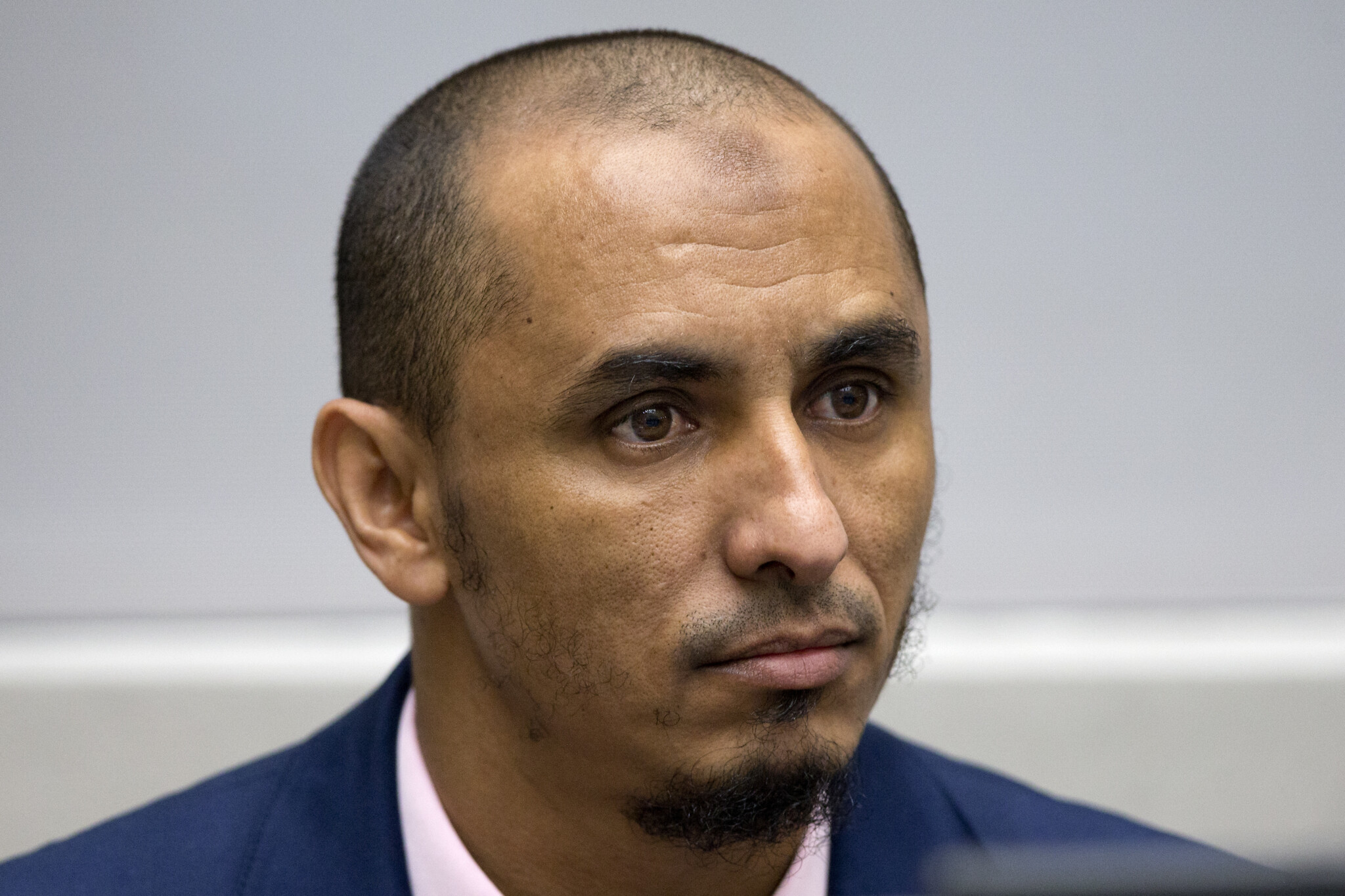
In this April 4, 2018, file image, alleged jihadist leader Al Hassan Ag Abdoul Aziz Ag Mohamed Ag Mahmoud takes his seat in the court room for his initial appearance on charges of war crimes and crimes against humanity at the International Criminal Court in The Hague, Netherlands. (AP Photo/Peter Dejong, Pool)
THE HAGUE, Netherlands — International Criminal Court judges on Wednesday rejected an appeal by an alleged Islamic extremist from Mali who argued that the charges against him were not serious enough to merit standing trial at the global court.
The decision clears the way for the trial of Al Hassan Ag Abdoul Aziz Ag Mohamed Ag Mahmoud to start later this year for alleged war crimes and crimes against humanity in Timbuktu, including torture, rape and persecution.
Prosecutors allege Al Hassan was responsible for the torture and mistreatment of the people in the ancient Sahara Desert city from April 2012 until January 2013 while it was occupied and ruled by Islamic extremists.
Al Hassan allegedly was a key member of Ansar Dine, an Islamic extremist group with links to al-Qaeda that held power in northern Mali at the time. Prosecutors say Ansar Dine imposed a brutal regime on Timbuktu residents including public floggings, amputations and forced marriages.
In this April 4, 2018, file image, alleged jihadist leader Al Hassan Ag Abdoul Aziz Ag Mohamed Ag Mahmoud, center, takes his seat in the court room for his initial appearance on charges of war crimes and crimes against humanity at the International Criminal Court in The Hague, Netherlands. (AP Photo/Peter Dejong, Pool)
At a hearing last year, the court’s Prosecutor Fatou Bensouda told judges Al Hassan was the de facto chief of the Islamic police and “played an essential and undeniable role in the system of persecution established by the armed groups throughout the period of occupation of Timbuktu.”
Get The Times of Israel's Daily Editionby email and never miss our top stories
Set up in 2002, the ICC is a court of last resort established to prosecute grave crimes when local authorities cannot or will not take legal action.
Advertisement
Help us report truthfully on social media
As a multimedia journalist, my job is to take the quality, fact-based journalism produced by The Times of Israel newsroom and make it accessible across every platform — from Instagram posts to podcasts to short-form videos.
This is how many, especially young people, consume news these days. But misinformation is rampant on social media. Our team at ToI produces accurate, responsible short-form reporting on Israel and the Jewish world.
If you believe in the importance of factual social media journalism, please consider joining our reader support group, The Times of Israel Community. Your financial support is essential to sustain responsible multimedia reporting.
We’re really pleased that you’ve read X Times of Israel articles in the past month.
That’s why we started the Times of Israel - to provide discerning readers like you with must-read coverage of Israel and the Jewish world.
So now we have a request. Unlike other news outlets, we haven’t put up a paywall. But as the journalism we do is costly, we invite readers for whom The Times of Israel has become important to help support our work by joining The Times of Israel Community.
For as little as $6 a month you can help support our quality journalism while enjoying The Times of Israel AD-FREE, as well as accessing exclusive content available only to Times of Israel Community members.
Thank you, David Horovitz, Founding Editor of The Times of Israel


 Add ToI as a Preferred Source on Google