

IDF: ‘Isolated failure’ allowed Hezbollah missiles to strike satellite station, Ramle
No sirens sounded in areas where long-range projectiles fired from Lebanon hit on Monday; IDF stresses ‘not a new threat’
 Add ToI as a Preferred Source on Google
Emanuel (Mannie) Fabian is The Times of Israel's military correspondent
An “isolated failure” resulted in two Hezbollah missiles impacting central Israel on Monday without being intercepted and without warning sirens sounding, the Israeli military said Tuesday after conducting an investigation.
Hezbollah fired several missiles from Lebanon in the attack, claiming to have targeted the IDF Home Front Command headquarters in Ramle, known as Rehavam Base, as well as a satellite communications station in the Ela Valley near Beit Shemesh.
One of the missiles struck Ramle, damaging a daycare and lightly wounding 14 people. Another directly struck the satellite station, damaging its infrastructure and wounding two others, according to rescue services and police.
Air defenses intercepted the other missiles, the Israel Defense Forces said.
A dashcam video permitted for publication on Tuesday showed the missile impact at a satellite station.
Hezbollah claimed the satellite station belonged to the “Communications and Cyber Defense Division of the Israeli enemy army,” although the site is in fact not a military installation, but rather a civilian-commercial site operated by the European company SES.
This dashcam video shows a Hezbollah missile striking the SES Satellite Station in Haela Valley near Beit Shemesh, March 9, 2026. (Social media; used in accordance with Clause 27a of the Copyright Law)
The site was established in 1972 by the Communications Ministry to transmit television and telephone signals where land connections were lacking. In 2008, it was privatized.
According to the military, attempts to shoot down the two missiles failed, and the impacts occurred without sirens sounding in the relevant areas.
The IDF described the incident as an “isolated failure,” adding that “this is not a new threat” and the Israeli Air Force “has intercepted similar threats in the past.”
The failure was investigated by both the Israeli Air Force, which is responsible for the interception, and the Home Front Command, which operates the warning system.
“Following the investigation, adjustments were implemented to strengthen interception capabilities against similar threats in the northern arena,” the military said.
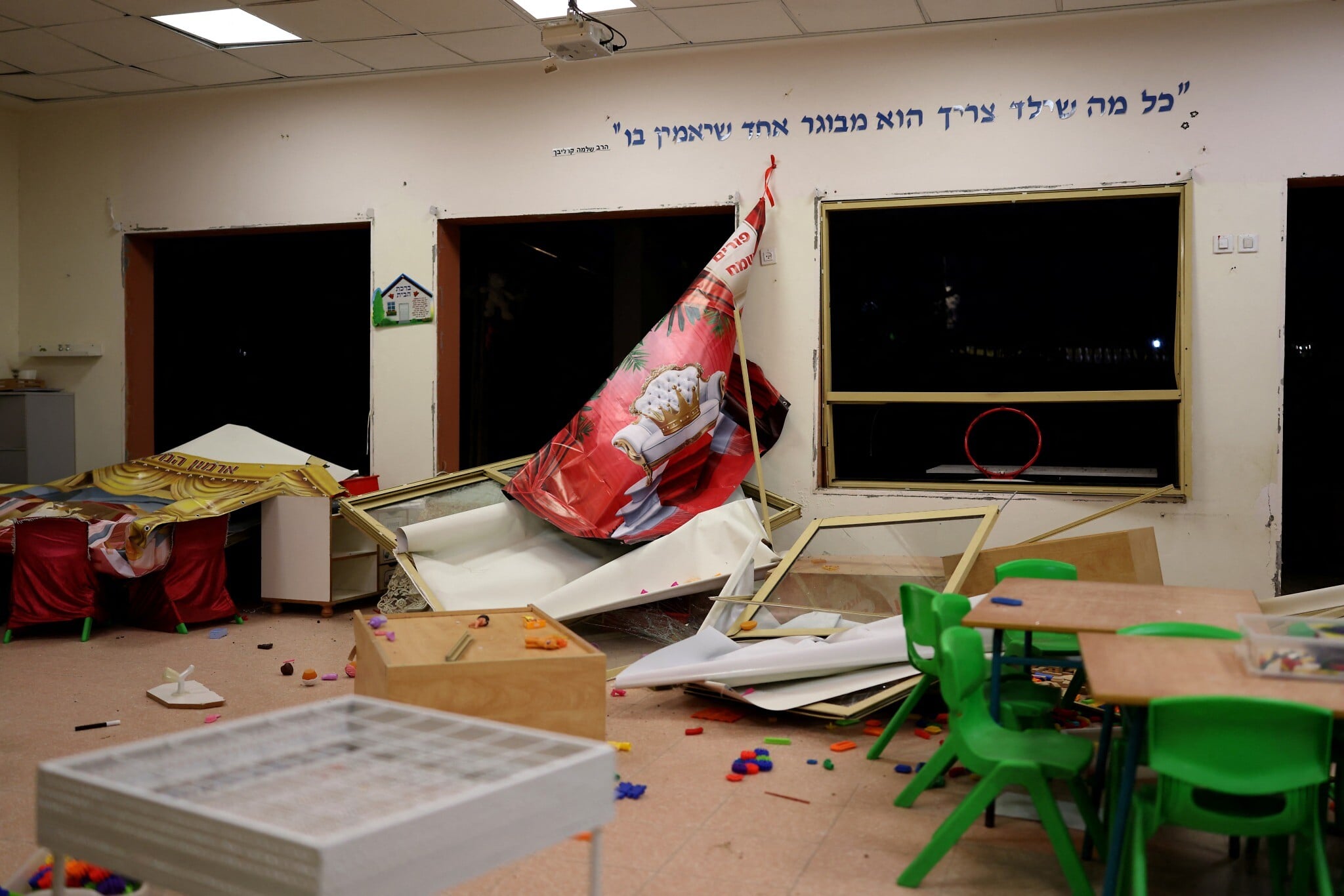
The IDF said Monday that the three Hezbollah launchers that had been used to fire the long-range projectiles at Israel were destroyed in airstrikes within an hour of the attack.
The terror group has been attacking Israel with renewed rocket and missile fire since last Monday, claiming it is in retaliation for the killing of Iran’s late supreme leader, Ali Khamenei.
Israel, in response, has struck hundreds of Hezbollah targets across Lebanon, including dozens in Beirut, and the IDF has pushed ground forces deeper into southern Lebanon in what it has said is a defensive measure to protect communities in northern Israel.







The Times of Israel Community.