

Iraq may oust a prime minister; Egypt may execute a president
Columnists say that expelling Syrian ambassadors will not suffice to halt the violence
Elhanan Miller is the former Arab affairs reporter for The Times of Israel
The expulsion of Syrian ambassadors from Western capitals did not succeed in lowering the level of violence in Syria. Most Arab news outlets lead Thursday with new reports of atrocities perpetrated by the Syrian army.
“Syria: Two new massacres; and Annan’s deputy: the Intifada never stopped,” reads the headline of Saudi-owned daily A-Sharq Al-Awsat. The daily begins by reporting a mass execution of army defectors in the city of Deir Al-Zour and a second in the town of Atarib. The photo, used also by London-based daily Al-Hayat, shows a mother fleeing to Lebanon holding her son who was shot in the hand by Syrian forces, an agonized look on her face.
Al-Hayat leads with the headline “The Security Council discusses the ‘next step’ if the Annan plan fails.” The daily leads with an American initiative to adopt “a third scenario,” referring to armed intervention without the consent of the UN Security Council, in which Russia and China continue to block anti-Assad resolutions.
Arab-nationalist daily Al-Quds Al-Arabi reports that Syrian forces have entered Lebanon and kidnapped three farmers. Three other Lebanese were wounded by Syrian fire shot across the border. Meanwhile, some Lebanese are calling for the expulsion of the Syrian ambassador to Lebanon following the expulsion of Syrian ambassadors from many European countries.
The dramatic European move against Syria is widely commented on by Arab columnists Thursday.
Al-Quds Al-Arabi’s lead editorial weighs two possibilities: international armed intervention or the establishment of a demilitarized zone where army defectors will be able to take refuge.
“Clearly, the Syrian regime will not be swayed much by these international pressures, since it relies on Russian and Chinese support. It has so far been able to adapt to the explosive situation on the ground, for over a year.”
“Will it be enough to expel the Syrian ambassadors?” asks A-Sharq Al-Awsat’s editor-in-chief Tareq Homayed in an editorial Thursday. He says that if the ambassadors were banished eight months ago, that could have been useful, but today, “following the death of over 13,000 Syrians,” it no longer is.
“The international community does not want to take a military stand, nor impose security zones in Syria which could guard the defectors from Syrian soldiers… the international community, as well as active Arabs, must take serious steps toward Russia so that it stops supporting the tyrant of Damascus and his killing machine,” writes Homayed.
Iraqi parliament to oust prime minister Maliki
Is Iraqi prime minister Nouri Maliki experiencing his last days in office? According to many Arab news outlets, the answer may be yes.
“Iraq: Signatures collected to withdraw confidence from Maliki,” reads the headline of A-Sharq Al-Awsat, referring to a drive to collect a majority of 325 parliament members’ signatures in order to oust Maliki.
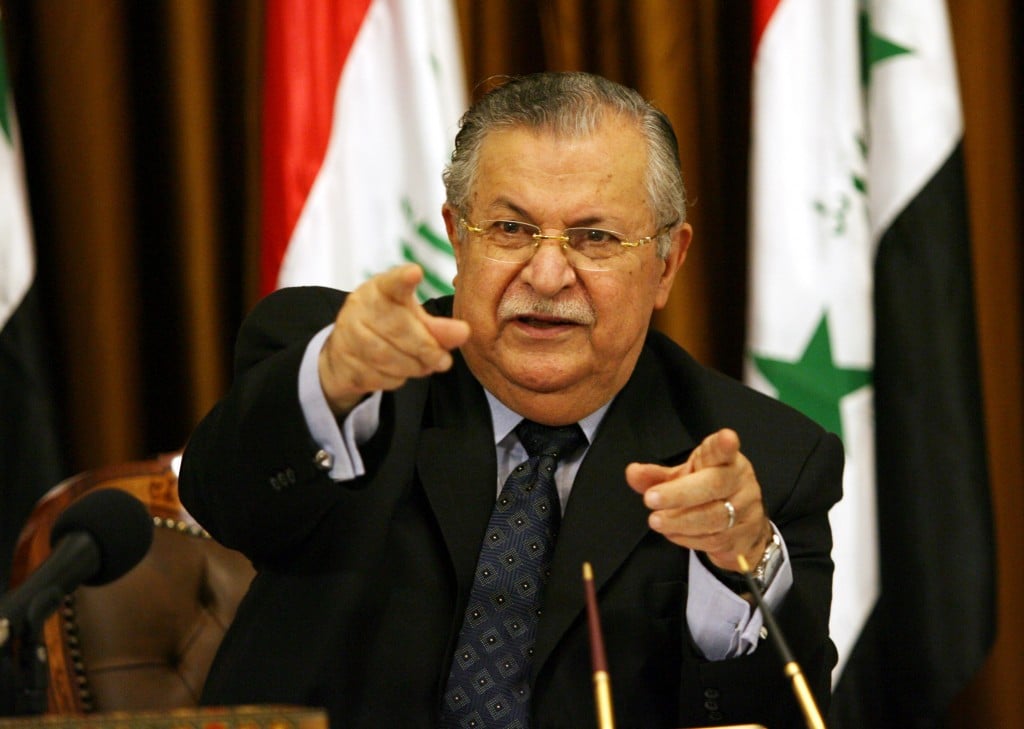
The daily reports this as a “very important development” on the part of Kurdish Iraqi President Jalal Talabani, who refused to turn to the parliament in the past to oust Maliki. Muqtada Sadr, a Shiite leader, said Maliki must be removed from office after refusing all appeals for political reform.
“The Kurdish hen no longer lays golden eggs,” writes columnist Muhammad Wani in A-Sharq Al-Awsat, referring to what seems to be the end of the Kurdish-Shiite political alliance in Iraq.
“There is no doubt that the Kurds need a new alliance after leaving — or on their way to leaving — a hated alliance which burdened them and did not grant them any of their national aspirations,” writes Wani.
Mubarak ruling draws nearer
Two days before a court delivers a ruling in the case of deposed and ailing Egyptian president Hosni Mubarak, Arab media are feverishly covering the trial and speculating on its outcome.
“Mubarak ruling in 48 hours: Innocence, prison or execution,” reads the headline of Dubai-based news channel Al-Arabiya. The channel reports that if Mubarak’s security forces are proven to have used live ammunition against protesters, he will face 10 years in prison even if he did not give the order to shoot at them. If, however, the prosecution manages to prove Mubarak’s direct involvement in the shooting, he may face 25 years in prison or even be executed.
Al-Ahram, once an establishment daily loyal to Mubarak, publishes a two-part article outlining the charges leveled against Mubarak and 10 other men in his close circle. The article, which features a recent photo of Mubarak on his sickbed, is titled “Mubarak: From the palace to the cage, aspects of the trial.”
Al-Quds Al-Arabi focuses on Mubarak’s two sons, Alaa and Gamal, currently standing trial on corruption allegations.The prosecution is accusing the two Mubarak sons of exerting illicit pressure to win shares in foreign concessions in Egypt.



The Times of Israel Community.