

Is Syria going the way of Iraq?
Analysts say Syria attacks may be the product of hard-earned Iraqi experience
Elhanan Miller is the former Arab affairs reporter for The Times of Israel
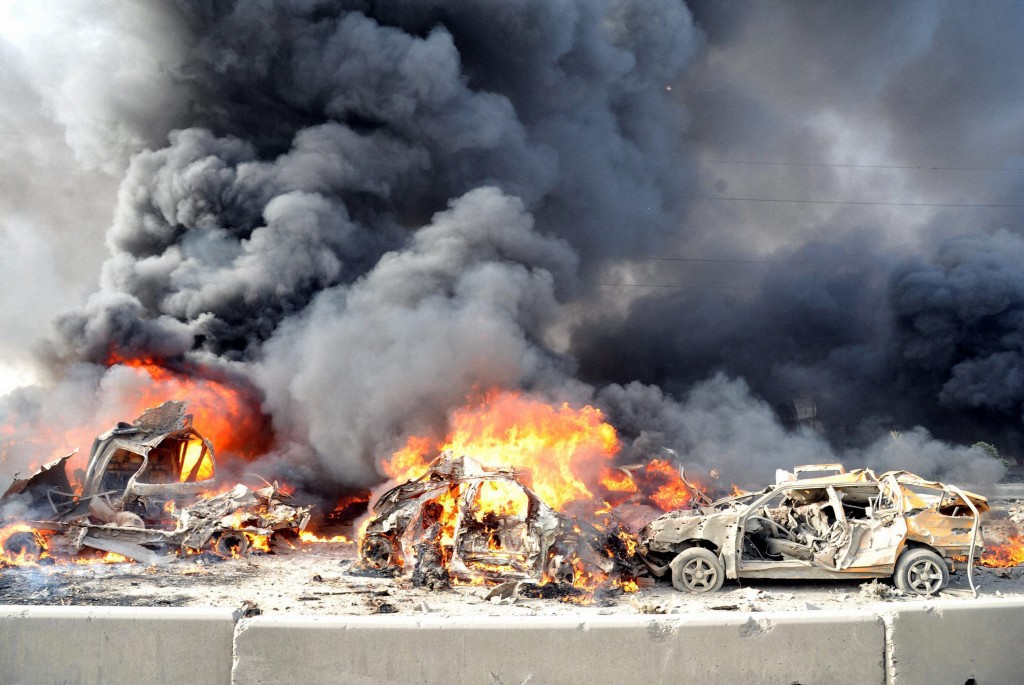
Fourteen months after social unrest began to ferment in Syria, the fall of President Bashar Assad seems as far away as ever. But as a series of explosions rocks the country — culminating in Thursday morning’s carnage in Damascus — the violence in the country has morphed from military clashes between government and opposition to grand-scale explosions reminiscent of Iraq.
“There is almost certainly an Iraq angle to the explosions in Syria,” one Iraq analyst who requested anonymity as he was not authorized to speak to the press, told the Times of Israel.
The Iraqi involvement in Syria manifests itself on three levels. Firstly, weapons smuggling has increased across the Iraq-Syria border, carried out by Bedouin tribes who straddle both sides of the border. Experts say the demand for light arms has recently increased in Syria, and Iraq is filling the void.
The second aspect relates to the operational experience gained in Iraq. The pattern of the double Damascus explosion follows the typical al-Qaeda Iraqi attack. Two explosions, seconds apart — the first small and the second large — intended to inflict maximum damage on fleeing crowds. This tactic is known as “small bomb, big bomb.”
But the most frightening prospect, analysts say, is the movement of ideologically motivated groups and cells from Iraq to Syria. Governments in both countries are viewed as infidels by fundamentalist Sunni elements, known as Salafis. Iraq is governed by a Shia-dominant coalition led by Prime Minister Nuri Al-Maliki and Syria, by a secular leader of the Alawite faith, an offshoot of Shia Islam.
On Thursday evening Syria’s SANA news agency reported 55 victims and 372 injured civilians in an attack that took place in the heart of Damascus. The fierce explosions in two separate car bombs left craters ten meters in diameter, Al-Arabiya news channel reported. Reports spoke of charges weighing a ton, leaving massive collateral damage.
When a series of explosions hit Damascus and Aleppo on May 5 killing five, opposition forces blamed the government for orchestrating the attack to discredit them. They repeated those arguments when an explosion nearly cost the lives of UN monitors passing a military checkpoint on their way to the southern city of Daraa May 9. But although opposition leaders again blamed the government for Thursday’s Damascus attacks, those claims seemed less convincing considering the magnitude of destruction.
Syria used to be a conduit for Jihadists on their way to Iraq, but now the flow may have reversed. The terrorists who carried out Thursday’s attacks are likely home-grown, but their motivation and experience are imported, analysts say.
On Wednesday, UN Secretary General Ban Ki-moon turned the attention of the General Assembly to the increase in bombing attacks in Syria. On Thursday, it seemed the terrible routine of government forces striking residential centers has given way to all-out chaos, Iraq-style.








The Times of Israel Community.