

Is the West about to invade Syria?
Egypt’s new prime minister continues to take flak, and Iran’s Supreme Leader calls for unity in the face of sanctions
 Add ToI as a Preferred Source on Google
Elhanan Miller is the former Arab affairs reporter for The Times of Israel
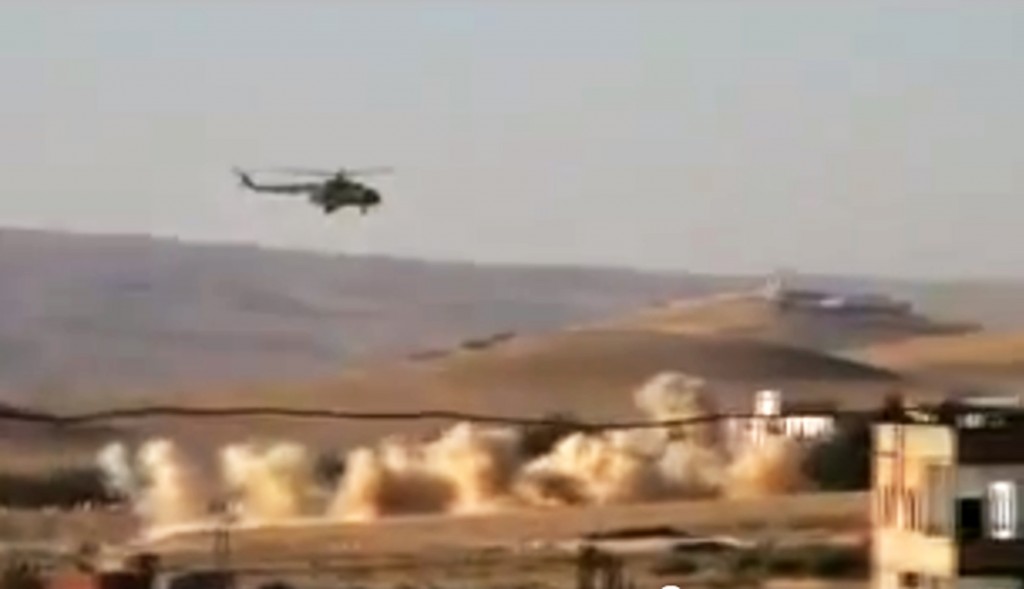
Arab dailies are reporting “decisive battles” in the two main Syrian cities of Aleppo and Damascus, and the country’s most senior defector gives a lengthy interview to Saudi-owned daily A-Sharq Al-Awsat.
Manaf Tlas tells the daily that there are many people within the regime “whose hands are not sullied with blood,” and should not be purged following Assad’s downfall. Tlas is currently paying a religious visit to Saudi Arabia, wishing that relations between Syria and Saudi Arabia hadn’t deteriorated as they did.
“I do not see the [future] Syria with Bashar Assad,” he cautiously tells the daily in his first public interview.
As thousands of regime soldiers are sent to confront the opposition in Aleppo, the opposition’s Free Syrian Army is calling the battle “the Benghazi of Syria,” referring to the vicious fighting that took place in Libya before the fall of Gaddafi, London-based daily Al-Hayat reports.
“I do not see the [future] Syria with Bashar Assad,” Manaf Tlas says cautiously
An Al-Jazeera reporter crosses the border from Turkey into Syria and interviews Free Syrian Army fighters in the western hinterland of Idlib, in north-western Syria. The fighters tell of the Assad regime’s torture and humiliation.
London-based daily Al-Quds Al-Arabi reports that Western countries, Jordan and Turkey are planning to invade Syria, as reported by London’s Royal United Services Institute (RUSI).
The daily’s editor Abd-Al-Bari Atwan bases his editorial Thursday on the report, concluding the Iran and Saudi Arabia are waging a proxy war on Syrian land.
As thousands of regime soldiers are sent to confront the opposition in Aleppo, the opposition’s Free Syrian Army is calling the battle “the Benghazi of Syria.”
“We must take the conclusion of this report very seriously, since most if not all of the western wars — past and future — were concocted in Britain,” writes Atwan. He notes that the purpose of foreign intervention is not to protect the Syrian people, but rather to contain the sectarian violence from spilling into neighboring countries.
A video uploaded to the opposition’s Ugarit News channel on YouTube displays a bombarded mosque in the city of Andan, near Aleppo.
Attack on Egyptian PM continues
The media attack on the new Egyptian prime minister Hisham Kandil continues in Arab dailies Thursday.
Al-Quds Al-Arabi claims that Kandil’s supporters view him as a capable and devout man, while his detractors accuse him of lacking a clear vision on Egypt’s future and failing in his last ministerial position as irrigation minister.
“Kandil is searching a government that will please everyone,” sarcastically reads the headline of independent Egyptian daily Al-Masry Al-Youm
“Kandil is searching for a government that will please everyone,” sarcastically reads the headline of independent Egyptian daily Al-Masry Al-Youm, highlighting the apparent non-committal personality of the new prime minister as he constructs the new Egyptian government.
In a poetic critique of the new prime minister, Al-Hayat writer Amina Kheiri laments the current anarchy on Egypt’s streets despite the vague promises and “sweet talk” of President Mohammed Morsi.
“It seems like the people generally do not care much about Kandil’s good reputation, or whether he is a technocrat or a member of the Muslim Brotherhood or ‘an irrigation expert’ or even ‘a good man’,” writes Kheiri. “People are suffering from increased bullying and the lack of security or security officials.”
Iranians stand in line for food
Saudi-owned daily A-Sharq Al-Awsat, known for its antipathy towards Iran, features a front-page article about the deteriorating economic situation there.
The daily reports images of Iranian citizens standing in line to receive food, while Grand Ayatollah Ali Khamenei calls on the public to remain steadfast and not bicker publicly.
It reports that the sanctions imposed on Iran earlier this year have weakened the Iranian currency, raised inflation and caused widespread unemployment. Nevertheless, Iran’s Supreme Leader called Wednesday on politicians to display more unity, noting that the Western sanctions have harmed Europe more than they’ve harmed Iran.






The Times of Israel Community.