

Israeli workers get more skilled as automation looms, study says
Taub Center study finds a decline in workers at risk from automation, though it’s smaller among Arab Israelis and immigrants
 Add ToI as a Preferred Source on Google
Shoshanna Solomon was The Times of Israel's Startups and Business reporter
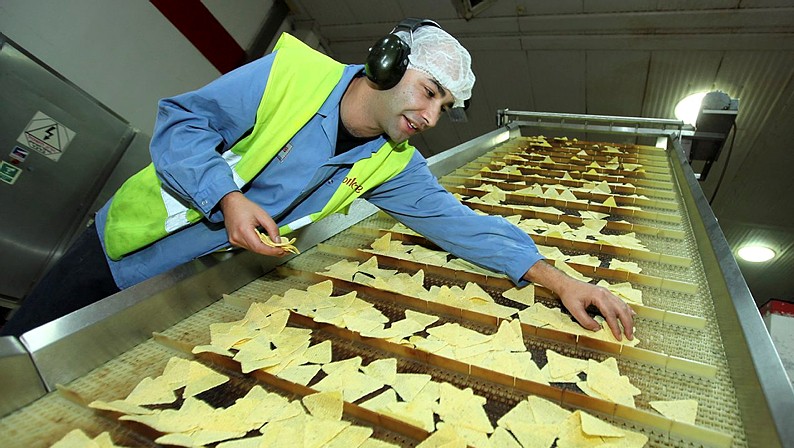
Israel’s labor force is undergoing a modernization process with fewer workers at risk of losing their jobs due to automation, according to a study by the Taub Center For Social Policy Studies in Israel.
The study examined the dangers posed by automation to the workforce as the nation moves from a traditional economy driven by manufacturing and production to an information technology and services economy, where high-tech and services are the major growth engines.
As a result of the market increasingly demanding high-skilled workers, the share of those whose jobs are highly vulnerable to automation went down between 2013 and 2015, the period covered by the study. However, this is less true for Arab Israelis and immigrants than for the native-born Jewish working population.
“The study finds that the relative portion of workers in low-risk occupations has risen, while the share of workers in high-risk occupations has declined – evidence of a continued labor force modernization process,” the Taub Center said in a statement.
The findings of the study come as policy makers and business leaders in Israel convened for two days in Jerusalem, on Monday and Tuesday, to discuss the challenges automation poses to Israel’s labor market.
The former president of Intel in Israel, Mooly Eden, warned on Monday that the government was not doing enough to deal with the blow being inflicted on the labor market by automation.
Thanks to the likes of autonomous cars, chatbots and digital banking, he sees “tens of thousands of people unemployed,” he said. “We can prepare for this,” he said. “But in my opinion we are completely unprepared.”
Fewer women in clerical jobs
The Taub study, by Prof. Claude Berrebi and Kyrill Shraberman, shows that changes among women were greater than among men with a significant drop in women employed in clerical work, indicating that these positions might have already undergone a process of automation as bank branches close, secretarial services become outsourced and offices computerize administrative tasks.
In the Arab Israeli sector the study shows a decline in the share of skilled workers in production and manufacturing — considered at high risk from automation — and a relatively strong rise in their share in sales and service as well as clerical work.
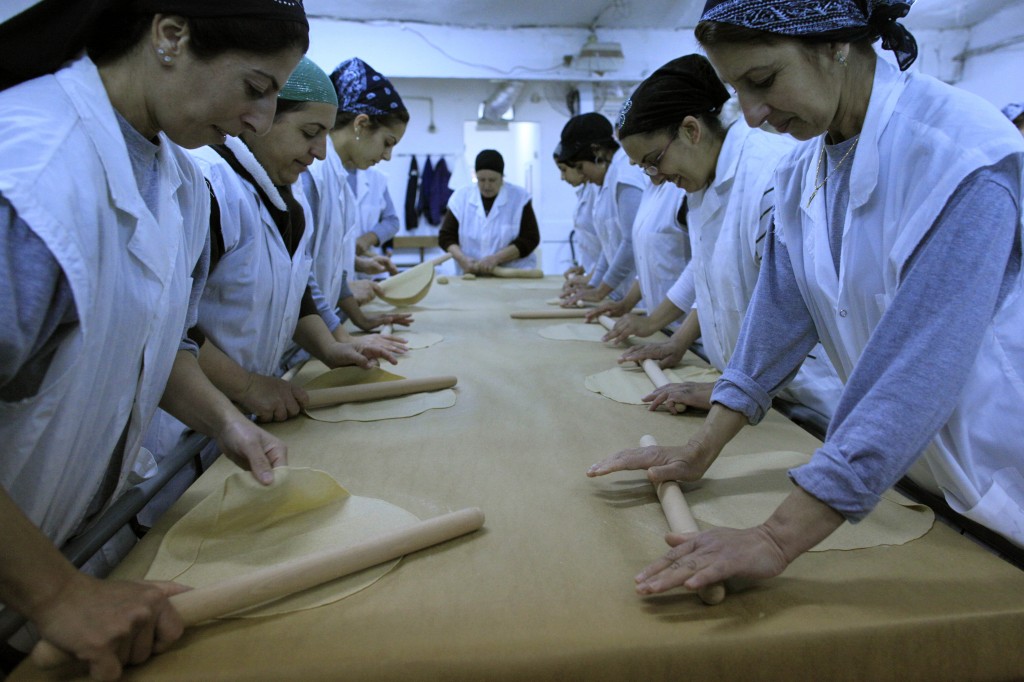
There was just a small change — an increase of 1% — in the share of Arab Israeli workers in occupations requiring an academic education. This is low relative to the Jewish population, which posted an increase of 1.9%. As a result, the average salary rise among Arab Israelis is also lower.
A possible reason for this is the relatively low skill level within the Arab Israeli sector: the share of those with high-level skills in reading comprehension and mathematics among Arab Israelis aged 16-64 is only 1%, versus 10-13% among the Jewish population, according to the OECD’s PIAAC survey of adult competencies.
Among Jewish immigrants, there has been a rise in the share of unskilled workers and a smaller increase in the share of workers in academic professions, relative to long-time residents or the native-born. An exceptional rise in the share of unskilled workers (like cleaning and security workers) is seen among men ages 45-54 who came to Israel between 1990 and 1995. According to the researchers, “the data point to the difficulties of integration among this adult male immigrant group who have been in Israel over a decade and have experienced difficulties adjusting to the modern labor market.”
The major impediment to immigrant integration in the labor market is language issues – Hebrew and sometimes English. Immigrants in general, and female immigrants in particular, are characterized by higher rates of academic education that do not match the local labor market. Thus, they often compromise by accepting employment in occupations that do not require an academic education. That said, immigrants are employed at slightly higher rates than Jewish long-time residents/native-born Israelis.
More education, better wages, but bigger gaps
The study also examined to what degree a year of formal education improves hourly average salary, and found that since 2003 there has been an overall rise in return on education. This return encourages workers to get more education, and thus improves the quality and the skill level of the labor force.
But this rise also contributes to increasing wage gaps between workers. In 2014, the hourly salary for men with 18 years of schooling, equivalent to a master’s degree, was 35% higher than for those with 12 years of schooling – equivalent to a high school diploma.
This gap was higher for women at 41%. But for Arab men the return on education declined between 2011 and 2014, as the rise in wages over those years for Arab Israeli men was more moderate than among the general male population. Among immigrant men, there was also a rise in return on education, although the gaps remained lower than among the general male population, the study showed. Wage gaps between immigrants with 18 years of schooling and those 12 years of schooling were 22% in 2014.
The Taub Center for Social Policy Studies in Israel is an independent, nonpartisan socioeconomic research institute.










The Times of Israel Community.