

Live updates (closed)
 Add ToI as a Preferred Source on Google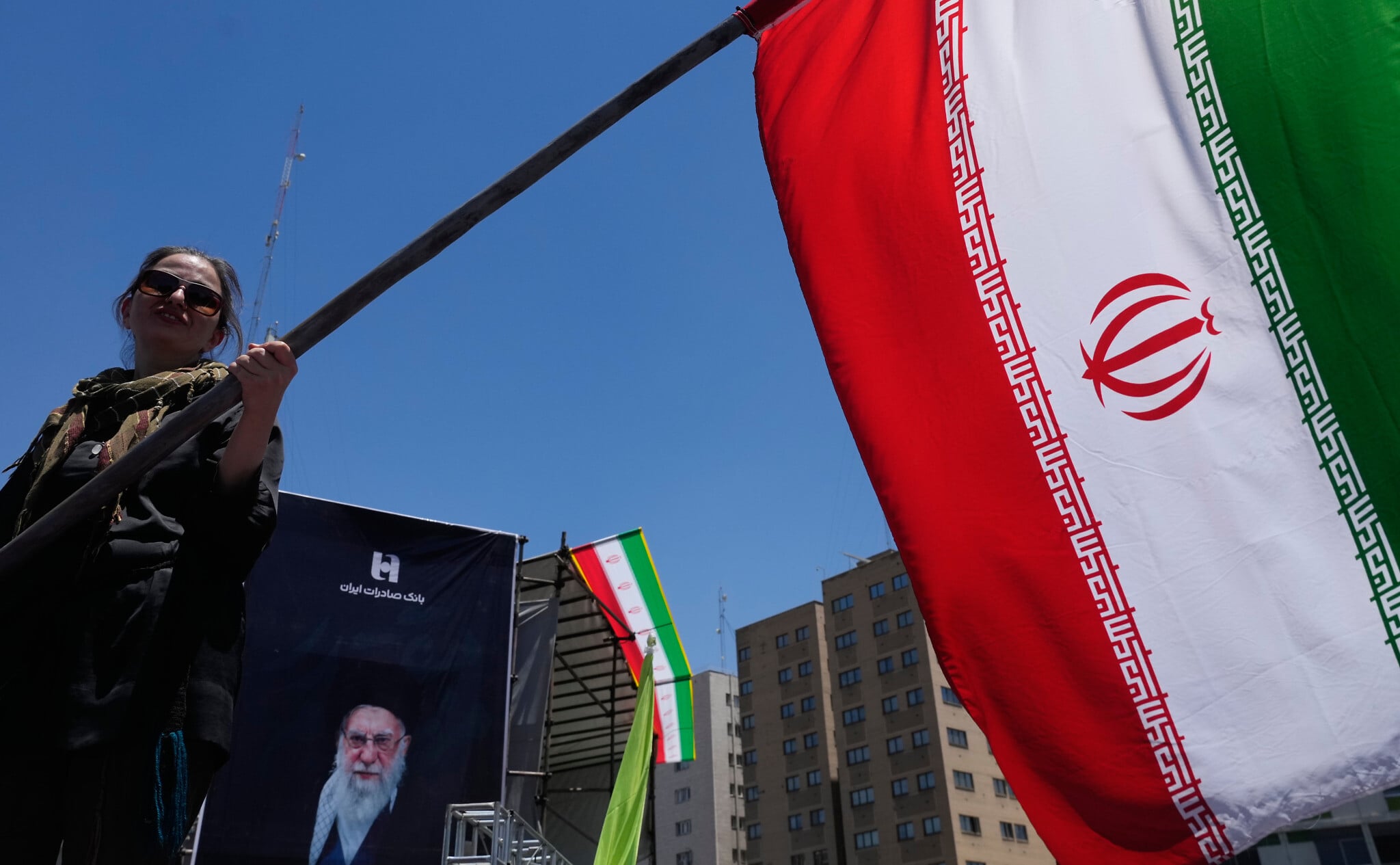

The Times of Israel is liveblogged Monday’s events as they unfolded.
US and Iran have reached ‘Peace Deal’ including Lebanon truce, Pakistani PM announces
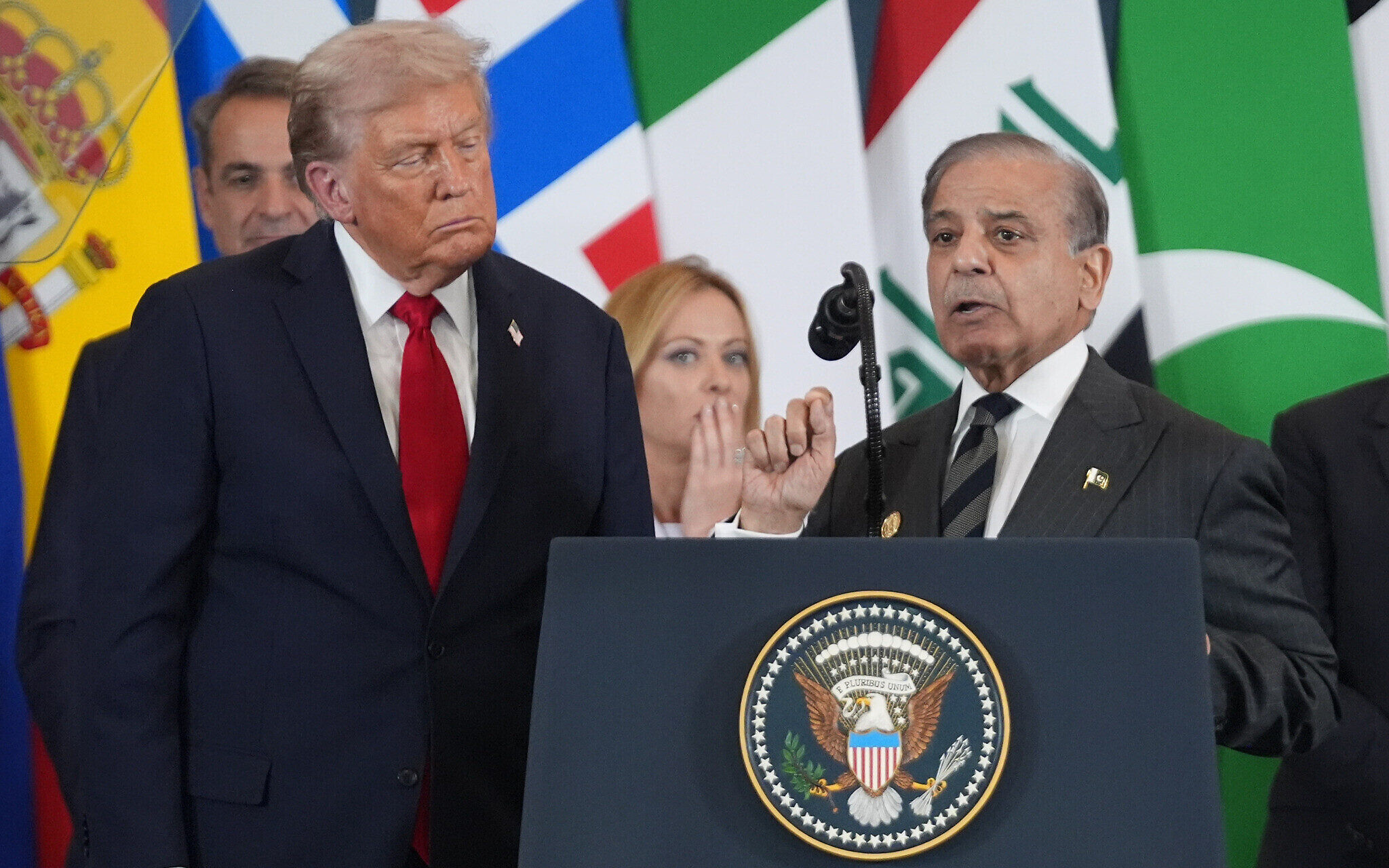
US President Donald Trump listens as Pakistan's Prime Minister Shehbaz Sharif speaks during a summit to support ending the more than two-year Israel-Hamas war in Gaza after a breakthrough ceasefire deal, on October 13, 2025, in Sharm El Sheikh, Egypt. (AP Photo/Evan Vucci)
The United States and Iran have reached a deal to end their war, Pakistani Prime Minister Shehbaz Sharif says in a statement on social media.
The deal includes a ceasefire in the conflict between Israel and the Iran-backed Hezbollah terror group in Lebanon, he says.
“Following intensive talks, we are pleased to announce that the Peace Deal between the United States of America and Islamic Republic of Iran has been REACHED,” he writes on X. “Both sides have declared the immediate and permanent termination of military operations on all fronts, including in Lebanon.”
He adds that there will be an official signing ceremony for the deal on Friday in Switzerland.
Following intensive talks, we are pleased to announce that the Peace Deal between the United States of America and Islamic Republic of Iran has been REACHED. Both sides have declared the immediate and permanent termination of military operations on all fronts, including in…
— Shehbaz Sharif (@CMShehbaz) June 14, 2026
If the deal takes effect, it will mark a formal end to the US-Israeli war with the Islamic Republic, which began at the end of February and has involved countries across the region.
The deal that has been reported is a memorandum of understanding meant to kick off 60 days of negotiations between the US and Iran. US President Donald Trump has said the deal will include the opening of the Strait of Hormuz, which Iran has blocked since the war began.
“With the agreement now in place, mediators will facilitate a series of meetings this week. These pre-implementation discussions will lay the foundation for the technical talks and the official signing ceremony,” Sharif writes.
Israel was not included in negotiations over the deal. Sharif thanks Turkey, Qatar and Saudi Arabia for helping bring the deal about.
His post comes as the Wall Street Journal reports that Trump plans to announce very soon that the US has reached an agreement with Iran.
Trump confirms US-Iran deal ‘complete,’ says he ‘authorizes’ opening of Hormuz, end of US blockade
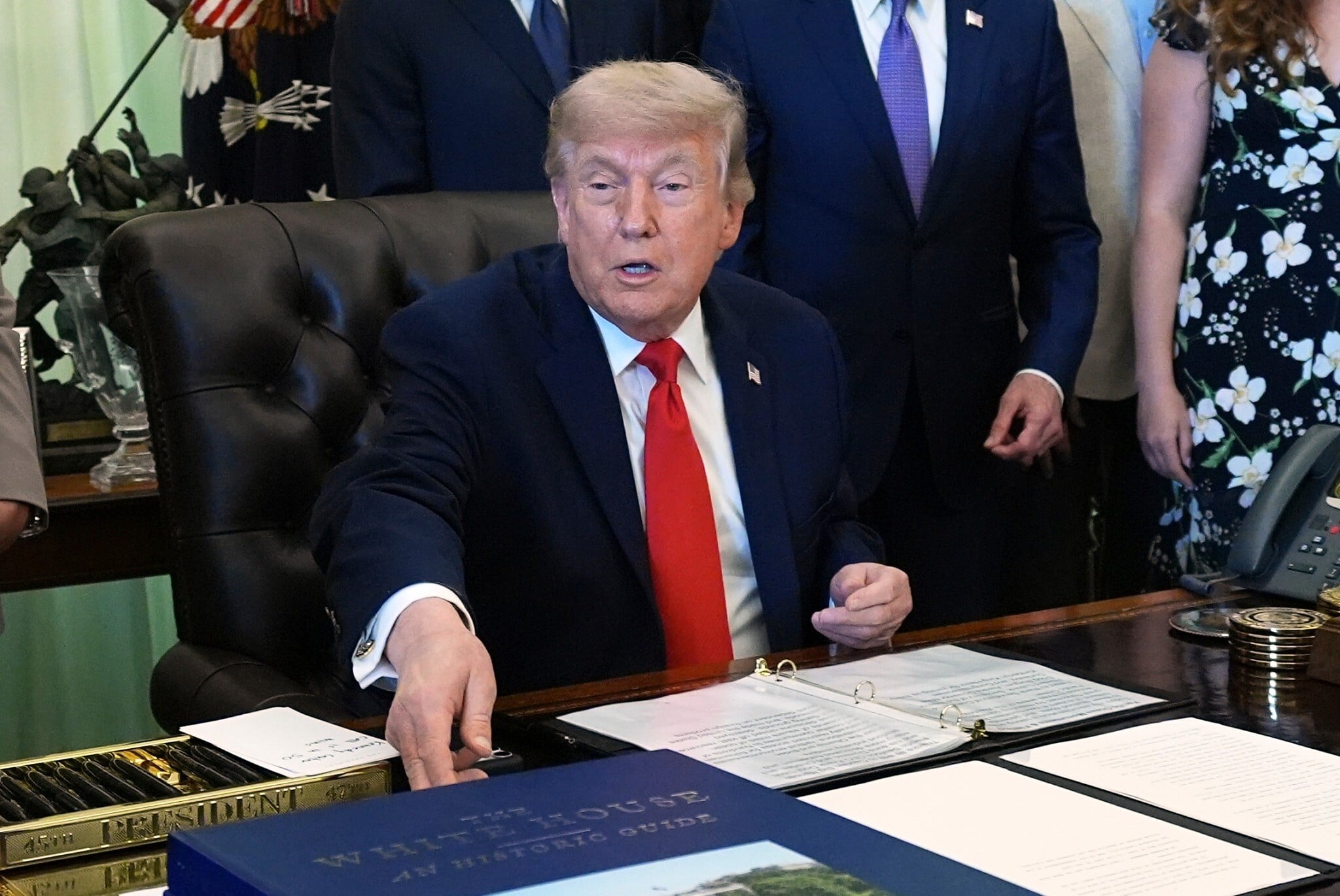
US President Donald Trump speaks before in the Oval Office of the White House, June 11, 2026, in Washington. (AP/Jacquelyn Martin)
Shortly after Pakistani Prime Minister Shehbaz Sharif announces that the US and Iran have reached a “peace deal,” US President Donald Trump confirms that the agreement between the countries is “complete.”
He adds that he has “authorized the toll free opening” the Strait of Hormuz, the artery for the global oil supply that Iran has blocked during the war. It is unclear from the post if Iran has agreed to let maritime traffic flow through the strait without charging a toll.
Trump adds that, simultaneous with the strait opening, the US blockade of Iranian ports will end.
“The Deal with the Islamic Republic of Iran is now complete,” he posts on Truth Social. “Congratulations to all! I hereby fully authorize the toll free opening of the Strait of Hormuz, and, simultaneously herewith, authorize the immediate removal of the United States Naval blockade. Ships of the World, start your engines. Let the oil flow!”
The Deal with the Islamic Republic of Iran is now complete. Congratulations to all! I hereby fully authorize the toll free opening of the Strait of Hormuz, and, simultaneously herewith, authorize the immediate removal of the United States Naval blockade. Ships of the World, start… pic.twitter.com/5LQ0y03Wbg
— Commentary Donald J. Trump Truth Social Posts On X (@TrumpTruthOnX) June 14, 2026
Sharif had written in his announcement that the deal includes as ceasefire in the conflict in Lebanon between Israel and the Iran-backed Hezbollah terror group. Trump does not reference that conflict in his statement.
Israel has not been included in the negotiations over the deal.
IDF says Hezbollah drone intercepted over northern Israel, sirens don’t sound
A Hezbollah drone launched from Lebanon was intercepted over northern Israel before midnight, the military says.
No sirens sounded in towns, “according to protocol,” the IDF adds.
Iran’s deputy FM confirms announcement of ‘immediate and permanent end of the war’
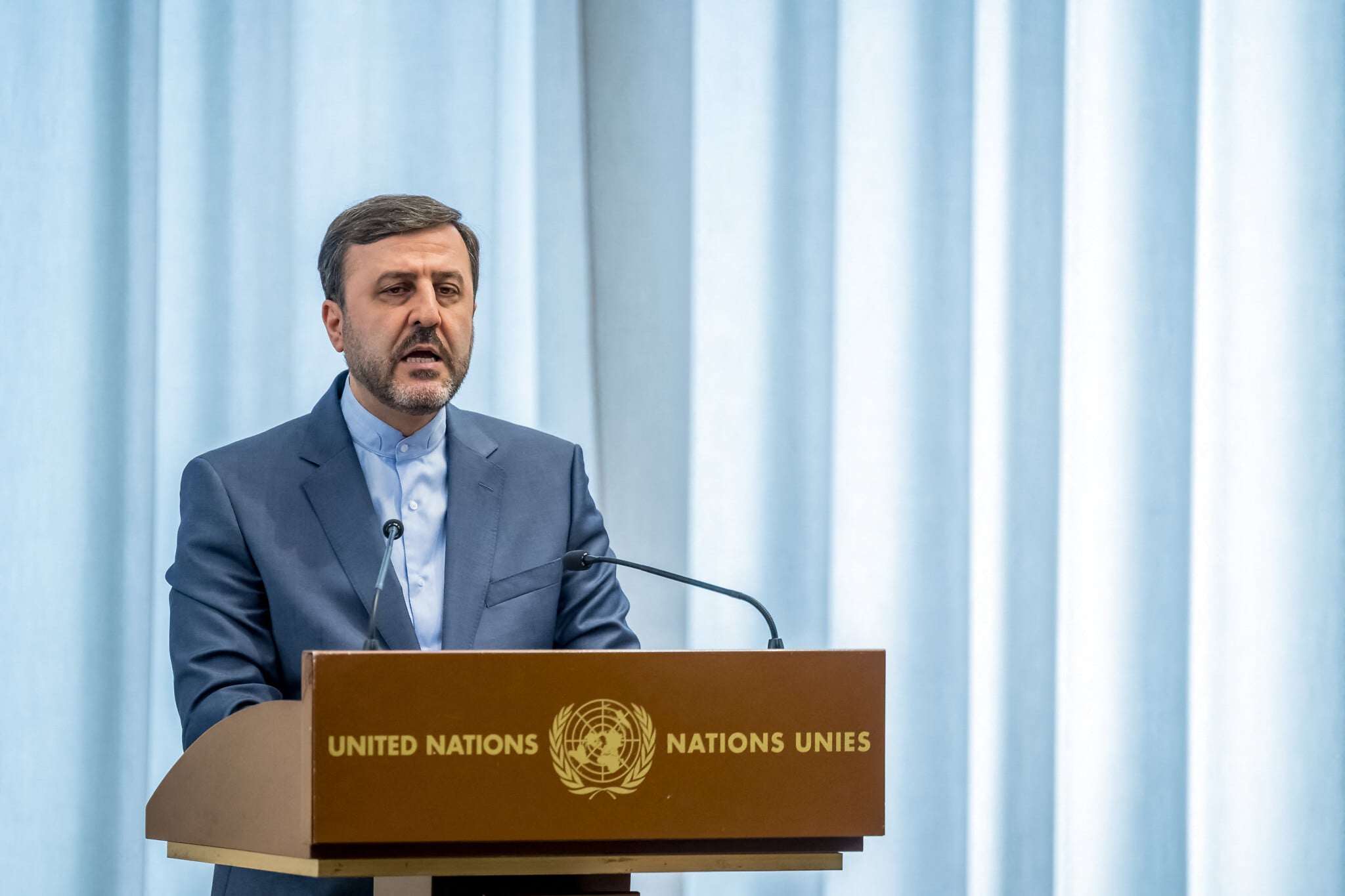
Iran's Deputy Foreign Minister Kazeem Gharibabadi adresses the United Nations Conference on Disarmament in Geneva, on February 23, 2026. (Fabrice COFFRINI / AFP)
Iran’s deputy foreign minister, Kazem Gharibabadi, confirms that a deal has been reached to end the US-Israeli war with the Islamic Republic.
An Iranian diplomatic mission in India cites Gharibabadi in announcing that “The immediate and permanent end of the war and all military operations on various fronts, including #Lebanon, will be announced starting tonight.”
The post on X adds, “The end of the US naval blockade against Iran will begin tonight.”
He tells Iranian state TV that the deal includes a ceasefire in the conflict in Lebanon between Israel and the Iran-backed Hezbollah terror group, which the Pakistani prime minister also said in a statement.
Gharibabadi adds in the remarks to state media that negotiations for a final deal will be held during a 60-day period, adding that Tehran will take its own measures in case of “breaches from the other side.”
“When negotiations begin within 60 days with the aim of reaching a final agreement, if such a final agreement is ultimately achieved, the key issue for us will naturally be the implementation of its provisions,” he says.
Gharibabadi’s remarks come shortly after US President Donald Trump confirmed that a deal between the two countries was “complete” and that he had “authorized” the opening of the Strait of Hormuz, which Iran has blocked, and the simultaneous end of the US blockade of Iranian ports.
The post from Iran does not reference the Strait of Hormuz.
Israel was not included in the talks over the agreement, whose reported terms have caused profound concern among Israeli officials. The deal reportedly fails to achieve any of the goals of the war that were set out by the US and Israel, including eliminating Iran’s nuclear weapons program, depleting its ballistic missile stockpile, ending its support for terror proxies and creating the conditions for the fall of the regime.
Trump claims deal achieves ‘peace with Iran,’ Hormuz to begin opening on Friday
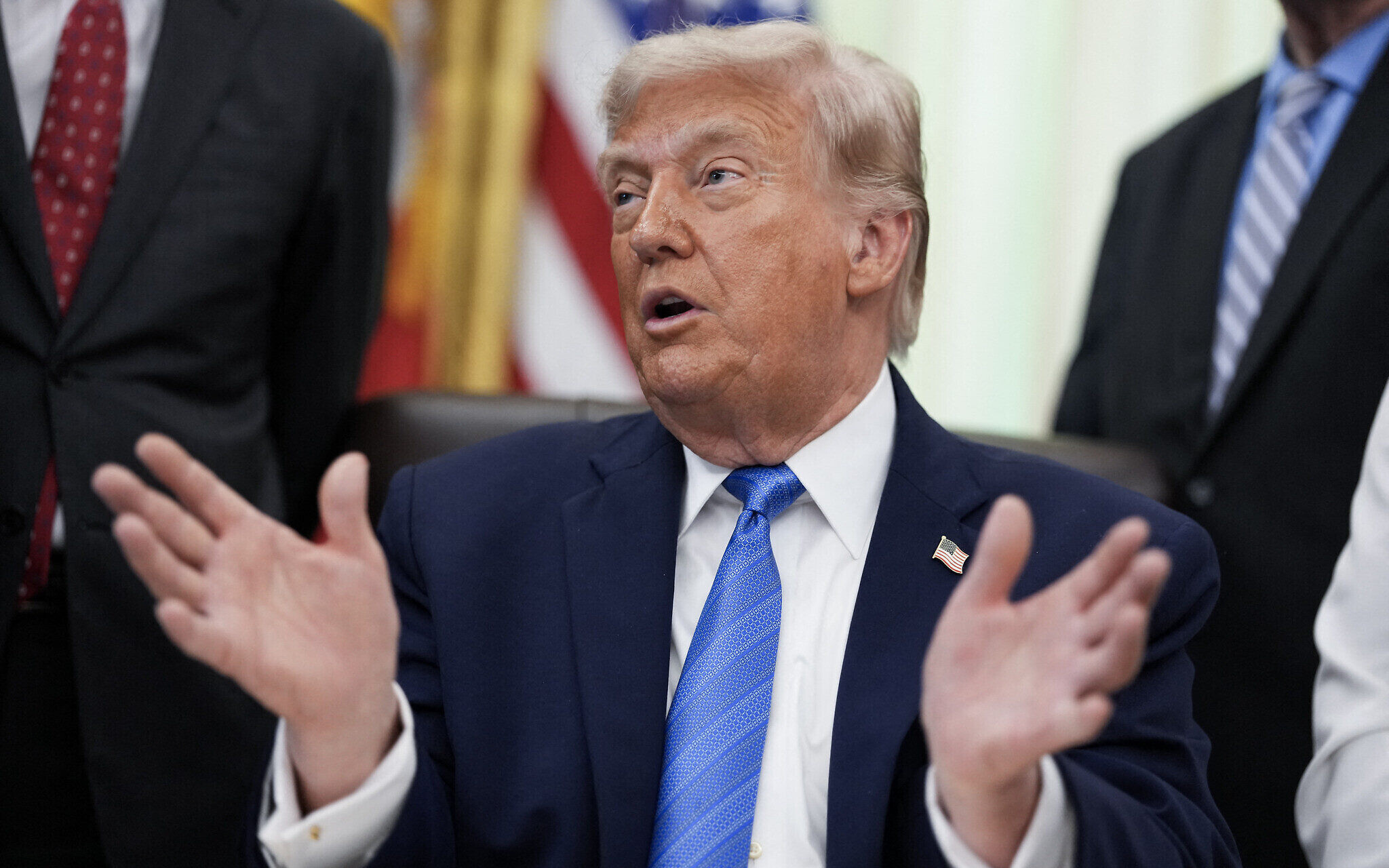
US President Donald Trump speaks during a signing ceremony in the Oval Office of the White House in Washington, DC, on June 10, 2026. (Ken Cedeno / AFP)
US President Donald Trump writes on social media that the US has achieved “peace with Iran” and that the deal between the countries that was just announced will “bring peace and security to the whole region.”
He adds that the Strait of Hormuz will begin to be opened on Friday, when the agreement to end the war is signed.
“This great deal will bring peace and security to the whole region,” Trump writes on Truth Social. “Many presidents have tried to make peace with Iran, and all have failed before me. The leaders of the region have, for the first time, found a president who can help them achieve real peace.”
He adds, “With the opening of the strait upon the signing of the deal on Friday, for purposes of mine removal, oil will flow on both ends again for the region, and the world!”
This Great Deal will bring Peace and Security to the whole Region. Many presidents have tried to make Peace with Iran, and all have failed before me. The Leaders of the Region have, for the first time, found a President who can help them achieve real Peace. With the opening of… pic.twitter.com/pbTEUHaW3l
— Commentary Donald J. Trump Truth Social Posts On X (@TrumpTruthOnX) June 14, 2026
There is no confirmation that mines have been placed in the strait, a key pathway for global oil that Iran has blocked since the beginning of the war in late February.
Israel was not included in the talks over the agreement, whose reported terms have caused profound concern among Israeli officials. The deal reportedly fails to achieve any of the goals of the war that were set out by the US and Israel, including eliminating Iran’s nuclear weapons program, depleting its ballistic missile stockpile, ending its support for terror proxies and creating the conditions for the fall of the regime.
UK, France, Germany, Italy ready to lift Iran sanctions after US-Iran deal, say Iran can ‘never’ get bomb
The United Kingdom, France, Germany and Italy say they are prepared to lift sanctions on Iran in response to steps on its nuclear program after the US and Iran say they reached a deal to end their war.
The deal, to be signed on Friday, will reportedly kickstart 60 days of talks over Iran’s nuclear program.
“Iran must never acquire a nuclear weapon. We stand ready to work with the US, Iran and the IAEA to this end,” the leaders of the countries say in a joint statement, referring to the United Nations’ nuclear agency.
Iran’s military claims to have ‘humiliated’ US and Israel
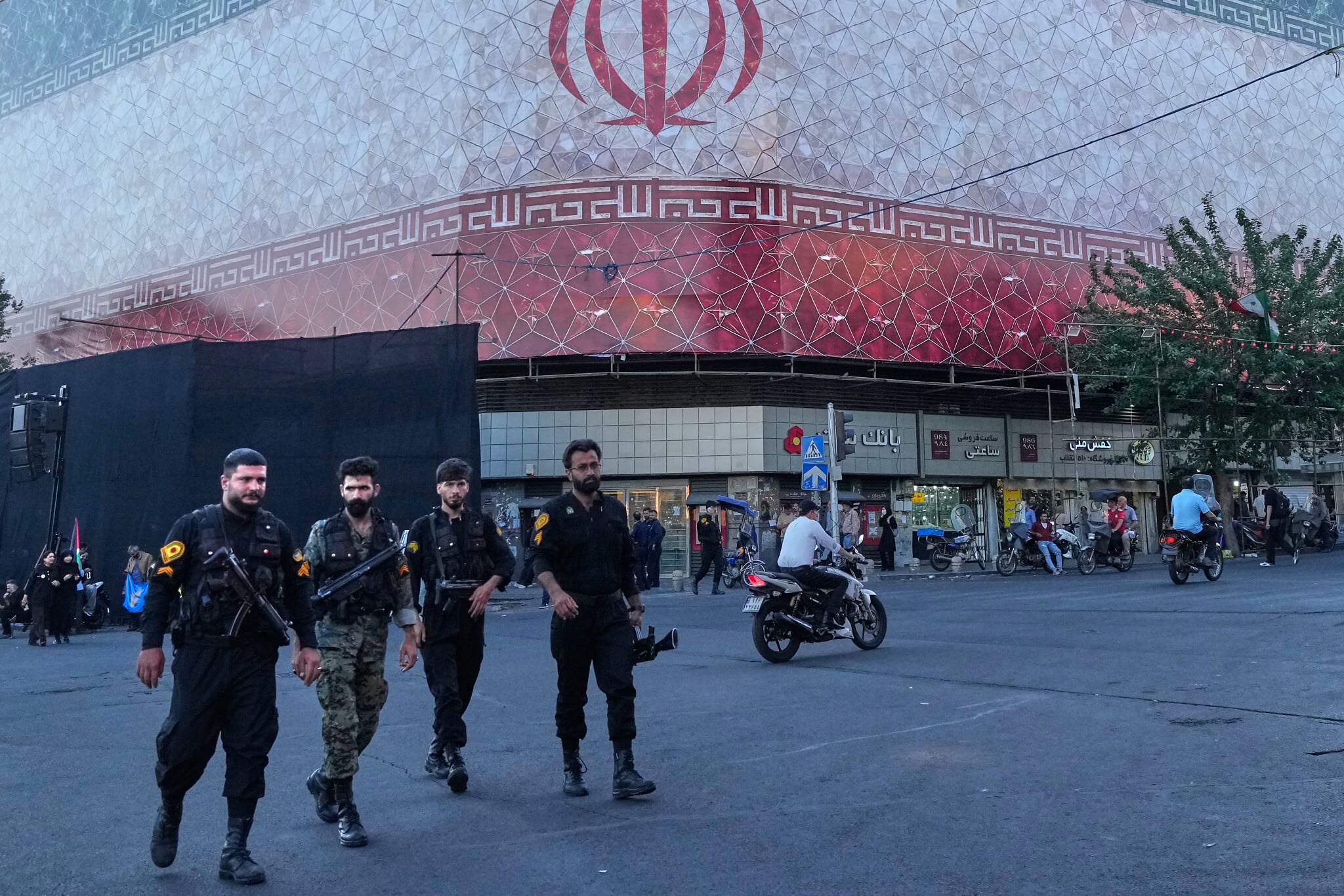
Policemen walk in front of a banner of the Iranian flag in the Islamic Revolution Square in Tehran, Iran, June 14, 2026. (AP/Vahid Salemi)
Iran’s military says it “humiliated” the United States and Israel, in a statement issued after an agreement to immediately end the US-Israeli war with the Islamic Republic was announced.
Iranian forces “have, through the imposition of their divine and iron will upon the humiliated American and Zionist enemies, demonstrated with strength that the enemy has no path other than accepting defeat and surrender”, the general staff says in the statement broadcast by state television.
Trump calls Netanyahu ‘very difficult guy,’ says attacks on Iran could resume if nuclear deal not reached
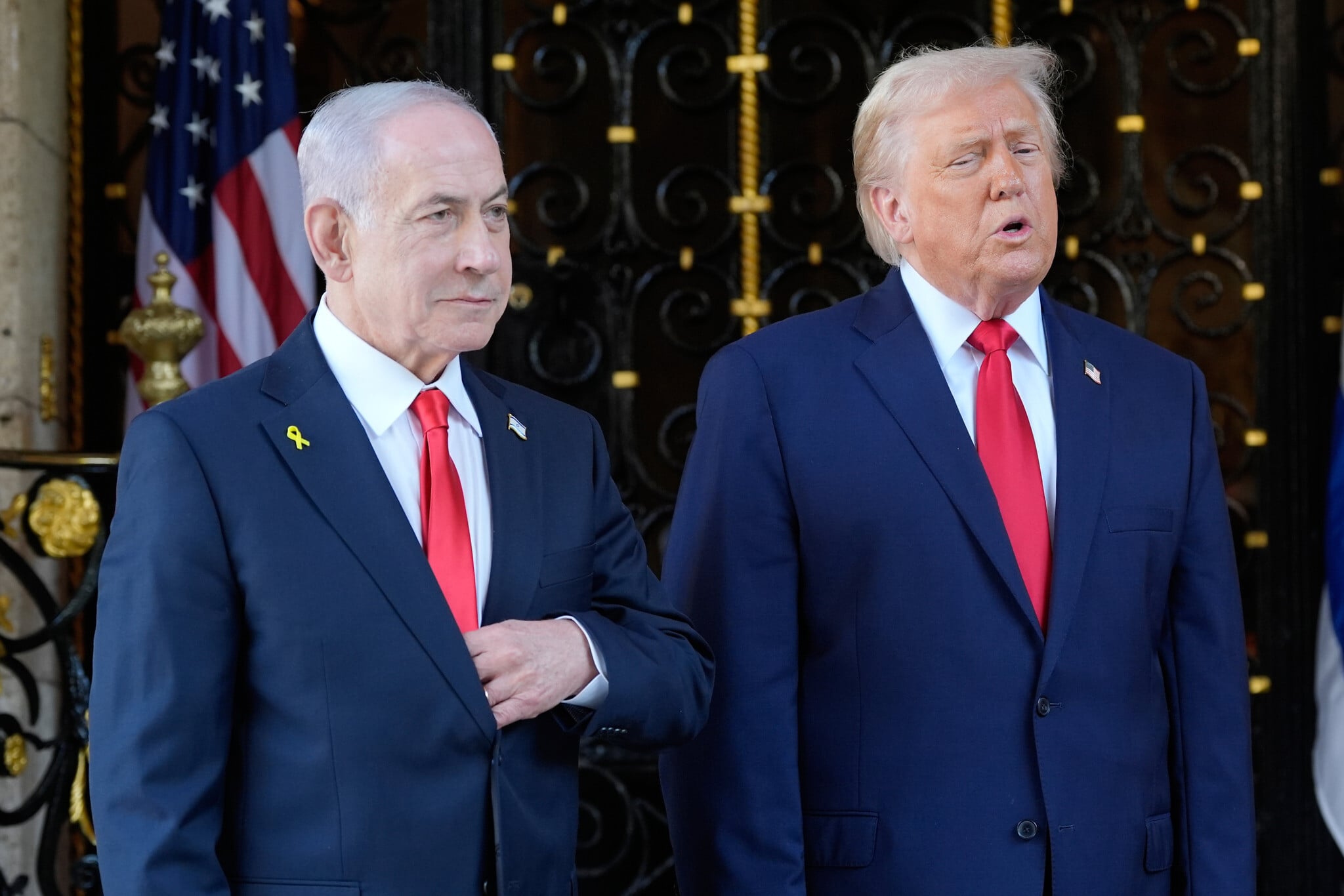
US President Donald Trump greets Prime Minister Benjamin Netanyahu at his Mar-a-Lago club, December 29, 2025, in Palm Beach, Florida. (AP Photo/Alex Brandon)
US President Donald Trump tells The New York Times that if Iran fails to reach a final nuclear accord with the United States, he will restart military attacks on Tehran or make the United States “the guardian of the Middle East” in return for 20% of the region’s revenues.
Trump tells the Times in an interview that the agreement he reached with Iran would ultimately assure that the Strait of Hormuz is “permanently toll free.”
He also calls Prime Minister Benjamin Netanyahu a “very difficult guy” and claims the premier should be grateful. Israel was not involved in the negotiations over the just-announced US-Iran deal, and its terms have sparked profound concern among Israeli officials.
“He’s a very difficult guy,” Trump says regarding Netanyahu, “and to be honest with you, he should be very thankful to us for doing this. Because if Iran had a nuclear weapon, Israel wouldn’t be around for two hours.”
US to release $12 billion in frozen Iranian assets under deal, Iranian media reports
The United States will release $12 billion in frozen assets to Iran before the start of negotiations under the just-announced US-Iran agreement, the Mehr news agency reports, quoting a 14-point memorandum of understanding between the two nations.
The document published by Mehr stipulates “the release of 24 billion dollars in frozen Iranian assets during the 60‑day negotiation period” that begins after the memorandum of understanding is concluded. A signing ceremony is scheduled for Friday in Switzerland.
“Half of this amount must be made available to Iran before the start of the negotiations,” the text, which has not been officially confirmed, specifies.
Stanford anti-Zionist student protesters walk out of Google CEO’s commencement speech
Anti-Zionist student protesters at Stanford University walk out of a commencement speech by Google CEO and Stanford alum Sundar Pichai.
The elite university’s branch of Students for Justice in Palestine and other protest groups announced the protest last month, saying the walkout was in response to Google’s connections to Israel.
“We don’t need another tech billionaire to tell us how to get rich off of the killing and surveillance of Palestinians,” Stanford SJP said. “Take a stance against war profiteering. Tell the Google CEO that he is not welcome.”
Stanford grads walk out as Google CEO Sundar Pichai takes the stage as commencement speaker. No mention of AI, unlike other uni speakers getting booed down this year. Story for @sfgate shortly pic.twitter.com/qvS2rJ91Ip
— Matt Brown (@maattttbrown) June 14, 2026
Videos show dozens of students walking out of the commencement ceremony, holding Palestinian flags and chanting, “Free Palestine.”
US students have repeatedly turned commencement ceremonies into anti-Israel protests in the years since the October 7, 2023, Hamas-led attack on Israel and the start of the war in Gaza, as well as before the war.
Dollar hits 10-day low as US and Iran reach deal
The US dollar has touched a 10-day low against its major peers as a preliminary agreement to end the war between the US and Iran sends oil prices tumbling and boosts demand for riskier assets.
The memorandum of understanding is scheduled to be officially signed on Friday in Switzerland, but caution still lingers as markets await more details and as the fate of Iran’s nuclear program is left for further negotiations.
Oil prices slump, with Brent crude futures down more than 4% to $83.82, while the safe-haven dollar eases on receding geopolitical tensions and inflation concerns.
Yair Golan: Deal ‘erases’ tremendous military achievements, Netanyahu a failure
The Democrats party chief Yair Golan says the US deal with Iran is terrible for Israel.
“Tremendous military achievements won through the courage of our pilots and the blood of our fighters were erased, while Netanyahu stood aside — weak, ill, isolated, and lacking influence,” he says.
He calls it “the culmination of many years of failure,” with the prime minister, “the man who promised ‘total victory,'” ending his tenure “with Israel’s enemies stronger, Israel weaker, and the deterrence built with the blood of our fighters eroding before our eyes.”
Civil Administration demolishes home of Bedouins who fled settler violence
The Civil Administration last night demolished a home belonging to a resident of Shaqara, a Bedouin community near the village of Duma, south of Nablus.
The community, which numbers several dozen people, fled their homes in March following repeated settler attacks and now resides inside Duma.
In response to a query from The Times of Israel, the Civil Administration says it carried out “an enforcement operation against an illegal Palestinian structure built on survey land.”
Survey land in the West Bank refers to areas whose legal status has not yet been fully determined. They are not registered as private land, but have also not been declared state land.
This marks the second time in two days that the Civil Administration has demolished homes belonging to Bedouins who fled their communities because of settler violence. On Sunday, the Civil Administration demolished four homes belonging to residents of Khilet al-Sidra, a Bedouin community in the Jerusalem area that was largely abandoned in January following settler violence. The Civil Administration likewise said the demolition was an enforcement action because the structures had been built illegally.
Ben Gvir: Trump’s agreement does not bind us, we are not partners to it
National Security Minister Itamar Ben Gvir says in a statement: “Trump’s agreement does not bind us. Israel is not subordinate to the United States. We are an independent and sovereign country.”
He adds: “We are not partners to this agreement, which does not safeguard our security. We must not withdraw from any territory [in Lebanon] that our fighters have captured.”
UK court to rule on ban of pro-Palestinian group
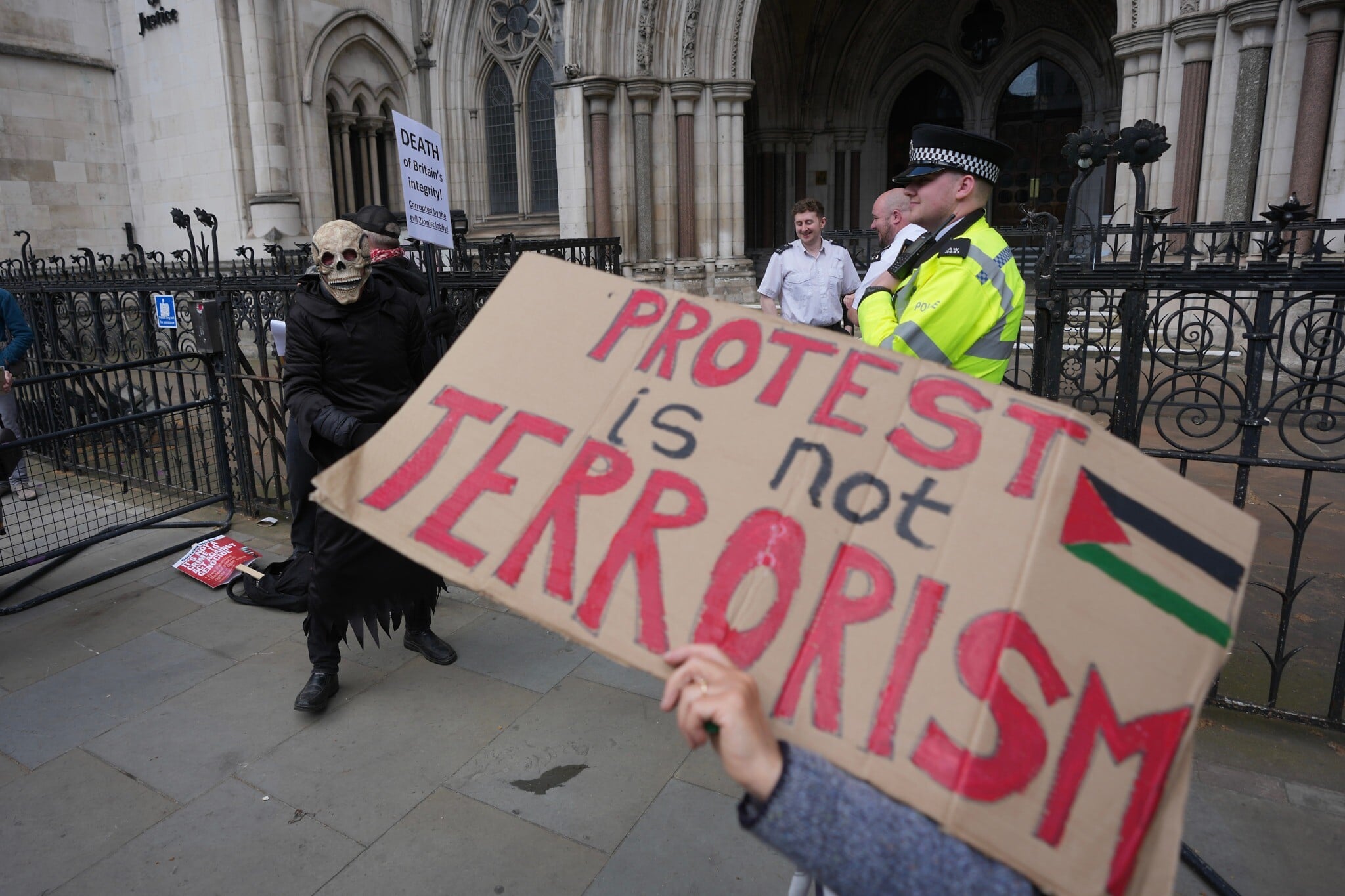
Supporters of Palestine Action stage a protest outside the Royal Court of Justice in London,, April 28, 2026. (AP Photo/Kin Cheung)
London’s High Court will rule today on a legal standoff between the government and activist group Palestine Action that has seen thousands of people arrested and carried away from protests by police.
The ban, which came into force on July 5, 2025, made membership of or support for the direct action group a criminal offense punishable by up to 14 years in prison under terrorism legislation.
Today’s ruling will determine whether the government overstepped its powers in banning Palestine Action.
The ban, which has led to some 3,000 arrests, put the group on a government blacklist that also includes terror groups Hamas and Hezbollah.
The government has been criticized for taking too broad a view of the definition of what constitutes “terrorism.”
But Foreign Secretary Yvette Cooper has defended the proscription, arguing supporters of the group are unaware of the “full nature” of the organization. “It’s really important that no-one is in any doubt that this is not a non-violent organization,” she said last year.
Lebanese media reports IDF drone strike, artillery fire in south Lebanon
Lebanese media reports that a car driving in the southern Lebanon town of Kfar Tebnit was hit by an Israeli drone strike this morning.
“Injuries were reported,” Lebanon’s National News Agency says.
NNA also reports that Israeli artillery shelling hit Kfar Tebnit and the nearby town of Nabatieh al-Fawqa.
There is no immediate comment from the IDF.
Israeli officials have not yet commented on the ceasefire between the US and Iran, which supposedly also includes ending the fighting in Lebanon.
European Central Bank chief welcomes Iran ceasefire agreement as ‘good news’
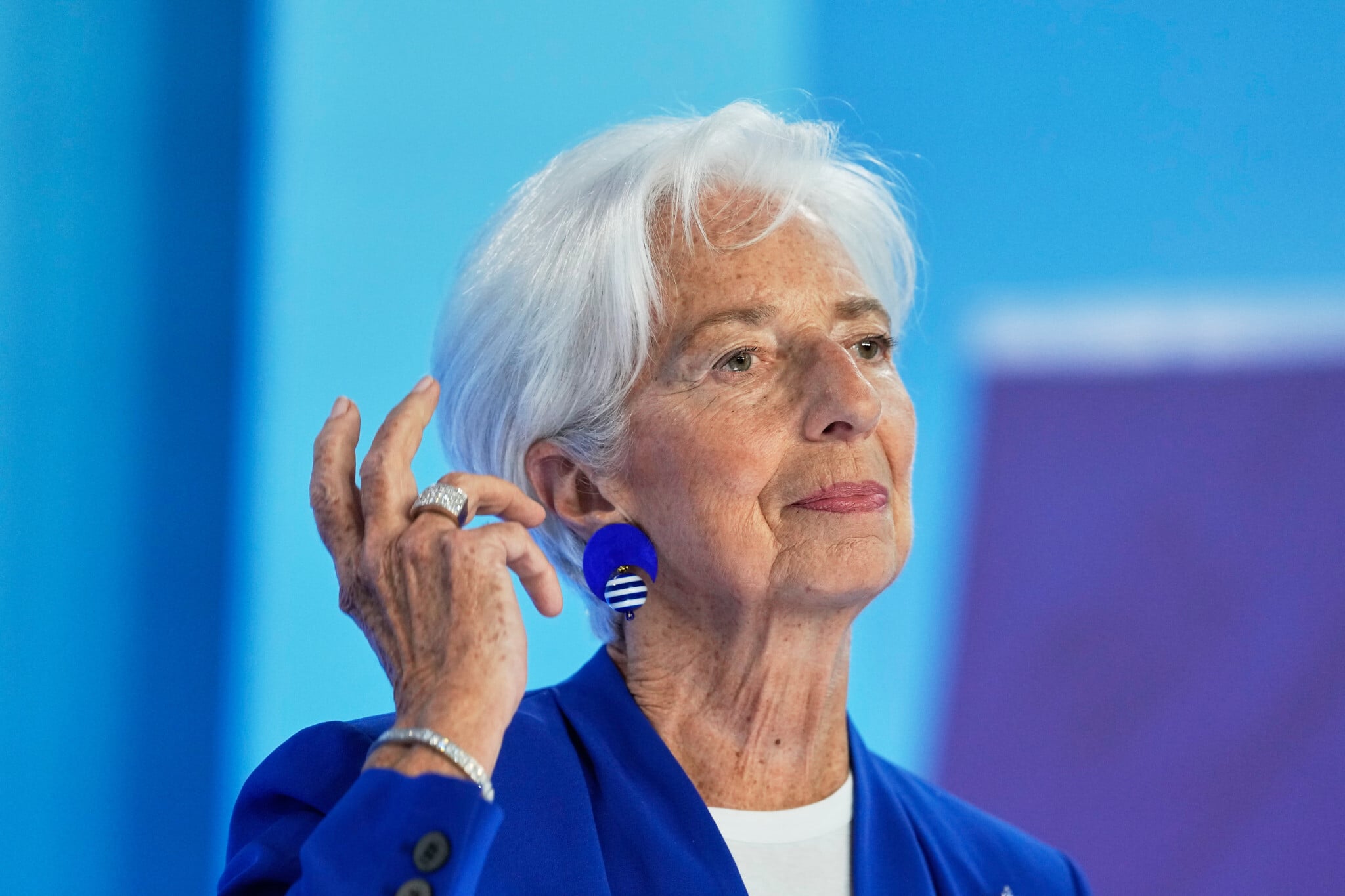
President of European Central Bank Christine Lagarde addresses the media during a press conference after an ECB governing council meeting in Frankfurt, Germany, Thursday, June 11, 2026. (AP Photo/Michael Probst)
European Central Bank President Christine Lagarde says that the ceasefire agreement reached with Iran is “good news,” especially as it could lead to a re-opening of the Strait of Hormuz.
“If this news is confirmed by developments in the coming days and the signing of a memorandum of understanding … it is good news. We can only welcome it,” Lagarde tells France Culture radio.
“We have not yet finished the story,” Lagarde says, adding that “the whole question of uranium enrichment remains to be debated, agreed and concluded in the form of an agreement.”
EU will weigh role in Middle East after US-Iran deal, Kallas says
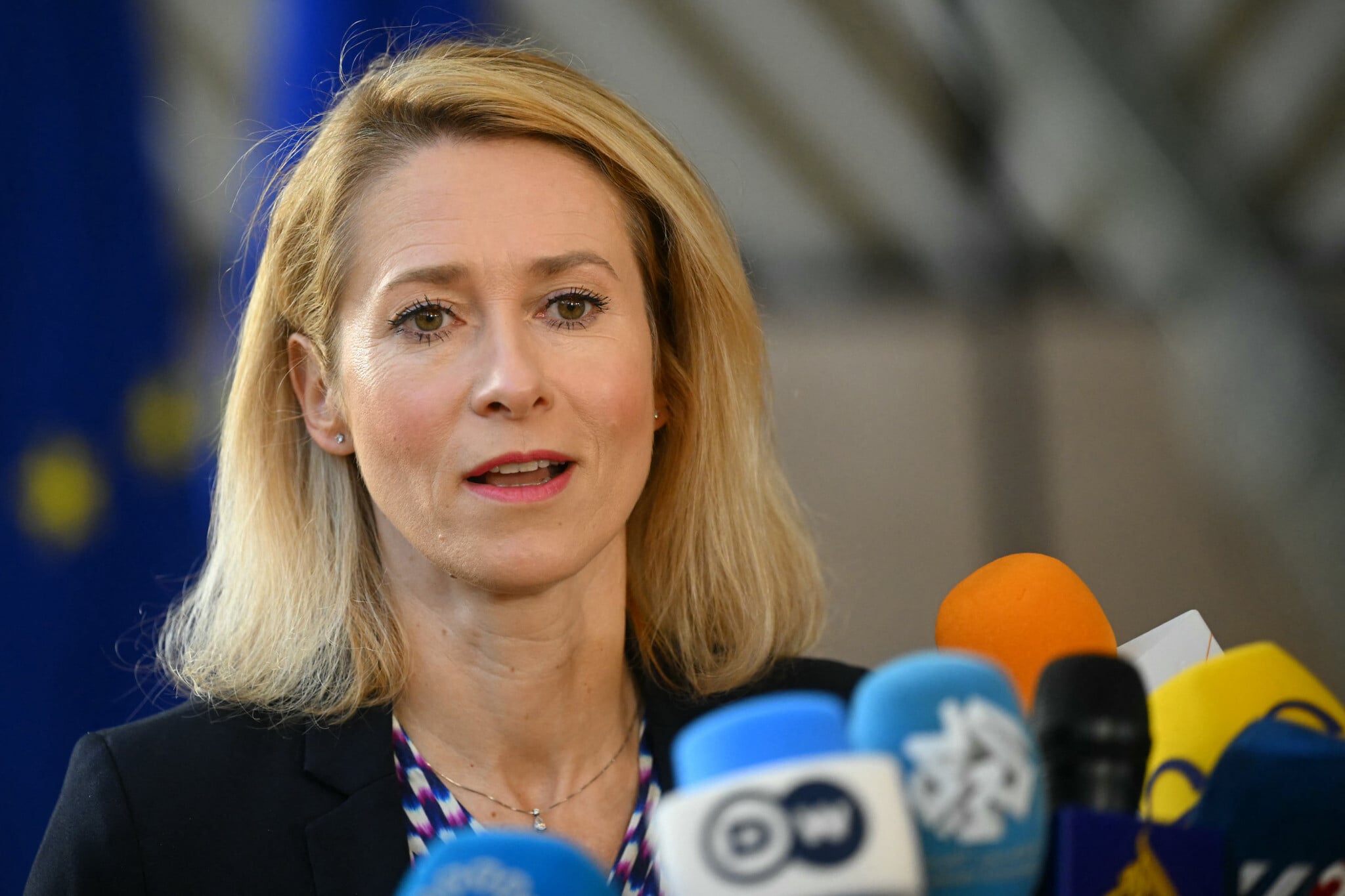
EU High Representative and Vice-President for Foreign Affairs and Security Policy Kaja Kallas addresses the media as she arrives for a Foreign Affairs Council to discuss Ukraine and the situation in the Middle East, in Brussels, Belgium, on March 16, 2026. (Nicolas Tucat/AFP)
The announced deal between the United States and Iran marks a “potential breakthrough” in the war and the EU will now weigh how it can be involved in the next phase, EU foreign policy chief Kaja Kallas says.
“From economic leverage to nuclear expertise and longstanding relationships with Gulf partners, the EU stands ready to contribute to a sustainable resolution,” Kallas says in a post on X, before a meeting of foreign affairs ministers from the 27 EU member states in Brussels.
Defense minister: Israel staying in south Lebanon; if Iran strikes, we’ll hit it ‘with full force’
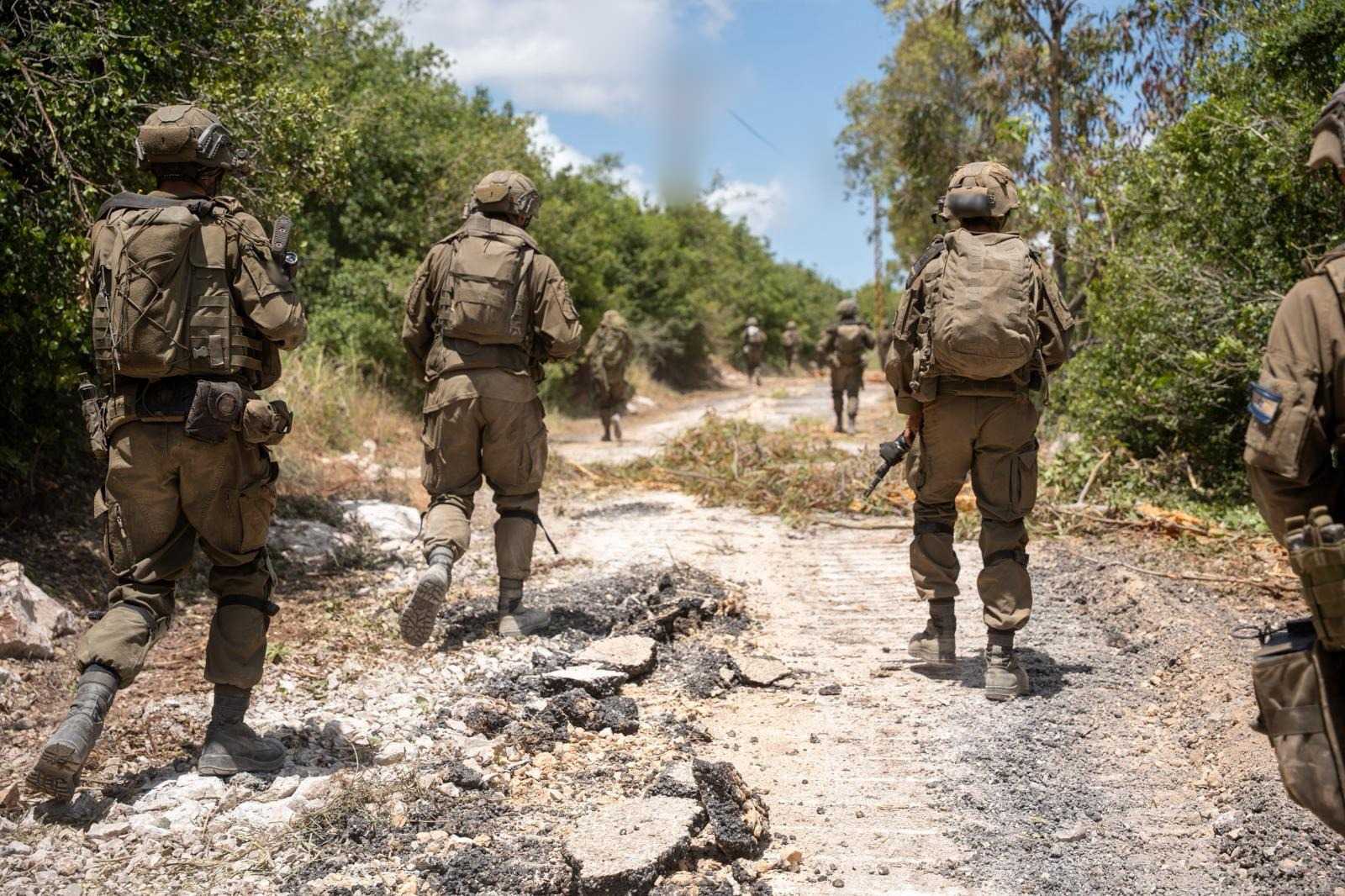
Illustrative: IDF troops operate in southern Lebanon, in a handout photo published on June 1, 2026. (Israel Defense Forces)
Defense Minister Israel Katz says Israel will not withdraw from southern Lebanon, following the announcement of a ceasefire between the US and Iran, which supposedly also includes ending the fighting against Hezbollah.
“Prime Minister Benjamin Netanyahu and I are leading a clear policy that determines that the IDF will remain in the security zones in Lebanon, Syria, and Gaza, without any time limit, to protect, from there, the border and Israeli communities against jihadist elements,” Katz says in a statement.
He says the security zones will be “cleared of local residents, and all terror infrastructure, above and below ground, including the houses in the contact-line villages that served as terror outposts, will be destroyed.”
Katz says that holding onto the security zones is “among the IDF’s greatest achievements” in the war, and therefore, “we oppose an IDF withdrawal from Lebanon, despite all the existing pressures and those that will still come.”
“Prime Minister Netanyahu made these points clear to US President Trump and to other senior American officials, and I also made this clear yesterday to US Secretary of War Pete Hegseth,” he says, adding that the IDF also supports holding onto the security zone in Lebanon.
“We will not compromise on Israel’s security interests and the protection of our citizens, and we will not withdraw from the security zones,” Katz says.
Katz also warns that “if Iran attacks Israel because of events in Lebanon, we will strike it with full force.”
“We are committed only to our citizens and to the security of the State of Israel,” he adds.
Katz’s statement is the first from an Israeli leader on the ceasefire that was announced last night.
Photos show south Lebanese residents headed back to their villages

A displaced family with their belongings, return to their village following the announcement of an initial ceasefire agreement between the United States and Iran, in the southern port city of Sidon, Lebanon, Monday, June 15, 2026.(AP Photo/Mohammed Zaatari)
News agencies have photos of Lebanese residents of south Lebanon on their way back to villages in the south after the declaration of the US-Iran agreement.
It is not clear that the IDF will enable such a return (and permissions will likely vary by village).

Home Front Command ends nationwide gathering restrictions
Following a fresh assessment, the IDF Home Front Command is lifting the nationwide gathering restrictions imposed yesterday amid fears of Iranian missile fire.
“As part of the changes, it was decided to remove the restriction on gatherings of up to 5,000 people in all regions of the country,” the military says.
In communities on the northern border, there are no changes to the current guidelines, which restrict gatherings to 100 people outdoors and 400 indoors.
Israeli defense industry booths walled off at leading Paris arms exhibition

Wooden panels erected around Israeli defense industry booths at the Eurosatory exhibition in Paris by event organizers, June 15, 2026. (Defense Ministry)
Wooden barriers have been erected around Israeli defense industry booths at the Eurosatory exhibition in Paris by event organizers, the Defense Ministry says, despite the companies complying with French restrictions targeting Israel and displaying only defensive weapons systems.
In a statement, the ministry accuses organizers of taking a “cynical” and “discriminatory” step aimed at excluding Israeli technology from the international defense expo.
“The Defense Ministry will continue to promote Israeli defense exports around the world to new heights, despite French efforts to conceal Israel’s technological superiority from the global community,” the statement reads.
Earlier this month, the Defense Ministry said French authorities barred Israel from establishing a national pavilion or sending government representatives to Eurosatory, while allowing Israeli firms to exhibit only air defense systems and banning the display of offensive weapons.
French authorities similarly sought to block Israeli participation in the 2024 Eurosatory exhibition before reversing the decision, while organizers at the 2025 Paris Air Show erected black partition walls around Israeli company exhibits displaying offensive weapons systems.
Starmer says Britain will ban under-16s from using a range of social media apps

The Instagram logo is seen on a cell phone, Oct. 14, 2022, in Boston. (AP Photo/Michael Dwyer, file)
Britain will ban under-16s from using a range of social media apps, Prime Minister Keir Starmer says, calling it “a big moment for our country.”
Starmer says he will fight back if technology companies resist the move, intended to protect children from harmful content and excessive screen time. He says he is “not prepared to compromise on the safety and happiness of our children.”
The move makes the UK part of a growing global movement to tighten online safety for children. Australia, Canada, Brazil and Indonesia have introduced legislation or announced age-based restrictions or requirements for children’s access to social media. France, Spain, Denmark, Thailand and South Korea are among others studying or developing similar approaches.
“How we keep kids safe online is one of the biggest debates of our time,” Starmer says in a statement released before the announcement. “This is a choice about whose side we’re on: families across the country, or a status quo that isn’t working.”
The under-16 ban would apply to TikTok, Instagram, Facebook, X, YouTube, Snapchat, Threads, Twitch, Kick and Reddit, the Sunday Times reports.
The decision follows a public comment period in which the government got 116,000 responses from parents, the tech industry and children. The number of responses was second only to one seeking input about marriage equality in 2012.
Saudi Arabia welcomes US-Iran deal
Saudi Arabia welcomes a US-Iran deal to end hostilities and kickstart peace talks, cautioning that any lasting arrangement should take into account the security interests of the region.
The kingdom welcomes “the agreement reached between the United States of America and the Islamic Republic of Iran to end military operations and initiate detailed negotiations within 60 days to reach a permanent agreement,” the ministry of foreign affairs says in a statement on social media.
It also insists that a lasting peace deal would be one “that takes into consideration the security interests of regional states, sticking to the principle of non-interference in the interior affairs of other countries.”
Eisenkot, Smotrich join criticism of US-Iran deal
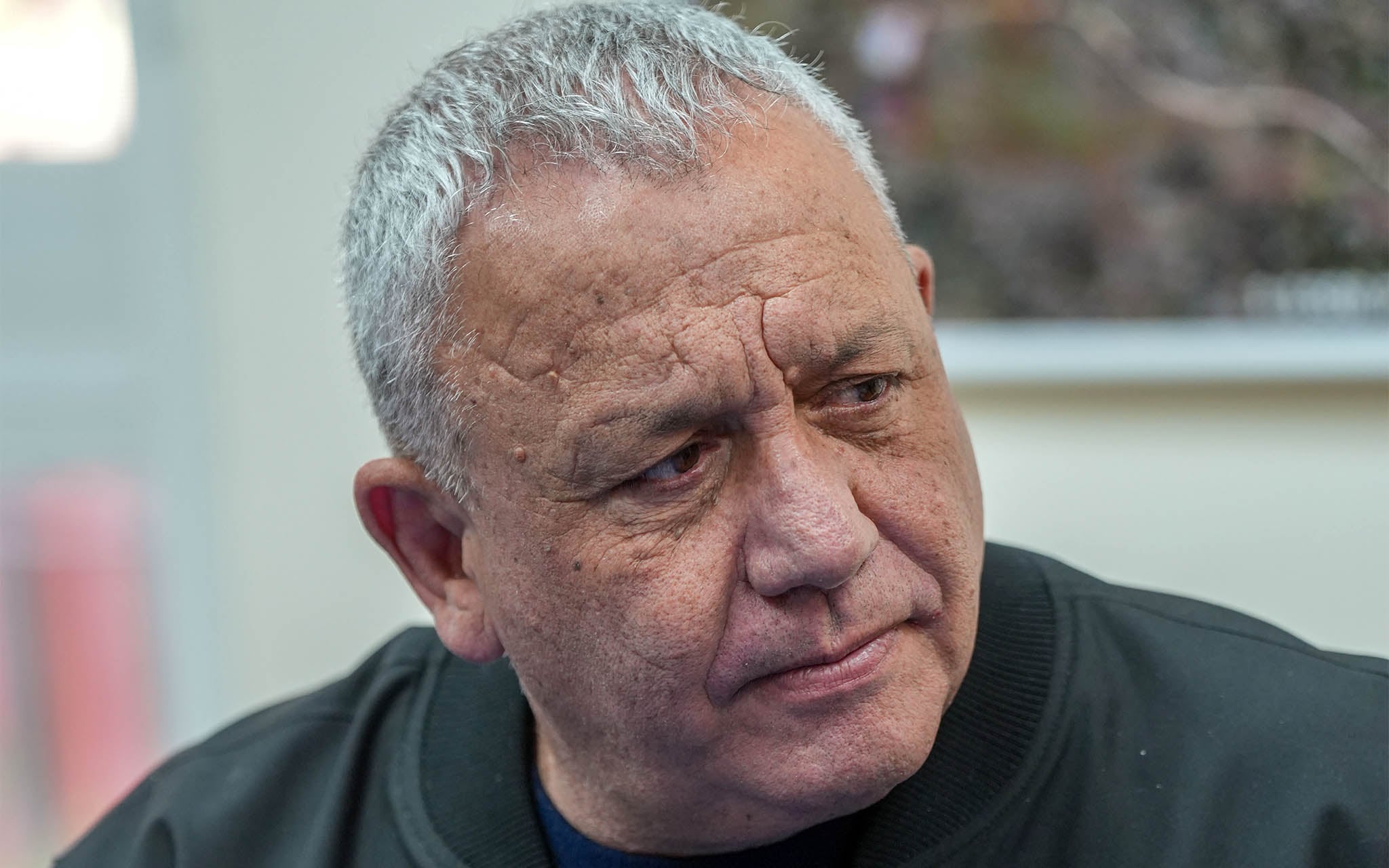
Former IDF chief of staff Gadi Eisenkot during a visit to Kibbutz Yiftah near the Israeli border with Lebanon, March 9, 2026. (Ayal Margolin/Flash90)
Yashar party leader Gadi Eisenkot and Finance Minister Bezalel Smotrich join a growing chorus of criticism across the opposition and coalition over the US-Iran deal.
Eisenkot, who is among the frontrunners to replace Prime Minister Benjamin Netanyahu in upcoming elections, blasts what he calls “the dismal outcome of a failed government” and says that there is “a vast gulf” between Netanyahu’s “empty promises of total victory” and the emerging deal.
He also criticizes Netanyahu for failing to face the public directly, noting that Israelis are once again learning about a major agreement affecting their security from foreign leaders rather than from their own government.
Smotrich similarly condemns the agreement, calling it “bad for Israel and for the entire free world. Period.”
He says that Israel must continue efforts to topple the Iranian regime and ensure Tehran never obtains nuclear weapons, but also defends the government, declaring that none of those running to replace Netanyahu could “withstand even ten percent of the pressure currently being exerted on the Israeli government, and especially on its leader.”
Lebanon warns displaced against rushing home after US-Iran deal
Authorities in southern Lebanon warn people displaced by three months of war between Israel and Hezbollah against rushing home despite a US-Iran deal to end the wider conflict, as Israel says it will not withdraw troops from the south.
Lebanon has seen the deadliest spillover of the conflict between the US and Iran, with thousands of people killed — according to Israel, mostly Hezbollah terror operatives — and some 1.2 million people uprooted by an Israeli offensive against the Iran-backed terror group, which opened fire on Israel in support of Tehran on March 2.
Pakistani Prime Minister Shehbaz Sharif, a key mediator between Tehran and Washington, announced that a deal was struck early on Monday local time, and that the pact called for “the immediate and permanent termination of military operations on all fronts, including in Lebanon.”
In south Lebanon, where Israeli forces have occupied a self-declared security zone, municipal councils issue statements calling on residents to hold off on returning, the state-run National News Agency reports.
Mona Mazeh, a displaced woman sheltering in Beirut’s Hamra district, has no immediate plans to return to her village near the southern city of Tyre. “Frankly, we are hesitant; Israel cannot be trusted,” she says.
Pakistan PM says US-Iran deal a ‘historic step towards peace’
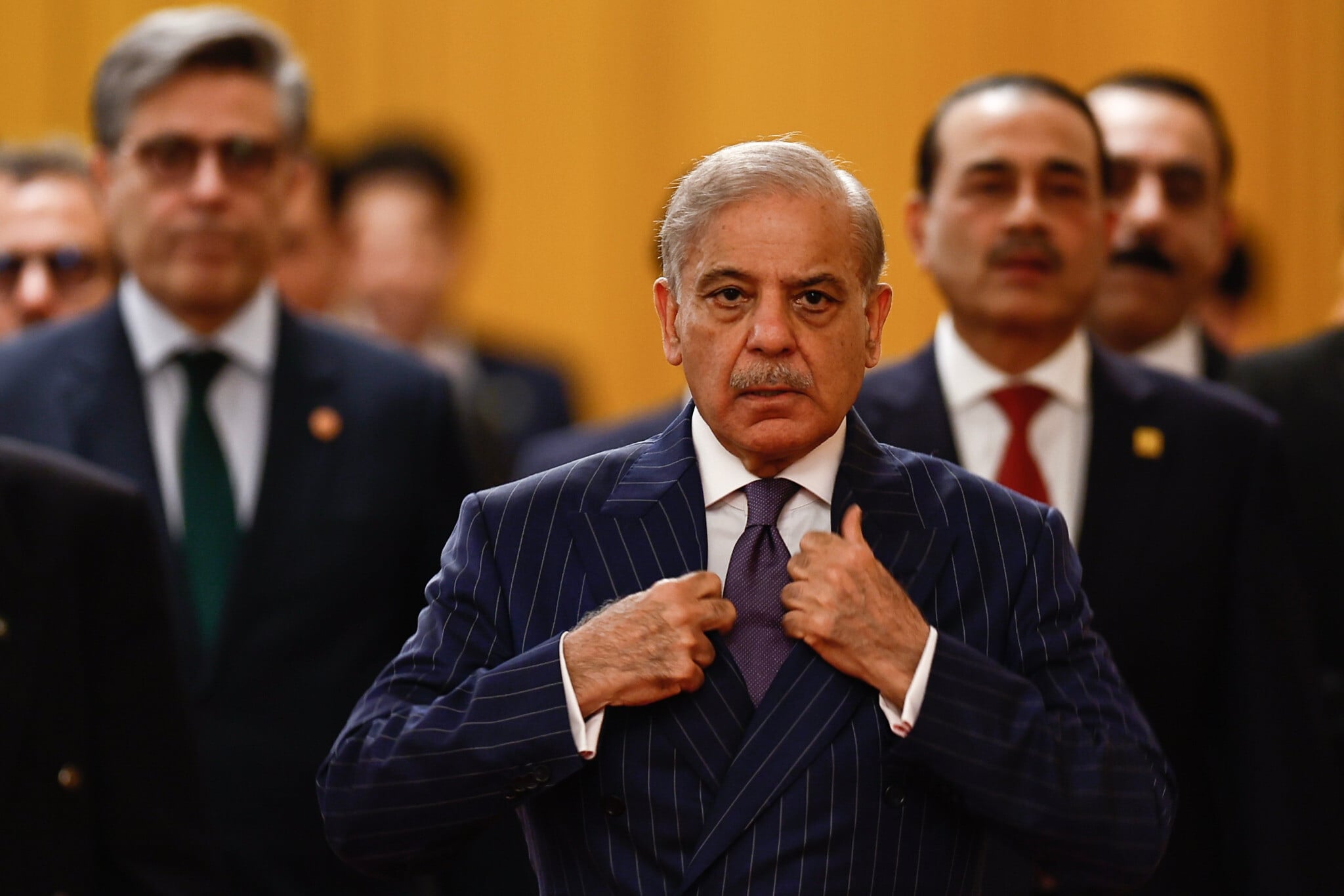
Pakistan's Prime Minister Shehbaz Sharif arrives for a meeting with Chinese President Xi Jinping at the Great Hall of the People, in Beijing, China, Monday May 25, 2026. (Tingshu Wang/Pool Photo via AP)
Pakistan’s Prime Minister Shehbaz Sharif calls the US-Iran deal a “historic step towards peace” following weeks of his government mediating between the warring sides.
“Today, the world has seen a historic step towards peace. After the darkness of war, the sun of peace has risen,” Sharif tells Pakistani lawmakers after earlier announcing the deal would be signed in Geneva on June 19.
Switzerland hasn’t received a request to host US-Iran signing ceremony — official
Switzerland has not received any information or official request to host a signing ceremony for a memorandum of understanding between Iran and the US, a diplomatic official tells The Times of Israel.
Pakistani Prime Minister Shehbaz Sharif said that the sides would attend a ceremony in Geneva on Friday.
Hosting a major event in Geneva on short notice would present a headache for Switzerland, as the countries at the G7 summit being held this week next door in Evian, France, are using their missions in Geneva as their logistical base for the event.
At the same time, the official says that if a request is made, Switzerland will in all likelihood know how to make the necessary arrangements for a signing ceremony.
Trump heads to G7 summit with wind at his back after agreement to end Iran war

This photograph shows a view of the Hotel Royal ahead of the start of the G7 summit, in Evian, eastern France, on June 15, 2026 (Ludovic MARIN / AFP)
US President Donald Trump is headed to the French Alps today to meet with fellow world leaders at the Group of Seven summit after announcing an agreement that he says will bring an end to the US war with Iran.
With the agreement, Trump is due to arrive in Evian-les-Bains this afternoon with some wind at his back for talks with G7 leaders, including some who have been sharply critical of his management of the roughly 15-week conflict that has led to a surge in global energy prices.
Sealing an agreement before jetting off to the summit could change the dynamic of the gathering for Trump. He has had friction with French President Emmanuel Macron, British Prime Minister Keir Starmer, German Chancellor Friedrich Merz, and Italian Prime Minister Giorgia Meloni over failing to consult them before the decision to go to war.
Meanwhile, Trump has pushed back on the four European leaders — all members of the NATO military alliance — for their lack of support for the US in the conflict.
Trump is expected to discuss with leaders the demining of the Strait of Hormuz, according to the White House. Britain and France have expressed interest in assisting with the demining once the conflict is paused. Fear of potential mines is among the reasons that tanker traffic has come to a halt during the war, and quickly clearing them will be crucial to regaining the confidence of commercial vessels.
Iran’s Fars news agency says Hormuz maritime fees added to US deal last minute
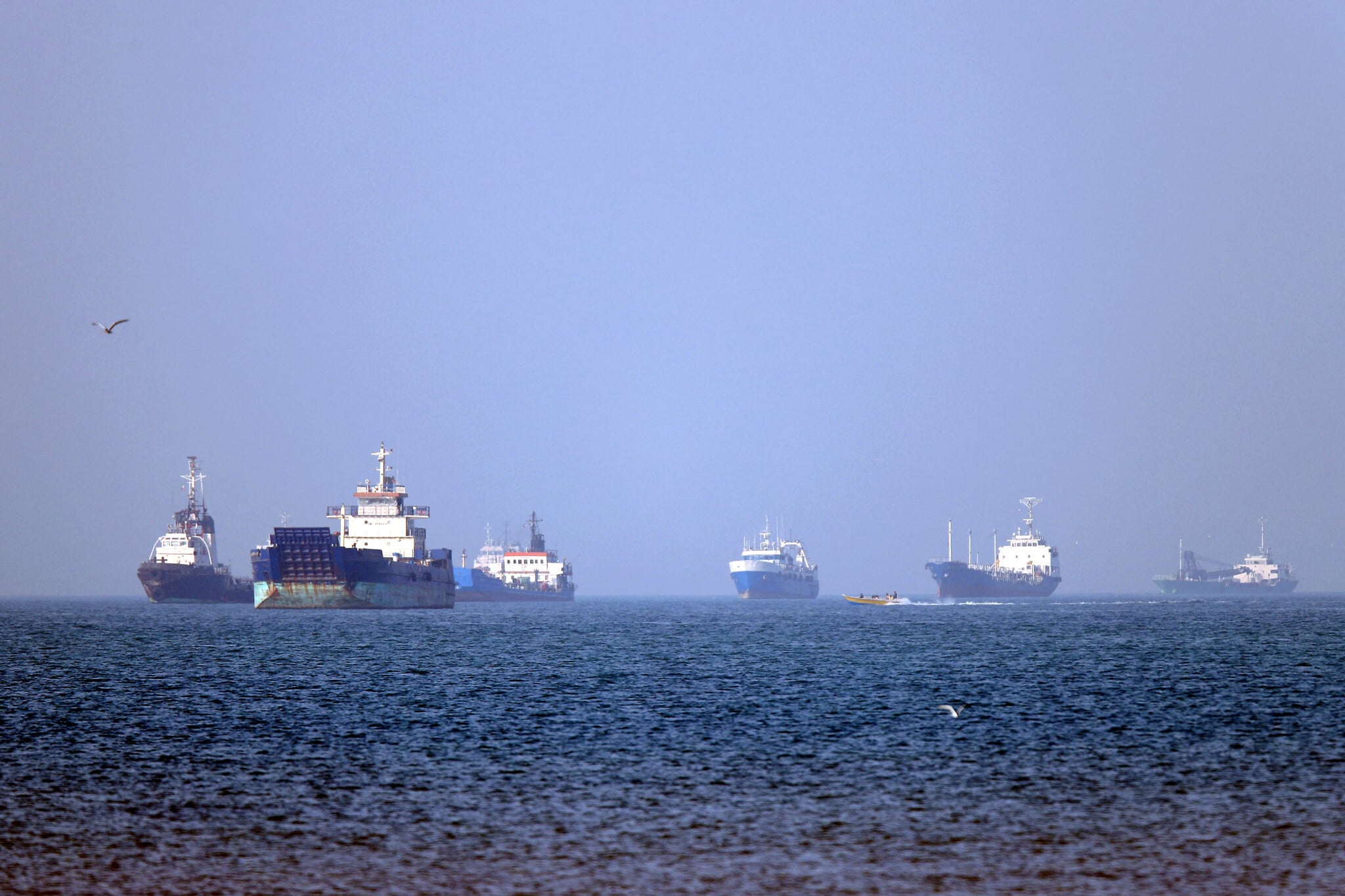
In this picture obtained from Iran's ISNA news agency on May 4, 2026, vessels are pictured anchored in the Strait of Hormuz off Bandar Abbas in southern Iran. (Amirhossein Khorgooei/ISNA/AFP)
Iran’s Fars news agency reports, quoting what it says is an informed source, that Tehran added a clause on imposing maritime service fees to the framework deal with the United States shortly before its announcement.
“In the final moments of the negotiations, the text of the memorandum of understanding was amended to clearly and explicitly emphasize the issue of the Iranian-Omani sovereignty over the Strait of Hormuz,” says Fars, citing the unidentified source.
“The use of the term ‘maritime services’ means that the United States has accepted that fees will be paid to Iran,” it adds.
Lebanon’s Aoun hopes US-Iran deal will put ‘definitive end’ to Israel-Hezbollah war
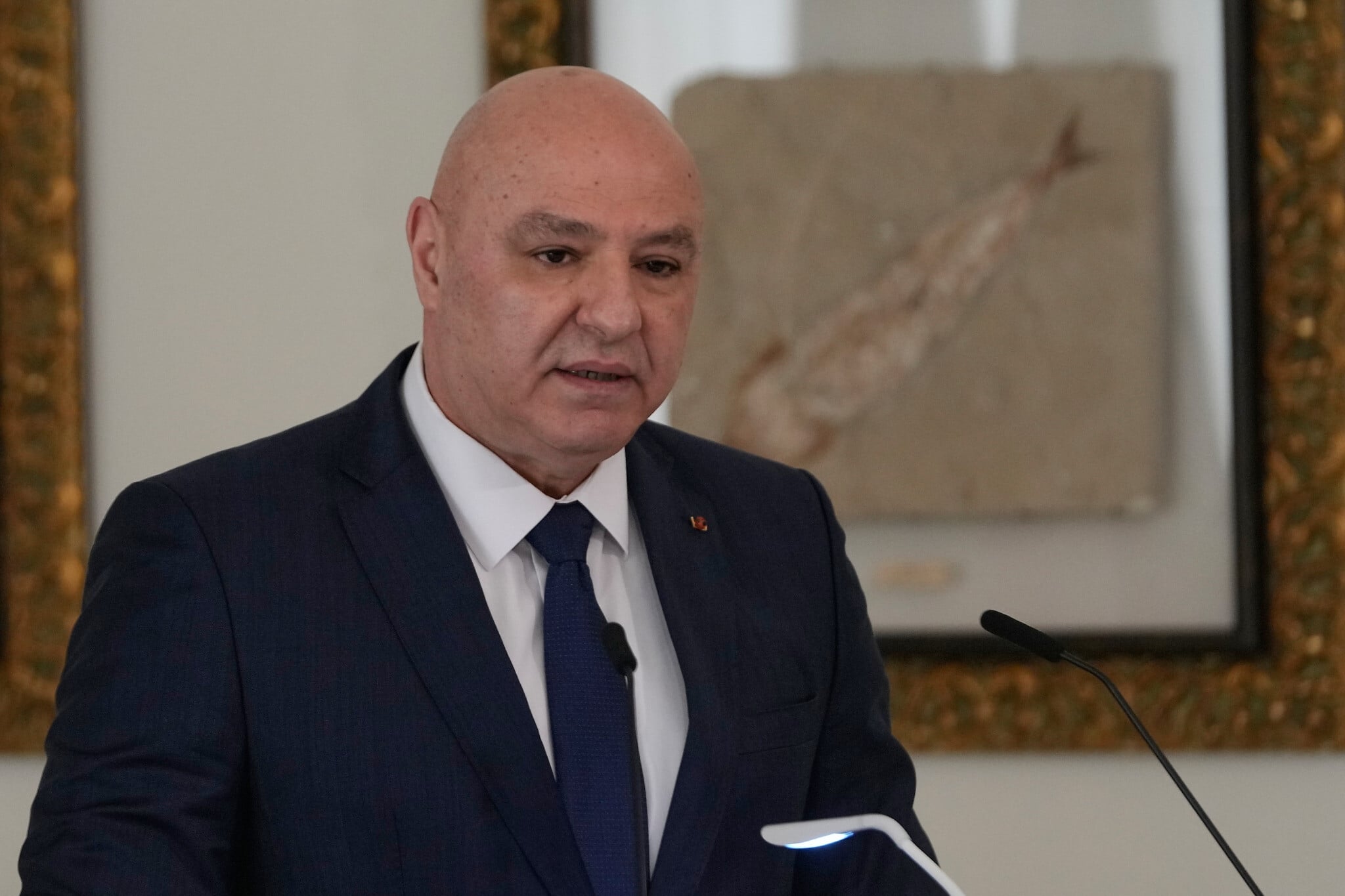
Lebanese President Joseph Aoun, speaks during a joint press conference with his Cypriot counterpart Nikos Chistodoulides , at the presidential palace in Baabda east of Beirut, Lebanon, November. 26, 2025. (AP Photo/Hussein Malla)
Lebanese President Joseph Aoun expresses a cautious hope that a deal between Washington and Tehran to end the Middle East war will put a “definitive end” to the conflict between Israel and Hezbollah.
Aoun says he has “followed with interest” the US-Iran deal and its call for an end to the fighting in Lebanon, welcoming the “recognition that Lebanon’s stability and security constitute an integral part of any serious endeavor to consolidate stability in the region.”
Aoun says that his country “hopes that this development will mark the beginning of a broader path that enhances stability in the region, preserves the sovereignty of states and the rights of their peoples, and allows the Lebanese to focus on rebuilding what has been destroyed and restoring their normal lives under a secure and stable state.”
At the same time, Aoun’s apparent reticence to offer a full-throated endorsement likely comes from concerns over Iran, and not the Lebanese state, negotiating a ceasefire in Lebanon, and the implications for Hezbollah, which Aoun’s government has committed to disarming.
Iran executed 18 protesters in 2026, UN says
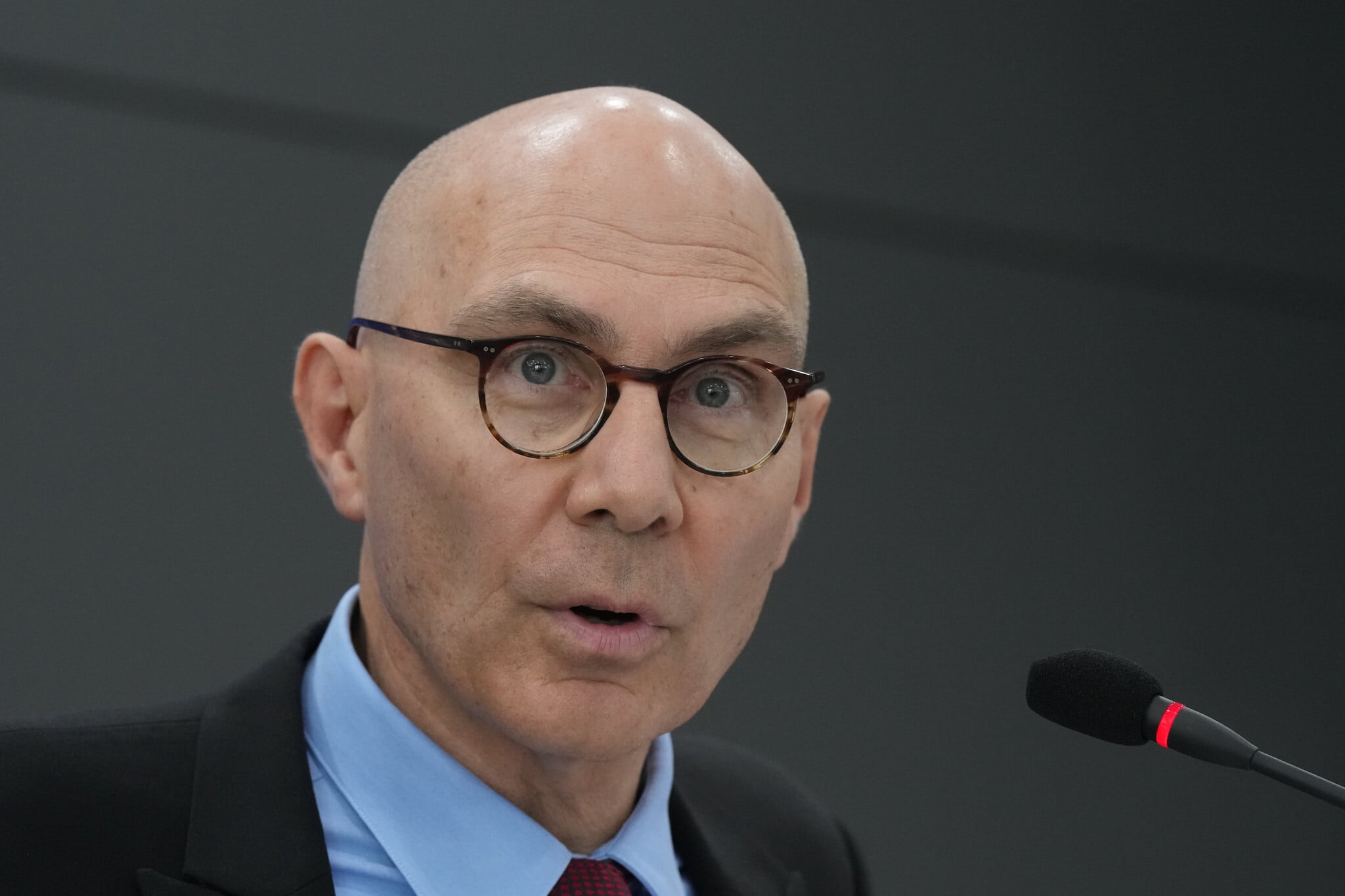
UN High Commissioner for Human Rights Volker Turk speaks to the media during a press conference in Seoul, South Korea, May 13, 2026. (AP/Lee Jin-man)
Iran has executed at least 40 people, including 18 protesters, on “national security grounds” since the start of 2026, the United Nations says.
UN rights chief Volker Turk says he feels “deeply for the people in Iran, caught between war and cruel repression.”
Since the start of the year, the Iranian authorities “have executed at least 40 people on national security grounds… including 18 protesters,” he tells the UN Human Rights Council.
Iran executes more people annually than any other nation besides China, according to rights groups.
Turk laments that Tehran has ramped up repression since a deadly crackdown on protests in January, on top of the Middle East war, sparked in February by US and Israeli attacks on Iran.
He welcomes the announcement that the United States and Iran have agreed to move forward on a peace deal, stressing that “it is clear all sides need to exercise maximum restraint and work to implement the agreement reached, quickly and in good faith.”
The conflict, he says, “has had a devastating impact on human rights across the region and around the world.”
Haredi parties threaten legislation boycott if bill to restore daycare subsidies not advanced
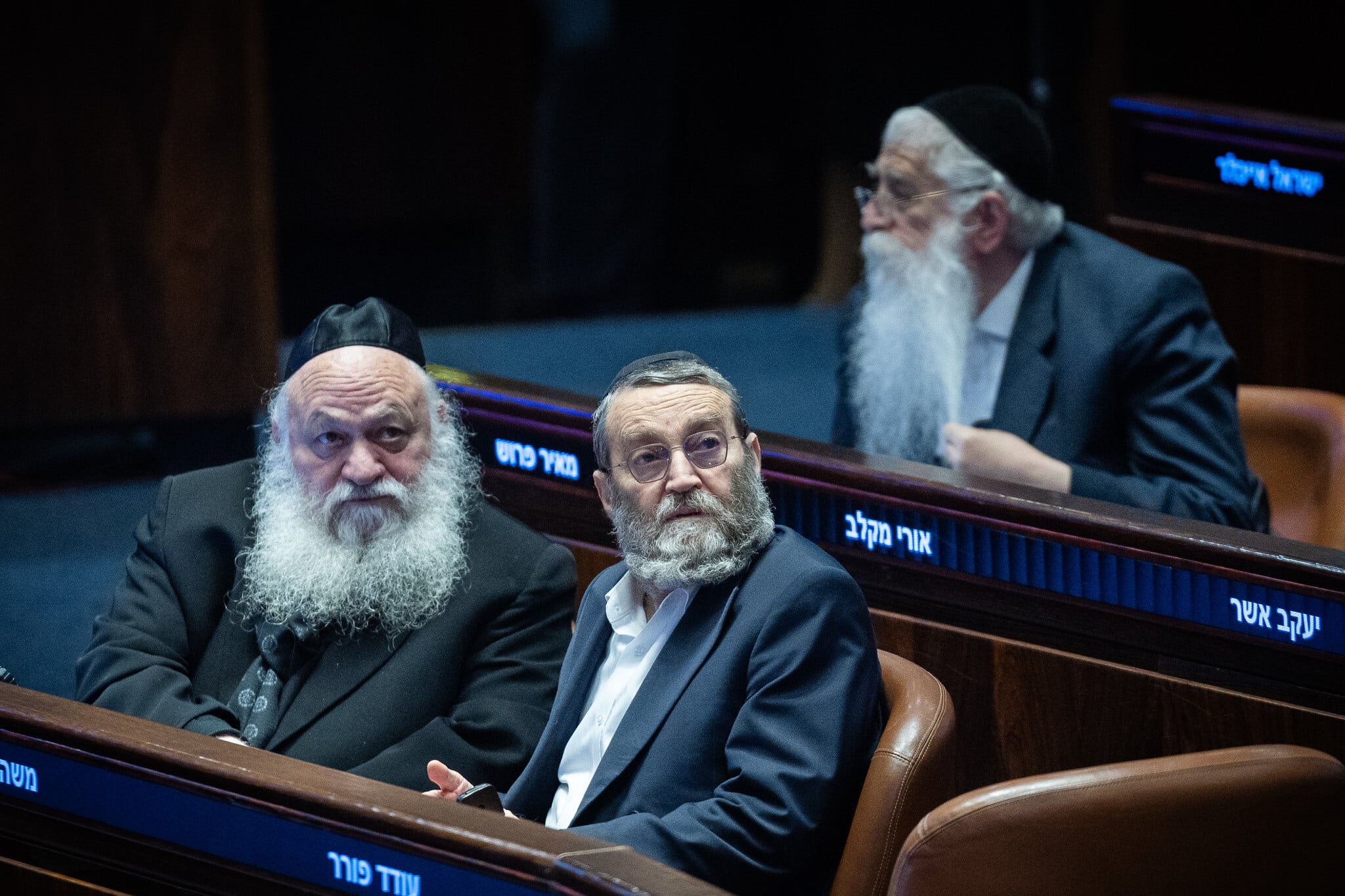
Degel HaTorah chair Moshe Gafni (R) and United Torah Judaism party chair Yitzhak Goldknopf attend a plenum session at the Knesset in Jerusalem, January 14, 2026 (Yonatan Sindel/Flash90)
The Knesset’s ultra-Orthodox parties may boycott additional coalition legislation to protest an expected lack of advancement of a bill restoring daycare subsidies to the children of Haredi draft evaders.
According to Hebrew-language reports, the coalition is not expected to bring the so-called Daycare Law to the plenum this afternoon, following its approval by the Knesset Finance Committee last week, due to Finance Minister Bezalel Smotrich’s Religious Zionism party’s opposition to the measure.
If the bill does not advance to the plenum today, the United Torah Judaism party is considering supporting an opposition-backed no-confidence motion against the government, says the Haredi news site Emess — which quotes a party source insisting that without a vote this afternoon, coalition whip Ofir Katz “must bring the Knesset dissolution to a third reading on Wednesday.”
In addition, Channel 12 reports that the Haredi parties, which are already preventing the passage of the government’s broadcasting bill, are also threatening to block the advancement of Likud-sponsored legislation to establish a political commission of inquiry into the events of October 7, 2023.
i24 news reports that Religious Zionism will discuss the Daycare Law during its weekly faction meeting in the Knesset this afternoon.
In August 2024, Attorney General Gali Baharav-Miara ordered the Labor Ministry to cut daycare subsidies for the children of ultra-Orthodox yeshiva students who disobey military draft orders, explaining that since the High Court ruled that members of the ultra-Orthodox community must be inducted into the army, there was no longer a legal basis for the state to fund daycare for those who don’t comply. The Haredi-backed legislation is an attempt to circumvent the attorney general’s orders.
Bennett calls US-Iran deal product of government ‘incapable of decisive victory’
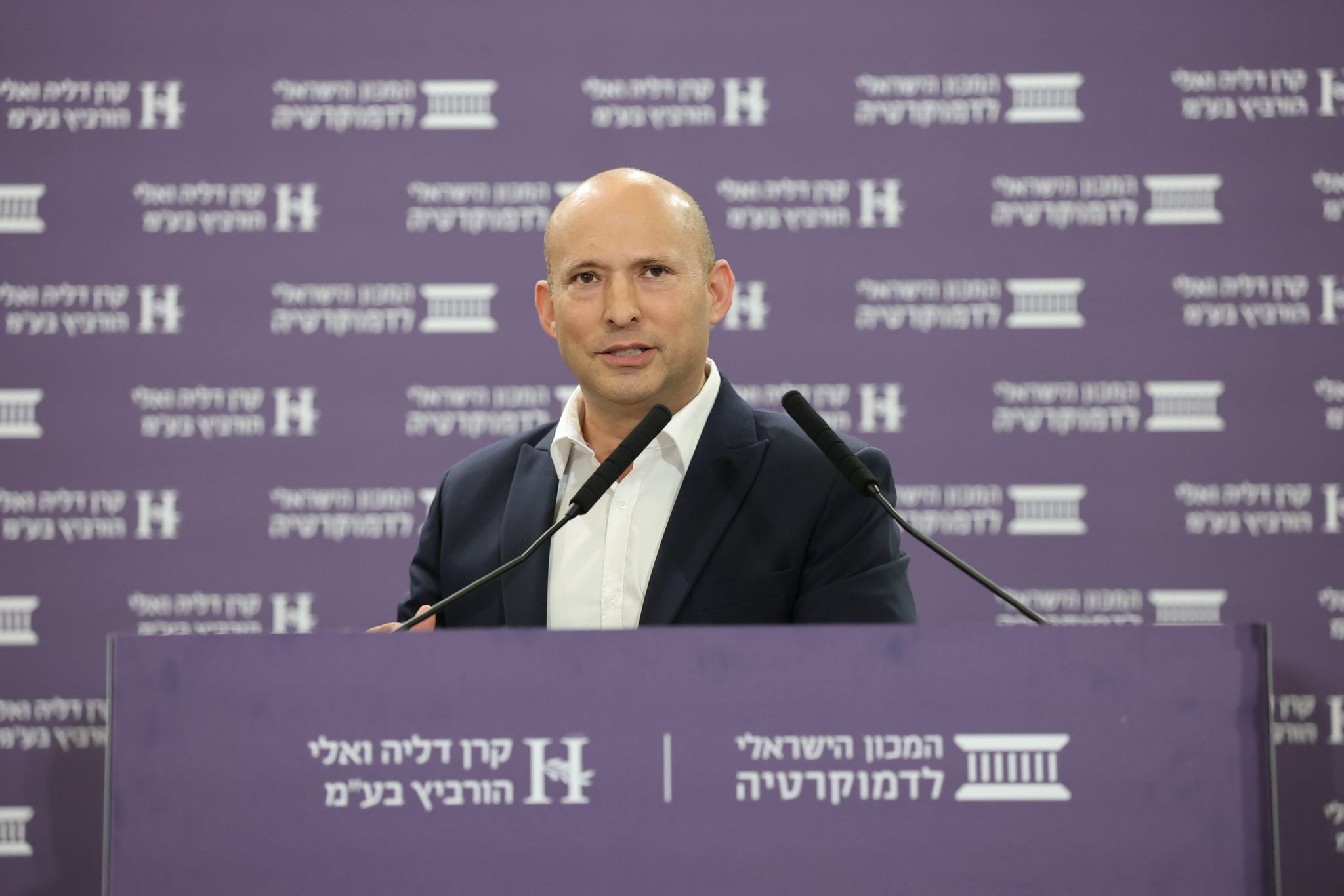
Former prime minister Naftali Bennett speaks at the Israel Democracy Institute's Eli Hurvitz Conference on June 3, 2026 (Oded Karni/Israel Democracy Institute)
Former prime minister Naftali Bennett says that the government has failed to translate Israel’s military achievements into lasting security gains in response to the US-Iran deal.
“During the war with Iran, we saw the extraordinary performance of the IDF and security forces on the front lines, and the courage of the Israeli public on the home front. This morning, we learned that the government is once again incapable of turning all of that into lasting security achievements,” says Bennett, who heads the Together alliance with Opposition Leader Yair Lapid, and is seen as a leading contender to replace Prime Minister Benjamin Netanyahu in elections that must be held by October 27.
Calling the deal not “a decree of fate” but the product of failed Israeli leadership, Bennett argues that the government has dragged Israel into wars of “stagnation and attrition” and is “incapable of achieving a decisive victory.”
He says that he has “a strategic plan for bringing about the collapse of the Iranian regime” and to dismantle its nuclear program through “a combination of diplomatic, intelligence, economic, technological and military means.”
Police detain far-right provocateur seen harassing Arab journalist Lucy Aharish
Police have detained far-right provocateur Mordechai David after he harassed Arab Israeli journalist Lucy Aharish and her partner, Tsahi Halevi, while they left the Tel Aviv District Court.
Footage of the incident this morning shows a group of civilian volunteers forming a circle around the news presenter and her husband as they exit the courtroom and walk out the door to catch a taxi, while David and several right-wing activists hound the pair.
After David follows the couple for several minutes, officers are seen taking him to a police car.
According to the Civil Support, a group of activists who came to the courthouse to guard Aharish, police detained David and took him to the police station for questioning.
Police do not immediately respond to a request for comment.
מרדכי דוד נלקח לתחנת המשטרה.
צילום: עפרי איתן pic.twitter.com/cnN4CniyO7— הסיוע האזרחי (@civil_support1) June 15, 2026
David, who serially harasses left-wing and liberal journalists and public figures, has been targeting Aharish for months now, and was subject to a temporary restraining order after showing up on her doorstep in February alongside more than a dozen other right-wing agitators.
ِAharish and her partner arrived in court for a hearing on an appeal filed by Likud activist Rami Ben-Yehuda in Aharish’s ongoing lawsuit against him, the right-wing Channel 14 outlet reports. In March, Aharish sued Ben-Yehuda, David’s fellow activist, accusing him of leading a harassment campaign against her, and demanding 2.6 million NIS ($840,000) compensation.
Sa’ar reveals secret October meeting with Somaliland’s visiting president
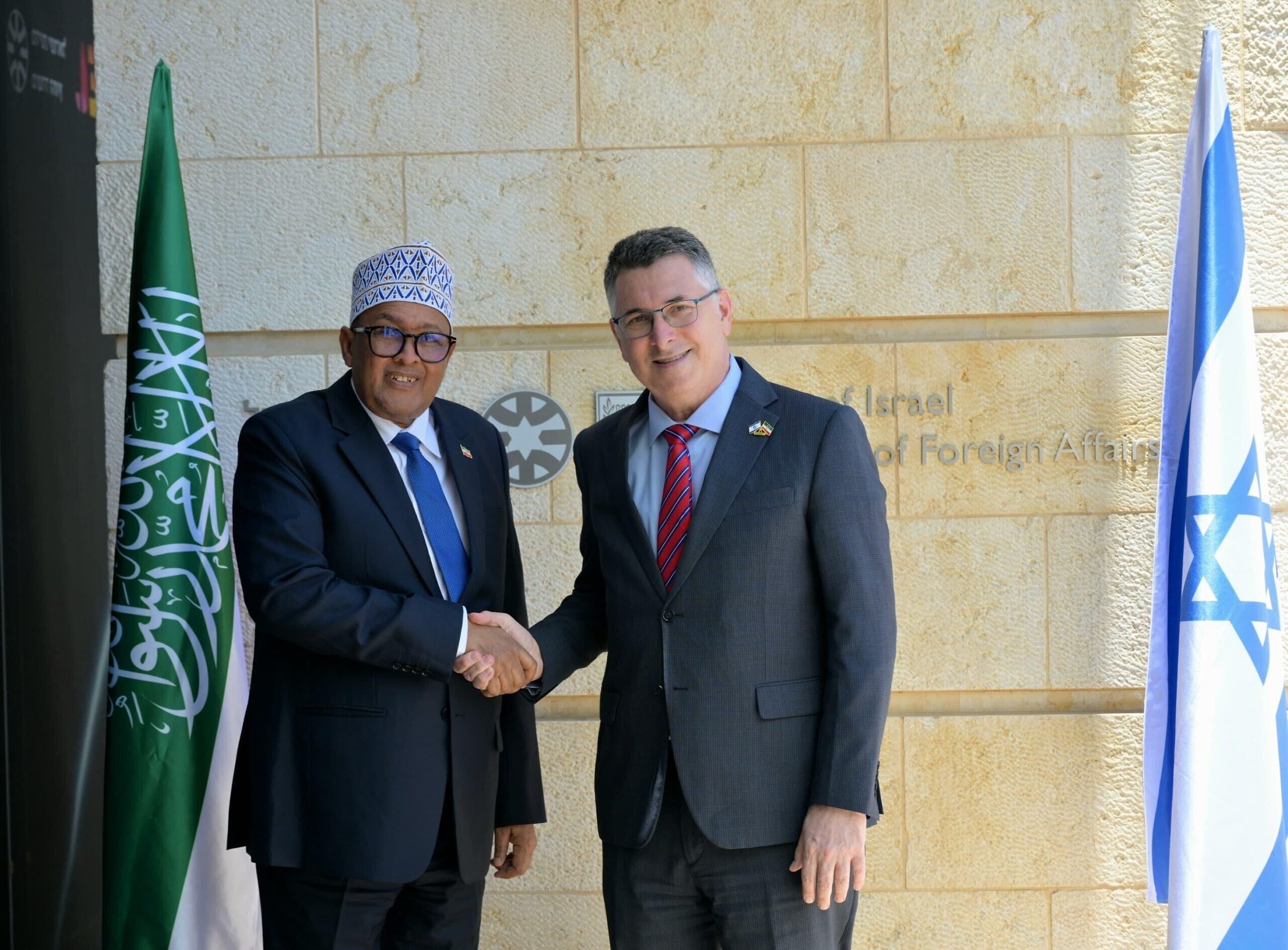
Foreign Minister Gideon Sa'ar (R) meets Somaliland's President Abdirahman Mohamed Abdillahi at the Foreign Ministry in Jerusalem, June 15, 2026 (Shlomi Amsalem, GPO)
Foreign Minister Gideon Sa’ar meets Somaliland’s President Abdirahman Mohamed Abdillahi at the Foreign Ministry in Jerusalem, revealing in a readout from his office that the two leaders secretly met at the ministry in October, two months before Israel became the first country in the world to recognize Somaliland.
“I will always be proud of the privilege I had to write, with you and your people, the first pages in the story of the Israel-Somaliland relationship. I am certain this partnership will continue to grow stronger for the benefit of both our nations,” Sa’ar says, thanking Abdillahi for his “historic” decision to open an embassy in Jerusalem.
Sa’ar acknowledges “there are indeed challenges in building the relationship between Israel and Somaliland,” which broke away from Somalia in 1991. Jerusalem’s unilateral recognition of the country was condemned internationally, including by the African Union and over a dozen Muslim-majority nations, which also issued a joint statement condemning Somaliland’s decision to open its embassy in Jerusalem.
“Unfortunately, there are many trying to undermine [bilateral ties]. They will not be successful,” Sa’ar vows, adding, “I am certain this partnership will continue to grow stronger for the benefit of both our nations.”
17-year-old charged with murder of Olga and Ruslan Prihodko

Olga (left) and Ruslan (right) Prihodko, who were found shot dead in their car in Mishmar Ayalon, in the Judean foothills, on May 22, 2026. (Facebook)
A 17-year-old is charged in court on two counts of aggravated murder for the killing of Olga and Ruslan Prihodko, a Ukrainian-Israeli couple found dead last month in the Judean foothills.
The teenager, a Lod resident whose name is barred from publication, is accused of fatally shooting the husband and wife while they were on a weekend excursion searching for relics near Mishmar Ayalon.
State prosecutors say the teenager got into an argument with the couple after they refused to give him metal detectors they had brought with them to the forest.
He then allegedly left the area for his family’s farm nearby, where he had hidden a Glock pistol he’d purchased earlier that year, then came back to shoot both point-blank in the head.
Prosecutors say that after killing the pair, the teenager stole their two metal detectors, credit cards and phones, then fled the scene. He is accused of attempting to hide the murder weapon at his house.
The couple leaves behind a teenage son.
Police initially probed the double homicide as a nationalistically motivated murder, as the suspect is an Arab Israeli. However, they changed direction after realizing Ruslan had prior acquaintance with the teenager, having met him at least twice while searching for artifacts.
Retired Supreme Court justice Elron joins petitions against state comptroller election

Outgoing Supreme Court Justice Yosef Elron attends a ceremony in his honor at the Supreme Court in Jerusalem, September 18, 2025. (Yonatan Sindel/Flash90)
Retired Supreme Court justice Yosef Elron joins High Court petitions against the controversial election as state comptroller of Michael Rabello, Prime Minister Benjamin Netanyahu’s long time personal lawyer and negotiator.
Elron was also a candidate for the position in the election by the Knesset, which took place on June 3.
After he won the first round of votes without an absolute majority, he was defeated in a highly contentious second vote when multiple Likud MKs videoed or photographed themselves voting for Rabello, after senior Likud officials reportedly instructed them to do so, despite the stipulation of the law that the vote be conducted by secret ballot.
Elron says he is joining the petitions regarding the “illegality of the second vote,” and joins the other petitioners in requesting that the High Court issue an interim order freezing Rabello’s appointment until a final decision on the issue by the court.
A hearing in the High Court is scheduled for this Thursday.
Knesset panel votes to grant Gotliv immunity for exposing Shin Bet officer’s identity
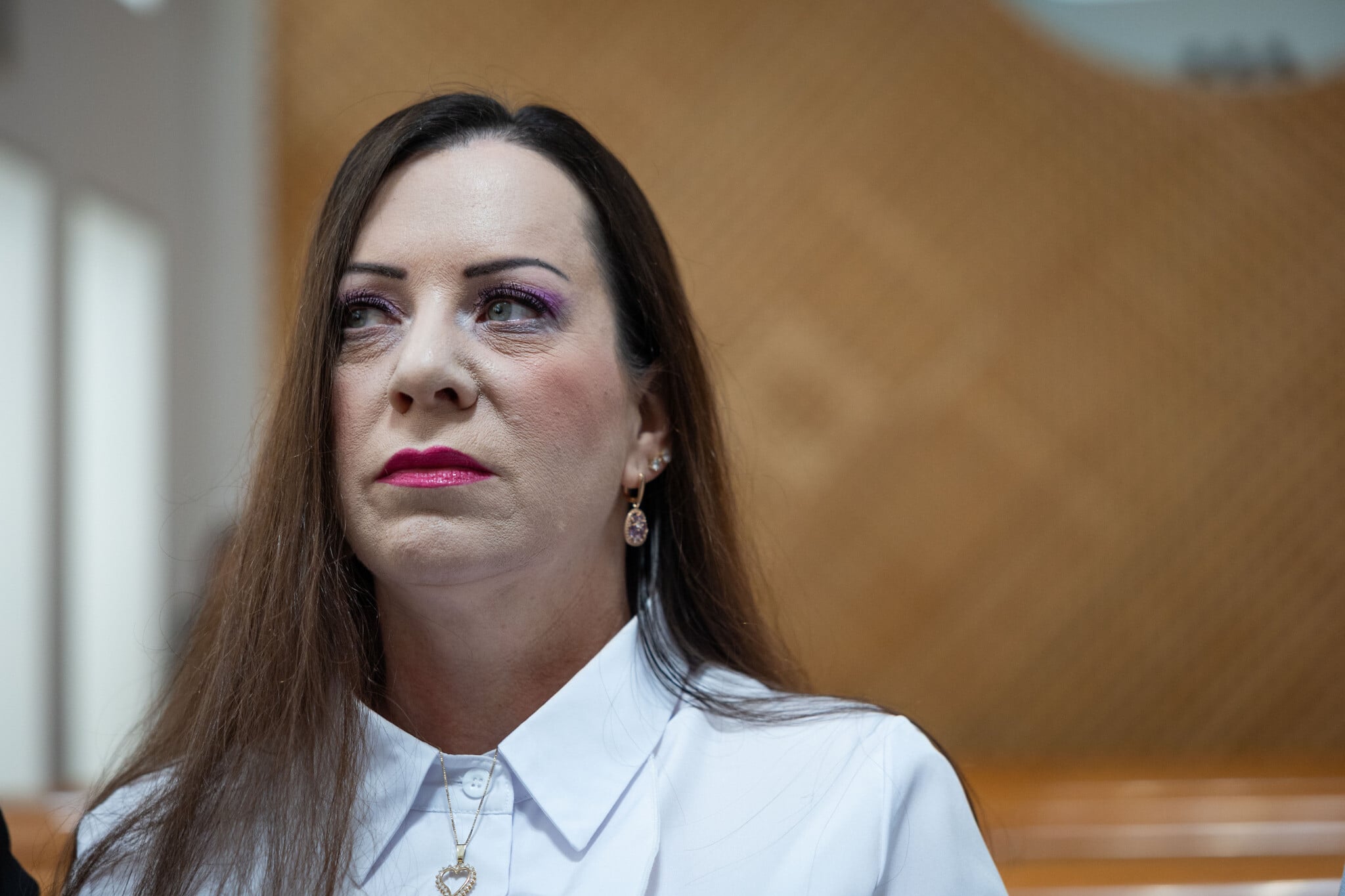
Likud MK Tally Gotliv at a hearing on a petition demanding the formation of a state commission of inquiry into October 7 at the High Court in Jerusalem, April 23, 2026. (Yonatan Sindel/Flash90)
The Knesset House Committee votes 11-3 to grant Likud MK Tally Gotliv immunity from criminal prosecution after she exposed the identity of a Shin Bet officer, following a heated session.
The Attorney General’s Office announced last month that it was indicting Gotliv over social media posts from 2024 identifying the partner of anti-government protest leader Shikma Bressler as a Shin Bet agent, while promoting baseless conspiracy theories linking him to Hamas and insinuating that he bore responsibility for the October 7, 2023, terror onslaught.
Gotliv does not dispute the charges and has repeatedly argued throughout the hearings that her actions were justified.
The decision, supported unanimously by coalition members on the committee, will now be brought before the Knesset plenum for final approval. Any immunity granted, however, would expire at the conclusion of the current Knesset’s term in the coming weeks.
Today’s session was the third in a series of tumultuous hearings on the matter. The first was held last week, even as most Knesset activity was suspended due to Iranian missile attacks that repeatedly sent Israelis to shelters, with a second hearing taking place several days later.
The proceedings have been dominated by lengthy attacks by Gotliv and fellow coalition lawmakers on the attorney general, as well as the promotion of conspiracy theories linking the judiciary, anti-government protesters, and security officials to the October 7 attacks.
Mexican-Israeli magnate gifts $69 million to Tel Aviv rehab hospital

The signing ceremony for the Jusidman Rehabilitation Hospital in Tel Aviv, from right to left: Dr. Hila Oren, CEO of the Tel Aviv Foundation, Ido Sharir, CEO of the Reuth Association, Dr. Orit Stein Reisner, Director of the Reuth TLV Rehabilitation Hospital, Prof. Nachman Ash, Chairman of the Reuth Association, Ron Huldai, Mayor of Tel Aviv-Yafo and Chairman of the Tel Aviv Foundation, Daniel Jusidman, Founder of the Jusidman Foundation, Igal Jusidman, CEO of the Jusidman Foundation and Dr. Einat Ronen, Vice CEO of the Jusidman Foundation (Courtesy)
The Jusidman Family Charitable Foundation will contribute NIS 200 million ($69 million) toward establishing the new Jusidman Rehabilitation Hospital campus, in partnership with the Tel Aviv Foundation and the Reuth Association in Tel Aviv.
The hospital, with an estimated total cost of NIS 1.1 billion ($390 million), is expected to become the largest rehabilitation hospital in Israel.
The new hospital, which will incorporate the Reuth Rehabilitation Hospital now in South Tel Aviv, is set to open in Sde Dov, north Tel Aviv, in 2032. It will contain a new 540-bed facility, serving 10,000 patients a year, and include a research and development hub and a PTSD clinic for IDF veterans.
The Jusidman Family Charitable Foundation was established by Mexican-Israeli magnate Daniel Jusidman, founder of Truper, Latin America’s largest manufacturer and marketer of hardware and hand tools.
“Through the Jusidman Rehabilitation Hospital, we hope to contribute to the recovery of those who have defended Israel and paid a heavy personal price in its service,” Igal Jusidman, Representative of the Jusidman Family Charitable Foundation, says in a statement. “This is our way of saying, thank you for your service.”
Liberman: Netanyahu leading us to worse disaster than Obama deal
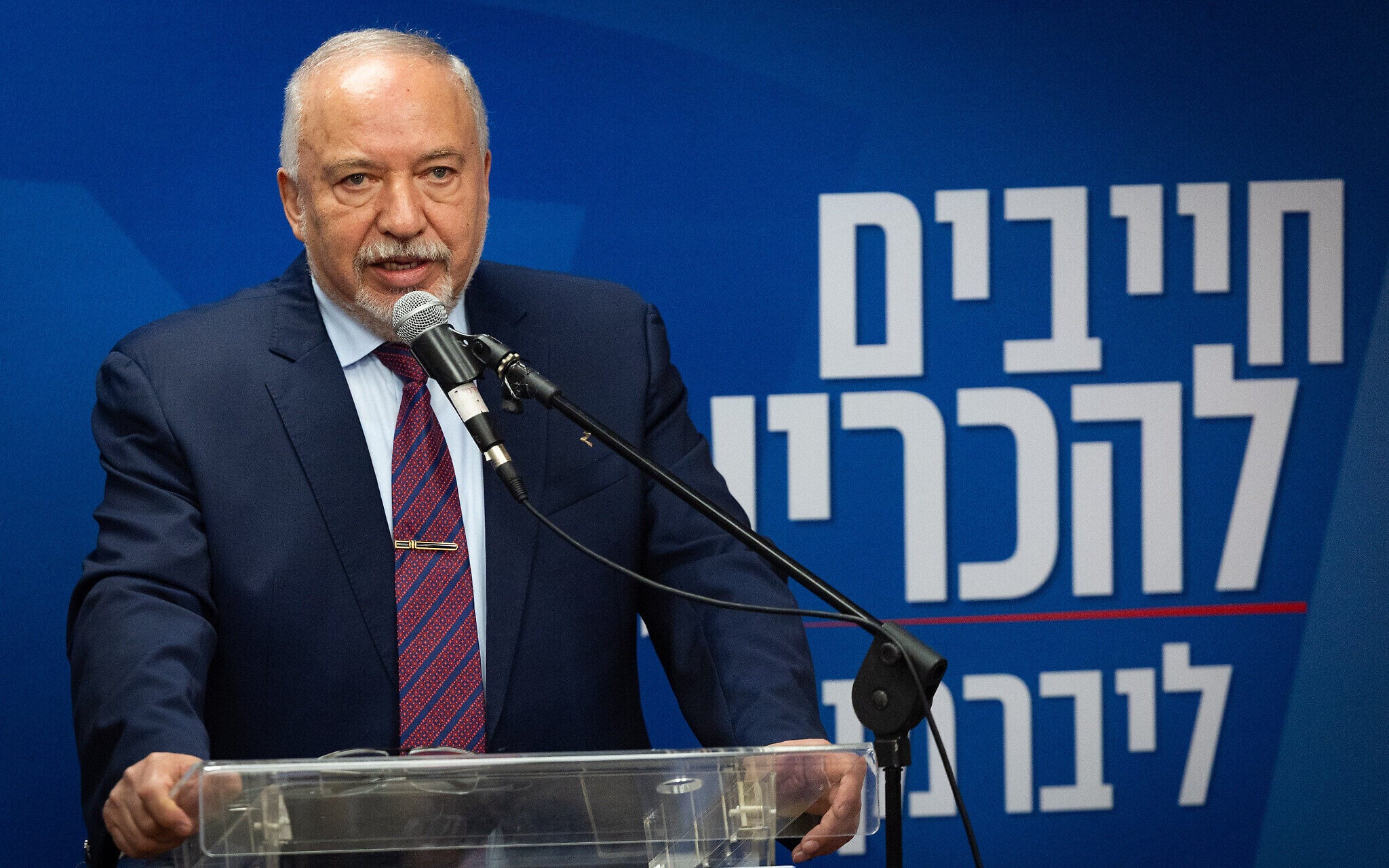
Yisrael Beytenu party chairman MK Avigdor Liberman leads a faction meeting at the Knesset in Jerusalem, on June 15, 2026. (Yonatan Sindel/Flash90)
Israel must not allow the United States to create a linkage between the ceasefire with Iran and the conflict in Lebanon, Avigdor Liberman declares — arguing that if the Trump administration’s pending agreement with Iran had been signed during the previous Bennett-Lapid government, Prime Minister Benjamin Netanyahu “would have accused us of treason.”
Accusing Netanyahu of leading Israel to a “diplomatic disaster much worse than Obama’s agreement” with Tehran in 2015, Liberman tells reporters ahead of his hawkish Yisrael Beytenu opposition party’s weekly faction meeting in the Knesset that Israel “must inform the US that we do not accept any linkage, any connection, between the Iranian arena and the Lebanese arena.”
Jerusalem must be prepared to retaliate against Hezbollah and Iranian attacks, he insists, asserting that “for every Iranian launch at Israel, we should respond by destroying Kharg Island and the port of Bandar Abbas.”
Liberman also calls for the creation of an Israeli missile force and insists that “from now on, Mossad must focus on one mission only — overthrowing the ayatollah regime.”
Iran’s enriched uranium should be ‘neutralized,’ supervised by UN, Macron says

French President Emmanuel Macron meets members of the emergency forces, ahead of the G7 Summit, in Evian-les-Bains, France, June 15, 2026. (Christian Hartmann/Pool Photo via AP)
Iran’s stocks of enriched uranium need to be neutralized and placed under the supervision of the UN atomic agency, French President Emmanuel Macron says.
“We will ensure that the enriched uranium capabilities that remain are properly neutralized,” Macron says after US President Donald Trump announced a deal with Iran. The sensitive stocks should be “either taken out, or diluted” and then looked after by the International Atomic Energy Agency (IAEA), Macron says.
Macron vows ahead of the G7 summit in France that “we will do everything” to ensure Iran imposes no tolls on the key Strait of Hormuz shipping channel.
Speaking to TF1 TV hours after a deal was agreed between Iran and the United States to end the Middle East war, Macron says a joint France-UK mission to ensure the Strait opens is prepared to deploy “very quickly,” with the French flagship aircraft carrier Charles de Gaulle ready to be in the zone “on a timescale of two to three days.”
Settlers attack Palestinians and activists assisting them near Hebron, vandalize vehicles
Some 10 settlers attacked Palestinian farmers from the Hebron-area town of Halhul and activists from the Bnei Avraham organization who were assisting them a short while ago, an activist from Bnei Avraham tells The Times of Israel.
The activist, who asked not to be named, says that around 30 Palestinians and activists had arrived at privately owned Palestinian farmland near Halhul to cultivate their land. According to her, the settlers initially assaulted them, punching and kicking them, and later vandalized five Palestinian vehicles, smashing windows and mirrors and slashing tires. The land is located in Area C, where Israel maintains both security and civilian control.
According to the activist, settlers first arrived from a nearby outpost and were later joined by settlers from other outposts in the area.
הממשלה מממנת את הטרור היהודי
לפני זמן קצר מתנחלים קיצונים השחיתו רכבים של פלסטינים שלוו על ידי פעילי קבוצת הנוכחות המגינה ״בני אברהם״ ליד חלחול.
הצבא הגיע, הכריז על שטח צבאי סגור, סילק את הפעילים והשאיר את המתנחלים בשטח. אחרי שהצבא הלך, המתנחלים חזרו להתנכל לפעילים.
ממש… pic.twitter.com/AwZWp7cg2M
— גלעד קריב (@KarivGilad) June 15, 2026
She further says that following the incident, IDF forces arrived at the scene, presented a closed military zone order, and removed the activists and Palestinians from the area, despite the fact that the order exempts local residents and had previously been issued in order to evacuate the nearby outpost. According to her, the settlers who came from the nearby outpost were not removed and went back to their outpost.
The IDF has not yet responded.
The activists and Palestinians are currently attempting to file a complaint with the police.
On June 5, settlers accompanied by IDF forces prevented Palestinians and Israeli activists from Bnei Avraham from reaching land in Area B, also near Hebron, so that the Palestinians could cultivate their fields.
In footage from that incident, a masked and armed settler is seen saying that only Jews were allowed to remain in the area and that Arabs had to leave.”Jews are allowed to be here. Arabs have to get out of here. This is a closed military zone,” the man said in the video to Palestinians from the town of Tarqumiyah.
Shipping giant Maersk welcomes US-Iran deal, but no change yet to Mideast operations

A Maersk cargo ship crosses the Gibraltar Strait near Tangier Med Port, Morocco, April 20, 2025. (AP Photo/Mosa'ab Elshamy)
Denmark’s Maersk says it welcomes the agreement announced by the United States and Iran but that it is too early to assess its impact and that there are no changes yet to the group’s Middle East operations.
Iran says respecting Lebanon’s territorial integrity is part of agreement with US
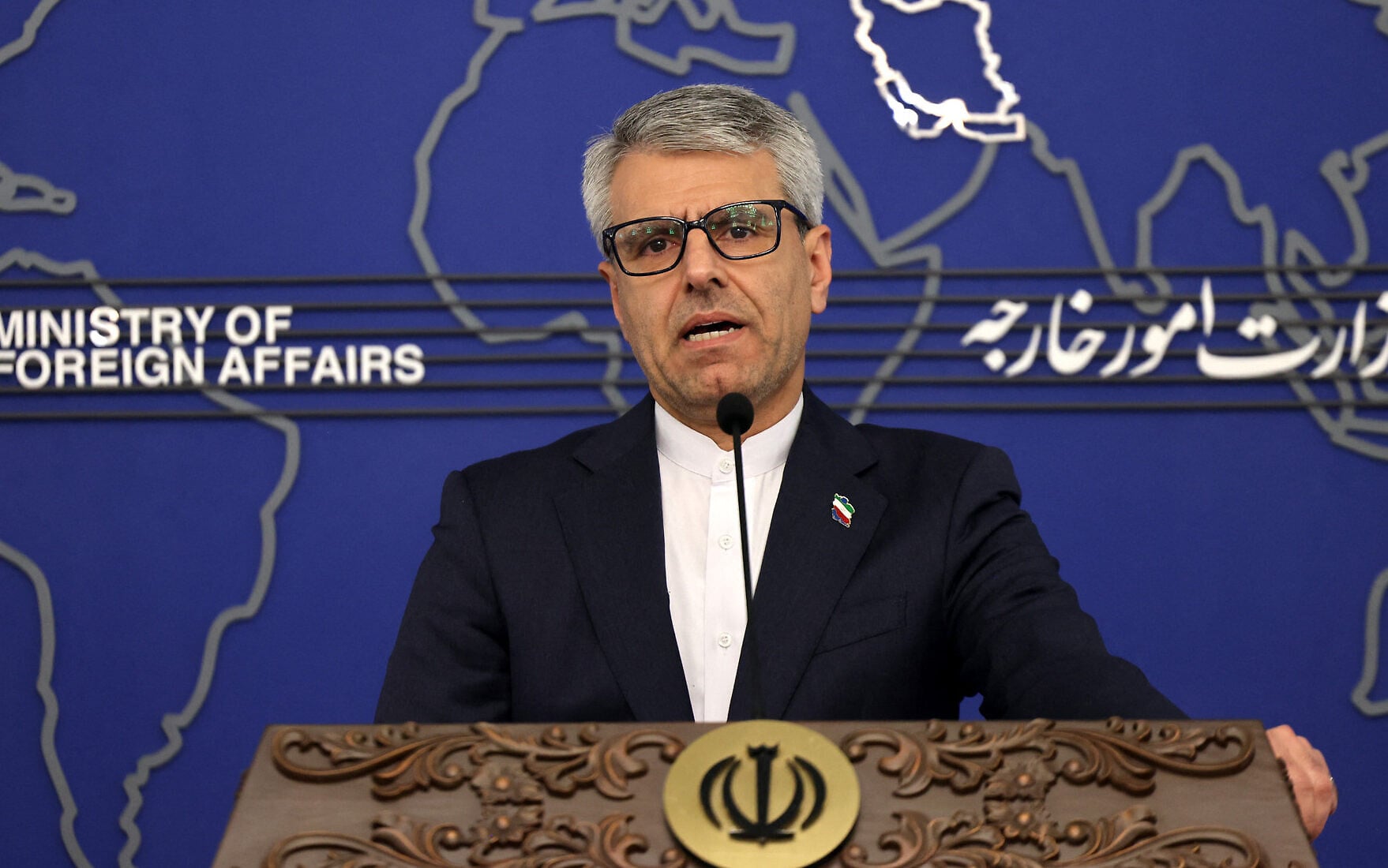
Iranian foreign ministry spokesman Esmail Baghaei during a weekly press conference at the Foreign Ministry in the capital Tehran, on February 10, 2026. (ATTA KENARE / AFP)
Iran’s foreign ministry spokesperson Esmail Baghaei says respecting the sovereignty and territorial integrity of Lebanon is part of the interim agreement with the US.
His statement comes after Israel’s Defense Minister Israel Katz said earlier the country will not pull its forces out of south Lebanon, and will continue to act to destroy terror infrastructure in the area.
Baghaei says Tehran still holds “deep mistrust” of the United States despite an agreed framework aimed at ending the war.
“Unfortunately, it must be acknowledged that Iran’s deep mistrust of the United States stems from a long history of wrongdoing by American leaders,” he says.
“The United States still has a long way to go before it can earn the trust of the Iranian people,” he says, adding that the framework is “merely a step toward reducing tensions and ending a war” which broke out late February.
Lapid: ‘There’s never been a more absolute failure than Netanyahu’s diplomatic failure on the Iranian front’
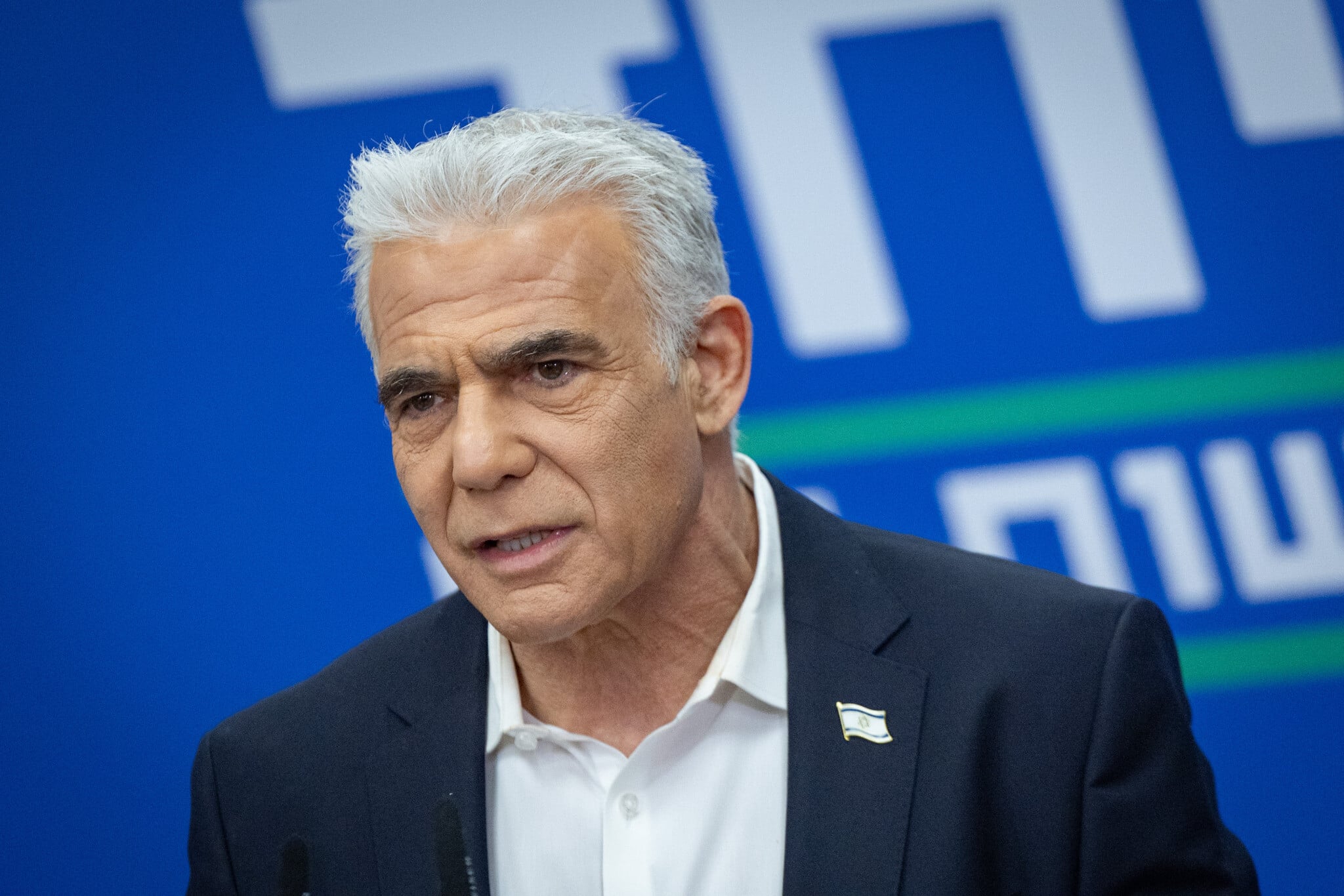
Opposition Leader Yair Lapid leads a Yesh Atid faction meeting at the Knesset in Jerusalem, June 15, 2026. (Yonatan Sindel/Flash90)
Prime Minister Benjamin Netanyahu has “lost the war” and “collapsed in the moment of truth,” Opposition Leader Yair Lapid claims, criticizing the emerging ceasefire deal between Washington and Tehran.
“The State of Israel won the battle; Netanyahu lost the war. The Israel Defense Forces fulfilled its missions, Netanyahu failed to deliver the goods,” Lapid tells reporters ahead of his Yesh Atid party’s weekly faction meeting.
“There has never, ever, been a more absolute failure than Netanyahu’s diplomatic failure on the Iranian front. The time has come for us to recognize the fact that Netanyahu simply cannot do it anymore,” Lapid continues, complaining of “an American president openly and publicly telling the prime minister of Israel: ‘I am your boss, and you will do what you are told.'”
This puts Israel in the difficult situation of having to choose between its right to self-defense and a confrontation with its greatest ally, he continues, insisting that under a Bennett-Lapid government “we wouldn’t have gotten into [this situation] in the first place.”
Slamming the prime minister for allegedly surrounding himself with clowns, cynics and people who “received money from Qatar,” Lapid says that “on October 7, 2023, we learned that Netanyahu can no longer protect the security and lives of Israel’s citizens. On June 15, 2026, we learned that he can no longer manage a diplomatic campaign.”
Lebanese celebrate news of US-Iran agreement, some try to return to homes in south

A displaced family with their belongings ride on a pickup truck as they return to their village following the announcement of an initial ceasefire agreement between the United States and Iran, in the southern port city of Sidon, Lebanon, June 15, 2026. (AP Photo/Mohammed Zaatari)
Lebanese media overnight published footage of displaced residents in southern Lebanon celebrating news of an agreement between Iran and the United States, amid reports that the deal also includes a de-escalation between Israel and Hezbollah.
In addition, residents were filmed this morning in the southern Lebanese city of Nabatieh attempting to return to their homes, apparently believing that the agreement would allow them to do so.
No official ceasefire in Lebanon or organized return of residents to their homes has been announced so far, and the Lebanese government has even warned residents against rushing home.
Hezbollah, as well as Iran and mediator Pakistan, have said the ceasefire also includes Lebanon.
الاحتفالات بمراكز الايواء في بلدة العباسية جنوب لبنان pic.twitter.com/Dt6kJTK1ET
— Mohammad Shreim (@ShreimMohammad) June 15, 2026
لقطات من طريق بلدة زفتا-النبطية جنوب لبنان.. راعي ماشية يعيد قطيعه من الأغنام إلى المنطقة التي أُجبر على مغادرتها بسبب الحرب#لبنان #النبطية pic.twitter.com/QdkN5C1OVd
— ديوان (@DiwanDaily) June 15, 2026
Hezbollah welcomes US-Iran MOU, thanks Iran for including Lebanon in deal
Hezbollah welcomes the memorandum of understanding between the United States and Iran, saying it has resulted in a comprehensive ceasefire across all fronts, including Lebanon.
In a written statement, the Tehran-backed terror group warns Israel that it will not accept any attacks that violate Lebanon’s sovereignty or target its people.
It says Lebanon’s inclusion in the agreement reflected Iran’s commitment to ending the war.
Vance: ‘Elements’ in Israel like Iran deal ‘quite a bit,’ those who don’t are relying on faulty info
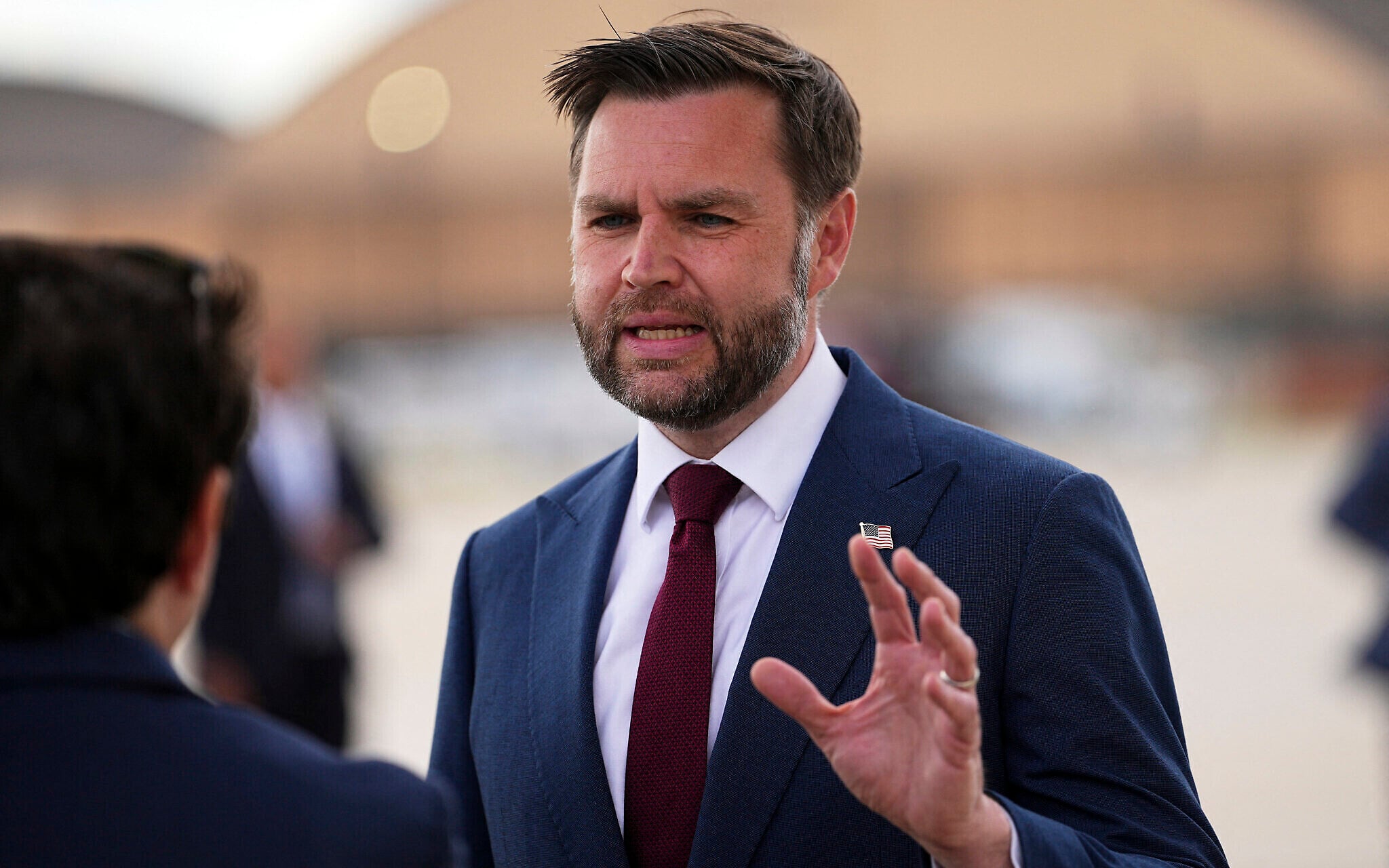
US Vice President JD Vance speaks with reporters after his arrival at Joint Base Andrews in Maryland, on May 28, 2026. (Matt Rourke/Pool/AFP)
US Vice President JD Vance claims that there are “elements within Israel” that like the deal that Washington reached yesterday with Iran “quite a bit.”
The memorandum of understanding — which has yet to be released — has been harangued by Israeli politicians from across the spectrum.
Vance says in a CNBC interview that some of the criticism has to do with reliance on “misreporting” from Iranian state media, which the vice president claims is mischaracterizing the agreement in order to sell it to a domestic audience.
Vance says the text of the MOU will hopefully be released later this week and that those now doubting it will then realize that it makes the region safer.
He compares the new deal to the nuclear agreement signed in 2015 by former US president Barack Obama, claiming that Gulf countries hated that accord. In contrast, Vance claims that Gulf countries are now heralding the newly inked MOU. It’s unclear what praise from Gulf countries Vance is referring to.
Vance insists that the deal with Iran will create a “new Middle East” in which “Israel is going to have a seat at the table.”
All legislation removed from today’s Knesset agenda as Haredi parties revolt over shelving of Daycare Law
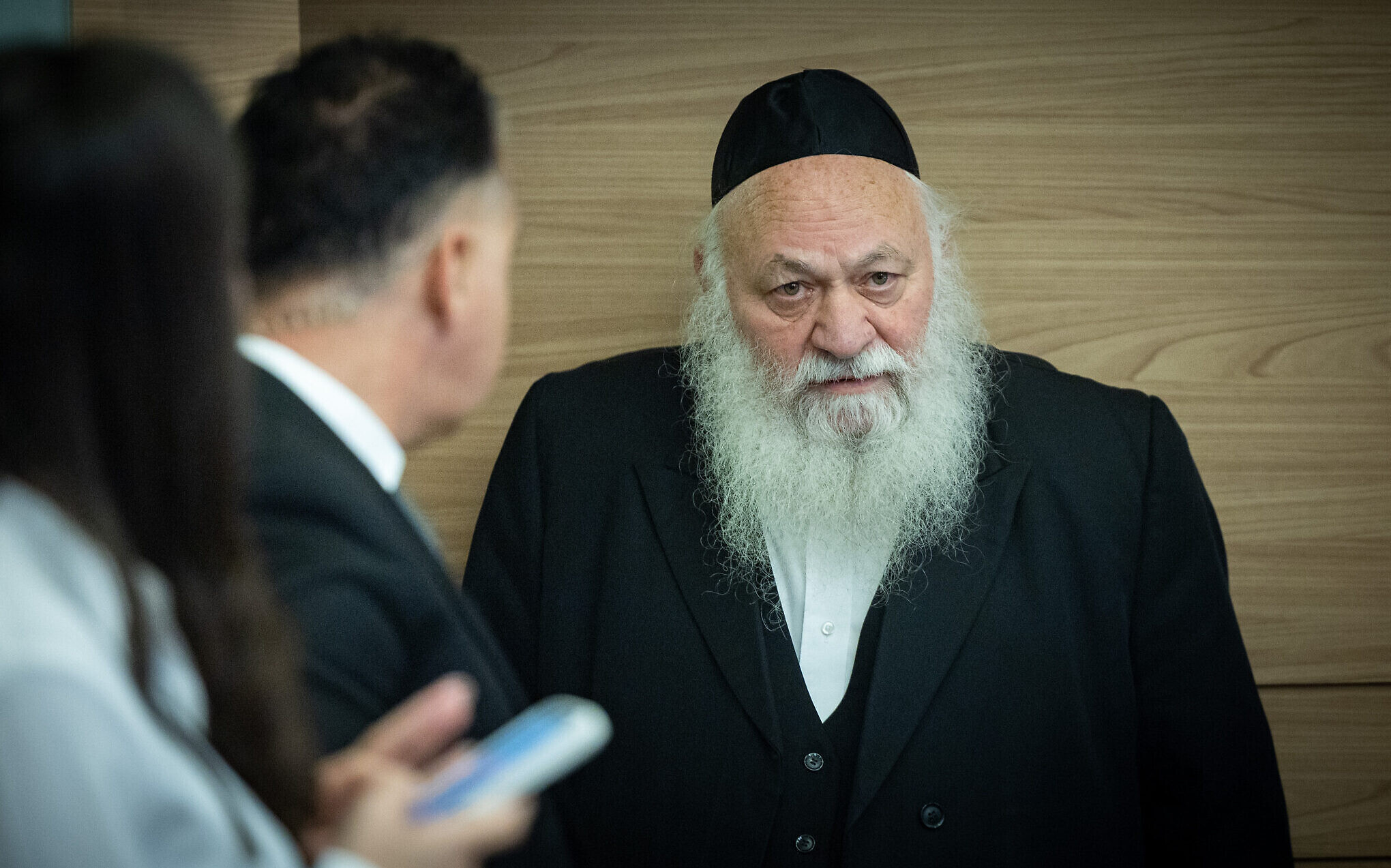
United Torah Judaism chair Yitzhak Goldknopf attends a House Committee meeting at the Knesset, in Jerusalem, June 9, 2026. (Yonatan Sindel/Flash90)
All legislation is removed from the plenum agenda this afternoon, after the Knesset’s ultra-Orthodox parties pledge to vote against all coalition bills.
“We have now informed the coalition chairman that due to the failure to put the Daycare Law on the agenda, we will not vote today in favor of coalition legislation in the Knesset plenum,” the United Torah Judaism and Shas parties declare in a joint statement.
The only votes will therefore be on three no-confidence measures by opposition parties.
The two Haredi parties earlier today threatened to boycott coalition legislation unless the so-called Daycare Bill, aimed at restoring daycare subsidies to the children of Haredi draft evaders, was placed on today’s legislative agenda.
According to Hebrew-language reports, the coalition was not expected to bring the so-called Daycare Law to the plenum this afternoon, following its approval by the Knesset Finance Committee last week, due to the opposition of Finance Minister Bezalel Smotrich’s Religious Zionism party to the measure.
In August 2024, Attorney General Gali Baharav-Miara ordered the Labor Ministry to cut daycare subsidies for the children of ultra-Orthodox yeshiva students who disobey military draft orders, explaining that since the High Court ruled that members of the ultra-Orthodox community must be inducted into the army, there was no longer a legal basis for the state to fund daycare for those who don’t comply. The Haredi-backed legislation is an attempt to circumvent the attorney general’s orders.
Trump claims ships are starting to traverse ‘totally safe’ Strait of Hormuz
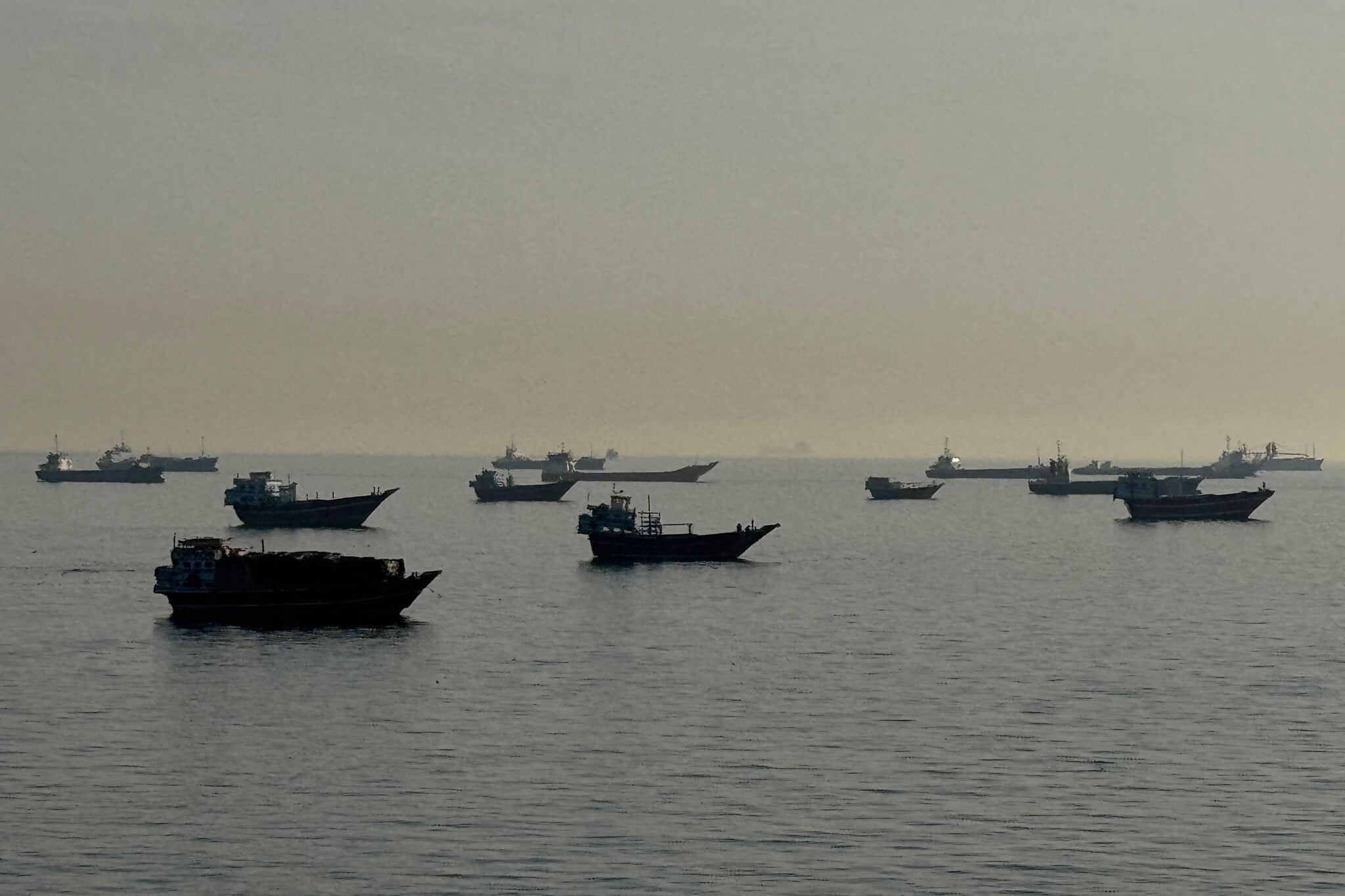
Vessels are seen anchored in the Strait of Hormuz, off the port city of Khasab on Oman's northern Musandam Peninsula on May 17, 2026. (AFP)
US President Donald Trump claims that “ships are starting to move — many loaded up with oil — out of the Strait of Hormuz.”
“They are going along the southern ‘highway,’ which is totally safe, secure, and pristine. There are other areas of travel, also!” he writes on Truth Social, as he tries to sell the MOU that the US and Iran approved yesterday in order to end the war between them and reopen the Strait of Hormuz.
Smotrich and Ben Gvir pan US-Iran deal, say Israel should defy it
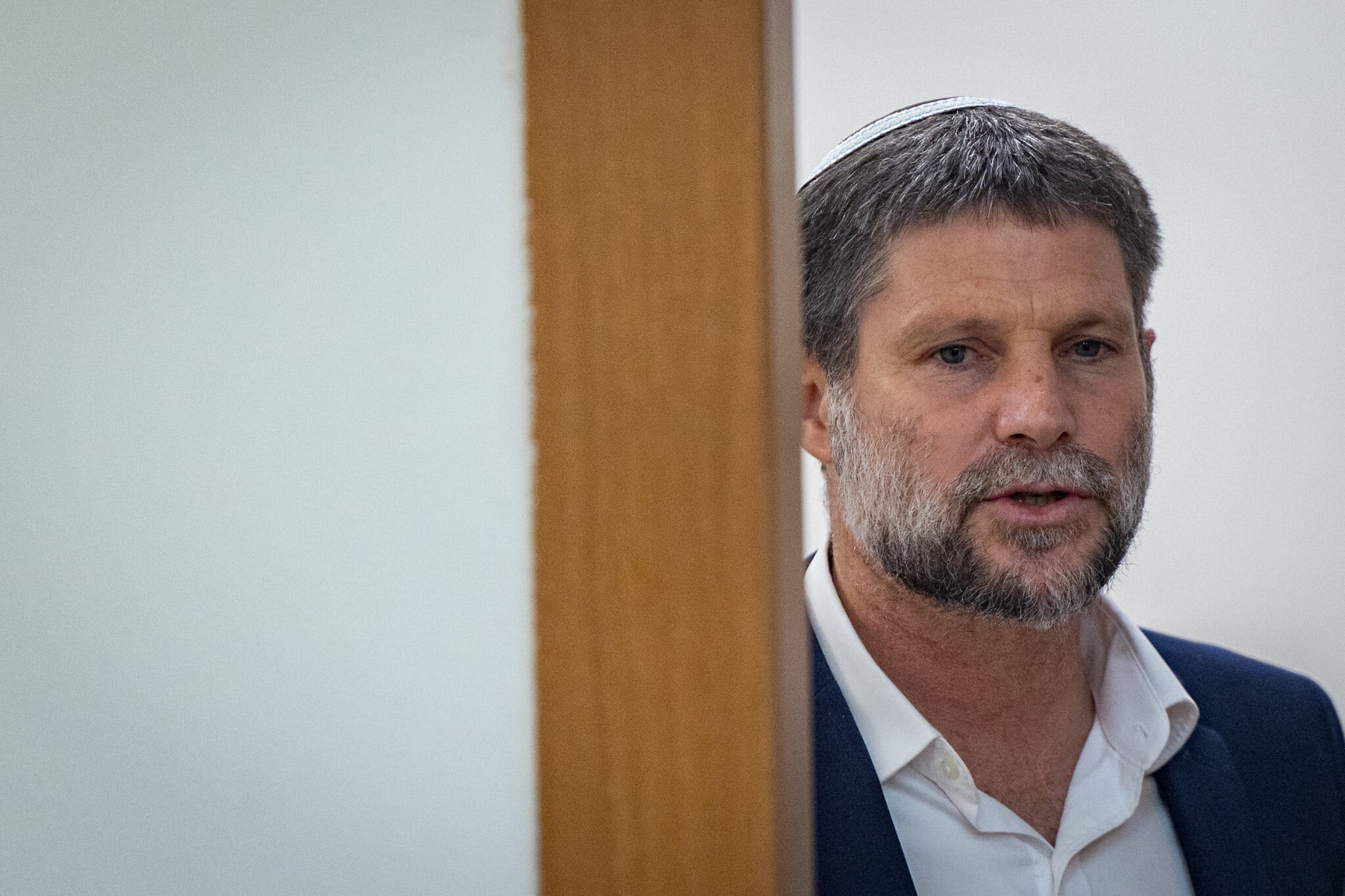
Finance Minister Bezalel Smotrich arrives for a Religious Zionism faction meeting at the Knesset in Jerusalem, June 15, 2026. (Yonatan Sindel/Flash90)
National Security Minister Itamar Ben Gvir and Finance Minister Bezalel Smotrich rail against the pending ceasefire deal between Washington and Tehran, insisting that Israel be allowed to continue fighting on multiple fronts.
“The State of Israel must not accept the ceasefire between the United States and Iran,” Ben Gvir tells reporters ahead of his ultranationalist Otzma Yehudit party’s weekly faction meeting in the Knesset, insisting that “the security of the citizens of Israel and IDF soldiers stands above all other considerations” and that Israel is “not bound by agreements that put an end to its ability to defend itself.”
“I demand that the prime minister allow IDF soldiers to continue the vital activity of demolishing homes, eliminating Hezbollah terrorists, and distancing residents from their homes. We must not act according to the agreements between Trump and Khamenei,” Ben Gvir declares.
“We cherish and appreciate the deep friendship with the United States and President Trump’s standing by Israel. However, the direct and exclusive responsibility for Israel’s security rests solely on the Government of Israel, [which] must maintain full operational freedom of security at any time and in any place,” he continues.
Smotrich tells reporters ahead of his far-right Religious Zionism party’s faction meeting that “the agreement with Iran is a bad deal for Israel and the entire free world. Iran must never be allowed to have nuclear weapons, and we must not accept a reality where the extremist regime in Tehran continues to advance toward this goal.”
While the joint US-Israel campaign against Iran “yielded very significant achievements” and weakened the regime, “Israel will continue to act using all tools at its disposal to topple the Iranian Ayatollah regime and to prevent this terror regime from becoming a nuclear threshold state,” Smotrich declares.
“I hear quite a bit of criticism and suggestions from the outside, but the truth must be told, the political, security and international pressure being exerted during this period on the Israeli government and the prime minister is unprecedented. Not a single one of the self-proclaimed candidates for prime minister would have withstood even a tenth of this pressure. Believe me. I know them all well.”
Vance: US ‘expects’ Hormuz to be opened toll-free for long-term
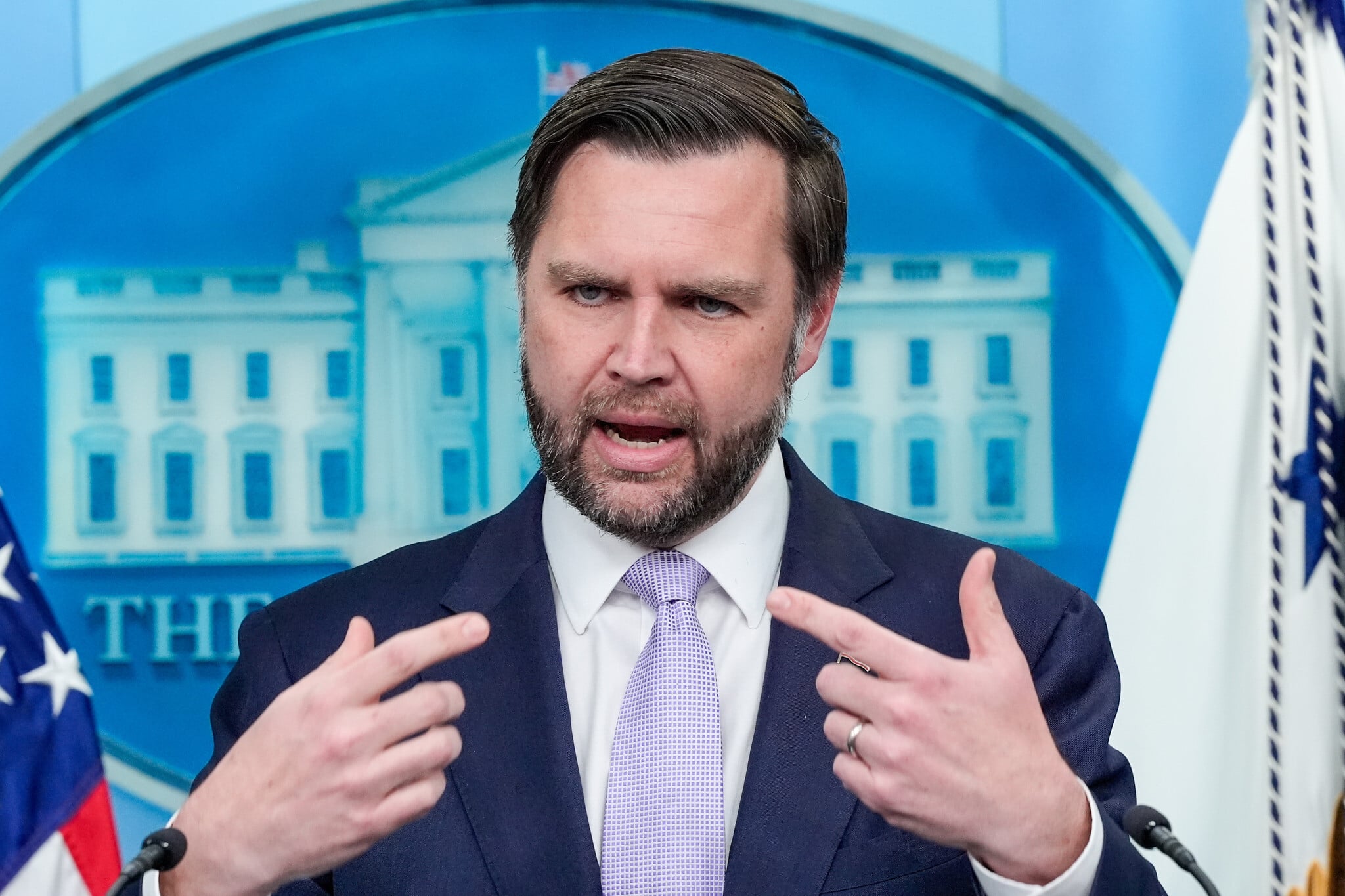
US Vice President JD Vance speaks to reporters during a during a press briefing at the White House, on May 19, 2026, in Washington. (AP Photo/Manuel Balce Ceneta)
US Vice President JD Vance says Washington “expects” that the Strait of Hormuz is going to be “opened in a toll-free way for the long-term.”
“That’s the sort of thing that we’re going to figure out in these technical negotiations,” Vance says in an interview with CNBC.
He notably stops short of saying that the MOU announced yesterday ensures freedom of navigation through the waterway.
His comments would appear to leave open the possibility that Iran will be able to charge tolls on vessels traveling through the Strait at least until an agreement is reached in the subsequent negotiations that the MOU launches between the US and Iran.
The US has framed the MOU as one that completely opens the Strait of Hormuz, while Iranian officials have said that Tehran and Oman will maintain control over the channel moving forward — a dynamic that was not in place before the war launched by the US and Israel on February 28.
While the deal was announced yesterday, it won’t be signed until Friday. US President Donald Trump said yesterday that the Strait of Hormuz will reopen on Friday, but has since claimed that ships have already started passing through with ease.
Vance tells CNBC that Iran’s Foreign Minister Abbas Araghchi and Parliament Speaker Mohammad Bagher Ghalibaf will join him at the signing ceremony in Switzerland on Friday.
He says the US has been “dealing with everybody in the Iranian system” — from military hardliners to political leaders — claiming that Washington is sometimes doing so directly and has built good relationships with counterparts in Tehran that will allow for a successful negotiation.
In an effort to sell the MOU, Vance insists that the US maintains “all of the cards” because it doesn’t offer Iran sanctions relief if Tehran doesn’t make concessions in the subsequent nuclear talks that will be held over the coming two months.
“Even if we just stopped here, what would be true? Their military is destroyed, the Straits of Hormuz are open, their nuclear program has been destroyed, and we have incredible economic leverage over them that we didn’t have a year and a half ago,” Vance says.
Despite Vance’s claims, though, Iran’s missile program remains intact, even if badly battered. Moreover, it still holds onto its stockpiles of highly-enriched uranium, which can be used to create a nuclear weapon.
Ben Gvir says his party won’t run jointly in the election with Smotrich’s, which is in danger of not entering Knesset
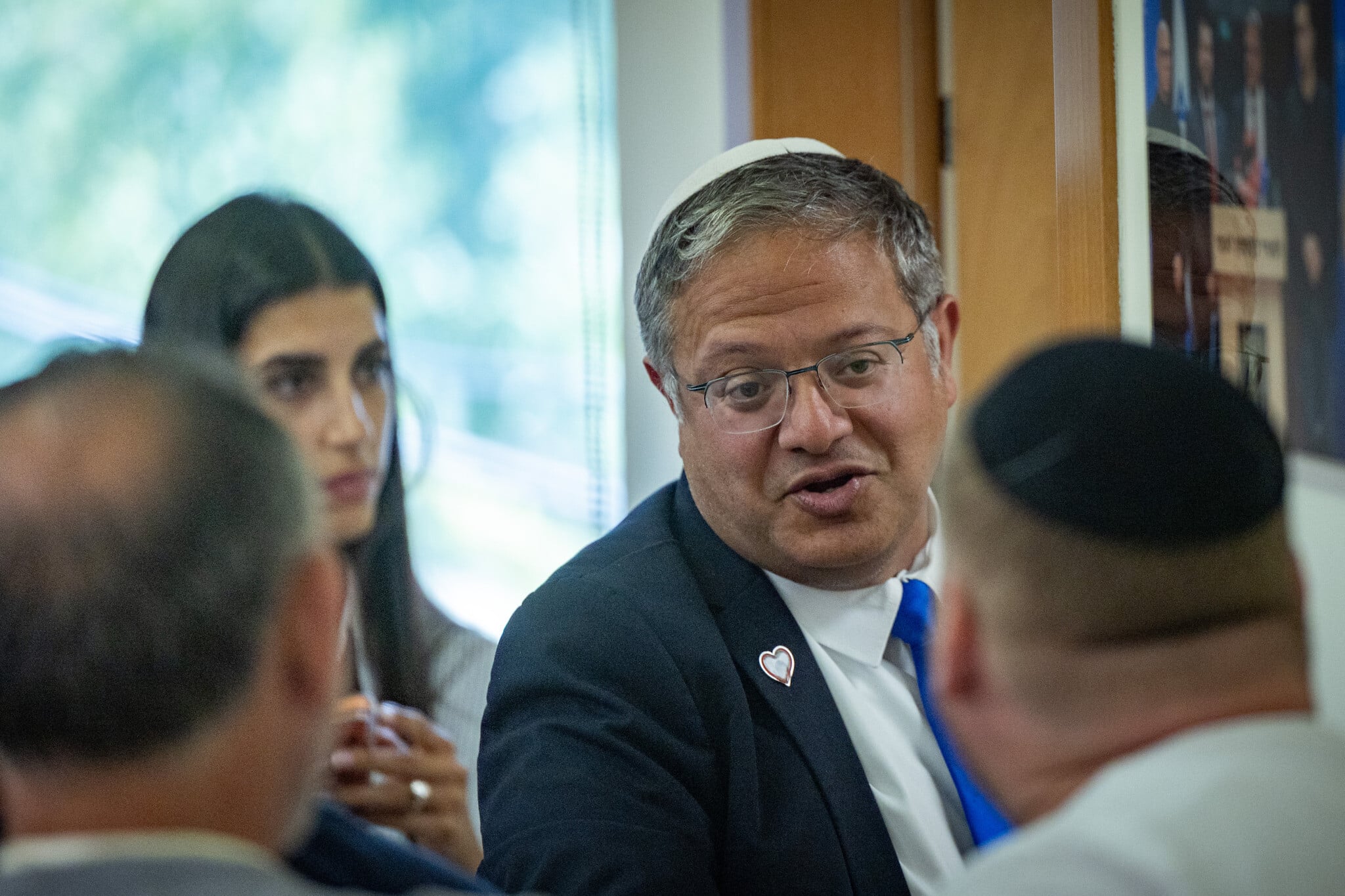
National Security Minister Itamar Ben Gvir leads an Otzma Yehudit faction meeting at the Knesset in Jerusalem, June 15, 2026. (Yonatan Sindel/Flash90)
National Security Minister Itamar Ben Gvir says that his ultranationalist Otzma Yehudit party will not run on a joint slate with Finance Minister Bezalel Smotrich’s far-right Religious Zionism in the upcoming election, after the two teamed up in the last election.
According to a survey published last week by Zman Yisrael, The Times of Israel’s sister site, if elections were held today, Otzma Yehudit would receive eight seats while Religious Zionism would fail to enter the Knesset. Religious Zionism has been polling around or below the electoral threshold for months, sparking speculation that Prime Minister Benjamin Netanyahu will broker another joint run.
Asked about this possibility by a reporter ahead of his party’s weekly faction meeting in the Knesset, Ben Gvir replies that “Smotrich must run in one party and we must run in another party. Otherwise, there is no option for a right-wing government.”
“The only option for a right-wing government is for Smotrich to run within the religious Zionism framework, try to make a sectoral party, and I believe he will pass the electoral threshold. And on the other hand, Otzma Yehudit must appeal to the entire State of Israel, to all the people. I hope we will bring such a large result that there will be no doubt. The larger Otzma Yehudit is, the greater the chance that there will be a right-wing government here,” Ben Gvir says.
Ben Gvir appeared to hint at this approach late last month, when he told reporters during a previous press conference that it was important that Smotrich run on his own.
He said at the time that he thought “we need to maximize the right-wing votes so that there will be a right-wing government here once again, and Otzma Yehudit has a very, very important role. Otzma Yehudit is not a sectarian party” and has supporters “from all sectors: secular, traditional, Haredi.”
“I think Bezalel needs to run in the format of a religious Zionist party. God willing, I believe and know that he can pass the electoral threshold, and Otzma Yehudit needs to bring a lot of mandates, and we can bring a lot of mandates to the right-wing bloc so that there will be a right-wing government here,” he said at the time.
NYT probes Kristof articles that quoted donors to his 2021 political campaign
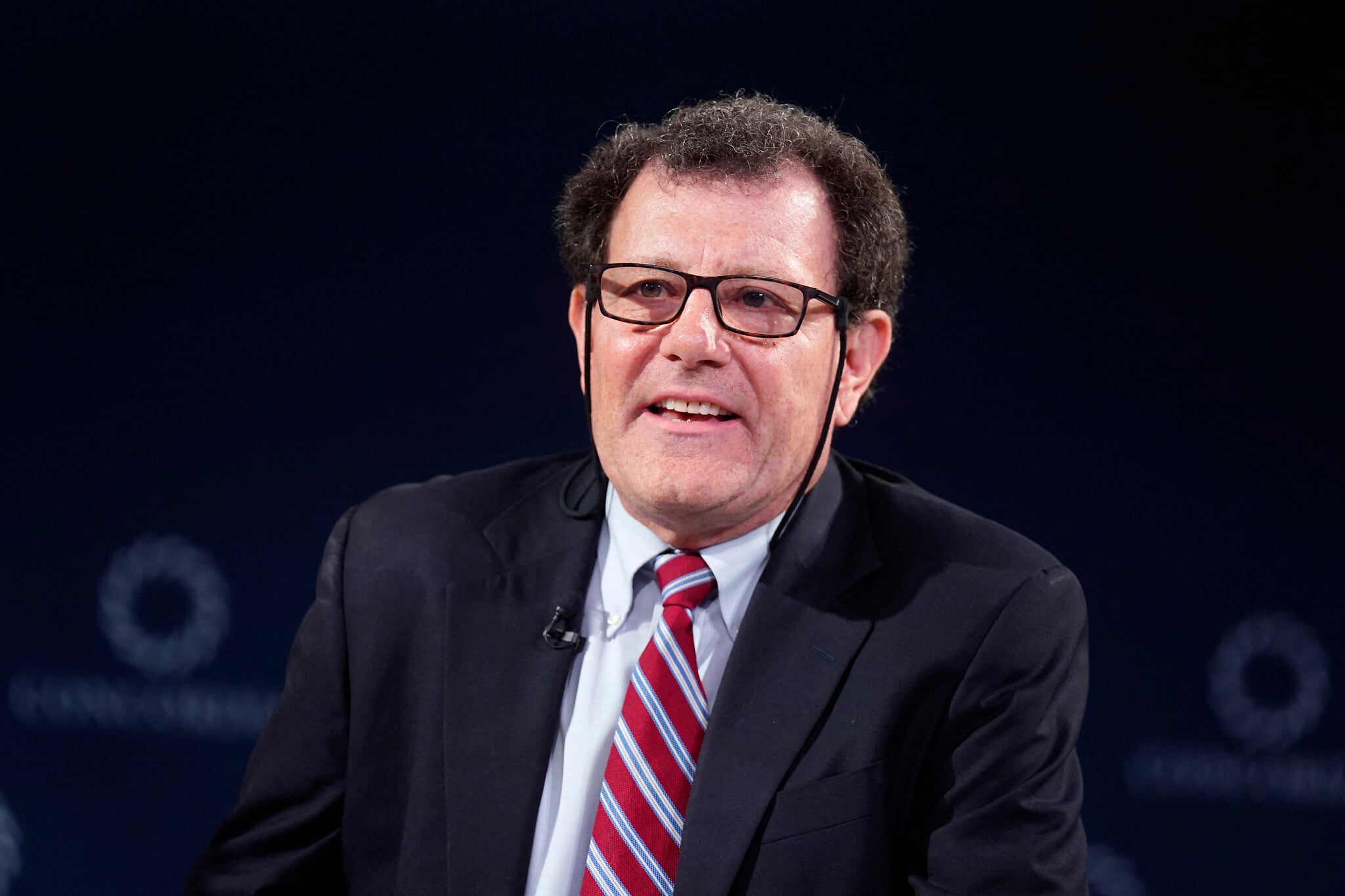
New York Times columnist Nicholas Kristof speaks onstage during the 2024 Concordia Annual Summit on September 25, 2024, in New York City. (Riccardo Savi / Getty Images via AFP)
The New York Times is reviewing Nicholas Kristof’s articles that quote donors to his failed 2021 run for governor of Oregon, Semafor reports.
Kristof wrote a widely criticized column last month that alleged sexual assault of Palestinians in Israeli prisons. That column, and its alleged deficiencies, led to wider scrutiny of Kristof’s work, of Kristof himself, and of New York Times coverage of Israel.
Semafor reports that it received a tip about Kristof’s reporting on his donors after the Israel column was released, although it isn’t clear what motivated the source.
When Kristof returned to The New York Times in 2022, after his run for governor, the newspaper said Kristof would not write about donors to his campaign, or would disclose the donations in his coverage.
Kristof quoted donors at least a dozen times without any disclosure, however.
Some of the donors included Bill Gates, a member of the Council on Foreign Relations, a partner at the McKinsey consulting firm and a Harvard professor.
A New York Times spokesperson tells Semafor that the newspaper is reviewing the articles mentioning Kristof’s donors.
“Previous political donations made by some people Nick Kristof mentioned in his columns should have been made more clear to readers,” the spokesperson says. “Editors from Times Opinion are reviewing these articles to determine further clarifications for readers.”
The New York Times has repeatedly defended Kristof’s reporting about alleged sexual abuse of Palestinians.
El Al signs deal with Musk’s Starlink for high-speed internet on its flights, starting 2027
Israel’s flag carrier El Al says it has signed an agreement with Elon Musk’s Starlink to install advanced internet service on its aircraft beginning in 2027.
The high-speed internet service will be offered free of charge to El Al passengers, subject to conditions, for in-flight streaming, remote working, and other digital services.
Starlink’s Fastest Internet in the Sky Is Coming to EL AL.
EL AL is signing an agreement with @Starlink to deploy advanced internet service on its aircraft, delivering a fast, stable and uninterrupted browsing experience throughout the entire flight, just like at home. The… pic.twitter.com/gxTDfQGEeh
— EL AL USA (@ELALUSA) June 15, 2026
Lindsey Graham appears to lay groundwork for distancing Trump from Iran deal if it doesn’t pan out
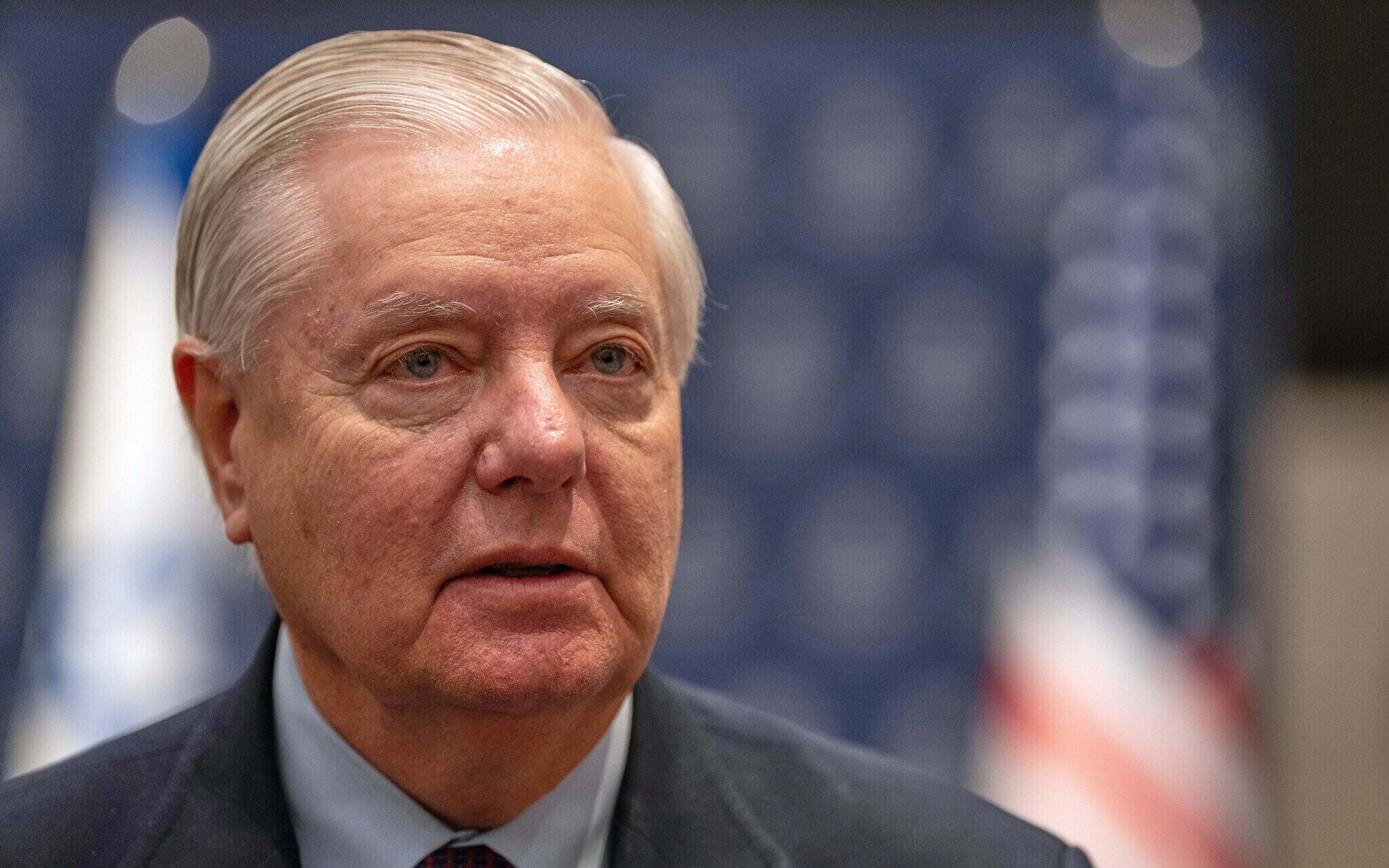
US Senator Lindsey Graham, a Republican from South Carolina, speaks to the media in Tel Aviv, December 21, 2025. (AP/Maya Levin)
Republican US Senator Lindsey Graham appears to lay the groundwork for distancing US President Donald Trump from the recently announced Iran deal if it does not pan out.
In a tweet last night tacitly welcoming the agreement reopening the Strait of Hormuz, Graham says he’ll be closely following the subsequent nuclear talks launched by the MOU.
“I am somewhat concerned that Iran’s view of the agreement seems different than what the American negotiating team is claiming,” Graham says.
He claims that any deal resulting from the subsequent nuclear talks will have to come before Congress for a vote.
“I believe it is imperative that the architect of the deal, Vice President Vance and his negotiating partners, be part of the process in presenting the final deal to Congress,” Graham writes, referring only to Vance by name as the “architect” of the deal, rather than Trump, who heads the administration in Washington.
After bitterly criticizing Trump when he was only a candidate for the presidency in 2016, Graham has since become one of Trump’s most die-hard supporters.
Trump has warmed up to him considerably and Graham has used the relationship to aggressively lobby in favor of US military action in Iran.
Vance reportedly opposed launching a war with Iran in February but agreed to back it once Trump decided to move ahead.
I am pleased to hear the memorandum of understanding with Iran to allow the Strait of Hormuz to open has been agreed to. I will be watching closely the ensuing negotiations regarding Iran’s nuclear program and other matters.
I am somewhat concerned that Iran’s view of the… https://t.co/3vSNSOc1mp
— Lindsey Graham (@LindseyGrahamSC) June 14, 2026
Knesset election likely to be held on original October 27 date, not earlier — source
The 2026 election is likely to be held on time on October 27 rather than earlier, with the pre-election parliamentary recess probably beginning on July 16, a source with knowledge of the matter tells The Times of Israel.
Coalition figures were involved in discussions of the issue on the sidelines of today’s Knesset House Committee debate on granting Likud MK Tally Gotliv parliamentary immunity, the source says.
According to the source, neither Prime Minister Benjamin Netanyahu nor the Knesset’s ultra-Orthodox parties, which initially pushed to dissolve the Knesset, are interested in beginning the recess any earlier due to a desire to pass a series of controversial bills such as the Daycare Law and a Basic Law equating Torah study with military service.
The source adds that a coalition bill to dissolve the Knesset is unlikely to pass its final readings.
No consensus for EU sanctions against Israel’s Ben-Gvir, bloc’s top diplomat says
EU foreign ministers have not reached a consensus to approve sanctions against far-right National Security Minister Itamar Ben Gvir, EU’s top diplomat Kaja Kallas says.
“Many member states have also proposed to sanction Minister Ben Gvir, but no consensus on that was reached,” she says.
Western governments expressed outrage after Ben Gvir posted a video of himself taunting activists who had intended to bring humanitarian aid to Gaza being pinned to the ground.
France decided to ban Ben Gvir from French territory in May, while Italian prosecutors have put him under investigation.
Australia to probe Israel’s alleged abuse of flotilla activists
Australia’s federal police say they are investigating claims of abuse by Israeli officials made by citizens who were detained following the interception of their Gaza-bound aid flotilla last month.
Some members of a group of Australian activists have alleged they were subjected to “physical, psychological and sexual abuse” by Israeli officials and demanded Canberra take action.
Following a meeting with Foreign Minister Penny Wong, the group says the Australian government has “committed to undertaking an independent investigation” into those allegations.
In a statement, Australia’s federal police confirm they have “begun inquiries into allegations made by a representative of the group.”
“The [police force] engages with a victim-centric, trauma-informed approach,” a spokesperson says, adding they will “provide an update at an appropriate time.”
Foreign Minister Wong said this month she believed women who said they had been subject to sexual abuse and assault by Israeli forces.
Israel’s embassy in Canberra does not immediately respond to an AFP request for comment.
Israeli drone strike reported on car in southern Lebanon, killing one
Lebanese media reports one dead in an Israeli drone strike in southern Lebanon.
Lebanon’s National News Agency reports that a car was targeted in Kfar Tebnit, resulting in the death of the driver.
There is no immediate comment from the IDF.
Iranian president confirms deal with US will be signed on Friday
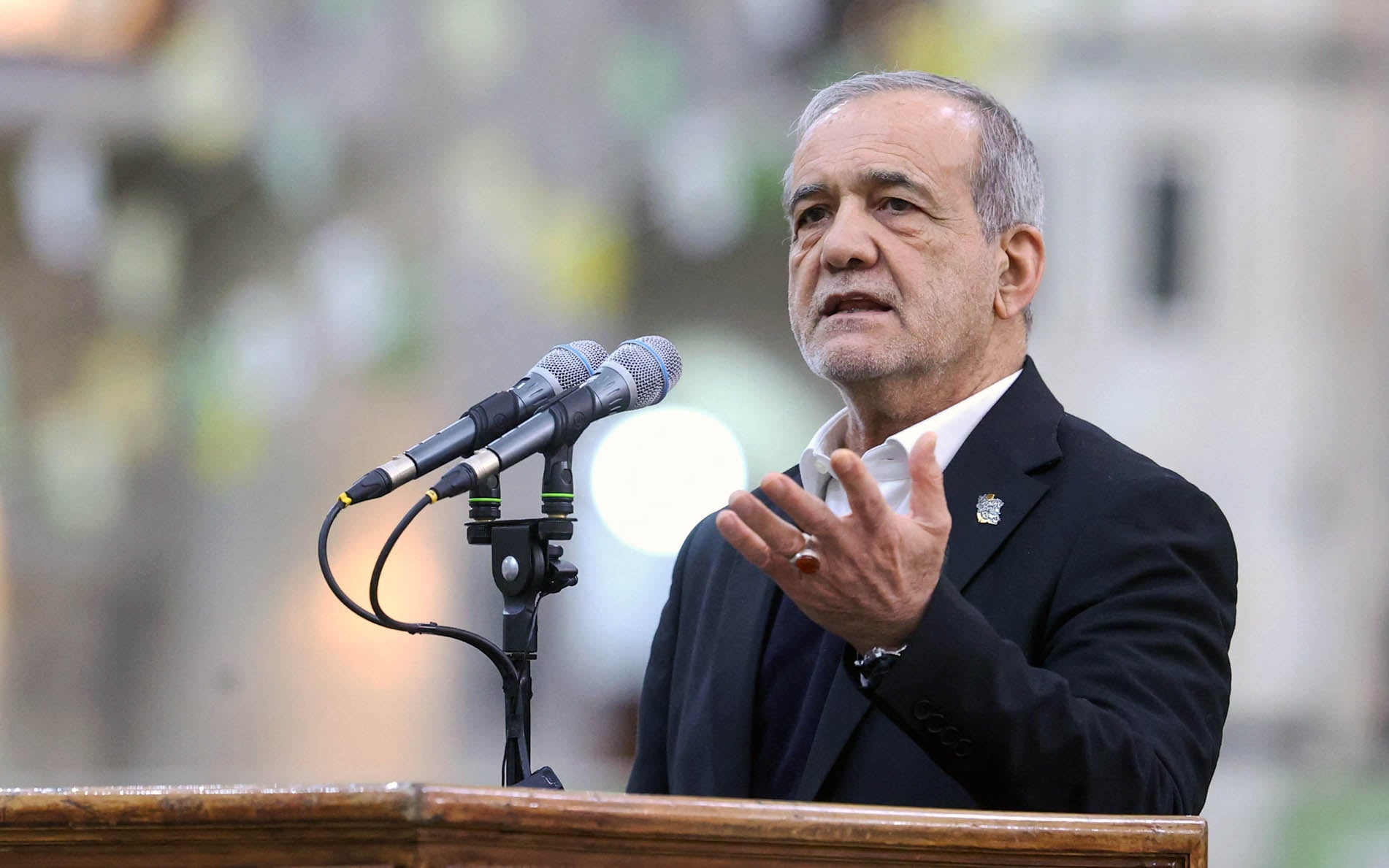
Iran's President Masoud Pezeshkian addresses cabinet members as they visit the tomb of the Islamic Republic's founding supreme leader, Ruhollah Khomeini, in Tehran, Iran, on January 31, 2026. (Handout/Iranian Presidency/AFP)
Iranian President Masoud Pezeshkian provides the first confirmation from Tehran that it will sign the deal with the United States on Friday.
“The memorandum of understanding to end the war between Iran and America is scheduled to be signed on Friday,” he says, according to multiple Israeli and international reports.
US military says blockade of Iran ports remains in effect until deal is signed on Friday
A US blockade of Iranian ports remains in effect pending completion of a ceasefire agreement with Iran scheduled for June 19, the US military says in an advisory note.
“A military blockade of Iranian ports remains in effect restricting all traffic inbound and outbound from these ports,” the advisory says.
“Do not attempt to cross until explicit direction is given.”
Iran says it will seek UN Security Council ratification after final deal with US, as lesson from the past
Iran’s foreign ministry says it will seek ratification from the UN Security Council after it negotiates a final agreement covering its nuclear program with the United States.
“The final agreement is expected to be endorsed by a United Nations Security Council resolution after a period of 60 days,” says foreign ministry spokesman Esmaeil Baghaei in a weekly press briefing, adding that Tehran “will learn from past experience.”
That comment appears to be a reference to the 2018 US withdrawal from the previous nuclear deal Iran signed with Western powers in 2015.
Israeli man caught trying to smuggle some 20 rare parrots into the country

Rare parrots caught being smuggled into Israel at Ben Gurion Airport, in a photo released June 15, 2026. (Israeli Customs)
Customs inspectors at Ben Gurion Airport have nabbed an Israeli man in his 20s trying to smuggle in around 20 rare parrots from Poland that were packed into five cages in his luggage.
The birds, reportedly worth tens of thousands of shekels, received veterinary treatment before being returned to Poland, the Israel Nature and Parks Authority says in a statement.
The suspect tried to pass through the Nothing to Declare channel of customs, where he was asked to put his luggage through the X-ray machine, according to the statement.
Criminal proceedings have been opened against him.
Ben Rosenberg, Director of the Wildlife and Plant Protection Division at the Nature and Parks Authority, says wildlife smuggling, which violates multiple laws, not only constitutes cruelty toward animals, but risks bringing parasites and animal-borne diseases into the country and endangering Israeli nature and agriculture.
At least two Syrian interior ministry personnel killed in suicide attack in Raqqa, ministry says
At least two Syrian interior ministry personnel were killed in a suicide attack that targeted a ministry camp in the city of Raqqa, the Syrian state news agency reports, citing the ministry’s spokesperson.
J Street welcomes Trump deal with Iran
The dovish American Middle East lobby J Street welcomes the MOU announced yesterday by the US and Iran, while noting that the war it ended didn’t accomplish any of the goals laid out by US President Donald Trump at the onset.
“While the details of the agreement are still unclear, bringing this devastating conflict to a close will save lives, reduce the risk of further regional escalation and ease the severe economic harm this war has inflicted on people across the world,” J Street says in a statement.
“At the same time, it is important to acknowledge a basic reality: This costly and illegal war achieved none of the sweeping objectives that were repeatedly invoked to justify it. The Iranian regime remains in power. Iran’s nuclear material remains in Iran. Iran retains significant military capabilities. And Tehran now has significantly more leverage in the region and with the international community than it did before President Trump and Prime Minister Netanyahu chose to launch this conflict,” the statement adds.
“The lesson is the same one many experts and former security officials have warned about for years: There is no sustainable military solution to the challenge posed by Iran’s nuclear program. Durable constraints on Iran’s nuclear activities can only be achieved through pragmatic and sustained diplomacy,” J Street claims, arguing that Trump should have kept in place the nuclear agreement former US president Barack Obama inked with Iran in 2015, rather than pull out of that deal only to negotiate what critics say will end up being a similar one, even after this year’s war.
FIFA said seeking to organize symbolic youth soccer match between Israeli, Palestinian national teams
FIFA is seeking to organize a symbolic soccer match between the Israeli and Palestinian under-15 national teams, according to reports in The New York Times and The Guardian.
The initiative aims to have the match open a new youth teams tournament in the United States that begins in September.
The competition will be open to all of FIFA’s 211 member associations, including Russia.
Campaign set to urge Israelis to start utilizing refills for pharm products
L’Oréal Israel will partner with the Super-Pharm chain to launch a weeklong campaign starting tomorrow to encourage the use of refills, Hebrew media reports.
Coinciding with International Refill Day, the initiative will offer discounts ranging from 20% to 40% on refillable products across categories such as skincare, fragrances and haircare.
Promotions will run online for a week, along with physical pop-up stalls with perfume giveaways in Tel Aviv and Haifa.
A 2026 Kantar Institute survey commissioned by L’Oréal Israel found that 63% of Israeli consumers are mainly motivated by cost savings, with 34% citing sustainability as a key driver. While more people are aware of the refill option, especially those aged 30 to 44, few have adopted the habit, the survey showed.
Heir to US raisin fortune arrested for antisemitic harassment against neighbor
Bruce Lion, the wealthy heir to the Lion Raisins company, has been arrested following antisemitic harassment against his neighbor in California, The California Post reports.
Images show a shirtless Lion shouting antisemitic abuse from his balcony at the Chabad house next door.
“I ain’t going nowhere, Jew boy,” Lion shouted, according to the report. “Your fake fucking gospel don’t mean shit. You’re fucking done. You kill Jesus. You’re going to fucking hell.”
Rabbi Zushe Cunin, from Chabad of Pacific Palisades, tells The Post that Lion began the harassment after buying the mansion next door to the Chabad house for more than $5 million in March.
Cunin says some of the abuse took place during services in front of children.
Lion tells The Post that he blasts Christian music “as loud as I can” to irritate the Jews next door.
“I want them to know they’re going to hell and it makes me happy,” he says.
He blames his Jewish neighbors for the dispute, saying they were “calling me all kinds of names” and are “hiding bodies” on their property.
He is arrested and charged with making terror threats, the report says.
Lion has a history of arrests for various offenses and has also made hateful statements against Black people, The Post reports.
Somaliland inaugurates its embassy in Jerusalem
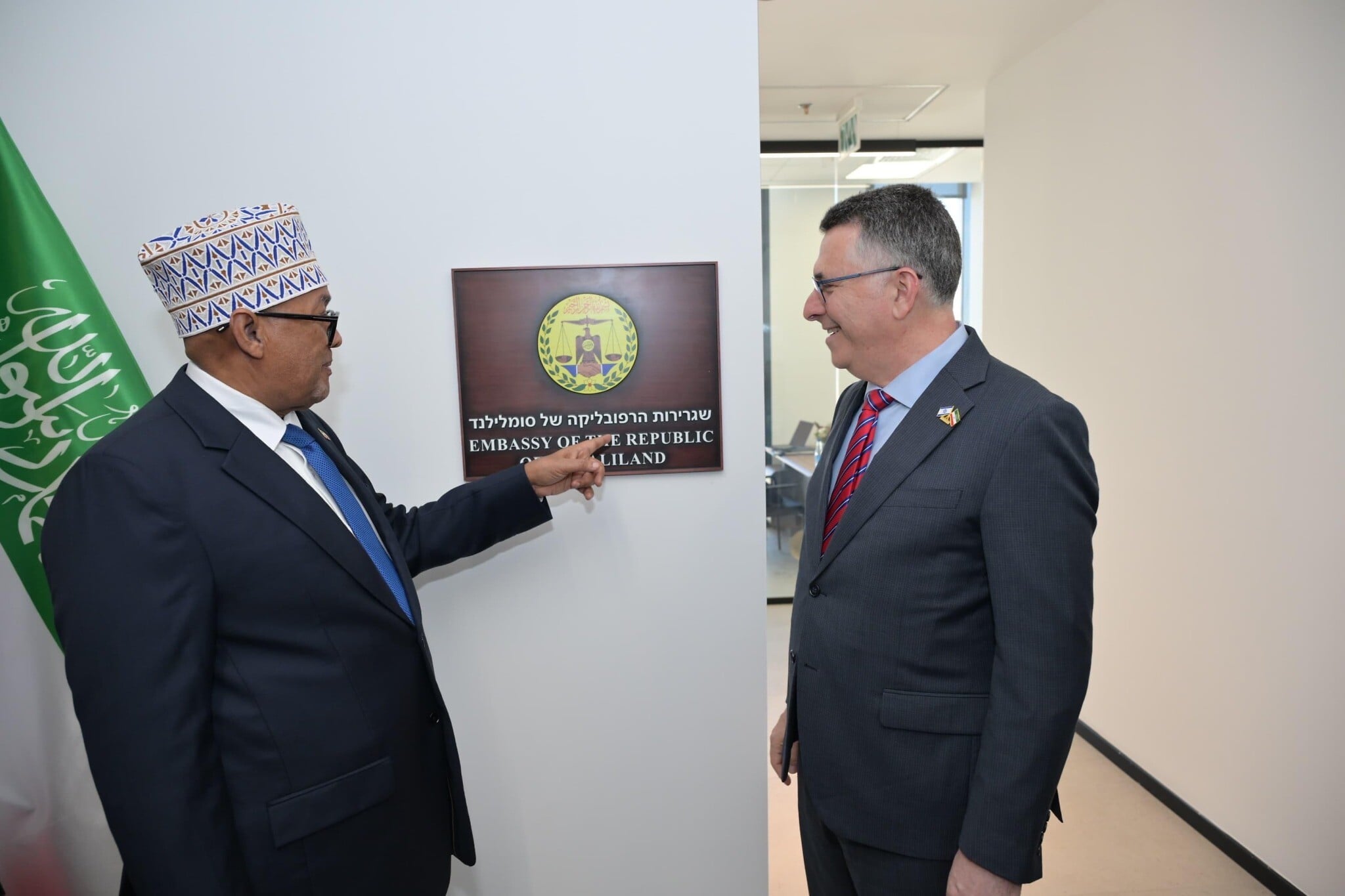
Somaliland President Abdirahman Mohamed Abdullahi, left, and Israeli Foreign Minister Gideon Sa'ar open Somaliland's embassy in Jerusalem, June 15, 2026. (Shlomi Amsalem/GPO)
Somaliland President Abdirahman Mohamed Abdullahi and Israeli Foreign Minister Gideon Sa’ar open Somaliland’s embassy in Jerusalem, the eighth such diplomatic mission in the capital and the breakaway territory’s first-ever embassy anywhere.
The embassy is in Jerusalem’s Har Hotzvim high-tech park.
The United States, Guatemala, Honduras, Kosovo, Papua New Guinea, Paraguay and Fiji also have embassies in Jerusalem, while other countries — including Hungary, the Czech Republic and Slovakia — have embassy branches in the capital.
Hamas gave effective ‘no’ in latest disarmament talks, US-backed Gaza plan to advance regardless — source
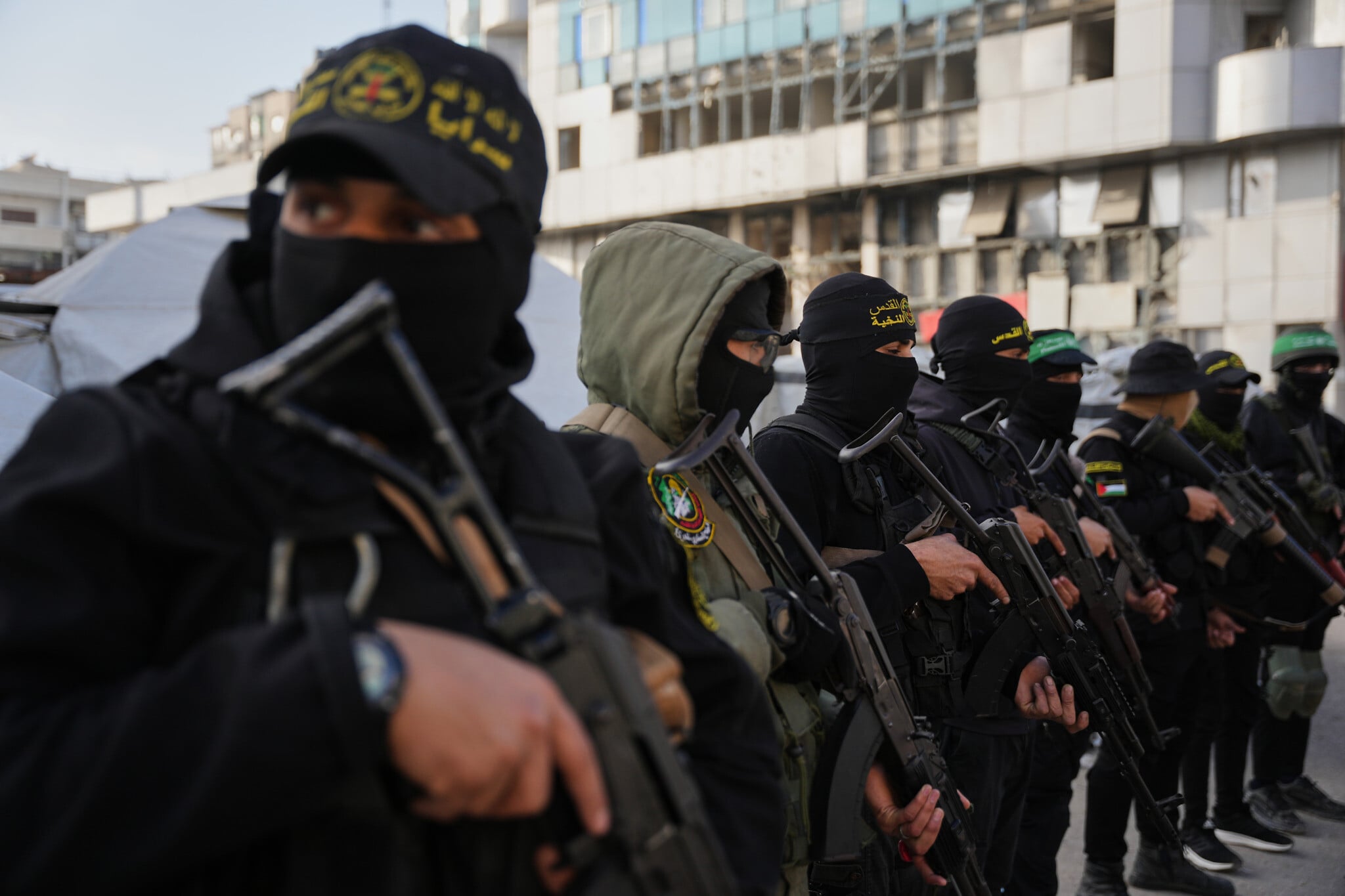
Palestinian gunmen from Hamas and Islamic Jihad gather next to Eid al-Fitr prayers in Gaza City, March 20, 2026. (AP Photo/Abdel Kareem Hana)
Hamas’s latest response to mediators during disarmament talks in Cairo amounts to an effective rejection of key components of US President Donald Trump’s Gaza peace plan, a source familiar with the talks tells The Times of Israel, adding that implementation of the plan will advance regardless.
The source accuses Hamas of attempting through media reports to present its response as more cooperative, while “in practice it looks much closer to a no,” adding that the response can’t yet be categorized as “a formal rejection because the final proposal is not public.”
“Hamas is still trying to avoid the core requirement, which is clear disarmament,” the source continues, stressing that according to Trump’s 20-point Gaza peace plan, which was backed by UN Security Council Resolution 2803, “Hamas has to lay down its weapons. If they are trying to condition this on Israeli withdrawal first, keep weapons under their influence, or change the sequencing, then it does not meet the standard.”
The Trump plan envisions Hamas relinquishing its weapons and transferring control of Gaza to a new Palestinian technocratic administration, while security responsibilities would gradually shift from the IDF to internal and multinational forces operating under Trump’s international Board of Peace.
Hamas has dragged out disarmament talks, mainly arguing that it should not be expected to implement what it views as the plan’s second phase while Israel has yet to fulfill many of its first-phase commitments, including expanded humanitarian aid, troop withdrawals, the reopening of Gaza’s main crossing, and a halt to military strikes.
Still, the source says implementation of the broader plan is moving ahead regardless: “The Board of Peace is not waiting around for Hamas. It is continuing to advance the plan, including [the technocratic National Committee for the Administration of Gaza] governance, stabilization, and reconstruction in areas that can be secured free of Hamas control.”
Other sources familiar with the matter have told The Times of Israel that if Hamas ultimately refuses to disarm, the Board of Peace is preparing to invoke Article 17 of the plan, under which reconstruction would proceed only in areas under IDF control.
Vance: US-Iran deal was signed ‘digitally’ yesterday; US official says Trump, Vance and Iran’s Ghalibaf signed
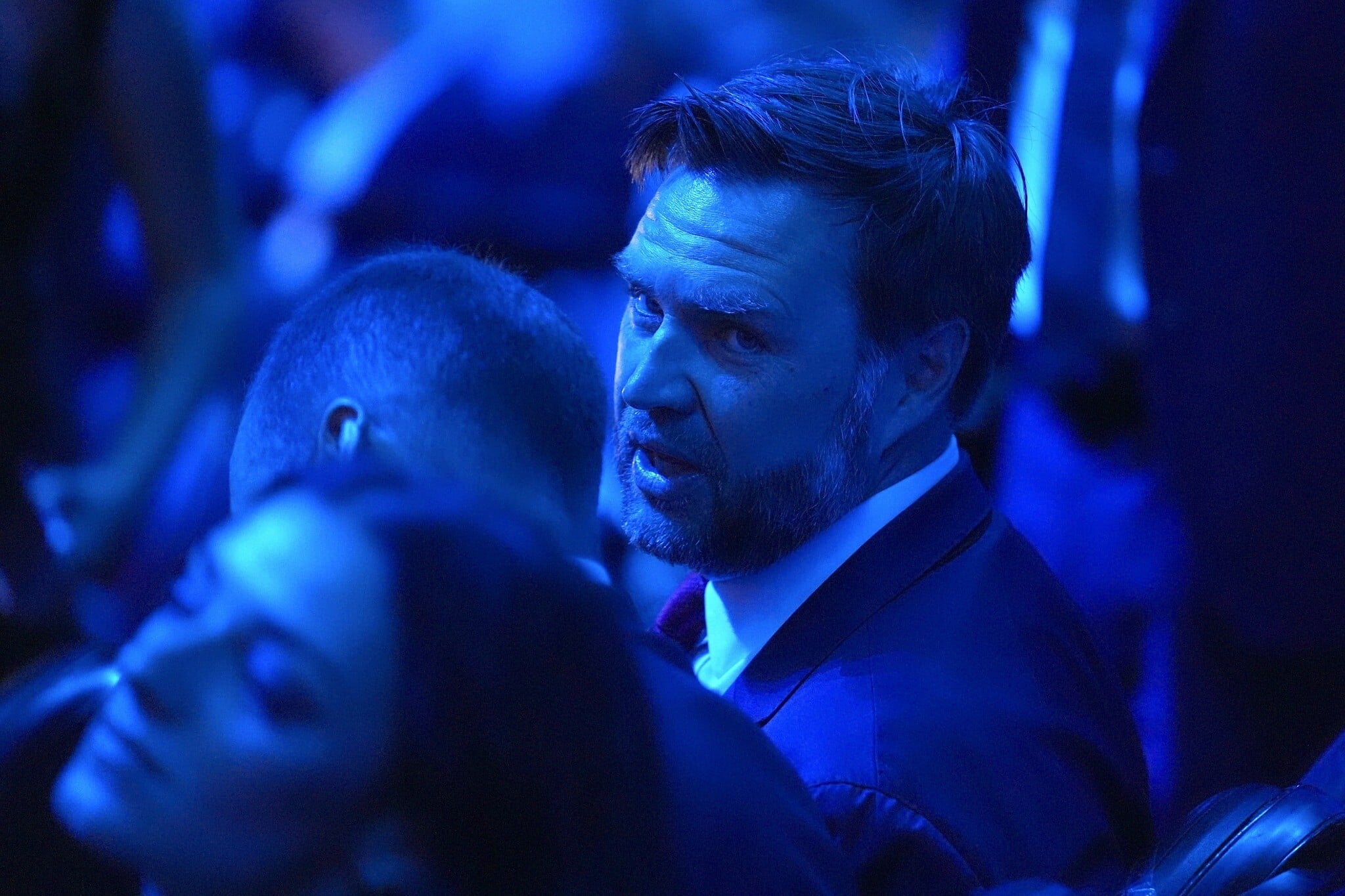
US Vice President JD Vance attends UFC Freedom 250 on the South Lawn of the White House, June 15, 2026, in Washington. (AP/Mark Schiefelbein)
While an in-person signing ceremony is apparently set for Friday in Switzerland, US Vice President JD Vance says the MOU between the US and Iran was signed “digitally” yesterday.
“We already signed the deal digitally yesterday,” Vance says during an interview with ABC’s “Good Morning America.”
Vance and President Donald Trump digitally signed the MOU on Sunday, a senior US official says during a subsequent phone briefing.
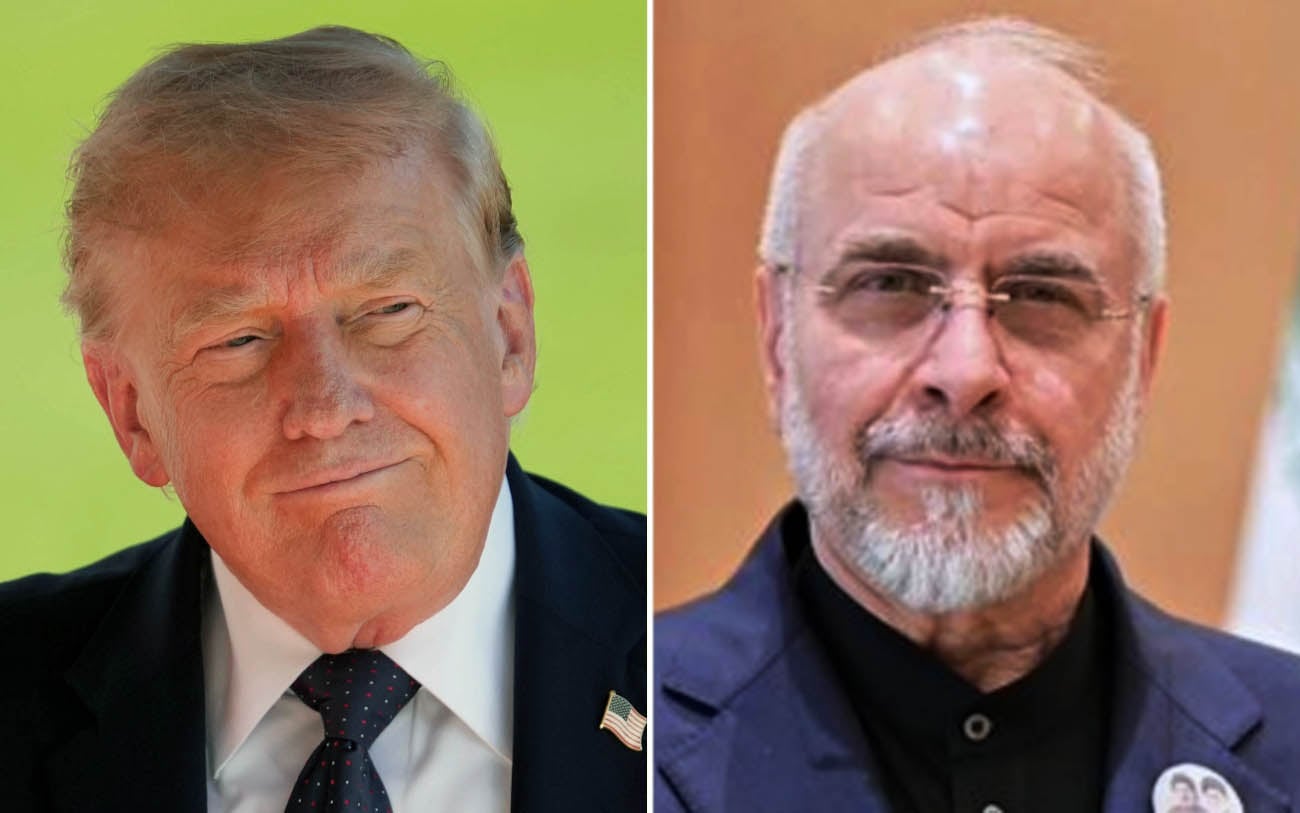
Iran Parliament Speaker Mohammad Bagher Ghalibaf signed on behalf of Tehran, the US official says.
The US official is asked why Iran’s Supreme Leader Mojtaba Khamenei isn’t the one to sign the agreement on behalf of Tehran.
The official says that the supreme leader doesn’t typically sign such agreements and that Khamenei’s father Ali didn’t sign the 2015 nuclear deal with the US.
“Our consistent understanding is that Speaker Ghalibaf is the person with the most influence in their system, and certainly who is given sanction by both the supreme leader, but also National Security Council, to sign this and negotiate the deal on behalf of Iran,” the US official says.
Netanyahu to give statement on Iran deal at 8 p.m.
Prime Minister Benjamin Netanyahu will give a video statement tonight at 8 p.m., according to an Israeli official.
It will be Netanyahu’s first statement since the signing of the memorandum of understanding between the US and Iran was announced.
Netanyahu, like most Israeli officials, is unhappy with the emerging deal, but is unlikely to publicly oppose Trump.
WATCH: Trump addressing US-Iran deal in press conference with Macron
US President Donald Trump is holding a press conference with French President Emmanuel Macron, during which he is expected to address the US-Iran deal.
Consumer prices fall by 0.3% in May, slightly more than expected
Consumer prices retreated slightly more than expected in May, led by declines in the costs of foreign travel and fresh vegetables, data released by the Central Bureau of Statistics show.
On a monthly basis, the consumer price index (CPI), a measure of inflation that tracks the average cost of household goods, fell in May by 0.3%, compared to analysts’ expectations for a decline of between 0.1% to 0.2%.
The monthly reading takes annual inflation over the past 12 months to 1.9%. The inflation rate is well within the government’s annual target range of between 1% to 3%.
In May, reductions were seen in the prices of fresh vegetables, which fell 4.9 %, transportation costs retreated 2.7%, and furniture and equipment slipped 0.4.%. Expenses for travel abroad dropped 16.9%.
These were offset by increases in the cost of fresh fruit, which rose by 6.7%, clothing and footwear increased by 1.9%, and culture and entertainment added 1.1%.
Rents on renewal of real estate contracts jumped 2.5% in May, and rents on contracts for new tenants surged 6.8%.
Netanyahu shared campaign ad claiming rivals will persecute right-wingers, close media outlets
Prime Minister Benjamin Netanyahu shared a campaign ad yesterday that claims his election rivals plan to silence right-wingers, fire senior officials appointed under the current government and close right-wing media channels if they win.
The clip, produced by the staunchly pro-Netanyahu Channel 14, argues that Naftali Bennett and Gadi Eisenkot will form a coalition with left-wing and Arab parties and will therefore be forced to stop acting militarily against all the country’s enemies and to open negotiations for a Palestinian state.
It claims they will carry out arrests of those who express right-wing views online and will close news outlets, including Channel 14, while purporting to base these predictions on remarks politicians within the anti-Netanyahu bloc have made.
The video claims Netanyahu’s rivals will pass a temporary measure allowing them for 100 days to fire senior public officials, such as the heads of the Shin Bet, Mossad and Israel Police, as well as hundreds of police officers “suspected to be right-wing.”
However, Netanyahu’s own government has attempted to make some of those moves against its political rivals. Last week, the Knesset approved, in a preliminary reading, a bill giving government ministers “sole discretion” over the selection of candidates for senior appointments, including the attorney general and heads of the Shin Bet and Mossad.
“The government holds full and exclusive authority to appoint or refrain from appointing a person to a senior position in the civil service,” the legislation’s explanatory notes stated, adding that the terms of such officials “shall terminate within 100 days” of the formation of a new government, unless extended — and that the government would have the power to remove senior officials “at any time at its sole discretion.”
The government has also made moves toward closing media outlets it perceives as adversarial such as Army Radio and the Kan public broadcaster, though those are publicly funded outlets rather than private ones.
הם באמת מתכוונים למה שהם אומרים.
מבוסס על הצהרות אמיתיות.
(לא נעשה שימוש בAI) pic.twitter.com/TUJwp1Zc2H— Benjamin Netanyahu – בנימין נתניהו (@netanyahu) June 14, 2026
Trump-supporting Zionist Organization of America calls emerging Iran deal ‘deeply problematic’
Zionist Organization of America (ZOA) president Morton A. Klein. (Joseph Savetsky/courtesy of ZOA)
The Zionist Organization of America (ZOA), a US pro-Israel organization that is typically firmly supportive of US President Donald Trump, says the emerging deal with Iran is “deeply problematic.”
ZOA’s president, Morton Klein, says in a lengthy statement that the organization is “extremely grateful” to Trump for the US military action against Iran.
The statement says “the pending deal with Iran is concerning,” however, citing reported details that would allow Iran “massive oil revenue” and time to build up its military and terror infrastructure, while leaving the regime and its weaponry in place.
Reports that the deal will mandate a ceasefire in Lebanon are also “extremely concerning” and will embolden Iran and its proxies, Klein says.
“Disturbingly, the interim Iran deal does not appear to be even close to the US-Israel war goals of eliminating the existential dangers of Iran’s nuclear program and ballistic missiles, ending the Iranian regime’s support for its terror proxies, and helping the Iranian people overturn the brutal, genocidal Iranian regime,” Klein says. “The world will not be safe as long as Iran’s hateful genocidal regime exists.”
Trump: Hormuz has partially reopened, will fully reopen on Friday
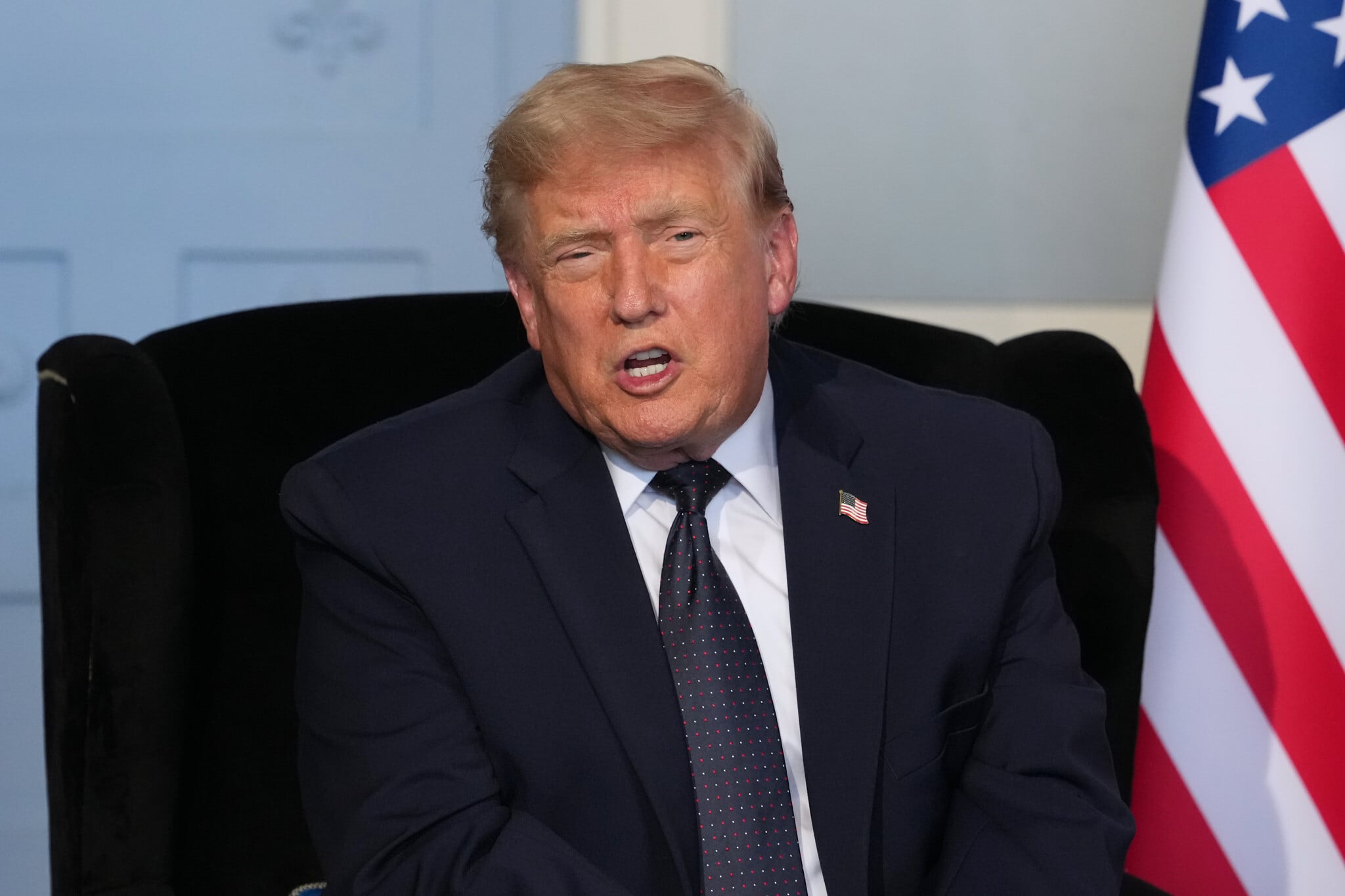
President Donald Trump speaks as he meets with French President Emmanuel Macron on the sidelines of the G7 summit, Monday, June 15, 2026, in Evian-les-Bains, France. (AP Photo/Julia Demaree Nikhinson)
US President Donald Trump says that the Strait of Hormuz has already “partially” reopened after a deal was signed with Iran yesterday.
Trump says the strait will be “completely open” on Friday — the day when the sides are set to hold a seemingly more symbolic signing ceremony.
Trump makes the comments to reporters at the top of a meeting with French President Emmanuel Macron while in Versailles for a G7 summit.
It is his first on-camera appearance since the Iran deal was signed. Trump speaks hoarsely due to an apparent cold.
He repeats that the US has “gotten along very well” with Iran’s “new set of leaders,” again claiming that he has enacted regime change, even though the regime is still intact.
Trump says “a lot of good things” are going to happen in the Strait of Hormuz and that gas prices have already started to fall.
He stresses that the most important dividend from the Sunday agreement is that Iran will not be able to obtain a nuclear weapon.
The deal is said to include a commitment from Iran not to obtain a nuclear weapon, but actual concessions on its nuclear program have been pushed off to subsequent negotiations.
Iran has long insisted it does not seek a nuclear weapon, and made such a commitment in the 2015 deal that Trump vilified and withdrew from in 2018. Both of Trump’s administrations, along with Israel, have refused thus far to take Tehran at its word — something the president is now suggesting he is prepared to do.
However, Trump clarifies that if Iran does not fall in line, “we’ll go back to where we started” — a reference to the US military campaign against Iran. He then reiterates that he does not think a return to war will be necessary.
Trump and his aides differ on whether Iran deal text will be published before Friday ceremony
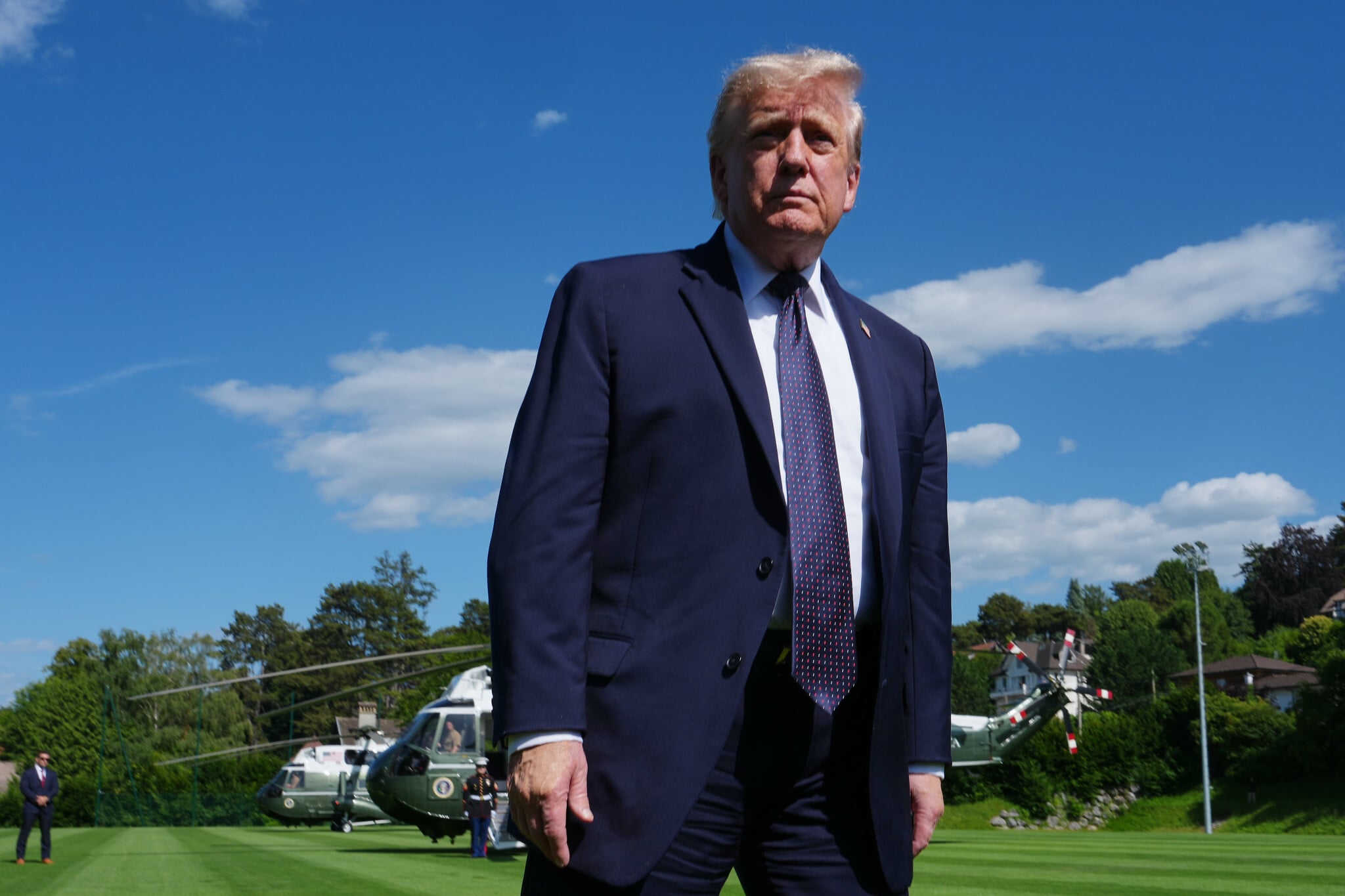
US President Donald Trump arrives for the G7 summit, June 15, 2026, in Evian-les-Bains, France. (AP/ Julia Demaree Nikhinson)
US President Donald Trump says the text of the MOU signed with Iran will be released “pretty soon,” before later specifying that will likely happen “some time after Friday.”
Moments before Trump spoke, two of his top aides held a briefing for reporters where one of them said that the MOU text would likely be released in the next 24 to 48 hours.
Asked whether he would be attending Friday’s signing ceremony, Trump does not rule it out, but says he will likely be back in the US. US Vice President JD Vance will be in attendance, though, Trump says.
Trump says he’ll talk to Hezbollah in effort to ‘straighten out the Lebanon thing’
“We do want to see if we can straighten out the Lebanon thing,” US President Donald Trump says.
“It just seems to never end,” Trump tells reporters while in Versailles for a G7 summit.
“Hezbollah, we have to have a little talk with them,” Trump adds, notably not specifying that he wants to have a talk with Israel.
Trump lashed out at Prime Minister Benjamin Netanyahu over the weekend for strikes in Beirut that the US president said risked the deal with Iran.
The MOU is said to extend the Iran ceasefire to Lebanon, though Israel has insisted that it will continue operating against Hezbollah.
Netanyahu to hold press conference at 9 p.m., his first in 3 months
Prime Minister Benjamin Netanyahu will hold a press conference at 9 p.m. in Jerusalem.
The press conference comes as the US and Iran finalize a deal aimed at ending the war and kicking off nuclear talks between the sides.
It will be the first time Israeli reporters are able to ask the premier questions since a March 12 press conference he held via Zoom.
Former prime minister Naftali Bennett will hold his own press conference at 8:30 p.m.
Top US officials say yet unclear if follow-up nuclear agreement with Iran can be reached
A pair of top officials in US President Donald Trump’s administration hold a background phone briefing with reporters, as Washington tries to sell the deal it inked yesterday with Iran.
The MOU established the “structure” for how negotiations on Iran’s nuclear program will unfold over the next 60 days, but one of the senior US officials on the call says that Washington will know “over the next two or three weeks” whether a follow-on agreement can actually be reached.
Another official says that while the deal provides for the “immediate” reopening of the Strait of Hormuz, that will still “take a little time” to operationalize, as mines allegedly need to be removed and ship operators have their own judgments regarding the risk for using the waterway.
“We probably won’t return to normal in two weeks, but we will see a significant increase in strait traffic,” the senior US official says.
The US official says he will be attending the Friday signing ceremony along with top Trump aides Steve Witkoff and Jared Kushner. Counterparts from Iran will also attend.
The US official says the direct relationships that he and other Trump officials built with Iranian leaders at the highest levels are what enabled Sunday’s deal, rather than exclusive reliance on mediators.
The direct relationships were necessary for the US to understand where Iran’s red lines were and where they would be willing to compromise.
The US official insists that the deal would not have been possible without the economic, military, and diplomatic pressure exerted by Washington across both of US President Donald Trump’s terms in the White House.
Senior US official criticizes American ‘hardliners’ opposing the deal with Iran
A senior US official knocks “hardliners” in the US who have criticized the agreement reached with Iran yesterday.
“One thing that I found to be the most comical is that you have a lot of people who are the hardliners [in the US] who say you can’t trust the Iranians — that they’re always going to lie. And then they take all the stuff put out in the IRGC channels as gospel,” the official says during a briefing with reporters on the Iran deal.
The US has argued that state-linked media in Iran has been falsely claiming that Iran will immediately receive sanctions relief as a result of the deal, while Washington insists that it will only allow the release of frozen assets if Iran follows through with concessions in the subsequent nuclear talks that will be held over the next two months.
“What you’re seeing now is hardliners on both sides. In the Iranian system, they’re protesting [against the deal]. And we have certain people in the American system who say there’s no deal you could ever do with Iran ever, who are obviously making a lot of noise,” the senior US official says.
“But all the details of the agreement have not been put out yet,” the official notes, adding that the text will likely be released in the next 24 to 48 hours.
Top US officials: Sanctions relief not tied to regime’s treatment of Iranians; there are no ‘side deals’ on frozen funds
Asked whether sanctions relief will also be tied to Iran’s treatment of its people, a senior US official briefing reporters responds: “Sanctions relief is not tied specifically to any particular conduct; it’s tied generally to [Iran] behaving more appropriately.”
The senior US official says the US cares about how Iran treats its people, but that Iran’s nuclear program and support for proxies are bigger priorities. “We care about the domestic situation too, but I would say that’s the third priority over the first two.”
“We are prepared to release sanctions, and we’ll do some small gestures of that in the beginning, if they make some small gestures to us that show that they’re willing to meet their commitments as well,” a second senior US official on the briefing says.
The senior officials stress that there won’t be any “side deals” made with Iran that will grant it access to frozen funds.
“We discussed the possibility of releasing frozen funds, sanctions relief and a big $300 billion fund to rebuild their country,” the US official says. “All of these things are going to be tied to performance.”
One of the officials insists that Gulf states such as the UAE and Qatar will not ink such side deals with Iran — despite reports to the contrary — because they too want the deal to succeed.
Top US official: Iran deal isn’t conditioned on Israel withdrawing from Lebanon, though the truce does cover Lebanon
A senior US official says that the MOU signed yesterday with Iran is not conditioned on Israel withdrawing from Lebanon.
However, the deal still envisions a ceasefire that covers Lebanon, as well as Iran, the US official says in a briefing with reporters.
“The deal is a ceasefire, but it will not be a one-way ceasefire. If Iran is not able to control Hezbollah, and if they attack Israeli positions or Israeli towns, Israel will have the right to defend themselves and respond,” the US official says.
The official touts the ongoing talks between the Israeli and Lebanese governments, which critics say can accomplish little given Hezbollah’s refusal to cooperate with them.
But the US official insists those talks, as well as the MOU, present an opportunity.
“The first point in the MOU talks about how Iran and its allies and America and its allies seek to end hostilities and hopefully have a final peace that hopefully will include a lot of these proxy groups,” the US official says. “Hopefully this will help us get the Israel-Lebanon normalization and peace done properly.”
IDF says it killed 2 Hamas operatives posing threats in separate Gaza strikes today
The IDF says it struck and killed two Hamas operatives who posed threats to troops in the Gaza Strip earlier today.
A strike in central Gaza killed Saleh Khalifa, a cell commander in Hamas’s Nuseirat Battalion, and a strike in the Strip’s north killed Muhammad al-Habil, a cell commander in Hamas’s West Jabalia Battalion, according to the military.
The IDF says the pair had been planning attacks on troops, “posed an imminent threat,” and were then killed in “precise strikes.”
חיל-האוויר תקף במרכז רצועת עזה מוקדם יותר היום (ב׳), וחיסל את המחבל צאלח רמדאן מחמד חליפה, ראש חולייה בגדוד נוציראת בארגון הטרור חמאס.
בתקיפה נוספת בצפון הרצועה, חיל-האוויר חיסל את המחבל מחמד מוסא דיאב הביל, ראש חולייה בגדוד מערב ג'באליה בארגון הטרור חמאס. pic.twitter.com/pAH1Jf02cu
— Israeli Air Force (@IAFsite) June 15, 2026
Senior US official chastises Oman for ‘duplicitous’ conduct while mediating previous failed US-Iran talks
A senior US official lashes out at Oman over its “duplicitous” conduct in mediating talks between the US and Iran, which fell apart ahead of the war launched against Iran on February 28.
“We felt they were very duplicitous and almost like employees of the Iranians in the way that they maneuvered,” the senior US official says during a briefing with reporters.
By contrast, the official touts the efforts of Qatar and Pakistan, which served as mediators after the war broke out.
The official says pundits accused the administration of not understanding Iran’s position in those failed talks when the reality was that Washington understood it very well, which was why the US pulled out of them, convinced Iran was not interested in reaching a deal that would be good for the United States.
But the ensuing war led Iran to change its position because its economy and military were both decimated, the US official claims.
The government in Iran was also shaken up and more space was given to those in the system who are interested in adopting a different approach.
The US official also claims that Project Freedom was an “unsung hero” that limited Iran’s leverage in the Strait of Hormuz.
Trump announced that he was shelving the operation to escort vessels through the Strait of Hormuz, less than two days after he unveiled it. But the US official claims it continued covertly and allowed for the easing of the bottleneck created in the channel.
The other US official on the briefing says the US will keep its current military posture in the region, but will withdraw troops if nuclear talks with Iran advance in the right direction.
The MOU “contemplates the reduction of military forces in the region upon the agreement of a final deal,” the official says.
US official says Hormuz will be open toll-free for next 60 days, but unclear what will happen afterward
A senior US official says the MOUs reached yesterday with Iran will open the Strait of Hormuz “toll-free” over the next 60 days.
However, the official briefing reporters appears to leave open the possibility that tolls by Iran will return after that 60-day period.
“There will be a regional dialogue around what will happen [afterward], but there are no tolls or charges during the time of this MOU,” a second US official says, remaining ambiguous as to what will unfold afterward.
Ben Gvir said to cancel US trip in last moment after failing to get travel visa
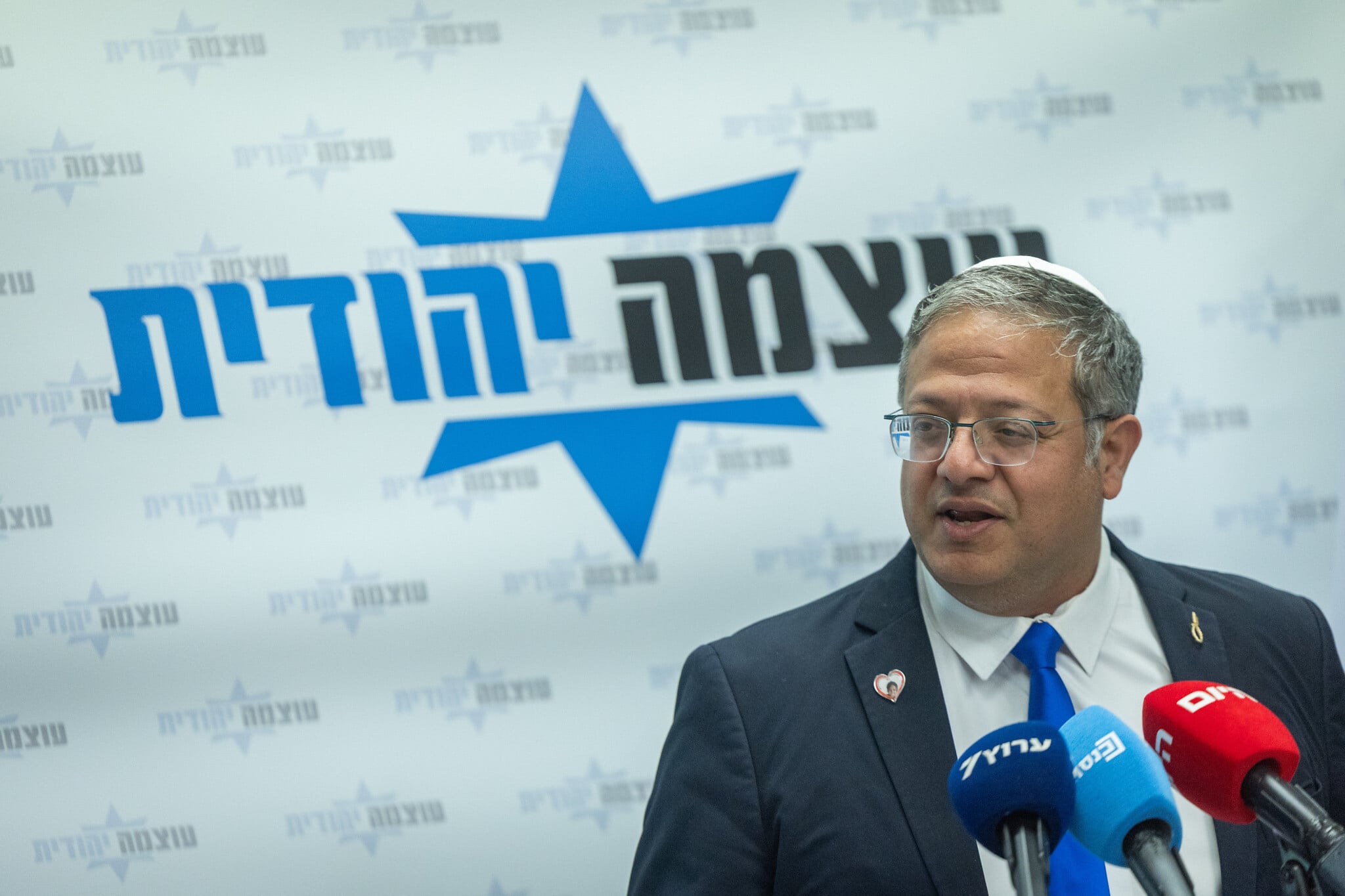
National Security Minister Itamar Ben Gvir leads an Otzma Yehudit faction meeting at the Knesset in Jerusalem, June 15, 2026. (Yonatan Sindel/Flash90)
National Security Minister Itamar Ben Gvir has canceled his upcoming trip to the United States after he was required by the US embassy to give fingerprints as a condition for receiving a visa and was asked about his previous criminal convictions, multiple Israeli media outlets report.
The unusual move signaled that Washington was not going to give him a diplomatic visa, for which he is supposed to be eligible, as a government minister who holds a diplomatic passport.
Ben Gvir had reportedly planned to attend an associate’s wedding and to hold an unspecified diplomatic meeting.
Responding to Channel 13, which first reported the cancellation, Ben Gvir’s office claims that Ben Gvir decided to voluntarily give up the option of a diplomatic passport since most of his trip was planned to be personal.
The response fails to address why Ben Gvir has ended up not traveling at all, and falsely claims that all Israelis asking for a US visa are required to give their fingerprints. In fact, Israelis are eligible for a visa waiver under the ESTA program, provided they meet conditions that include not having a criminal record.
Additionally, Israeli journalist Chaim Levinson, who has an ongoing legal case against Ben Gvir, notes that the minister had asked the court to delay a scheduled hearing due to his US trip, presenting it as a visit with “diplomatic importance,” and not, as he later claimed, as a primarily personal visit.
Assailing Netanyahu’s ‘historic failure,’ Bennett says Iran regime will only be replaced after Israeli leadership changes
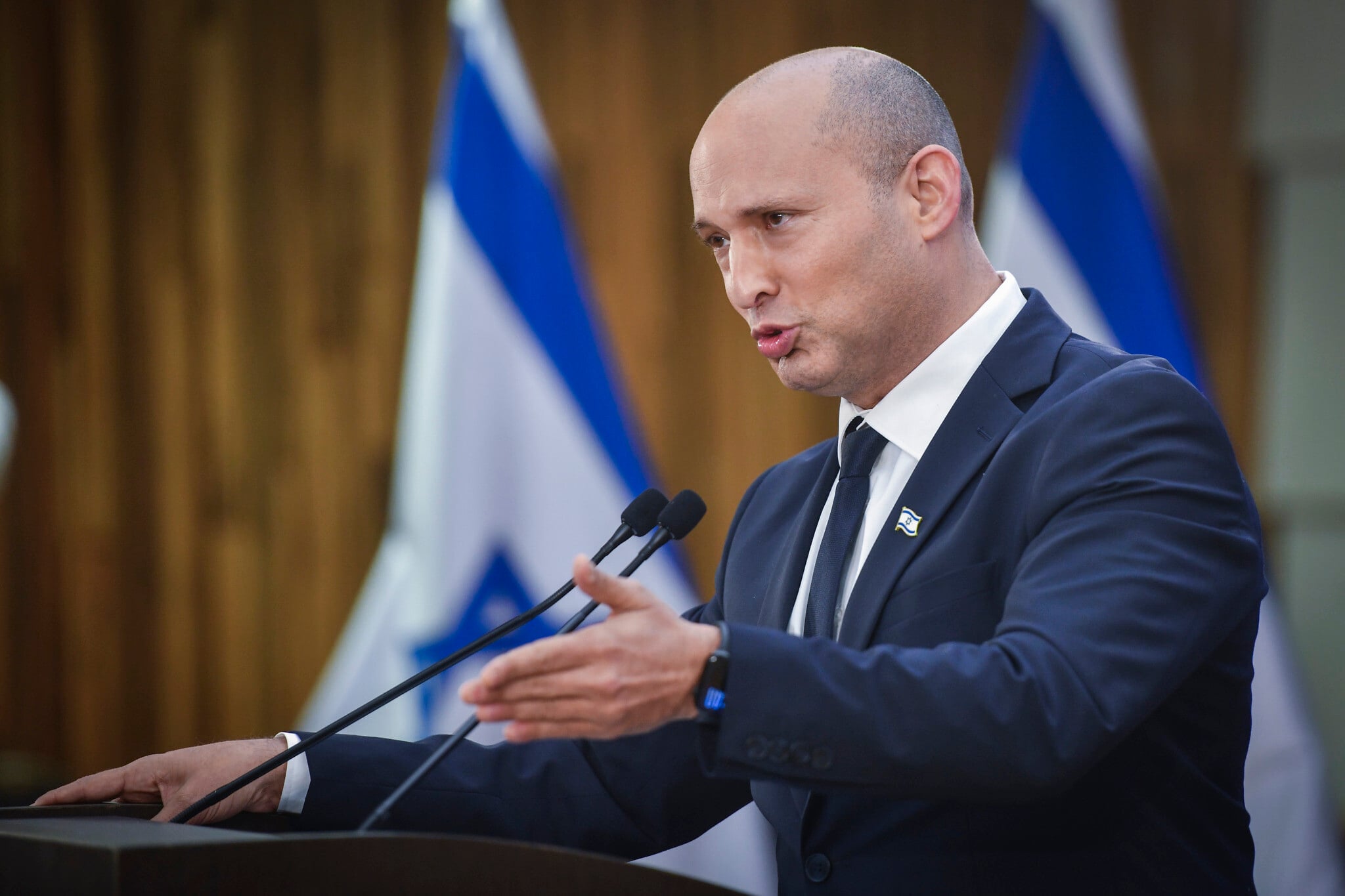
'Together' party leader and former prime minister Naftali Bennett speaks during a press conference in Tel Aviv, June 15, 2026. (Avshalom Sassoni/ Flash90)
Following the announcement of a deal between the United States and Iran to end the war between them, former prime minister Naftali Bennett slams Prime Minister Benjamin Netanyahu’s handling of the war, arguing that he would have been a better wartime leader and that regime change in Tehran will only happen after the government in Jerusalem is replaced first.
“The term of this Netanyahu government began with a civil war, continued with the October 7 massacre, and is now ending with a historic failure against Iran,” Bennett tells reporters at a press conference in Tel Aviv.
Promising to “restore security for Israel,” Bennett says that he would have done “everything” differently, including diplomatically by using his “credit with the president most sympathetic to Israel that we have ever had, solely for the benefit of Israel’s national interests,” an apparent dig at US President Donald Trump’s repeated calls to pardon Netanyahu in his ongoing criminal trial.
A Bennett government would also see “a return to the security concept of fast, strong, and decisive wars,” rather than “dragging things out” like Netanyahu, while also “revitalizing the national public diplomacy directorate… that this government dismantled.”
These moves would be accompanied by the implementation of “mandatory conscription for all and halting the funding of draft evasion,” because when the IDF lacks soldiers, “you have to conquer the same places over and over again, and you can’t win that way,” he continues.
Under a Bennett government, Israel would engage Iran via an “octopus doctrine,” “with one hand, preventing Iran from going nuclear, and with the other, accelerating the collapse of the regime with political, economic, technological, and military tools.”
“The countdown to replacing the regime in Iran will begin as soon as the government in Israel is replaced,” he asserts.
Netanyahu claims Israel, US removed ‘immediate’ Iranian nuclear threat, ‘saved State of Israel from anniliation,’ but fight is ‘not over’
Prime Minister Benjamin Netanyahu holds a press conference at the Prime Minister's Office in Jerusalem, June 15, 2026. (Olivier Fitoussi/POOL)
Prime Minister Benjamin Netanyahu opens his press conference with an assertive defense of what he portrays as the success of the US-Israel campaign against Iran, vowing that, regardless of any deal between Washington and Tehran, the Islamic Republic will not have a nuclear weapon.
Facing mounting domestic backlash — including from within his own government — over the war’s apparent end, Netanyahu reiterates that preventing Iran from obtaining nuclear weapons is his “life’s mission,” saying: “With an agreement or without an agreement, Iran will not have nuclear weapons — not today and not tomorrow. As long as I am prime minister of Israel, it will not happen.”
Netanyahu repeats his assertion that the nuclear threat from Iran had been an “immediate danger” and Israel succeeded in removing it, “together with our American friends.”
“We launched the largest attack operation in Israel’s history. We targeted the nuclear scientists; we eliminated the leaders of the terror regime; we crushed the nuclear facilities; we destroyed missiles and the vast majority of the factories that produce missiles. We struck countless military industries and infrastructures. We destroyed their navy, their air force. We eliminated basij commanders who massacred the Iranian people. We caused enormous damage — [some] estimate it in the hundreds of billions of dollars, some estimate it at even close to a trillion dollars — to Iran’s economy,” he says.
“We removed, for years to come, this danger hanging over us of the elimination of Israel’s population. That is what we did. We saved the State of Israel from annihilation,” he says.
He adds, however, that “the struggle is not over and complete. We will need to continue standing guard, continue being strong and determined, and defend ourselves as much as necessary.”
“This is true not only against Iran,” he says, saying Israel’s fight will continue against “Iran’s terror arms” as well, as he says it has been doing against groups in Gaza, Lebanon, Syria, Yemen, and the West Bank.
Amid concerns over US limitations on Israeli freedom of action, Netanyahu adds that in addition to fighting terror groups in those areas, “we established deep security zones around Israel… in Gaza, in Lebanon, in Syria,” and stresses that “we will remain in the security zones for as long as necessary to protect our country.”
Netanyahu vows Israel “will continue to thwart threats in the region, “build new alliances with countries in the region and outside the region,” and “ensure our security independence.”
To assist in that last effort, he says he is “putting an additional NIS 350 billion into the defense budget,” saying Israel will “develop technologies that push the boundaries of imagination, and we will turn Israel into an even stronger power.”
Netanyahu: Trump and I don’t always see eye-to-eye; I stand up for Israel’s security interests
Taking questions from Israeli reporters in his press conference, Prime Minister Benjamin Netanyahu asserts that he knows how to “stand firm” against the White House on Israeli security interests, amid growing concerns over US limitations on Israeli military freedom of action against Hezbollah and Iran.
Netanyahu declines to say whether he would permit Israel to strike Iran alone or act independently against Hezbollah in Lebanon, as one reporter asks. But he insists that he defends Israel’s interests in his interactions with US President Donald Trump, following days of reported friction between the two leaders and public criticism from Trump of the premier on those issues.
Speaking about Trump, Netanyahu says, “Many times we see eye to eye, and there are also cases in which we see less eye to eye. I am responsible for Israel’s security interests. I stand up for them.”
In a likely dig at political opponents he portrays as less experienced, Netanyahu adds, “One must stand up for them not with fiery rhetoric. It must be done wisely, and that requires a great deal of experience, a great deal of wisdom, and a great deal of familiarity with the American arena. It requires a great, great deal of experience, and I think I do it in the best possible way. And when necessary, I stand firm on our security interests.”
‘Simply incorrect’: Bennett dismisses report claiming he’s mulling canceling merger with Lapid amid drop in polls
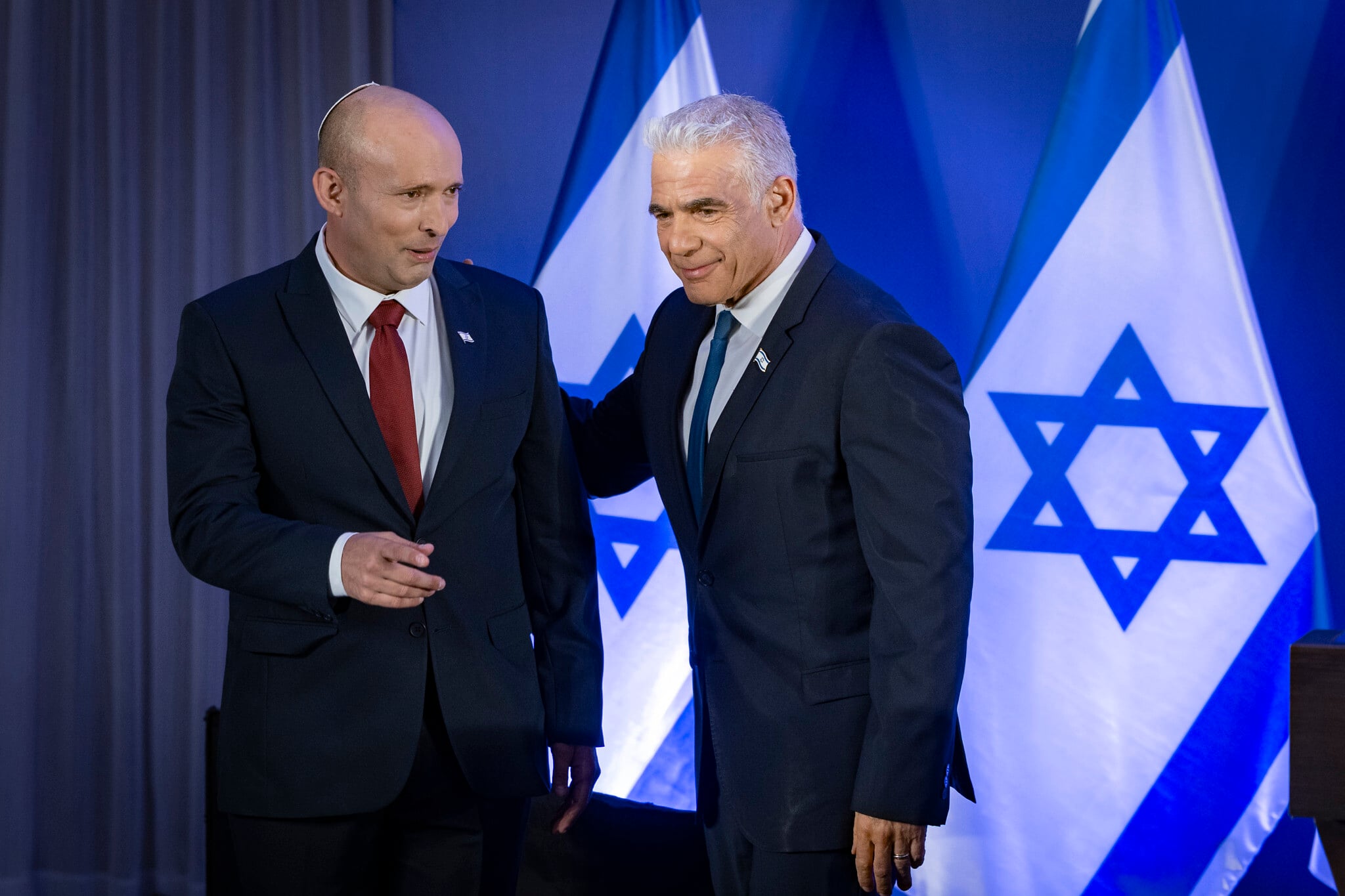
Former prime minister Naftali Bennett (left) and Opposition Leader Yair Lapid speak during a press conference announcing their joint slate named 'Together' ahead of upcoming elections, in Herzliya, April 26, 2026. (Chaim Goldberg/ Flash90)
Former prime minister Naftali Bennett has in recent days examined the possibility of reversing his merger with Opposition Leader Yair Lapid’s Yesh Atid party in the upcoming election, amid differences between them and a consistent drop in opinion polls, Channel 13 reports.
Bennett dismisses the report as false.
The network cites unnamed officials in the Together alliance as saying Bennett’s associates are arguing that the center-left Lapid has alienated right-wing voters, and that strategist Lior Chorev is failing to contain the crisis. It adds that campaign managers have had serious clashes between them.
During a press conference in Tel Aviv, Bennett denies the story, calling it “simply incorrect.”
Asked if he regrets merging his Bennett 2026 list with Yesh Atid, Bennett responds that “the person who benefits the most from divisions inside the bloc is [Prime Minister Benjamin] Netanyahu… and therefore we must not only preserve this union, but increase and expand unity further and further.”
Despite the fact that Together has been sinking in the polls while Gadi Eisenkot’s Yashar party has been rising and is now polling even with Together, Bennett continues to insist he is the best candidate to lead the opposition bloc, arguing that “over the past 16 years, whenever the opposition bloc…placed someone who is not right-wing at the helm, they always lost.”
“The only way to win is a united bloc,” he adds. “We need to learn from the lessons of Meretz and Labor in the previous elections, those splits led to a loss. This means we need to draw lessons and apply them. We need to unite the bloc, and that’s how we win.”
Hamas welcomes US-Iran deal to end the war
The Palestinian terror group Hamas hails the deal between the United States and Iran, expressing hope that it will help put an end to violence in the Gaza Strip.
Israel and Hamas trade near-daily accusations of truce violations and the Gaza Strip remains gripped by bloodshed, as progress on permanently ending the war remains stalled, including due to the group’s refusal to disarm.
In a statement, Hamas says it “welcomes the announced agreement on the memorandum of understanding between the Islamic Republic of Iran and the United States,” congratulating its backer Iran for its “steadfastness… in the face of pressures and challenges.”
“We hope that this agreement will serve as a step to contribute to enhancing regional stability and positively reflect on various regional files, foremost the immediate cessation of the ongoing Zionist aggression against our Palestinian people in the Gaza Strip, and an end to the repeated attacks and violations against Lebanon and all other fronts,” it adds.
Netanyahu reiterates that he will run in the upcoming elections
Prime Minister Benjamin Netanyahu again promises that he will run in this year’s elections, after being asked about the issue during a press conference at the Prime Minister’s Office.
“I am going to run, and I intend to win,” he says.
During an interview last week, US President Donald Trump wondered “if Bibi even wants to continue.”
“I don’t know, he’s had an amazing career,” Trump said. “Does he want to continue? Because, you know he’s a wartime prime minister. We will very shortly win the war one way or the other, and you know he’s a wartime prime minister.”
Likud responded at the time to Trump in an X post, saying Netanyahu “will run in the upcoming election, and, God willing, will win.”
Netanyahu claims main goals of Iran war achieved, says they never included regime change but ‘there are cracks’ in Tehran’s rule
Prime Minister Benjamin Netanyahu holds a press conference at the Prime Minister's Office in Jerusalem, June 15, 2026. (Olivier Fitoussi/POOL)
Prime Minister Benjamin Netanyahu continues to defend the US-Israeli military campaign against Iran in his press conference, claiming its central goals were achieved despite the Iranian regime remaining in power.
Asked by a reporter about his apparent objective of removing the threat “posed by Iran’s regime” — and why, three months later, the end of the campaign is being declared while that regime remains intact — Netanyahu rejects the premise that things went wrong.
“It did not go wrong at all. I defined the goals — and the cabinet defined the goals — differently from what you said,” Netanyahu says.
“We said we wanted to remove an existential danger from over us: first, the nuclear danger — and we did that. We said we wanted to remove from over us the [ballistic missile] danger — and we did that. And we said we wanted to create the conditions that would allow the Iranian people, should they wish, to remove from themselves this terror regime,” Netanyahu says.
Both the US and Israel had been somewhat vague when laying out war aims at the outset of the campaign, but Israel consistently stressed the threat from Iran’s nuclear and ballistic missile capabilities, as well as from its proxy network, at times, adding the goal of “creating the conditions” for regime change in Iran.
While appearing to acknowledge that any aspirations for regime change have not yet been met, Netanyahu adds: “Iran is in a very difficult economic situation. We struck every possible infrastructure there. The damage is enormous. There are cracks within this regime as well.”
“Can I tell you when this regime will fall? I do not know. Could I have told you when the Soviet regime would fall? No. I cannot tell you,” he says.
Addressing Israel’s broader strategic achievements since the Hamas-led massacre on October 7, 2023, which ultimately led to Israel’s wars with Iran last year and this year, Netanyahu argues that Israel is far stronger today than it was on October 7, pointing to what he describes as achievements against Iran’s nuclear and ballistic missile threats as well as against Hamas and Hezbollah.
“Israel on October 7 and Israel today — how can one compare them? Israel before, with a regime racing toward nuclear weapons and going to produce thousands more ballistic missiles against us — and today this threat has been averted… And the main thing I can tell you is that there is an organized, systematic effort to minimize these enormous achievements, to avoid showing that Israel is emerging renewed, strong and steadfast, and that it has leadership capable of standing for what is necessary,” he says.
Netanyahu: Trump and I ‘have a relationship of partners’
Prime Minister Benjamin Netanyahu pushes back against the idea that Israel has lost its autonomy in strategic decision-making.
“In the US, they say that President [Donald]Trump does everything I ask, and in Israel, they say the opposite, that I do everything he asks,” he says in response to a question during a press conference at the Prime Minister’s Office.
“Neither is true.”
“We have a relationship of partners who know each other,” Netanyahu argues. “Many times, we agree; sometimes we don’t agree. That happens in the best families.”
Netanyahu stresses that Israel “has to take into account” what the US says.
“We appreciate it,” he says. “He entered into this [campaign] boldly; he brought the US military to fight with us against our common enemy. That’s a big deal. I respect it.”
“Just as it’s impossible to say we are totally ignoring what is happening in the world, or geopolitical considerations, you can’t say we are totally bound by these considerations,” Netanyahu continues, “because under my leadership, Israel has proven that it does major things and it leads many things.”
“We are initiating, we are operating, we are surprising, and we are also winning,” he says.
Netanyahu says details of US-Iran deal aren’t yet known, rejects comparisons to Obama’s 2015 pact
Prime Minister Benjamin Netanyahu holds a press conference at the Prime Minister's Office in Jerusalem, June 15, 2026. (Olivier Fitoussi/POOL)
Prime Minister Benjamin Netanyahu declines to criticize the emerging US-Iran agreement, stressing during his press conference that Israel does not yet know its details, while insisting he is “not limiting” himself in acting to prevent Tehran from obtaining a nuclear weapon or in preserving Israel’s freedom of action against Hezbollah in Lebanon.
Pressed by a reporter about concerns over potential similarities between the US Obama administration’s 2015 nuclear deal with Iran and reported details of the emerging US-Iran framework, Netanyahu responds: “I would not make that comparison. We do not know what the agreement was.”
“I can say that the fundamental difference between the situation then and the situation today is that any agreement must be accompanied by a credible military threat. Back then, there was no credible military threat. Today, because of what we did — not only the United States, but also because of us, because we entered there with 14,000 sorties — that is the biggest difference,” he says.
The premier says the 14,000 sorties were split “roughly half and half” between Israel and the United States, arguing that they demonstrate how “there is a credible military threat.”
He repeats that Israel “will do what is necessary” to prevent Iran from obtaining a nuclear weapon, stressing that “I am not limiting myself in any way regarding this goal.”
Asked by another reporter how much he would oblige himself to the US-Iran deal, Netanyahu does not answer directly, but emphasizes that Israel is not a signatory and distances himself from Trump’s decision to sign an agreement.
“This agreement was made by the United States, by the president of the United States. And he believes that he can truly combine both the opening of the [Strait of Hormuz] and the cancellation of the nuclear program… And I repeat and say that this is his decision, and he is leading it.”
“Of course, I expressed my view in various conversations. On the other hand, I said that we have our own interests – first of all, regarding the nuclear threat. I am committed that there will not be such a threat facing us.”
Regarding the question of Israel’s freedom of action against Hezbollah in Lebanon — a country Tehran insists be covered by any ceasefire deal with the US — Netanyahu says: “We created a buffer zone there, a security zone. We will remain in it for as long as necessary.”
“Iran wanted us to withdraw from there. That did not happen. Do you know why it did not happen? Among other reasons, because I stood very, very firm. I was very, very resolute on this matter. And I think our American friends respect that resoluteness and that firm stance,” he says.
Channel 12 reported earlier this week that Trump proposed a full Israeli withdrawal from Lebanon as part of an Iran deal during a phone call with Netanyahu, but that the premier resolutely rejected the notion.
“We want to preserve — and are acting to preserve — our freedom of action,” Netanyahu says.
US Air Force B-52 bomber crashes after takeoff, Edwards Air Force Base says
A US Air Force B-52 Stratofortress has crashed shortly after taking off from the Edwards Air Force Base in California, the base says.
“Emergency crews immediately responded to the scene and the situation is ongoing,” the base writes in a post on X.
BREAKING: A U.S. Air Force B-52 bomber crashed shortly after takeoff at Edwards Air Force Base, triggering an emergency response.
Emergency crews rushed to the scene as thick black smoke billowed from the wreckage scattered across the desert airfield.
More details, including… pic.twitter.com/JRx3R4ElJW
— Fox News (@FoxNews) June 15, 2026
Opposition leaders assail Netanyahu over claims about Iran war goals, saving Israel from annihilation
Opposition leaders react furiously to Prime Minister Benjamin Netanyahu’s press conference this evening, assailing his claims that the recent war against Iran saved Israel from nuclear annihilation and that its main goals were achieved even though Tehran’s regime was not replaced.
“It would have been better for him to say, ‘I erred, I set false goals that I wasn’t able to achieve,'” says Yashar party leader Gadi Eisenkot. “This would have given Netanyahu much more credit and respect from the people, if he had admitted he made empty declarations.”
Eisenkot, increasingly seen as likely to be Netanyahu’s main rival in the upcoming election, accuses the premier of denying war goals he previously set and providing “zero real answers to a nation that has gone through the toughest years in its history.”
Opposition Leader Yair Lapid tweets: “You can argue that we are a power that is close to regional dominance, you can argue that we are in danger of annihilation and one step away from mass death, but you can’t make both arguments, and definitely not one minute apart.”
The Democrats party leader Yair Golan says: “If you dedicated most of your life to fighting the Iranian threat, and you say we came close to being annihilated, then you failed at your life mission. We appreciate the honesty.”
Judges reject Netanyahu’s request to shorten tomorrow’s trial hearing
Judges in Prime Minister Benjamin Netanyahu’s corruption trial reject the premier’s request to shorten tomorrow’s hearing, Hebrew media reports.
After Netanyahu asked for the session to end at 1 p.m., judges write that the request does not include information indicating the urgency needed to justify shortening the hearing.


read more: