

Yehuda Katz’s return closes painful Sultan Yacoub saga, but Lebanon mire endures
Return of remains of last missing soldier from disastrous 1982 battle closes 44-year chapter, as Israel again confronts risks of a prolonged military presence in its northern neighbor

 Add ToI as a Preferred Source on Google
Nava Freiberg is The Times of Israel's deputy diplomatic correspondent.
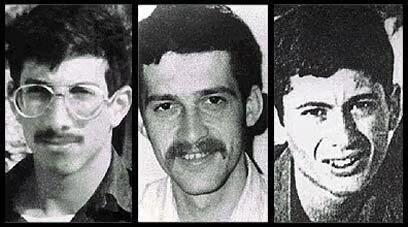
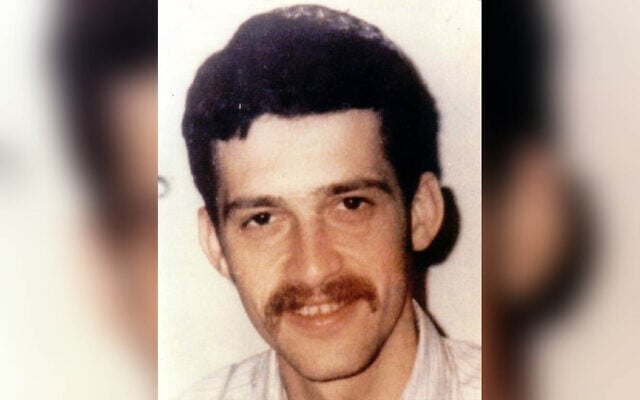
A harrowing four-decade-long saga in Israeli history was brought to a close on Tuesday with the return of the remains of Israeli soldier Sgt. First Class Yehuda Katz, who went missing in the First Lebanon War’s battle of Sultan Yacoub in 1982.
Following a secretive recovery mission, Israeli leaders hailed the country’s commitment to bring back every missing or fallen soldier, and with good reason.
The extraordinary fact of Katz’s return — following the recovery in recent years of the two other soldiers who disappeared at Sultan Yacoub — is a striking testament to Israel’s commitment to return its missing and fallen troops. But while it closes a wound from one war in Lebanon, another generation of Israeli soldiers continues to confront some of the same painful dilemmas across the northern border.
“Decades have passed, but our duty toward our fallen has not changed. We will leave none of our people behind,” IDF Chief of Staff Eyal Zamir declared upon announcing the recovery mission.
The IDF said that a special operation led by the Military Intelligence Directorate, in coordination with the Mossad spy agency, located and returned Katz’s bones for burial.
No details were given on where his remains were found, with the IDF saying only that the finding was made possible due to a “series of intelligence and operational activities that continued for more than four decades, since he fell in battle.”
Those four decades began on a chaotic night in June 1982, just days into Israel’s invasion of Lebanon, which was formally aimed at pushing the Palestine Liberation Organization northward to stop its rocket and artillery fire into northern Israel.
An Israeli armored force advancing through the Beqaa Valley toward Sultan Yacoub ran into Syrian troops holding commanding positions in difficult terrain. The force became trapped in heavy fighting overnight and was extracted the following morning under intense artillery cover, shortly before a ceasefire took effect.
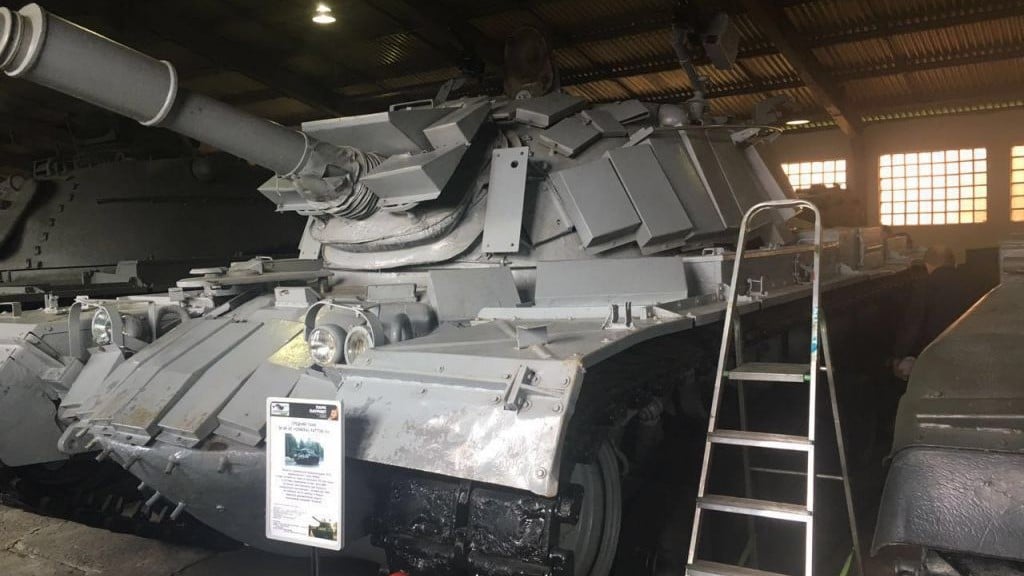
The battle claimed the lives of 21 Israeli servicemen and injured more than 30. Amid the confusion, three tank crewmen disappeared.
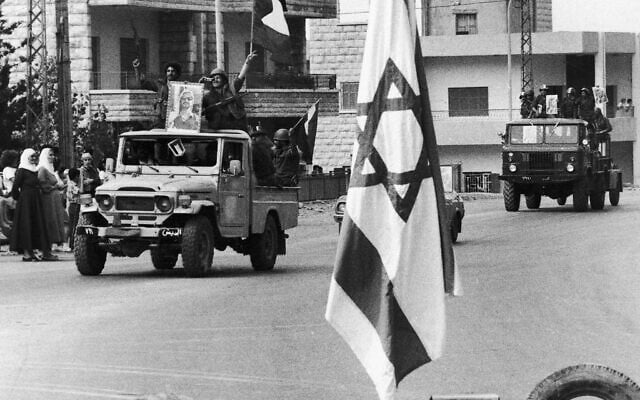
Katz, a tank gunner, went missing along with Sgt. First Class Zachary Baumel and Sgt. First Class Zvi Feldman. Baumel’s remains were recovered with Russian assistance and returned to Israel in 2019, and Mossad agents recovered Feldman’s remains in May 2025.
For decades, the fate of the three soldiers remained a lingering mystery of the war, as their family members campaigned for their return, pursuing rumors and fragmentary reports of their whereabouts, while Israeli intelligence continued searching for answers.
Rabbi Baruch Vider, the head of a prominent Jerusalem yeshiva, recalled being in one of the eight surviving tanks at Sultan Yacoub and losing his “dear friend” Katz, in a Hebrew-language phone interview with The Times of Israel on Wednesday.
“This battle has accompanied me almost every day,” he said. “I [still] see burning tanks in front of my eyes. Every few seconds, a shell would explode inside a tank and flames would shoot up into the sky, maybe a hundred meters high. Fire would leap upward.”
Vider called Katz a “very special person,” saying, “what stood out was the gentleness of his soul, his joy of life, his extraordinary character traits.”
“He was a righteous man — a Torah scholar and a fighter, but also very gentle in spirit,” he continued, recalling that Katz remarkably wore tefillin (small leather boxes containing scriptural verses traditionally worn during morning prayers by observant Jewish men) into battle.
“Today, the battle of Sultan Yacoub ended,” Vider said he declared upon hearing of Katz’s return, adding, “That doesn’t mean it won’t accompany me for the rest of my life. For anyone who was there, it is a very significant part of their life. But still, this is what we prayed for. For 44 years, I have prayed for this day.”
The military said Katz’s family was updated over the years regarding the ongoing efforts to locate his remains and return them to Israel, and was yesterday “informed of the return of their loved one.”
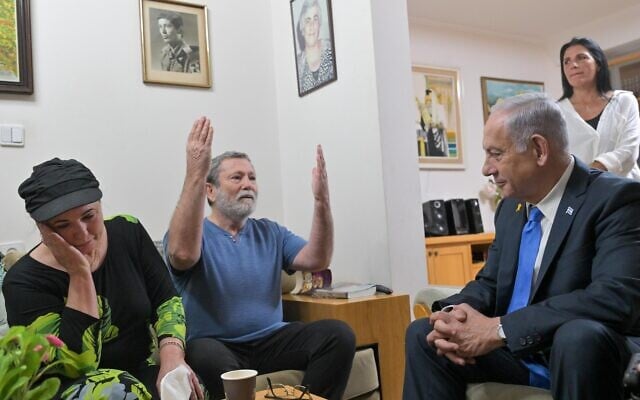
Yehuda’s parents, Sarah and Yosef Katz, did not live to receive the news of their son’s return.
Further chapters
But while one chapter of Israel’s complicated history in Lebanon has now come to a close, the country’s military entanglement across its northern border is far from over.
Katz was not the only body of an Israeli soldier killed while fighting in Lebanon brought home in recent years — only the one gone the longest.
Around 40 Israeli soldiers have been killed on the northern front and in operations related to Lebanon since fighting with the Hezbollah terror group restarted in the aftermath of the October 7, 2023, Hamas-led onslaught that sparked the war in Gaza.
The circumstances of 1982 and today are markedly different, but the First Lebanon War left Israel with a lasting sensitivity to the danger of entering Lebanon with limited military goals, only to find the mission expanding and the conditions for withdrawal increasingly difficult to define.
What began in 1982 as an operation to push Palestinian forces away from Israel’s border eventually drew Israeli troops toward Beirut and into a long-term occupation of a security zone in southern Lebanon that lasted until 2000.
Then, Israel was confronting the consequences of a weak Lebanese state in which the PLO and Syrian military had established powerful footholds. Today, Israel is similarly grappling with how to eliminate Hezbollah — the Iran-backed terror group that has built military capabilities largely beyond the control of the Lebanese government — without becoming indefinitely tied to hostile northern territory.
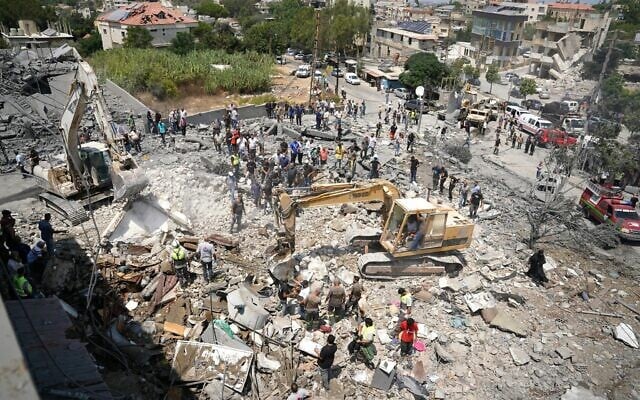
Vider contrasted the First Lebanon War with the recent conflict, saying that while “we fought for a few days, and the battle itself lasted one night, today, people are in war for a very long time,” with many of his own students “fighting for months on end.”
An unprecedented six rounds of US-mediated negotiations between Israel and Lebanon have produced some progress in recent weeks, with a framework agreed upon for gradual Hezbollah disarmament and Israeli withdrawals.
But there is no strict timeline for that framework, and the plan faces significant hurdles, including Hezbollah’s intense opposition and the Lebanese military’s current inability to force the group’s disarmament.
Katz’s return thus closes the last unresolved chapter of one generation’s war in Lebanon even as another remains unfinished.
Whether the current framework can disarm Hezbollah and bring Israeli troops home remains to be seen, as the country again faces questions about military objectives, the risks of becoming bogged down in another quagmire, and how its wars in Lebanon end.
Emmanuel Fabian contributed to this report.






The Times of Israel Community.